





 Follow Us
The retail and related revenue generated globally by the trademark licensing business increased to US$271.6B in 2017, according to the Annual Global Licensing Industry Survey by the International Licensing Industry Merchandisers’ Association (LIMA). The industry grew by 3.3 per cent as compared to previous year, where the total revenue was clocked at US$262.7B.
Royalty revenue from sales of licensed merchandise and services rose 2.6 percent to $14.5 billion. The top licensing property type was again Entertainment/Characters, with a 44.7% share of the market, accounting for $121.5 billion. Corporate Trademarks comprised the second largest segment, with its market share declining very slightly from last year to 20.5% of total retail revenues, thus accounting for $55.8 billion. Fashion accounted for $32.1 billion while sports got slightly better from last year at a 9.75% share accounting for $26.5 billion.
Some of the most significant growth came from property types that play somewhat smaller roles in the overall business, including publishing-based properties and art licensing. In addition, the music and celebrity categories saw growth reflective of the “influencers” effect. Though the U.S. and Canada remain the largest market for licensed merchandise and services, with revenue accounting for 58 percent of the global total, the strongest growth was driven from North Asia (up 6.2 percent) and Latin America (up 7.6 percent), primarily driven by growth in China/Hong Kong, Japan, and Brazil.
Apparel, toys, and fashion accessories continue to account for the largest shares of the business. Given a greater number of licensors seek to expand into more non-traditional categories, Casino gaming/lotteries increased by 9.6 percent. Home-related categories, infant, and video games/software/apps all showed growth higher than the overall 2017 average.
For Further Franchise Info Contact
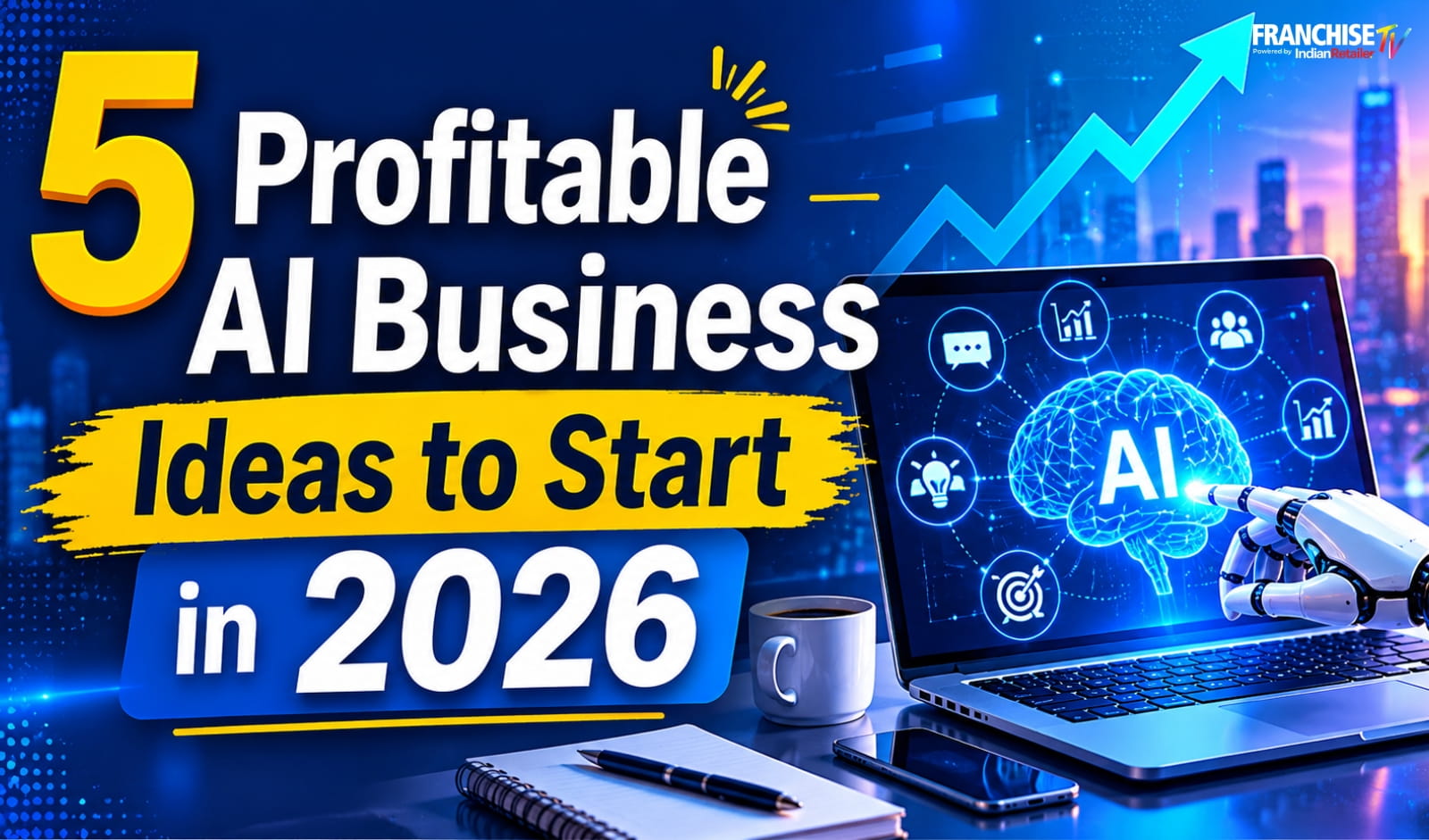
The global AI market is projected to surpass $800 billion by the end of 2026 — and the most exciting part? The largest share of that growth is happening in small, niche service businesses, not just in Big Tech boardrooms.
Whether you are a recent graduate, a stay-at-home parent, or a professional looking for a side income, AI-powered business ideas in 2026 have never been more accessible, affordable, or in demand. Unlike traditional franchises or startups, most AI businesses require no inventory, no office, and no technical degree.
In this guide, we cover the 5 best profitable AI-powered business ideas you can realistically launch in mid-2026 — even with zero prior experience. Let's get into it.
1. AI Content Creation & Marketing Agency
Every brand in 2026 needs content — blog posts, social media captions, email newsletters, video scripts, product descriptions. The demand has exploded, yet most small businesses cannot afford a full-time content team. That is where you come in.
An AI content creation business uses tools like ChatGPT, Claude, Jasper, and Canva AI to produce high-quality content at scale — faster and cheaper than traditional agencies. Your role is not to replace creativity but to manage, edit, and deliver AI-assisted content that actually converts.
How to start: Sign up for 2–3 AI writing tools, create sample content pieces, and pitch to local businesses or list your services on Fiverr and Upwork.
Startup cost: Under ₹5,000 / $60 per month in tool subscriptions.
Earning potential: ₹50,000–₹2,00,000 per month ($600–$2,400) once you build a client base.
Trending keywords: AI content agency 2026, ChatGPT content business, generative AI services for small businesses.
2. AI Automation Consulting for Small Businesses
Small businesses are drowning in repetitive tasks — responding to customer enquiries, scheduling, invoicing, data entry. In 2026, AI automation tools like Zapier AI, Make (formerly Integromat), and n8n have made it possible for non-coders to automate entire business workflows in hours.
As an AI automation consultant, you identify pain points in a local business, design an automation solution using no-code tools, set it up, and charge a monthly retainer to maintain it. This is one of the most scalable AI business ideas for beginners because the tools do the heavy lifting.
How to start: Take a free course on Zapier or Make, then offer a free audit to 3–5 local businesses to build your portfolio.
Startup cost: Near zero — most platforms have free tiers.
Earning potential: ₹80,000–₹3,00,000 per month ($950–$3,600) with recurring retainer clients.
Trending keywords: AI workflow automation consultant, business automation 2026, no-code AI for small businesses.
3. AI-Powered E-Commerce Store
E-commerce in 2026 is smarter than ever. AI tools now handle product research, trend forecasting, copywriting, customer service chatbots, and even ad creatives — all automatically. You no longer need a warehouse or a design team to run a professional online store.
By combining AI-driven product research tools with print-on-demand or dropshipping models, you can launch a fully operational AI ecommerce business in a weekend. Platforms like Shopify integrate natively with AI apps that write product descriptions, generate images, and personalise the shopping experience.
How to start: Pick a niche using AI trend tools (Google Trends + AI analysis), set up a Shopify store, and use AI to generate your product listings and ad copy.
Startup cost: ₹2,500–₹8,000 per month ($30–$100).
Earning potential: ₹30,000–₹5,00,000+ per month ($360–$6,000+) depending on niche and marketing.
Trending keywords: AI dropshipping 2026, AI ecommerce business ideas, AI product research tools.
4. AI Chatbot Development for Local Businesses
Restaurants, salons, clinics, real estate agents, and fitness studios all need one thing in 2026: a chatbot that handles enquiries, bookings, and FAQs — 24 hours a day, 7 days a week. Most of them have no idea how to set one up, and that is your opportunity.
Using no-code platforms like Voiceflow, Botpress, or Tidio AI, you can build and deploy a functional AI chatbot for a local business in under a day — no coding required. The best part? You charge a one-time setup fee and a monthly maintenance retainer, creating a highly predictable recurring income stream.
How to start: Build 2–3 demo chatbots for imaginary businesses using Voiceflow's free plan, then approach local businesses with a live demo.
Startup cost: Free to start with no-code tools.
Earning potential: ₹15,000–₹40,000 per chatbot setup + ₹5,000–₹15,000 monthly retainer per client.
Trending keywords: AI chatbot business 2026, build AI chatbot no code, chatbot for local businesses.
5. AI-Powered Personal Branding & Resume Service
The gig economy and job market in 2026 are more competitive than ever. Professionals are willing to pay a premium for a standout LinkedIn profile, a polished personal brand, and an ATS-optimised resume that actually gets interviews. AI has made it possible to deliver all three — faster and better.
Using tools like Teal, Kickresume, and Claude AI, you can offer a premium personal branding package that includes resume writing, LinkedIn profile optimisation, a personal bio, and cover letter templates. This service has an extremely low overhead, a high perceived value, and a client base that is always in demand.
How to start: Create 3 sample resume packages at different price tiers, list on LinkedIn and Fiverr, and partner with career coaches for referrals.
Startup cost: Under ₹2,000 per month ($25) in AI tool subscriptions.
Earning potential: ₹40,000–₹1,50,000 per month ($480–$1,800) with 10–15 clients.
Trending keywords: AI resume writing service 2026, personal branding AI tools, LinkedIn optimisation service.
Read also: 6 Consumer Brands Scaling Aggressively Across India
Top 5 Industries That Will Create Massive Franchise Demand in India
Top 7 Fast-Growing Street Food Franchise Brands in India
How to Choose the Right AI Business for You
With five strong options on the table, the right choice comes down to three factors: your available time, your starting budget, and the type of work you enjoy.
- If you enjoy writing and creativity — go with the AI Content Creation Agency.
- If you are analytical and love solving problems — AI Automation Consulting is your best fit.
- If you want a passive income stream — the AI E-Commerce Store offers the most scalability.
- If you like building and selling tools — AI Chatbot Development delivers fast recurring revenue.
- If you enjoy helping people grow professionally — the Personal Branding & Resume Service is highly rewarding.
The good news is that all five of these AI business ideas for beginners require no prior technical experience, and most can be started for less than the cost of a streaming subscription. The best time to start an AI business in 2026 is right now — before the market gets crowded.
Start Your AI Business Journey Today
The AI business opportunity in mid-2026 is real, it is growing, and it is accessible to anyone willing to take the first step. You do not need a tech degree, a large investment, or years of experience. You need a clear idea, the right AI tools, and the confidence to get started.
Whether you choose to build a content agency, consult on automation, sell products online, deploy chatbots, or help professionals stand out — each of these profitable AI-powered business ideas has been proven to generate income in the current market.
At FranchiseTV, we are committed to helping you find the best business opportunities in 2026 and beyond. Explore our full library of AI business guides, franchise opportunities, and startup resources to take your next step with confidence.
For Further Franchise Info Contact
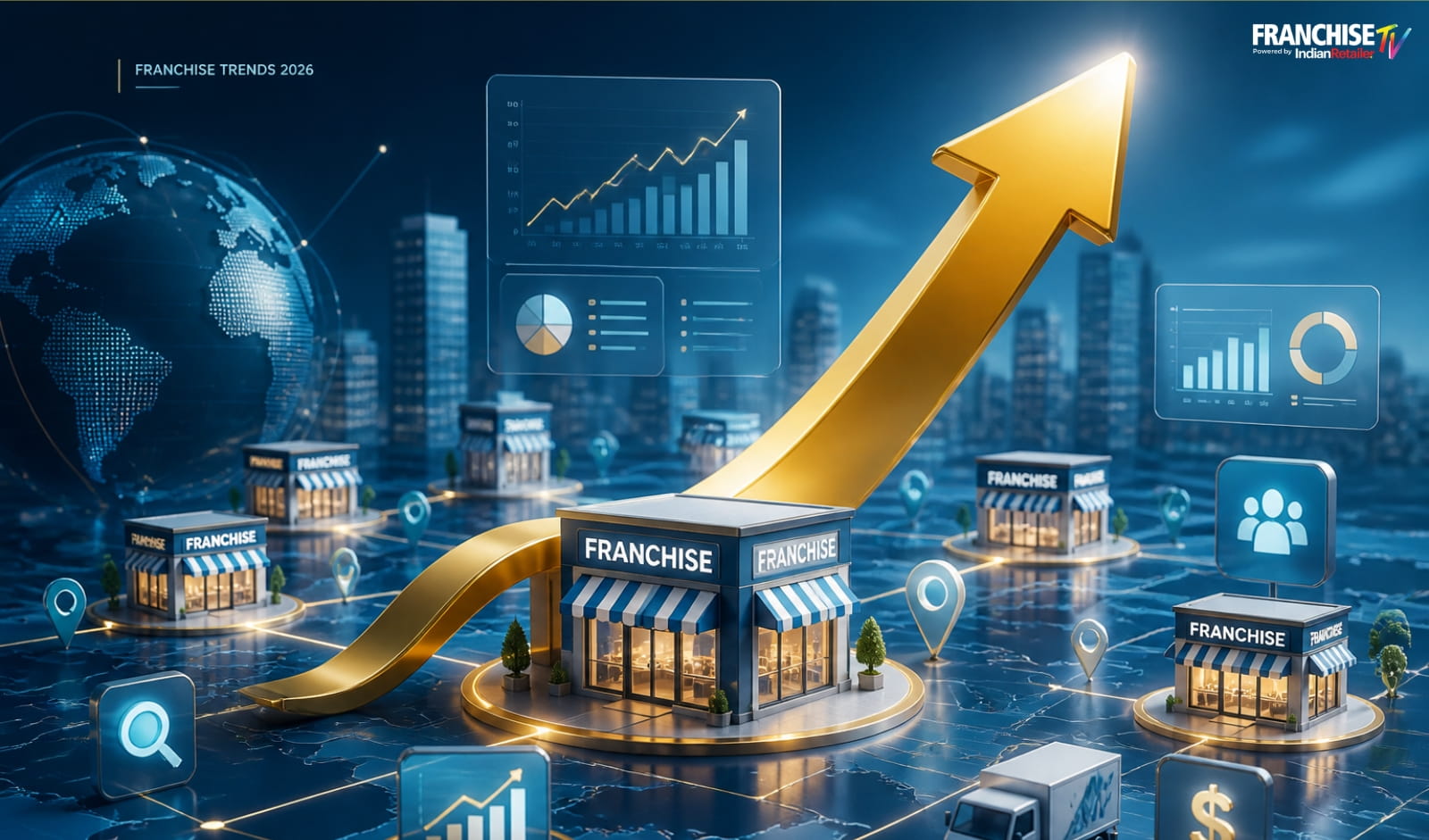
The franchise trends shaping 2026 reflect a market that is adapting quickly to new technology, shifting consumer habits, and stronger demand for flexible ownership models. Across the franchise industry, brands are focusing on smarter expansion, leaner operations, and customer experiences that can scale across multiple locations. As a result, the franchise business is becoming more attractive for both first-time entrepreneurs and experienced investors looking for stable growth.
Service-Based Franchises Are Growing
Lower Entry Costs and Strong Demand
One of the biggest top franchise trends in 2026 is the continued rise of service-based franchises. These businesses often require lower startup costs than traditional retail models and can adapt more easily to local market demand. Home services, health and wellness, senior care, cleaning, pet care, and education-focused franchises are all gaining attention because they meet everyday needs and can perform well in both strong and uncertain economic conditions.
Why Buyers Prefer These Models
For many buyers, these franchise opportunities offer a practical balance of demand, scalability, and long-term potential. They are often easier to manage, easier to localize, and more resilient in changing markets. That makes them especially appealing for entrepreneurs who want steady growth without depending heavily on foot traffic.
Read more: The Most Googled Franchise Questions in India - Answered
FunXtreme Unveils PAN India Expansion Plan Through FOCO Franchise Model
Top 5 Fast-Growing Street Food Franchise Brands in India Low Investment Picks
Technology Is Reshaping Franchising
AI and Automation in Operations
Another major shift in franchise trends in 2026 is the growing use of digital tools and AI-supported systems. Franchisors are investing more in automation, customer communication, lead generation, and location-based marketing. This helps franchise owners run operations more efficiently while also improving the customer journey.
Better Efficiency and Scale
In the modern franchise business, brands that embrace technology are better positioned to grow faster and stay competitive. Automation can reduce manual work, improve response times, and give franchise owners more time to focus on service quality and local business development.
Local SEO Matters More
Visibility Drives Growth
Local marketing is becoming a major growth driver in the franchise industry. Search visibility, map listings, location pages, and locally relevant content matter more than ever because franchise buyers and customers often start their journey online. Franchise brands that optimize each territory or location separately are seeing stronger results than those using a one-size-fits-all approach.
Why It Works for Franchises
This makes local SEO one of the most important franchise trends 2026 for both lead generation and brand discovery. A strong local presence helps franchisees attract nearby customers and gives franchisors a better chance of ranking for location-based searches.
Buyers Want Clear Value
Transparency Builds Trust
Franchise buyers in 2026 are becoming more selective. They want clear proof of profitability, strong support systems, and a business model that fits their lifestyle and budget. That means franchisors need to communicate value more clearly than before.
What Buyers Look For
The most successful franchise opportunities will be those that present transparent financial expectations, strong training, and a clear path to growth. In other words, trust and clarity are now just as important as brand recognition.
Multi-Unit Ownership Is Rising
Scaling Beyond One Location
Another important trend is the rise of multi-unit ownership. Many operators are no longer interested in just one location. Instead, they want franchise systems that allow them to expand into multiple units, multiple territories, or even multiple brands under the same umbrella.
Portfolio-Style Growth
This reflects a broader shift in the franchise business toward portfolio-style ownership, where entrepreneurs build wealth through scale rather than relying on one location alone. For franchisors, this creates opportunities to build stronger relationships with high-performing operators.
Consumer Demand Is Changing
Convenience and Personalization
Consumer demand is also influencing the future of franchise trends. People are spending more on convenience, personalization, and quality service. That creates opportunities for franchise brands that can solve everyday problems quickly and reliably.
Categories With Strong Potential
Whether it is food, home improvement, wellness, or business services, the strongest franchise opportunities are often the ones that deliver convenience and consistency in a changing market. Brands that understand this are more likely to grow in both new and existing territories.
Know more: Top 5 Healthcare Franchise Opportunities in India with Growing Demand
10 Best QSR Franchise Opportunities in India You Shouldn't Miss in 2026
Neel Jewels Franchise Opportunity: A Premium Jewellery Business Expanding Across India
Final Thoughts
For franchise brands, 2026 is a year to focus on adaptability. The companies that win will be the ones that combine strong operations with smart digital visibility and a clear brand story. For buyers, the best approach is to look beyond hype and focus on franchises with real demand, manageable costs, and strong support.
In a competitive franchise industry, those fundamentals matter more than ever.
For Further Franchise Info Contact
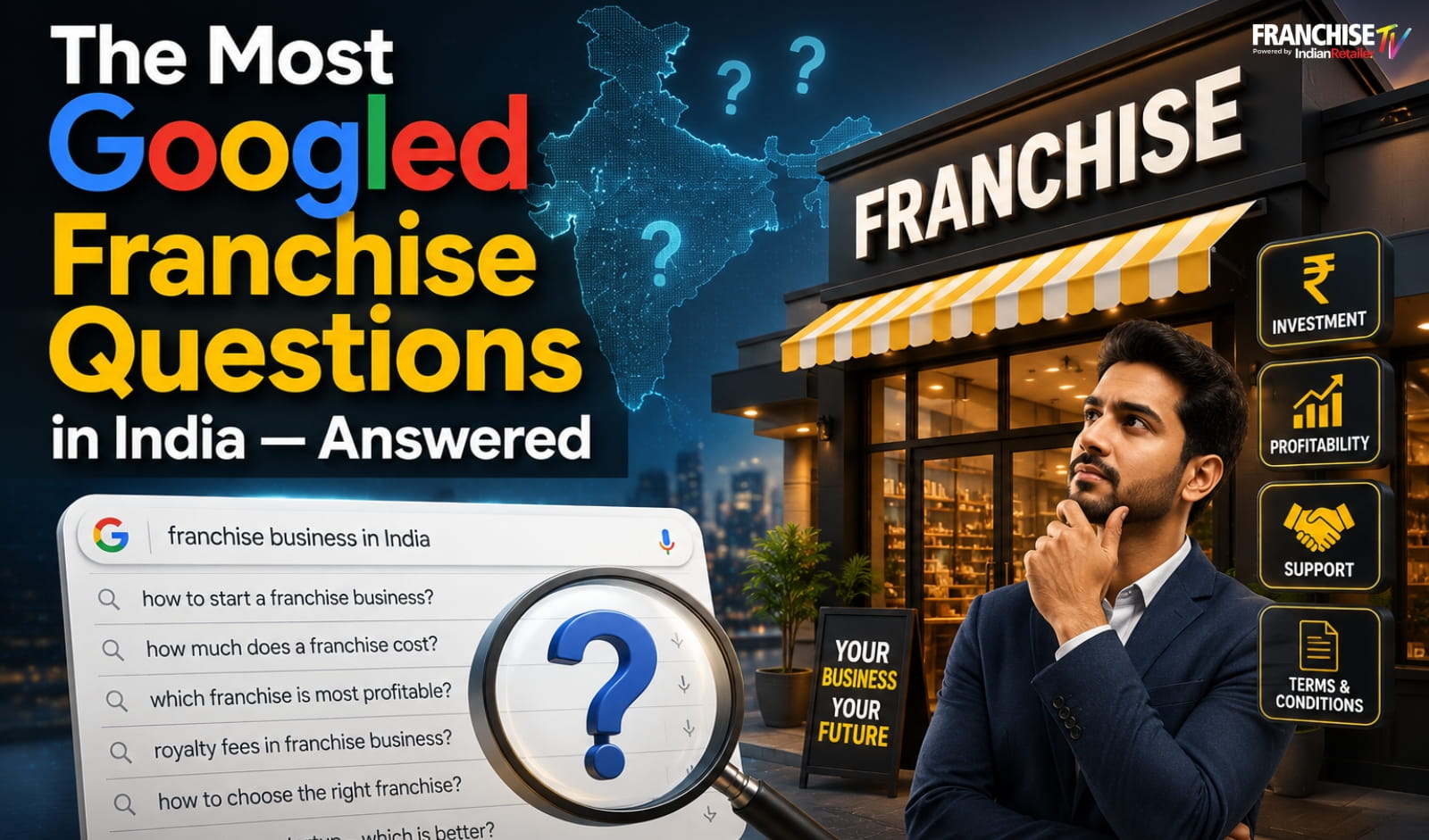
What Is a Franchise Business and How Does It Work in India?
A franchise is a business model where a brand owner — called the franchisor — licenses its name, systems, products, and support to an independent operator — the franchisee — in exchange for a fee and ongoing royalties.
In simple terms: you invest money, follow a proven system, operate under an established brand, and share a percentage of revenue with the parent company.
In India, franchising has evolved from fast food chains and coaching institutes to EVs, wellness clinics, and D2C brands. The Indian franchise industry is estimated to be worth over ₹900 billion and growing at 30–35% annually, making it one of the fastest-growing franchise markets globally.
How Much Does It Cost to Start a Franchise in India?
This is the single most searched franchise question in India — and rightfully so.
Franchise investment in India ranges from as low as ₹50,000 (for home-based or micro-service franchises) to ₹5 crore or more (for premium hospitality or international brands). Here's a practical breakdown:
Investment Range | Typical Sectors |
|---|---|
| Under ₹2 Lakhs | Courier, home services, online tutoring |
| ₹2–10 Lakhs | Tea/coffee kiosks, small retail, cleaning services |
| ₹10–30 Lakhs | QSR food brands, pharmacy, education centres |
| ₹30–75 Lakhs | Fitness studios, fashion retail, automobile services |
| ₹75 Lakhs–2 Crore | Full-service restaurants, hospital chains, hotel brands |
The total cost typically includes: franchise fee, security deposit, interior setup, equipment, initial inventory, staff training, and working capital for 3–6 months.
Pro tip: Always keep a working capital reserve equal to at least 3–6 months of your fixed operating costs. Most franchises don't fail because of bad products — they fail because the owner runs out of cash before profits kick in.
Which Franchise Is Most Profitable in India?
Profitability depends on sector, location, brand strength, and how efficiently the unit is managed. That said, consistently high-performing categories in India include:
Food & Beverage (QSR and Kiosks): Tea, quick bites, and cloud kitchen formats offer faster break-even due to low overheads and high repeat purchase frequency.
Education & Coaching: Among the most recession-proof sectors in India. Consistent monthly cash flows with relatively low attrition once students enrol.
Healthcare & Pharmacy: Driven by India's growing health-conscious population and insurance penetration. Stable demand year-round.
EV & Clean Energy: Emerging but rapidly gaining traction. Government incentives and rising fuel costs are creating strong tailwinds for EV charging and service franchises.
Logistics & Last-Mile Delivery: Explosive growth post-pandemic. Brands like DTDC, Delhivery, and Blue Dart offer franchise models with investment starting at ₹5–25 lakhs.
The most profitable franchises are not always the most famous. Lesser-known brands in high-demand sectors often deliver better ROI than marquee brands with saturated markets.
What Is the Minimum Investment for a Franchise in India?
Many aspiring entrepreneurs are surprised to learn that genuine franchise opportunities exist below ₹1 lakh. Low-investment options include:
- Courier & logistics agencies – ₹50,000–₹2 lakhs
- Ed-tech or tutoring platforms – ₹1–5 lakhs
- Home cleaning and pest control – ₹1–3 lakhs
- Tea kiosks – ₹2–5 lakhs
- Digital marketing franchise – ₹1–3 lakhs
However, be cautious of very low-investment opportunities that promise unrealistic returns. Always verify the brand's track record, speak with existing franchisees, and review the franchise agreement with a legal professional before signing.
How Long Does It Take to Break Even on a Franchise in India?
Break-even timelines vary significantly by sector:
- QSR/Food kiosks: 6–18 months
- Pharmacy/Healthcare: 12–18 months
- Education/Coaching: 12–24 months
- Fitness/Wellness: 18–30 months
- Hospitality: 24–48 months
Tier-2 cities often offer better risk-adjusted ROI than metros — lower rentals, lower competition, and untapped consumer demand frequently result in faster break-even despite lower revenue ceilings.
What Is a Franchise Agreement and What Should I Look For?
A franchise agreement is the legal contract between the franchisor and franchisee. It governs every aspect of the relationship — from how you run the business to what happens if you want to exit.
Key clauses to review carefully:
- Territory rights - Is your area exclusive or shared with other franchisees of the same brand?
- Royalty structure - Is it a fixed monthly fee or a percentage of gross sales?
- Contract duration - How long is the initial term? What are renewal terms?
- Exit and termination clauses - Can you sell or transfer the franchise? What happens if the franchisor terminates?
- Marketing fund contributions - Are you required to contribute to a brand-level marketing fund?
- Supply chain obligations - Are you mandated to buy supplies only from the franchisor or approved vendors?
In India, franchise agreements are governed by the Indian Contract Act, 1872. There is no standalone Franchise Act in India, so the agreement itself is your primary legal protection. Always have it reviewed by a franchise lawyer before signing.
Franchise vs Starting Your Own Business — Which Is Better?
This is one of the most debated questions among Indian entrepreneurs. Here's an honest comparison:
Choose a Franchise if you:
- Want a proven business model with lower risk
- Prefer structured support, training, and SOPs
- Value brand recognition over building from scratch
- Are entering a new industry without prior experience
Start your own business if you:
- Have a strong, original product or service idea
- Want complete creative and operational control
- Are willing to take higher risk for higher reward
- Have domain expertise and industry connections
The truth? Franchising is not "safe" — it is structured. You can still lose money in a franchise if you choose the wrong brand, wrong location, or mismanage operations. But statistically, franchise businesses in India have a significantly higher 5-year survival rate compared to independent startups.
Can I Get a Bank Loan to Buy a Franchise in India?
Yes — franchise financing is increasingly accessible in India. Several banks and NBFCs offer dedicated franchise loans under schemes like:
- SIDBI (Small Industries Development Bank of India) - for micro and small franchise businesses
- Mudra Loans under PMMY - up to ₹10 lakhs for qualifying micro businesses
- Commercial bank franchise loans - SBI, HDFC, ICICI, and Axis offer business loans against the franchise agreement and business plan
Key requirements banks typically ask for:
- Minimum 40% of the total investment from own funds
- Signed or draft franchise agreement from the franchisor
- Projected financials and business plan
- Collateral or guarantor (for larger loan amounts)
- Good credit score (700+ CIBIL preferred)
Some large franchise brands — particularly in food, education, and healthcare — have tie-ups with banks that make the loan process significantly faster and simpler for their franchisees.
What Are the Biggest Mistakes First-Time Franchise Owners Make?
Experienced franchise consultants across India point to five recurring mistakes:
1. Choosing a brand based on familiarity, not data. Just because a brand is famous doesn't mean the franchise model works well for franchisees. Always ask for the Franchise Disclosure Document (FDD) and speak to at least 5–10 existing franchisees before investing.
2. Underestimating working capital. Most first-timers budget for setup but forget that months 1–6 will likely be cash flow negative. Undercapitalised franchises frequently shut down before they have a chance to succeed.
3. Ignoring location science. Footfall, visibility, catchment area demographics, competitor presence, and lease terms all significantly impact franchise performance. A wrong location can doom even a strong brand.
4. Not reading the franchise agreement carefully. Many franchisees only discover unfavourable clauses — like forced supply chain exclusivity or zero exit rights — after they have already invested.
5. Expecting passive income. Franchising requires active management, especially in the first 12–18 months. Franchisees who treat it as a passive investment consistently underperform those who are hands-on.
Are Tier-2 and Tier-3 Cities Better for Franchising Than Metros?
Increasingly, yes — and the data backs it up.
Cities like Indore, Coimbatore, Surat, Lucknow, Jaipur, Bhopal, Nashik, and Kochi are emerging as the new frontiers of Indian franchising. Here's why:
- Lower real estate and rental costs - often 40–60% cheaper than metros
- Rising disposable incomes - a growing middle class with appetite for branded experiences
- Lower competition - many national brands are still underpenetrated in these markets
- Government infrastructure push - smart city development driving urbanisation
Multiple franchise brands that struggled in Delhi or Mumbai are thriving in Tier-2 cities. For first-time franchisees with moderate capital, Tier-2 cities frequently offer the best risk-adjusted returns in India right now.
Which Sectors Are Best for Franchise Investment in India in 2026?
Based on current market dynamics and growth projections, these sectors represent the strongest opportunities:
1. Food & Beverage - Still the dominant category. Cloud kitchens and QSR kiosks offer the lowest entry point with solid volumes.
2. Education & EdTech - Post-pandemic demand for hybrid learning has strengthened both physical coaching centres and ed-tech franchise models.
3. Health & Wellness - Gyms, yoga studios, diagnostics labs, and pharmacy chains are all expanding aggressively via franchising.
4. EV & Sustainable Business - Government subsidies and rising fuel awareness make this one of the most forward-looking sectors for franchise investment.
5. Quick Commerce & Logistics - The rise of 10–30 minute delivery infrastructure is creating new franchise roles across cities of all sizes.
How Do I Evaluate a Franchise Before Investing?
Before signing anything, run through this checklist:
- Request the Franchise Disclosure Document (FDD) — a reputable brand will always provide this
- Review audited financial statements of the franchisor
- Visit existing franchise outlets — not just showroom-style ones arranged by the brand
- Speak directly with franchisees — ask about actual revenues, support quality, and whether they'd invest again
- Assess the brand's digital presence — review scores, social media engagement, and consumer sentiment
- Get the franchise agreement reviewed by a qualified lawyer
- Verify trademark registration — ensure the brand's IP is legally protected under the Trade Marks Act, 1999
- Understand the exit mechanism — what happens if you need to shut down or sell
Final Word: Is Franchising Right for You?
Franchising in India is at an inflection point. Organised retail, digital supply chains, rising consumer aspirations, and a young, entrepreneurial population are creating conditions for franchise growth not seen before.
But franchising is not a shortcut — it is a structured path to business ownership. The brands that thrive are those where the franchisee brings energy, local knowledge, and active management to a proven system.
If you're willing to do the due diligence, choose the right sector, manage your capital wisely, and run operations with discipline — franchising in India in 2026 represents one of the most compelling entrepreneurial opportunities available today.
For Further Franchise Info Contact

With India rapidly becoming a global franchising hub, Franchise India is offering a powerful opportunity for professionals to enter the consulting ecosystem. As explained by Sanjay Bhat, this model is designed to build entrepreneurs in the consulting space.
This opportunity focuses on creating a knowledge-driven business, where individuals can:
- Connect investors with the right franchise brands
- Help businesses expand through franchising
- Build long-term advisory relationships
Unlike traditional jobs, this is positioned as a “return on involvement” model, where:
- More time = more deals
- More learning = higher earnings
- More networking = faster growth
- Understanding the Business Model
The Franchise India model works on a simple but scalable structure. As a consultant, your role revolves around:
- Working with investors who want to start a business
- Partnering with brands looking for expansion
- Creating the perfect business-investor fit
Additionally, the model expands into multiple revenue streams:
- Franchise sales (core revenue)
- Brand onboarding services
- Business resale & exit solutions
This makes it a multi-income consulting ecosystem, where you earn from:
- Investor side fees
- Brand side commissions
- Deal closures
Why Franchising is a Massive Opportunity in India
Franchising is one of the fastest-growing industries globally and in India. The webinar highlighted that this growth is driven by multiple factors:
- Rising demand for entrepreneurship over jobs
- Increasing trust in branded businesses
- Companies preferring asset-light expansion models
Today, franchising is expanding across industries like:
- Food & Beverage (QSR, cafes)
- Retail (fashion, electronics)
- Education & preschool
- Healthcare & diagnostics
- EV, pet care & home services
This growth indicates that franchising is not limited anymore—it is becoming a mainstream business model across sectors.
IFC Model: Low Investment, High Earning Potential
The Independent Franchise Consultant (IFC) model is ideal for individuals looking to start with low investment and high scalability.
Key Highlights:
- Investment: ₹6.5 lakh (one-time)
- Leads: 50+ guaranteed per month
- Brand Portfolio: 500+ opportunities
- Revenue Share: 40% (up to 50%)
As an IFC, your earnings come from multiple sources:
- Investor onboarding fees
- Franchise deal commissions
- Brand service revenues
A typical earning structure can include:
- ₹2–3 lakh/month (beginner level)
- ₹5–10 lakh/month (mid-level performance)
- ₹20 lakh+/month (high performers)
This makes it a performance-driven income model with no cap on growth.
Firm Model: Build a Franchise India Office in Your City
For entrepreneurs looking to scale further, the Firm Model offers a bigger opportunity.
Key Features:
- Investment: ₹20–25 lakh
- Office Setup: ~500 sq. ft. with 4–5 team members
- Revenue Share: 50%
This model allows you to build multiple income streams:
- Run a Franchise India office in your city
- Build and manage a network of IFC partners
- Earn from business resale opportunities (CBB)
- Generate revenue through commercial leasing
Additionally, you get city-level exclusivity, which means:
- Less competition
- Strong local presence
- Higher scalability
What Support Do Partners Get?
Franchise India provides structured support through its TABLET framework, ensuring business ease:
- Technology: CRM, database, email system
- Access: Office infrastructure across cities
- Brands: 500+ franchise opportunities
- Leads: Pre-qualified investor leads
- Events: 1,400+ events annually
- Training: Continuous learning & mentoring
This system ensures that partners can:
- Focus on conversions instead of lead generation
- Build expertise faster
- Scale operations efficiently
Who Should Consider This Opportunity?
This opportunity is best suited for individuals who are serious about building a consulting business.
Ideal Profiles:
- Management consultants
- Business advisors or coaches
- Entrepreneurs seeking scalable income
- Professionals planning a career transition
However, it is important to note:
- This is not a passive income model
- Requires active involvement
- Needs continuous learning and networking
Those who commit fully can build a long-term, high-income consulting career.
Conclusion: A Scalable Consulting Business in a High-Growth Industry
Franchise India’s IFC and Firm Model offer a structured way to enter the franchising ecosystem. With strong backend support, brand credibility, and multiple revenue streams, this opportunity stands out as a future-ready business model.
Key takeaways include:
- Low entry barrier (IFC model)
- High scalability (Firm model)
- Strong earning potential
- Access to a growing industry
For individuals looking to move beyond traditional jobs and build a sustainable consulting business, this opportunity provides a clear and proven pathway.
Frequently Asked Questions About Franchise India IFC & Firm Opportunity
Q1. What is the IFC model in Franchise India?
It is a consulting-based business where you help investors find the right franchise opportunities and earn commissions.
Q2. What is the total investment required?
₹6.5 lakh for IFC and ₹20–25 lakh for firm partnership.
Q3. How much can I earn?
Earnings can range from ₹2 lakh to ₹20 lakh per month depending on performance.
Q4. Are leads provided?
Yes, Franchise India provides 50+ pre-qualified leads every month.
Q5. Is this suitable for career switch?
Yes, but it requires time, involvement, and learning commitment.
For Further Franchise Info Contact

Starting a business is one of the most important financial and emotional decisions in life, especially for professionals and first-time entrepreneurs. The Successpreneur webinar by Franchise India provides a structured roadmap to help investors choose the right franchise business in India with clarity, confidence, and calculated risk.
One of the biggest reasons people fail to start their entrepreneurial journey is not the lack of opportunity but the absence of a defined timeline and mindset. Setting a clear start date for your business creates discipline, accountability, and a learning path. This is the foundation of the Successpreneur model, which focuses on training, education, and informed decision-making before investment.
Watch the full webinar and take the first step toward your entrepreneurial journey: Click here
The 4-Dot Strategy for Choosing the Right Franchise
To help investors identify the best business opportunities in India, the framework introduces the powerful 4-dot strategy:
- Selecting the right industry based on your skills, goals, and risk appetite.
- Choosing the right brand through performance, vision, and competitive advantage.
- Matching financial goals with ROI, income potential, and value creation.
- Understanding the micro-market, location demand, and target audience.
This structured evaluation ensures that the business is not just profitable on paper but also strategically aligned with the investor’s long-term life goals.
ROI, Risk & Smart Funding Strategy
A successful franchise investment is not only about return on capital. The webinar highlights three critical returns:
- Return on Investment
- Return on Involvement
- Return on Intelligence
Equally important is the 60:40 funding rule, where 60% is used for setup, and 40% is reserved as working capital. Most businesses fail due to under-capitalisation, not because of poor concepts.
Top 10 Home Décor Franchise Brands Expanding in Metro Cities
Top Laundry & Dry Clean Franchise Brands Expanding Fast
From Incubation to Scale
Every successful venture moves through three stages:
Incubation → Growth → Sustenance.
When a business reaches the stage where it runs without the owner’s daily involvement, it creates real asset value and exit opportunities.
With access to 1000+ brands across 150+ industries and presence in multiple countries, Franchise India enables investors to make data-driven, low-risk franchise decisions.
FAQs About Choosing the Right Franchise Business
1. What is the Successpreneur webinar by Franchise India?
It is a structured investor awareness session that teaches how to select the right business, evaluate ROI, and start a successful franchise.
2. Who should attend this webinar?
Professionals, first-time entrepreneurs, career changers, and investors who are looking for profitable franchise opportunities.
3. What is the 4-dot strategy in franchise selection?
It is a method to choose the right industry, brand, financial model, and location before investing.
4. How much capital is required to start a franchise business?
It varies by brand, but experts recommend the 60:40 rule to maintain working capital and reduce risk.
5. Why do most new businesses fail?
The primary reason is under-capitalisation and lack of structured planning, not the business idea.
For Further Franchise Info Contact
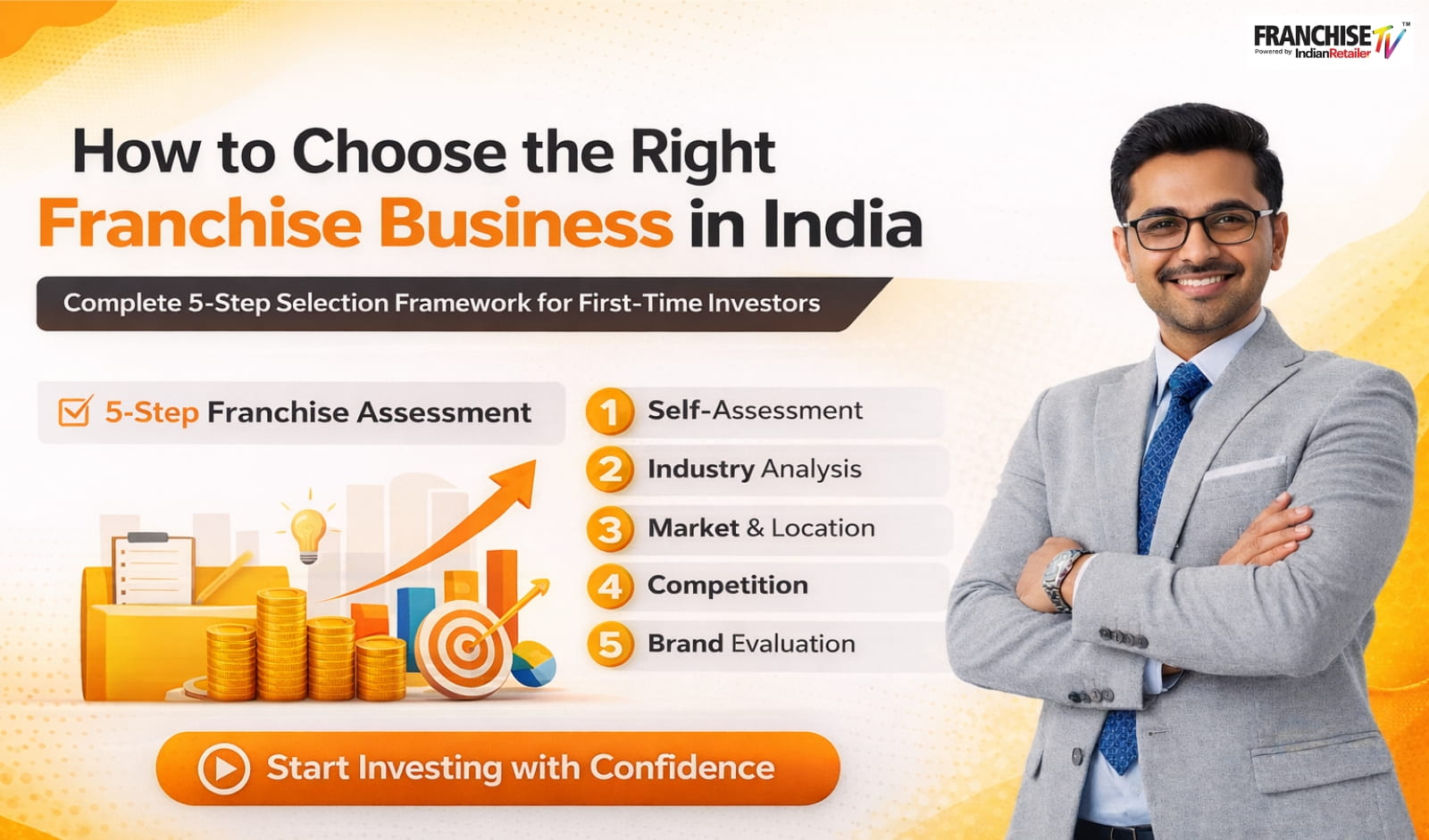
Choosing a franchise in India is no longer about brand popularity or low investment. It is about using a structured evaluation framework that aligns your time, risk appetite, market, industry demand, and operating capacity to the right business model. This guide explains the exact 5-step assessment process every first-time franchise investor should follow before investing.
Why Franchise Business Opportunities in India Are Growing Fast
Franchising has become one of the fastest-growing business formats in India because of rising branded consumption, formalization of services, and the surge of first-time entrepreneurs entering the market. From food outlets, salons, education centers, healthcare clinics, laundry services, and retail stores to quick-commerce formats, almost every sector today operates through a franchise ecosystem. India is now considered one of the largest franchise markets globally, and the growth in the last decade has been driven largely by new investors who want to start a business but do not want to build from scratch.
However, this growth has also created confusion. There are thousands of franchise options across industries, and most investors choose based on brand name, investment size, or margin promises. This approach often leads to poor decisions because the real success of a franchise depends on fitment, not popularity.
The Biggest Mistake First-Time Franchise Investors Make
Most new investors focus only on franchise cost, expected margins, and brand recognition. They rarely evaluate whether the business model suits their time availability, financial goals, city potential, and operating ability. A franchise is not a passive investment. It is an active business that requires alignment between the investor and the model.
The right question is not “Which is the best franchise brand?” but “Which franchise business is best suited for me?”
Read more: Top 20 Franchise Business Opportunities in India With Low Investment
Best Cafe Franchise Brands Expanding Rapidly Across Urban and Tier-II India
The 5-Step Franchise Assessment Framework Every Investor Must Follow
Self-Assessment Using the Time–Risk–Return Rule
Before selecting any industry or brand, an investor must understand their own mindset and expectations. Every franchise opportunity fits into one of three financial goals: safety, income, or growth. If you want safety of capital, returns will be lower. If you want high growth, risk involvement will be higher. Time commitment is equally important because some businesses require full-time involvement while others can be semi-managed. Clarity on these three elements prevents wrong decisions.
Industry Assessment to Avoid Overcrowded Sectors
Not every trending industry is profitable in every city. Investors must study industry growth prospects, demand and supply gap, historical performance, and future disruptions. If too many players offer similar services without differentiation, margins shrink. Understanding whether the industry has room for new players is crucial before investing.
Market and Location Assessment Based on Real Estate Science
Location selection is one of the most scientific parts of franchise success. A proven thumb rule is to open where your closest competitors are already doing well. This indicates validated demand. Investors should evaluate total addressable market, rental feasibility, local regulations like food license or drug license, and rent-to-sales ratio. Location is not emotional; it is mathematical.
Competition Assessment Across Cities and Formats
Investors must study how the brand performs in different cities, high streets versus malls, metro versus tier-2 markets, and across different formats. Understanding average performance gives a realistic picture of business efficiency rather than relying on brochure projections.
Brand Assessment Beyond Franchise Fee and Margins
Many investors focus only on franchise fee and margin structure. The real evaluation should include founder credibility, operational SOPs, training systems, marketing support, operating cost structure, cost escalation over time, and the legal strength of the franchise agreement. Standardized systems reduce operational errors and make scaling easier.
Read also 7 Best Lab-Grown Diamond Jewelry Franchise Brands in India to Watch
Top International Beauty Salon Franchises Open Doors for Indian Investors
Understanding ROI in Franchise Business Correctly
Return on investment depends on the life of the opportunity. Businesses like schools, hospitals, or hotels have long life cycles and hence longer ROI periods. Typical franchise agreements run for five years, where ROI usually takes 2.5 to 3 years because the first year is spent in optimization. Unrealistic expectations of first-year returns often lead to disappointment.
The 3-Stage Franchise Selection Process Smart Investors Follow
The correct approach to selecting a franchise happens in three stages. The first stage is exploration, where opportunities are filtered based on strategic fit, operational fit, market fit, and financial fit. The second stage is evaluation, where investors deeply understand selected brands, unit economics, and leadership vision. The final stage is personalization, where deal structuring, territory planning, and agreement review are completed. This entire cycle typically takes 30 to 90 days for a serious investor.
Explore more: 7 Things You Need to Know Before Becoming a Franchise Owner
Top Franchiseable Jewelry and Accessories Brands Rising in Tier II Cities
The Key Lesson for First-Time Entrepreneurs
Franchising in India is not risky. Unstructured decision-making is. Investors who apply this 5-step assessment before choosing a franchise significantly reduce their chances of failure and improve their chances of building a sustainable business.
A franchise should match your mindset, your city, your financial goals, and your ability to operate it. When these align, success becomes predictable rather than accidental.
FAQs on Choosing the Right Franchise Business in India
Q1. How to choose the right franchise business in India?
Choosing the right franchise business in India requires evaluating self-assessment, industry potential, market location, competition, and brand credibility before investing.
Q2. What factors should first-time investors check before buying a franchise?
First-time investors should check investment capacity, time involvement, industry demand, brand support system, operating cost, and return on investment.
Q3. Why is self-assessment important before starting a franchise business?
Self-assessment helps investors align their mindset, financial goals, risk appetite, and time commitment with the right franchise opportunity.
Q4. How to evaluate franchise brand credibility and profitability?
Investors must review the brand’s track record, SOPs, unit economics, support structure, market performance, and legal agreements to judge profitability.
Q5. What is the ideal process to select a profitable franchise opportunity?
The ideal process includes opportunity exploration, detailed brand evaluation, market feasibility, deal structuring, and agreement signing with proper guidance.
For Further Franchise Info Contact
Starting a business in India no longer means building everything from scratch. Today, smart entrepreneurs prefer franchise business opportunities because they offer lower risk, proven demand, brand trust, and faster returns.
India’s franchise industry is expanding rapidly across Tier I, Tier II, and Tier III cities. With rising disposable income, urbanization, and consumer preference for branded services, low-investment franchise businesses are becoming the first choice for new investors, working professionals, and small business owners.
Industry estimates suggest the Indian franchise market is growing at a CAGR of 30–35 percent, and is expected to cross $100 billion in the coming years. If you are looking for a low-investment, high-profit franchise business, this guide covers the best sectors, expected investment, space, and advantages.
Why Franchise Business Is Growing Fast in India
- Consumers trust branded services over unorganized businesses
- Brands are expanding into small cities through franchise partners
- Lower marketing effort due to brand recognition
- Proven business model with training and support
- Faster ROI compared to independent startups
This makes the franchise one of the safest business opportunities in India today.
Investment, Space, and Payback Expectations
| Factor | Typical Range |
| Investment | ₹10 Lakhs – ₹50 Lakhs |
| Area Required | 500 – 1200 sq ft |
| Payback Period | 18 – 30 Months |
| Staff Required | 3 – 8 People |
Top 20 Low-Investment Franchise Business Opportunities
1. Tea & Coffee Café Franchise – Low Investment Food Franchise Opportunity
Tea and coffee are among the most consumed beverages in India, with demand spanning office workers, students, shoppers, and travelers. This makes a tea and coffee café franchise one of the most stable low-investment franchise business opportunities. These outlets work well in high streets, malls, corporate areas, and even small kiosks near colleges and markets.
The business thrives on high repeat orders, minimal kitchen complexity, and quick service. With delivery apps and takeaway culture growing, this model ensures daily revenue flow.
Advantages of Tea & Coffee Café Franchise Opportunity
- High daily consumption category with repeat customers
- Small space requirement (150–400 sq ft possible)
- Simple operations and low staff dependency
2. QSR Franchise – Profitable Quick Service Restaurant Franchise
The QSR franchise business is one of the fastest-growing food franchise opportunities in India due to rising demand for fast, affordable meals. Consumers prefer quick dining and home delivery, making QSR models highly scalable.
These franchises operate on standardized menus, fast billing, and high table turnover, which improves profitability even in small spaces.
Advantages of QSR Franchise Opportunity
- Strong takeaway and delivery demand
- High footfall and fast customer turnover
- Works in malls, food courts, and high streets
3. Ice Cream & Dessert Franchise – High Margin Food Franchise
Desserts and ice creams are impulse-buy categories with strong margins. An ice cream and dessert franchise performs well across seasons, especially in urban and semi-urban markets.
Advantages
- Low preparation complexity
- High margins and impulse purchases
- Requires limited manpower
4. Bakery Franchise – Evergreen Low Investment Franchise
A bakery franchise business benefits from daily demand for cakes, pastries, breads, and cookies. Cloud kitchen and retail formats both work well.
Advantages
- Daily consumption products
- High average order value through customization
- Flexible retail or delivery model
5. Preschool & Daycare Franchise – Education Franchise Opportunity
With rising nuclear families and working parents, preschool and daycare franchise demand is growing rapidly in residential areas.
Advantages
- Stable monthly fee structure
- High trust and word-of-mouth admissions
- Long-term enrollments
6. EdTech & Coaching Center Franchise – Coaching Franchise Business
The demand for competitive exam preparation and skill development makes EdTech and coaching center franchises highly profitable.
Advantages
- Hybrid online-offline model
- Low infrastructure requirement
- High margins per student
7. Salon & Beauty Franchise – Personal Care Franchise
Beauty and grooming services have become routine expenses. A salon and beauty franchise generates recurring monthly revenue.
Advantages
- Repeat service model
- High margins on services
- Works in all city categories
8. Skin & Laser Clinic Franchise – High ROI Healthcare Franchise
A skin and laser clinic franchise offers advanced skincare treatments with premium pricing and growing awareness.
Advantages
- High ticket size services
- Growing skincare awareness
- Faster investment recovery
9. Diagnostic & Pathology Lab Franchise – Essential Medical Franchise
Healthcare diagnostics are non-optional services. A diagnostic lab franchise ensures steady daily demand.
Advantages
- Regular test requirements
- Works well in Tier 2/3 cities
- Strong trust-based repeat visits
10. Pharmacy Franchise – Retail Medical Store Franchise
A pharmacy franchise provides essential medicines and healthcare items with consistent sales.
Advantages
- Daily necessity category
- High repeat purchases
- Works in small retail spaces
11. Fitness Studio / Gym Franchise – Fitness Business Opportunity
Health awareness is driving demand for gym and fitness studio franchises in urban India.
Advantages
- Monthly membership model
- Personal training upsell
- Growing youth participation
12. Yoga & Wellness Center Franchise – Wellness Business Franchise
A yoga and wellness franchise attracts customers seeking holistic health solutions.
Advantages
- Low equipment cost
- Membership-driven model
- Increasing wellness awareness
13. Laundry & Dry Cleaning Franchise – Urban Service Franchise
Urban lifestyles create demand for laundry and dry cleaning franchise services.
Advantages
- Regular service demand
- Subscription model possible
- Minimal staff and space
14. Car Wash & Auto Detailing Franchise – Automobile Service Franchise
Rising vehicle ownership boosts demand for car wash and detailing franchises.
Advantages
- High margin per service
- Repeat customers
- Low inventory requirement
15. Mobile & Electronics Repair Franchise – Repair Franchise Business
Gadget dependency creates a constant demand for mobile and electronics repair franchises.
Advantages
- Low tool investment
- Quick service turnaround
- Strong demand in all areas
16. Courier & Logistics Franchise – E-commerce Driven Franchise
E-commerce growth fuels demand for courier and logistics franchise businesses.
Advantages
- Daily shipment volumes
- Works from a small office
- Strong B2B demand
17. Real Estate Consultancy Franchise – Property Business Franchise
A real estate consultancy franchise operates on a high commission model without inventory.
Advantages
- High earnings per deal
- Low setup cost
- Small office requirement
18. Digital Marketing Agency Franchise – Online Service Franchise
Businesses moving online increase demand for digital marketing franchise services.
Advantages
- Work-from-office or home
- High service margins
- Growing SME demand
19. Printing & Advertising Services Franchise – Advertising Franchise
Local businesses constantly need branding and printing support.
Advantages
- Continuous B2B demand
- Wide service range
- Small setup space
20. Organic Food & Grocery Franchise – Retail Grocery Franchise
Health-conscious consumers are driving demand for organic food and grocery franchises.
Advantages
- Repeat purchase category
- Growing awareness of healthy living
- Works well in residential locations
Best Franchise Opportunities for Tier 2 & Tier 3 Cities
Small cities are now the biggest growth drivers for franchise brands because:
- Lower rentals
- Less competition
- High demand for branded services
- Rising disposable income
Sectors like food, education, healthcare, beauty, and logistics perform exceptionally well here.
How to Choose the Right Franchise Business
Before investing, always check:
- Brand demand in your location
- Investment vs expected ROI
- Training and operational support
- Profit margins and royalty structure
- Space and manpower requirements
Choosing the right sector is more important than choosing a famous brand.
Why a Low-Investment Franchise Is Ideal for First-Time Entrepreneurs
Low-investment models reduce risk and allow you to learn operations while earning steady profits. Many entrepreneurs scale to multiple outlets within 3–5 years using this model.
Future of Franchise Business in India
With organized retail, food chains, healthcare services, and education expanding rapidly, franchise business opportunities will continue to grow for the next decade. Experts predict the franchise sector to cross $100 billion in the coming years.
Conclusion
If you want to start a business with low risk, proven demand, and faster returns, a franchise is one of the best options in India today. Choosing the right sector, right location, and right investment plan can help you recover your investment within two years and build long-term income.
This is why thousands of new entrepreneurs are choosing low-investment franchise business opportunities over independent startups.
For Further Franchise Info Contact
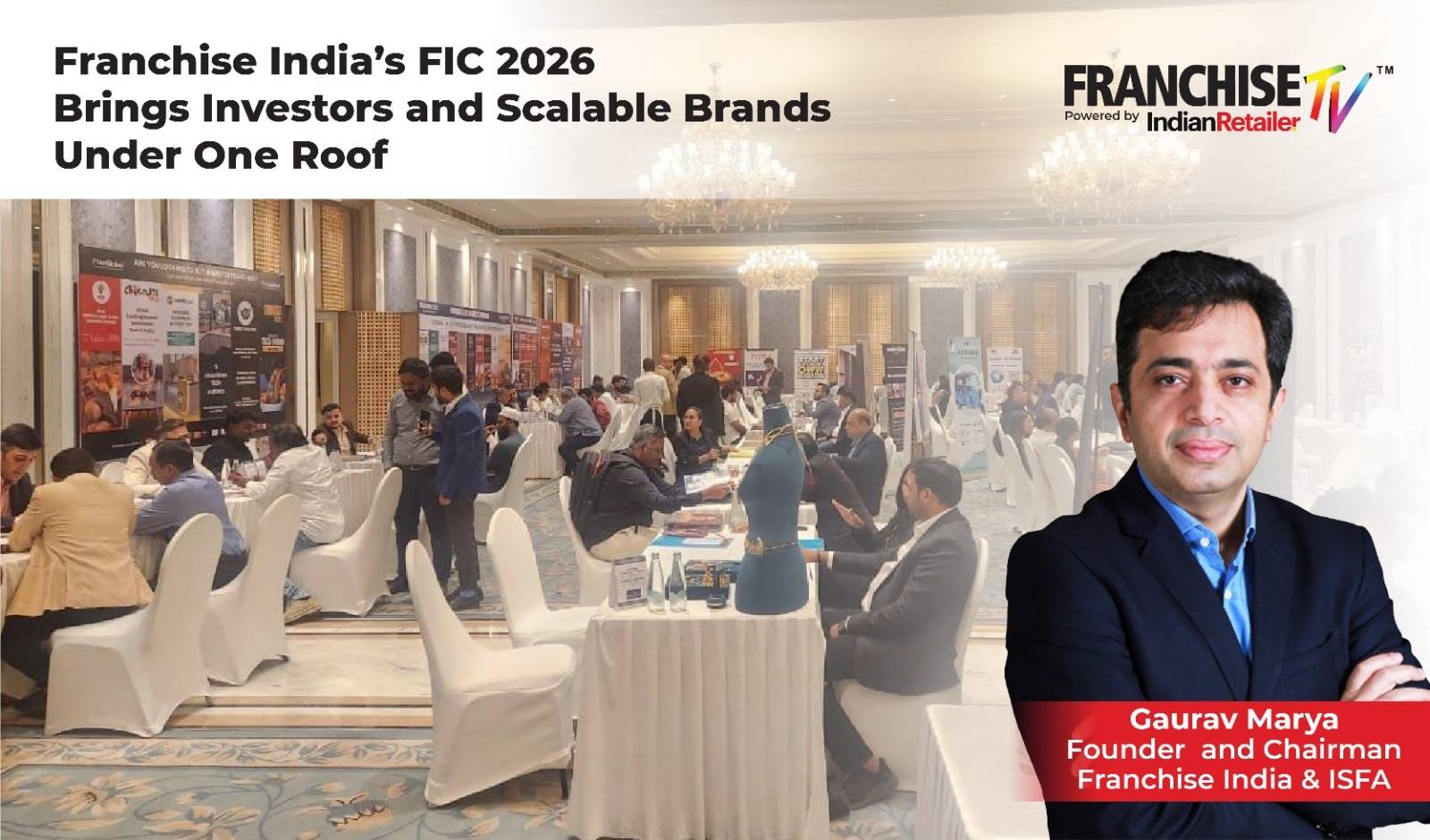
The Franchise & Investment Conclave 2026 (FIC 2026) proved to be a focused and high-impact platform for franchise growth and investor engagement, once again underlining franchising as one of the most organized and scalable business models in India. Organized by Franchise India, the one-day master franchise conclave was held at ITC Hotels Limited in Hyderabad on 10 January 2026, bringing together leading Indian and global brands, serious investors, and experienced multi-unit operators.
Unlike a typical exhibition, FIC 2026 was designed as a curated, deal-oriented forum. The conclave featured franchise opportunities across multiple sectors, including jewelry, food & beverage, health, beauty and wellness, education, logistics, technology, fashion retail, home and furnishings, and quick commerce. The presence of digital-first brands such as Zepto reflected the evolving and future-ready nature of India’s franchising landscape and set the tone for upcoming editions.
The energy on the show floor remained strong throughout the day. Discussion tables were consistently occupied, and focused one-on-one meetings led to practical, results-driven business conversations. The event attracted nearly 700 visitors, including first-time entrepreneurs, HNIs, retail property owners, and seasoned franchise operators, all actively exploring scalable, proven business models.
Several key franchise partners of Franchise India leveraged the platform to directly engage with investors and master franchise seekers. Brands such as TTK Prestige, OakTree, Nilkamal Sleep Nova, Kedman, Lucira Diamond, Nazeer Foods, Chicago Pizza, Bagelstein, and others shared their expansion plans, investment requirements, and growth strategies. With brands spanning food & beverage, health, retail, and quick commerce, investors had the flexibility to evaluate opportunities across different investment levels and business formats.
Beyond networking, the conclave highlighted structured entrepreneurship in action. Conversations went deeper into critical aspects such as unit economics, site selection, franchise support, and multi-city expansion plans. This business-first approach reinforced the conclave’s core purpose, enabling real participation and informed decision-making.
A major highlight of the event was the successful closure of a franchise deal for Gelato Italio Ice Cream, facilitated by Franchise India Holdings Limited and Franchise India Brands Limited. The deal clearly demonstrated the conclave’s strength as a platform where serious intent translates into tangible outcomes.
“Franchising offers the ideal entry point for investors aspiring for entrepreneurship, providing proven business models, reduced risk, and comprehensive support. Events like the Franchise India Investment Conclave catalyze India’s entrepreneurship ecosystem by connecting scalable brands with committed investors, fostering real growth and innovation,” said Gaurav Marya, Founder and Chairman, Franchise India.
As FIC 2026 concluded, it reinforced a clear message: franchising remains one of the most reliable and growth-oriented paths for business expansion in India. With ready-to-scale brands, committed investors, and a tightly curated format, the conclave once again showcased why Franchise India continues to lead India’s franchising and investment ecosystem.
For Further Franchise Info Contact
India’s startup ecosystem is clearly moving into a more mature phase, often referred to as Startup 2.0. This new phase is not about chasing rapid growth at any cost. Instead, it focuses on building sustainable, well-structured businesses powered by technology, purpose, and strong fundamentals.
In a recent Franchise India webinar, Jai Dave, Founder and CEO of Aapilok Softech Pvt. Ltd. (आपि), shared how today’s entrepreneurs are changing the rules of entrepreneurship and why this shift is crucial for long-term success.
From Startup 1.0 to Startup 2.0
Jai Dave explained that Startup 1.0, which emerged during the dot-com boom of the 1990s, was driven mainly by fast scaling, heavy venture capital funding, and aggressive customer acquisition. While this phase created global giants, it also saw many startups fail due to weak revenue models and uncontrolled expansion.
Watch here the complete video to get the complete insight: click here
Startup 2.0 marks a clear shift. Today’s founders are more cautious, disciplined, and data-driven. The focus is on strong unit economics, clear revenue visibility, transparent operations, and long-term sustainability.
Rather than chasing high valuations, entrepreneurs are now prioritizing business health, customer trust, and consistent performance. According to Dave, this shift is helping India’s startup ecosystem become more resilient and investor-ready.
Technology at the Heart of Startup 2.0
Technology plays a central role in this new startup phase. Dave highlighted that tools like cloud platforms, automation, AI, and data analytics, which were once affordable only to large companies, are now accessible to even early-stage startups.
This allows founders to automate daily operations, improve customer experience, personalize services, make better, data-backed decisions.
Consumers today expect speed, convenience, and reliability. Startups that use technology thoughtfully can meet these expectations while keeping costs under control. Dave stressed that technology should support efficiency and scale, not just hype.
Purpose, Community and Sustainable Thinking
Another defining feature of Startup 2.0 is purpose-led entrepreneurship. Dave pointed out that many new-age founders are solving real problems in areas like sustainability, agriculture, waste management, and digital inclusion.
Customers are increasingly drawn to brands that stand for something meaningful. Businesses that align with social and environmental values often build stronger loyalty and long-term relevance.
Community engagement also plays a big role. Startups today actively listen to users, involve them in product development, and adapt quickly based on real feedback. This community-first approach helps build better products and deeper trust.
India’s Startup Future Through the Startup 2.0 Lens
While referencing आपि as an example of modern digital innovation, Dave’s broader message was clear: India’s startup future belongs to companies that balance technology, sustainability, ethics, and operational discipline.
Investors are now more selective. They prefer startups that show early traction, realistic growth plans, and a strong business foundation rather than just ambitious projections.
Startup 2.0 is not about slowing down; it’s about building smarter. By combining technology, purpose, customer focus, and financial discipline, India’s next generation of entrepreneurs is creating businesses that are built to last.
Explore more: Prestige Exclusive Store: A Scalable, High-Potential Franchise Opportunity
For Further Franchise Info Contact
Franchise India’s recent ‘Business Opportunity with Motion Education’ webinar introduced investors to Motion Education, a well-known JEE and NEET coaching brand rooted in Kota’s competitive learning environment. The session featured Deependra Yadav, Head of Franchise Expansion (Pan India) at Motion Education, along with the Franchise India team.
Motion started in 2007 in Kota when IIT-BHU alumnus Nitin Vijay (popularly known as NV Sir) launched it as a physics coaching center. Over time, it has evolved into a nationwide coaching franchise inspired by Kota’s model. Today, Motion runs around 72 centers across India, including 12 in Kota, and teaches nearly 55,000 students. It offers programs for students from Class 6 to 12, covering Olympiads, board exams, JEE (Main and Advanced), and NEET. The institute has crossed over 1 lakh student selections, with notable results in JEE and NEET.
During the webinar, Deependra highlighted that Motion works on four key foundations: academics, recruitment, operations, and marketing/branding. The brand provides a centralized academic system designed in Kota, including expert study planners, AI-based content, regular assessments, and performance tracking. Students and franchise owners benefit from the Motion Learning App, video lectures (including NV Sir’s sessions), homework modules, practice tests, and personalized analytics.
Don’t miss the full insights watch the complete webinar here: https://tinyurl.com/3kz2nh4y
A standout innovation is Motion’s patented ACPS (Adaptive Conceptual Practice Solutions) machine. This AI-driven tool reads student performance data and generates customized practice papers tailored to their weak areas. Franchise partners also get access to UNISC, the brand’s in-house ERP platform that handles inquiries, admissions, attendance, syllabus progress, finances, and reports, all via a central dashboard.
Motion operates mainly through the FOFO (Franchise-Owned, Franchise-Operated) model. A standard center needs about 4,000 sq. ft. in a prime location, equipped with multiple classrooms and basic admin facilities. Deependra mentioned that franchise fees vary by city tier (Tier I, II, or III). Motion supports franchisees with faculty hiring, training, center setup, branding, biometric and CCTV systems, parent SMS alerts, marketing, and lead generation.
Read more: Bahrain Strengthens Its Regional Franchise Leadership at Gulf Franchise Show 2025
For investors looking to enter the education sector, especially in Tier II, III, and IV cities, Motion positions itself as a strong JEE and NEET coaching franchise, offering Kota-quality academics with ready-to-use systems, technology, and operational support.
For Further Franchise Info Contact
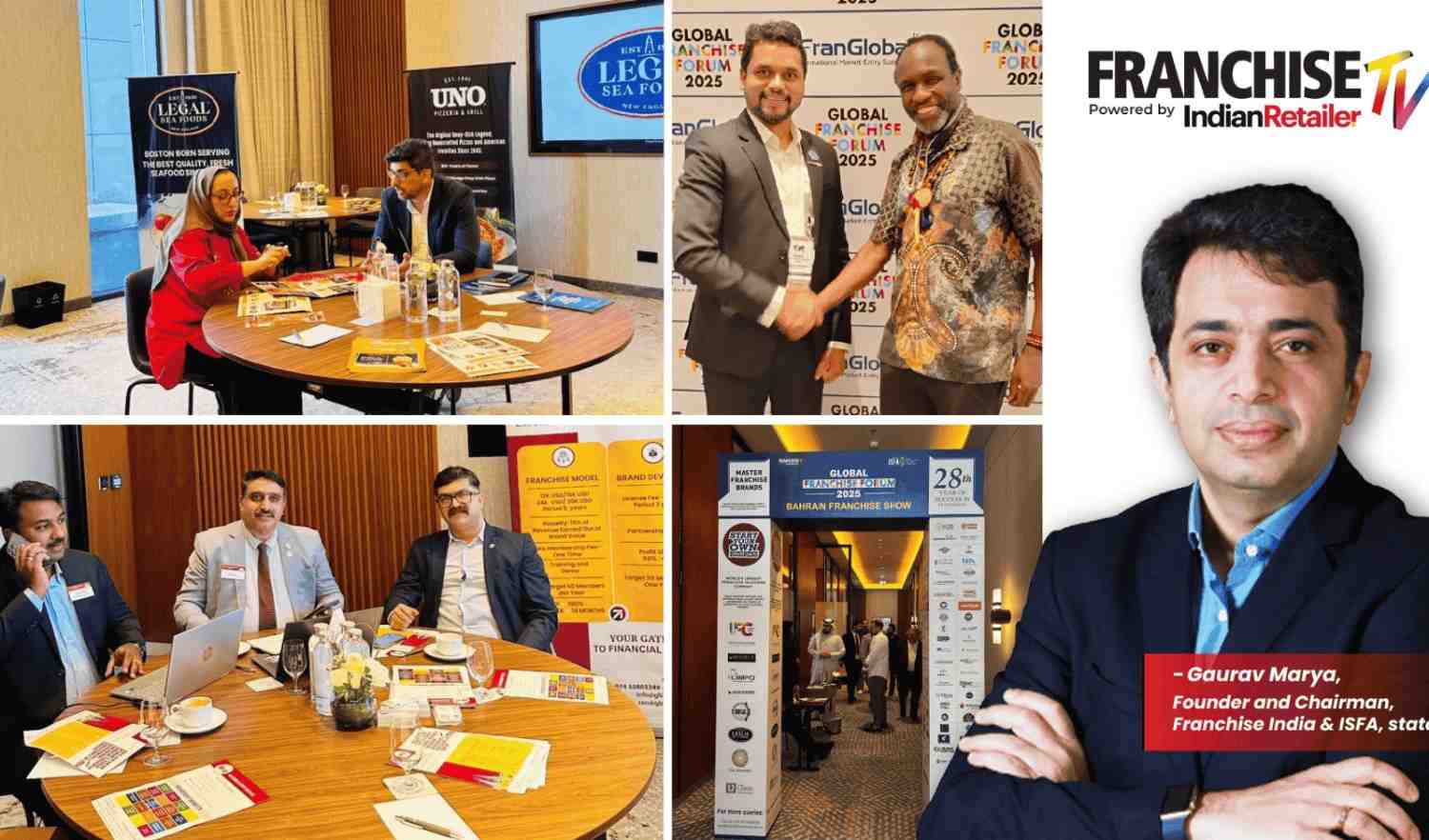
The Gulf Franchise Show Bahrain 2025, part of the Global Franchise Forum (GFF), proved to be a strong platform for international business growth. Hosted at the Sheraton Hotel in Bahrain, the event brought together over 40 leading global brands, investors, entrepreneurs, and industry experts, positioning itself as a key gateway for franchise expansion across the Gulf region.
GFF is known for helping businesses access new markets with expert insights, networking opportunities, and strategic partnerships. Its Bahrain edition strengthened that role, becoming the go-to stage for business collaboration, investment discussions, and market entry strategies.
Global Brands Under One Roof
The exhibition showcased exciting franchise possibilities across sectors such as food and beverage, retail, health and wellness, and fitness. Some participating brands included: UNO Pizzeria (USA), Stellarosa (Australia), Coffeeshop Company (Austria), Barcelos (South Africa), Franks (France), Konafa House (Oman), Limpo (South Africa), Smith and Wollensky (USA), GUS Chicken (USA), Legal Sea Foods (USA), and more. The event hosted one-on-one business meetings, seminars, and networking sessions, resulting in meaningful franchise deals and partnerships.
Bahrain’s Growing Retail Market
Bahrain is emerging as a strong retail destination. The sector is currently valued at $5.80 billion and is expected to grow at a CAGR of 15.62 percent through 2028. This momentum comes from economic development, tourism growth, rising population, changing customer behavior, and strong marketing efforts. The success of GFF further reinforced Bahrain’s position as an attractive hub for franchising within the GCC.
Ravi Singh, Second Secretary at the Embassy of India in Bahrain, attended as the Guest of Honor. He highlighted growing business ties between India and Bahrain and spoke about franchising as a scalable, sustainable model. He encouraged investors and entrepreneurs to leverage the rapidly expanding franchise ecosystem.
Gaurav Marya, Founder and Chairman, Franchise India & ISFA, stated, “The Gulf Franchise Forum 2025 Bahrain has proven to be a remarkable gateway for partnership and growth. The vibrant franchise deals and investor engagements underscore Bahrain’s strategic potential for scaling businesses across the GCC. This success reaffirms our vision of unlocking vast opportunities in a booming retail market.”
Strong Institutional Support
The Gulf Franchise Forum was organized by the Global Franchise Forum and supported by respected partners, including the Bahrain Chamber of Commerce and Industry, the United Nations Industrial Development Organization (UNIDO), and the Indian Small Business and Franchise Association (ISFA). The partners’ support further strengthened the event’s credibility and reach.
“The Gulf Franchise Forum will reinforce the strong economic and trade relations between Bahrain and India. It will successfully facilitate meaningful franchise collaborations that I hope will contribute to mutual business growth”, remarked Ravi Singh, Second Secretary, Embassy of India in Bahrain.
Empowering SMEs and MSMEs
A major emphasis of the show was supporting small and medium-sized businesses. Through expert guidance, business insights, and collaboration opportunities, the platform helped SMEs and MSMEs explore ways to scale confidently through franchising.
A Landmark Event for the Region
The Gulf Franchise Show Bahrain 2025 concluded on a high note, enabling international brands and investors to explore Bahrain’s dynamic growth and expanding GCC opportunities. With top-tier participation, impactful deals, and global support, the event stands out as the region’s leading franchise platform and sets a promising tone for future industry collaborations and expansions.
For Further Franchise Info Contact
Are you planning to own a business and looking for a franchise partner near your location then, why don’t you check for it in your city? It’s an exciting opportunity, especially if you want to run a business with a proven model and strong brand support. But before investing, it’s important to understand how the franchise ecosystem works, what responsibilities come with ownership, and which factors truly define franchise success. Many new investors jump in without research, which affects performance and expected franchise ROI. From investment and training to daily operations and the brand’s expectations, there are a few key things every aspiring franchisee should know.
Know the True Cost of Owning a Franchise
Becoming a franchise owner is one of the most reliable ways to enter entrepreneurship, especially with the rising demand for franchise brands across India. But what if you don’t know the parameters to check before you choose a brand? As a franchise owner, you need to prepare your checklist and follow the guidelines that every successful franchisee has considered key points to help you make a confident, well-informed decision. Here are seven crucial pointers you must know before starting a franchise business in India.
Understand How the Franchise Model Works
Before deciding how to start a franchise, you must understand the structure. A franchise operates on a proven business system, meaning you follow the brand’s SOPs, product standards, and operational processes. You cannot modify branding or pricing on your own. In return, the franchisor offers training, brand recognition, operational support, and marketing assistance. This model works best when the franchisee stays consistent with the brand’s framework.
Read more>> Five Cultural Strategies Every Franchisor Should Master
Know the Total Franchise Cost Before Investing
Many investors think the franchise fee is the only major expense, but the actual franchise cost includes interiors, equipment, licenses, marketing, staff salaries, inventory, and working capital for the initial months. For smooth operations, always request a complete investment breakdown and compare it with other brands in your category. Understanding the real cost helps you estimate long-term financial stability.
Check the Franchise Support System Offered by the Brand
A reliable franchisor provides comprehensive franchise support, including staff training, store setup guidance, marketing strategies, supply chain coordination, and performance monitoring. Strong support increases a franchise’s success rate and ensures better consistency across locations. Always ask how involved the brand will be during the pre-launch, launch, and operational phases.
Study Franchise ROI, Payback Period, and Margins
Before investing, study the franchise ROI, average profit margin, break-even timeline, and monthly operational costs. Compare the numbers with similar brands to verify whether the projections are realistic. Reputable franchisors openly share basic financial data from existing outlets. If a brand avoids discussing numbers, it may be a problem for you in the future.
Read the Franchise Agreement Carefully
A franchise agreement is the legal foundation of your partnership. It includes terms related to royalty fees, territory rights, brand guidelines, renewal, restrictions, and termination. Since franchisors draft the agreement, go through every clause carefully. If needed, take legal advice to ensure you fully understand your rights and responsibilities.
Read more>> Top Four Franchise Opportunities in India for High ROI Growth
Choose the Right Location for Long-Term Success
Even the best franchise opportunities can fail at the wrong location. Before finalizing a site, analyze footfall, visibility, accessibility, competition, and the rent-to-revenue ratio. Many franchisors offer support for location approval because they understand how critical it is. A strong location directly improves your sales, customer flow, and long-term performance.
Understand Your Responsibilities as a Franchise Owner
Franchising reduces risk but does not eliminate effort. As a franchise owner, you must oversee daily operations, team management, customer experience, and local marketing. Brands offer systems and training, but your active involvement, especially in the first year, plays a major role in achieving success and maintaining brand standards.
Becoming a franchise owner can be a smart and rewarding path if you know what to expect. By understanding the commitments, financial requirements, support systems, and long-term potential, you’ll be better prepared to choose the right brand and run it successfully. Keep these seven points in mind, look for top brands near you, and take the next step only when you feel fully ready. The right franchise can truly shape your entrepreneurial journey for the better.
FAQs: Becoming a Franchise Owner
Is franchising profitable for first-time business owners?
Yes, franchising is considered safer for first-time entrepreneurs because you get a proven system, training, and brand support. However, profitability depends on location, category, brand strength, operational efficiency, and your involvement.
How long does it take to recover the franchise investment?
The franchise ROI and payback period vary by industry. On average, franchise owners recover their investments within 12–36 months across the food, retail, and service sectors. Always check the brand’s financial projections before investing.
What should I check before signing a franchise agreement?
Review the agreement for royalty fees, territory rights, renewal terms, brand guidelines, operational restrictions, and exit clauses. Ensure all financial commitments and support promises are clearly stated.
Do franchisors help find the correct location?
Many top brands assist in location scouting and approval because a strong site increases the success rate. If a brand does not support location selection, ensure you conduct your own market and footfall study.
Can I run a franchise as a passive business?
While some franchises allow partial passive operations, most require active involvement, especially during the first 6–12 months. Even with a manager, owners must regularly oversee operations to ensure consistent performance.
For Further Franchise Info Contact
Having strong systems is important for any franchise, but it’s the culture that truly keeps everything connected. A healthy culture brings consistency, trust, and a sense of belonging across the entire network, something franchise owners, their teams, and even customers can easily relate to.
Culture is basically the shared values, behaviors, and attitudes that shape how people work together. In a franchise, this largely depends on relationships. It needs to flow naturally from leadership to franchisees and back again, so it shows up consistently at every level of the organization.
Based on industry experts’ experience, here are five practical strategies franchisors can use to grow a culture that scales with the brand.
Establish a Clear Identity and Allow It to Evolve
Franchisors need to be crystal clear about what their brand stands for. That message has to reach everyone in the system. However, culture shouldn’t stay frozen in time. As markets, people, and generations shift, the way you support franchisees and communities should also evolve. Hosting annual conferences, sending surveys, and doing regular pulse checks help you understand if your culture still matches your long-term goals. When you stay open to change, culture becomes something that grows with your brand instead of holding it back.
Read More: Top Four Franchise Opportunities in India for High ROI Growth
Lead With Your Actions
The corporate team sets the tone for the entire franchise system. If leadership doesn’t practice the values they expect from franchisees, things can easily fall out of sync. Every interaction is an opportunity to show what your culture looks like in action. Keep a team-first mindset and remove any hierarchy that makes some roles feel above others. When franchisees see genuine support and collaboration from the corporate level, they reflect that in their own centers. Culture works only when it’s lived every day, not just written in a manual.
Infuse Your Values Into Onboarding and Training
Cultural alignment should start before a franchise agreement is even signed. Early conversations should clearly express your mission and values while also helping you understand what drives each candidate. A strong onboarding program should highlight the why behind the brand. And ongoing training, leadership sessions, field support visits, and learning tools keep reinforcing the brand identity long after the doors open.
Help Franchisees Connect With One Another
Peer-to-peer connections are one of the most powerful ways to strengthen franchise culture. When owners interact, share stories, and learn from each other, they get to see the brand’s values play out in real situations. Mentorship programs, regional meetups, national conventions, and smaller committee groups all help franchisees feel more connected. These interactions build alignment, improve engagement, and encourage the sharing of ideas that can benefit the entire system.
Give Space for Local Personalization
Every location serves a unique community, so franchisees need room to express the brand’s values in ways that feel authentic locally. This could be through community partnerships, local causes, or initiatives that align with both the neighborhood and your company values. A broader CSR framework keeps brand consistency intact while still giving franchisees the freedom to take meaningful local action. This approach builds trust, keeps franchisees empowered, and shows customers that your brand genuinely cares about their communities.
A strong and flexible culture is a real competitive advantage. When franchisees feel supported and connected to a shared mission, they’re more likely to thrive. And when culture grows naturally and evolves over time, it becomes a powerful force that unites every location. That’s how culture spreads, one franchise at a time.
For Further Franchise Info Contact
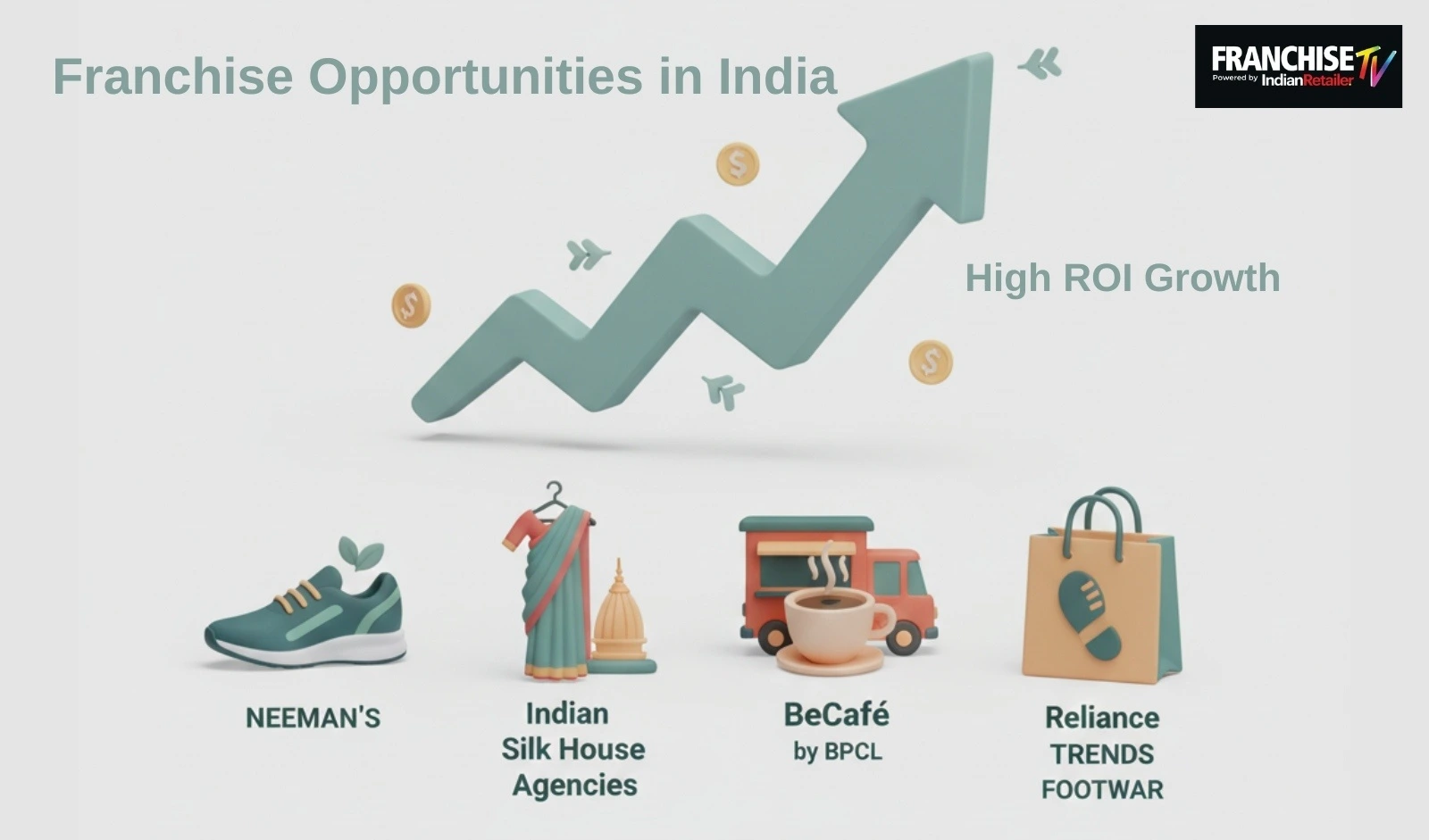
Are you planning to start a business, or are you looking for the right franchise opportunity in India? Why don't you check for the well-established franchise brands that hold a good business record? India has become a hub for the franchise brands, and many new entrepreneurs are growing their businesses through becoming franchise partners for different huge brands.
India’s franchise market continues to grow rapidly, and investors are actively seeking profitable, credible, and scalable business models. In the recent webinar conducted by Franchise India on the theme ‘Business Opportunity Over Chai,’ four powerful enterprise brands were featured, including Neeman’s, Indian Silk House Agencies, BeCafé by BPCL, and Reliance Trends Footwear. Each of these brands brings strong market presence, established operations, and high-return potential for investors exploring top franchise opportunities in India.
Neeman’s – India’s Fastest-Growing Sustainable Footwear Franchise Brand
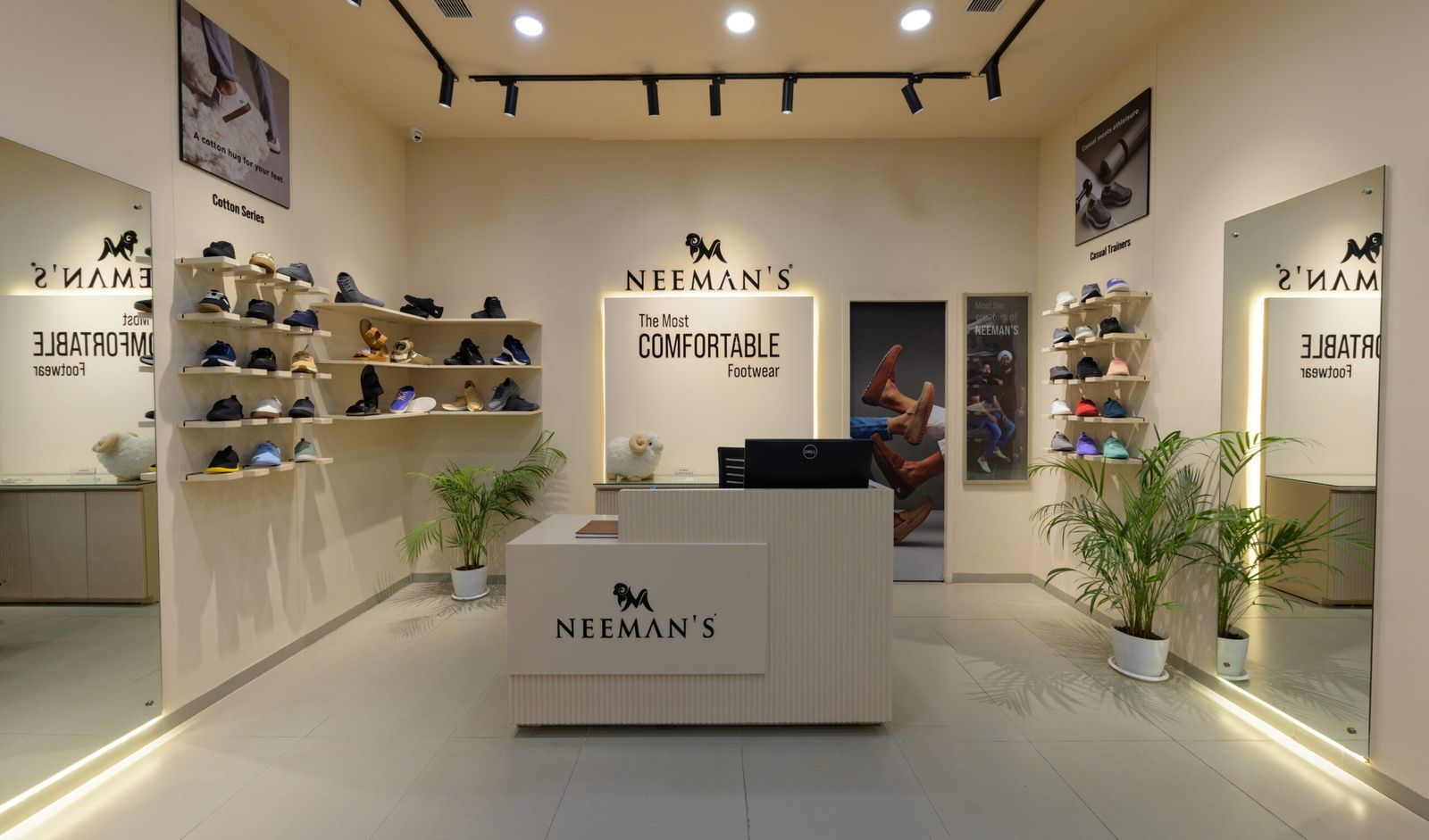
Neeman’s has emerged as one of India’s largest D2C sustainable footwear brands. Built around the idea of replacing multiple shoes with one comfortable, all-purpose pair, Neeman’s creates sneakers using recycled PET bottles and recycled tyres.
The brand has around 24 operational stores across the Tier I, II, and III cities. It uses the COCO (company-owned and company-operated) model, and there are around 23 new franchise agreements that have been signed under the FOFO model. If entrepreneurs are looking forward to investing in this brand, there are a few things they can expect: The area required is around 800 sq. ft., the capital expenditure is around Rs 23.5 lakhs, a lifetime franchise fee is around Rs 2.5 lakhs, and the security deposit is around Rs 20 lakhs, which is refundable. The tenure for the agreement is 5 years. The average sales per store is Rs 15 lakhs. The average monthly operational expenditure per store is Rs 2.5 lakhs. And the support getting by the brand is property scouting, manpower hiring, manpower training, brand marketing, inventory management, and stock correction. With strong margins and an 18-month payback window, Neeman’s offers an attractive entry into the booming footwear retail segment.
Indian Silk House Agencies – A Heritage Saree Brand Expanding Nationally
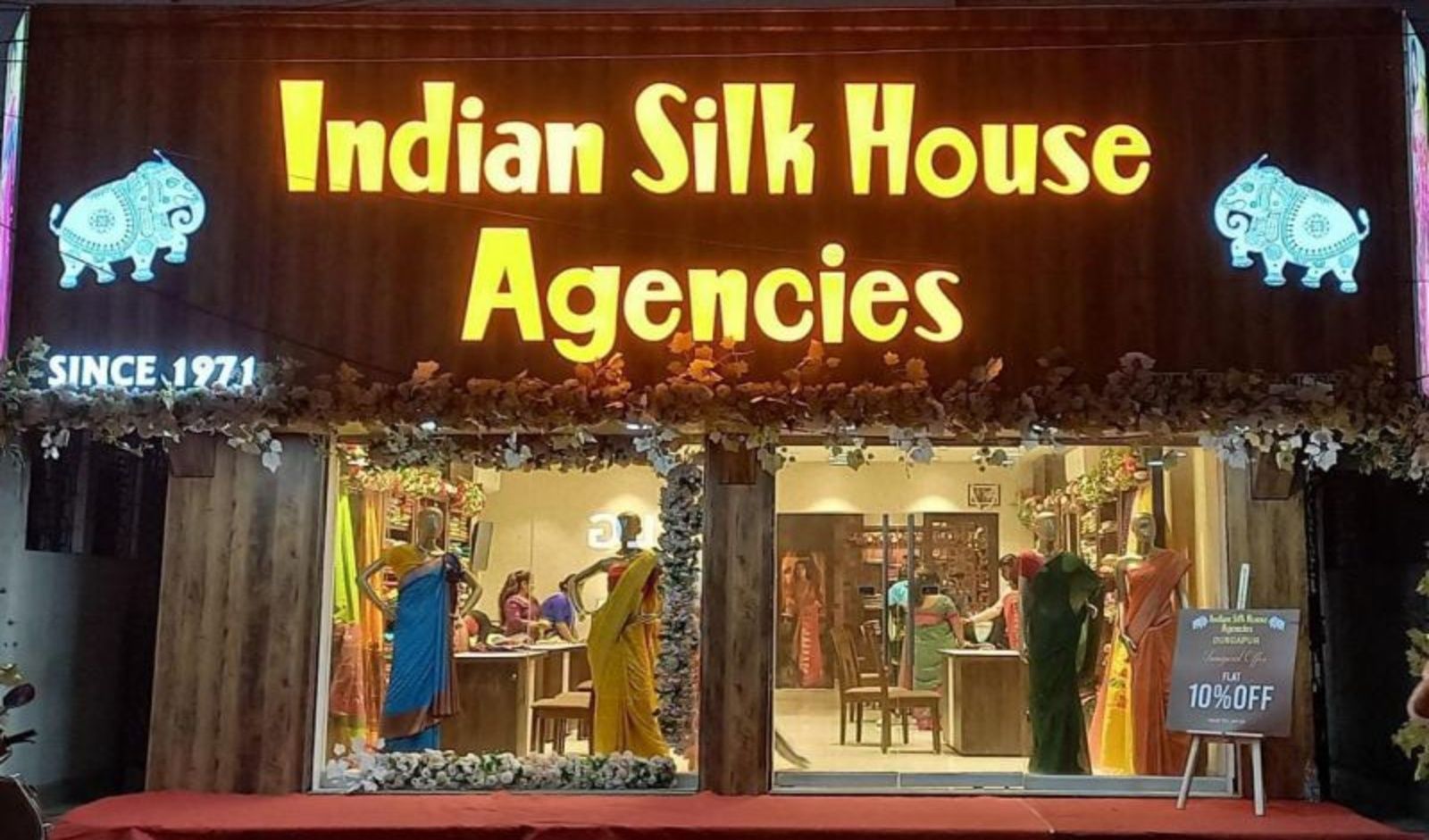
Established in Kolkata in 1971, Indian Silk House Agencies is a family business currently run by the third generation that brings together India’s finest traditional weaves: Banarasi, Kanjivaram, Chanderi, Patola, and more. It is said to be India’s first tech platform, which is transforming the age-old tech industry. The brand is a heritage-induced brand with modern technology that already runs 62 stores across 12 states and aims to become India’s first national-level exclusive sari retail chain.
For this brand, the investment ranges between 1 and 2 crore under the FOCO (franchise-owned and company-operated) model, where operations are fully managed by the company. Any entrepreneur who is planning to partner with this brand needs to have a minimum area of 1,000 to 2,100 sq. ft. of space to start a business. Around 30 lakhs will be the capital expenditure cost, and a lifetime franchisee fee is 5 lakhs, which is non-refundable. In setting up the stores, the brand designs the SOPs and supports vendors within 30 days. The brand guides its franchise partners with the operational support, manpower recruitment, manpower training, the audit, and more. There is 25-30% potential profitability, high capital return, no rental issues, brand support, digital visibility, and brand promotions.
The agreement will be for 5 years. Investors can also receive inventory on SOR and earn the higher of a 12% minimum guarantee annually or a 30% revenue share. This passive-investor-friendly model offers strong stability and significant returns, where operations are fully managed by the company.
For more information, watch here: https://www.youtube.com/watch?v=auXrzcq8akQ
BeCafé by BPCL – A Zero-Rent, Zero-Interior Franchise Cost Café
BeCafé is a unique café brand launched by Bharat Petroleum Corporation Limited (BPCL) to serve travelers and families through a clean, modern pit-stop café experience. The brand has over 130 cafés that offer beverages, snacks, pizzas, burgers, momos, and more. BeCafe is one of the most cost-efficient food and beverage franchise opportunities in India. To franchise with this brand, the investor should have experience in the food service industry.
It uses two franchise models for investment: full-scale and express models, which operate under the FOFO (franchise-owned, franchise-operated) model. The investment for a full-scale model is around Rs 29 lakh, with an area requirement of 400-600 sq. ft. The model offers full beverage service, quick snacks, a lounge-café experience, and impulse-buy food categories. The second model is the Express Model, in which the area needed is around 220-400 sq. ft., and the investment required is approximately Rs 21 lakhs. The franchisee fee will be around Rs 2.36 lakh (non-refundable), and the security deposit is around Rs 2 lakh.
Reliance Trends Footwear – A High-Demand Retail Franchise
Reliance Trends Footwear has quickly emerged as one of India’s most sought-after retail franchise opportunities, driven by the growing demand for affordable, stylish, and quality footwear across urban and Tier II markets. Backed by the strong brand equity of Reliance Retail, the footwear division brings a wide assortment of trendy, value-driven products that appeal to a diverse consumer base.
It has over 720 stores across more than 361 cities in metros and Tier I and II towns across the country. The store’s size is 1,200-1,500 sq. ft.. It’s a multibrand store including multiple brands in different categories. There are many in-house brands like Catwalk, Marvel, Lee Cooper, Disney, Hi-Altitude, and more under the FOFO business model. Investors need around Rs 40 lakh, including Rs 20 lakh capex and a Rs 20 lakh bank guarantee for inventory under the SOR model. With 28% margins on in-house brands and strong customer footfall, Reliance Trends Footwear is a promising retail franchise for long-term profitability.
These four enterprise brands offer strong unit economics, brand-backed operations, and investor-friendly models. Whether you are looking for a retail franchise, a fashion franchise, a café business, or a trusted, corporate-backed opportunity, each of these brands offers a stable, scalable pathway into India’s expanding consumer market. For investors seeking secure investments with proven SOPs and nationwide support, these franchises stand out as some of the most promising options today.
For Further Franchise Info Contact
Are you looking to invest in a leather brand in a Tier II city but unsure which would be the best option? If so, you must check out the top leather fashion brands that are making profits in Tier II cities.
The scenario of India’s Tier II cities is changing rapidly. In Tier II cities, many people earn well and can afford higher-quality leather. Today, you can see many stores opening in malls across Tier II cities. The Tier II fashion scene is undergoing a complete transformation, as many big brands are ready to expand their presence in Tier II cities. Below are a few brands expanding in both Tier I and Tier II cities through company stores, shop-in-shops, and franchise models, and they are well-positioned to change the fashion landscape.
Top 5 Leather Brands Growing in India
Brands like Hidesign, Woodland, Da Milano, Red Tape, and Metro Shoes are growing their retail network through company stores, shop-in-shops, and franchise partnerships. Their focus on craftsmanship, design, and affordability is helping them connect with a broader audience. This growth shows how Indian shoppers in smaller cities are ready to embrace premium leather fashion that was once found only in big malls and metros.
Hidesign
Hidesign is known for handcrafted, vegetable-tanned leather bags and accessories. Traditionally a premium, metro-focused brand, Hidesign has been steadily building a store network and has publicly discussed expanding into Tier II cities through the franchise route. The brand combines exclusive stores and online sales, and its franchise push aims to bring signature handcrafted products to smaller cities where demand for quality leather is rising.
Woodland
Woodland began as an outdoor and rugged footwear brand and today sells across company-owned stores, multi-brand outlets, and shop-in-shops. Woodland has opened many stores across India and has used franchising and partner routes to reach non-metro areas, making it a natural fit for Tier II customers who want durable, stylish leather footwear. It is expected that Woodland will continue to grow in tourist towns and smaller cities through franchise and retail partnerships.
Da Milano
An Italian-inspired leather brand, Da Milano, has focused on high-street retail and online marketplaces. In recent years, the brand has announced store openings and retail expansion plans targeting both Tier I and Tier II cities, using a mix of company-operated stores and franchise partnerships to expand its reach. For shoppers in growing Tier II centers who seek premium leather accessories, Da Milano’s retail strategy makes it easier to buy curated, luxury leather locally.
Red Tape
Red Tape offers fashionable leather footwear and accessories at mass-market prices. The brand has a strong pan-India retail footprint and actively encourages store expansion and franchise interest, even inviting property owners and franchise partners to grow the network. The brand’s retail expansion strategy gives an opportunity to the customers from Tier II cities to balance style with value.
Metro Shoes
Metro Shoes has long been a household name for footwear. With more than 200 stores in over 100 cities, Metro has used company stores and franchise models to scale. Their retail and franchise offerings make it straightforward for entrepreneurs in Tier II towns to bring a trusted leather-shoe and accessory variety to local shoppers. The experience of Metro is helping its partners in getting good exposure and revenue.
Why Tier II cities are the next big opportunity for leather brands
In Tier II cities, the purchasing capacity of the consumers is increasing everyday, and every consumer is looking for the best quality of leather. There are many brands that have opened their store outlets in the available malls and multiplexes in Tier II cities, and they prefer franchise and shop-in-shop formats to scale quickly and keep local costs in check. Brands are also looking forward to expanding their reach through online platforms in small cities alongwith local stores to serve shoppers who still prefer trying leather goods before buying.
These are a few of the top leather brands in India that you can consider investing in; there are many more that are set to reshape how leather fashion is bought and worn across India’s growing towns. Choose a brand that uses local marketing strategies and whose pricing also matches local purchasing power.
FAQs
Which of these brands is easiest to franchise for a Tier II town?
Mass-market brands with structured franchise programs, like Metro or Red Tape, tend to offer clearer franchise systems and lower setup complexity. Premium brands may have stricter location and brand-image criteria.
Will leather goods sell year-round in Tier II cities?
Yes, leather shoes, bags, and wallets are staple categories. Demand can spike during festival and wedding seasons, making seasonal planning necessary.
Do brands support shop-in-shop formats?
There are many renowned brands that use shop-in-shops and multi-brand outlets to quickly enter Tier II markets, thereby reducing investment and helping test the market before opening a standalone store.
Is e-commerce enough to grow a business, or do I need a store?
No doubt, e-commerce helps reach customers, but many shoppers in Tier II cities still prefer to check and try leather products in stores. A small physical presence often boosts trust and increases value.
Which Tier II cities are best for leather brand stores?
Cities like Indore, Lucknow, Patna, Siliguri, Coimbatore, and Ludhiana are among the growing cities where the demand for leather brand stores is rising with increasing purchasing power.
For Further Franchise Info Contact

If you’re an entrepreneur looking for a profitable, trendy, and interesting concept to leverage your beauty industry expertise, investing in a salon and skincare franchise in India is one of the best decisions you can make. Nowadays, the beauty industry is growing rapidly in India, and consumers are influenced by various influencers and celebrities too easily. And, if you have a good business strategy, a great concept, and the right franchise partner, you can grow your salon business with less effort.
Today, women in India are shaping the beauty business, as seen everywhere. There are many women entrepreneurs in the beauty sector in India, including Falguni Nayar (Nykaa), Vineeta Singh (SUGAR Cosmetics), Vandana Luthra (VLCC), and others, who are doing a great job with their expertise and passion. And, when it comes to franchise opportunities in India, salon and skincare brands are looking for such passionate women.
Top Salon and Skincare Franchise Brands To Consider
Once you’ve decided to invest in the beauty segment, start looking for top skincare franchise brands. Here are the top 7 salon and skincare franchise brands in India, with which you can plan your new journey. These brands will help you find the right location, a skilled workforce, beautiful designs for the space, and a cozy atmosphere.
Trimy Tones
Trimy Tones is one of the fastest-growing salon chains in India, offering aspiring investors great franchise opportunities to grow their businesses. The brand is popular among millennials and Gen Z and is expanding rapidly not only in metros but also in Tier II cities. One looking to franchise with Trimmy Tones can achieve higher profits with a lower initial investment. The brand also offers its partners strong staff training and tech systems.
You might also like 7 High-Performing Baby Retail Franchise Ideas Shaping Tier II Towns
Lakmé Salon
Lakmé, owned by Unilever, is the most trusted beauty salon chain in India, with around 400 outlets in almost 125 cities. Over the years, the brand has trained more than 280 entrepreneurs in growing their businesses. Recently, the brand has signed a contract with Aptech to start around 80 Lakmé beauty institutes and train more aspiring makeup stylists to become professionals in the beauty segment. The brand offers a highly sustainable, profitable franchise model for people interested in starting a beauty retail business.
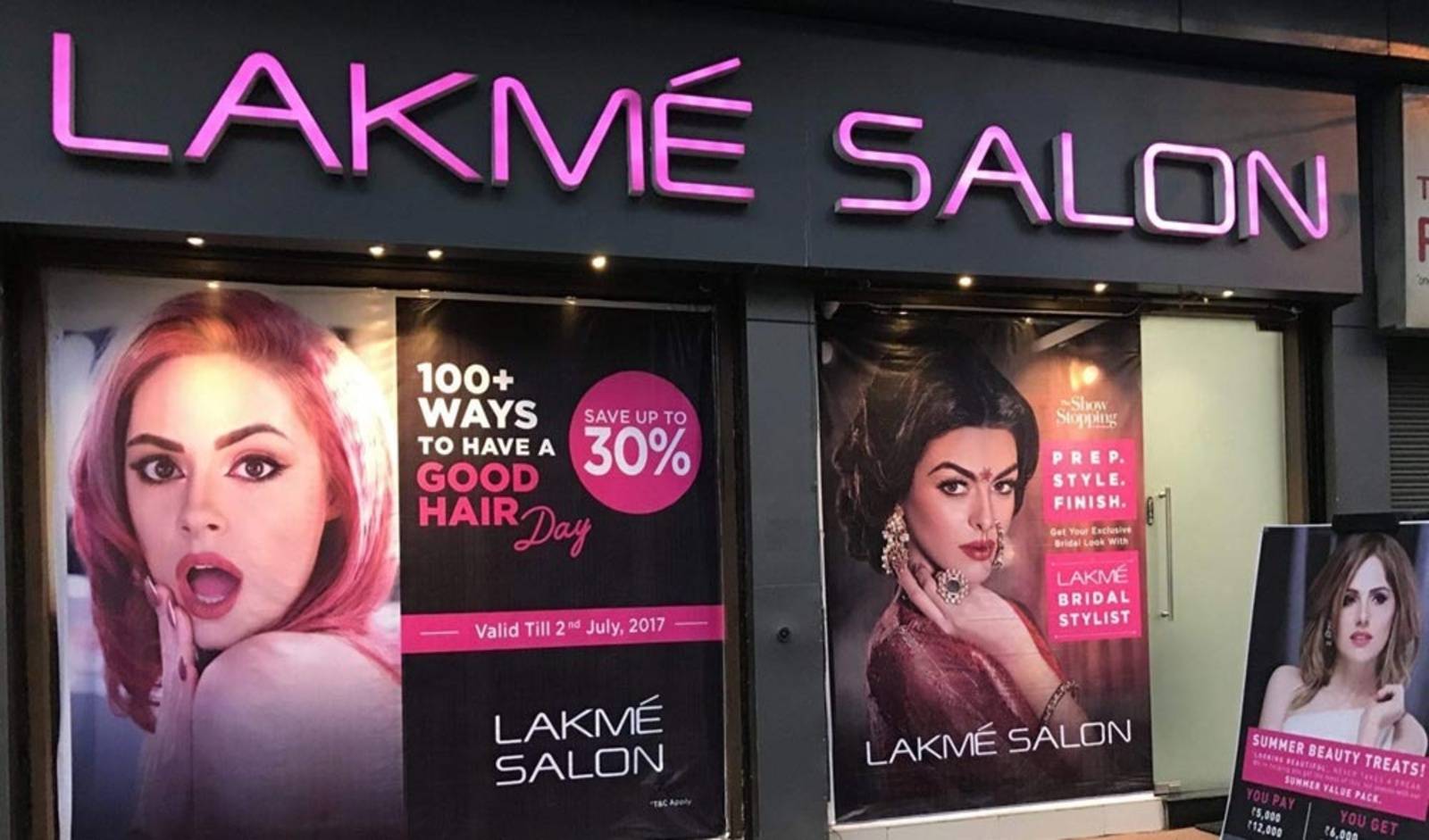
Jawed Habib Hair and Beauty
Jawed Habib is one of the most popular hair and beauty salon chains in India, offering a wide range of premium hair and beauty self-care services across various locations. The brand has opened more than 900 salons and has a strong reputation in the hair and beauty segment. Entrepreneurs looking to invest in this brand need a smaller upfront investment for a nominal area of space and can receive complete support in training and operations. It has also opened around 45 institutes, either owned or franchised, with course durations ranging from one week to six months, and, in some cases, to longer periods, covering specialized aspects of hairdressing and beauty.
Related article How Q-Commerce and D2C Are Shaping India’s Franchise Landscape
Shahnaz Husain Salon
The Shahnaz Husain Group is iconic for its herbal and ayurvedic offerings, which include natural beauty and anti-ageing treatments. Shahnaz Husain is known as one of the most successful women entrepreneurs and has trained many beauticians at her beauty training academy. The brand operates a chain of over 200 beauty centers in India and abroad. If one is looking for a franchise opportunity with this group in the herbal beauty salon and the International Beauty Training space, Shahnaz Husain is the right choice. It also has a superior product line, with a 30 percent to 40 percent profit margin.
Nykaa
Nykaa is one of the popular eCommerce platforms for beauty and lifestyle products, operating around 237 physical stores across 79 cities in India, and offers franchise opportunities for entrepreneurs. It offers different franchise models depending on location and size. Entrepreneurs can apply by submitting a business profile to Nykaa’s partnership team, and the company provides support, including operational assistance, training, and marketing. Falguni Nayar’s vision turned Nykaa into one of India’s largest online beauty retailers and made her one of the country's wealthiest self-made women. For any woman entrepreneur, success is inspiring and motivating.
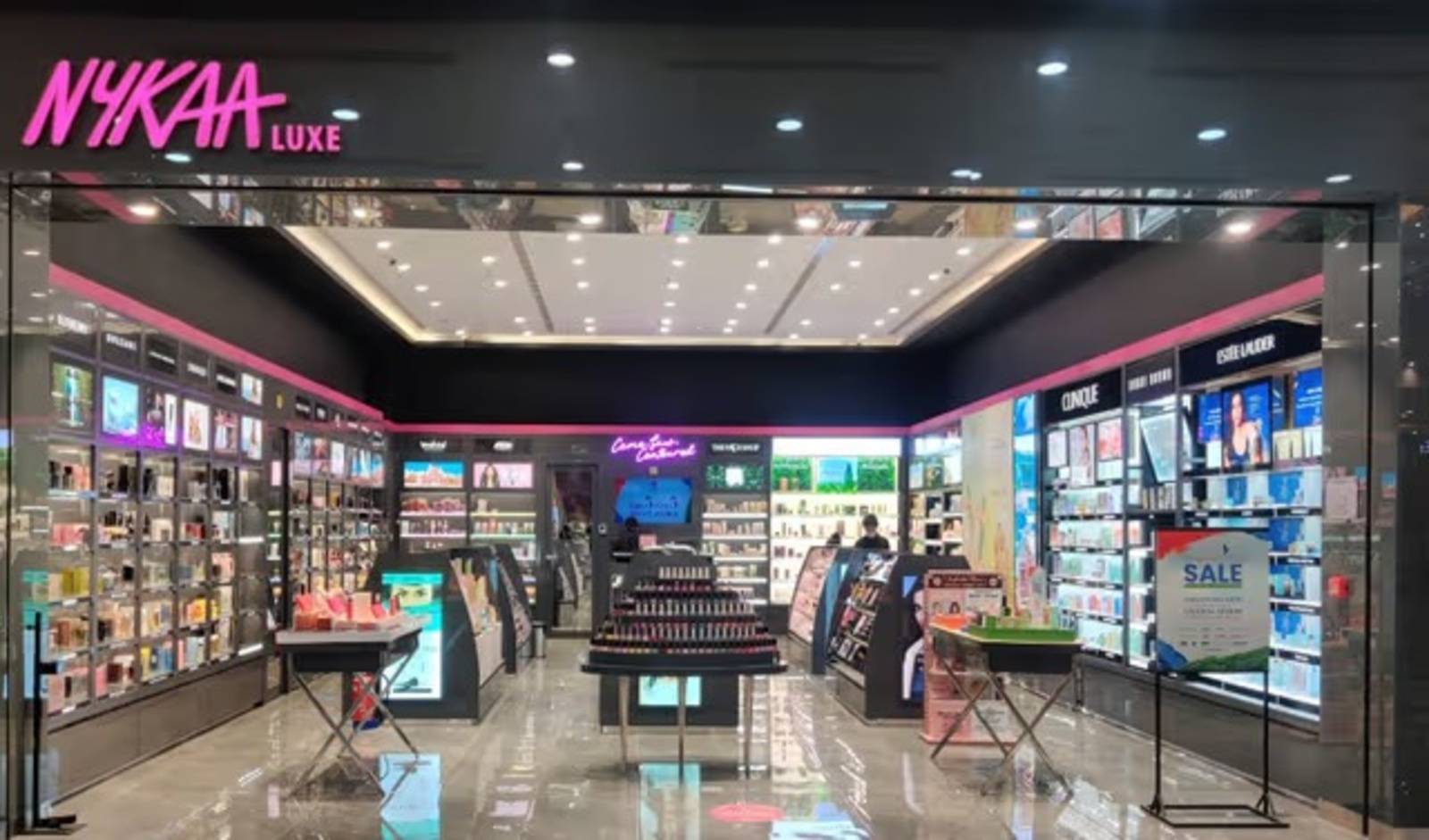
Explore more>> Top 8 Food and Beverage Franchise Brands Ruling India
Sugar Cosmetics
Sugar Cosmetics, founded by Vineeta Singh and Kaushik Mukherjee, is a prominent Indian D2C cosmetics brand known for its high-performance, cruelty-free, and vegan products formulated to suit Indian skin tones. It has built a cult following among Gen Z and millennials through its bold branding, distinct packaging, and aggressive omnichannel retail strategy that combines its online platform with a strong offline presence across India. The brand operates around 200 own-brand stores in India, with a total offline presence in over 45,000 retail outlets in more than 550 cities. With a vast count of outlets across India and growing rapidly, Sugar’s franchise opportunity is perfect for entrepreneurs looking to tap into the booming premium beauty segment. With this brand, you can expect extensive support, including marketing materials, promotional campaigns, and training to ensure smooth operations and effective sales.
Read also>> India’s Leading Fashion Labels Opening Doors for Retail Franchising
Mamaearth
Mamaearth is an Indian brand of natural, toxin-free personal care products, initially focused on baby care but expanded to include products for men and women, including skincare, hair care, and baby care items. Mamaearth emphasizes natural ingredients and is known for its direct-to-consumer (D2C) model and strong digital marketing, though it also has a retail presence. The brand operates more than 1000 stores in India; franchising with Mamaearth in India is a significant investment that requires careful consideration of several factors. The total cost can vary significantly based on location, store size, and design. If one is investing in this brand, she can get full training, marketing, and supply chain support.
If you want to start your own business, study these brands first, and also look for more. These brands help you get customers, offer training, and simplify finance. Find the best salon and skincare franchise in India, choose a location, compare costs, service quality, and payback, and connect with its existing owners. Women entrepreneurs thrive with the right franchise support and proven brand appeal.
FAQs
Which is the best salon franchise in India for women entrepreneurs?
However, there is no such thing as one brand that is the best salon franchise; there are many, including Lakmé, Shahnaz Husain, Habib, Naturals Salon, and many more, but still Naturals Salon leads the way for women. Naturals backs new female owners, supports training, and offers clear systems. More than 80% of Naturals outlets are run by women, as it allows flexibility and community support.
Are beauty and skincare franchises profitable in India?
Yes, franchising into the beauty and skincare segment is profitable, as the brands help in getting high profit; ROI averages from 36 percent to 55 percent. The brand will also help in recovering investment in 2-3 years, and it will offer quality, modern branding, and efficient service systems that improve profit.
Why are salon and skincare franchises ideal for women entrepreneurs?
As in these segments, brands provide the investors with full operational help, strong network support, proven models, and training that covers both technical and business sides. The beauty industry also gives flexible work hours so that work-life balance is maintained.
How to choose the right beauty and skincare franchise brand?
There are a few of things to consider while choosing the right brand and they are
- Look at total investment and expected profit.
- Check brand strength and customer reviews.
- Assess training and support.
- Match your market and clientele to the brand’s offer.
- Test location; see nearby competition.
- Talk to current franchisees for tips.
What are the emerging trends in India’s beauty franchise sector?
Nowadays, the concept of unisex salons is expanding in Tier I, II, and III cities that also offer digital bookings, app-based management, and social media marketing to drive growth.
For Further Franchise Info Contact
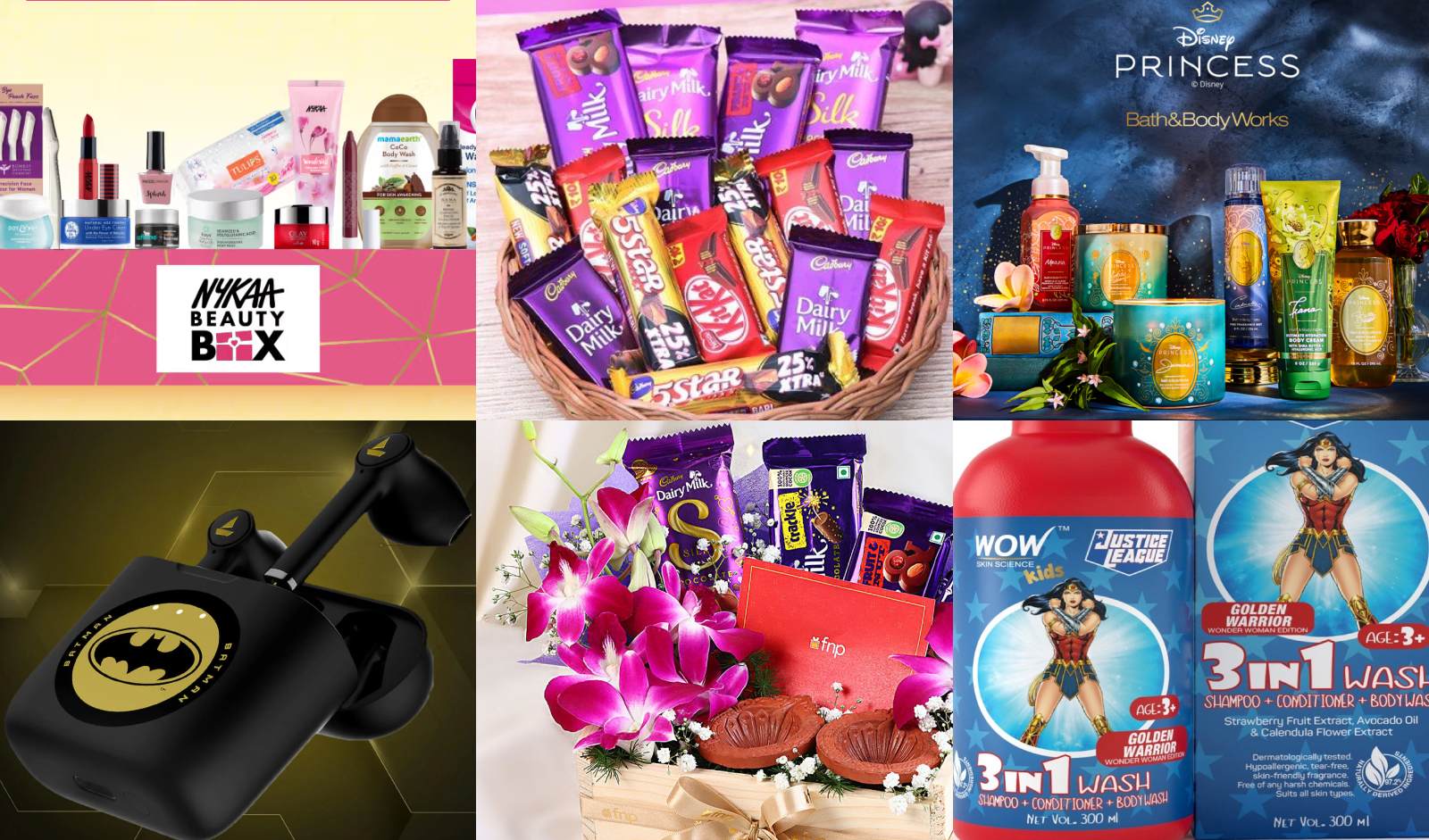
Raksha Bandhan 2025 is more than just tying rakhis. It has become a time to celebrate sibling bonds with special and thoughtful gifts. This year, many brands have joined hands to launch unique collaborations. These tie-ups bring together popular characters, nostalgia, and trendy products. From beauty kits to tech gadgets, the options are wide and exciting. Brands are focusing on packaging, emotions, and daily-use products. Many gift boxes are designed to match different tastes, whether it's skincare, fashion, sweets, or fitness. Tech and lifestyle brands are using superhero themes to add fun and energy to their offerings. Some brands are also offering personalised messages and quick delivery options.
These collaborations are not just creative, but also smart. They help brands connect with Gen Z and millennial consumers. They also give retailers new gift products to offer during the festive season. In 2025, Raksha Bandhan gifts are not only thoughtful but also full of colour, fun, and meaning. These brand tie-ups are a big part of that shift.
Why Raksha Bandhan Brand Tie-Ups Are a Big Deal in 2025
Today's consumers expect more than just products; they seek emotional connections and experiences. This shift has turned Raksha Bandhan into a strategic period for brands to introduce meaningful collaborations. These tie-ups serve to:
- Provide convenient, ready-made gift boxes for shoppers.
- Infuse traditional gifting with pop culture relevance.
- Feature exclusive, limited-edition products.
- Enhance personalization and engagement in gifting.
- As a result, Rakhi gifting is no longer a last-minute purchase but a deliberate choice to express affection with unique presents. The following brand collaborations highlight this trend.
Nykaa x Barbie Beauty Boxes
Nykaa, a leading player in India’s beauty and fashion retail sector, collaborates with Barbie, the globally recognized doll brand, to offer themed beauty gift options. While specific Raksha Bandhan Barbie boxes may not always be prominently displayed, Nykaa offers Barbie-themed products such as hair accessories and cosmetics that retailers and consumers can combine into personalized gift sets.
The box may include items like lipsticks and blush in Barbie pink shades, mini perfumes inspired by the Barbie theme, and skincare samples in pastel packaging. This partnership leverages Barbie's renewed popularity and Nykaa’s diverse product range to appeal specifically to younger consumers and those interested in fashion-forward gifting.
The Souled Store x Marvel Rakhi Gift Boxes
The Souled Store, known for its licensed pop culture merchandise, partners with Marvel to create Rakhi gift boxes that combine traditional celebration with superhero fandom. These sets typically include Marvel-themed rakhis, accessories such as mugs and keychains, and sometimes edible treats like chocolates or dry fruits.
Popular items include Marvel-themed t-shirts for siblings, stylish Rakhis featuring characters like Iron Man or Spider-Man, and comic-style packaging with options for personalized messages. This collaboration capitalizes on Marvel’s global appeal while fitting the local festive context. Retailers have also noted demand for similar products on platforms like Amazon and JioMart.
Archies x Cadbury Gift Collection
Archies, a well-established brand for greeting cards and personalized gifts, teams up with Cadbury to deliver classic Rakhi gift combos. These collections merge Archies’ traditional Rakhis and greeting cards with Cadbury’s widely loved chocolates, creating a balanced gifting option for consumers seeking familiarity.
The assortment features greeting cards with heartfelt Rakhi messages, Cadbury chocolate packs with festive sleeves, and combos that include plush toys and sweet notes. This partnership meets diverse consumer preferences and pricing needs, making it accessible and appealing across segments.
Ferns N Petals x Cadbury & Aura Gift Hampers
Ferns N Petals (FNP), known primarily for floral and gifting services, offers curated hampers in collaboration with Cadbury and the Aura brand. These gift sets combine fresh flowers, Cadbury chocolates, dry fruits, and designer rakhis to provide a multi-category gifting solution.
Additional hamper components may include soy wax scented candles, bath salts, scrubs, and body oils spa kits. Optional personalization and same-day delivery add convenience and customization. This collaboration meets current demand for luxurious, multi-dimensional gifting experiences that combine aesthetics with tradition.
Bath & Body Works x Disney Princess Collection
Bath & Body Works’ Disney Princess Collection offers fragrances and body care items inspired by characters such as Cinderella, Ariel, Moana, and Jasmine. The range includes body mists, lotions, glitter-packed shower gels, and gold-foiled packaging for a premium feel.
Although not exclusively marketed for Raksha Bandhan, these products offer attractive gifting choices for younger siblings and those appreciative of themed personal care items. This collaboration blends nostalgia, elegance, and personal luxury for a differentiated retail offering.
boAt x DC Comics Rakhi Edition Smart Wearables
boAt, a leading name in audio and wearable tech in India, collaborates with DC Comics to provide smart wearables featuring superhero designs. These include smartwatches with Batman, Superman, and Wonder Woman-themed watch faces, alongside limited-edition packaging that incorporates Rakhis and comic artwork.
With features like fitness tracking and health monitoring, these wearables combine utility with fandom, offering tech-savvy consumers stylish and meaningful gifts. This collaboration supports retailers aiming to provide high-value, functional gifting options with broad appeal.
WOW Skin Science x Justice League Skincare Hampers
WOW Skin Science, known for its natural and herbal-based skincare, partners with Justice League to launch themed skincare hampers. These sets include safe, paraben-free face washes, masks, and other wellness products, featuring packaging inspired by iconic characters like Wonder Woman.
The hampers come with refreshing scents and vibrant superhero-themed designs, offering a bold and energising gifting option. While not exclusive to Raksha Bandhan, these hampers fit perfectly into wellness-focused festive collections, especially for health-conscious consumers and superhero fans who enjoy a powerful twist to skincare.
How These Collaborations Are Changing Raksha Bandhan Gifting
The 2025 brand tie-ups illustrate that gifting now emphasizes experience as much as the product itself. Key drivers include:
- Personalization: Many brands offer the option to add names or custom messages.
- Pop culture integration: Collaborations with globally beloved icons like Barbie, Marvel, and DC Comics generate excitement.
- Practicality plus design: Combining function with attractive, themed packaging enhances gift appeal.
- Social shareability: Designed to be visually appealing and “share-worthy” on social media.
Choose Your Gift!
The trend of licensed brand collaborations has transformed Raksha Bandhan gifting in India. These partnerships reflect evolving consumer demands for innovative, themed, and meaningful products. Brands like Nykaa, The Souled Store, Archies, Ferns N Petals, Bath & Body Works, boAt, and WOW Skin Science demonstrate how licensing agreements can effectively connect cultural traditions with contemporary retail trends.
For retail professionals, understanding these collaborations is essential for informed inventory and marketing decisions. These partnerships offer versatile, trending products that enhance customer engagement during the Raksha Bandhan season by blending cultural significance and popular lifestyle themes. Incorporating such licensed collaborations can help retailers meet diverse consumer needs and drive festive season sales effectively.
For Further Franchise Info Contact
In India’s fast-changing retail landscape, celebrities are doing much more than endorsing products, they are actively building and owning consumer brands using brand licensing. This approach, rooted in strategic partnerships, allows stars to shape products that reflect their personal style, values, and ambitions, while leveraging experienced partners for execution. As consumer aspirations and digital engagement soar, brand licensing enables celebrities to transform their influence into valuable business ventures.
Celebrity brand licensing is rapidly expanding. It benefits both celebrities, who look for steady, scalable revenue, and business partners eager to tap into enormous fan bases. Instead of building companies from scratch, celebrities work with established players, ensuring quick market entry and professional management. For the Indian market, where star power, social media reach, and consumer aspirations run high, this model is reshaping how brands are created, marketed, and consumed.
A Shift from Endorsements to Ownership
The traditional model of celebrity endorsements in India’s retail has transformed into one where celebrities actively own and shape their brands. Instead of just lending their image, they take part in product development and brand strategy to ensure authenticity and alignment with their values. This involvement builds stronger consumer trust, as buyers connect more deeply with brands that genuinely reflect a celebrity’s persona and lifestyle.
To maximize impact, celebrities often partner with experienced manufacturers or retail players through brand licensing, combining operational expertise with their influential identity. They also use social media platforms such as Instagram and YouTube to engage directly with consumers, bypassing traditional marketing. This direct-to-consumer approach helps build long-term brand equity, positioning celebrity-owned ventures not just as marketing campaigns but as lasting contributors to India’s evolving retail landscape.
Top Indian Celebrity Brands Using Licensing
Check out this well known brands to know, what’s magic celebrities brings in there brands.
1. HRX by Hrithik Roshan
Product category: Activewear apparel, footwear, fitness accessories
HRX was launched in 2013 by Hrithik Roshan alongside co-founders Afsar Zaidi, Kamal Punwani, and Sid Shah, with the vision to create a fitness and lifestyle brand for India. The brand set out to make functional, stylish, and affordable activewear, targeting India’s growing youth market and fitness enthusiasts. The “X” in HRX symbolizes the “X-factor”, the drive to strive for one’s best. Initially focused on clothing, HRX rapidly expanded its portfolio to include footwear, accessories, and even collaborations in food and technology sectors. HRX’s business model is deeply integrated with partners: Myntra manages apparel, Cure. fit provides fitness solutions, and other licensing deals enable further category growth.
The brand is recognized for democratizing fitness fashion and operates both online and via exclusive offline stores.
Key Points:
- Pioneered Indian athleisure; launched in 2013
- Built its ecosystem via multiple brand partnerships
- Represents affordable, inclusive fitness and wellness for youth
2. Kay Beauty by Katrina Kaif
Product category: Cosmetics
Kay Beauty was co-founded by Bollywood actress Katrina Kaif and Nykaa in 2019. Their goal was to create an inclusive beauty brand that bridges glamour with skin health, focusing on shades and products meant for Indian skin tones. Katrina’s direct involvement in product development and marketing led to a brand defined by inclusivity and quality, launching with the hashtag #ItsKayToBeYou. Even during the 2020 pandemic, Kay Beauty gained traction, leveraging Nykaa’s e-commerce network and consumer base for fast nationwide reach.
Key Points:
- Founded in 2019 by Katrina Kaif and Nykaa
- Fills the gap in inclusive, skin-friendly beauty products in India
- Thrived and grew even during pandemic-era challenges
3. Ed-a-Mamma by Alia Bhatt
Product category: Children’s and maternity wear
Ed-a-Mamma, a sustainable children’s and maternity brand, was launched in 2020 by Alia Bhatt, inspired by her own need for trendy, eco-friendly kids’ attire during her pregnancy. Early success saw revenues multiply tenfold in just 18 months, with the brand quickly reaching a valuation of Rs 150–200 crore. Reliance Retail acquired a 51 percent stake, helping expand the brand into new categories and physical retail outlets across India. Ed-a-Mamma distinguishes itself with affordable, sustainable clothing designed for young families.
Key Points:
- Launched in 2020 by Alia Bhatt
- Noted for rapid scale and sustainability focus
- Expanded rapidly through the Reliance Retail partnership
4. Being Human by Salman Khan
Product category: Apparel and lifestyle
Being Human was started by Salman Khan’s charitable trust in 2012 as a way to fund education and healthcare initiatives. The brand began as a simple T-shirt line, then scaled up after a licensing deal with Mandhana Retail Ventures in 2013. The brand grew beyond basic tees, offering full lines of men’s and women’s apparel and accessories. Royalties from sales directly support Salman Khan’s philanthropic work. Being Human faced early challenges with imitation products but managed to build a unique presence in casual wear both in India and internationally.
Key Points:
- Founded in 2012 to support Salman Khan Foundation
- Became a full-range lifestyle brand post-2013 licensing deal
- Integrates charity with fashion retail
5. 82°E by Deepika Padukone
Product category: Skincare and self-care products
Actress Deepika Padukone launched 82°E in November 2022 as a self-care and skincare brand, starting with just two products, aiming to simplify beauty routines for consumers. The brand reflects Deepika’s advocacy for holistic self-care, emphasizing global appeal with Indian roots and a simplified approach to skincare. Within a year, 82°E expanded to a portfolio of twelve products and announced plans for retail and international growth through partnerships with companies like Reliance Retail’s Tira.
Key Points:
- Launched in November 2022
- Directly shaped by Deepika’s personal wellness philosophy
- Expanded quickly, preparing for international market presence
6. Anomaly by Priyanka Chopra
Product category: Haircare
Priyanka Chopra Jonas introduced Anomaly in 2021 in the US and brought it to India in partnership with Nykaa in 2022. Created with the help of global beauty incubator Maesa, Anomaly stands out for its focus on vegan, cruelty-free, and gender-neutral haircare using recycled plastic packaging. Anomaly has gained wide recognition, becoming one of the world’s top-earning celebrity beauty brands and resonating with Indian millennials and Gen Z thanks to its accessibility and ethical values.
Key Points:
- Launched in the US in 2021, entered India in 2022 with Nykaa
- Stresses sustainability and inclusivity in haircare
- Global reach with strong ethical brand platform
7. Hyphen by Kriti Sanon
Product category: Skincare
Hyphen was co-founded by actor Kriti Sanon and PEP Technologies (makers of mCaffeine) in 2023, combining science-backed solutions with a nature-inspired approach to skincare. The brand initially faced some market awareness challenges but swiftly rebounded, hitting a 100 percent repeat purchase rate and generating Rs 100 crore in revenue in its first year. Hyphen’s direct-to-consumer strategy is supported by aggressive digital campaigns and the use of PEP Technologies’ established networks, aiming for further expansion and award-winning design.
Key Points:
- Launched in 2023 by Kriti Sanon and PEP Technologies
- Science-meets-nature philosophy with high user retention
- Achieved Rs 100 crore in sales within first year
8. SOEZI by Sonakshi Sinha
Product category: Nail care and press-on extensions
SOEZI, co-founded by Sonakshi Sinha and Shrishti Raai, launched in May 2022 to fill a market gap for high-quality, easy-to-apply press-on nails. Sonakshi’s celebrity involvement and the brand’s fresh take on nail solutions helped SOEZI quickly gain traction in Indian beauty circles. Collaborations like Hello Kitty have broadened their appeal. The brand emphasizes stylish, affordable nail care and leverages both digital and retail partnerships for growth.
Key Points:
- Launched in May 2022
- Co-founded with entrepreneur Shrishti Raai
- Fast growth driven by celebrity marketing and partnerships
9. StarStruck by Sunny Leone
Product category: Innerwear
Sunny Leone’s StarStruck originally began as a makeup venture and expanded into innerwear under the “Infamous by StarStruck” label. The brand’s licensing is managed by Bradford License India, using events such as the India Licensing Expo to drive business-to-business partnerships. Focused on international expansion, StarStruck uses licensing to connect with manufacturers and retailers, enabling rapid scale without heavy capital outlay.
Key Points:
- Started by Sunny Leone, expanded via licensing partnerships
- Focuses on innerwear for women and international growth
- Uses industry events to secure distribution deals
10. NUSH by Anushka Sharma
Product category: Women’s casual and western wear
Anushka Sharma launched NUSH in 2017 in partnership with Suditi Industries, aiming to create trendy, affordable western wear inspired by her personal style. Suditi manages production and retail, while Anushka is responsible for brand direction and design curation. The brand is sold online and through leading retail stores, maintaining popularity among young, style-conscious consumers and weathered early issues with plagiarism by tightening design processes.
Key Points:
- Founded in 2017 by Anushka Sharma and Suditi Industries
- Personal style-driven brand in casual western wear
- Widely distributed online and offline
What the Future Looks Like
As per industry estimates, the celebrity endorsement market in India is valued at approximately Rs 2,434 crore and is growing at a compound annual growth rate (CAGR) of 6.25 percent. Within this larger ecosystem, brand licensing, especially involving celebrities, is evolving as a key business strategy. The celebrity-led brand licensing market in India is expected to continue growing. According to industry experts, the brand and celebrity licensing segment in India has been growing at an annual rate of 12 to 15 percent. Some emerging trends include:
- Entry of regional stars: Regional cinema and TV celebrities are exploring licensing opportunities to reach local markets.
- Cross-industry collaborations: Partnerships between music, fashion, and food are gaining popularity.
- Tier ll and Tier lll market penetration: Smaller towns are emerging as major consumption hubs.
- Sustainable branding: Younger consumers prefer eco-conscious products, pushing celebrity brands to adopt responsible practices.
International celebrity brands are also exploring Indian retail through local partnerships, hinting at greater competition in the future. The rise of celebrity-led consumer brands in India, powered by brand licensing, is reshaping the retail landscape. With a growing consumer base, digital marketing tools, and experienced business partners, Indian celebrities are not just endorsing brands, they’re building them. As the industry matures, success will depend on more than just fame. It will require strategic thinking, strong execution, and a long-term commitment to delivering value to consumers.
For Further Franchise Info Contact
Starting a business in India requires more than just an idea and capital, it demands compliance with a complex legal framework. One of the first steps every entrepreneur must take is obtaining the right business licenses to operate legally. From small startups to large enterprises, businesses across sectors need specific permits to meet local, state, and central government regulations.
These licenses help ensure that the company follows all applicable laws, avoids legal complications, and builds credibility with customers, vendors, and stakeholders. Whether it’s a retail store in a metro city or a manufacturing unit in a tier ll town, failing to comply with licensing requirements can lead to heavy penalties, operational disruptions, and reputational damage.
Navigating the Indian licensing landscape can be overwhelming due to the diversity of laws and regulatory bodies involved. Different sectors require different registrations, ranging from GST and Udyam Registration for general business operations, to sector-specific clearances like FSSAI for food businesses and BIS certification for product standards. Some licenses, such as the Shop and Establishment Act, are mandatory for businesses with physical locations, while others like the Import Export Code (IEC) are necessary for those involved in global trade. Understanding which permits apply to your business, how to secure them, and what compliance measures to follow is essential for smooth operations and long-term success in India’s evolving business environment.
What Are Business Licenses and Why Are They Important?
Business licenses are legal documents issued by government authorities that allow companies to operate within a legal framework. These permits ensure that businesses follow local, state, and central government laws. Having the correct licenses helps avoid legal issues, builds trust with customers, and protects your brand’s credibility.
GST Registration – For Tax Compliance
Goods and Services Tax (GST) registration is mandatory for businesses with annual turnover above the threshold limit (Rs 40 lakh for goods and Rs 20 lakh for services, as per current norms). Even businesses below the limit can voluntarily register to take advantage of input tax credit. GST registration enables smooth tax filing, allows interstate trade, and enhances business transparency.
Udyam Registration – For MSMEs
If you are starting a small or medium-sized business, Udyam Registration is crucial. It is a government recognition for Micro, Small, and Medium Enterprises (MSMEs). It helps businesses avail of subsidies, lower interest rates, and government schemes. The registration process is simple, online, and based on investment and turnover.
FSSAI License – For Food Businesses
Any business that deals with the manufacturing, processing, storage, distribution, or sale of food must obtain a license from the Food Safety and Standards Authority of India (FSSAI). There are three types: Basic Registration, State License, and Central License, depending on the size and scale of operations. This license ensures food safety and consumer health standards are met.
Shop and Establishment License – For Retail and Offices
This license is required by all businesses operating from a physical location, such as shops, restaurants, or offices. Issued by the local municipal corporation, it helps regulate employee working conditions, opening hours, leave policies, and holidays. Most state governments require this license within 30 days of starting business operations.
Trade License – For Specific Business Operations
A trade license allows a company to carry out a specific trade or business activity in a particular area. Issued by municipal authorities, it is typically required for businesses like restaurants, salons, and small factories. The rules and fees vary from state to state. This license ensures that your operations don’t pose any health hazard or nuisance to the public.
Import Export Code (IEC) – For Global Trade
If your business deals in importing or exporting goods or services, you must apply for an Import Export Code (IEC) issued by the Directorate General of Foreign Trade (DGFT). It is a 10-digit number required to clear customs and receive shipments. The IEC has lifetime validity and is essential for expanding your business to international markets.
Professional Tax Registration – For Employers
Businesses that employ staff are required to register for professional tax, which is levied by state governments. The tax is deducted from the employee’s salary and submitted to the government. States like Maharashtra, Karnataka, and West Bengal mandate this registration. Failure to comply can lead to fines and legal complications.
Factory License – For Manufacturing Units
If your business involves manufacturing or production and employs ten or more workers with power (or twenty or more without power), you need a Factory License under the Factories Act, 1948. It is issued by the state labor department and ensures compliance with safety, health, and welfare regulations at the workplace.
Environmental Clearance – For Impactful Businesses
Industries that may have an environmental impact, such as those dealing with chemicals, textiles, or waste management, need environmental clearance from the Ministry of Environment, Forest, and Climate Change. This ensures that your business activities do not harm the environment and that waste disposal and emissions are regulated properly.
Fire Safety Certificate – For Public-Facing Spaces
If your business is located in a commercial building, mall, restaurant, or hotel, a fire safety certificate is often mandatory. This certificate is issued by the local fire department after a safety inspection. It certifies that your premises have the necessary fire safety equipment and follow proper evacuation procedures.
BIS Certification – For Product Quality Standards
Bureau of Indian Standards (BIS) certification is required for certain products like electronics, appliances, and industrial items to ensure they meet Indian safety and quality standards. Some items require mandatory BIS certification before they can be sold in India. This helps in building customer confidence and ensuring regulatory compliance.
Other Industry-Specific Licenses
Depending on your business model and industry, you may need additional permits. For example:
- Pharmaceutical businesses need Drug Licenses.
- Real estate agents need RERA registration.
- Broadcasting or media companies need Ministry of Information and Broadcasting clearances.
- Researching industry-specific compliance is essential before you begin operations.
Consequences of Not Getting the Right Licenses
Operating without the required licenses can lead to severe consequences. These include:
- Heavy fines and penalties
- Temporary or permanent shutdown
- Loss of customer trust
- Legal actions or lawsuits
- Timely compliance with licensing regulations protects your business from these risks.
How to Apply for Business Licenses in India
Most registrations today can be completed online through official government portals. Here’s a general process:
- Determine which licenses are applicable based on your business type.
- Collect all required documents such as PAN, Aadhaar, address proof, and business registration documents.
- Visit the respective online portal and complete the application form.
- Pay applicable fees and submit the documents.
- Track the status online and receive the certificate upon approval.
- Many entrepreneurs also consult legal experts or licensing consultants to avoid delays and ensure compliance.
Getting the proper licenses and permits before starting operations is essential for any business in India. It not only helps you follow the law but also builds a strong foundation for growth. Whether you run a retail store, food outlet, tech startup, or export company, understanding and securing the right licenses ensures long-term success.
For Further Franchise Info Contact
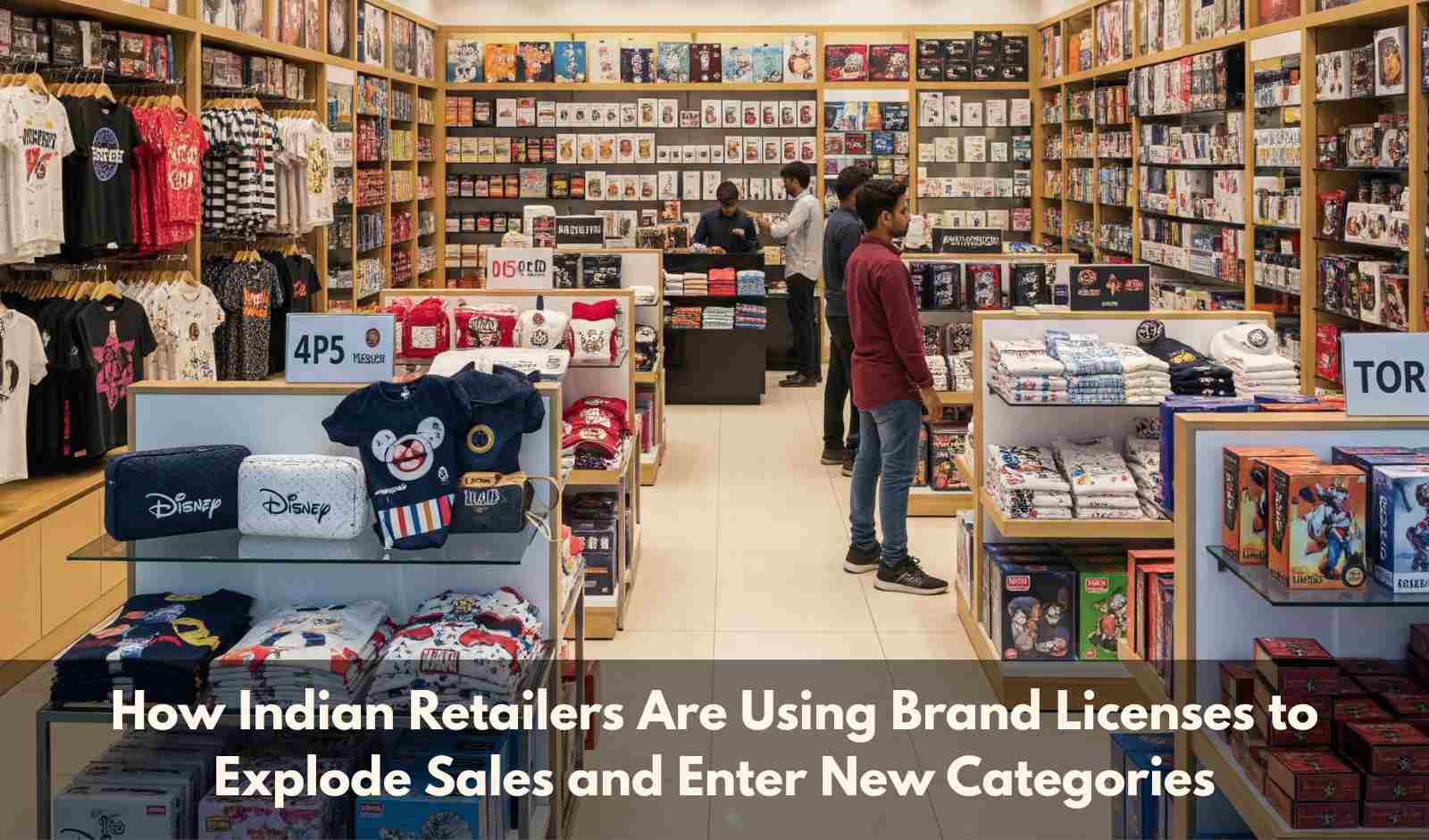
Brand licensing is becoming a critical growth lever in the retail industry, especially in a rapidly expanding market like India. It allows companies to scale operations, expand into new categories, and increase brand visibility, without significant capital expenditure. But the success of a licensing model depends heavily on structure, alignment, and protection of business interests.
If you're a brand owner or a retail operator in India, developing a sound licensing strategy can help you achieve scale while maintaining control. Here's how to approach it.
Secure Your Intellectual Property Before You License
Before offering your brand to other businesses through a license, it’s essential to protect your intellectual property (IP) under Indian law. This includes registering:
- Trademarks
- Logos and wordmarks
- Packaging designs
- Product designs
- Taglines and characters
Clearly define what part of your brand identity you're licensing, whether it’s a logo, brand name, a mascot, or a proprietary software design. Your ownership should be legally documented and acknowledged before any retail licensing discussions begin.
In India, IP enforcement can be complex. Having formal protection in place ensures you retain control over your brand's usage and have the legal standing to act if your identity is misused by licensees.
Choose the Right Licensing Partner for the Indian Retail Market
Selecting a licensee is not just about revenue potential, it’s about brand fit. For companies operating in India’s retail ecosystem, the wrong partner can quickly dilute brand value.
A licensing partner should align with your brand’s positioning and values. For example, if you're a premium lifestyle brand, partnering with a discount retail chain might hurt your long-term equity in India. Instead, look for licensees that already operate in your target consumer segment and have a track record of excellence in product quality and retail distribution.
When evaluating potential licensees in India:
- Assess their existing retail footprint
- Review their product standards and customer satisfaction metrics
- Check their ability to manufacture or source at scale
- Ensure they understand local consumer preferences
Brand licensing is a reflection of your business. A weak partner can damage your reputation quickly, especially in markets like India where word-of-mouth and brand perception hold high value.
Create a Detailed, Retail-Focused Licensing Agreement
Once a suitable partner is identified, drafting a comprehensive licensing agreement becomes the next critical step. This agreement serves as the backbone of the business relationship and must address:
- Scope of the license (which products and services it covers)
- Geographic territory (e.g., India-only or including other regions)
- Duration of the license
- Exclusivity clauses
- Branding guidelines
- Financial terms
For retail-focused licensing in India, royalty structures often follow one of these formats:
- A percentage of gross or net sales (e.g., 8–12 percent)
- A fixed annual or quarterly fee
- A combination of both, including a minimum guaranteed payment
Here’s an example: If a licensee agrees to pay 10 percent royalty on Rs 1,00,000 worth of products sold through retail stores in India, the licensor earns Rs 10,000 in royalty income. If the agreement includes a minimum guarantee of Rs 8,00,000 per year, that amount must be paid regardless of actual sales, providing financial assurance to the licensor.
Enforce Quality Control in the Retail Environment
In India’s retail space, where consumer trust plays a pivotal role in repeat purchases, consistent quality is essential. Licensing agreements must include robust clauses that allow brand owners to oversee:
- Product samples and approvals
- Packaging design
- Visual merchandising in retail stores
- Marketing and promotional materials
These clauses ensure the brand’s identity is represented accurately and consistently, whether the licensed product is sold in a Tier l shopping mall or a Tier lll local store. For instance, a brand known for its minimalism should not find its logo slapped on a loud, over-designed retail item without prior approval.
Retailers must also commit to ongoing compliance, including submitting periodic reports or undergoing random quality audits—especially when products are being sold across India’s fragmented retail channels, including offline stores, marketplaces, and quick commerce platforms.
Set Clear Terms for Duration, Renewal, and Exit
One area often overlooked in licensing strategies is how long the license will last, and what happens when it ends.
In the Indian market, where consumer trends shift rapidly and categories evolve fast, short-term licenses (1–2 years) are often used to test new product extensions. Longer-term partnerships (3–5 years or more) are ideal for products requiring sustained marketing or deep retail penetration.
Your agreement should clearly address:
- Renewal terms and renegotiation periods
- Adjustments to royalty rates over time
- Exit clauses for both parties
- Rights over leftover inventory or unsold stock
- Conditions that trigger early termination
This is especially important in India, where regulatory shifts or sudden changes in retail distribution channels (such as the rise of D2C or q-commerce) can disrupt plans mid-agreement.
Why Licensing Strategy Matters for Retail in India
Unlike casual brand collaborations, a well-structured licensing strategy provides long-term value. For retail businesses in India, licensing offers a cost-effective path to product diversification, faster go-to-market, and improved margins, without the overhead of building new manufacturing or branding from scratch.
For licensors, it’s an opportunity to build additional revenue streams, increase brand reach across India, and ensure product lines align with customer expectations at the point of sale. For licensees, it's a gateway to consumer trust, especially when operating in competitive sectors like fashion, home goods, toys, personal care, or electronics.
But the key lies in treating brand licensing as a serious business strategy, not just a commercial transaction. Without strong contracts, quality control, and alignment between partners, licensing can backfire, especially in India’s diverse and fast-moving retail landscape.
Remember a well-implemented licensing model can unlock substantial retail value in India. But success depends on upfront legal protection, thoughtful partner selection, retail-specific contract terms, and long-term strategic thinking. For retailers and brand owners alike, licensing offers a smart, scalable way to build value in India’s booming consumer economy.
For Further Franchise Info Contact





Copyright © 2009 - 2026 Franchise Tv.