






 Follow Us
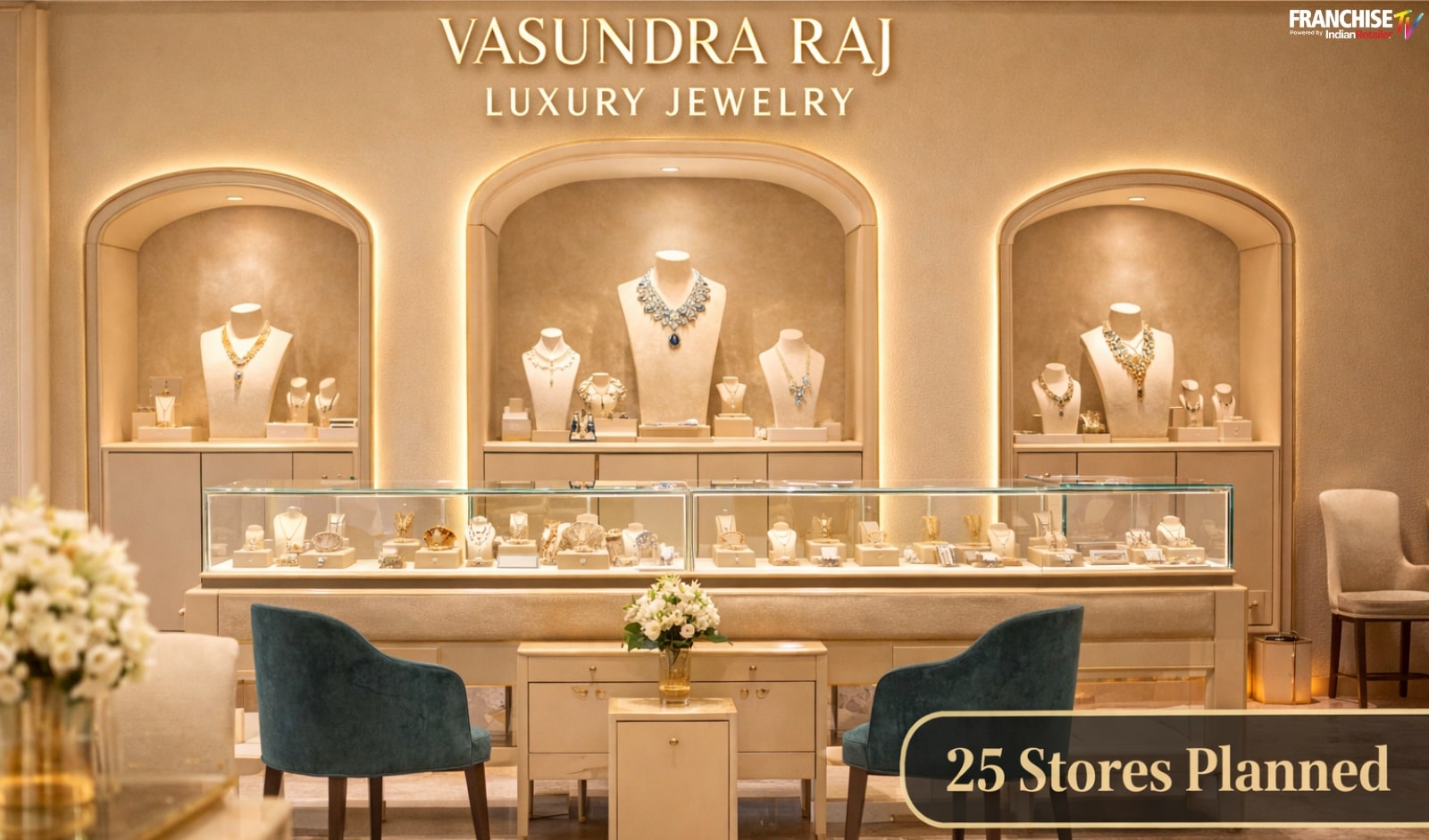
Franchise India’s Business Opportunity Over Chai webinar recently featured Vasundra Raj Luxury Jewelry, a fast-growing Indian brand reshaping the luxury jewelry space with a strong focus on ethical craftsmanship, transparent pricing, and franchise-led growth. The session gave potential investors a clear understanding of the brand’s journey, its market positioning, and the business opportunity it offers in India’s expanding jewelry sector.
A Luxury Jewelry Brand Built on Heritage and Ethics
Founded by designer Vasundra Raj, a graduate of Istituto Marangoni in Florence, the brand is deeply influenced by her global education and by her work with artisan communities in India through the United Nations Development Program. These experiences shaped the brand’s core belief: creating luxury jewelry that supports traditional craftsmanship while adhering to fair trade and ethical business practices.
Each collection combines modern, international design with traditional Indian techniques such as jadau, polki, meenakari, and handcrafted gold and diamond work. The brand presents its jewelry as more than just adornment; each piece reflects culture, emotion, and long-term value.
Watch the full webinar to explore Vasundra Raj Luxury Jewelry’s franchise opportunity and business model in detail: Click here
Strong Market Performance and Steady Expansion
Starting with its first store in Delhi, Vasundra Raj Luxury Jewelry has expanded to Noida and Jaipur. Today, the brand operates four stores, all of which are performing strongly. As shared by the leadership team, store revenues are on par with those of well-known regional jewelry brands, supported by a manufacturer-led model, efficient operations, and a strong focus on customer satisfaction.
India’s jewelry market, valued at around $97 billion, continues to grow due to higher disposable incomes, rising demand for branded jewelry, and a growing preference for diamonds and handcrafted designs. These trends favor organized luxury brands like Vasundra Raj.
Read also Silkriti Eyes 100 Stores Nationwide as It Builds on a 50-Year Silver Jewellery Legacy
What Sets the Brand Apart
One of the key takeaways from the webinar was the brand’s transparent and customer-first approach. Vasundra Raj offers customized jewelry within 7 to 10 days, even during busy festive periods. Policies such as lifetime buyback with minimal deductions, clear pricing, and free lifetime maintenance have helped the brand build trust and strong repeat business.
The brand also caters to a wide customer base. It offers entry-level pieces at accessible prices while also featuring premium statement and bridal jewelry, making luxury more inclusive without diluting its appeal.
Read more: Restaurant Franchise Brands Reshaping India’s Organized Dining Landscape
Franchise Opportunity and Growth Plans
Vasundra Raj Luxury Jewelry is expanding through a combination of franchise-owned and company-operated stores, offering investors well-defined formats and comprehensive operational support. Over the next two years, the brand plans to open up to 25 stores across key metros and state capitals and is looking for partners with a sound understanding of the business, financial strength, and a long-term outlook.
The webinar highlighted that the brand’s growth is focused on sustainability, ethical values, and a consistent customer experience, rather than rapid expansion. This approach positions Vasundra Raj Luxury Jewelry as a strong, credible franchise opportunity in India’s evolving luxury jewelry market.
For Further Franchise Info Contact

The jewellery counter hasn't vanished; it has only moved further along the customer's path. Today's shopper begins on a screen browsing, bookmarking favourites, and comparing prices across several websites late into the night. But at some point, before any money changes hands, they want to step into a store, hold the piece, and hear someone explain why it's worth the price. The counter hasn't disappeared it has simply shifted from the start of the journey to its very end.
These evolving consumer habits and what they mean for the industry's future were among the central topics discussed on the sidelines of JewelX 2026, where retail leaders examined how omnichannel strategies, franchise-driven expansion, experiential stores, and the growth of Tier-II and Tier-III markets are reshaping India's jewellery business.
That gap between browsing and buying is exactly where big brands are quietly eating into territory that used to belong to small, independent jewelers. Industry watchers expect branded players to control something like 43-47% of India's jewelry market by 2029, up from roughly 37% in 2024, in a market projected to be worth $130-140 billion. And it's not happening because branded jewelry is cheaper. It's happening because people are craving something to trust. To earn that trust, brands are leaning into omnichannel selling, pushing into smaller cities, making in store visits feel more personal, and using malls as a kind of live showroom for all of it.
Where Online Meets Offline
Jewellery has long resisted pure e-commerce, and the reason hasn't changed: trust. What has changed is where that trust journey now begins. For most shoppers, discovery starts on a screen, a reel, a story, a saved collection well before it ever reaches a shop floor. Ankita Singh Somvanshi, Co-Founder, Jiaara Jewellery, has watched this play out consistently with her own customers, who browse online but still show up in person before they'll commit to a piece.
"They want to visit an offline store to see, understand and experience the jewellery before making a purchase," she said, describing a pattern that has quietly become the norm rather than the exception.
What's changed is how deliberately brands are now chasing that in store moment. Somvanshi's team maps expansion around customer behaviour and average selling prices well before a single store opens, treating each new market as a hypothesis to be tested rather than a hunch to be followed. And for a brand built on handcrafted work, the store carries a job e-commerce simply can't do explaining where a piece came from.
"Customers genuinely want to understand the craftsmanship and the story behind each piece," she noted, a line that could double as Jiaara's entire retail philosophy.
Vidushi Jain, Co-Founder, Attrangi, has arrived at a similar conclusion from a different angle. Nine years into the category, her team now leans on data sharp enough to answer questions that once took gut instinct which products are moving, in which cities, and why. "AI and customer data tell us exactly what's selling, where, and which regions are responding to different collections," she explained. But Jain is quick to draw a line most brands still blur: a bestseller online rarely walks off a store shelf the same way.
"What sells online doesn't necessarily sell offline," she stated, a reminder that the two channels, however connected, are still running fundamentally different playbooks.
Smaller Cities Fueling Growth
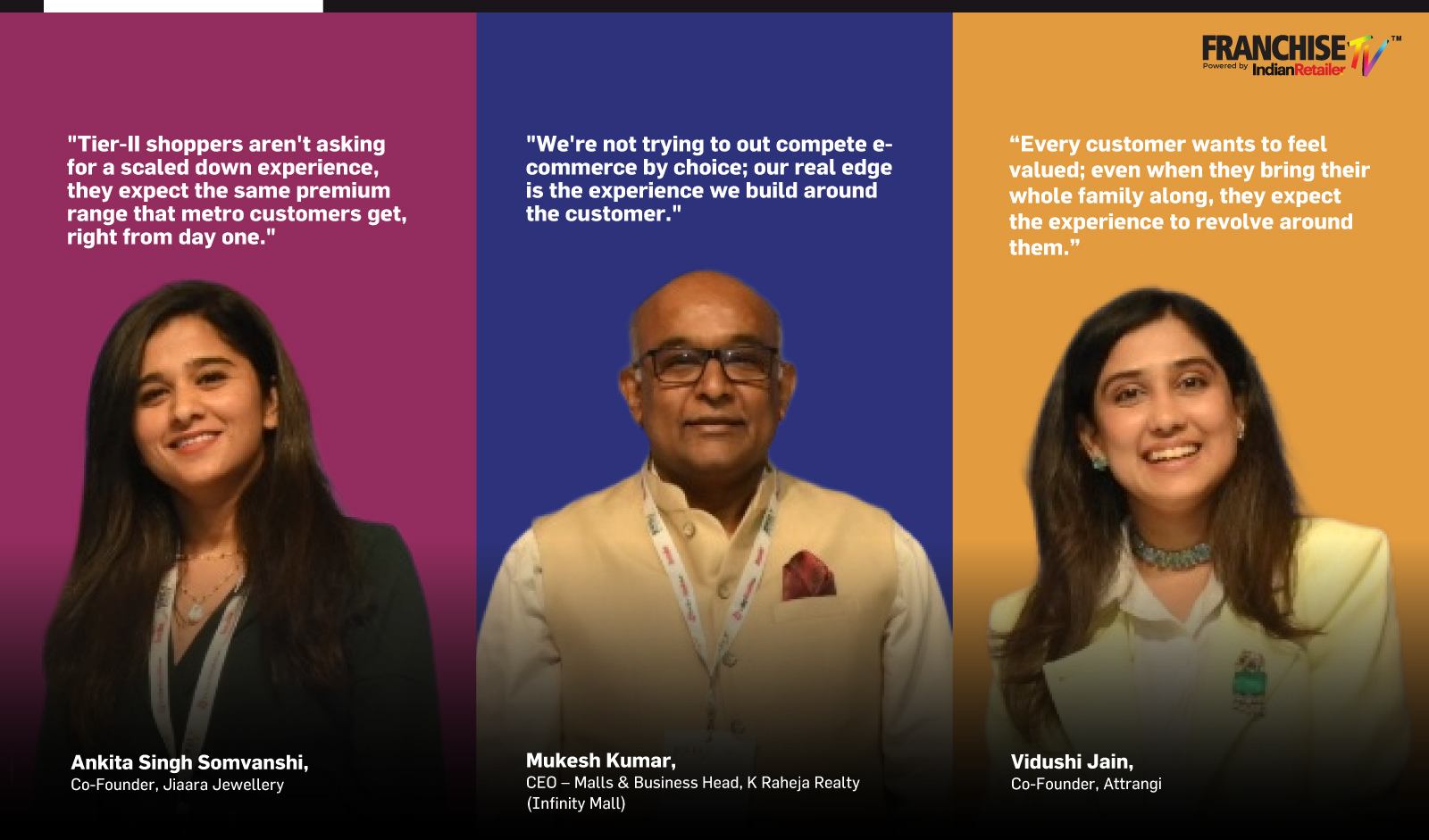
Metro first expansion is no longer the default playbook. Somvanshi points to Jiaara's own numbers as evidence of where demand is actually building. "Around 40 to 45 percent of our customers come from Tier II cities, which clearly shows the growing demand beyond metros," she said. Crucially, these buyers are not settling for a scaled down catalogue.
"Consumers in Tier II markets don't want a watered-down version of what Tier-I customers receive. They expect access to the same premium product assortment from day one," Somvanshi added a shift the brand is addressing through franchise partnerships in cities like Surat, Indore, Chandigarh, Dehradun and Lucknow.
Mukesh Kumar, CEO – Malls & Business Head, K Raheja Realty (Infinity Mall), attributes this leveling to years of digital exposure reshaping expectations everywhere at once.
"I believe the difference between Tier-I, Tier-II and Tier-III cities has become extremely thin today," Kumar observed. E-commerce, he argues, did the groundwork long before organised retail arrived in these markets.
"Consumers across India have developed strong aspirations over the last fifteen to sixteen years, regardless of whether they live in metros or smaller cities," he added.
Beyond Products, Towards Experiences
Jewellery has always carried emotional weight engagements, weddings, milestones and brands are now designing around that instead of around the transaction. Jain describes a customer base that wants recognition, not just service.
"Customers want to feel important. Even when they visit with their families, they expect an experience that is built around them," she shared, noting how personalisation has become central to Attrangi's in-store and online interactions alike.
For Jiaara, scaling that kind of experience has meant leaning on franchise partners rather than company-owned stores alone. "Franchising gives us partners who truly understand local markets and customer behaviour," Somvanshi said, framing the model as a collaboration rather than a landlord arrangement.
From Shopping Centres to Experience Hubs
As digital channels absorb more of the browsing, malls are repositioning themselves around what they can offer that a screen cannot.
"Today's malls are creating the physical spaces that brands need to connect with customers offline," Kumar said, describing a shift from pure retail towards social infrastructure places where families spend time together, not just money. "Today's malls are essentially creating social spaces where people come together beyond just shopping," he added.
Within that ecosystem, jewellery has quietly become one of the standout performers. "Fashion jewellery has become one of the strongest-performing retail categories inside malls," Kumar noted, pointing to the category's high engagement and premium positioning as reasons mall operators are courting these brands actively.
The Next Wave of Jewellery Retail
No single channel is carrying this industry on its own anymore and honestly, that's the whole plot twist. Online flirting, getting customers curious and scrolling. Stores seal the deal, turning that curiosity into actual conviction. Franchise partners are the ones pushing the map outward, into cities that barely used to register on a growth chart. And malls? They're the stage where all of this finally comes together in person.
Here's the real shift, though: smaller cities aren't the "someday" market anymore; they're where the next big wave of demand is already brewing. The brands that figure this out early won't be the ones with the flashiest ad campaign or the biggest store. They'll be the ones smart enough to treat trust, data, and genuine customer experience as one single strategy not three separate boxes to check.
The future of jewellery retail, it turns out, isn't about choosing between the phone and the store. It's about making sure both are telling the same story.
For Further Franchise Info Contact




Copyright © 2009 - 2026 Franchise Tv.