


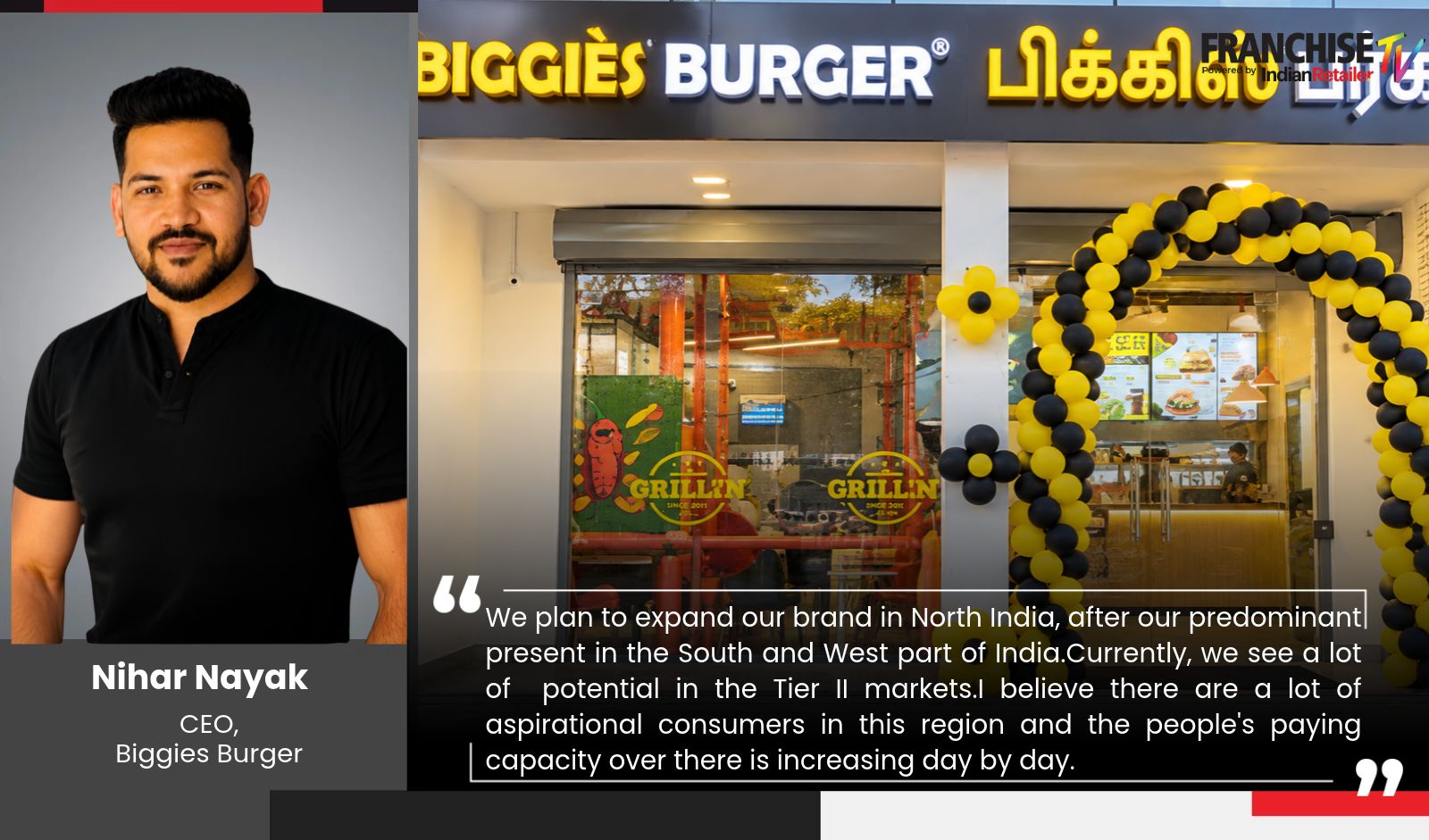
Biggies Burger is a QSR burger brand that started its journey in November 2011. Founded by Biraja Prasad Rout, the brand has a simple but powerful vision that they want to have an Indian QSR burger brand which can deliver better products, compared to the global QSR chains. The brand offers a premium range of burgers to its customers that are value-sensitive, compared to other burger giants in the world.
“The overall product experience needs to be elevated, ensuring that customers feel good about what they consume and perceive it as a more premium offering compared to established QSR chains’’, says Nihar Nayak, CEO, Biggies Burger.
Brand’s Journey
Talking about the brand’s journey, Nihar said, ‘‘From 2011 to 2016, our founder Biraja Prasad Rout started doing a lot of research and then our two co-founders joined, Abilash Bellur and Sandeep Satpathy. We started franchising 2016 onwards. Our philosophy at Biggies Burger is ‘big, bold, satisfying’,’’ says Nihar.
He adds that the QSR burger chain wants to give a good product and a better burger experience to its customers, which they can love. The brand wants to build a homegrown burger brand, which India can be proud of.
Brand’s Expansion Strategy and Market Footprint
Biggies Burger has 100-plus retail footprints in India, and is expanding its presence in the Tier II markets like Bhubaneswar, Coimbatore, and Pune.
Talking about the brand’s expansion strategy, Nihar said, ‘‘There are a lot of areas that have untapped markets in India. We plan to expand our brand in North India, after our predominant present in the South and West part of India.’’ He adds, ‘‘Currently, we see a lot of potential in the Tier II markets. I believe there are a lot of aspirational consumers in this region and the people's paying capacity over there is increasing day by day. So, people who are aspiring to have a good product can definitely aspire Biggies Burger as a big brand in Tier 2 cities where it will be a big success.’’
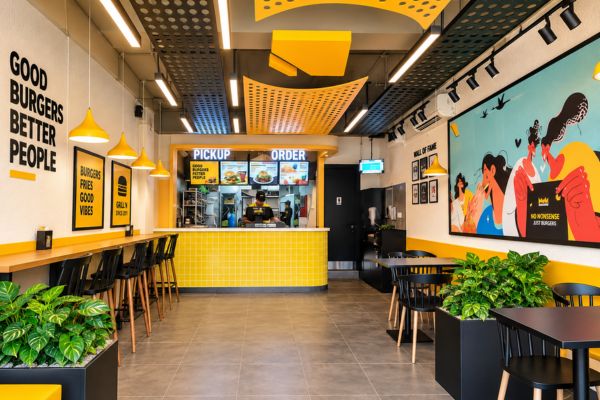
Further he shares that the brand will also evolve in the Tier 1 cities , giving attention to multiple areas in the region. He believes that tier 2 cities get exposure from tier 1 cities or metropolitan cities, and aspire to the same brands and services in their region.
Franchising Ecosystem
As mentioned earlier, Biggies Burger started franchising in 2016. Nihar sees the franchise model as a ‘growth engine’ for Biggies Burger that combines centralized brand vision with entrepreneurial energy of the local business owners.
Talking about the franchising ecosystem, Nihar says, ‘‘Franchise expansion is a growth engine for Biggies Burger. Being a strong national QSR brand, we combine a centralized brand vision with the entrepreneurial energy of local business owners, who are aspiring to build their career with structured food brands. With us, they will be able to learn and leverage the brand’s SOP (Standard Operating Procedure) knowledge with customer handling and the process is the means to build a brand.’’
He further shares that the brand’s approach is not just to get franchise partners for their outlet but to ensure the success of franchisee partners. He emphasizes that only when they (franchise partners) succeed, the company succeeds and the brand becomes stronger.
Factors Evaluated While Franchising
Nihar further shares how the brand evaluates their franchise partners. He says that the first and foremost aspect is financial readiness, i.e., whether the investor has the required initial working capital during the initial 3-4 months ramp-up period.
‘‘The initial working capital is required to stabilize the business whenever you open an outlet,’’ says Nihar. ‘‘It takes a little bit of time to achieve the kind of sales that one can expect from this market or to get a break even, so financial readiness is the first criteria,’’ emphasizes Nihar.
The second is entrepreneurial commitment. Nihar shares that if somebody wants to have a franchise with the brand, they should be committed towards the business. They should be able to give time to the business, and be able to understand the market. Lastly, there is structural and operational alignment, providing the standard services to the customers.
‘‘I have certain SOP recipes, which every franchise owner has to follow,’’ says Nihar. ‘‘We want to streamline our taste profile across India. We cannot become a brand, if we are not providing the same taste profile to our customers or the same kind of standard service to them at every touchpoint.’’
He further adds that the brand should have the right partner and a standard system for the franchisee partners to run a successful business in this sector.
‘‘A lot of business professionals are now coming from the same food industry background where there is a lot of standardization, and so we are also learning from them as well,’’ says Nihar.
Franchise Formats
Biggies Burger has two different franchise store formats. One is a standalone format, while the other is express counters. The standalone model requires an investment around INR 43 lakhs while the express model consists of total investment up to INR 35-40 lakhs.
Discussing the two models, Nihar says, ‘‘The standalone model has an interior area where you have to develop the seating arrangements, AC fittings, and other branding materials. But in the express model your security deposit will go into building a small kitchen and the billing counters. So investment in the express model is slightly lesser compared to the standalone model. But risk in terms of rent-to-revenue ratio is more in express counters.’’
QSR Market in India
According to Modor Intelligence, the India quick service restaurant market size is expected from USD 30.37 billion in 2026 to 50.68 billion by 2032. In India, rising disposable income, QSR outlet expansion, digital ordering and online delivery platforms, locally developed menus, minimum rent due to franchising or cloud kitchens, and airport outlets are leading to the growth of this segment.
Describing the evolution in the consumer spending habit, Nihar says, ‘‘People these days in metro cities or the Gen-Z are spending a lot for their daily needs.’’ He recalls, ‘‘When I was in college, we literally had to save money to have a burger in any restaurant. But today people, especially the young adults of this country can experience the best burger at an affordable price. Digital adoption and cost-effective internet penetration plays a big role in this, as people are able to explore and get access to quick delivery services via their phone.’’
He adds that a lot of QSR brands are expanding beyond major metros into Tier I and Tier II cities, with Tier II cities having a lot of exposure from Tier I or metro cities. I would say the food service in India is definitely growing every single year. I see a 12-15% CAGR growth in this sector.
He further shares that product innovations and value-to-price ratio (value proposition) is also a driving factor for this segment.
Citing an example, he says, ‘‘So let's suppose my burger price is around INR 200 rupees. While paying this money, the customer is looking at the whole product offering and trying to compare my brand with other brands in terms of taste, and quality and and justify its pricing. The reason my product offerings are really working out is because I am confident in my product, and that is what I believe is my driving factor.’’
Omnichannel Strategy
Talking about the brand’s omnichannel strategy, Nihar said, ‘‘Our omni-channel strategy focuses on 3 dimensions: The first one is obviously the physical presence. As a brand, we would prefer the customer to visit our outlet and sit there and experience the burger, its taste, quality and the other offerings that we are able to present to our customers. The second is the quick service delivery via quick service delivery platforms like Swiggy,Zomato, and now Flipkart Minutes through which our customers can experience our product from the comfort of their surroundings (home, offices etc.). There are multiple different channels that have started online product delivery. The third contribution is from the digital footprint and marketing, driving customer engagement.
Discussing the role of influencer marketing and social media, Nihar mentions that today people are first eating through their eyes. If the product is drool worthy, they will definitely give it a try.that is where the brand’s hook is coming from.
‘‘But having said that, the objective is not simply to present everywhere but to make every customer interaction count,’’ emphasizes Nihar. ‘‘We want to give each and every customer the best-of-the best services, and this is our prime mission.’’
Future Plans
Describing the brand’s future roadmap, Nihar says, ‘‘My roadmap has four to five different criteria.Even though we are getting a lot of opportunities from overseas, our first and foremost priority is a disciplined national expansion. As I mentioned before we have footprints in South, East and West India but the North part is not yet fully covered. So we want to expand to the whole territory of India first in the next five to ten years down the line. Further, we want to do continuous product innovations. The burger is always standard for all the brands, but we are also looking into a range of new products for our menu like wings, wraps, fries, mojito, milkshakes, and other products at many of our sites.’’
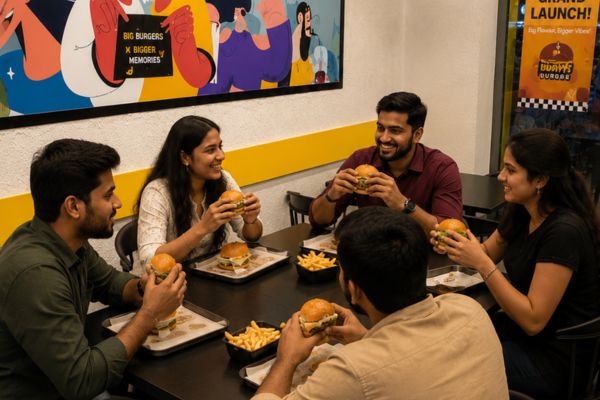
‘‘Moreover, we are targeting operational excellence. We want to build a very long term, sustainable business because I believe any business that you are doing has to be sustainable, and carefully choosing the right partners is part of this strategy. My hundred outlets consist of hardly 40-45 franchisee owners that are carefully evaluated and selected to run operations at par. And lastly, our ambition is to make Biggies Burger much more than a successful burger brand. We want to become a lasting Indian QSR institution where we are going to build a brand that is loved by the people, and is able to compete with much bigger brands,’’ signs off Nihar.
For Further Franchise Info Contact




Copyright © 2009 - 2026 Franchise Tv.