






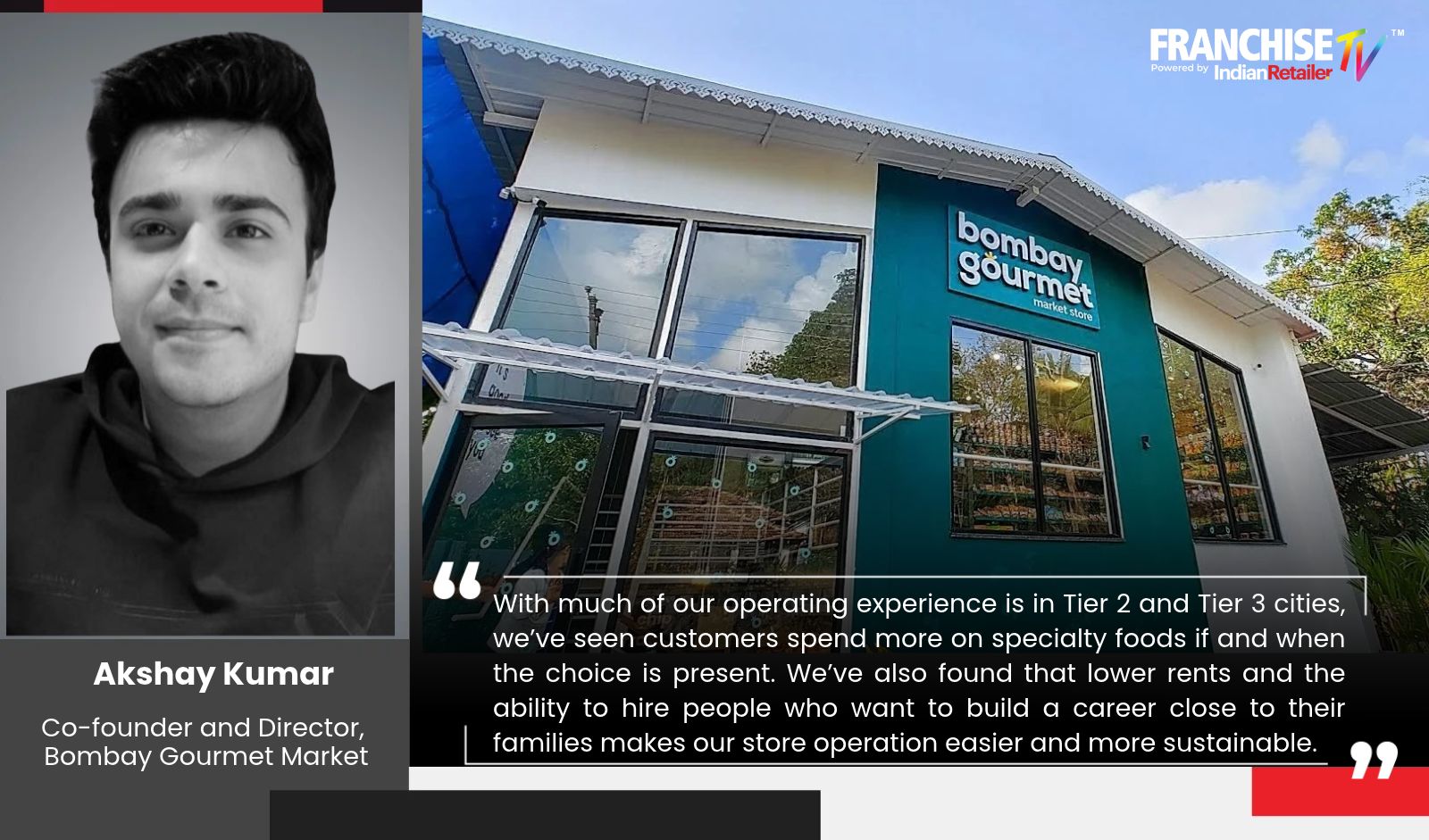
Founded in 2020, Bombay Gourmet Market is a premium grocery and specialty food retailer in India, bringing together international food brands, Indian specialty products and its own private-label range. Headquartered in Mumbai, the brand operates through a franchise retail model, alongside its online store and a B2B import distribution network for hotels, restaurants, and cafés.
Talking about the brand’s journey, Akshay Kumar, Co-founder and Director, Bombay Gourmet Market, said, ‘‘I came to grocery retail years after running Dinshaw’s Café in Mumbai. At the café, the customers would ask for what we order for ourselves (our supply produce). We wanted to curry forward the similar relationship with Bombay Gourmet Market. We want our customers to be able to walk in, find their regular groceries and get an honest recommendation if they want to try something new.’’
This is how the brand began its journey and gradually developed its own private-label food range. The category events such as ‘K-Food Summer Fest’ were important milestones for the brand.
Sharing about the fest, Akshay says ‘‘At the Korean food festival, our teams would show customers how to enjoy products they have seen online, giving their customers a firsthand experience of what people wanted to try and will come back to buy.’’
Retail Footprint in India
Bombay Gourmet Market currently operates 18+ stores across India with key markets in Mumbai, Pune, Goa, Bengaluru, Rajkot, Hyderabad and Nashik.
Talking about the brand’s expansion plan, Akshay shares, ‘‘Our immediate strategy is to penetrate deeper into the markets to understand our customers as well as support our store operations.’’Further discussing his expansion strategy, Akshay says, ‘‘When we look at a new city, we initiate by observing the neighbourhood areas. I personally visit each supermarket in that city, see what is on the shelves, and in the customer baskets. We also see the design and the decor of the store, and how they replenish their products reliably. Our on-ground research and observations help us evaluate the market for store expansion.’’
Opportunities in Tier II and Tier III Cities
Further discussing the brand’s expansion in Tier II and Tier cities, Akshay says, ‘‘With much of our operating experience is in Tier 2 and Tier 3 cities, we’ve seen customers spend more on specialty foods if and when the choice is present. We’ve also found that lower rents and the ability to hire people who want to build a career close to their families makes our store operation easier and more sustainable.’’
Franchising Format of Bombay Gourmet Market
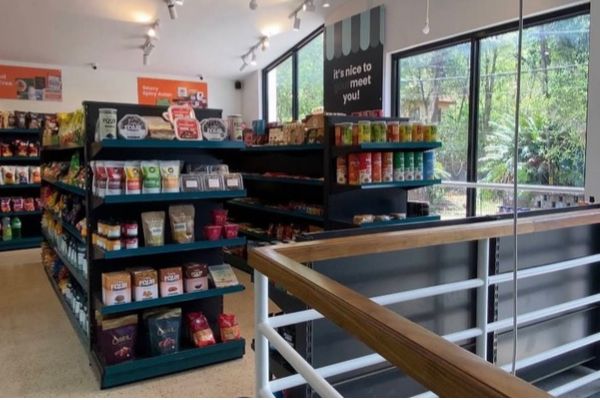
The premium retail brand operates via 2 formats: the first format includes an area spanning 800 sq. ft with Beer and Wine, a small eatery for snacks, drinks & freshly packed food, costing approximately INR 50-60 lakh, depending on the city. The second is a medium format of 600 sq ft., with a primary assortment of K-Foods (Korean Foods) Ramen live counter, fresh soft-serve beverages, Korean snacks counters, having an investment range of INR 30-40 lakh.
Discussing the franchising ecosystem, Akshay says, ‘‘From a franchisee perspective, we want our prospective franchise partners to understand what an ordinary trading month looks like. We talk through rent, staffing, how quickly inventory needs to move and how much cash the store will need as it builds its customer base. Once it’s open, consistency comes down to regular work such as keeping core lines available, training the team and reviewing stock before it ages. Of course adding new inventory as per trends remains a constant.’’
How Does the Brand Evaluate Its Franchise Partner?
Bombay Gourmet Market looks for franchise partners who are actively looking at day-to-day operations, is able to build the business despite strong competition from quick-commerce and other large retailers, and can carve a niche for the brand, establishing a loyal customer base.
‘‘We look for someone who is genuinely interested in running a store with passion,’’ says Akshay. He adds, ‘‘Our product assortment is high-margin, so we need someone who understands this and can add value to the brand by being there on a busy Saturday, following up with regular customers and noticing and managing stocks that have been sitting for long,’’ says Akshay.
Supermarket franchising gives the brand like Bombay Gourmet Market the benefit of a partner who understands the neighbourhood. The local partner is often the first to spot customers in the area or pin down the gap in the market needed to be fulfilled.
Further discussing about its franchise partners, Akshay says, ‘‘Some of our most practical feedback comes from the people running the stores as they analyze the changing trends, keep track of customers asks, identify products that need an explanation or looks good on a shelf but rarely makes it into the basket.’’
Omni Channel Strategy
Apart from its retail stores, Bombay Gourmet Market also has its own website and delivers through quick commerce applications.
Sharing about the brand’s Omnichannel strategy, Akshay says, ‘‘Our stores are where customers can see, taste and ask about products. Our social content gives people a reason to visit, and our omnichannel presence makes it easy for customers to ‘buy again’ once they like something at our stores.
Leveraging its Omnichannel strategy, the brand ensures accurate availability and reliable fulfillment of product assortment at its stores and other channels, ensuring seamless experience for the customers.
Supermarket and Hypermarket Sector in India
According to a market report, the Indian supermarket segment is projected to increase from USD 29,243 million in 2025 to USD 62,517 million in 2031. The sector is accelerating due to greater store rollouts, deeper sales density, private-label penetration and conversion of household spendings from unorganised to organised trade.
India’ s rapid urbanization is fundamentally changing the shopping habits of consumers and thereby propelling the growth of supermarkets and hypermarkets in India. With the rise of urban and suburban residential hubs, the consumers are increasingly favoring organized retail formats for convenience, variety, and predictable pricing. Apart from that, India's growing middle class and increasing disposable incomes act as the key growth drivers for the sector.
Discussing the sector’s growth potential in India, Akshay says, ‘‘I think there’s a real opportunity for supermarkets and hypermarkets in India…. There is a strong potential for grocery retail franchising in India, especially when both partners are serious about running the same business. A local entrepreneur knows what their neighbourhood is missing and can overcome the gap between the brand and the customers.’’
At Bombay Gourmet Market, buying across multiple stores gives access to a wider range of products and leverage to negotiate better terms. The franchise partners benefit from that collective buying power, helping bring distinctive products to the city and earn a healthy margin.
Role of Premiumization in the Segment
According to Akshay, premiumization gives retailers room to grow by offering products customers genuinely value. People tend to pay more for a better ingredient, a distinctive regional recipe or a flavour they’ve been curious to try.
‘‘At Bombay Gourmet Market, our job is to help customers discover those products so that they can decide for themselves whether it's worth buying again,’’ says Akshay. Citing an example, Akshay says, ‘‘K-foods or Korean Foods has done particularly well in Nashik. A wide range of snacks, ramen noodles and pouch beverages gave customers enough choice to explore the category. Our K-Food Summer Fest gave them a chance to taste products before buying and we’re now applying what we learned across other cities we operate in.’’
Akshay emphasizes that the real test for premium products is whether customers choose to pay full price for it even after its novelty wears off. That’s when it becomes a category worth investing in.
Future Plans
Bombay Gourmet Market aims to expand to 500-plus in India, using a cluster based expansion approach. The brand also wants to keep its ‘fit-outs’ disciplined and build the core assortment around its best-performing private-label products, while keeping room for what sells best in its neighbourhood.
Akshay concludes by sharing the advantages of cluster based approach. He says, ‘‘The advantage of a dense network is that stock can easily move to where it sells. If a product is moving slowly in one store, we can easily transfer it within the cluster, while it still has enough shelf life to sell at full price. He adds, ‘‘We can buy centrally on better terms, replenish fast selling goods in smaller batches and test new products in a few stores before committing stock across the network. That’s where scale earns its keep. Every new store makes the cluster stronger by improving the purchasing power, reducing cash tied up to the stock and giving franchise partners better access to products their customers actually want.’’
For Further Franchise Info Contact
Explore Franchise Opportunities by Industry






Copyright © 2009 - 2026 Franchise Tv.