


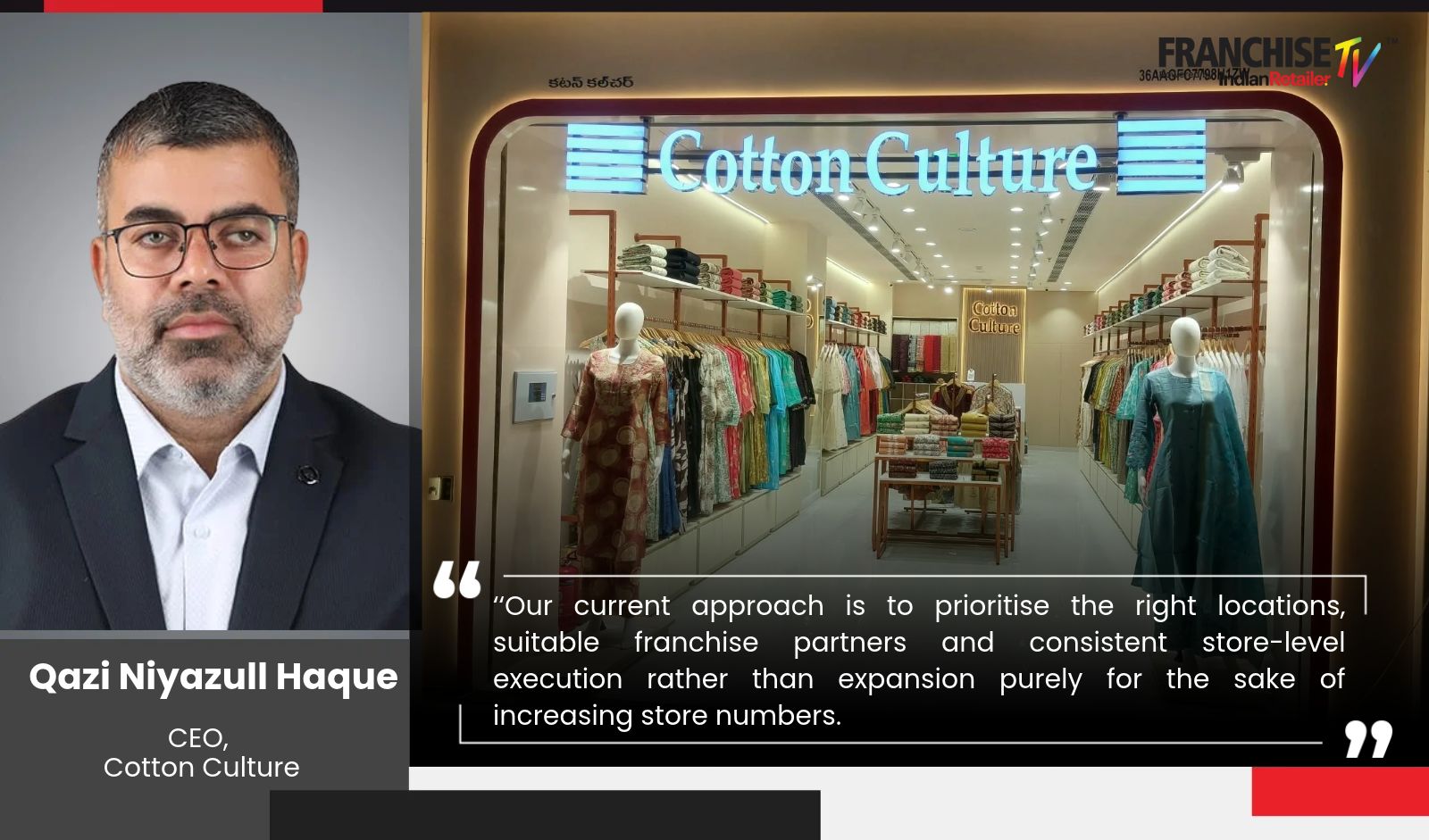
Cotton Culture was established in 2010 with a clear vision: to build a trusted Indian women’s ethnic-wear brand that combines quality fabrics, attractive designs, everyday comfort and honest pricing. Over the years, the brand has developed its business across manufacturing, retail and online marketplaces. The brand’s in-house manufacturing capability helps maintain greater control over product quality and deliver collections aligned with the customers’ preferences.
‘‘Our brand’s philosophy is simple: ‘Premium Fabric, Everyday Comfort, and Honest Pricing’’’says Qazi Niyazull Haque, CEO, Cotton Culture, Cotton Culture. ‘‘We believe in beautiful designs, trusted quality and exceptional service should be at the heart of every customer experience. Our retail network expansion across India reflects our commitment to make quality ethnic wear accessible to more women and building long-term relationships with our customers.’’
Brand’s Presence in India and Expansion Strategy
Cotton Culture currently has a network of 65+ stores across India, supported by the online business. The brand is particularly interested in locations where there is a strong women customer base and where a sustainable store business can be developed.
‘‘Our current approach is to prioritise the right locations, suitable franchise partners and consistent store-level execution rather than expansion purely for the sake of increasing store numbers…..Our retail expansion has helped us reach customers across different markets, with a focus on making comfortable, quality ethnic wear available beyond the major metropolitan centres, says Qazi. ‘‘Going forward, we see opportunities to deepen our presence in existing markets while entering new cities through a carefully planned retail expansion strategy.’’
International expansion also remains a potential future opportunity for the brand.
Brand’s Portfolio and Evolving Consumer Preferences in the Ethnic Wear Segment
Cotton Culture specialises in women's ethnic wear, with a portfolio designed to combine traditional Indian aesthetics with contemporary styling and everyday practicality.
‘‘Our key categories include kurtis, pure cotton suits, Chanderi collections, Jaipuri-inspired styles and embroidered garments. We focus on fabrics, fit, comfort and designs that customers can incorporate into their regular wardrobes as well as select festive and social occasions,’’says Qazi.
Cotton is an important part of the brand philosophy because the brand believes that clothing should not only just look good but also feel comfortable throughout the day.
Talking about the current trend in the ethnic wear segment, Qazi says, ‘‘We have strongly observed that the demand for ‘everyday comfort’ has gone up significantly due to the rising temperatures. Simultaneously, the revenue of stores inside cities (cities with high temperatures) has gone up by an average of 30%. As customer preferences evolve, we continue to focus on developing relevant designs and maintaining a product offering that balances aesthetics, versatility and value.’’
Brand’s USP
Cotton Culture stands apart because of its combination of in-house manufacturing, quality fabrics, everyday comfort, accessible and honest pricing.
Discussing its honest pricing strategy, Qazi says, ‘‘One practice we consciously stay away from is inflating prices through multiple markups and then offering products at 50% off to create the perception of a great deal. When the discount becomes the primary selling proposition, customers may feel they are getting exceptional value, even when the original listed price has been artificially elevated. We believe this is a misleading approach to pricing that puts the appearance of a bargain ahead of genuine value.’’He adds, ‘‘At Cotton Culture, we believe customers deserve greater transparency. Our approach is to price our products fairly rather than inflate the price simply to offer a dramatic discount. We want customers to choose us because they appreciate the fabric, design, quality and price—not because they are persuaded by a discount banner.’’
The brand in-house manufacturing capability strengthens this approach by giving them greater control over product development, quality and costs. Combined with focus on women's ethnic wear and everyday comfort, it allows the brand to build a proposition around the product itself rather than promotional gimmicks.
‘‘Ultimately, our differentiation is built on a simple belief: a product should be worth its price, even without a discount. We want customers to trust the value they receive every time they shop with Cotton Culture, says Qazi.
Franchising: Route to Success
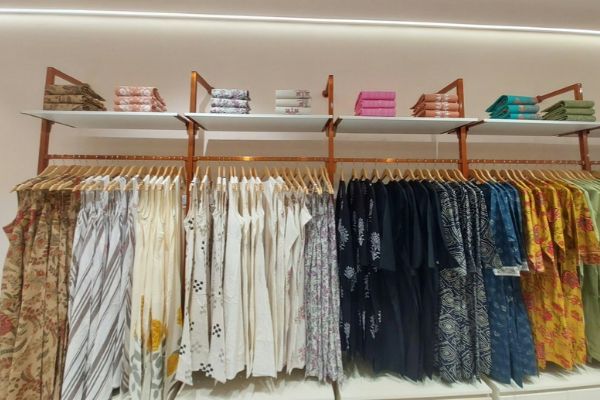
Franchising is an important route for Cotton Culture to expand its retail presence while working with entrepreneurs who understand their local markets. A strong franchise partnership brings together the brand's product capabilities, operating processes and retail experience with the franchise partner's local knowledge and commitment to the business.
Discussing the brand’s franchising model, Qazi says, ‘‘For us, successful franchising is more than opening new stores. It requires the right location, appropriate investment, disciplined inventory management, trained staff and consistent customer service. We aim to build a model in which franchise partners receive the support needed to operate in line with Cotton Culture's standards, while the brand benefits from a broader physical presence and closer engagement with local customers.’’ He adds, ‘‘Our experience of expanding to 65 stores has reinforced the importance of sustainable growth. Going forward, our focus is on identifying suitable partners, evaluating store economics carefully and building long-term relationships that create value for both the franchisee and the brand.’’
Cotton Culture’s Outlook on India’s Ethnic Wear Market
There are several factors that support the development of organised ethnic-wear retail: growing fashion awareness, the expansion of e-commerce, rising aspirations in smaller cities and consumer interest in consistent product quality and fit.
However, growth must be supported by sound business fundamentals. Store location, rent, inventory productivity, product availability, customer retention and franchisee profitability are critical to long-term success.
‘‘We see meaningful opportunities in India's ethnic-wear retail market, particularly for brands that combine relevant designs, reliable quality, accessible pricing and a consistent shopping experience,’’ says Qazi. ‘‘Consumers increasingly have access to branded apparel through physical stores and digital platforms. At the same time, ethnic wear continues to serve a wide range of needs, from everyday dressing and workwear to festivals, family gatherings and celebrations.’’
How Does Franchising Aids Ethnic Wear Brands and Market?
Franchising helps ethnic wear brands reach the markets by working with local entrepreneurs who understand customer preferences, shopping behaviour and the economics of their locations.
Qazi believes that the strongest opportunities will be for the brands (ethnic-wear brands) that build genuine customer trust and sustainable franchise economics rather than relying solely on aggressive store expansion or heavy discounting.
Festive Period: A Boost for the Ethnic Wear Demands in Indian Market
Festive periods are important for ethnic wear brands because customers look for clothing for celebrations, family gatherings, religious occasions and gifting. The demand can increase for particular designs, colors and styles, making product availability and timely replenishment especially important.
‘‘We recognise that inventory planning is not simply about stocking more products before a festival. The objective is to maintain the right assortment, sizes and quantities while avoiding unnecessary accumulation of slow-moving stock during the festive period,’’ says Qazi.
Inventory Planning During Festive Season
‘‘Our approach to inventory management is to plan around expected demand, monitor stock movement and coordinate replenishment so that stores have relevant merchandise available when customers need it,’’ says Qazi. ‘‘At Cotton Culture, our in-house manufacturing capability gives us closer involvement in product development and supply planning. It also helps us coordinate our product offering with the requirements of our retail network.’’
As the brand’s retail network and online business grow, disciplined inventory visibility and coordination between channels become increasingly important. Our broader objective is to serve customers on time while maintaining a healthy balance between product availability, customer choice and inventory efficiency.
Brand’s Omnichannel Strategy
Cotton Culture’s Omnichannel strategy is built around making its products accessible to customers through both physical retail stores and online shopping platforms.
Talking about the brand’s Omnichannel strategy, Qazi says, ‘‘We operate a growing store network and have an online presence through our own e-commerce channel website and marketplaces such as Myntra, Flipkart, Amazon and Tata. Each channel plays an important role. Physical stores allow customers to experience the products directly, assess the fabric and fit, and receive personal assistance. Online channels provide convenience and allow customers to discover and purchase products digitally.’’
As the brand continues developing its digital business, it is also focused on improving the customer journey, product discovery, website performance, checkout experience and service quality.
‘‘We also see opportunities to strengthen coordination between retail operations, inventory management and online sales. Better visibility and more disciplined processes can help us make products easier to discover and purchase. For Cotton Culture, omnichannel retail is not simply about selling through more platforms. It is about building a consistent brand experience and serving customers in the way that is most convenient for them,’’ says Qazi.
Future of Ethnic Wear Franchising in India
Qazi believes the future of ethnic-wear franchising in India will be shaped by organised retail growth, evolving consumer preferences and the ability of brands to establish trust across markets. Franchisees play a valuable role in taking established brands into new locations because local entrepreneurs bring an understanding of their customers and communities. For brands, the opportunity lies in combining this local knowledge with dependable products, operating systems and brand support. At the same time, the franchise business is becoming increasingly focused on operational performance. Store economics, rent-to-sales ratios, inventory turnover, customer retention and staff productivity will matter as much as the initial investment and store design.
‘‘We expect physical retail and digital commerce to become more closely connected. Customers may discover a product online and prefer to shop in a store, or visit a store before purchasing digitally. In our view, sustainable franchise growth will come from a balanced approach: the right partner, the right location, the right assortment and a business model that supports long-term profitability for both parties,’’ says Qazi.
Road Ahead
Looking ahead, Cotton Culture is laser focused on reaching our 100th retail store target and growing its D2C business by 5x by the end of 2027. The brand’s long-term ambition is to build Cotton Culture into one of India's most trusted women's comfort-wear brands.
The brand intends to strengthen its presence in existing markets, expand selectively into new cities and continue developing its franchise network.
‘‘Our priority is to ensure that expansion is supported by strong unit economics, consistent product quality and the right operating capabilities. We also plan to continue developing our product portfolio, strengthening our manufacturing and supply-chain capabilities, and improving our digital and omnichannel customer experience. As the business grows, we want to invest in better processes, technology, people and systems so that we can serve customers consistently across stores and online channels. Above all, we want to remain true to the principles on which Cotton Culture was built: quality fabrics, comfortable fits, attractive designs, fair value and dependable service,’’ signs off Qazi.
For Further Franchise Info Contact
Explore Franchise Opportunities by Industry




Copyright © 2009 - 2026 Franchise Tv.