






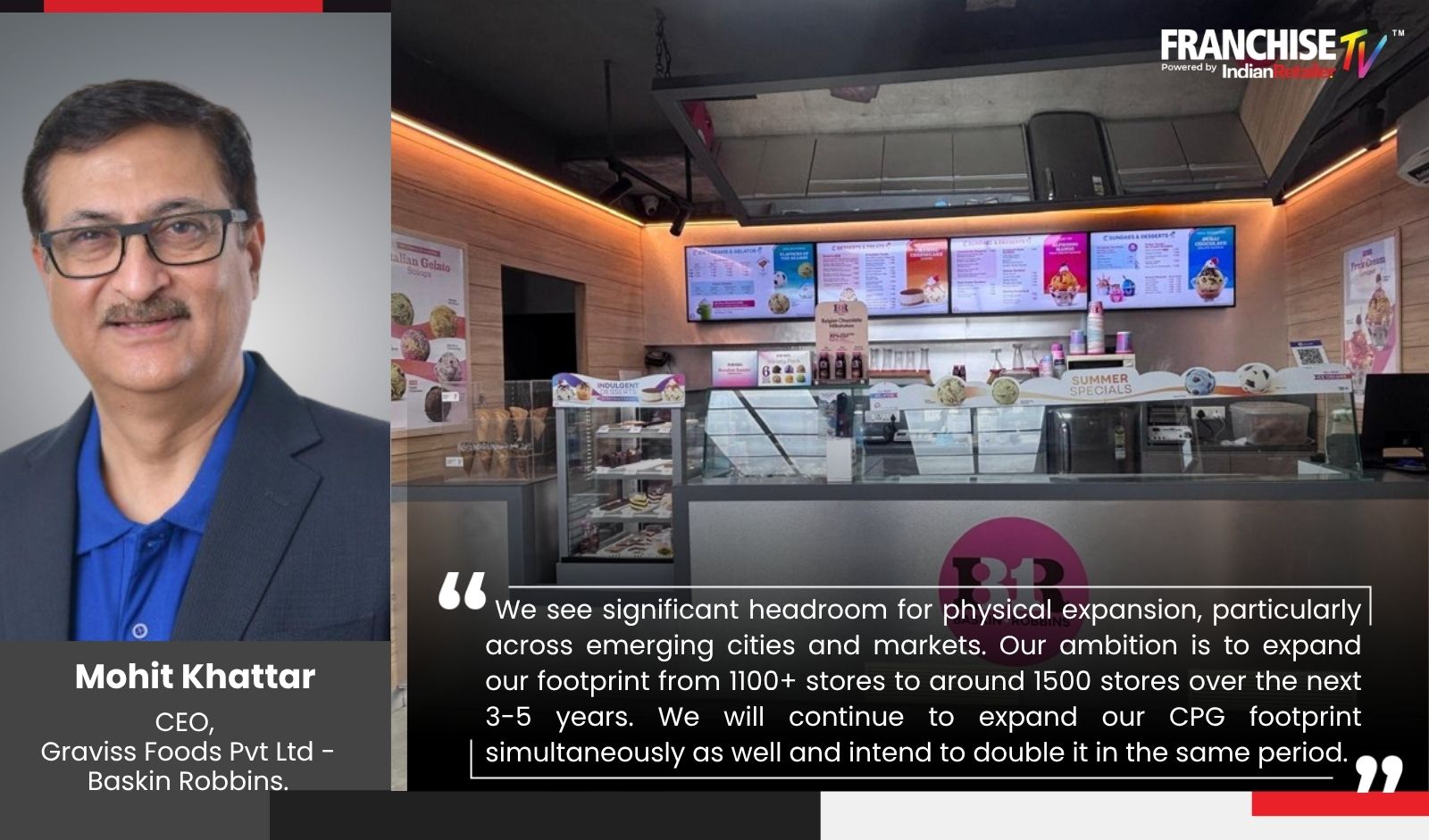
Graviss Foods Private Limited (part of the larger Graviss Group) is a premier food and beverage company, headquartered in Mumbai. The conglomerate has evolved into a global brand primarily recognized for manufacturing, retailing, and managing major ice cream and "better-for-you" FMCG products across India, the Middle East, and Europe. The company's brand portfolio includes Baskin Robbins, The Brooklyn Creamery, Kwality Ice Cream and Plantaway. The company acts as the master franchise holder for the Baskin Robbins across the entire SAARC region, including India.
Baskin Robbins has a legacy of over eight decades globally and has been present in India since 1993. With Graviss Foods, the brand has evolved by combining its global strengths and customer love with a deep understanding of Indian consumers and their preferences.
The brand is known for its variety and distinct flavours and ice cream formats. It serves 100% vegetarian and completely dairy based offering and consumer offers on the 31st of every month. It currently operates across multiple channels including CPG (Consumer Packaged Goods) and HoReCa, apart from exclusive brand parlour format.
Significant Milestones of the Brand
Significant recent milestones for the brand includes the opening of its new and modern production facility in 2021 and the opening of the 1,000th location across India and the SAARC region in 2024.
‘‘As Graviss Foods takes the brand deeper into India, it will be introducing new product and consumption formats designed to anticipate evolving consumer preferences, spark curiosity and capture attention across occasions and channels.’’ says Mohit Khattar, CEO, Graviss Foods Pvt Ltd - Baskin Robbins. ‘‘Alongside continued innovation, this approach is helping us strengthen Baskin Robbins as a distinctive destination for indulgence and shared experiences.’’
Market Footprint
Baskin Robbins has a strong presence across India. Graviss Foods, as its master franchisee for the region, operates over 1100+ standalone parlours across over 300+ cities in India and the SAARC region and continues to grow this footprint by 100-120 stores every year, supported by a growing presence across retail, modern trade, e-commerce and quick commerce.
Beyond India, Graviss Foods also manages the operation in other SAARC region countries such as Nepal, Sri Lanka and the Maldives.
Further sharing the brand’s international expansion, Mohit shares, ‘‘Earlier this year, Graviss Foods was appointed as the master franchisee for the UK. We currently operate only 10 stores there and are looking to overhaul our presence with several new openings and a brand refresh.’’
Globally Baskin Robbins is present across over 50 countries and boasts a scale of nearly 8000+ restaurants.
Franchising Model Powering the Brand
‘‘Franchising has been an important part of our growth journey and continues to be a key enabler of our expansion,’’ says Mohit. ‘‘It allows us to combine the strength of the Baskin Robbins brand, our product expertise and operating systems with the local market understanding and entrepreneurial commitment of our franchise partners.’’
A strong franchise ecosystem enables Baskin Robbins’ to scale efficiently, enter new markets with local understanding and remain relevant to consumers, while maintaining consistency in quality, operations and customer experience.
Mohit further says, ‘‘For us, expansion is not simply about adding stores. It is about building sustainable businesses for our franchise partners while taking the brand closer to consumers.’’
Evolution of Franchising Ecosystem in India
Talking about the franchising ecosystem and its evolution in India, Mohit says, ‘‘The Indian franchising ecosystem has become significantly more sophisticated. Consumers are more familiar with organised brands, while for entrepreneurs it is a wonderful opportunity to associate with global brands and benefit from their structured approach to building scale and profitability. The opportunity is particularly strong across sectors such as food, retail and consumer services. At Baskin Robbins in India and the SAARC region, franchising has been integral to our expansion.’’
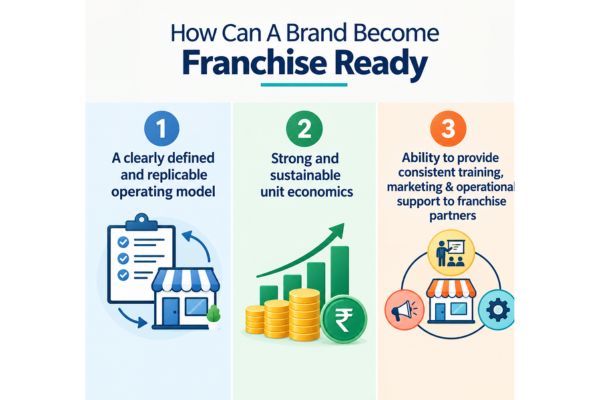
Further discussing how a brand can become franchise ready, Mohit shares, ‘‘For a business to be franchise ready, I believe three things are particularly important: a clearly defined and replicable operating model, strong and sustainable unit economics, and the ability to provide consistent training, marketing & operational support to franchise partners.
He further adds that right governance and communication systems are equally important and needs to be in place to ensure that the brand promise is delivered consistently across locations.
‘‘Ultimately, franchising works when there is a strong value proposition for both sides. The brand gets a scalable growth engine, while the franchise partner gets a proven business model, backed by the right systems, processes and support to build a sustainable business,’’ says Mohit.
Fundamentals to the Franchise Success: Training, Operational Support, & Ongoing Communication
‘‘At Baskin Robbins India, we work closely with our franchise partners across areas such as training, operations, product knowledge, customer experience, marketing and business performance,’’ says Mohit.
Continuous communication allows the brand to understand challenges at the ground level and respond quickly. It also helps us ensure that the brand’s standards evolve with changing consumer expectations. The success of the brand is closely interconnected to the success of our franchise partners.
How Technology and Data Analytics Are Becoming Enablers for Efficient and Effective Operations?
Technology is becoming an increasingly important enabler across the food and retail ecosystem,with significant opportunities for improvement both operational efficiency and consumer engagement.
Baskin Robbins India is increasingly using data and technology to get a better understanding of the business and consumer behaviour. It allows the brand to make informed decisions and identify opportunities to improve the overall consumer experience.
‘‘As the business continues to scale, we believe technology will play an increasingly important role in areas such as customer interface at the front end, data analytics to drive repeatability and seamless operations in general. Our focus will be on using technology meaningfully, not simply as an enabler, but as a tool to make the business more efficient, responsive and consumer centric,’’ says Mohit.
Ice Cream and Frozen Dessert Market in India
The Indian ice cream and frozen dessert category is undergoing an interesting phase of evolution. The Indian ice cream market is currently estimated at approximately INR 30,000 crore and is projected to reach INR 50,000 crore by 2030, reflecting that significant headroom for growth exists for organised players.The market is being supported by rising disposable incomes, urbanisation, premiumisation, greater exposure to global food trends and, importantly, an increase in consumption occasions.
Discussing insights about the ice cream and frozen dessert market, Mohit shares, ‘‘One of the biggest shifts we are seeing is that ice cream is increasingly moving beyond the perceived seasonal category. Consumers are enjoying it across a wider range of occasions, whether as an everyday indulgence, a social experience or an after-meal treat. The category is also benefiting from greater accessibility. Consumers can now discover and purchase products through parlours, modern trade, general trade, e-commerce and quick commerce.’’
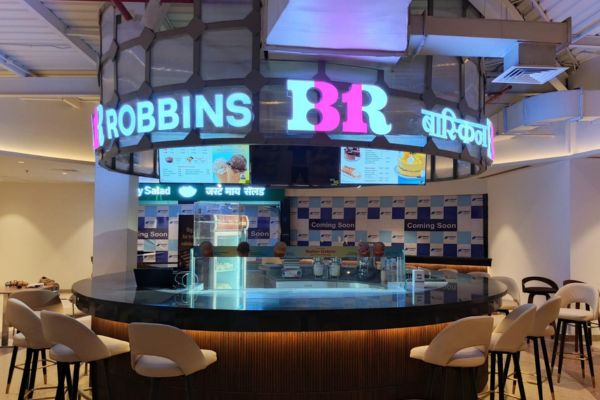
He adds, ‘‘For brands like Baskin Robbins, this creates an opportunity to participate across multiple consumption occasions while continuing to innovate around products, formats, experiences and channels.’’
New Market Trends and Customer Preferences
Consumer preferences are becoming more diverse and occasion led. Consumers are looking for greater variety, new flavour experiences and formats that fit different consumption occasions.
‘‘We are seeing interest across premium and indulgent offerings, globally inspired as well as locally relevant flavours, new formats and convenient options for at-home consumption,’’ says Mohit.
Mohit further shares that another important shift is how consumers discover and purchase food. Digital platforms and quick commerce have significantly reduced the distance between discovery and consumption, making indulgence more accessible and spontaneous. At the same time, physical parlours continue to be important because they offer something that digital channels cannot fully replicate, the experience of visiting a brand, trying new products and sharing the occasion with friends and family.
He emphasizes, ‘‘For Baskin Robbins, the opportunity lies in balancing innovation with familiarity, bringing new experiences to consumers while retaining the quality, trust and flavours that they know and love.’’
Future Plans
Over the next five to ten years, the brand will focus on building Baskin Robbins into a larger, more accessible and more relevant destination not just for ice creams but also other desserts.
‘‘We see significant headroom for physical expansion, particularly across emerging cities and markets where organised dessert consumption is still developing. Our ambition is to expand our footprint from 1100+ stores to around 1500 stores over the next 3-5 years, subject to market and business conditions. We will continue to expand our CPG footprint simultaneously as well and intend to double it in the same period,’’ says Mohit.
Alongside retail expansion, the ice cream brand will continue to strengthen its presence across modern trade, e-commerce and quick commerce, while developing new products and formats that respond to evolving consumer preferences.
‘‘A key priority will also be building a stronger and more profitable franchise ecosystem. For us, the objective is not expansion for the sake of store numbers. It is about creating a scalable and sustainable business that delivers value to consumers, franchise partners and the broader ecosystem. While continuing to evolve with the next generation of Indian consumers, ultimately, we want Baskin Robbins to remain a brand that consumers associate with indulgence and joyful experiences, signs off Mohit.
For Further Franchise Info Contact




Copyright © 2009 - 2026 Franchise Tv.