


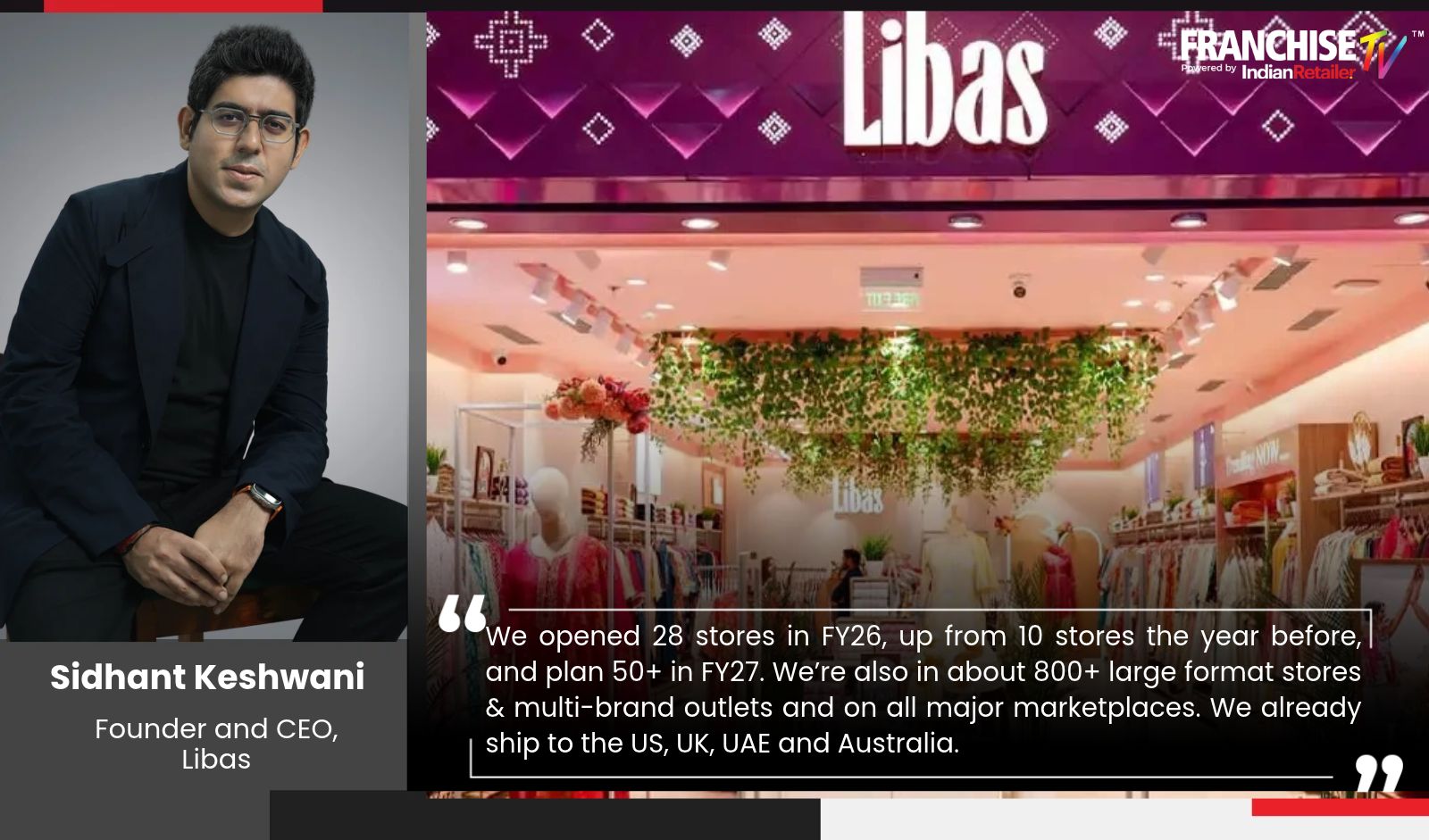
Libas is India’s first digital-first, tech-enabled ultra-fast fashion brand specialising in women’s Indian and fusion wear. Sidhant Keshwani took the brand forward in 2013, steering its growth into India’s first fast-fashion brand to achieve an annual revenue run rate of INR 1,000 crore as of March 2026. Notably, Libas achieved its first INR 500 crore in revenue through a bootstrapped journey while maintaining EBITDA positivity.
‘‘Our significant milestones include our first stores in 2021, INR 150 crore from ICICI Venture’s IAF Series 5 in 2024, quick commerce foray in 2025, and Gerua, our workwear brand, in 2026,’’ says Sidhant Keshwani, Founder and CEO, Libas.
Retail Footprint
The brand has a strong retail footprint in India. Recently, the brand has opened nine stores in Navratri, and has reached 60+ stores across 25+ cities.
Talking about the brand’s physical retail expansion, Sidhant said, ‘‘We opened 28 stores in FY26, up from 10 stores the year before. Looking ahead, we plan to open 50+ stores in FY27.
Libas currently has about 800+ large format stores & multi-brand outlets in all major marketplaces, ship its clothing to the US, UK, UAE and Australian markets.
Brand’s Portfolio and Price Point
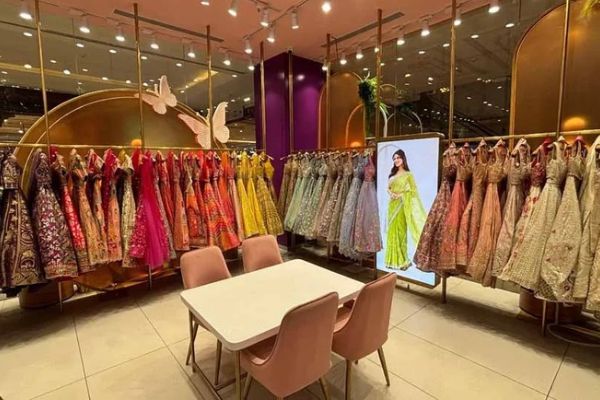
Libas' product portfolio covers everyday kurtas, kurta sets, co-ords, dresses, festive and occasion wear. The brand premium sub collection 'Libas Art' caters to detailed embellished clothing tailored for festive occasions, weddings, and celebrations while its Gerua brand offers contemporary, daily-wear, and affordable western and fusion clothing for working women.
Talking about its fast-fashion segment and price point, Sidhant says, ‘‘Our price point sits in the accessible-premium band and we launch 200 new styles every 10-15 days.’’
Role of Franchising in Libas
Franchising serves as a key growth driver for Libas, enabling the brand to expand its retail footprint across Tier II and Tier III cities while partnering with local entrepreneurs who bring valuable market understanding and regional insights, strengthening the brand’s presence in their respective markets.
Talking about the role of franchising in Libas, Siddhant says, “We don’t look at franchising as a shortcut to increasing our store count. Our own stores help us understand how customers actually behave, while franchising allows us to reach markets where local partners have a better understanding of the catchment. This is particularly important in Tier II and Tier III cities. We are selective in our approach, ensuring that the store is profitable for the partner first.”
Libas’ Outlook on Ethnic Wear Market in India
Sidhant belives that organised players still have a small share in ethnic wear market in India. There are four things that drive the segment’s demands: Rising incomes outside the metros, online discovery that builds demand before a store exists, contemporary, comfortable designs that keep their cultural relevance, and partners wanting a brand with proven systems rather than starting from scratch.
Rising incomes beyond metro cities are creating new opportunities for the ethnic wear market, particularly across Tier II and Tier III cities. With improving purchasing power, changing lifestyles and greater exposure to fashion trends, consumers in these markets are increasingly moving beyond unorganised local retail options and exploring branded ethnic wear. They are also becoming more willing to spend on quality, design, variety and convenience, creating demand for organised brands in these area.
Digital platforms, social media and e-commerce have transformed how consumers discover and engage with ethnic wear brands. Customers can now explore collections, follow fashion trends, compare designs and develop brand preferences even in cities where a physical store does not exist. This online visibility helps brands build awareness and establish a customer base ahead of their offline expansion.
Consumer preferences in ethnic wear are evolving, with shoppers increasingly looking for designs that combine traditional aesthetics with contemporary styling and everyday comfort. Younger consumers, in particular, are exploring versatile silhouettes, fusion wear, lightweight fabrics and occasion-based collections that can transition across different settings. Brands are responding by refreshing traditional designs with modern cuts, colours, prints and styling while retaining their cultural relevance. This balance between tradition and modernity is helping ethnic wear appeal to a wider consumer base and encouraging more frequent purchases beyond weddings and festivals.
Lastly, as organised retail expands into emerging markets, entrepreneurs are increasingly interested in associating with established brands. A recognised brand can offer partners an established product range, brand identity, merchandising strategies, supply-chain support and standardised operating systems, streamlining store operations and provide greater clarity on managing the business. For franchise partners, the opportunity lies in leveraging an existing business framework and consumer recognition, while brands benefit from local market knowledge and a wider retail network.
Festive Season: Biggest Peak Season for Ethnic Wear Segment
Festive and wedding months represent the biggest demand peaks of the year for the ethnic wear category, contributing significantly to overall sales and consumer spending. During these periods, shoppers are more inclined to explore new designs, experiment with colours and styles, and purchase multiple outfits for different occasions, creating opportunities for brands to introduce exclusive festive collections, refresh their store merchandise, and strengthen their omnichannel presence.
‘‘In the festive quarter we see roughly 20-25% more than normal sales,’’ says Sidhant. ‘‘We plan collections and stock early and use data from our online business to decide what goes where. Stores get regular replenishment during the season, and our stores also support quick commerce and endless aisle, so a size or style missing in one place can be fulfilled from elsewhere. Typical replenishment time to stores is between 1 to 6 days depending on the proximity of the warehouse,’’ says Siddhant.
Omnichannel Presence
Libas follows an integrated omnichannel approach, ensuring a seamless and consistent customer experience across digital and physical touchpoints. From product discovery on social media to in-store trials and purchases through its app or Libas Now, every channel plays a connected role. Stores also serve as service, returns and fulfilment hubs, while each channel remains accountable for its own business economics.
Talking about the brand’s omnichannel presence, Sidhant says, ‘‘Customers don’t see channels, they see one brand. Someone might discover us on Instagram, check the fit and fabric in a store, and reorder through the app, Libas Now. We want every one of those steps to feel like the same relationship, with stores doing more than selling: service, trials, returns and fulfilment too. Each channel is still accountable for its own economics.’’
Roadmap for Future
Looking ahead, the brand plans to reach 50+ stores in FY27 and a push towards 200+ stores over the next few years.
‘‘Our long term plan is to become a national name in Indian ethnic wear, with a meaningful international presence starting with the UAE and the US, and a franchise network that is a real part of the business,’’ signs off Sidhant.
For Further Franchise Info Contact
Explore Franchise Opportunities by Industry




Copyright © 2009 - 2026 Franchise Tv.