






 4625
/ 10 MIN READ
4625
/ 10 MIN READ

 Follow Us
Starting a franchise has become one of the most popular ways to enter the business world in India. Instead of building a brand from scratch, entrepreneurs can partner with an established company, benefit from an existing customer base, and operate with a proven business model. As India's franchise ecosystem continues to expand across food, retail, healthcare, education, beauty, and service sectors, more investors are asking one important question: How much money do you really need to start a franchise in India?
The simple answer is that there is no fixed investment amount. Depending on the business category, location, and brand, franchise investments can range from less than ₹10 lakh to several crores. However, understanding where your money goes is far more important than focusing only on the franchise fee.
Franchise Investment Is More Than Just the Franchise Fee
One of the biggest misconceptions among first-time investors is that the franchise fee is the total cost of starting a business. In reality, the franchise fee is only one part of the investment. Setting up a franchise also requires spending on store interiors, equipment, inventory, rental deposits, technology systems, licenses, staff recruitment, training, marketing, and day-to-day operations.
Many successful franchisees also keep sufficient working capital aside to comfortably manage the business during its initial months. This financial cushion allows the outlet to operate smoothly while building a loyal customer base.
How Much Should You Budget?
The investment required depends largely on the industry you choose. Entry-level franchise businesses, including kiosks, service centres, and small-format retail concepts, can often be launched with an investment below ₹15 lakh. These businesses typically require limited space and lower operating expenses, making them attractive for first-time entrepreneurs.
For investors with budgets between ₹20 lakh and ₹50 lakh, opportunities expand significantly. This investment range includes many café brands, quick-service restaurants (QSRs), salons, optical stores, pharmacies, fitness studios, and children's retail concepts. These businesses continue to attract strong demand as consumers increasingly prefer organised brands and consistent customer experiences.
Premium franchise formats, including large restaurants, hotels, furniture showrooms, luxury retail stores, and home décor businesses, generally require investments exceeding ₹50 lakh and, in many cases, crossing ₹2 crore. While the capital requirement is higher, these businesses often operate in larger markets with higher average customer spending and greater long-term growth potential.
Read more: Best Sports & Fitness Franchise Opportunities in India to Start in India
Why Spa Franchises Are Becoming India's Next Big Business Opportunity
Most Trusted Franchise Brands in India to Start a Franchise Business
The Real Cost Lies in Operations
Opening a franchise is only the beginning. Running it successfully requires careful financial planning. Monthly expenses such as employee salaries, rent, utilities, inventory replenishment, maintenance, and local marketing continue long after the launch.
Industry experts often recommend maintaining enough working capital to support business operations for at least three to six months. This approach provides stability during the early stages and allows businesses to focus on customer acquisition instead of worrying about immediate cash flow.
Choosing the Right Franchise Matters More Than Choosing the Cheapest One
A lower investment does not automatically make a franchise a better opportunity. Experienced investors evaluate several factors before making a decision, including brand reputation, customer demand, operational support, profitability, expansion plans, and the success of existing franchise partners.
A well-established franchisor usually provides structured training, marketing assistance, technology support, supply chain management, and operational guidance. These advantages can significantly reduce business risks and improve long-term performance.
India's Franchise Market Continues to Grow
India's franchise industry is evolving rapidly as organised retail expands and consumer spending increases. Demand is rising not only in metro cities but also across Tier II and Tier III markets, where branded businesses are witnessing strong acceptance.
Food and beverage, retail, healthcare, education, wellness, fitness, logistics, home improvement, and pet care are among the sectors attracting increasing franchise investments. Consumers today value trusted brands, consistent quality, and better customer experiences, encouraging businesses to expand through the franchise model rather than company-owned stores alone.
This growing ecosystem has created opportunities for entrepreneurs with different investment capacities, making franchising one of the most accessible business models in the country.
Questions Every Investor Should Ask
Before investing in any franchise, entrepreneurs should understand the complete financial picture rather than focusing only on the advertised investment. It is important to know the total setup cost, ongoing royalty charges, expected break-even period, average monthly operating expenses, and the level of support offered by the franchisor after launch.
Speaking with existing franchise partners can also provide valuable insights into the business's actual performance and help investors make informed decisions.
Explore more: 7 Reasons Smart Entrepreneurs Are Choosing Franchising Over Startups in 2026
How to Start a Beauty Salon Business in India
5 Profitable AI-Powered Business Ideas You Can Start in 2026
Final Thoughts
Starting a franchise in India does not require a fixed amount of money—it requires the right financial planning. Whether your budget is ₹10 lakh or ₹2 crore, the ideal franchise is the one that aligns with your investment capacity, market demand, location, and long-term business goals.
Rather than chasing the lowest-cost opportunity, entrepreneurs should focus on brands with strong business fundamentals, sustainable unit economics, and a proven expansion strategy. In today's competitive market, choosing the right franchise is not simply about how much you invest, but how wisely you invest.
FREQUENTLY ASKED QUESTIONS
Yes, several kiosk, service, education, and small-format retail franchises can be started with an investment of around ₹10 lakh, depending on the brand and business model.
Apart from the franchise fee, the investment generally covers store setup, interiors, inventory, equipment, technology, staff training, marketing, licenses, and working capital.
Hotels, premium restaurants, luxury retail, furniture, jewellery, and large-format home décor businesses typically require the highest capital investment.
Yes. Maintaining funds for at least three to six months of operations helps manage expenses and supports business stability during the initial growth phase.
While every business carries risk, franchising can reduce uncertainty by providing entrepreneurs with an established brand, proven operating systems, training, and ongoing business support.
For Further Franchise Info Contact

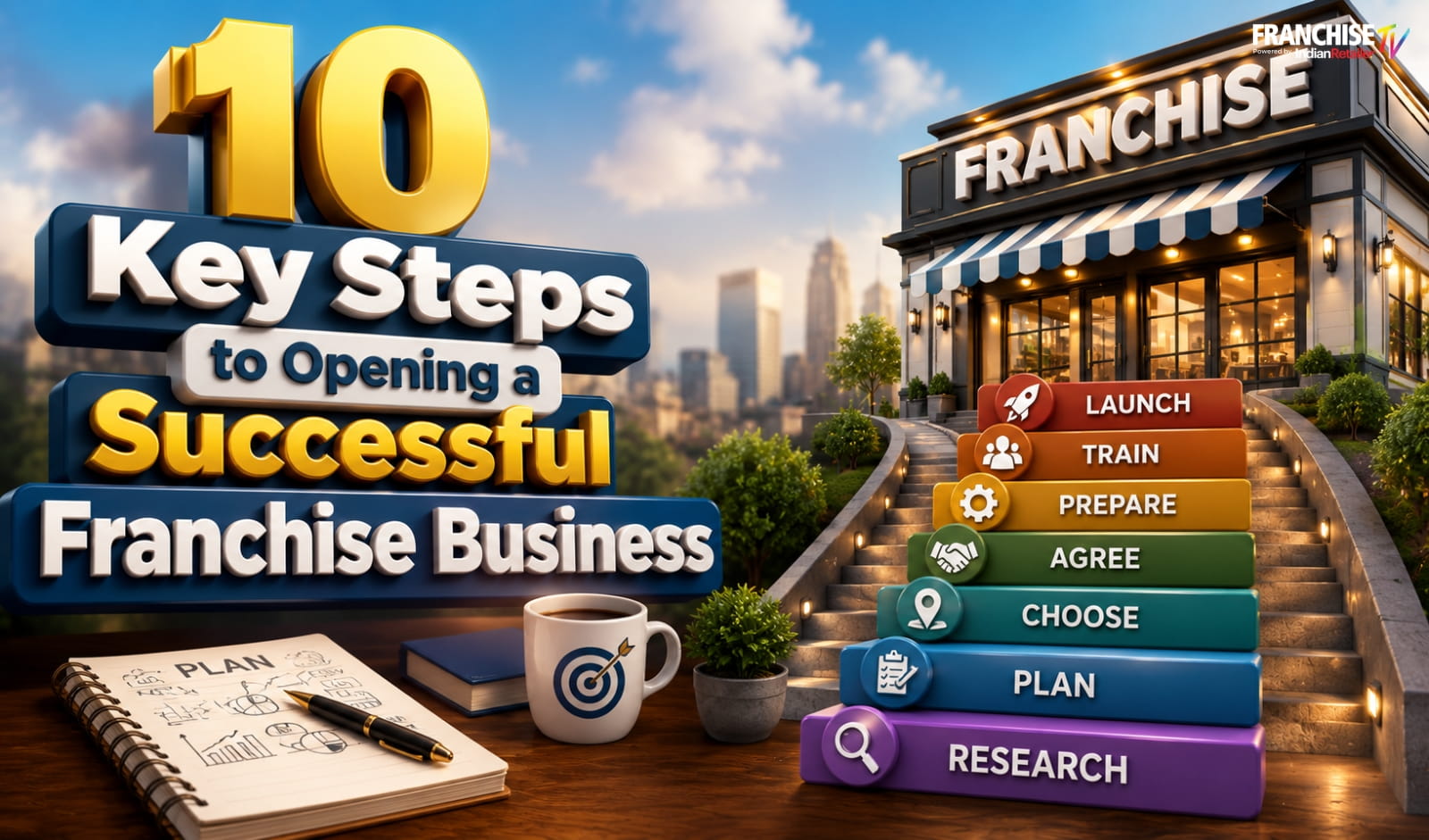
Starting a business has become one of the most popular career choices among aspiring entrepreneurs in India. However, building a brand from scratch requires significant time, capital, and market acceptance. This is why many investors today prefer franchising, which offers an established business model, brand recognition, operational support, and proven systems that reduce many of the risks associated with starting an independent venture.
A franchise business gives entrepreneurs the advantage of operating under an established brand while receiving guidance in areas such as training, marketing, operations, and business management. Although franchising offers a structured path to entrepreneurship, success depends on much more than choosing a popular brand. Proper planning, financial discipline, and market research remain equally important.
The rapid growth of organized retail, food service, healthcare, education, and lifestyle sectors has created thousands of franchise opportunities in India. Entrepreneurs now have access to businesses across different investment ranges, making franchising one of the fastest-growing business models. However, choosing the right opportunity requires careful evaluation rather than emotional decision-making.
Many successful franchise brands have built their reputation through consistency and operational excellence. As a franchise owner, you become responsible for maintaining those standards while delivering a quality customer experience. Following the right process before investing helps minimize risk and increases your chances of building a profitable business.
1. Evaluate Yourself Before Investing
Every successful franchise begins with understanding your own goals. Before exploring different franchise options, ask yourself why you want to own a business, how much time you can dedicate, and what level of investment you are comfortable making. Franchising requires commitment, discipline, and the willingness to follow an established business system rather than creating your own operating methods.
Financial preparedness is equally important. Apart from the franchise fee, you should be prepared for expenses related to interiors, equipment, inventory, marketing, salaries, rent, and working capital. Understanding your financial capacity before approaching a franchisor helps you choose a business that aligns with your long-term objectives.
Read also: How to Start a Cafe Franchise Business in India
7 Franchise Industries Growing Faster Than Real Estate in 2026
How Much Money Do You Really Need to Start a Franchise in India?
2. Choose the Right Industry and Franchise
Instead of selecting a franchise solely because it is well known, focus on industries that continue to experience consistent consumer demand. Food and beverage, healthcare, education, beauty, fitness, retail, home services, and pet care are among the sectors showing sustained growth in India.
Once you've shortlisted an industry, compare multiple franchise options based on investment requirements, operational support, profitability, market demand, royalty structure, and future expansion plans. The right franchise should align with both your budget and your business goals rather than simply being the most recognized name.
3. Research Before You Invest
Successful entrepreneurs approach franchise selection like an investment decision rather than an emotional purchase. Study the company's business model, growth history, training programs, operational systems, and franchise support. Understanding how the business operates on a daily basis provides valuable insight into its long-term sustainability.
Equally important is reviewing the Franchise Disclosure Document (or equivalent documentation), which explains fees, responsibilities, legal obligations, and operational expectations. Taking time to research every aspect of the business helps you make an informed decision and avoid costly mistakes later.
4. Speak With Existing Franchise Owners
One of the most valuable sources of information is current franchise owners. Their practical experience often provides insights that marketing brochures cannot. Visit operational outlets whenever possible and observe customer traffic, employee performance, cleanliness, and service quality.
Ask franchisees about the support they receive from the franchisor, their operational challenges, profitability, and whether the business has met their expectations. Speaking with multiple franchise owners from different locations provides a balanced understanding of both the opportunities and the challenges involved.
5. Secure Funding and Plan Your Investment
Many entrepreneurs underestimate the total cost of opening a franchise. Beyond the franchise fee, you must account for property deposits, interiors, technology, licenses, insurance, staffing, inventory, and marketing. Preparing a comprehensive investment plan allows you to estimate your working capital requirements during the initial months.
If external funding is required, prepare a detailed business plan before approaching banks or financial institutions. A realistic financial strategy ensures that your business remains stable while building its customer base.
6. Understand the Franchise Agreement
Before signing any agreement, carefully review every clause related to franchise tenure, royalty payments, territory rights, marketing contributions, renewal conditions, and exit policies. These terms define your relationship with the franchisor and determine how the business will operate in the future.
Although most established franchisors follow standardized agreements, consulting a legal professional with franchise expertise can help you understand technical clauses and protect your long-term interests.
7. Choose the Right Business Location
Location continues to be one of the most important factors influencing franchise success. A business located in an area with strong customer demand, good accessibility, and adequate visibility has a greater chance of attracting consistent footfall.
Study local demographics, competition, surrounding businesses, parking availability, and future commercial development before making your decision. Many franchisors also assist franchisees with site selection, ensuring that the chosen location supports the business model.
8. Complete Legal Formalities
Every franchise must comply with applicable legal and regulatory requirements before commencing operations. Depending on the industry, you may need GST registration, Shop and Establishment registration, Trade License, FSSAI approval, labour registrations, fire safety clearances, and business insurance.
Completing these formalities before opening ensures smooth operations while protecting your business from future compliance issues.
9. Build a Strong Team and Complete Training
Employees play a significant role in maintaining the quality and consistency of any franchise. Recruit individuals who possess both technical skills and a customer-focused approach. A motivated and well-trained team contributes directly to customer satisfaction and business growth.
One of the biggest advantages of franchising is access to structured training. Most franchisors provide detailed guidance on operations, customer service, inventory management, technology, and standard operating procedures. Following these systems consistently helps maintain brand standards across every outlet.
10. Launch Your Business Strategically
Opening day is just the beginning of your entrepreneurial journey. Create awareness through digital marketing, social media campaigns, Google Business Profile optimization, local advertising, and community engagement. Many successful franchises also organize a soft launch before the grand opening to identify operational improvements and train staff under real business conditions.
Long-term success depends on continuously monitoring customer feedback, maintaining service quality, adapting to market changes, and following the franchisor's proven business processes.
Read more: Scooping Success: The Trends Transforming India’s Ice Cream Franchise Industry
Top 5 Fashion Retail Franchise Brands for Delhi Entrepreneurs
Top 10 International Food Franchise Brands to Start a Business in India
Conclusion
Opening a successful franchise business requires much more than investing in a recognized brand. It involves careful planning, selecting the right industry, conducting thorough research, arranging finances, understanding legal responsibilities, choosing a strategic location, and building a capable team. Entrepreneurs who follow a structured approach are better prepared to manage challenges and create sustainable growth.
With India's franchise sector continuing to expand across multiple industries, now is an excellent time to explore franchise ownership. By following these ten key steps and making informed decisions at every stage, you can build a profitable business while benefiting from the support and credibility of an established franchise system.
For Further Franchise Info Contact

Real estate has long been the gold standard people compare every other investment to. But 2026 franchise industry data tells a different story: several franchise sectors are now expanding two to ten times faster than real estate franchising itself.
According to the International Franchise Association's (IFA) 2026 Franchising Economic Outlook, real estate — along with quick-service restaurants and automotive — is projected to grow at a conservative rate of under 0.5% this year, largely due to constrained discretionary spending and a cooling property market. Meanwhile, service-based franchise categories built around recurring, non-discretionary demand are posting growth rates of 3% to 7%+ annually, with some niche segments growing even faster.
If you're evaluating where to put your money in 2026 — whether that's a franchise investment or simply understanding where the economy is heading — here are the seven franchise industries outpacing real estate, backed by current market data.
Quick Answer: Fastest-Growing Franchise Industries vs. Real Estate (2026)
| Industry | 2026 Growth Rate | Real Estate Comparison |
| Health & Wellness / Personal Services | 4.3% (IFA) | 8–9x faster |
| Pet Care & Services | 4–7% annually | 8–14x faster |
| Senior Care | ~5% unit growth, 8–9.8% market CAGR | 10–20x faster |
| Child Services & Education | 3.2% (IFA) | 6x faster |
| Commercial & Residential (Home) Services | 3.2% (IFA), 6.7% market CAGR | 6–13x faster |
| Beverages (Coffee, Tea, Specialty Drinks) | Among top 10 hottest categories (Entrepreneur, 2026) | Outpacing traditional food franchising |
| Business Services | Among top 10 hottest categories, AI-driven demand | Outpacing traditional retail/office models |
| Real Estate (baseline) | Under 0.5% (IFA/FRANdata) | — |
Now let's break down why each of these industries is pulling ahead — and what's fueling the growth.
Read more: Best Kids Fashion Franchise Brands Riding India's Growing Children's Apparel Market
Top 5 South Indian Restaurant Franchise Brands to Start a Profitable Business in 2026
Top Chocolate Franchise Brands in India: Investment, Store Formats & Profit Potential
1. Health & Wellness (Personal Services)
Health and wellness has become the fastest-growing category in franchising, projected at 4.3% growth in 2026 — the highest of any segment tracked by the IFA. Employment within personal services franchises (fitness studios, medical spas, recovery centers, weight management clinics) grew 7.8% between 2023 and 2025, outpacing every other franchise sector.
The driver isn't a passing wellness fad. It's a structural shift: rising healthcare costs are pushing consumers toward preventive, results-oriented services rather than reactive medical care. Average unit revenues in this sector surpassed $1 million in 2024, and demand is increasingly coming from Millennials and Gen Z, who now account for over 41% of annual wellness spending.
Why it beats real estate: Wellness franchises operate on recurring membership models with smaller physical footprints and lower fixed costs than large-format real estate offices, giving them faster scalability with less capital risk.
2. Pet Care & Services
The U.S. pet industry crossed $157–165 billion in annual spending in 2025–2026, a figure that has grown every single year for more than 25 consecutive years — including through recessions. Pet care franchises specifically (daycare, grooming, training, boarding) are growing at 4–7% annually, with some sub-segments like pet daycare projected at nearly 9% CAGR through 2030.
This growth is driven by "pet humanization" — a cultural shift where pet owners treat animals as family members and budget accordingly, regardless of broader economic conditions.
Why it beats real estate: Pet spending has proven recession-resistant across multiple economic cycles, while real estate transaction volume is directly tied to interest rates and consumer confidence — both headwinds in 2026.
3. Senior Care
Franchised senior care locations have grown at a CAGR of roughly 5% over the past several years, with average unit revenues climbing at a 4.6% CAGR. Broader market forecasts for senior care franchising range from 8% to nearly 10% CAGR through the early 2030s.
The math behind this is demographic, not cyclical: the number of Americans aged 80+ is growing roughly four times faster than assisted-living and nursing capacity can expand, according to Harvard's Joint Center for Housing Studies. More than 90% of seniors say they prefer to age in place, funneling demand into home-based and community care — exactly where franchised senior care operates.
Why it beats real estate: This is one of the few franchise categories where demand is essentially guaranteed by population aging, independent of interest rates, housing prices, or consumer discretionary spending.
4. Child Services & Education Enrichment
The IFA projects child services franchises to grow 3.2% in 2026 — nearly double the overall franchise industry's establishment growth rate of 1.5%, making it one of the two fastest-growing sectors alongside commercial and residential services.
Within this category, enrichment-focused models (STEM, mental math, coding, tutoring) are seeing some of the strongest momentum in all of franchising, with certain brands posting unit growth above 70% year-over-year and drawing fresh institutional investment from private equity.
Why it beats real estate: Childcare and enrichment spending is treated by working parents as non-negotiable, not discretionary — a dual-income household doesn't pause enrollment because mortgage rates rose.
5. Commercial & Residential (Home) Services
Home services — cleaning, restoration, pest control, plumbing, lawn care, and handyman franchises — are matching child services at 3.2% IFA-projected growth in 2026. The broader U.S. home services market is valued at roughly $842 billion in 2026, on track to approach $989 billion by 2031.
The driver here is structural, too: the average U.S. home is now more than 40 years old, generating a steady, non-discretionary stream of repair and maintenance demand that doesn't disappear when the housing market slows.
Why it beats real estate: Home services franchises typically operate from a van or small office rather than expensive retail or commercial real estate, meaning lower buildout costs and faster unit economics than real estate brokerage models.
6. Beverages (Coffee, Tea & Specialty Drinks)
Beverage concepts — from specialty coffee to Asian-inspired tea brands — were named among the 10 hottest growth categories in franchising for 2026 by Entrepreneur magazine, alongside business services and personal care. This category benefits from low real estate footprints (many operate as kiosks, drive-thrus, or small-format stores), fast customer throughput, and strong repeat-visit economics.
Why it beats real estate: Beverage franchises can open in a fraction of the space and cost of a real estate office, letting operators scale units faster per dollar invested.
7. Business Services
Business services — everything from marketing and staffing agencies to specialized B2B support franchises — round out the list of the fastest-growing franchise categories heading into 2026. Much of this growth is being fueled by small and mid-sized businesses outsourcing functions that AI and automation have made newly affordable to deliver at scale.
Why it beats real estate: Business services franchises are largely asset-light, requiring no storefront, inventory, or major real estate footprint — a structural advantage in a year when real estate costs remain elevated across most major markets.
Know more: Baby Island Bets Big on India's Booming Kidswear Market with Premium Franchise Model
9 Winning Food Franchises to Own Under ₹30 Lakhs
How Much Money Do You Really Need to Start a Franchise in India?
Why Real Estate Franchising Is Lagging in 2026
It's worth being fair to real estate: the sector isn't shrinking, it's just growing slowly relative to these service categories. Elevated interest rates, tighter credit conditions, and cautious buyers have all suppressed transaction volume, which directly caps growth for real estate franchise brands that earn revenue on sales commissions. The broader global "property franchise market" (which includes non-U.S. and adjacent segments) is still projected at a healthier 6.7% CAGR through 2035 — but the pure franchise-unit growth rate inside the U.S. market remains well under 1% for 2026 specifically.
In short: real estate franchising is stable, not stagnant — but it's no longer the fastest lane in franchising, and hasn't been for a couple of years now.
For Further Franchise Info Contact






Copyright © 2009 - 2026 Franchise Tv.