





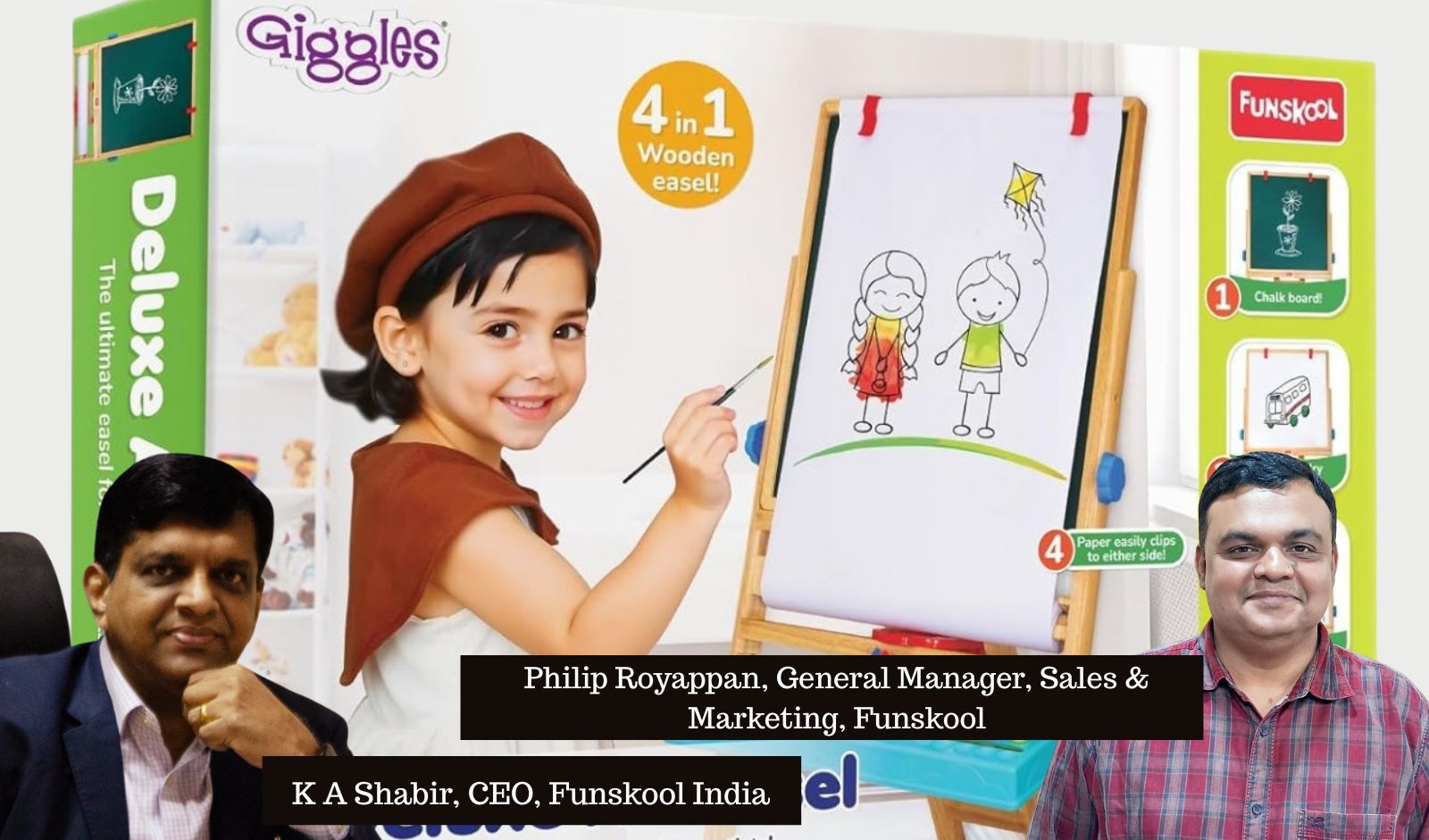
India’s toy market is entering strategic licensing, and Funskool India, a leading toy manufacturer, is giving it a first-mover advantage. It is backed by the esteemed MRF Group, which has been a trusted name in the toy industry since 1988. With over three decades of experience, the brand has been a pioneer in promoting quality and safety, setting new standards and elevating the industry to new heights.
The Indian toys and games market size reached $3.90 billion in 2024. Looking forward, IMARC Group expects the market to reach $5.71 billion by 2033, exhibiting a growth rate (CAGR) of 4.40 percent during 2025-2033.
Licensing marks more than just a shift in business models; it signals the maturing of an industry that has long been driven by price wars, imports, and generic offerings. The landscape is now evolving toward intellectual property (IP), localized manufacturing, and brand integrity.
While licensing has traditionally been the playground of multinational giants, Funskool has methodically built a licensing-led portfolio that spans international games, animation franchises, action figures, and educational kits. By bringing the manufacturing of licensed products to Indian soil, the brand has not only reduced costs and improved margins but has also aligned product design, pricing, and distribution with Indian consumer sensibilities.
Licensing as Core Growth Driver
Rather than limiting itself to proprietary designs, Funskool secured manufacturing and distribution rights for globally established IPs such as Catan (Asmodee), Dobble, Scotland Yard (Ravensburger), Othello (MegaHouse), and action figures from Warner Bros. and Green Gold’s Chhota Bheem.
The company’s distribution footprint ensures its products don’t remain urban luxuries but reach Tier II and III markets where demand is surging.
KA Shabir, CEO, Funskool said, “This approach has made Funskool not just a distributor of global IPs but a curator of play experiences tailored for Indian families.”
The Made-in-India Edge
Funskool’s real competitive edge lies in its ability to produce licensed toys in India at scale and quality. With three manufacturing facilities: two in Ranipet and one in Goa, the company is uniquely positioned to avoid import-related frictions such as high customs duties, long lead times, and lack of control over production schedules.
By securing manufacturing rights and producing the game in India for Catan, Funskool was able to offer it at Rs 3,499, significantly below the international price tag of $70. Similarly, Dobble is priced at an accessible Rs 499, with over 5,000 units sold monthly, a feat made possible only by local production.
“Funskool’s ability to produce in low MOQs (minimum order quantities) of just 2,000 units allows for more SKU agility, reducing inventory risk and enabling faster testing of market responsiveness,” mentioned Philip Royappan, General Manager, Sales & Marketing, Funskool.
Cultural Localization
Shabir stated, “We bring global toys to Indian consumers at an affordable price, but it requires cultural recalibration as well.”
“In India, family values play a defining role in toy preferences. That’s why we’ve seen consistent success in the board game segment—titles like Scotland Yard and Othello thrive here because they foster quality family time. Products that promote group play and cooperation deeply resonate with Indian parents, aligning perfectly with our cultural fabric,” explained Royappan.
Even packaging plays a psychological role. Indian consumers often perceive bigger boxes as higher value, prompting Funskool to adapt sizing strategies accordingly.
These localizations also serve to increase product engagement, reduce friction at the point of purchase, and ultimately drive higher repeat purchases.
Beyond Metro Outreach
While metros remain key markets, Funskool is deliberately pushing into India’s emerging consumption centers, cities like Coimbatore, Kochi, Chandigarh, Pune, and Ahmedabad.
However, this expansion plan is not without its challenges, such as low brand awareness, value-conscious buying behavior, and limited retail infrastructure in smaller cities make market penetration complex.
The company tackles this through intensive retail training, demo programs, and locally anchored sales staff who can explain gameplay and demonstrate product benefits in real time.
“Our strategy may be low-glamour, but it’s high-impact, especially in markets where first-time exposure often determines long-term brand loyalty,” revealed Shabir.
The IP Enforcement Gap
Despite the growth in licensing, India’s toy industry faces a significant challenge—IP infringement. Shabir explained by mentioning, “The prevalence of counterfeits, especially in popular SKUs like Rubik’s Cube, undermines both brand trust and market viability.”
Funskool, which holds official licensing for Rubik’s in India, has consistently highlighted the need for stronger IP enforcement mechanisms. Without effective protection of licensed rights, ethical players find themselves undercut by copycats offering lookalikes at unsustainably low prices.
“To support a healthy licensing ecosystem, regulatory clarity, industry collaboration, and consumer awareness, we are taking critical steps,” Royappan commented.
Parental Shift and Educational Appeal
There’s a rising preference for toys that contribute to a child’s cognitive, social, or emotional development. Licensing helps meet this need by aligning trusted international IPs with educational content.
Shabir noted, “Games like Sum Genius, a math-based board game from an Australian inventor, exemplify how licensing enables the distribution of skill-building products.
To which Royappan further added, “ Similarly, craft kits like Fantastic Jewel Designer and Bead Studio introduce creativity, fine motor skills, and pattern recognition into playtime.”
This development-first orientation fits squarely into the expectations of modern Indian families, especially urban and semi-urban ones who are increasingly influenced by international parenting trends.
Looking Ahead
Funskool’s licensing playbook is currently anchored in foreign IPs, but the roadmap extends beyond that. The company is actively developing its brands like Giggles (for preschool toys), Handicrafts (arts and crafts), and Play & Learn (educational puzzles), with a long-term vision to license these domestically and potentially abroad.
Shabir stated, “In parallel, we see opportunities to extend the Funskool brand into adjacent baby categories—strollers, feeding bottles, and baby gear—where safety and trust are paramount. Marking its full-circle evolution: from licensed manufacturer to IP-owning exporter.
By aligning global IPs with Indian manufacturing, cultural nuance, and retail reach, Funskool is setting a precedent for how licensing can be both a growth engine and a brand differentiator.
For Further Franchise Info Contact




Copyright © 2009 - 2026 Franchise Tv.