





You can find Kalki’s favourite piece of fashion wear on Myntra.com. ‘Star N Style’ is Myntra’s first fashion property. Mukesh Bansal, CEO, Myntra.com explained the concept to Ankur Gaurav during the launch of Star N Style launch.
Ankur Gaurav (AG): What is the reason behind choosing a celebrity for your property “Star N Style”?
Mukesh Bansal (MB): Celebrities, Models, VJs all play a very big role in shaping people’s fashion state and style preferences. People take lot of fashion cues from movie stars. We are thrilled that we’re launching our first fashion property with Kalki. Our objective of brining these youth icons together is to build a strong and direct brand connect with our customers.
AG : What is the reason you chose Kalki Koechlin for this?
MB: There is a distinct synergy in what kalki wears and what she has chosen. Kalki’s youth appeal and elegance coincide perfectly with the fashion quotient of our exclusive brands. We are convinced that online shoppers will love to wear what kalki has picked out under ‘Star N Style’.
AG : How has the concept of fashion property, to be used as a marketing strategy, come up in today’s online market?
MB : It is another level of celebrity endorsement, where brands work very closely with the celebrities. It starts with various events where the star talks about their approach to fashion, style and shopping. And then with time they will start blogging the brands website. They will talk about their fashion styling tips, their pictures at the website and all this will be followed by contests, winner will be given a chance to spend time with the celebrity. So this is how the whole concept becomes a property, in this case a fashion property.
AG : What makes such a strategy different from normal promotional strategies?
MB : This is obviously a marketing strategy but with a lot of content. Choosing a set of products at our website does not look like a celebrity coming in a TVC. It gives a lot of exclusivity to the products she has chosen. Adding to that there will be a lot of interaction happening with the star which brings the customers even closer to the celebrity. The impact, I must say will be higher than any other marketing strategy.
AG : Can you comment on your marketing budget?
MB : I will not be able to give you any figures for that, but among all the e-commerce companies, we have the healthiest marketing budget.
AG: In future are you planning to associate any other celebrity with your retail website?
MB : Yes! We have planned to bring in a number of stars to get associated with our web portal. As celebrities are the ‘fashion inspirations’, from time to time they will be coming up but the names will till then will be a surprise.
AG: What is your market share in the e-commerce industry, if fashion and lifestyle is concerned?
MB : If we talk about fashion and lifestyle, I think we have a market share of about 35 per cent. There are many players coming up but by this time, I think we have made a strong customer base.
AG: Talking about the products you offer, how many brands do you offer?
MB: Till now we have been showcasing just over 350 brands on our portal. And very soon we also plan to bring in some designers as well on our website. We are already in talks with a couple of leading designers, names of whom you will get to know in the days to come.
AG : At what rate has Myntra.com been growing in this fiscal year?
MB: We have been getting encouraging results. Last month we crossed the sales mark of Rs 1 Crore per day. And we have been growing by 100 percent every two quarters. We are expecting with this growth rate, that we should cross the revenue of Rs 500 Crore.
AG: What is the differentiation of marketing budget spent on ATL and BTL activities?
MB: We generally focus on ATL that is mass media communications. We are not that much into BTL activities. These days we have also started focusing on digital media. This is one of such activity. Since our presence is on the web, we want to attract the web users. Google, Facebook, Twitter, etc is where we are putting up our presence. If talk about the differentiation, it is 40 percent mass media and 60 percent digital media.


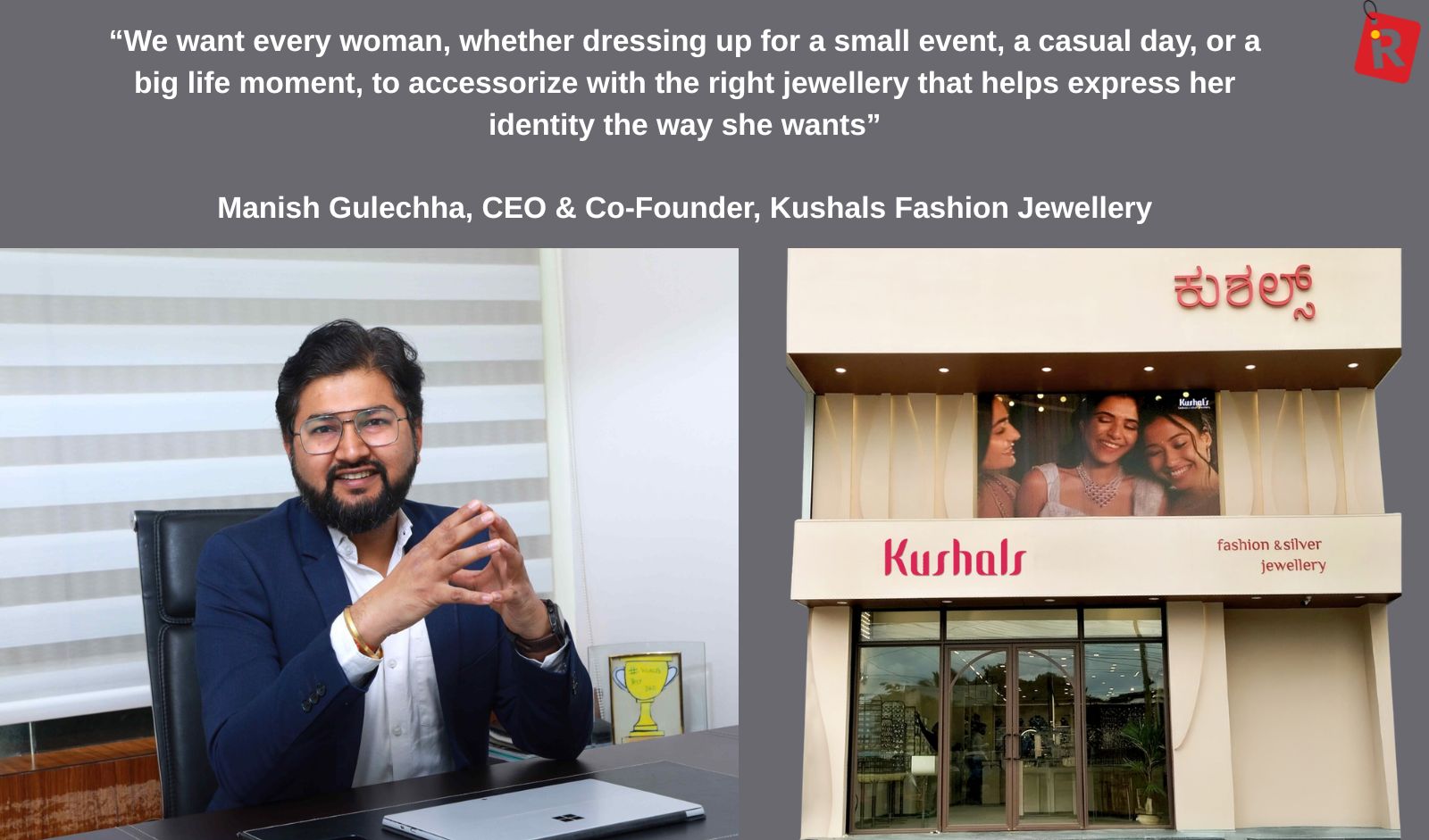
Founded in 2006, Kushals Fashion Jewellery has established itself as a leading fashion and silver jewellery brand, catering to every facet of a woman’s life—from workwear and partywear to bridal ensembles and everyday elegance. The brand offers a diverse range of jewellery, including necklaces, earrings, finger and toe rings, and more.
At present, Kushals has established over 100 stores across more than 40 cities in the country and continues to rapidly expand its retail presence throughout India.
“We reached our 100-store milestone last year and now we are looking at expanding further, improving our store experience and delivering better experiences and elevating the entire customer journey,” shared Manish Gulechha, CEO & Co-Founder of Kushals Fashion Jewellery.
Retail Presence and Expansion
Kushals Fashion Jewellery is primarily an offline-first brand. Its journey began with offline stores. Today, with close to 120 stores, the majority are located in South India. Over the last one and a half years, the brand has aggressively expanded into North India.
Online has been steadily growing over the last four years and today serves as a significant channel for the enterprise. Within the online segment, revenue contribution is equally split between marketplaces and D2C.
“Online contributes about 20–25 percent to our overall revenue. The remaining share comes from offline retail,” noted Gulechha.
Looking ahead, Kushals Fashion Jewellery plans to establish its retail footprint pan-India. The brand aims to expand to over 300 stores in the next three to five years. It also sees immense potential in online channels and will continue to focus on omnichannel expansion.
High-Growth Categories
Kushals Fashion Jewellery caters to a wide range of categories, from everyday wear to occasion wear. Its celebration and wedding segment remains a significant driver. However, over the last couple of years, the everyday category has grown substantially. Today, both categories contribute almost equally to the overall business.
“We have seen significant growth in the everyday category, which includes workwear 92.5 sterling silver as well as fashion jewellery,” expressed Gulechha.
The brand plans to launch new collections from April onwards, aligning with the upcoming wedding season.
Consumer Behaviour Across Tiers
Consumer preferences across Tier I, II, and III cities are increasingly converging, particularly in terms of design sensibilities and collection choices. The brand has observed that customers beyond metros are equally receptive to both contemporary and traditional styles.
“Our collection ranges from modern and Western designs to traditional Indian designs. Tier II cities also show equal preference for both categories. Fashion is no longer limited to Tier I cities; it has penetrated well beyond that. We are seeing similar behavior in Tier II cities as well,” highlighted Gulechha.
Standing Out in the Market
One of the biggest USPs that Kushals Fashion Jewellery brings to consumers is its curated offering. It positions itself as a one-stop destination for all jewellery requirements—whether everyday jewellery, celebration wear, occasion wear, or wedding jewellery.
The brand’s offerings are trend-driven and aligned with fashion apparel launches. Most designs are not repeated, ensuring that product offerings remain fresh and constantly evolving.
“We are positioned in the mass premium or affordable luxury category. Our products are well balanced between luxury and affordability. Our assortment ranges from as low as Rs. 560 to as high as Rs. 20,000. Each product is precisely priced based on its quality and craftsmanship,” shared Gulechha.
Growth Target and Long-Term Vision
Kushals Fashion Jewellery is targeting 40 percent year-on-year growth over the next three to four years. The brand also plans to reach more global customers through a stronger online presence in international markets.
“Our long-term vision aligns with our tagline—‘Fashion ki favourite jewellery.’ We want every woman, whether dressing up for a small event, a casual day, or a big life moment, to accessorize with the right jewellery that helps express her identity the way she wants,” concluded Gulechha.
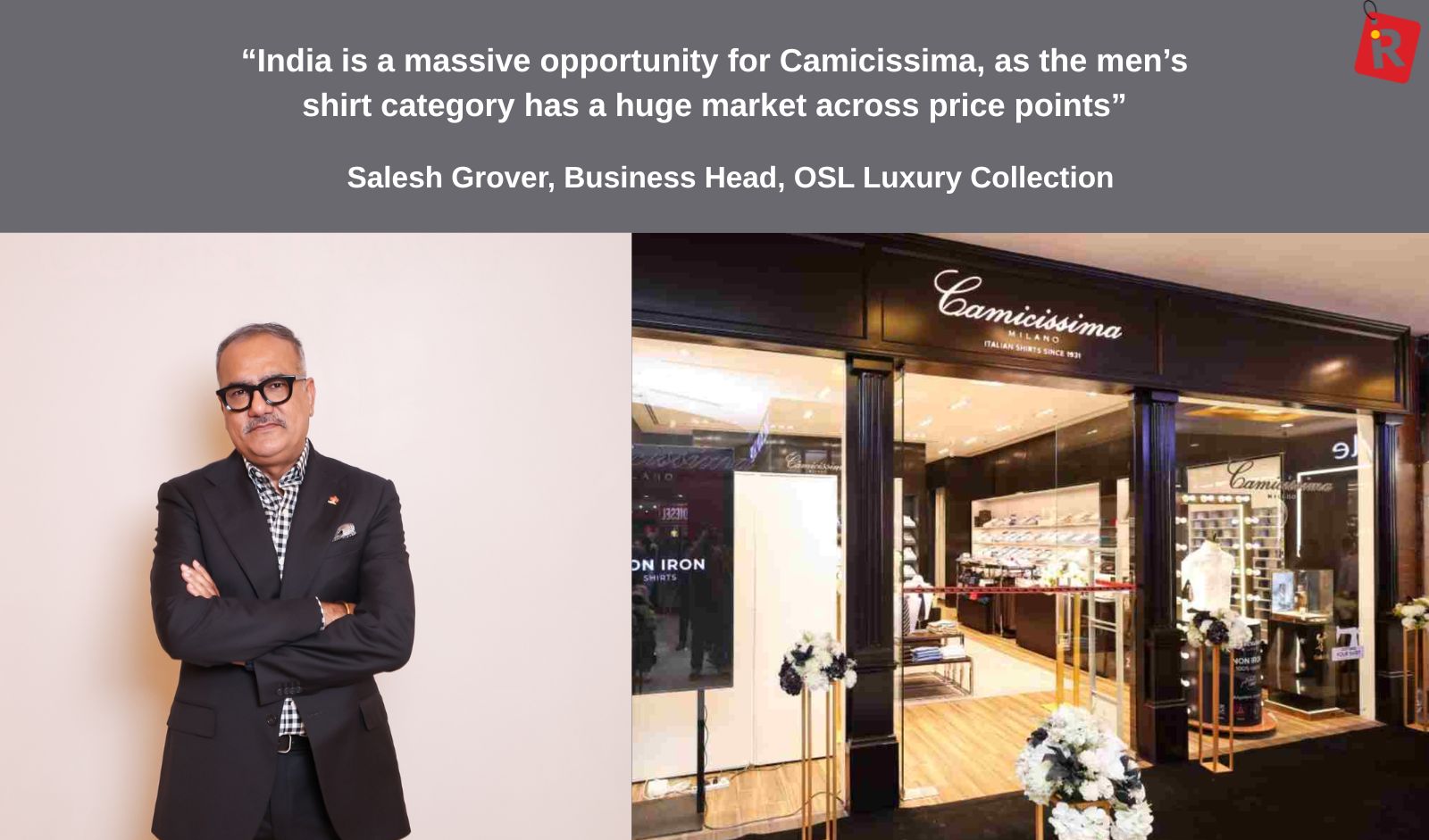
Founded in 1931 by Cavaliere Giovanni Candido under the parent company Fenicia, Camicissima is a renowned Italian menswear brand specialising in shirts. Over the decades, the brand has evolved from a family-run business into a global retail player, formally expanding its international retail presence in 2004 with a focus on high-quality men’s formal wear and accessories.
Currently, Camicissima operates more than 350 stores and is present in over 29 countries worldwide. The brand recently entered the Indian market and opened its first store at Ambience Mall, Vasant Kunj, New Delhi.
“Camicissima recognised a significant white space in the Indian market — the absence of a specialised formal shirt brand that delivers consistent sizing, premium quality, and accessible pricing. That gap made India a strong opportunity for expansion,” expressed Salesh Grover, Business Head, OSL Luxury Collections.
Product Categories
Primarily, Camicissima is a shirt-focused brand. About 80 percent of its collection consists of shirts — 60 percent formal and 40 percent casual or evening wear. The remaining 20 percent includes jackets, trousers, T-shirts, and polos.
“The brand has recently launched Polo Breathe, which is expected to perform strongly in India due to the climate. While shirts remain the core category, the brand offers a full menswear range,” shared Grover.
Expansion Plans
Currently, Camicissima has one offline store in Delhi. In the online space, the brand has onboarded major fashion marketplaces, including Myntra, Jio, and Tata Cliq.
The next store is planned in Mumbai, and development is already underway. Over the next three years, the brand will expand through multiple channels across India. It plans to open four more exclusive stores across metro cities during this period. Product pricing will remain uniform and aligned with global standards, with no differentiation across cities.
“We will expand through a combination of both Exclusive Brand Outlets (EBOs) and Multi-Brand Outlets (MBOs). The strategy is to allow regional partners flexibility in selecting merchandise based on their local market needs — including sizing and colour preferences,” shared Grover.
Category Expansion Plans
Looking ahead, Camicissima is aggressively exploring women’s formal wear. The brand has already opened a women’s showroom in Milan, and testing is underway in European markets. Once established, this category may expand into other countries, including India. Until then, the focus will remain on strengthening the men’s category in India.
On the design front, although the collection remains purely European, the brand is open to exploring collections inspired by Indian prints in the future.
“There are no immediate plans for India-specific designs, but collaborations or adaptations may be explored in the future,” said Grover.
Differentiation in the Market
Camicissima is positioned in the “bridge” segment — between premium and luxury. While many Indian premium brands perform well, there remains a gap between premium and luxury categories. The brand aims to fill that bridge segment by offering high-quality European formal wear at an accessible yet aspirational price point.
“Camicissima is neither luxury nor premium, but a bridge brand — ideal for customers upgrading from premium to luxury,” expressed Grover.
Manufacturing Strategy
Camicissima sources its garments from specialised vendors across multiple countries, including Turkey, Milan (Italy), other parts of Europe, and China. The brand does not depend on a single region but sources from the best suppliers globally.
Growth Targets
Camicissima is focused on profitability and sustainable expansion. In the long run, the brand plans to establish a presence across metros and Tier II and Tier III cities through both offline and online channels.
“India is a massive opportunity for Camicissima, as the men’s shirt category has a huge market across price points. We aim to capture around 15–20 percent share in the Indian shirt market over the next five years,” concluded Grover.
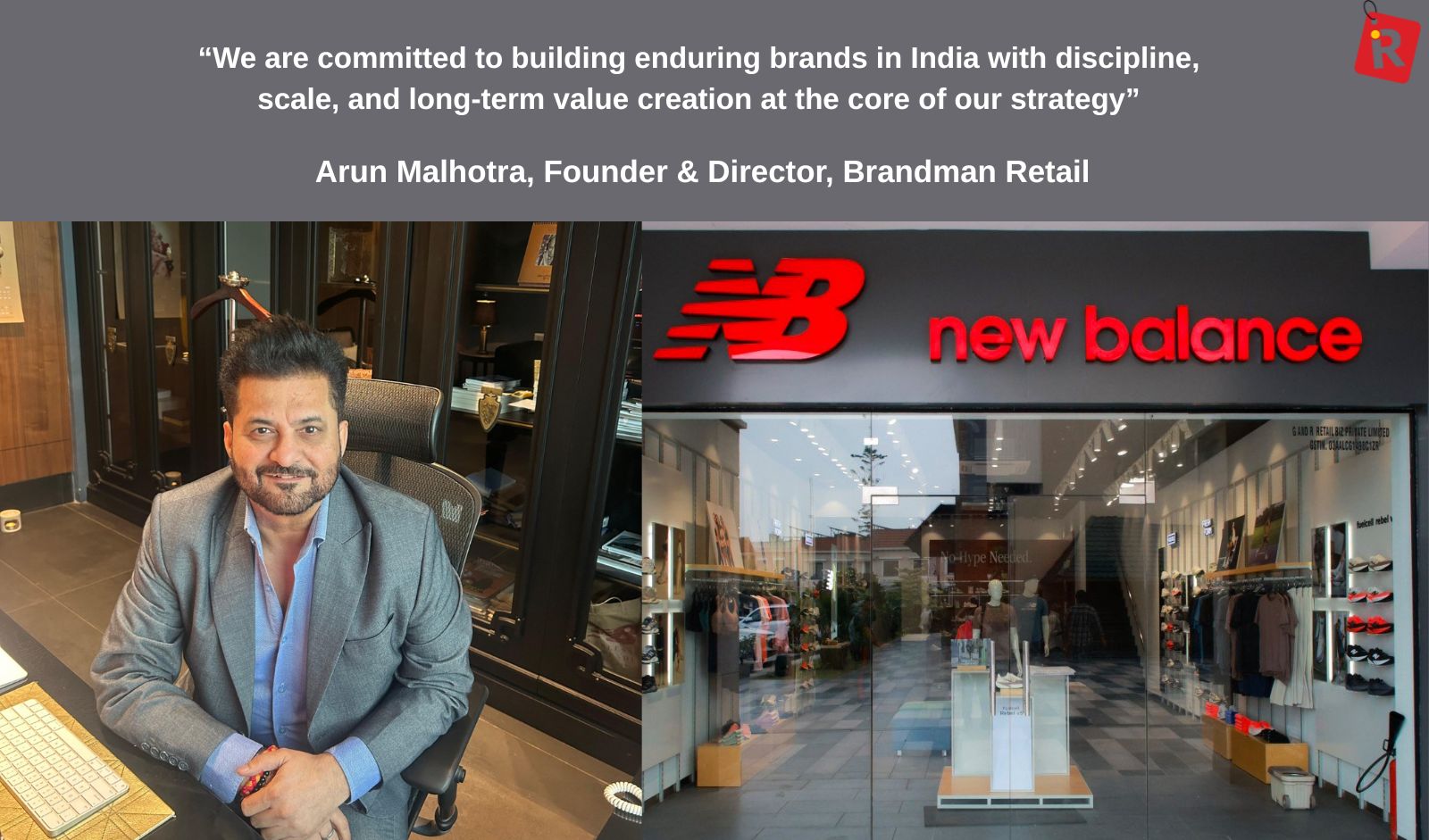
Founded in July 2021, Brandman Retail began with a clear vision to bridge the gap between global fashion and lifestyle brands and the evolving Indian consumer. The company identified early on that India was ready for premium and aspirational brands—provided they were backed by the right retail strategy, strong distribution, and deep market understanding.
Over the years, it has built a strong foundation through disciplined expansion, strategic brand partnerships, and an omnichannel-led approach. Today, it is an established distributor of international premium sports, footwear, and lifestyle brands such as New Balance, On, and Rockport.
“Our journey has been defined by calculated growth, a strong mall presence, robust backend operations, and a deep understanding of consumer behavior across markets. Today, Brandman Retail stands as a trusted partner for international brands looking to establish and scale in India,” shared Arun Malhotra, Founder & Director, Brandman Retail.
Standing Out in the Market
Brandman Retail differentiates itself through three key strengths: strong brand partnerships, execution excellence, and an omnichannel focus. The company works closely with global brands to localize strategies without diluting their brand DNA, ensuring relevance in the Indian market while maintaining global positioning. Backed by a scalable operational backbone, it delivers execution excellence across the value chain—from supply chain management to seamless retail rollouts. Additionally, Brandman Retail follows an integrated omnichannel model rather than operating purely offline or online, enabling a seamless and consistent customer journey across touchpoints.
“Our ability to combine global brand appeal with Indian market insights gives us a strong competitive edge,” expressed Malhotra.
Retail Strategy
Brandman Retail has a presence across both offline and online retail touchpoints. Offline, it operates through a combination of Exclusive Brand Outlets (EBOs) and Multi-Brand Outlets (MBOs). At present, the company operates 21 stores across the country, including the recent launch of Sneakrz outlets in Mohali and Greater Noida—moves that further consolidate its footprint in key urban centers.
Online, its brands are available on leading Indian marketplaces such as Myntra, Ajio, and Amazon India, alongside their own direct-to-consumer websites.
“Currently, our revenue mix is largely driven by offline retail, which contributes approximately 65–70 percent of overall revenue, while online channels account for 30–35 percent,” noted Malhotra.
Although the current revenue mix leans heavily toward offline, the company is witnessing strong momentum in digital commerce.
“Our strategy is to steadily strengthen our omnichannel ecosystem—ensuring seamless integration between physical stores, marketplaces, and direct-to-consumer platforms,” added Malhotra.
Highest-Growing Categories
Brandman Retail derives a significant portion of its revenue from New Balance, Saucony, and On, particularly in the footwear and streetwear segments. These brands have a strong youth connect and benefit from high mall visibility, forming a substantial share of the company’s portfolio revenue.
“Our focus remains on building each brand as an independent growth engine rather than depending on a single vertical,” expressed Malhotra.
IPO Listing and Expansion Plans
Looking ahead, Brandman Retail is eyeing significant expansion across offline retail in India. The company’s recent SME IPO listing is expected to pave the way for retail expansion across various formats.
It plans to expand deeper into Tier I and Tier II cities while strengthening its presence in top-performing malls. The company aims to open 50 exclusive stores across West, East, and South India by the end of this financial year.
“Over the next 24–36 months, we aim to significantly increase our store count while optimizing store formats based on market potential. We are also exploring shop-in-shop models and experiential retail formats to enhance consumer engagement,” shared Malhotra.
Category Expansion Plans
Brandman Retail views category expansion as a key part of its growth roadmap. While footwear and fashion remain strong pillars, the company is actively evaluating categories such as athleisure, performance wear, and accessories that align with evolving consumer preferences.
The company has also signed ANTA, a globally recognized sportswear brand, and looks forward to introducing it to Indian consumers.
“We believe there is strong potential for performance-focused and innovation-led sportswear in India, and ANTA’s entry will further strengthen our portfolio in this segment,” said Malhotra.
Looking ahead, the company remains open to entering categories and partnerships where it sees long-term scalability, brand-building potential, and sustainable growth rather than short-term opportunities.
Growth Target & Long-Term Vision
Over the next three years, Brandman Retail is targeting consistent double-digit year-on-year growth, driven by store expansion, online acceleration, and portfolio diversification. The company’s focus remains on sustainable, profitable growth rather than aggressive overexpansion.
“Our long-term vision is to position Brandman Retail as one of India’s most respected and scalable brand management and retail distribution companies. We are committed to building enduring brands in India—with discipline, scale, and long-term value creation at the core of our strategy,” concluded Malhotra.
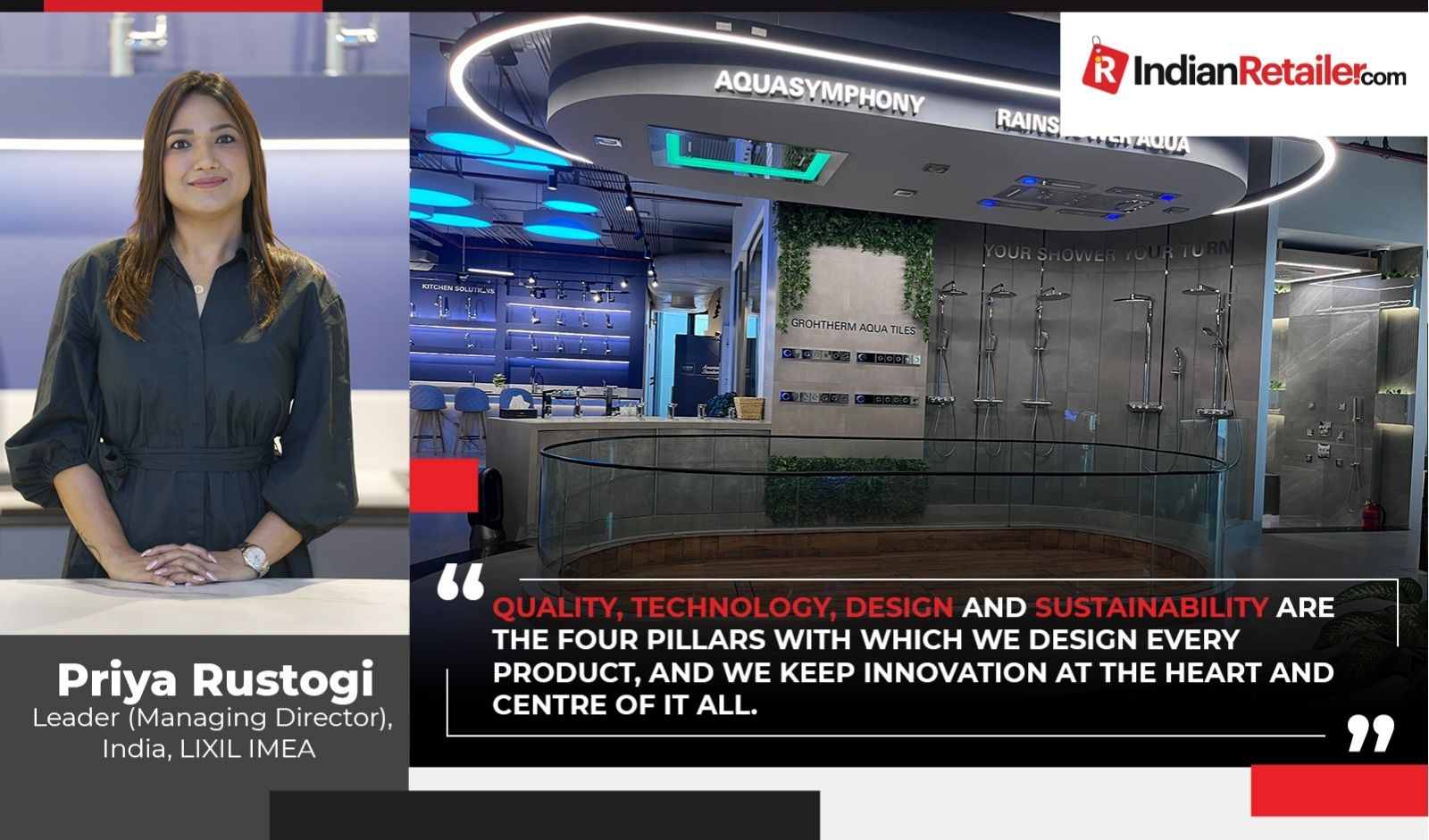
When we talk about bathroom fittings, what name strikes our mind? Grohe. Grohe is a leading global brand for complete bathroom solutions and kitchen fittings.
As part of the LIXIL Group, the brand offers life-enhancing product solutions as well as services with its portfolios Grohe QuickFix, Grohe Professional and its premium sub-brand Grohe Spa.
In a conversation, Priya Rustogi, Leader (Managing Director), India, LIXIL IMEA, outlines the brand’s retail and geographic expansion plans, their retail strategy and more.
Retail & geographic expansion
Talking about the retail and geographic expansion for Grohe, currently the brand runs about 400 stores pan India which it refers to its direct retail channel where Grohe bills to these retailers and they bill to consumers. These are spread across 80 to 90 cities. “Our aim in the next three years is to at least go to 150 to 200 cities in the country, which means every city that has a population of more than 10 lakh people and also has a certain number of households above an income group that is where we plan to expand,” says Rustogi.
“But we'll be very careful with how we expand. I don't want to have 20 stores in a small geography. We want to be very careful, very selective, and also work with the market leader in that particular market,” she adds.
Focus on Tier II & III markets
It is noticeable that since the past few years, the pace of growth has increased from the Tier II and III cities as compared to Tier I, across categories. Of course, the base is much smaller, but the rate of growth is much faster.
“Like I said, we plan to go to at least 150-200 cities - those cities essentially will be Tier II and III cities and towns,” she mentions. Now with personal disposable incomes increasing in cities, a lot of people are travelling abroad. They're getting exposed to better lifestyle, hotels, so they're wanting to recreate their experiences back at home. This enables a brand such as Grohe to be able to establish themselves very well in the small markets. “Additionally, the competition is less fierce, plus consumers are more discerning — they do their research well before spending. That really helps us spread ourselves in Tier II and III markets,” brings out Rustogi.
Channel mix
Grohe is a 100 per cent channel organisation, wherein it does not sell to anyone directly. Catering to the B2B and B2C segment, even when the brand bills to large developers like DLF, Lodha, Prestige,it bills through a network of its channel partners. Rustogi emphasises that the brand’s model would always remain as a channel-driven one.
While Grohe has three experience centres— Delhi, Mumbai, Bengaluru— very soon it will also add Hyderabad to its kitty. Grohe doesn’t sell from any of these experience centres. When customers visit the brand’s experience centres and if they like the products, they get a code generated, but ultimately the fulfillment happens through a channel store only. 99 per cent of these stores are MBOs (multi-brand outlets), selling two or more different brands of sanitaryware, selling tiles, selling other plumbing accessories, etc.
Innovations
When one mentions German, what comes to mind? Technology, quality, engineering, innovation. That's Grohe’s DNA. “No matter what we do, no matter what products we launch, technology and innovation is like the North Star guiding all our product innovation,” she tells.
Now with people spending so much of their time in the bathroom post-COVID, wellness has become significant to everybody. There's a lot of innovation that we are witnessing in the bathroom space, especially in bathroom fittings, because there's just so much of technology that can go behind the wall.
“Sustainability is also very important to us. Hence, quality, technology, design, and sustainability are the four pillars with which we design every product, and we keep innovation at the heart and centre of it all,” Rustogi explains.
Earlier in the past, brands needed to have different products for India and different products for the rest of the world, but Rustogi understands that the lines are getting blurry. She says, “Infact, there are a lot of products that we're launching for India first, and then taking them globally because India really is becoming the hub of innovation and tech. That’s why we don't believe that our products need a lot of localisation, because these are effortless, plug-and-play, human design. Irrespective of whether you're in Germany, Tokyo, US, or India, at the end of the day it is human experience, and the joy of showering is really the same.”
Omnichannel and digital initiatives
Along with the B2B and B2C channels, Grohe is gradually getting into e-commerce as well. “I believe that while in this industry e-commerce has not really taken off the way it has taken off in other industries, but globally, as we see in some of our other markets, there's a lot of business that happens online,” Rustogi points out.
She mentions that the brand is going to start its marketplace on Amazon, and will see how it goes. She feels that eventually Grohe would also be on quick commerce. “While we will remain channel-led, we will not sell directly, and not go D2C. However, we would like to dabble with both quick Commerce and e-commerce as well,” she tells.
Retail strategy
Along with expansion, the retail strategy would be focused on enhanced consumer experience. Experience centres cannot be made available in every city. “Hence, our endeavour is that whenever a consumer walks into our spaces, which is a multi-brand outlet, wherein we typically have a floor or an area dedicated to the brand, the experience that we create in that environment should be so multi-sensory and experiential that a consumer can actually imagine using those products in their own spaces,” Rustogi explains.
Grohe will also be relying heavily on digital technologies like AR and VR. For example, if a consumer comes to one of its stores, and he/she likes some products, and wants to visualise it in his/her own bathroom, the brand would want to create some real-life experiences around experiencing those products in their own bathroom. Therefore, the brand is deeply experimenting with some cutting-edge AR and VR technology to be able to give a fully immersive experience to its consumers.
Competitive positioning
Grohe doesn’t like to compete with some of the more popular brands in the country because every brand has its own positioning. In a crowded market with the likes of Mahindra, Maruti, Kia, Grohe considers itself as the BMW of the bathroom industry.
“I can never offer the pricing that our competition is offering today. Because the quality and the technology that goes in our products is so high quality that we have to maintain a certain price premium. That is why, while India is hypercompetitive, I think there is a band of customers which is very quality conscious, and those are really our customers. We're slightly more price premium than our competition, but that's our strategy, and that's how it's going to be,” Rustogi emphasises.
New launches
Along with the expansion and experience centre launch in Hyderabad, the brand has recently relaunched Grohe Spa, which is a luxury premium brand. She reveals that they would continue expanding on the Grohe Spa portfolio.
Grohe, as a bathroom fittings brand has always been known for its showers and faucets. But now it is a full-blown bathroom solution brand. The brand also manufactures ceramics in India. The brand plans to continue innovating and strengthening its ceramics portfolio.
“On the fittings side, we'll continue investing in our Grohe Spa products. Grohe Spa is personalised luxury, because it's like picking a piece of jewellery. If you pick a basin mixer out of our Grohe Spa collection, no two pieces would be the same, which is something that this industry has never seen. The level of customisation and personalisation in our products is next level. That is going to be our focus in the coming year as well,” reiterates Rustogi. The brand will be showcasing Grohe Spa in all its glory at the Milan Design Week in the month of April.
Customer engagement at retail touchpoints & experience centres
Grohe drives a lot of footfall to its retail stores and experience stores through digital marketing, SEO, and varied methods of optimisation. But once the customers are in the store the brand stands for true personalisation.
“If you walk into a store where you experience 2 or 3 different brands, I think the way we train our shop floor staff and the way they interact with the consumer— we're not just selling products, we're selling a story, we're selling a solution, we're selling a lifestyle. The experience that we're creating at a store level to engage with the consumers that is why retention rate is very high,” she says.
Rustogi draws inspiration from the Apple brand. “Apple is one of the brands that I really admire. No matter where in the world you go to, an Apple store looks the same, feels the same, the experience is the same. That's actually my vision - when you walk into a Grohe store anywhere across the country, you should feel the same experience.”
Her endeavour is to unify the experience - irrespective of whether a customer walks into a store in Delhi or Meerut or Kanpur, he/she should experience the same level of service and same level of experience at the store.
Business growth & the EU-India trade deal
For the last 4-5 years, Grohe has grown at a CAGR of 12-15 per cent, which is slightly higher than what the industry is. “But we're seeing a bit of a slowdown across the industry because I feel the post-COVID demand has sort of settled, hence we're expecting a similar 12-15 per cent growth in the coming year as well,” she tells.
The latest trade deal between European Union and India eventually might help the brand because 80 per cent of its imports happen from Germany, which currently attracts a custom duty. “I'm really hoping if that works, it'll have a lot of consumer benefit because then we'll have zero custom duties on products that we import from Germany,” Rustogi clarifies.
Trends
Rustogi reveals that there is a lot of use of different colour material finishes. She brings out, “Five years back, bathroom products were available in chrome, which is normal silver, and also PVD finishes. In the past, only 10 to 20 per cent of our business would come from colours and 80 per cent would be chrome. But it's actually 50-50 now. So 50 per cent of luxury bathrooms that we are seeing are now in colour finishes.”
She is also seeing an increased trend of using electronic shower toilets or the Japanese toilets in Indian homes. “Earlier it was limited to only hotels and high-end hospitality. But now there is a lot of travel between Japan and India. Hence, once you've experienced a shower toilet - the hands-free convenience of that electronic toilet, you don't want to use a manual toilet. So we're seeing a lot of consumers actually coming and asking us about shower toilets,” she states.
Not to forget, the centre stage in any bathroom is a shower. People are wanting bigger showers and different spray patterns in a shower. In the past there was just one shower. Now people are asking for a mist-like shower flow, or a cascade or a different flow.
Another drift which is more design-led is the inclusion of a lot of biophilic elements like natural light and greenery. Open spaces in the bathroom, a bathroom opening out to like a backyard or a courtyard to let the nature in, is also one of the notable trends.
Long-term vision & roadmap for India
“We're currently the second biggest international bathroom brand in the country. We want to be the biggest. We're already the biggest in the luxury space. But in the next five years, our aim is to become the number one international bathroom brand in the country,” Rustogi wraps up.
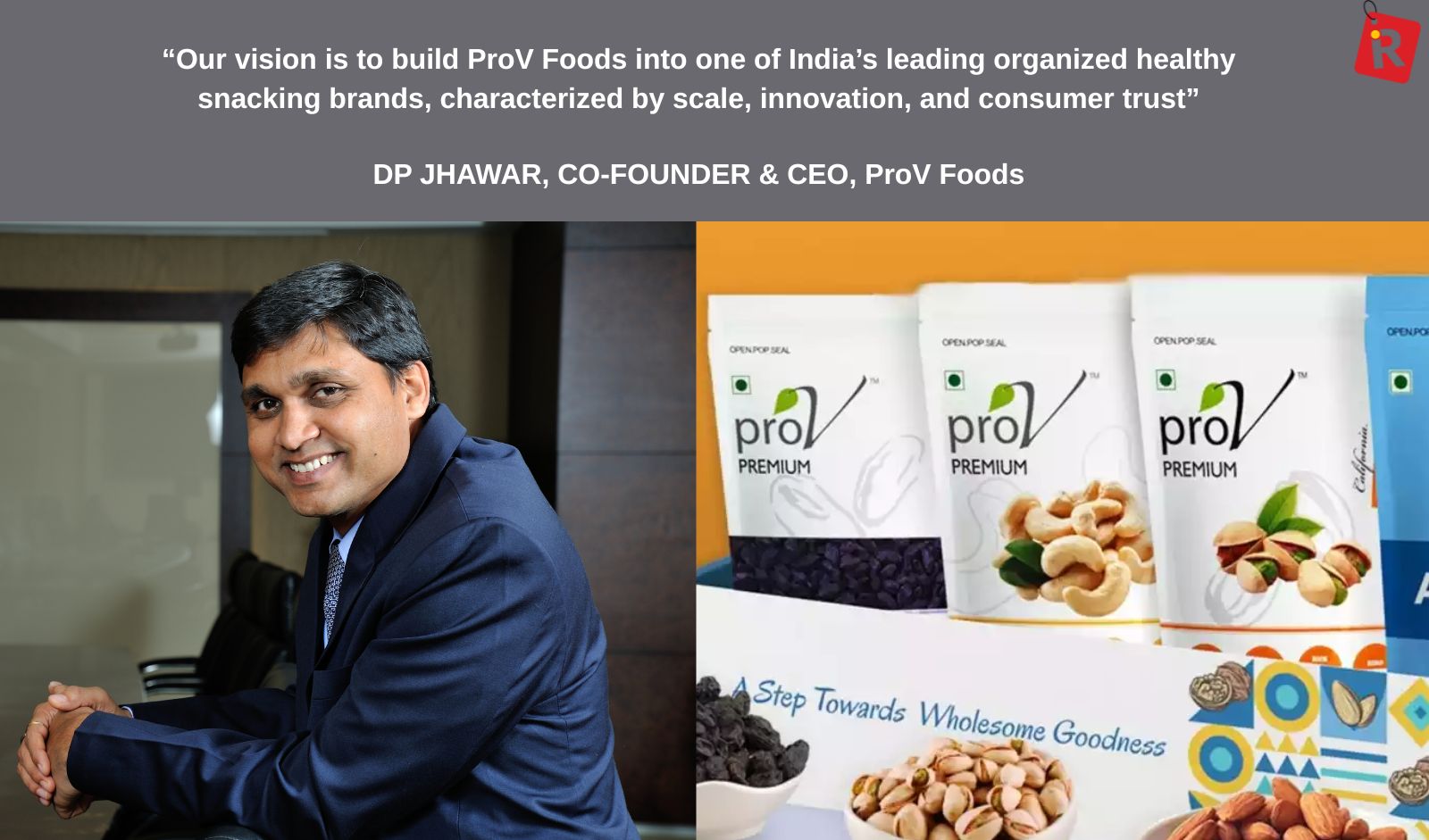
India’s dry fruits and healthy snacking category is rapidly shifting from unorganized trade to branded, value-added offerings—and ProV Foods is positioning itself right at the center of this transformation. Backed by strong sourcing capabilities, a robust processing backbone, and a growing omnichannel footprint, the publicly listed brand is now charting an ambitious growth roadmap toward Rs 1000 crore by FY27.
ProV began its journey in 2019 under its parent company Proventus Agrocom with a clear and focused vision.
“We started with the vision to build a farm-to-home healthy snacking brand and contribute toward India's movement from unorganized to organized markets in the dry fruits and nuts category,” shared DP Jhawar, Co-Founder & CEO, Proventus Agrocom Limited.
The brand built its own processing facility in 2017, creating strong backend capabilities before going to market with premium dry fruits in 2019.
Product categories
Over the years, ProV steadily expanded into value-added categories such as trail mixes, flavoured nuts, and makhana—aligning itself with evolving consumer preferences for convenient, nutritious, and flavor-forward snacks.
Today, the brand offers more than 175 SKUs across seven-plus sub-brands and has crossed sales of over 3 crore pouches in FY25. It also holds a distinct industry position.
“We also happen to be the only publicly listed company in the Nuts & Dry Fruits Sector in India,” expressed Jhawar.
Omnichannel Retail Strategy
ProV has established a strong omnichannel network across online and offline retail touchpoints.
Online, the brand is available on platforms such as Amazon, Flipkart, JioMart, BigBasket, Zepto, and Swiggy Instamart, along with its own D2C website.
Offline, ProV products are distributed through both General Trade and Modern Trade networks, including leading chains like DMart, Reliance Smart, and Walmart India.
“Currently, about 30 percent of our revenue comes from Ecommerce & Q-Commerce, followed by 24 percent from modern trade and 6 percent from general trade,” noted Jhawar.
This balanced distribution between physical and digital media allows the brand to scale and gain brand visibility while continuing to maintain strong digital growth momentum. It also ensures acceessibility across metro cities, Tier II and Tier III markets, tapping into both planned and impulse purchases.
Expansion plans
Looking ahead, ProV is focusing on deepening its presence in General Trade while accelerating expansion across Modern Trade and Q-Commerce. With a daily production capability of 1.5 lakh pouches and an FSSC-certified 40,000 sq. ft. facility, the brand has built strong operational capacity to support expansion.
“There will also be retail expansion to raise the visibility of value-added products like flavoured makhana, trail mixes, and mini packs to tap into impulse and on-the-go snacking demand,” said Jhawar.
Mini packs and flavor innovations are expected to play a key role in driving higher basket sizes and frequent purchases.
Moving Beyond Core Dry Fruits
While dry fruits remain the core category, ProV is consciously expanding the healthy snacking ecosystem.
“We are currently making a strong focus beyond core dry fruits into flavoured makhana, trail mixes, chocolate-based healthy bars and premium gifting formats,” shared Jhawar.
The brand regularly introduces new SKUs aligned with changing consumer preferences. With health-conscious consumers increasingly seeking convenience and taste without compromising nutrition, ProV sees innovation as a growth lever rather than just a product strategy.
Standing out in the market
One of ProV’s strongest differentiators is its vertically integrated model. The brand manages sourcing across over 9 countries and works with over 55 farmer relationships. Processing, roasting, flavouring, and packaging are handled in-house, ensuring strict quality control and freshness.
With more than 175 SKUs across multiple sub-brands, ProV caters to diverse consumer needs—from everyday snacking to premium gifting—while maintaining a balance between affordability and quality.
Long-term vision
ProV’s aims to achieve the milestone of becoming a Rs 1000 crore brand in the coming year.
“Our vision is to build ProV Foods into one of India’s leading organized healthy snacking brands, characterized by scale, innovation, and consumer trust. So, we have an ambition of achieving Rs 1000 Cr by FY27,” shared Jhawar.
Beyond revenue growth, the company aims to expand its global sourcing network, strengthen domestic retail penetration, and innovate in value-added and functional snacking segments.
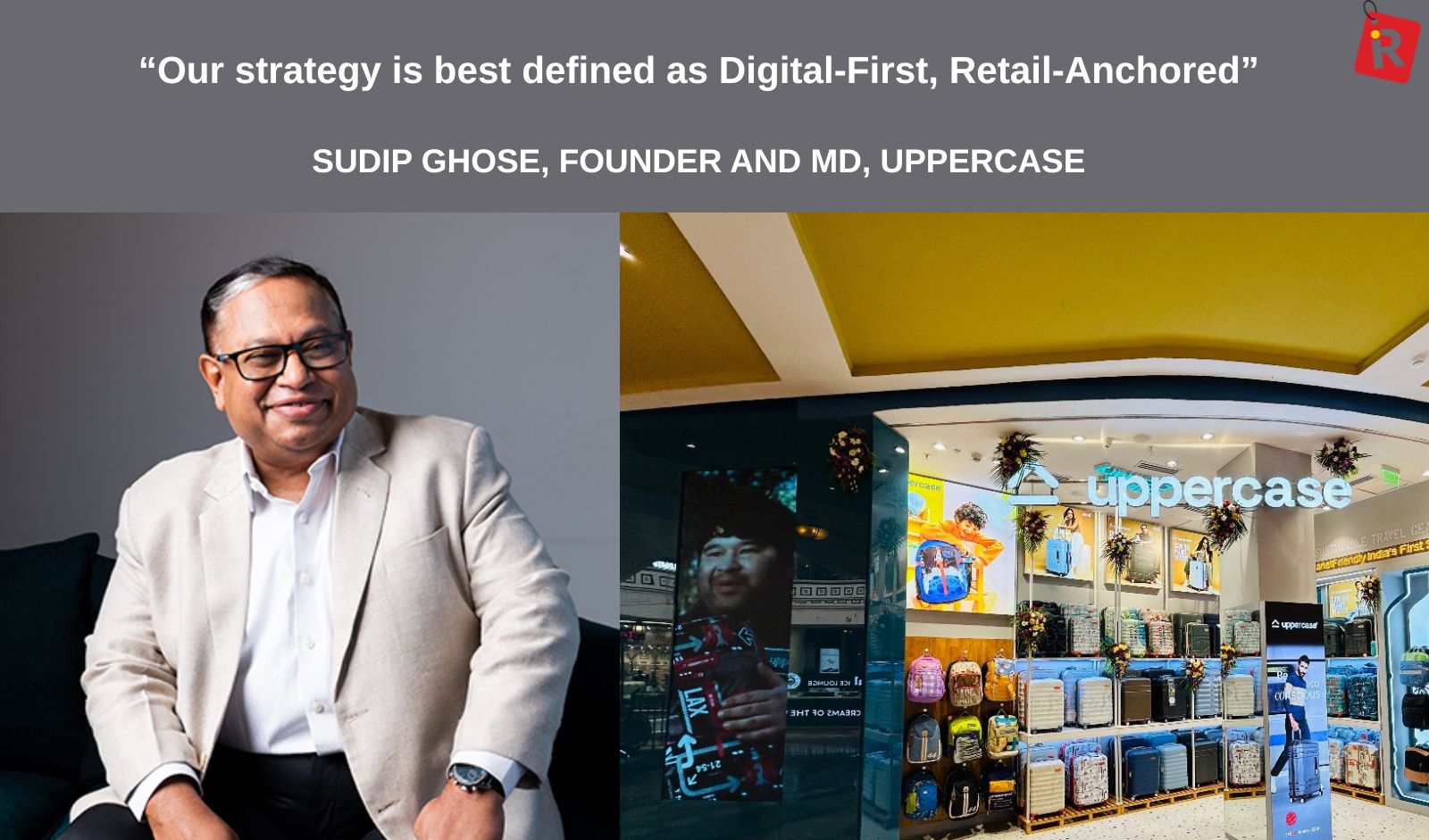
Founded in 2021, Uppercase is a Made-in-India, sustainability-led luggage and accessories brand positioned in the mid-premium segment, built to win on design, trust, and value for money. The brand was born when Sudip Ghose realized how heavily the luggage market depended on plastic.
“My wife, Sukanya, was instrumental in highlighting this gap and urging me to look beyond the status quo and find greener alternatives. Hence, Uppercase was established with the promise of giving back to the environment,” recalled Sudip Ghose, Founder and Managing Director, Uppercase.
The brand differentiates itself through globally acclaimed design credentials, recognized sustainable products, and a fully integrated Indian supply chain. It caters to consumers aged 18 to 45 who seek the convenience of travel without compromising on style.
“We aim to make more and more travellers eco-conscious,” Ghose expressed.
Retail Presence
Uppercase has established a strong omnichannel presence across both online and offline touchpoints. Offline, the brand operates through General Trade, Modern Trade, and exclusive brand stores. Online, it is present across leading e-commerce platforms as well as its own D2C website.
“Our strategy is best defined as ‘Digital-First, Retail-Anchored.’ While we launched as a D2C brand to build our narrative, we recognized early that in the luggage category, ‘touch and feel’ is a critical trust builder for the Indian consumer,” shared Ghose.
The brand has achieved what it calls a ‘Golden Ratio’ in its channel mix. Currently, its business is split 50:50 between online and offline channels.
“While we see monthly fluctuations—swinging 60:40 either way depending on seasonal sales or festive spikes—this balanced 50:50 average is deliberate,” he added.
Expansion Plans & Sustainable Approach
Looking ahead, Uppercase is focused on expanding to 250 exclusive brand outlets and 2,500 points of sale over the next two years. The brand is also working toward bringing sustainable production in-house.
“By manufacturing ourselves, we are supporting close to 1,000 families. This is my definition of a truly sustainable business—one that is profitable, eco-friendly, and socially responsible,” expressed Ghose.
Leveraging Tech and AI
Technology plays an important role in marketing and brand awareness for Uppercase.The brand leverages AI for product insights and cataloging. By utilizing generative AI for imagery, it produces high-fidelity visuals and lifestyle content without the overhead of traditional shoots.
“This technology empowers us to create highly personalized content that resonates deeply with our audience across every channel. Ultimately, operational excellence and creative agility have become the core drivers of our brand’s rapid growth and evolution,” highlighted Ghose.
Growing Through Collaborations
Collaborations play a critical role in scaling Uppercase’s B2B vertical. The brand’s recent alliance with Akasa Air—designing custom gear for its crew—was a proud milestone, uniting two homegrown brands committed to design and sustainability.
Even though this partnership was not directly consumer-facing, it acted as a catalyst for recognition. The industry trust gained from the Akasa partnership has created a flywheel effect, making other brands more eager to explore synergies.
“Looking ahead, we have several exciting collaborations in the pipeline. While details remain confidential, rest assured that each upcoming partnership will align perfectly with our eco-conscious and design-led DNA,” expressed Ghose, hinting at new announcements.
Growth Target & Vision
Uppercase aims to become a Rs 500 crore brand within the next three years while achieving profitability by FY26.
“To get there, we are shifting gears from being just a brand to becoming a manufacturer. We are moving production entirely in-house, which allows us to control our design and quality,” concluded Ghose.
Traya’s journey began in 2019 when founders Altaf and Saloni set out to solve Altaf’s complex health issues—thyroid imbalance and lifestyle-related conditions—all of which eventually manifested as hair loss. This personal struggle revealed a larger industry truth: no single system of medicine could provide a sustainable solution, and much of the market was trapped in superficial quick fixes.
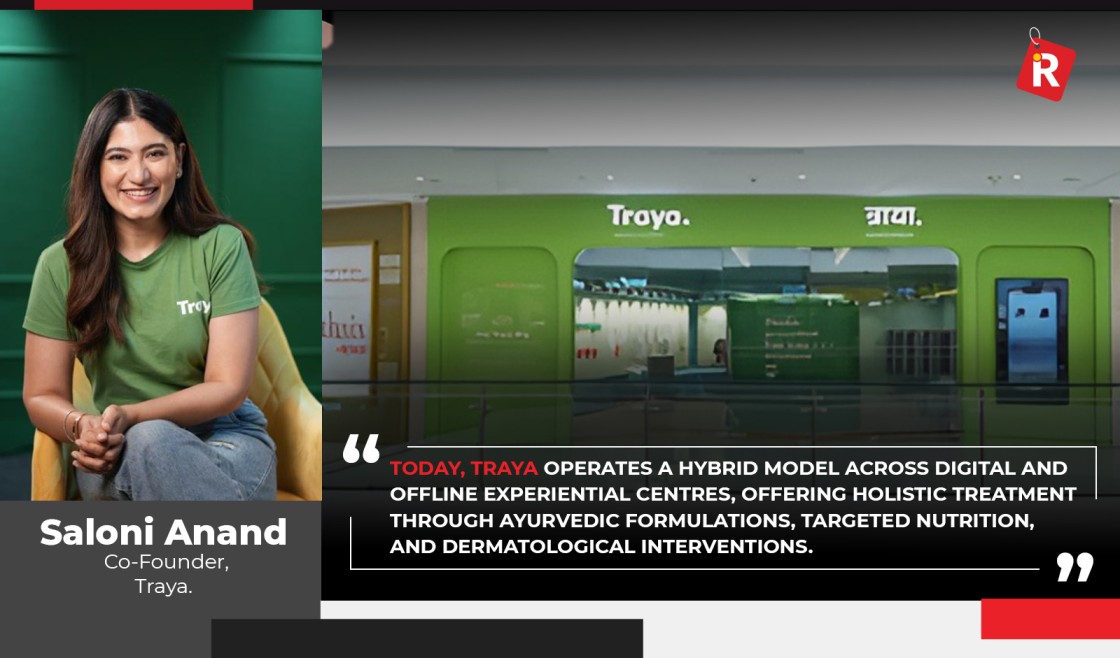
“Today, Traya operates a hybrid model across digital and offline experiential centres, offering holistic treatment through Ayurvedic formulations, targeted nutrition, and dermatological interventions,” said Saloni Anand, Co-Founder, Traya.
Standing out the market
Traya differentiates itself in the market through a combination of strengths including Ayurveda, dermatology, and nutrition into one integrated, root-cause-driven treatment approach. The brand launched Traya Hair Test, an 18-question AI-assisted diagnostic system that analyses stress, gut health, sleep, metabolism, immunity, and scalp condition to curate personalized, doctor-led plans.
“What began with skepticism soon became Traya's competitive edge, delivering a 93 percent success rate and proving that Indians were ready for evidence-led, long-term care,” expressed Anand.
Omnichannel Retail Presence
Traya has established a strong omnichannel presence across online and offline channels. Online, it has built a loyal customer base of over 1.2 million users. Offline, the brand has launched three stores in Mumbai, five in Pune, four in Hyderabad, and one in Nagpur, expanding access and strengthening customer trust through a physical footprint.
The brand’s target audience consists of urban, health-conscious individuals aged 25–45, primarily in Tier I and Tier II cities, who are seeking effective, science-backed solutions for chronic hair concerns.
“Traya’s integrated approach combining Ayurveda, dermatology, and nutrition resonates deeply with this segment,” added Anand.
Leveraging Technology
AI powers Traya at every touchpoint. It begins with an intelligent hair health analysis that recommends personalized treatment, continues through AI-enhanced customer experience tools, and extends into offline centres where advanced Korean scalp diagnostic systems provide deeper, more accurate insights.
“Together, these technologies create a seamless, science-led journey for every user,” Anand noted.
Expansion plans
Traya is targeting a turnover of Rs 2,000 crore over the next two to three years, with international expansion playing a key role in that growth. The company has initiated a pilot in the UAE, marking its first step into global markets, and is evaluating further expansion opportunities in the region as it scales its hybrid digital–offline model beyond India.
“The company has embarked on a journey to revolutionize the hair health industry through a holistic approach. Committed to innovation, sustainability, and customer-centric solutions, Traya is positioned to lead the transformation of how hair health is approached.”
Beyond geographic growth, Traya is also focused on category expansion. While it has built strong expertise in treating male hair fall, the brand has expanded into female-specific solutions through its Santulan range. Going forward, it plans to leverage its root-cause diagnostic approach to address adjacent concerns such as gut health and skin health, broadening its presence within the personalized wellness space.
The opportunity size for Traya sits within one of India’s fastest-growing wellness categories, with the hair loss treatment market alone valued at over $280 million and projected to nearly double over the next decade, while the broader hair care market continues to expand into the multi-billion-dollar range.
"This indicates substantial headroom for growth and innovation in the personalized wellness and haircare space,” concluded Anand.
Escape Plan is carving a distinct identity in India’s growing travel accessories market. Instead of positioning itself as just another luggage brand, the company is building a focused travel platform designed to improve the overall buying experience through better supply chain management and category specialization.
"Instead of building another luggage brand, we felt the category needs a platform where third-party brands and our own partners, can come together with a lens of improving the customer buying experience. That’s the story behind Escape Plan," expressed Abhinav Pathak, Co-Founder & CEO, Escape Plan.
Today, Escape Plan houses multiple brands under its umbrella and continues to expand its assortment with a consistent focus on enhancing customer experience across channels.
Building an Omnichannel Presence
Escape Plan operates through a strong omnichannel model. Online, it is present on leading marketplaces as well as its own D2C website. Offline, the brand has established both exclusive brand outlets (EBOs) and a presence in multi-brand outlets (MBOs). It currently operates around 24–25 EBOs and continues to add new stores.
At present, approximately 75 percent of the company’s revenue comes from online channels, while offline contributes 25 percent.
“Retail contribution is roughly 25, which is a combination of our own stores in malls and high streets across tier-one and tier-two cities, along with some multi-brand outlets,” shared Pathak.
The company is present in more than 20 cities across India. While metro markets remain strong contributors, Tier II and Tier III cities are emerging as important growth drivers.
“Metros continue to perform very well, but we are also seeing strong traction from tier-two cities like Mangalore and Mysore,” expressed Pathak.
Expansion Plans
Looking ahead, the company has aggressive retail expansion plans.
“Tier-two and tier-three cities continue to remain the main focus for us. We have a very audacious goal to launch 200 exclusive brand outlets this year. It’s still a long way to go, but that’s the target we are working towards,” shared Pathak.
While luggage and backpacks remain the core categories, Escape Plan is evaluating expansion into adjacent travel-related segments based on customer demand.
“There is significant customer demand for adjacent travel categories like sunglasses and smartwatches. Travel is ambiguous — anything you use during travel can technically be classified as travel,” expressed Pathak.
Highest Growing categories
Currently, backpacks contribute around 60 percent of overall sales, while trolleys account for approximately 40 percent. The company focuses on designing products based on specific usage needs.
“Trolleys contribute about 40 percent of the category and backpacks around 60%. Backpacks are segmented by usage — office backpacks, one-day travel, two-day travel, domestic trips with family, international trips, laptop inclusion, and storage configurations. We design products based on specific travel use cases,” shared Pathak.
Staying Ahead in the Market
When it comes to competition, the company maintains an inward-looking approach, concentrating on operational improvement rather than external comparisons.
“We respect competition, but we don’t spend energy tracking them. The focus is on whether we are improving our fundamentals,” shared Pathak.
Recent Fund Utilization
The company’s recently raised funds will primarily be directed toward strengthening retail expansion and brand visibility.
“A large chunk will go into retail expansion. We are also looking at large-scale celebrity engagements. Beyond that, funds will go into building fundamentally new products,” expressed Pathak.
On the manufacturing front, Escape Plan collaborates with factories in India and overseas, maintaining a strong emphasis on quality control and design standards.
“There are factories across India, China, and other regions. If you design well, many factories can deliver high-quality products. For us, it’s about building strong quality control and focusing on the right aspects of design,” added Pathak.
Growth Target and Global Aspiration
Escape Plan has outlined an ambitious growth roadmap as it strengthens its position in the travel accessories market. The company aims to emerge as the largest player in its category over the next three years. The brand has set a target of reaching Rs 2,000 crore in revenue within the next two to five years, depending on market dynamics and expansion progress.
Alongside domestic growth, international expansion forms a key part of the strategy. The company plans to begin with relatively accessible markets such as Southeast Asia and the Middle East, leveraging similarities in consumer behavior and travel demand.
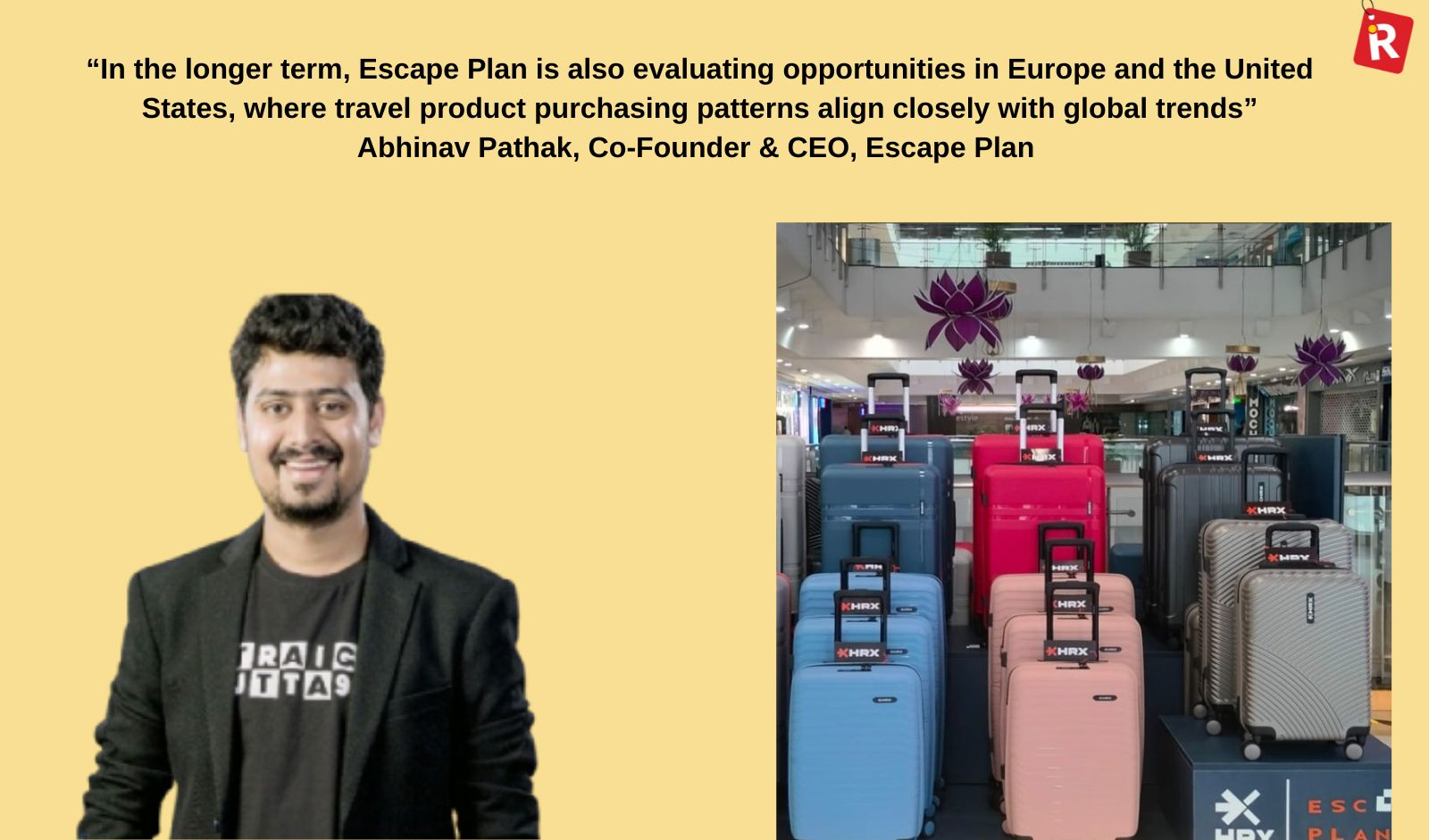
“In the longer term, Escape Plan is also evaluating opportunities in Europe and the United States, where travel product purchasing patterns align closely with global trends,” said Pathak.
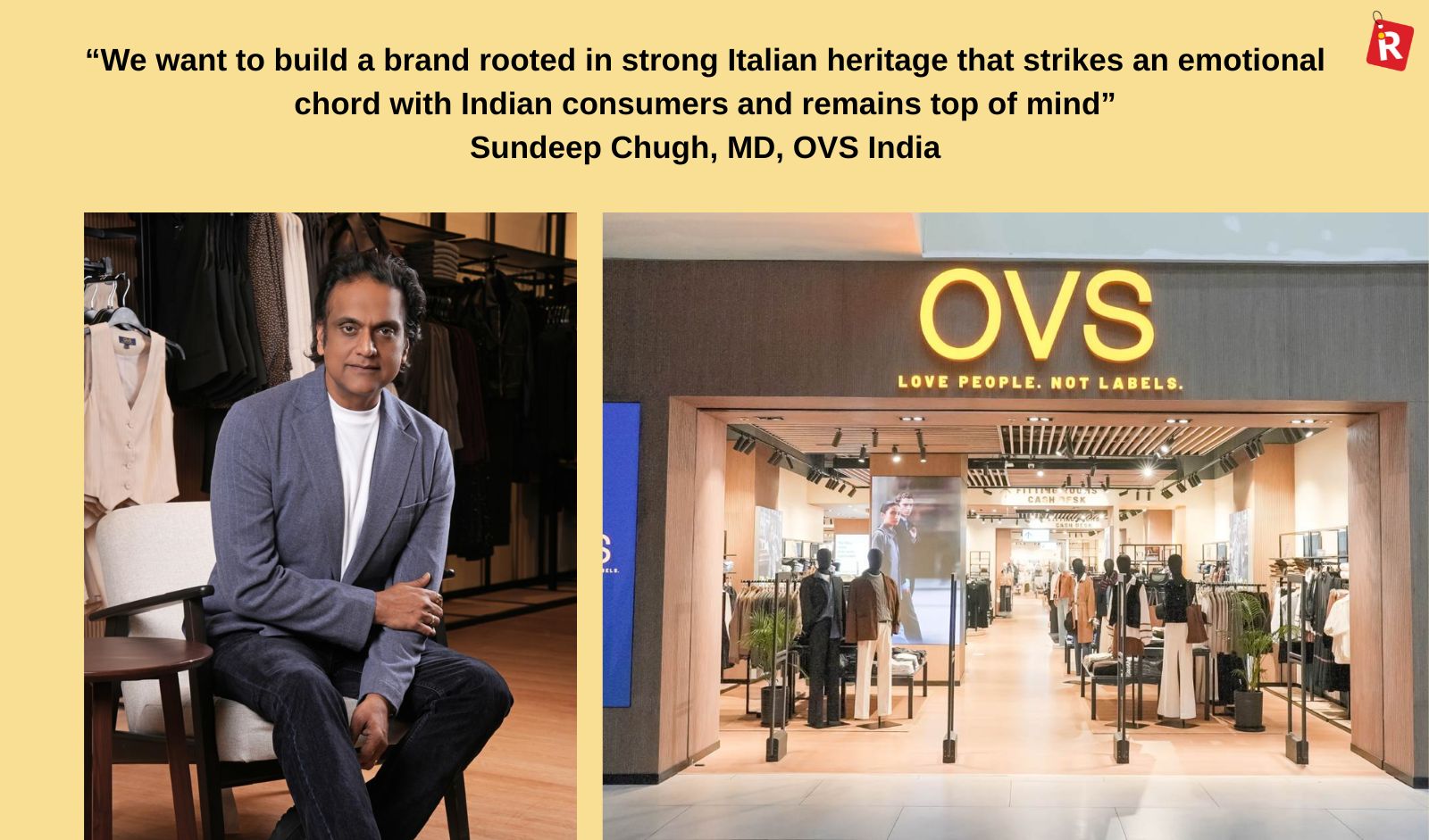
Founded over five decades ago, OVS is one of Italy’s leading clothing brands, commanding more than 10 percent market share in its home market. Established in 1972, the brand has successfully sustained its global presence by continuously evolving with changing times. Positioned as an affordable luxury brand, OVS made its debut in India with the launch of its first exclusive outlet at Pacific Mall, Tagore Garden, New Delhi.
“We see India becoming one of the fastest-growing markets for OVS. The demographic advantage, young population, digital adoption, and diversity made us believe that this is the right time to launch the brand here,” expressed Sundeep Chugh, Managing Director, OVS India.
Diverse product categories
OVS is a family-focused brand with a strong presence across multiple categories. It caters to women, men, and kids, and also offers a well-developed accessories range. Its store at Pacific Mall, New Delhi, reflects a strong Italian aesthetic, with all categories thoughtfully presented.
“Our products are backed by sustainability, quality, and timeless design. The fashion is time-right and price-right, which are key aspects of the brand,” said Chugh.
Staying ahead of the competition
OVS aims to stay anchored to its core philosophy of delivering quality-led fashion at accessible price points. According to Chugh, consistency across collections remains the brand’s biggest differentiator in a highly competitive market.
“We intend to stay true to what we believe in—providing good quality products at affordable prices. Every day, across collections, we focus on delivering great quality at the right price, and that consistency is what sets us apart,” he said.
Chugh further highlighted the brand’s ability to adapt quickly to changing consumer preferences as a key strength.
“What sets OVS apart is its agility—the ability to stay relevant and continuously create collections that cater to a very wide audience. This is why the brand has consistently delivered strong performance,” he added.
Looking ahead, OVS is also open to exploring opportunities to introduce locally inspired collections to better resonate with Indian consumers.
Read more: Atlantic Watches Plans to Expand to 150 MBOs across India in 3 Years
Furlenco to Scale Dealer Network Pan-India; Targets Rs 700 Cr in 3 Years
Retail presence & expansion plans
Currently, OVS has an offline presence through its 9,000 sq ft store at Pacific Mall, New Delhi. The brand is set to open its second store at Oberoi Sky City, Borivali, Mumbai, spanning 11,500–12,000 sq ft.
Over the next 12 to 18 months, OVS will focus on building a strong offline presence through exclusive brand outlets (EBOs).
“We want to create a glorious Italian representation through our stores. We are targeting the top 20 to 25 malls across the country. However, for the first three years, the focus will largely remain on Delhi-NCR, Mumbai, and adjoining markets,” highlighted Chugh.
By 2027, OVS plans to expand to eight large-format offline stores across key malls, along with launching its own digital website. In the long term, the brand will also introduce new channels, including multi-brand outlets (MBOs), to reach a wider consumer base.
Pricing strategy
OVS’s pricing in India is aligned with its international pricing strategy. The brand views India as one unified market and aims to maintain pricing uniformity across regions.
“Given our strong focus on quality, sustainability, and the use of fabrics such as cotton, combined with the right pricing, we believe the current price points work well across Tier I, II, and III cities,” expressed Chugh.
Growth target
Over a five- to eight-year horizon, OVS aims to make India its largest market outside Italy in terms of revenue contribution. Currently, the Italian market contributes over 10 percent to the brand’s overall revenue share.
“We want to build a brand rooted in strong Italian heritage that strikes an emotional chord with Indian consumers and remains top of mind,” concluded Chugh.
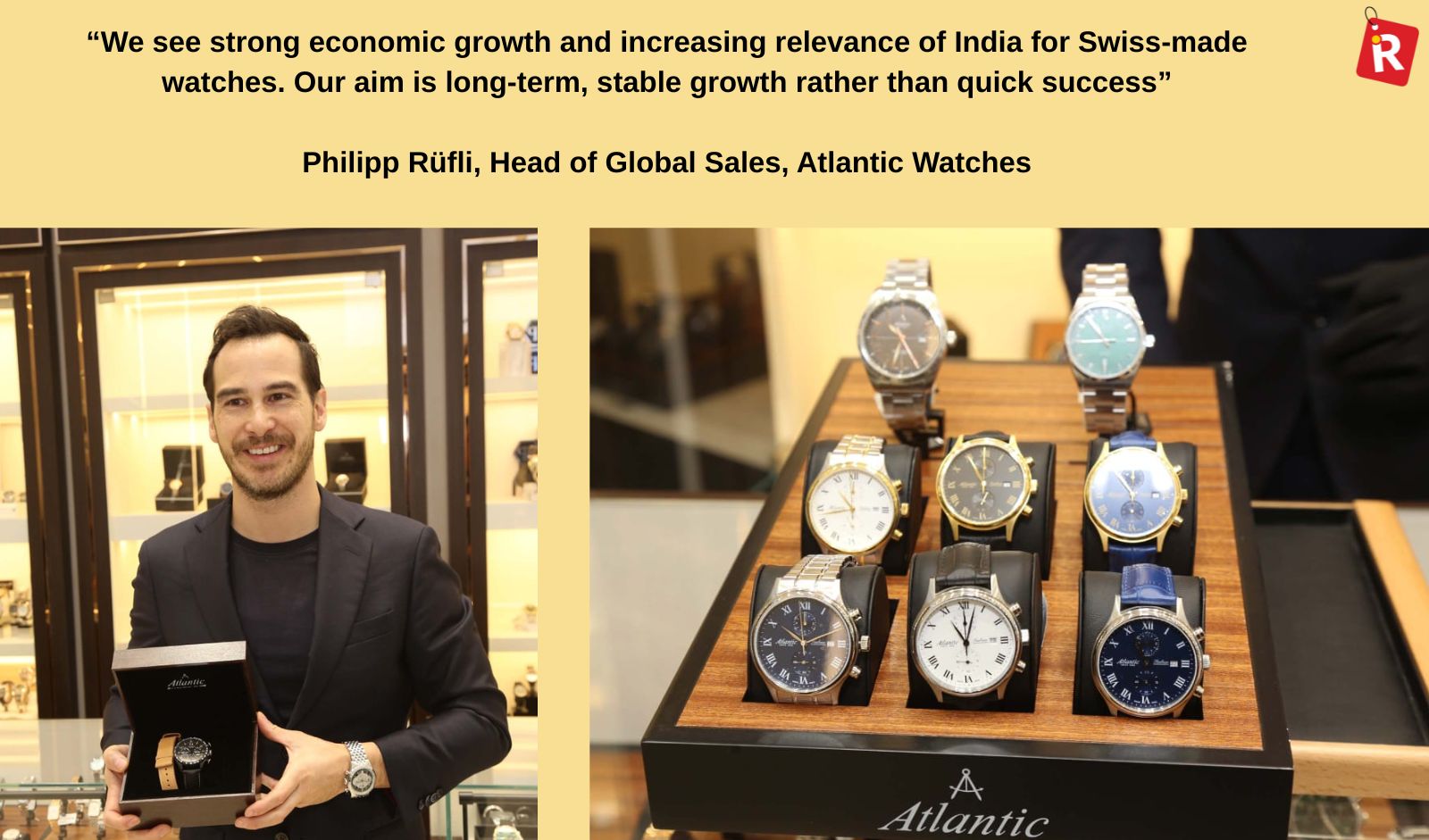
Founded in 1888 in Bettlach, Switzerland, Atlantic Watches traces its origins to Eduard Kummer, a pioneering watchmaker who was among the first to develop waterproof Swiss-made timepieces. Originally named EKB, the brand introduced these innovations under the name Atlantic—a name that would later define the company itself and its enduring legacy in Swiss watchmaking.
Over the decades, Atlantic Watches has built a strong international footprint, positioning itself firmly in the affordable luxury segment. Today, the brand enjoys a particularly robust presence across Eastern Europe and key Asian markets, including Japan, Vietnam, and the Philippines. Rooted in classic design sensibilities while evolving with modern horology, Atlantic continues to focus on delivering strong value without compromising on craftsmanship or precision.
“We have a classic design DNA and an international portfolio including quartz, automatic, and limited-edition watches for collectors. We currently have three in-house movements, with a fourth launching in spring,” expressed Philipp Rüfli, Head of Global Sales, Atlantic Watches.
Retail presence in India
Atlantic Watches launched in India last year. The brand currently has a presence in 20 multi-brand outlets, including 19 stores with Just In Time and one with Pundole, a well-known retailer in Pune. By the end of this year, the company aims to expand its footprint to 40 outlets pan-India.
“The sell-out is working well, and feedback from sales staff has been positive—customers appreciate the quality and design. The next step will be learning more from the market and possibly introducing designs tailored specifically to Indian consumer preferences,” shared Rüfli.
Expansion plans
Over the next two to three years, Atlantic Watches aims to be present in around 100 to 150 multi-brand outlets through partners such as Just In Time and Pundole.
“Expansion is largely driven by our local partners, who understand consumer behaviour city by city. We focus on cities with strong economic potential, but sometimes you need to test markets and learn from experience,” shared Rüfli.
Staying ahead of the competition
Atlantic Watches is a classic Swiss brand positioned in the entry-luxury segment. Highly export-driven, around 90–95 percent of Atlantic’s watches are sold outside Switzerland, underscoring its global appeal and relevance. The brand focuses on affordable luxury with a strong price-to-value proposition and is known for its distinct identity and authentic design language.
“We work closely with our partners and sales teams, who provide real market feedback. Our in-house designer then translates this input into designs that align with Atlantic’s DNA. Many designs are also inspired by our heritage, and sometimes historical models perfectly match current market needs,” highlighted Rüfli.
Upcoming collections
All Atlantic Watches models are manufactured and assembled in Switzerland. The brand launches new collections twice a year—in spring (April–May) and autumn (September–October)—and has also introduced limited-edition collections.
For instance, the Desert Racer watch was designed in collaboration with brand ambassador Adrian van Beveren and draws inspiration from the Dakar Rally. An India-specific design-based collection is also under consideration.
“We are considering an India-specific design and possibly an Indian ambassador by the end of this year. These discussions are ongoing, and any collaboration would be driven by our local partner,” expressed Rüfli.
Growth target and long-term vision
Atlantic Watches aims for India to become one of its top five markets within the next three to five years. Currently, Poland is the brand’s strongest market, followed by Romania, Vietnam, and Ukraine.
“We see strong economic growth and increasing relevance of India for Swiss-made watches. After finding the right local partner, we developed a sustainable go-to-market strategy. Our aim is long-term, stable growth rather than quick success,” concluded Rüfli.
-
Founded in 2006, Kushals Fashion Jewellery has established itself as a leading fashion and silver jewellery brand, catering to every facet of a woman’s life—from workwear and partywear to bridal ensembles and everyday elegance. The brand offers a diverse
-
Founded in 1931 by Cavaliere Giovanni Candido under the parent company Fenicia, Camicissima is a renowned Italian menswear brand specialising in shirts. Over the decades, the brand has evolved from a family-run business into a global retail player, formal
-
Founded in July 2021, Brandman Retail began with a clear vision to bridge the gap between global fashion and lifestyle brands and the evolving Indian consumer. The company identified early on that India was ready for premium and aspirational brands—provid
-
In a conversation, Priya Rustogi, Leader (Managing Director), India, LIXIL IMEA, outlines the brand’s retail and geographic expansion plans, their retail strategy and more






Copyright © 2009 - 2026 Franchiseindia.com Ltd