




Associate Editor, IndianRetailer.com & Retailer Media Jun 08, 2026 /


As Indian malls transform from shopping destinations into experience-driven social hubs, family entertainment centres (FECs) have emerged as one of the fastest-growing categories in modern retail. At the forefront of this evolution is Timezone India, which has steadily expanded its footprint across the country while redefining how consumers engage with entertainment.
From metro cities to emerging Tier II markets, Timezone has built a robust network of gaming and entertainment destinations that cater to families, children, teenagers, and corporate groups alike. Today, the company operates 74 Timezone venues and 19 Play and Learn centres across India, taking its total footprint to 93 locations.
Experiences Are the New Retail
The role of malls in India has undergone a significant shift over the past decade. While retail once dominated mall spaces, experiences are increasingly becoming the primary reason consumers visit these destinations.
"Today's generation is not going to malls to buy things; they are going to malls to do things," said Abbas Jabalpurwala, CEO, Timezone India. "Anything barcoded can be purchased online. Experiences like entertainment, cinema and food are what people increasingly seek out, and that's exactly where Timezone comes in."
The company's venues are designed as complete entertainment destinations, offering a mix of arcade games, bowling, laser tag, VR attractions, bumper cars, party rooms and food offerings. At flagship locations such as Inorbit Mall Malad, visitors can spend hours engaging in multiple activities under one roof.
"We are creating destinations inside malls that become reasons for people to visit. Whether it's a family outing, a birthday celebration, a college group gathering, or a corporate event, we have something for everyone," Jabalpurwala explained.
Expanding Beyond Metros
While Timezone initially established itself in metropolitan markets such as Mumbai, Bengaluru, Chennai and Delhi, its growth strategy has evolved significantly over the past few years. The company has consciously moved deeper into Tier I and II markets, identifying untapped demand for quality entertainment experiences.
"We wanted to be present in most state capitals first, and over the last four to five years we have achieved that. Now we're entering the second- and third-largest cities within states," noted Jabalpurwala.
The strategy has already seen Timezone establish operations in cities such as Bhubaneswar, Gwalior, Siliguri, Rourkela, Bhopal and most recently Amravati.
According to Jabalpurwala, India still offers significant room for expansion. "We currently have around 50 white-space cities where we are not present and need to be. Most of these are Tier I and II markets, and they represent a substantial growth opportunity for us."
This expansion reflects a broader trend in Indian consumption patterns, where rising aspirations and increasing disposable incomes are driving demand well beyond traditional urban centres.
Tier II Cities Becoming Growth Engines
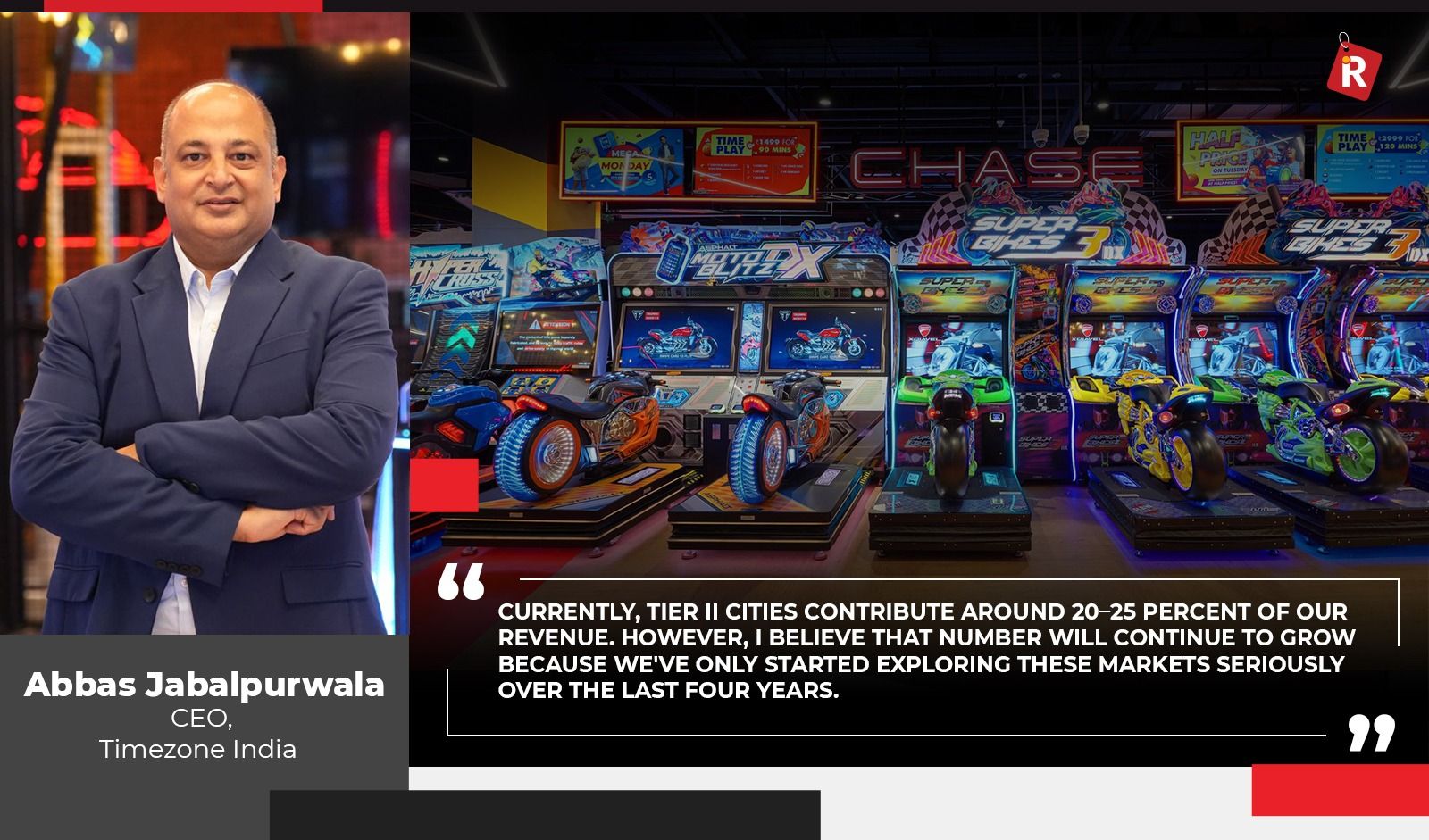
Tier II markets are already making a meaningful contribution to Timezone's business. "Currently, Tier II cities contribute around 20–25 percent of our revenue. However, I believe that number will continue to grow because we've only started exploring these markets seriously over the last four years," stated Jabalpurwala.
Interestingly, consumer expectations in smaller cities are becoming increasingly sophisticated. "Today, because of social media, someone sitting in a remote city knows exactly what's new and trending. We cannot offer a diluted experience in smaller markets. If you visit our store in Bareilly, you'll find games that are just as current as those in Noida or Faridabad."
This commitment to consistency has become a key differentiator for the brand.
Betting Big on Technology
The company has been an early adopter of emerging entertainment technologies, introducing several concepts ahead of the broader market. "We were among the first to bring bowling into malls, among the first to introduce laser tag, and we started installing VR attractions as early as 2018 when very few people even knew what virtual reality was," Jabalpurwala explained.
Today, Timezone is one of India's largest operators of VR-based attractions and offers several immersive experiences, including role-play virtual reality formats.
"We were the first to introduce Hologate role-play VR in India along with experiences such as Transformer VR and Arcadia. Going forward, I see AR and VR becoming a much larger part of the entertainment landscape."
What makes these technologies particularly exciting, he highlighted, is their universal appeal. "We're seeing guests in their fifties and sixties enjoying VR experiences as much as younger audiences. The appeal is much broader than people initially expected."
A Disciplined Growth Model
Unlike many retail and entertainment operators that rely on franchising, Timezone has adopted a company-owned model across all its locations.
"We only operate company-owned stores," he said. "Financial discipline, safety standards and product refreshes are critical in our business. We want complete control over the guest experience."
Expansion is also entirely self-funded. "Our growth is funded through internal accruals. On average, we open around 10 to 12 stores annually. With an investment of approximately Rs 10,000 per square foot, each store requires a capex investment ranging between Rs 9.5 crore and Rs 12.5 crore."
This translates into annual reinvestments exceeding Rs 100 crore back into the business. "We're redeploying well over Rs 100 crore every year into expansion and upgrades. That's a reflection of our confidence in the long-term potential of the Indian market."
Chasing Quality, Not Numbers
Despite operating one of the largest entertainment networks in the country, Timezone is not focused solely on aggressive expansion targets. "I don't believe in getting into a numbers race," asserted Jabalpurwala. "The moment you start chasing numbers, there's always a risk of compromising on quality."
That said, the company is approaching a major milestone. "With 93 venues already operational, our first goal is naturally to cross the 100-venue mark across Timezone and Play and Learn. We expect to achieve that milestone by 2027."
The company continues to target approximately 10 to 12 new openings annually, balancing growth with operational excellence.
"India is now our second-largest market globally after Australia, underscoring the remarkable scale and significance of our business in the country. Given the momentum we are witnessing, I am confident that India will continue to be a key growth driver for us in the years ahead,” he concluded.
Launched in July 2021, RESET entered the Indian wellness market with a proposition that brought together pharmaceutical formulation science and natural, Ayurveda-rooted ingredients. Backed by Venus Remedies, a research-driven pharmaceutical company with over 35 years of experience in critical care and antimicrobial research, the brand was developed at the Natural Products Research Lab of Venus Medicine Research Centre (VMRC), the company's R&D division.
The idea behind RESET emerged from a gap its founders identified in the Indian pain management market. Indian consumers largely approached pain relief reactively, seeking solutions only when discomfort began affecting their daily lives. The available choices were also divided between conventional painkillers and traditional remedies that often lacked scientific validation.
"We saw an opportunity to bridge that gap by bringing the rigour of pharmaceutical formulation science to natural, Ayurveda-rooted ingredients. Our topical range uses proprietary nanotechnology that helps actives penetrate nearly five times faster than conventional preparations, which is what allows a natural formulation to perform at a clinically meaningful level," shared Saransh Chaudhary, Founder, RESET and CEO, VMRC.
What began as a pain relief business gradually evolved into a broader wellness proposition as consumer insights revealed demand for products that addressed everyday well-being rather than occasional discomfort.
"We began with pain relief, but consumer insight quickly made it evident that people were looking for far more than episodic relief. They wanted a partner in their everyday well-being. That insight shaped RESET's evolution from a pain management brand into a holistic wellness brand, and it is why RESET is built around three ideas: Relief, Revive and Restore," he said.
Today, this philosophy guides the brand's product development and retail approach, with a portfolio spanning pain relief, recovery, sleep, gut health and daily nutrition.
Building an Omnichannel Distribution Network
RESET's retail footoprint comprises e-commerce marketplaces, its direct-to-consumer (D2C) platform, quick commerce, modern retail and specialised wellness spaces. In online retail, Amazon is currently its leading marketplace, while its own website serves as a direct channel for consumer engagement and repeat purchases. The brand is also available on Blinkit, allowing consumers to access its products through quick commerce.
Offline, RESET has established a presence through modern retail partners, including Broadway, across cities such as Delhi, Pune and Hyderabad. It is also present on Smytten across Noida, Ahmedabad and Indore. Beyond conventional retail, the brand is tapping boutique wellness centres, Pilates studios and fitness centres, where its pain relief and recovery products find relevant consumers.
"Our distribution strategy is built on one principle: meet the consumer at the moment the need arises. RESET operates across a set of complementary channels, each doing a distinct job," Chaudhary said.
Explaining the rationale behind its channel mix, he said the objective is to create an ecosystem where product discovery, trial and repeat purchases reinforce one another.
"Our channel choices have been deliberate rather than opportunistic. The intent has been to build an ecosystem in which discovery, trial and repeat purchase reinforce one another, so that every channel earns its place and strengthens the next," he added.
The brand's current revenue mix reflects the importance of online marketplaces, with Amazon leading on volume. However, its D2C platform also contributes a meaningful share, giving the company an opportunity to build stronger consumer relationships and understand purchasing behaviour.
"Marketplaces, with Amazon in particular, currently lead on volume, while our own platform contributes a materially larger share than is typical for a brand at this stage, and that is the number we watch most closely," Chaudhary said.
He added that the contribution from its own platform indicates that consumers are increasingly willing to engage directly with the brand, supporting retention and long-term customer value.
Expanding Beyond Pain Relief
RESET currently has around 15 products across four categories: Pain Relief, Wellness, Vitals and Yoga. While pain relief remains its core category, the brand is building its portfolio around recovery, preventive wellness and everyday nutrition.
Its leading pain relief products include Ultra Potent Gel, Pain Relief Roll-On Emulsion, Deep Penetrating Spray and Instant Ease Tablets. These address muscular discomfort and everyday aches associated with modern, sedentary lifestyles.
Another important product in its portfolio is Stretch Easy Oil, a research-backed Abhyanga formulation featuring chamomile, lemongrass, eucalyptus and camphor. Positioned within its Yoga portfolio, the product is used before or after yoga sessions to ease stiffness and support mobility.
"Along with the Emulsion, it records our highest repeat purchase rates, which tells us that recovery, and not only relief, is where the deeper relationship with a consumer is built," Chaudhary said.
In its Wellness and Vitals categories, Herbal Detox Candy has emerged as one of the fastest-growing products. The formulation combines five Ayurvedic herbs: Kalmegh, Manjishta, Guduchi, Punarnava and Daru Haldi extracts.
The brand is also witnessing adoption of Marine Collagen Peptides and its gummies range, which includes Biotin and Ashwagandha with Melatonin. These products reflect growing consumer interest in preventive wellness, beauty-from-within solutions and daily-care formats.
"Across categories, the common thread is formulation integrity: products that consumers can integrate into their routines with confidence," he said.
Entering Everyday Skin and Wound Care
The next phase of RESET's product expansion will take the brand into everyday skin and wound care. The company sees an opportunity in a category where it believes consumers need more credible, science-led solutions.
The upcoming products have been developed in-house using the company's proprietary patented formulations, allowing RESET to extend its research-led approach into another everyday health category.
"This is a natural extension of our philosophy. Wherever there is an everyday health need that remains underserved by credible, science-led solutions, there is a role for RESET," Chaudhary expressed.
The planned expansion also signals the brand's intention to move beyond its initial positioning as a pain management player and establish a wider presence in the preventive wellness market.
Strengthening Retail Reach Across Metros and Tier II Markets
Over the next two to three years, RESET plans to strengthen its retail presence by deepening distribution in established markets while expanding into newer geographies. The brand is already receiving orders from across the country, with consumption particularly strong in Mumbai, Bengaluru and Delhi NCR. It is also witnessing encouraging traction in Tier II cities, including Jaipur, Jodhpur, Bhubaneswar, Jamshedpur and Panchkula.
This demand is shaping its expansion priorities, particularly as preventive wellness products gain traction beyond metropolitan markets.
"Preventive wellness is no longer a metro conversation, and that shapes how we plan distribution. Our approach is to go deeper in the markets where demand is already proven, while steadily widening our reach across the rest of the country in a planned manner," Chaudhary said.
In established markets, the company will focus on strengthening product availability through modern retail, expanding partnerships with fitness and wellness spaces, and building a presence at airports. The latter is an opportunity to reach travelling consumers who may be looking for products addressing fatigue, discomfort and recovery.
"Adding geographies is the more straightforward part of retail. Building density in markets where demand is already validated is what creates a durable business, and we are pursuing both in sequence rather than trading one against the other," he added.
Making Everyday Wellness a Household Habit
For RESET, long-term growth is closely linked to changing how Indian consumers approach health and wellness. Rather than limiting product consumption to occasions when discomfort becomes disruptive, the brand wants to encourage consumers to incorporate preventive wellness into their everyday routines.
Its 'Dose of Good' philosophy brings together pharmaceutical science and natural healing, with the objective of developing products that deliver benefits while remaining suitable for regular use.
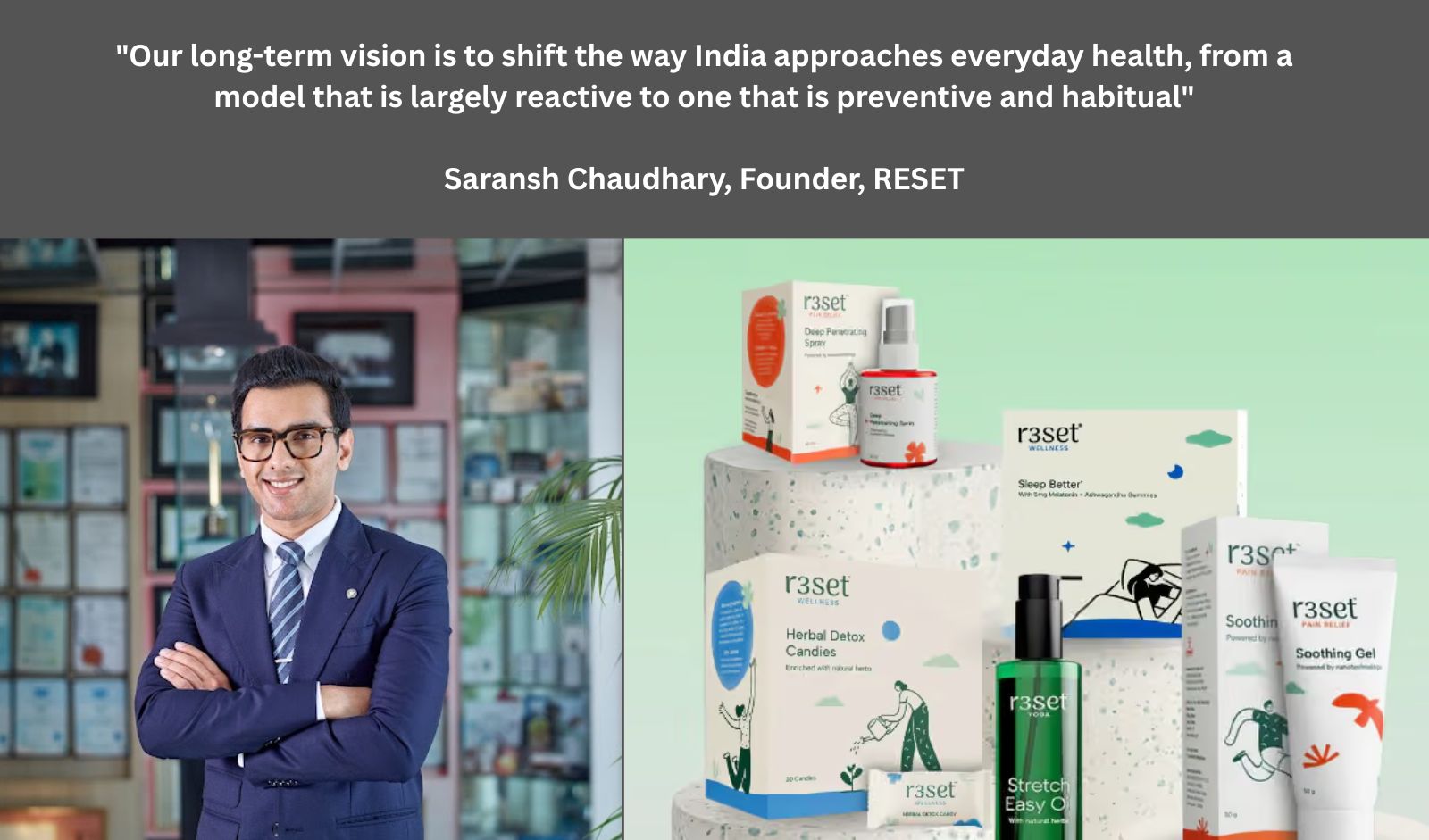
"Our long-term vision is to shift the way India approaches everyday health, from a model that is largely reactive to one that is preventive and habitual. Today, most consumers engage with pain relief or wellness products only when discomfort becomes impossible to ignore. We want RESET to be part of the routine long before that point," Chaudhary concluded.
As the brand expands its categories, distribution network and consumer touchpoints, its larger ambition is to build a wellness business rooted in research, formulation integrity and everyday relevance.
"If, over the next decade, RESET becomes synonymous with everyday well-being in Indian households, and a reference point for how natural wellness can be both credible and effective, we will have achieved what we set out to do," he said.
The retail landscape in India is undergoing a significant transformation. As digital-first brands increasingly explore physical retail, shopping centres are evolving beyond traditional destinations for buying products. Consumers today seek experiences, convenience, engagement, and a sense of connection with the brands they interact with. For retailers and mall developers alike, understanding these changing expectations is becoming central to building successful retail businesses.
In an interaction with Retailer Media, Kamakshi Mantri, Chief Strategy Officer, Mantri Group, discusses the nuances of transitioning from online to offline retail, the importance of festive shopping in India, and the growing role of food and beverage (F&B) spaces in shaping the modern mall experience.
D2C Brands: Why Offline Retail Requires a Different Mindset
For direct-to-consumer (D2C) brands that have built their businesses online, entering physical retail is an exciting opportunity. However, the transition requires more than simply replicating an online store in a physical environment. It calls for a fundamental shift in how brands understand consumer behaviour and the shopping journey.
According to Mantri, one of the most common mistakes D2C brands make when opening their first physical store is underestimating the importance of store design and the psychology behind it.
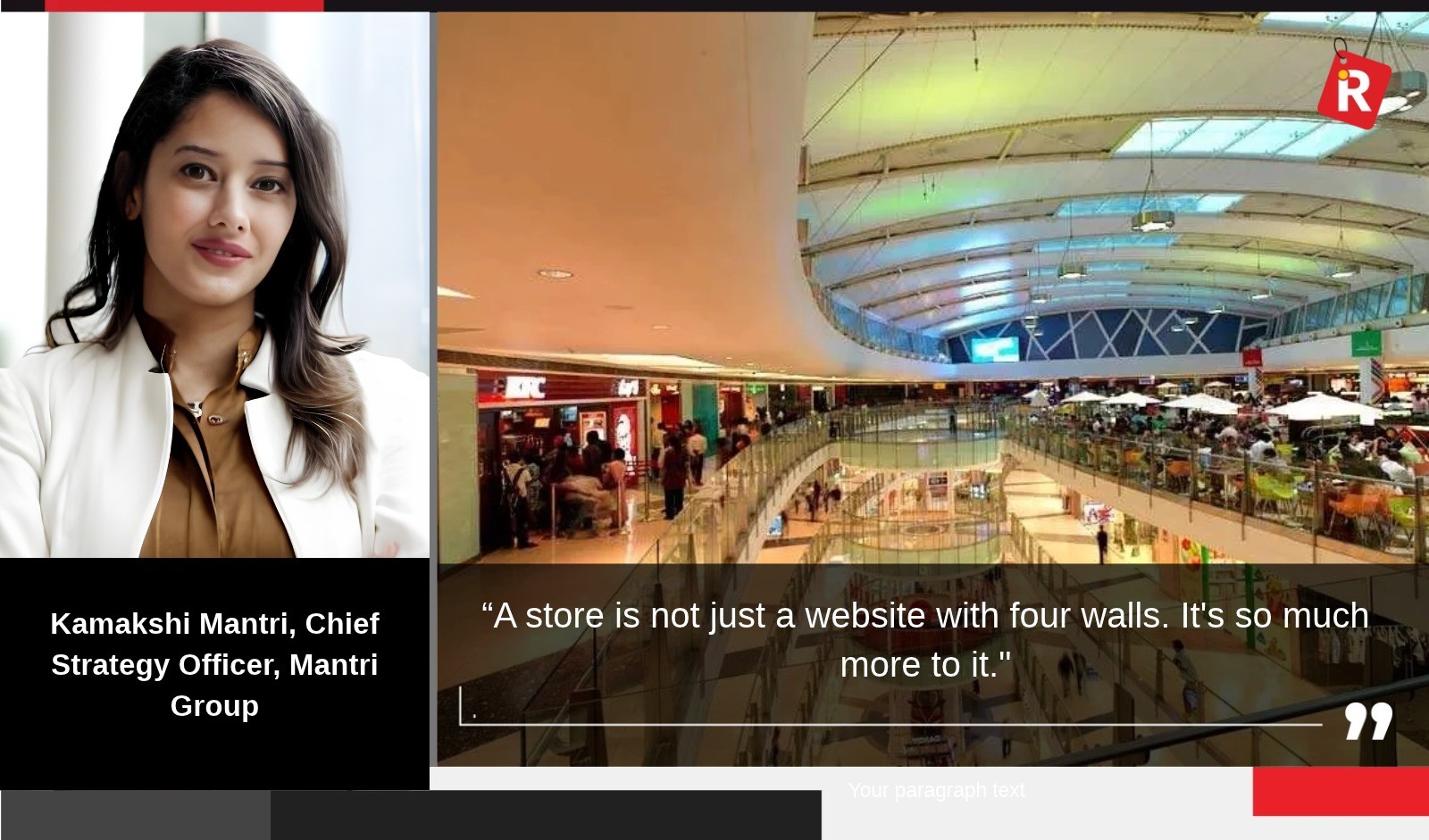
“A store is not just a website with four walls. It's so much more to it,” she emphasized.
Unlike online shopping, where consumers largely interact with products through images, descriptions and digital interfaces, an offline store engages multiple senses. Everything, from the lighting and layout to the fragrance, mirrors, product placement and overall ambience, influences the customer's perception and purchasing decisions.
“When a customer walks in, what are the first items that greet them? How does the lighting look? How does the mirror make them feel when they try on their clothes? What is the quality of the products? How much rack space do you give versus display space? All these little things matter,” she explained.
For retailers, this means approaching store planning as a carefully considered exercise in customer experience. Product visibility, ease of navigation, visual merchandising, and the overall look and feel of the space must work together to encourage exploration and influence buying behavior.
However, the physical environment is only one part of the equation. The human element is equally important, particularly the role played by store associates.
Mantri believes that store staff should be viewed as brand ambassadors rather than employees whose primary responsibility is billing. “The store staff cannot just be a cashier or an accountant you have hired to do the billing. They almost have to be hospitable in nature. They need to create a relationship with the customer and walk them through the buying journey.”
This relationship should extend beyond the customer's time inside the store. Associates can follow up through WhatsApp, share relevant offers, inform customers when previously unavailable products are back in stock, and even facilitate online orders when a desired product is not available at the physical location.
Such practices create continuity between online and offline channels while ensuring that retailers do not lose sales simply because of inventory limitations.
Mantri also encourages D2C brands to look beyond the immediate financial performance of their physical stores. While profitability remains important, an offline presence delivers significant intangible value by strengthening brand credibility and recognition.
“An offline store creates a brand identity. It creates a kind of trust in the eyes of the customer that this brand has arrived. It's not an online-only brand. It exists offline,” she said.
The Festive Season: India's Biggest Retail Opportunity
In India, the festive season has traditionally been synonymous with shopping. From appliances and electronics to jewellery, fashion and lifestyle products, consumers often plan major purchases around Diwali and the months leading up to it.
As Mantri observed, many consumers deliberately postpone significant purchases until the festive period. “People wait for Diwali to buy a new fridge, a microwave and many jewellery items. They say, ‘Diwali jab aayega tab lenge.’” This consumer mindset makes October to December particularly important for the retail industry. The period encompasses pre-Diwali shopping, Diwali, pre-Christmas and Christmas purchases, followed by New Year shopping, creating a concentrated window of heightened consumption.
Recognizing this opportunity, Mantri Malls has introduced the Mantri Shopping Festival, a three-month initiative designed to make festive shopping more engaging and rewarding. The festival brings together participating brands under a larger retail celebration, with attractive discounts, offers and experiences for shoppers. Complementing this is the mall's Shopping On programme, which rewards customers based on their spending through gifts, vouchers and opportunities to win bigger prizes, including cars and bikes.
“Our message is simple: shop and win, shop and earn with us at Mantri,” noted Mantri.
The festival also incorporates entertainment and engagement beyond conventional retail promotions. Every year, Mantri Malls invites a prominent celebrity to launch the shopping festival, offering visitors an opportunity to interact with personalities they may otherwise only see on screen.
For Mantri, this is an important part of the mall's role as an experience destination. “It's also a way for all our customers to meet a celebrity whom they don't get to meet on a day-to-day basis. As a mall, we kind of try to bridge that gap.”
The festive season is also an important period for retailers to introduce new concepts, refresh existing stores and undertake renovations. Mall developments and brand launches are planned with the objective of ensuring that customers experience something new when they visit during the peak shopping months.
F&B: From Dining Destinations to Informal Co-working Spaces
Another notable shift in consumer behavior is the changing role of food and beverage spaces within shopping centres. Traditionally, F&B was largely concentrated in dedicated food courts, with dining considered a complementary activity to shopping. Today, that approach is evolving rapidly.
According to Mantri, restaurants, cafés, coffee shops and bars are increasingly becoming destinations in their own right, serving purposes that extend well beyond eating and drinking.
“An F&B outlet today is so much more than just a place where people go to grab a bite. They almost nowadays double as informal co-working spaces,” she observed.
The appeal lies in the combination of ambience, comfort, food and flexibility. Consumers are increasingly choosing cafés and restaurants as alternative environments for meetings, creative work and casual professional interactions.
A change of setting can offer a welcome break from conventional office environments, while access to favourite beverages, food and comfortable seating makes these spaces conducive to spending extended periods of time.
Mantri pointed out that it is not unusual to find someone spending three to four hours at a coffee shop with just one coffee or a cookie. Their visit is not necessarily driven by consumption alone; it is also about finding a comfortable environment to work, unwind, or enjoy some personal space.
This behavioral shift is influencing how malls plan their F&B offerings. “At Mantri, we understand this, and that's why F&B is no longer like earlier, when there used to be a food court, and all the food items would be only there,” she explained.
Instead, F&B is increasingly being integrated across different floors and zones of the mall. Coffee shops, tea bars, matcha bars and other specialised concepts are strategically introduced in different areas to encourage visitors to pause, relax and spend time wherever they are.
The idea is to make food and beverage accessible throughout the mall rather than confining it to a single designated area.
Building the Next Chapter of Experiential Retail
Across these three areas, a common theme emerges: retail is no longer defined solely by the transaction. Whether it is a D2C brand establishing its first physical store, a mall creating a compelling festive shopping programme or an F&B operator offering a space to work and socialise, the emphasis is increasingly on the experience surrounding consumption.
For retailers, this requires a deeper understanding of the customer journey, thoughtful investments in physical environments and a willingness to build relationships that extend beyond the point of sale.
For shopping centres, it means creating destinations that offer multiple reasons to visit, return and engage.
Electronics Mart India Limited (EMIL) is sharpening its expansion strategy for FY2026–27, with plans to open 25–30 new stores and enter West Bengal, beginning with Kolkata. The company is focusing on cluster-led expansion, strengthening its presence in existing markets while tapping emerging consumption centres and improving the productivity of its retail network.
The company’s expansion priorities include deepening its presence in Telangana, Andhra Pradesh and Delhi-NCR, alongside building a scalable presence in West Bengal. Kolkata is emerging as a key growth market, with the company seeing potential to establish around 30 stores in the city over the next two years.
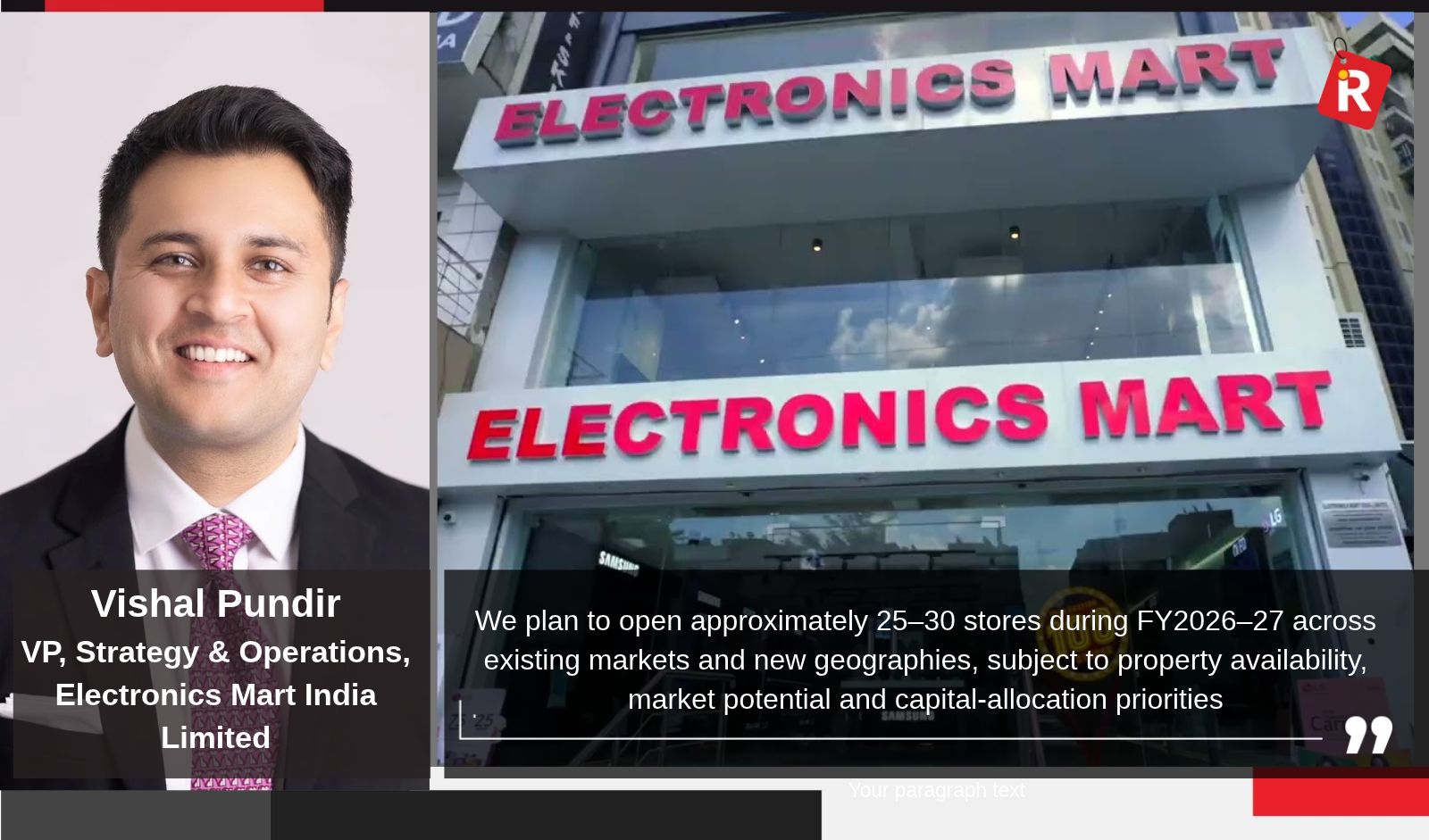
“Our expansion strategy is centred on cluster-led growth, deepening our presence in established markets while entering new geographies where we see a meaningful opportunity for organised electronics retail. We plan to open approximately 25–30 stores during FY2026–27 across existing markets and new geographies, subject to property availability, market potential and capital-allocation priorities,” said Vishal Pundir, VP, Strategy & Operations, Electronics Mart India Limited.
Beyond geographical expansion, EMIL is evaluating opportunities in growing urban centres and the expanding peripheries of existing cities, where rising residential development and improving consumer access are creating demand for organised electronics retail. However, the company is prioritising sustainable store economics over the pace of expansion.
Location Strategy Anchored in Demand and Store Economics
EMIL’s location-selection strategy considers multiple factors, including consumer demand, purchasing power, competitive intensity, real estate costs and supply-chain efficiencies. The company assesses household formation, population growth, consumption patterns and the presence of a growing middle-income customer base before entering a market.
Local income profiles and purchasing behaviour also influence product assortment, pricing, premium offerings and financing options. On the real estate front, visibility, accessibility, parking, frontage, floor space and delivery access are among the key considerations.
“We evaluate occupancy costs against realistic sales potential and do not want high rentals to compromise the long-term economics of a store. A location becomes more attractive when it can be supported efficiently by our warehouses, distribution network and existing store ecosystem. This helps us improve replenishment, inventory availability and logistics costs,” Pundir said.
The company also evaluates projected revenue, operating expenses, capital expenditure, inventory requirements, break-even timelines and payback periods before approving a new location. Its objective is to identify markets where consumer demand, competitive positioning and real estate economics collectively support a sustainable retail operation.
Multi-Brand Outlets Remain Core to Retail Strategy
EMIL continues to rely on its multi-brand outlet (MBO) format as the backbone of its retail business. At the end of FY2025–26, the company operated 215 MBOs and eight exclusive brand outlets (EBOs).
Its MBOs offer customers access to multiple leading brands across smartphones, IT products, televisions, refrigerators, air conditioners, washing machines and other consumer appliances under one roof.
Store size and format are determined by the catchment's population, purchasing power, anticipated footfall, category mix, competitive landscape and sales potential. While larger urban markets may require wider assortments and additional display space for premium products, stores in smaller cities and emerging catchments are calibrated to local demand.
“Our focus is on the productivity of every square foot. The objective is not to create the largest possible store, but to ensure that the space, assortment, inventory and operating costs are aligned with the revenue opportunity,” Pundir said.
Specialised formats and EBOs complement the MBO network by addressing specific product categories and brand experiences where there is a clear customer proposition.
Tier II and III Markets Offer Expansion Opportunities
The company sees significant headroom for organised electronics retail beyond major metropolitan markets. Rising aspirations, greater access to branded products, increasing digital awareness and consumer financing are supporting demand in smaller cities.
However, EMIL believes store maturity and productivity, rather than geographical classification alone, determine profitability. While established markets such as Hyderabad and other parts of Telangana and Andhra Pradesh benefit from brand familiarity, operating experience and an established supply chain, newer markets require an initial investment in building awareness and customer relationships.
“We do not assume that every Tier II or Tier III location will outperform a metropolitan market, or vice versa. We evaluate smaller-city opportunities individually, based on the addressable market, competition, customer demand and achievable sales per square foot,” Pundir said.
Store Productivity and Premiumisation to Drive Growth
Alongside network expansion, EMIL is banking on same-store sales growth, the maturing of newer outlets, premiumisation and operational efficiencies to strengthen its business.
Demand for premium smartphones, larger-screen televisions, advanced air conditioners, high-capacity appliances and connected-home products is creating opportunities to improve average transaction values. Stronger brand partnerships are also enabling the retailer to offer wider assortments, participate in new product launches and respond to evolving consumer preferences.
The company is also focusing on customer retention, local marketing, inventory planning, supply-chain productivity and data-led merchandising to improve existing store performance.
This strategy is reflected in its FY2026–27 first-quarter performance, with revenue from operations growing 39% year-on-year to Rs 2,419 crore, while same-store sales growth stood at 34.2%.
“A significant part of our network is relatively young. As these stores gain brand recognition, customer traffic and scale, we expect operating leverage and profitability to improve. Our growth strategy combines network expansion with higher productivity from existing stores. The objective is to build a larger business while progressively strengthening its earnings quality,” Pundir said.
Disciplined Capital Allocation to Support Expansion
With large-format electronics retail requiring substantial investment in store fit-outs and inventory, EMIL is maintaining a disciplined approach to capital allocation.
Management has indicated an average store fit-out capital expenditure of approximately Rs 2,500 per sq. ft. This translates into an investment of around Rs 2.5 crore for an illustrative 10,000-sq.-ft. store, excluding initial inventory requirements. Actual investments vary depending on the location and store format.
The company follows a mix of leased and owned property models, retaining flexibility in expansion while selectively considering property ownership where long-term economics justify it.
Payback periods are another important consideration. Management has indicated indicative payback periods of around 10–11 months in its established southern cluster and 16–18 months in the northern cluster. These benchmarks vary depending on market maturity and individual store performance.
“We follow a disciplined capital-allocation approach. Every store proposal is evaluated on expected revenue, gross margins, rental and employee costs, initial inventory, capital expenditure, break-even and payback. Our focus is on profitable expansion rather than expansion for its own sake,” Pundir said.
The company is also working on improving inventory turns, managing working capital and increasing throughput across its network to support better absorption of fixed costs as the business scales.
Specialised Formats to Tap Premium Home Solutions
Apart from its core MBO business, EMIL sees specialised retail experiences as an opportunity to strengthen customer engagement and tap premium consumption.
Its existing portfolio includes Kitchen Stories, Easy Kitchens and Audio & Beyond, which cater to specialised requirements in kitchen solutions and audio-related categories.
The company sees potential in premium kitchen appliances, home cinema, premium audio and smart-home solutions, where customers benefit from product demonstrations, consultation and guided selection. These formats can also support premiumisation by enabling consumers to evaluate integrated products based on functionality, design and suitability for their homes.
“Specialised retail experiences are an important complement to our core multi-brand business, particularly in categories where customers benefit from demonstrations, consultation and guided product selection. Our approach will remain selective and commercially disciplined. We will evaluate the size of the opportunity, customer demand, store economics, brand partnerships and the potential to scale before committing to wider expansion,” Pundir said.
As EMIL expands its geographical footprint, the company is looking to build a complementary retail ecosystem in which MBOs remain the foundation, while specialised formats deepen engagement in categories that require more immersive shopping experiences. The broader strategy is to combine wider market reach with stronger store-level productivity, premium product offerings and disciplined investment to sustain long-term growth.
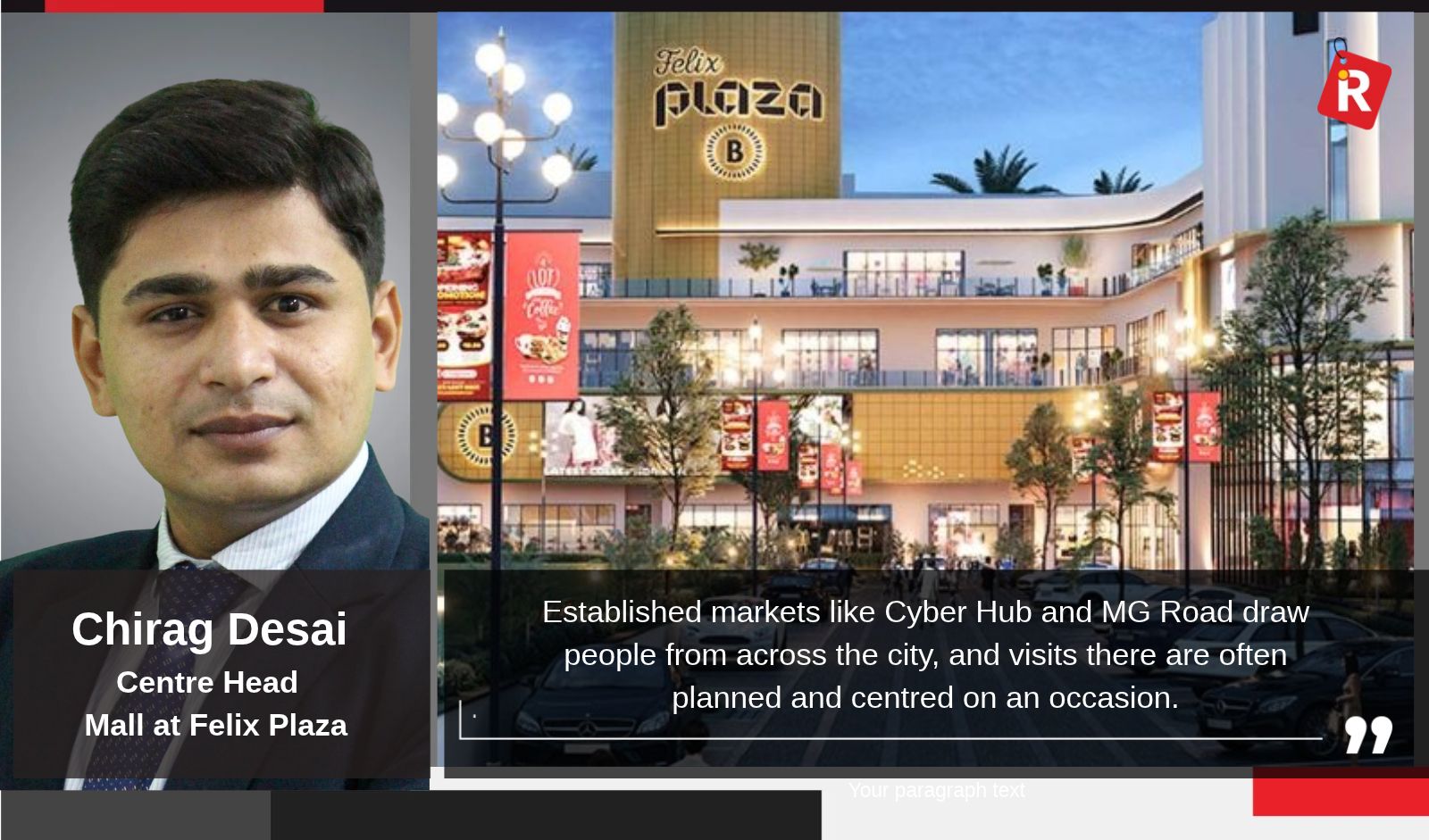
New Gurugram’s transformation from a predominantly residential market into a growing retail and lifestyle destination is reshaping consumer shopping patterns, with neighbourhood retail centres gaining traction among families, young professionals and residents of nearby housing societies.
Felix Plaza in Sector 82A is part of this shift, bringing together more than 100 stores across 26 categories, including fashion, footwear, beauty, accessories, homeware, dining and entertainment. The destination houses brands such as H&M, Marks & Spencer, Westside, Tommy Hilfiger, Calvin Klein and Cinepolis.
According to Chirag Desai, Centre Head – Mall at Felix Plaza, the growth of organised retail in New Gurugram has followed the expansion and occupation of residential communities in the area.
“Five years ago, New Gurugram was mostly a residential story. Families moved into new housing societies, but for anything beyond daily needs they drove across the city. As those communities have filled up, retail has followed. What started as convenience retail has grown into full lifestyle destinations,” said Desai.
Neighbourhood Retail Gains Ground
The growing appeal of neighbourhood retail destinations reflects a shift in how consumers approach shopping and leisure. While established commercial hubs such as Cyber Hub and MG Road continue to attract visitors from across Gurugram, neighbourhood centres are increasingly catering to frequent, convenience-led visits.
Desai said consumers in New Gurugram tend to favour destinations that combine multiple needs, allowing them to shop, dine and socialise without travelling long distances.
“Established markets like Cyber Hub and MG Road draw people from across the city, and visits there are often planned and centred on an occasion. New Gurugram is more local, more family-led and more spontaneous. Shoppers here want variety and good value in one place,” he said.
He added that convenience extends beyond location to include parking, seating and easy movement between stores, particularly for families visiting with children and older members.
While larger malls continue to play a role in the retail ecosystem, neighbourhood destinations are becoming an option for regular weekend outings and impromptu plans. Desai noted that physical retail can differentiate itself from online and quick-commerce platforms by offering product trials, discovery and opportunities for shoppers to seek opinions before making purchases.
Shopping Becomes a Leisure Activity
Consumer behaviour at Felix Plaza varies between weekdays and weekends. Weekday visits are generally shorter and more purposeful, with customers visiting for errands, individual purchases or coffee and dinner. Weekends, in contrast, see families and groups combining shopping with dining and entertainment.
“On weekdays people come for something specific; at the weekend the visit itself becomes the outing,” Desai said.
He observed that fashion and footwear often draw consumers to the centre, while categories such as beauty, accessories and homeware encourage them to explore further. Dining and entertainment extend the duration of visits, making the overall experience an important part of the destination's retail proposition.
Families from nearby residential communities form a significant part of the weekend audience, alongside young professionals who have recently moved to New Gurugram. According to Desai, proximity encourages frequent and sometimes unplanned visits, helping build a repeat customer base.
Weekend visits also tend to involve larger groups shopping across multiple categories, which can increase spending per visit compared with weekday trips. However, the centre has not disclosed specific transaction values or repeat-visit figures.
Tenant Mix Focuses on Variety and Repeat Visits
Felix Plaza's retail strategy centres on bringing together established brands and emerging labels across different price points and categories. The aim is to cater to consumers with varied preferences while encouraging them to spend more time at the destination.
“Our aim is for different tastes and budgets to share one afternoon. We balance fashion and footwear, which bring people in, with beauty, accessories, homeware, dining and entertainment, which turn a quick errand into a full outing,” Desai said.
He added that maintaining a sustainable neighbourhood retail destination requires regular attention to the tenant mix and the overall customer experience. While proximity can attract initial visits, retaining customers depends on fresh offerings, effective brand engagement and an environment that encourages repeat visits.
The centre also focuses on practical amenities, including valet services, pram services and convenient movement between stores. These features are intended to improve accessibility for families and support longer visits.
For retailers, sustained footfall must translate into sales for the destination to remain commercially viable. Desai said balancing the tenant mix with the customer experience is important for tenant retention and occupancy.
Expansion and Community-Led Experiences
Felix Plaza plans to continue developing its tenant mix by adding brands that reflect New Gurugram's changing consumer profile, including emerging labels alongside established retailers. The centre also intends to strengthen its dining and leisure offerings.
Community-led initiatives, including festive celebrations, family-oriented weekends and brand activations, are expected to form part of its strategy to encourage repeat visits and position the centre as a social destination for nearby residents.
Looking ahead, Desai is optimistic about the centre's growth prospects over the next 12–24 months, supported by the continued development and occupation of housing societies in New Gurugram.
“We are optimistic. New Gurugram’s population keeps growing as more housing societies are completed and occupied, which steadily widens our catchment. These residents want a weekend destination close enough for an impromptu plan, with enough to do that nobody watches the clock. That demand will be the main driver of our growth,” he said.
As residential development continues to reshape New Gurugram, neighbourhood retail destinations such as Felix Plaza are positioning themselves around convenience, category diversity and experience-led shopping. Their long-term performance, however, will depend on converting local catchment demand into consistent store sales, repeat visits and sustainable tenant performance.
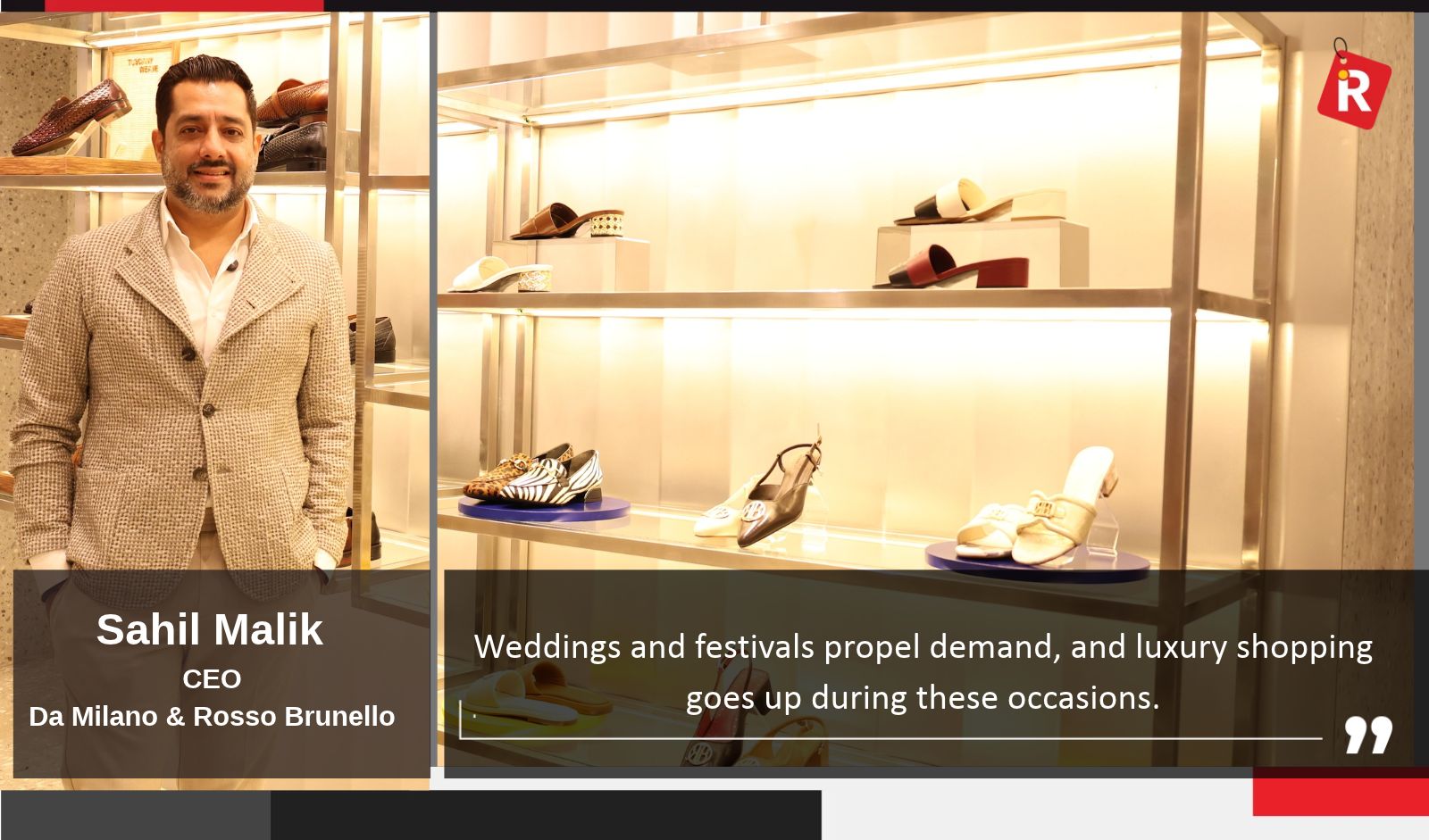
India’s premium footwear market is witnessing a shift in consumer behaviour, with demand gradually expanding beyond weddings and festive occasions to everyday luxury purchases. While festivals and weddings continue to drive seasonal sales, consumers are increasingly investing in premium footwear as part of their regular wardrobes.
Sahil Malik, CEO of Da Milano and Rosso Brunello, has observed this shift firsthand, noting that footwear is increasingly becoming an integral part of consumers’ everyday style choices rather than remaining limited to special occasions.
“Traditionally, in our country, sales have always been higher during the festive period. Weddings and festivals propel demand, and luxury shopping goes up during these occasions. Footwear is an important part of the overall ensemble, with consumers looking to complement their outfits,” Malik said.
However, he believes the market is undergoing a broader transformation, driven by consumers’ growing interest in quality products, established brands and everyday style.
“What I have witnessed over the last few years is that people are now looking to buy footwear on a regular basis as well. I feel the shift is towards everyday luxury rather than just the festive period. Consumers want to look good and invest in great products and brands. Everyday luxury is coming in a big way,” he added.
Everyday Luxury Reshapes Premium Footwear Demand
The growing preference for everyday luxury signals an opportunity for premium footwear brands to expand their consumer base beyond occasion-led shopping. Instead of purchasing premium footwear only for weddings, festivals or formal events, consumers are increasingly considering it for work, social outings and daily wear.
This shift could also influence how brands approach product design, pricing and retail strategies. Versatility, comfort and durability, alongside aesthetics and brand value, are likely to become important considerations for consumers seeking to incorporate premium footwear into their everyday lives.
For brands such as Da Milano and Rosso Brunello, the trend presents an opportunity to build more frequent consumer engagement and encourage repeat purchases beyond peak festive seasons.
As consumers increasingly view premium footwear as an everyday style investment, the category’s growth could become less dependent on seasonal demand and more closely linked to changing lifestyle aspirations.
The emerging trend points to a wider evolution in India’s premium retail market, where luxury is increasingly being incorporated into everyday consumption rather than being reserved exclusively for special occasions.
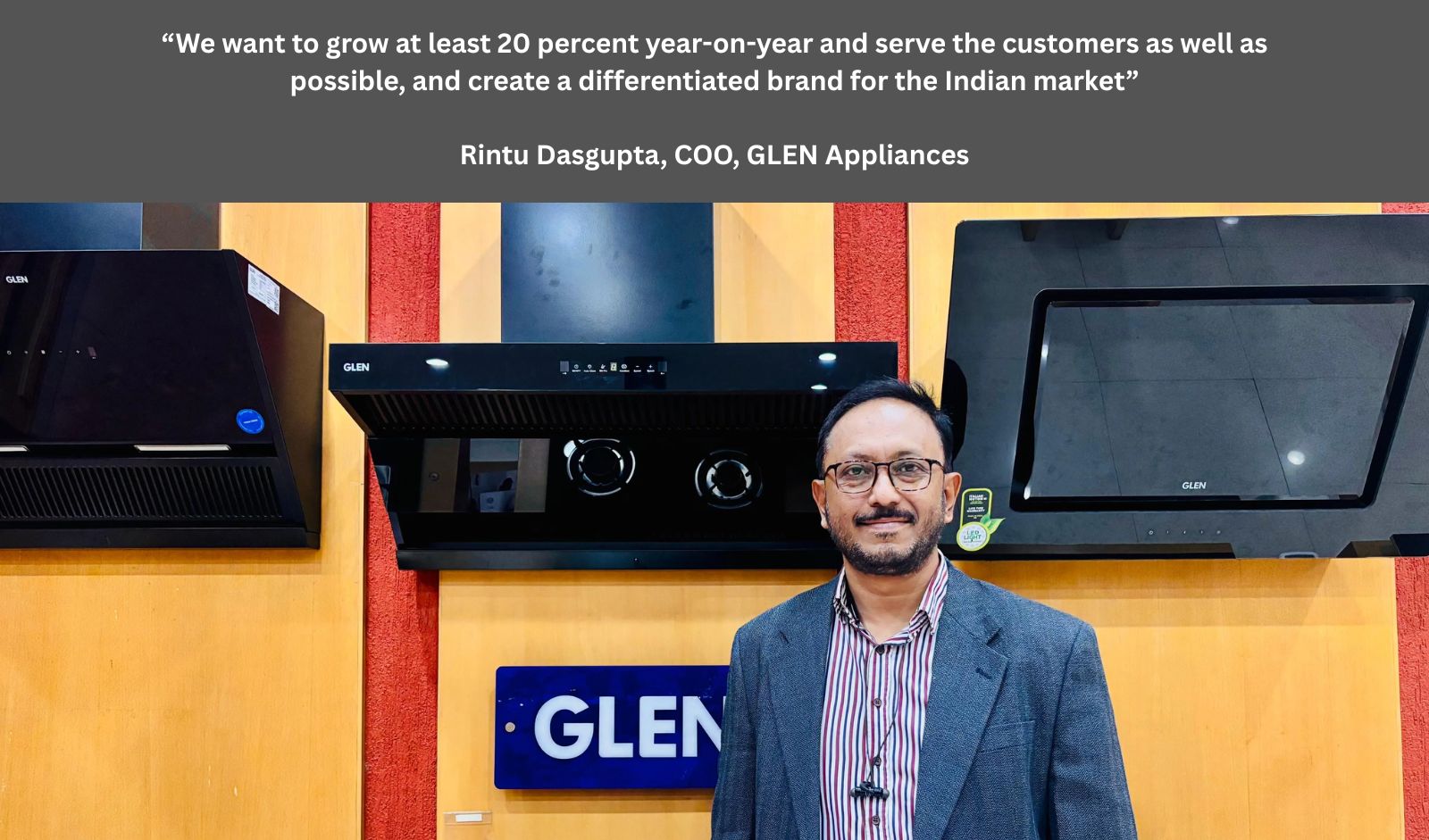
From neighbourhood appliance stores to a larger manufacturing footprint, GLEN Appliances is preparing for its next phase of expansion in India. The homegrown kitchen and home appliances brand plans to expand its exclusive retail network from 236 GLEN Galleries to 500 over the next two years, with a longer-term ambition of reaching 600–700 outlets. Alongside its retail push, the company is doubling manufacturing capacity at its Faridabad facility to support growth across existing and new product categories.
Founded in 1999, GLEN recorded revenue of approximately Rs 440 crore in the previous financial year, according to Rintu Dasgupta, COO, GLEN Appliances. With a strong presence in North India, the company is now focusing on expanding across West, South and East India, while increasing its reach in Tier-II and Tier-III markets. It is also strengthening its online business and introducing new product categories as it looks to build a wider national presence.
Expanding the Exclusive Retail Network
GLEN's exclusive retail network is central to its plans to improve consumer access and strengthen its presence across India. The company currently operates 236 GLEN Galleries and aims to increase this to approximately 500 outlets over the next two years, eventually reaching 600–700 galleries nationwide.
The company opened around 36 galleries during the year up to the interview and expected to close the year with approximately 55–56 new outlets. While North India remains an important market, a larger share of incremental store additions is expected to come from West and South India, where the brand's existing gallery footprint is comparatively smaller.
“Most of the galleries currently getting opened are in South and West, mostly. The reason is that our gallery footprint today in these markets is pretty small,” said Rintu Dasgupta, COO, GLEN Appliances.
The company will continue to expand in North India as well, particularly in towns where it does not yet have a gallery. However, the region already accounts for a significant share of its established retail network.
GLEN Galleries follow a neighbourhood-store format, with outlets typically measuring between 250 and 350 sq. ft. Rather than prioritising large shopping malls, the company focuses on local markets and residential commercial complexes to remain accessible to consumers.
The stores operate through a franchise-led model. Franchisees purchase inventory, while GLEN provides the store branding, layout, furniture and fixtures.
“The franchisee has an equal say in the business as the brand, and he has significant skin in the game also, so that the stores remain operational till the time there is mutual benefit between the company and the franchisee,” Dasgupta added.
Strengthening Presence Beyond North India
GLEN is looking to build on its established presence in North India by expanding distribution and retail access across western, southern and eastern markets. The company is also moving beyond the Tier-I urban centres that shaped its earlier growth, targeting smaller cities where rising income levels are creating opportunities for kitchen and home appliances.
“We are essentially an urban brand. In the initial part of the company's journey, we were essentially present in the Tier-I towns. Now, as income levels are increasing in Tier-II and Tier-III towns, our presence is also increasing in these towns,” Dasgupta said.
The company's distribution network includes approximately 350 distributors, supported by a sales team of around 180 people and nearly 370 service centres across India. Through this network, GLEN reaches consumers across approximately 5,500 multi-brand retail stores.
Beyond exclusive galleries and multi-brand outlets, the company also serves institutional customers and the Canteen Stores Department (CSD). Its modern trade presence remains limited, with a focus on B2B customers and selected regional retailers.
Online Channels Contribute 17% of Revenue
While offline retail continues to account for most of GLEN's business, the company is strengthening its digital presence through its own website, e-commerce marketplaces and selected quick-commerce platforms.
Online channels contribute approximately 17% of the company's business, according to Dasgupta. Of this, around 14% comes from marketplaces and quick-commerce platforms, while its own website contributes approximately 3%. The remaining revenue comes from offline channels.
GLEN sells its full product range through Amazon and Flipkart, which Dasgupta identified as its largest e-commerce customers. Its presence on Swiggy Instamart, Blinkit and Zepto is more selective, focusing largely on entry-level, lower-priced products suited to impulse purchases.
The company is also taking a targeted approach to expanding its small-appliance business online. Rather than competing across the entire category, it intends to focus on product segments where it can offer the right combination of quality, features and pricing.
“We are not a price-driven brand in the market. We will never be a price-driven brand in the market. We are a brand which is razor-focused on quality,” Dasgupta said.
Categories such as OTGs and air fryers are among the products the company sees as suitable for online expansion. GLEN plans to concentrate on approximately six or seven large, growing categories where it believes it can offer differentiated products rather than spread its resources across the entire small-appliance market.
Doubling Manufacturing Capacity in Faridabad
Manufacturing is another key component of GLEN's expansion plans. The company produces approximately 87–88% of the products it sells at its Faridabad facility, while the remaining share is imported. It is gradually looking to shift more of the imported product range to domestic manufacturing.
The existing facility was commissioned around 2020, following the company's move from its earlier factory in Faridabad's DLF industrial area. GLEN is now developing a new factory adjoining its current facility, with the aim of doubling manufacturing capacity within approximately a year of the interview.
“The reason that we are doing this is that we are very, very optimistic about the way the market is going to grow. The second is that our presence in this growing market will only get strengthened over a period of time,” Dasgupta shared.
The investment is intended to support the company's retail expansion and growing product portfolio while allowing it to retain greater control over manufacturing and quality.
Dasgupta said domestic manufacturing also provides an advantage in servicing products over their useful lives. Since the company controls production, it can maintain the availability of spare parts for its products for as long as consumers continue to use them.
“ As we manufacture ourselves, we exercise full control over the service and quality of the product,” he said.
Chimneys and Cooktops Remain Core Categories
GLEN's product portfolio continues to be led by kitchen appliances, particularly chimneys, which account for approximately 40% of its sales. Cooktops and hobs together contribute another 22–23%, while built-in appliances, including ovens, microwaves and dishwashers, account for around 7–8% of total sales.
Over the past two years, the company has also entered new categories, including kitchen sinks, and is launching air purifiers and tabletop coffee machines. Its small-appliance range spans products such as mixer grinders, blenders, air fryers, water heaters and room heaters.
Although these newer categories are growing, they currently account for a smaller share of the company's overall business. Dasgupta expects them to make a more substantial contribution over the next three years as the portfolio expands.
The company is also investing in product innovation within its established categories. In chimneys, GLEN has moved from suction capacities of approximately 1,000–1,200 cubic metres per hour to models offering 1,400–1,600 cubic metres per hour, reflecting its focus on more effective smoke extraction and healthier kitchen environments.
“That's primarily to give a more efficient machine to the housewife, so that she can operate in a smoke-free environment in her house, and of course to launch more innovative products in the market,” Dasgupta said.
He added that the company is working on connected appliances, including products incorporating the Internet of Things (IoT), app-based functionality and design innovations. Several of these developments are expected to reach the market over the six to nine months following the interview.
Building Market Share Through Quality and Service
GLEN aims to strengthen its market position over the next three to four years, with category-specific market-share targets guiding its expansion. The company is targeting approximately 15% market share in chimneys and around 10% in cooktops and hobs combined.
In small appliances, its focus is on building a profitable business while maintaining its mid-premium positioning. Rather than competing primarily on price, GLEN intends to concentrate on selected categories where product quality, design and service can differentiate its offerings.
The company plans to support these ambitions through continued investment in manufacturing, retail expansion, product innovation and after-sales service. Its priorities include maintaining product quality, ensuring spare-parts availability throughout a product's useful life and making its products accessible across a wider range of markets.
Dasgupta said the company's long-term approach is centred on creating a differentiated proposition for Indian consumers while sustaining growth.
“We want to grow at least 20 percent year-on-year and serve the customers as well as possible, and create a differentiated brand for the Indian market,” concluded Dasgupta.
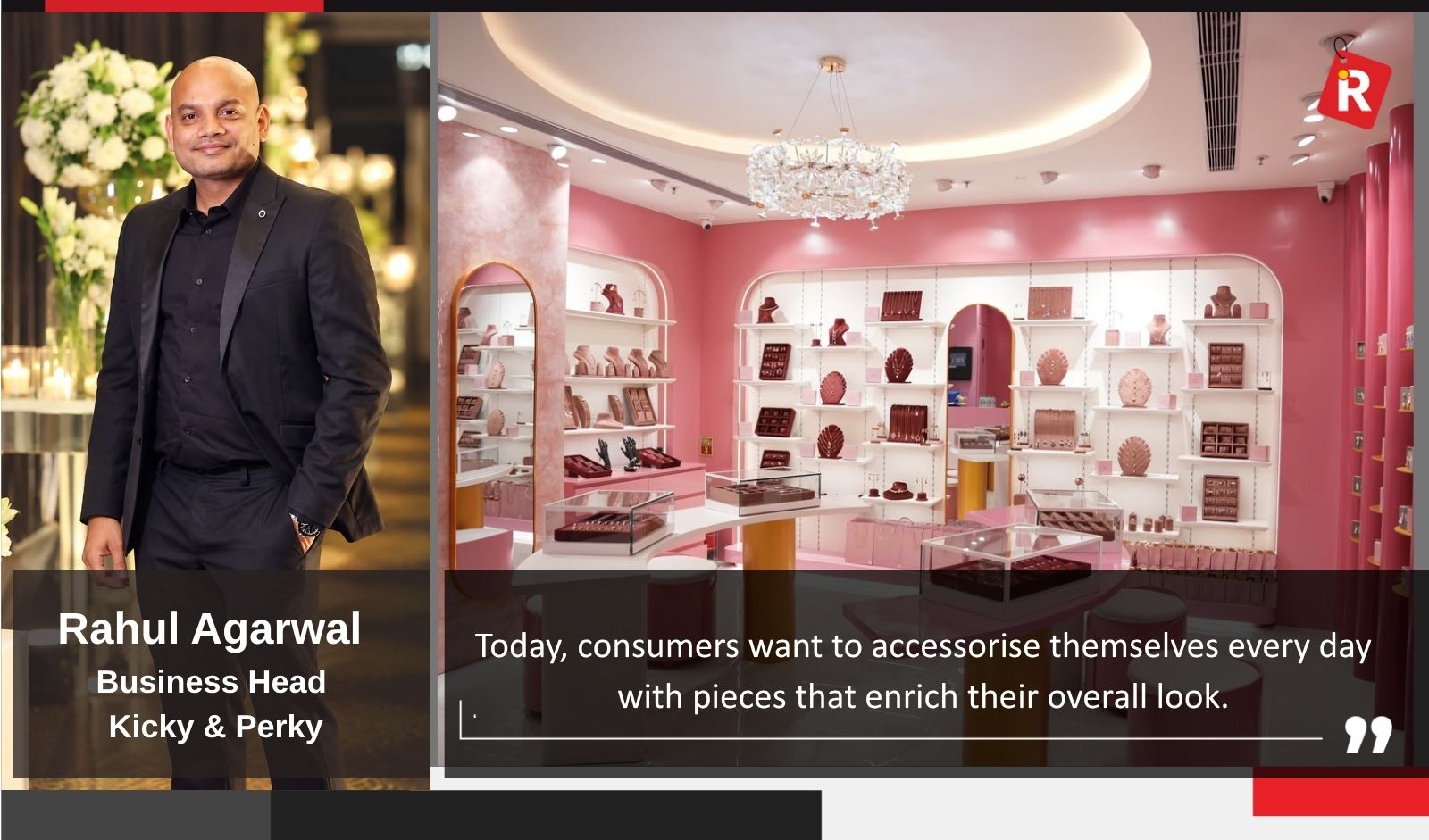
Kicky & Perky is stepping up its retail expansion, targeting 200 stores over the next three years as the online-first jewellery brand looks to diversify its sales channels, strengthen customer engagement and build a scalable retail business. The company plans to open 20 stores over the next year before exploring franchising as a route to accelerate expansion.
The strategy marks a shift towards an omnichannel business model, with physical retail expected to play a larger role in customer acquisition, product discovery and revenue generation. The brand currently generates approximately 90% of its sales online and 10% offline, but aims to move towards a 70:30 offline-to-online sales mix over the longer term.
“Jewellery is a touch-and-feel product. Customers want to experience it before buying. With offline stores, we can explain the stories behind our collections and help customers understand the effort that goes into creating them,” said Rahul Agarwal, Business Head, Kicky & Perky.
Offline Expansion Becomes a Key Growth Driver
Kicky & Perky's retail strategy combines company-led store expansion with a data-driven approach to location selection. The brand is evaluating both shopping malls and high-street locations, with plans to assess their performance before committing to a preferred format.
According to Agarwal, the company considers three key factors when selecting locations: the concentration of its target customers, the positioning of neighbouring brands and insights from its online sales and conversion data.
“We evaluate where our target customers reside, which brands are located around us and what our online sales data tells us about customer acceptance and conversions. These three factors help us decide where to open our stores,” he said.
The brand's initial expansion is focused on Delhi and Mumbai, with Hyderabad, Bengaluru and selected markets in Punjab also on its radar. Pune and Varanasi are among the other cities being considered, particularly for their connection with art and culture.
The company sees different commercial advantages in mall and high-street retail. Malls offer access to established footfall, while high-street stores provide greater flexibility in storefront visibility and product presentation. Kicky & Perky plans to use its initial expansion phase to understand which format delivers better results for the business.
Silver, Bridal Jewellery Offer Opportunities to Increase Average Selling Prices
Alongside retail expansion, Kicky & Perky is looking to broaden its product mix across everyday jewellery, statement pieces and bridal collections. The strategy provides an opportunity to serve multiple purchase occasions while increasing the contribution of higher-value products.
The brand believes that changing consumer preferences are creating demand for versatile jewellery that can be worn across work, social gatherings and special occasions.
“Earlier, people would buy gold jewellery and take it out only for special occasions. Today, consumers want to accessorise themselves every day with pieces that enrich their overall look. They are also looking for jewellery that expresses their personality,” Agarwal said.
Bridal jewellery is emerging as another opportunity. Silver enables the brand to create elaborate, lightweight pieces, while gold-plated silver offers consumers an alternative to conventional gold jewellery.
“People want bridal jewellery that looks heavy but does not weigh heavily. They want to invest more in the look of the piece rather than the weight of the metal. Silver gives us the flexibility to create these designs,” Agarwal said.
The company is seeing opportunities in larger pieces such as Chandbalis, bridal sets and bridesmaid sets. These products carry higher average selling prices (ASPs) than smaller everyday pieces, potentially increasing revenue per transaction.
The brand is also expanding its range across categories such as hair accessories, nose pins and toe rings, creating additional opportunities to broaden its product portfolio and attract repeat purchases.
Franchising to Support the Next Phase of Scale
While Kicky & Perky intends to establish its first 20 stores through company-led expansion, franchising is being considered as a subsequent growth lever. Before bringing in partners, the company wants to establish standardised operating processes and test the economics of its retail model.
“We want to open the first 20 stores ourselves, test the model and establish processes that can withstand operational challenges. Once we are confident that the model is scalable, we will explore franchising with partners who understand what Kicky & Perky stands for,” Agarwal said.
This phased approach is intended to help the brand establish a replicable operating model before expanding through external partners. The company has not disclosed specific franchise investment requirements or store-level profitability targets.
Quick Commerce and International Markets on the Roadmap
Beyond physical retail, Kicky & Perky is exploring quick commerce as an additional distribution channel. The company plans to identify products suited to the channel, allowing it to reach customers seeking convenient access to jewellery.
International expansion is another part of its longer-term strategy. The brand aims to establish a global presence by building on India's strengths in gemstone availability and jewellery craftsmanship.
“Our aim is to become a successful Indian global brand. India has access to some of the best gemstones and artisans, and we want to build a brand that can represent that strength on the global stage,” Agarwal said.
The company has not disclosed its revenue targets in absolute terms but indicated ambitious growth expectations for FY2026–27 and the following financial year. Agarwal also emphasised that expansion would be guided by financial discipline rather than growth at any cost.
As Kicky & Perky pursues its 200-store ambition, execution will be critical. The company's ability to establish sustainable store economics, identify the right retail formats and build standardised operations will determine how effectively it can translate digital demand into a larger omnichannel business.
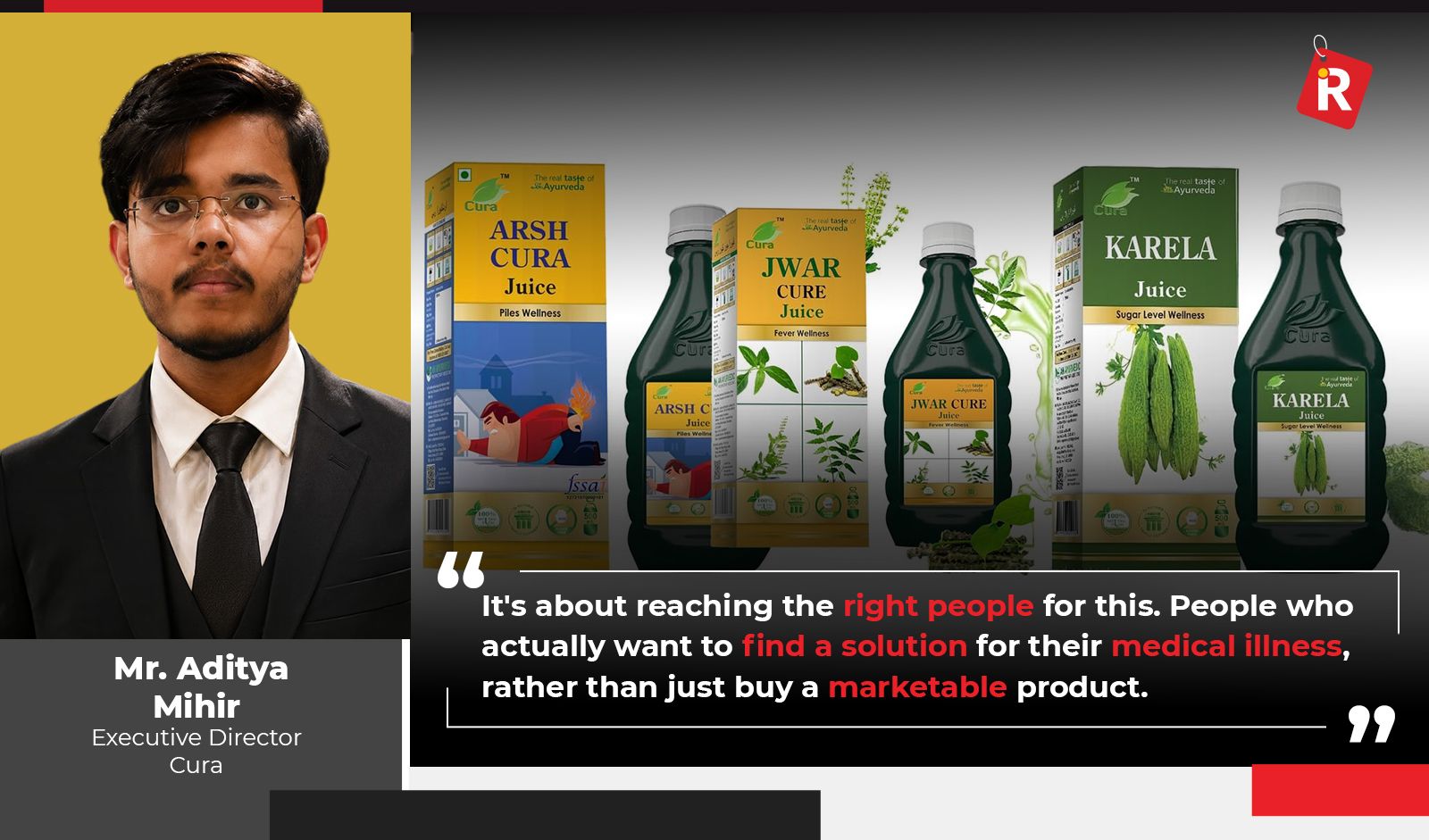
Cura Ayurvedic & Unani Ltd. is preparing for its next phase of growth by expanding into digital commerce, developing new wellness products and strengthening its manufacturing capabilities. Founded by Hemant Sharma in 1999, the company reported revenue of Rs 107.18 crore in FY26, with a net profit margin of 30 percent. It is targeting Rs 500 crore in revenue over the next three years.
The company recently entered the direct-to-consumer (D2C) market and is expanding its presence on Amazon and Flipkart, with plans to enter quick commerce. It expects digital channels to contribute Rs 15–20 crore in their first full year.
For Aditya Mihir, Executive Director, Cura Ayurvedic & Unani Ltd., the expansion is not just about opening new sales channels. It is also about reaching consumers with relevant products while maintaining the relationships the company has built with offline retailers over the years.
“It's about reaching the right people for this. People who actually want to find a solution for their medical illness, rather than just buy a marketable product,” Mihir said.
Growing Online Without Losing the Offline Network
Cura has built an offline distribution network spanning 17,000 pincodes across 28 states and eight Union Territories, according to the company. As it enters digital commerce, protecting this network remains an important consideration.
Mihir said the company had experimented with online sales three to five years ago but found that the channel was affecting its offline retailers. This prompted Cura to reconsider how it approached e-commerce before expanding its digital presence again.
“After two to three years of preparation and prep work, we have created the perfect combination to not cause even an inch of problem for our offline retailers,” he said.
The company is now looking to develop its online business while continuing to serve its established retail network. Its current priorities include expanding across marketplaces and preparing for quick commerce, with the Health Plus range expected to be an important part of its digital portfolio.
Cura expects its digital channels to generate Rs 15–20 crore in their first full year. The company is pursuing this alongside its overall revenue target of Rs 500 crore over the next three years.
Health Plus Leads the Next Product Push
Product development is another focus as Cura looks to expand its presence in the wellness market. The company has 600 live SKUs across its portfolio and introduced Triphala Ras in 2006. It also works with more than 190 varieties of herbs, according to Mihir.
Its newer Health Plus range includes products focused on gut and liver health. Cura Gut Health Plus is among the products being introduced, while the company is also developing its liver-health offering. Further additions to the range will depend on consumer response and the company's assessment of market needs.
Explaining the thinking behind the portfolio, Mihir said the company was drawing on ingredients from different regions and the traditional knowledge associated with their cultivation.
“We are sourcing all the herbs and all the ingredients from that place directly,” he said.
The company expects the Health Plus range to contribute to its digital business as it expands online. Rather than relying solely on marketplace listings to drive growth, Cura is looking to use the channel to reach consumers for whom its products are relevant.
Manufacturing and Quality Control
Cura's growth plans also include expanding its manufacturing footprint. The company currently has five manufacturing units and plans to establish two additional facilities in Jewar and Guwahati, according to information shared by the company. It also manufactures products for other wellness brands, including Kapiva.
Mihir said quality checks form part of the company's process, from the evaluation of incoming herbs to testing finished products. Cura has an internal quality assurance and quality control laboratory and works with third-party laboratories for testing, he said.
“At least, we do four quality tests. That is the bare minimum that we do. In some cases, it goes up to six to seven tests,” Mihir said.
He explained that ingredients are assessed against quality parameters before being used in production, while finished products undergo further checks before packaging and dispatch.
For certain herbal juice formulations, Mihir described a brewing process that runs continuously for 48 hours. The company also plans to make product-testing information more accessible to consumers through scannable QR codes, although this remains a future plan.
Cura has additionally stated that its five existing manufacturing units use solar energy and IGL, with no fossil fuel use reported across these facilities.
A Bootstrapped Approach to Growth
Cura's expansion is being pursued without external funding, according to the company. Its plans combine investment in digital channels, product development and manufacturing with a continued focus on its existing distribution network.
Mihir said the company intends to grow through its own resources rather than seek external investment to accelerate expansion.
“We are not a brand which is looking for investors. We are not a brand which is looking for people to invest or to throw money at,” he said.
For the company, long-term consumer confidence is central to its ambitions. Mihir said Cura wants to build a brand that consumers can recognize and trust.
“We want to be the next startup of this category, where people trust the brand by its name,” he said.
With its digital business still at an early stage, Cura's next phase will depend on how effectively it expands online while maintaining its offline relationships. Its Health Plus portfolio, marketplace presence and planned manufacturing investments are expected to support this expansion as it works toward its Rs 500 crore revenue target over the next three years.
India’s fast-fashion market is seeing brands compete not only on pricing and design but also on how quickly they can identify trends, develop products, and bring them to consumers. For Littlebox, the answer lies in combining an online-first business model with control over manufacturing, technology-led production, and a product assortment that evolves every week.
Founded in 2022 by Rimjhim Deka Kakati and her husband, Partha Kakati, Littlebox has built its business around Gen Z consumers seeking access to global fashion trends at affordable price points. The brand currently sells exclusively through its own website and app, with no marketplace presence. As it prepares to enter offline retail, Littlebox is looking to extend its reach while retaining control over its customer relationships and product development.
“We wanted to cater to the Gen Z audience in the country. We could see that Gen Z consumers were very much exposed to all the trends happening around the world through social media. At Littlebox, we wanted to bring those fashion trends to them at an affordable and accessible price point,” said Rimjhim Deka Kakati, Co-Founder and CEO, Littlebox.
The company’s next phase of growth will focus on expanding its retail presence, strengthening its operating model, and increasing its share of consumers’ wardrobes. Over the next four to five years, Littlebox aims to become a Rs 1000 Cr brand in five years.
Building an Online-First Fashion Business
Littlebox began in Guwahati, where the founders started operations from a rented one-bedroom flat with a small team. Having spent nearly a decade in fashion before launching the brand, Kakati brought experience in brand building, factory operations, and supply-chain management. The company established its manufacturing base in Delhi while maintaining offices in both Guwahati and Delhi.
The founders’ focus extended beyond creating a fashion label. They wanted to build a business with greater control over its distribution, production, and consumer insights. Littlebox remained bootstrapped until it raised its first round of funding in 2025, following which it began expanding more aggressively, according to Kakati.
From the outset, the brand chose a direct-to-consumer (D2C) model, selling exclusively through its own digital channels. This has allowed it to retain access to customer feedback and purchasing data while making decisions on product development, pricing, and assortment.
“From the very beginning, we have been selling through our website and app. We are not on any marketplaces, and we want the larger share of our sales to continue coming from our own app and website in the near future,” Kakati said.
She acknowledged that marketplaces can provide substantial sales volumes, particularly for young brands trying to establish themselves. However, Littlebox has prioritized direct consumer relationships over the additional reach that third-party platforms can offer.
“For me, it was very important that I know my consumers. I understand the data behind the purchases. I could analyze the data behind the transactions, which would help me take decisions. And then you control your price point at every step. There is a bigger control, a better decision-making capacity if you are on your own platform,” she said.
According to Kakati, the brand has seen consumers return to purchase through its own channels, reinforcing its decision to continue investing in the model. The objective is to build on this base rather than pursue marketplace expansion simply to increase volumes.
Relevance Over Exclusivity in Fast Fashion
Littlebox primarily targets consumers aged 18 to 26, a segment that encounters fashion trends from different markets through social media and expects brands to respond quickly. In this environment, the company sees speed, affordability, and trend relevance as key factors in attracting repeat purchases.
Rather than positioning its products as designs unavailable elsewhere, Littlebox focuses on identifying emerging styles and making them accessible to its customers at the right time.
“I believe it is not about differentiation, but about how relevant you are for them,” Kakati said.
She explained that if a product such as a corset top gains popularity, the brand must ensure it reaches consumers while the trend is still relevant and at a price they can afford. This approach informs the company’s product-development cycle.
“In fast fashion, your whole idea is how fast you can make a product and bring it to your shelf, online or offline. At Littlebox, we launch around 150 products every week in order to maintain that freshness and relevance for the consumer,” she said.
The frequent launches are also intended to give customers reasons to return to the platform. Kakadi said the company regularly surveys consumers to understand what encourages them to shop with the brand again, with trend relevance emerging as an important response.
This model requires the brand to balance a constantly evolving assortment with the operational capacity to develop, produce, and launch products at speed.
Technology and Manufacturing at the Core
Littlebox’s product-launch frequency is supported by its focus on managing the supply chain and integrating technology into production. The company handles its manufacturing process from the early stages, including raw-material procurement, and has built in-house systems to track consumer preferences, fabric performance, and emerging trends.
It also gathers customer feedback before developing product samples, using these insights to inform the assortment. This process allows the company to assess consumer interest before committing to production.
“We do not just work like a fashion brand where we spot a trend, make a product, and just go out there. We try to be very data-oriented. We also have a process where we take feedback from consumers even before making any sample,” Kakati said.
The company describes its model as real-time retail, with technology supporting both production planning and weekly launches. Kakadi said Littlebox maintains around 17 days of inventory stock, which she attributed to its technology-enabled operating system.
For the brand, the challenge has been to combine India’s established garment-manufacturing ecosystem with a more technology-led approach to fashion retail.
“India always had the manufacturing platform. There are so many export houses in India where we are manufacturing, and there are so many domestic brands. We had access to skilled laborers. Our job was to ensure that, as a modern, technology-first fashion company, we could marry technology with the supply chain,” she said.
By integrating consumer insights, product development, and manufacturing, Littlebox aims to shorten the gap between identifying a trend and making it available to customers. The model is central to its ability to introduce new products frequently without relying solely on seasonal collections.
Offine Retail Expansion Plans
Although Littlebox has built its business entirely through digital channels, the company is preparing to enter physical retail. It plans to open around 30–40 stores across India in 2027, marking a significant step in its distribution strategy.
The initial expansion is expected to focus on markets where the brand already has a strong customer base. Delhi is likely to be the starting point, supported by the company's manufacturing presence in the region, before it expands into other parts of the country. The brand's existing order distribution provides a starting point for identifying potential markets. Delhi-NCR, Mumbai, Bengaluru, and Hyderabad together account for around 50 percent of Littlebox's orders, while the remaining half comes from other markets, including Tier I and Tier II cities.
This distribution indicates that the brand's customer base extends beyond the largest metropolitan markets. Its planned stores will give the company an additional channel to reach consumers who currently shop through its website and app.
For Littlebox, offline expansion will add a new dimension to its existing model. While its current business allows it to control the digital shopping experience and access purchasing data directly, physical stores will extend the brand's presence into markets where consumers may prefer to discover and shop for fashion in person.
Rethinking Festive Demand
Littlebox's approach to seasonal demand also reflects its focus on fast-moving trends rather than relying exclusively on traditional festive merchandising.
Kakati said the brand does not need to stock up specifically for Diwali in the way some other fashion retailers do. Instead, it adapts its marketing to the festive calendar while continuing to introduce products aligned with its core positioning.
The company's stronger months are generally December, January, and February, driven by occasions such as Christmas, New Year, and Valentine's Day. For the recent festive season, Littlebox introduced a collection that adapted Indian prints into Western silhouettes. The company also incorporated festive themes into its marketing and was working on a Halloween campaign.
However, the festive period creates operational challenges for its supply chain. Many of its textile and clothing manufacturers are based in Gujarat, where factory closures and labor shortages during festivals can disrupt production.
“The preparation for us is at the back end. Our supply chain gets disrupted because our vendors and clothing manufacturers are based in Gujarat, and there is a labor shortage as workers go home during festivals,” Kakadi said.
The brand therefore focuses on preparing for supply-chain interruptions while maintaining a relatively consistent customer-facing approach. Its festive collections are designed to fit its modern fashion positioning rather than shift entirely toward traditional occasionwear.
Building a Larger Share of Consumers' Wardrobes
As Littlebox prepares to expand beyond its online-only model, its longer-term ambition is to become a regular destination for consumers shopping for dresses and other fashion products.
Kakadi recognizes that young consumers are unlikely to remain loyal to a single fashion brand. They experiment with different labels, silhouettes, and styles, creating an opportunity for retailers that can consistently offer relevant products.
“At Littlebox, it is important to understand how much of the wardrobe share we can take from our consumers. That is what we are focusing on from the consumer's point of view,” she said.
The ambition is to build repeat engagement by offering an assortment that evolves with consumer preferences, rather than depending on exclusivity or a limited set of signature products. Over the next five years, Littlebox aims to reach revenue of Rs 1,000 crore.
Achieving that scale will require Littlebox to sustain its product-launch pace, strengthen its supply-chain capabilities, and execute its planned offline expansion while continuing to grow its owned digital channels.
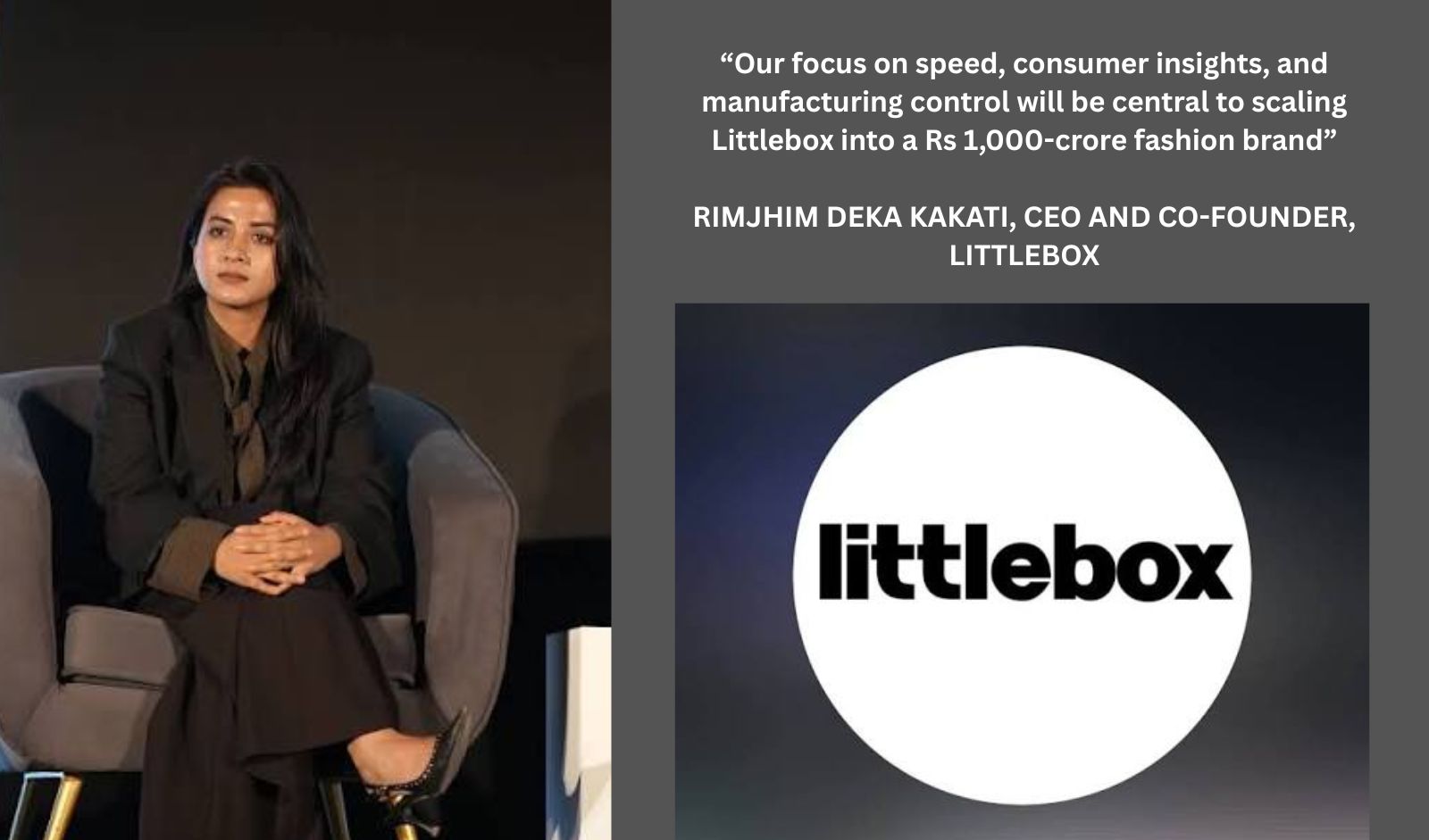
“As we expand into a larger retail business, our focus will remain on speed, consumer insights, and manufacturing control. These capabilities will be key to realizing our vision of building a Rs 1,000-crore fashion brand,” concluded Kakati.
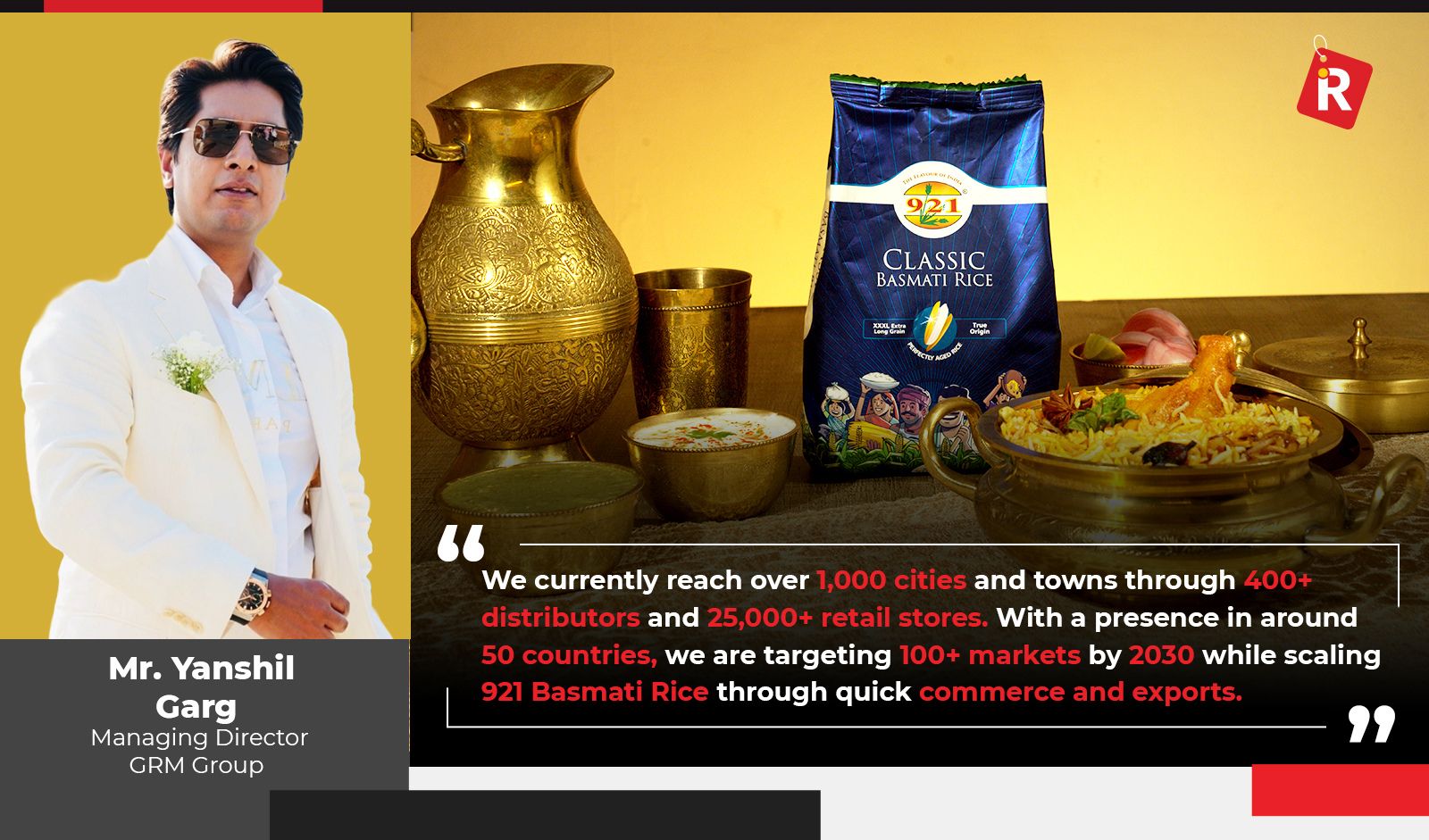
India’s packaged rice market is changing as more consumers look for good quality, trusted brands, and convenient ways to shop. According to GRM Foods, its brand 921 Basmati Rice has expanded its reach to more than 25,000 retail stores across over 1,000 cities and towns in India.
The company, which started its journey in 1972, is now focusing on building its consumer brands, growing its online business and expanding into international markets. Yanshil Garg, Managing Director of GRM Group, is leading this next phase of growth. Under his leadership, the company is working to build on its long history in the rice industry while meeting the changing needs of consumers.
Also read: BMW Group India’s Hardeep Singh Brar on Luxury Car Retail Trends
From a family business to a consumer brand
Garg comes from Ladwa (Haryana), a region known for its rice trade. Growing up around the business gave him an early understanding of the industry. He later pursued higher education abroad before taking charge of GRM Foods, with the aim of taking the family business forward.
The company was founded in 1972 by his grandfather, Late Shri Dhanpat Rai Garg, as Ganesh Rice Mills in Kurukshetra. For many years, it mainly supplied rice to businesses and institutions. Over time, the company began focusing more on its own consumer brands.
“Our brands, including 921 Basmati Rice and Rehaan Basmati Rice, represent this transformation,” Garg said.
“Today, GRM Foods has a presence in around 50 countries. Our manufacturing facilities use advanced technology from Germany, the UK and Japan to maintain product quality and meet the needs of different markets,” he added.
The company is using this experience and infrastructure to grow its brands in India and overseas.
Also read: Bharath Rao on Indian Interior Materials Market Growth
Growing through retail and quick commerce
The growth of 921 Basmati Rice has been supported by a wider distribution network and changing shopping habits. According to Garg, the brand's general trade business has been growing at around 20 percent year-on-year. Quick commerce has also become an important channel for the company.
GRM Foods said it reaches more than 1,000 cities and towns through over 400 distributors and 25,000 retail stores. While local grocery stores remain important, online platforms are helping the brand reach consumers who prefer shopping from their phones.
“Our goal is simple: meet modern consumers wherever they shop. Whether a family picks up a bag at a local kirana store or orders a 10-minute delivery on an app, we want 921 to be seamlessly accessible,” Garg said.
The brand is available on platforms such as Swiggy Instamart, Zepto, BigBasket, Amazon and Flipkart.
According to the company, quick commerce contributes around 10 percent of its revenue and generates approximately Rs 50 crore in annual sales. The channel is growing at around 30 percent month-on-month, with a reported customer repeat rate of 30 percent.
The company plans to build on this growth while continuing to strengthen its presence in traditional retail, especially in smaller cities and towns.
Also read: From Craft to Commerce: How Indian Fashion Brands Are Building the Next Premium Retail Market
Meeting the demand for premium rice
Consumers are becoming more particular about the rice they buy. Grain length, aroma, ageing and cooking quality are increasingly important, especially when choosing Basmati rice for special meals and family occasions.
Garg believes this change is creating opportunities for brands that can offer consistent quality and products for different needs.
The 921 range includes Biryani, Super and Classic variants, while Rehaan caters to other consumer requirements. The company has also introduced Sticky Rice for specific cooking preferences. Its 30 kg Rehaan pack is aimed at large family gatherings, festive occasions, and the hotel, restaurant, and catering (HORECA) sector.
“Sales of premium and super-premium rice increase by around 25% during festive periods, when consumers tend to opt for higher-quality products for family gatherings and celebrations,” Garg mentioned.
For the company, the focus is on offering more choices while maintaining product quality across its range.
Also read: From Illumination to Expression: How Luxury Lighting Is Reshaping Indian Spaces
Expanding into international markets
Exports are becoming an important part of GRM Foods' growth plans. The company began exporting in 2022 and has since expanded into around 50 countries.
According to the company, its annual rice export volume stands at approximately 375,000 metric tonnes, with exports growing at around 15 percent year-on-year.
The UAE is currently its main export market. The company is also looking to expand its business across the Gulf, Africa, Australia, New Zealand, Europe and Nepal.
“Global consumers want authentic, high-quality Basmati,” Garg added.
“Currently, around 80 percent of the company’s revenue comes from India, while exports contribute the remaining 20 percent. GRM Foods aims to bring this closer to a 50:50 split between domestic and international markets in the coming years,” he added.
To achieve this, the company plans to work with more local partners, improve distribution and expand into new markets. Its target is to reach more than 100 countries by 2030.
Also read: India’s Baby-Care Market Moves Beyond Basics
Plans for the coming years
According to Garg, GRM Foods recorded revenue of Rs 350 crore in FY25 and Rs 500 crore in FY26. It is targeting Rs 700 crore in FY27 and has a longer-term goal of crossing Rs 3,000 crore in revenue.
Quick commerce is expected to play a bigger role in reaching these targets. Garg aims to increase its contribution from around 10 percent to 40 percent of the company's domestic business. The company also plans to invest in premium products, distribution and manufacturing facilities.
Achieving these targets will depend on how well the company responds to changing consumer preferences, maintains quality, and expands its presence in India and overseas.
As Garg put it, “We aren't just selling rice; we're building a global, digital-first FMCG powerhouse.”
The coming years will show how GRM Foods turns its long-standing experience in the rice industry into a larger consumer business in India and international markets.
Also read: From Coffee to Culture: How Cafés Are Rewriting India’s Retail Experience
Facts:
- Inception: 1972
- Revenue: Rs 500 Cr (FY26); Rs 700 Cr target (FY27)
- Countries: 50+; target 100+ by 2030
- Distributors: 400+
-
RESET Builds an Omnichannel Wellness Business, Looks to Expand Beyond Pain Relief
-
Kamakshi Mantri, Chief Strategy Officer, Mantri Group, shares insights on the rise of D2C brands in physical retail, the significance of festive shopping, and how F&B spaces are transforming malls into vibrant destinations for dining and socializing.
-
Electronics Mart India Limited (EMIL) is sharpening its expansion strategy for FY2026–27, with plans to open 25–30 new stores and enter West Bengal, beginning with Kolkata.
-
Felix Plaza reflects New Gurugram retail growth, combining neighbourhood retail, experiential retail, diverse brands and entertainment to attract families and young professionals, supporting retail expansion and consumer engagement.






Copyright © 2009 - 2026 Franchiseindia.com Ltd