India’s premium whisky market is evolving beyond the bottle. As consumer interest shifts toward authenticity, provenance, and immersive experiences, distilleries are increasingly becoming an extension of the brand itself. Gamber Valley, the Indian single malt whisky brand from Alcobrew Distilleries, is embracing this trend by positioning its Solan facility not only as a production centre but also as a destination that showcases the journey of whisky making.
Launched in 2026, Gamber Valley represents Alcobrew’s entry into the premium Indian single malt category. Distilled, matured, and bottled at the company’s facility in Solan, Himachal Pradesh, the brand draws heavily on its Himalayan location to shape its identity. The surrounding climate, altitude, and access to water from the region form an integral part of the whisky’s production environment and brand narrative.
Unlike many whisky brands that focus primarily on the finished product, Gamber Valley is placing equal emphasis on the process behind the spirit. The brand’s positioning is built around the idea that whisky is shaped not only by ingredients and production techniques but also by the environment in which it matures. This philosophy is reflected in its identity, which highlights altitude, climate, water, oak, and time as defining elements of the whisky-making journey.
Bringing Consumers Closer to the Whisky-Making Process
A visit to the Solan distillery offers a detailed look into the stages that shape the final spirit. From fermentation and distillation to cask selection and maturation, the facility allows visitors to see firsthand how whisky develops long before it reaches consumers.
For premium spirits brands, creating visibility around production is becoming increasingly important. Consumers are no longer interested only in tasting notes and packaging. They want to understand the craftsmanship, infrastructure, and expertise behind the product. By opening up its production story, Gamber Valley is creating a more tangible connection between the whisky and the consumer.
Why Cask Maturation Plays a Central Role
One of the key highlights of the distillery experience is the role of oak casks in shaping flavour. Factors such as barrel type, previous cask usage, charring levels, and ageing conditions all contribute to the character of the whisky over time.
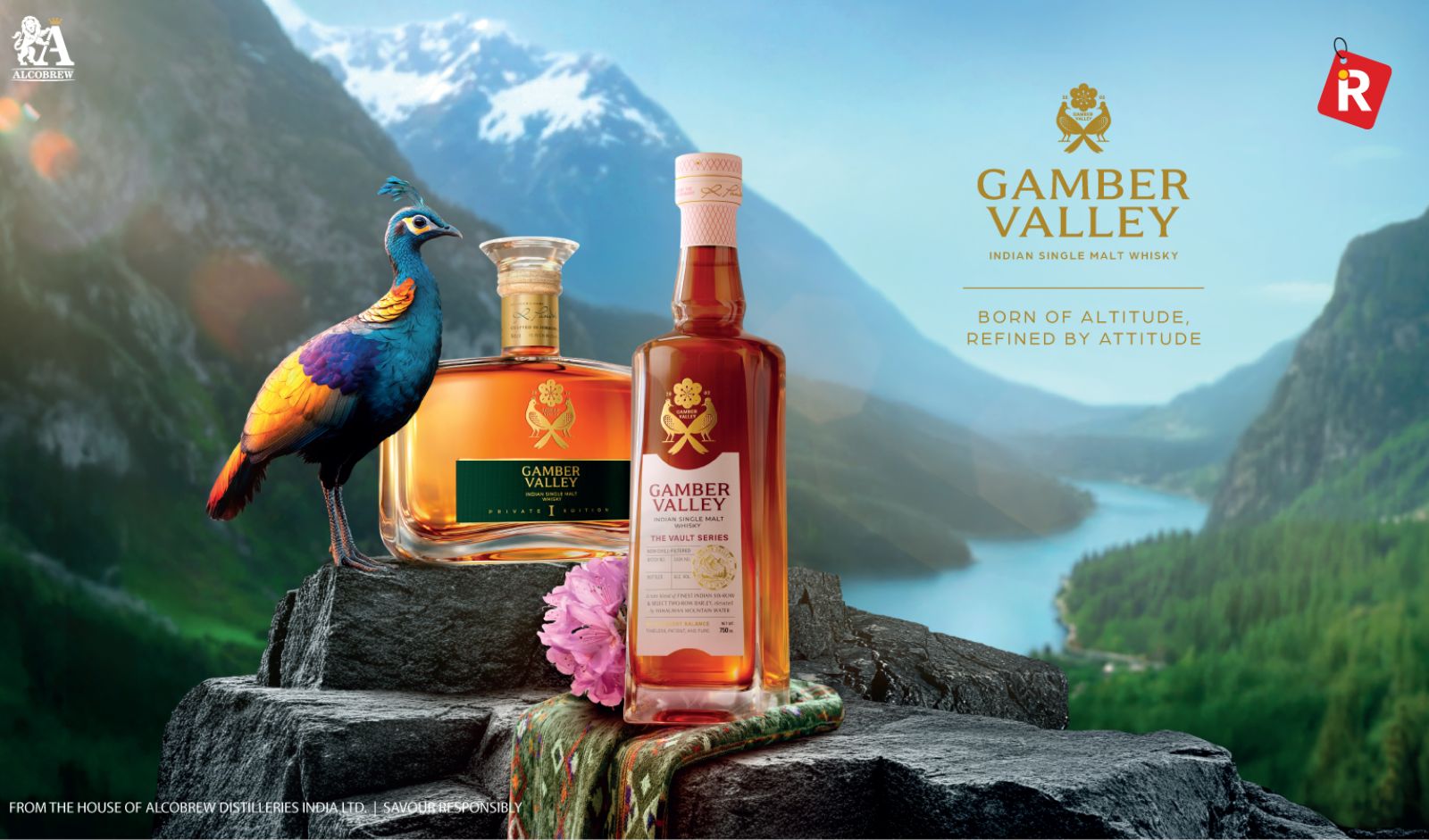
This approach is reflected in Gamber Valley’s current portfolio, which includes Private Collection 1 and The Vault Series. Both expressions showcase different maturation approaches and provide insight into how cask management influences flavour development. The maturation facilities house thousands of barrels, including ex-bourbon and virgin oak casks, highlighting the scale of the ageing programme behind the brand.
A Brand Story Rooted in the Himalayas
Water is another important component of Gamber Valley’s identity. The Solan facility features a 6 lakh litre water tank and sources water from the surrounding Gamber Valley region. Alcobrew has consistently linked the region’s natural resources and environmental conditions with the production process and the whisky’s final character.
For a growing Indian single malt brand, this emphasis on place helps create a stronger sense of origin. Rather than positioning itself as simply another whisky produced in India, Gamber Valley is using its Himalayan location to establish a distinct identity within the premium spirits market.
Expanding Beyond Production with Whisky Hospitality
The company’s ambitions extend beyond whisky production. Alcobrew has outlined plans for a visitor centre and a new maturation hall at the Solan facility. According to company documents, the visitor centre will feature guided distillery tours, tasting lounges, and a heritage gallery dedicated to spirits, giving visitors a deeper understanding of the whisky-making process.
The move reflects a growing trend in the global spirits industry, where distilleries are being developed as hospitality and tourism destinations. Instead of limiting consumer interaction to retail shelves or tasting events, brands are creating environments where visitors can engage directly with production, ageing, and brand heritage.
Gamber Valley is also preparing to broaden its product portfolio. Trademark filings submitted in June 2026 indicate plans for new expressions, including Gamber Valley Pravah and Gamber Valley Tapah. As the range expands, the brand will have greater opportunities to offer comparative tastings and deepen consumer understanding of different maturation styles and flavour profiles.
Distilleries Are Becoming the New Brand Experience Centres
The premium spirits industry is increasingly recognizing that consumers want more than a product. They want access to the story behind it. Distillery visits provide that context by allowing consumers to see the production process, understand maturation techniques, explore cask programmes, and experience the environment where the whisky is created.
For Gamber Valley, the Solan distillery serves as more than a manufacturing facility. It acts as a platform for storytelling, consumer engagement, and brand building. As competition intensifies in India’s single malt whisky segment, experiences such as distillery tours, tastings, and whisky hospitality may become just as important as the spirit itself in shaping consumer perception.