
Sustainable commerce: balancing financial profitability with environmental responsibility
  • IR
  • IR
  • IR
Sustainable commerce: balancing financial profitability with environmental responsibility

Concepts such as “ESG” (Environmental Social Governance), “Sustainability”, “Net Zero”, “Triple Bottom Line”, “Circular economy” have transitioned from academia and thinktanks to boardrooms, annual reports, and strategy meetings. This is an explicit acceptance of the fact that enterprises can no longer afford to prioritize financial profitability over environmental costs; the environment is no longer an “externality”. 

This mindset is reshaping business priorities, growth strategies, and operations due to global climate change and social divisions. Adverse impacts include inadequate rainfall, high temperatures, unpredictable weather patterns, and severe flight turbulence. Socio-economic inequities also worsen, leading to unrest and migration.

Leaders are consciously considering sustainability aspects when making business decisions due to:

  • Business decisions based solely on financial gains, ignoring environmental impacts 
  • Regulatory changes holding businesses accountable for environmental and social impacts 
  • Rising stakeholder activism from customers, employees, and business partners against unsustainable actions

With pervasive digitalization and changing globalization, sustainable commerce demands a shift from Milton Friedman’s 1970s famous assertion that a business’s sole responsibility is to maximize shareholder profits.

What is the sustainable commerce movement?

Sustainable commerce requires businesses to prioritize conserving resources and minimizing environmental damage, even if it leads to lower profits, across all strategic and operational aspects of the value chain.

Millennials and GenZers, increasingly comprising employees, customers, influencers, and policy makers, strongly support environmental and social issues. Survey show over three out of four employees would consider companies’ sustainability commitments before accepting job offers. 

The sustainable commerce paradigm will impact demand, operations, and value chains. Talent attraction and retention will also hinge on sustainability commitments. Leaders must take a comprehensive approach to embracing sustainable commerce. 

Direct impact on demand

Customers are consciously prioritizing the environment and changing lifestyles. Businesses will see a shift in demand as customers will:

  • Defer upgrades, delaying the purchase of new products.
  • Prefer repairing products over the "use and throw" approach, supported by government regulations.
  • Rent instead of buy 
  • Buy “pre-owned” or “refurbished” products for expensive products and promote circular economy. 

Impact on strategy and operations 

Organizations can embrace sustainable commerce by shifting their focus from "innovation" to "ecovation," creating ecologically sensitive products that meet customer needs. They should embed sustainability in their vision and mission and set ambitious "Net Zero" goals. 

Manufacturers can proactively adopt the following to align with the sustainable commerce paradigm: 

Product Design: Focus on modularity, reducing material consumption, and standardizing components to cut costs and improve durability, safety, and repair expenses, while increasing energy efficiency and adopting regenerative designs like carbon-sequestering materials.

Raw Materials: Opt for environmentally friendly materials, such as sodium-ion batteries over lithium-based ones, and increase the use of recycled materials, or using recycled plastic hangers for toner cartridges.

Production processes: to reduce energy consumption, pollution, and waste generation.

Innovative packaging: to eliminate plastic and ease recycling of waste. 

Responsible Sourcing: Mandate suppliers to adopt sustainable, ethical practices, comply with labor laws and safety standards, include these criteria in vendor selection, conduct surprise audits, and reward top vendors with preferential terms. Ensure downstream suppliers adhere to the same standards.

Greener logistics options: to reduce carbon footprint, such as using trains instead of trucks and waterways for heavy equipment.

Greener Reverse Supply Chains: Create safe disposal channels for end-of-life products. Use third parties to buy and recycle used items from consumers. E-commerce companies can adopt this, selling refurbished products to recoup costs.

Businesses need AI tools to accurately capture and analyze large data sets from various sources, generating actionable insights.

While sustainable commerce is evident in manufacturing, it applies to all sectors, including service providers. Enterprises can implement sustainable practices by using recycled water in data centers, opting for cleaner energy sources like solar panels and biomass, and regularly measuring sustainability progress. Other strategies include considering environmental impacts in problem-solving, repurposing old computers for underprivileged students, making office changes to reduce consumption, fostering employee volunteerism in environmental causes, and focusing Corporate Social Responsibility programs on conservation and recycling. 

Embracing sustainable commerce is now a business imperative. While actions vary by industry and company, leaders must integrate sustainability into their design thinking when transforming functions and the enterprise.

Authored By

A person in a pink dress

Description automatically generated

Bindya S Raj, Associate Vice President, Head - Strategy, Planning & Operations, Digital Experience, Infosys

Bindya is an Information Technology professional with 20+ years of experience in strategy, business and operations planning, acquisitions, subsidiary integrations, and software delivery management delivering technology-led business solutions in a global delivery model. She is an engineering graduate and holds an MBA from the Indian Institute of Management, Kozhikode. Bindya is a dedicated volunteer of NGOs focused on eradication of child labour.

 
Stay on top – Get the daily news from Indian Retailer in your inbox
5 Best Payment Innovations Changing Indian Retail Right Now
  • IR
  • IR
  • IR
5 Best Payment Innovations Changing Indian Retail Right Now
 

The retail landscape in India is now transforming like never before. The way people pay for things, whether it’s a couch, sweater, or candy bar on the corner, has moved from cash and checks, to debit and credit cards, to digitalized mobile phones. Strong digital infrastructure, a high penetration of smartphones, and government-backed moves such as Digital India have paved the way for a payment revolution in the country.

Today, online transactions are a way of life. India, from small kirana stores to large retail chains, is accepting smarter, faster, and safer payments. According to the National Payments Corporation of India (NPCI), over 100 billion UPI transactions were recorded in 2024, a number that reflects how India has truly gone digital. Let’s explore the five payment innovations that are reshaping Indian retail right now.

India’s Retail Payments Go Real-time

India’s retail payments are rapidly shifting to real-time and mobile-first, as UPI, tap-to-pay, BNPL, wallets, and AI-led authentication reshape how consumers pay across kirana stores and large chains alike. Strong digital infrastructure, widespread smartphones, and policy support have pushed online transactions into daily life, with UPI enabling instant, low-friction payments, NFC cutting checkout times, BNPL lifting conversion and ticket size, super apps unifying commerce and financial services, and AI, biometrics, and voice interfaces expanding secure, inclusive access for both urban and rural shoppers.

1. UPI 2.0 and UPI Lite: The Backbone of India’s Cashless Growth

UPI (that is, Unified Payments Interface) lies at the heart of India’s digital payment success. Not only has it made transactions easier, but they’re instant, free and incredibly safe. Whether you’re buying a coffee, hailing a taxi, or making an online purchase, UPI is now the preferred way to pay. The UPI 2.0 had version had features like Overdraft facility and signed intent and invoice in the system of GST, which had made it even more business-friendly. Retailers now deploy it in use cases from fast checkouts to inventory management.

UPI Lite, introduced to enable small-value offline payments, is helping India’s smaller towns and rural areas go cashless. Even without internet connectivity, people can make payments of up to Rs 500, making it a reliable option for kirana stores, street vendors, and rural retailers. Apps like Paytm, PhonePe, Google Pay, and BHIM have taken UPI to the masses. These apps are now deeply integrated into retail ecosystems, from malls to roadside stalls, ensuring convenience for both sellers and buyers.

2. Tap-to-Pay and NFC: Redefining Speed at the Checkout Counter

Speed and convenience are key in today’s fast-moving retail world. Tap-to-pay and NFC (Near Field Communication) payments are making this possible. By simply tapping a card or smartphone on a POS machine, payments are completed within seconds, with no PIN no delay. Major banks in India have rolled out NFC-enabled debit and credit cards. Retailers are upgrading their POS systems to accept tap payments. The result is shorter queues, faster billing, and a smoother shopping experience.

Big brands like Reliance Retail, Big Bazaar, and Starbucks India have already adopted contactless payment systems. Even small businesses are catching up, especially after the pandemic highlighted the importance of touch-free transactions. Beyond speed, NFC payments also bring better security. Each transaction generates a unique code, reducing fraud risks. This combination of safety and convenience is helping retailers build customer trust and loyalty.

3. BNPL (Buy Now, Pay Later): India’s New Age Credit Revolution

The concept of “Buy Now, Pay Later” has gained massive traction among Indian consumers. BNPL allows customers to purchase products immediately and pay for them in easy installments, often without interest. This innovation has changed how people shop, especially young professionals and online buyers. BNPL options are available across e-commerce platforms, fashion brands, and even offline stores.

Leading players such as Simpl, ZestMoney, LazyPay, and Amazon Pay Later have made it easy to access short-term credit without traditional paperwork or bank approvals. For retailers, BNPL drives higher sales and improves customer retention. Shoppers are more likely to buy when flexible payment options are available. According to recent market reports, BNPL transactions in India are expected to grow by over 40 percent annually in the next few years. The Reserve Bank of India (RBI) is also monitoring the sector closely to ensure responsible credit practices. With regulation and innovation working hand in hand, BNPL is set to remain a key player in India’s retail payment future.

4. Digital Wallets and Super Apps: One App for Every Payment Need

Digital wallets have evolved far beyond simple money transfer tools. They have now become super apps, multifunctional platforms that combine payments, shopping, insurance, travel, and more in one place.

Apps like Paytm, PhonePe, Amazon Pay, and Google Pay are leading this transformation. They not only enable instant payments but also offer rewards, cashback programs, and financial services. Many of these platforms have built merchant tools that allow even small retailers to manage payments, invoices, and loyalty programs digitally. For consumers, this integration means convenience and control. They can book tickets, pay bills, or shop online, all within a single app. For businesses, it means access to a larger audience, faster settlements, and better data insights. The success of these super apps lies in their ecosystem approach, creating an all-in-one digital lifestyle that blends finance, commerce, and entertainment seamlessly.

5. AI, Biometrics, and Voice Payments: The Future is Already Here

The next wave of payment innovation in India is being powered by artificial intelligence and biometrics. These technologies are improving both security and accessibility. AI helps detect fraud in real time by identifying unusual spending patterns. Retailers using AI-powered payment systems can reduce chargebacks and enhance customer trust. Biometrics, such as fingerprint and facial recognition, are being used for authentication, making transactions faster and safer.

Voice payments are another emerging trend, especially for India’s rural and semi-literate population. Initiatives like RBI’s and NPCI’s voice-based UPI pilot are allowing users to make payments through simple voice commands in regional languages. This is helping bridge the digital divide and bringing millions into the formal financial system. These futuristic technologies are not just trends; they are tools for inclusion and empowerment. With AI, biometrics, and voice technology, India is proving that digital innovation can be human-centric too.

How These Innovations Are Transforming Retail Businesses

Digital payment systems enable growth for retailers. Transactions become more than just conversion. Payment systems provide businesses with real-time and streamlined more efficient data processing. Businesses understand consumer behaviour, optimize cash flow, and deploy targeted promotions. Digital payments also promote transparency, reduce cash dependency, and enhance customer trust. Quick settlement and simplified record keeping increase time efficiency for small retailers. 

Large retail chains enjoy improved turnover and operational time efficiency. Government initiatives such as Digital India, PMGDISHA, and Jan Dhan Yojana improve financial literacy and drive digital payment use in India. In unison, these initiatives assist retailers and consumers to a cashless and more connected economy.

The Road Ahead

The evolution of a completely cashless economy in India is commendable. Innovation is making fast and integrated retail driven by UPI, BNPL, and AI-enabled payments. The combination of ease, safety, and inclusivity is what gives India a competitive advantage in the world. In the future, as technology continues to evolve and become ubiquitous, the distance between physical and digital retailing will continue to close. Early adopting retailers will have a competitive advantage in customer acquisition, engagement, and retention. The Indian retail sector of tomorrow is intelligent, integrated, and most importantly, inclusively cashless, funded by sleights of innovations and changes in India’s shopping, payment, and economic growth paradigms.


Next Story
India’s E-Commerce Industry to Cross $345 Bn by 2030
  • IR
  • IR
  • IR
India’s E-Commerce Industry to Cross $345 Bn by 2030
 

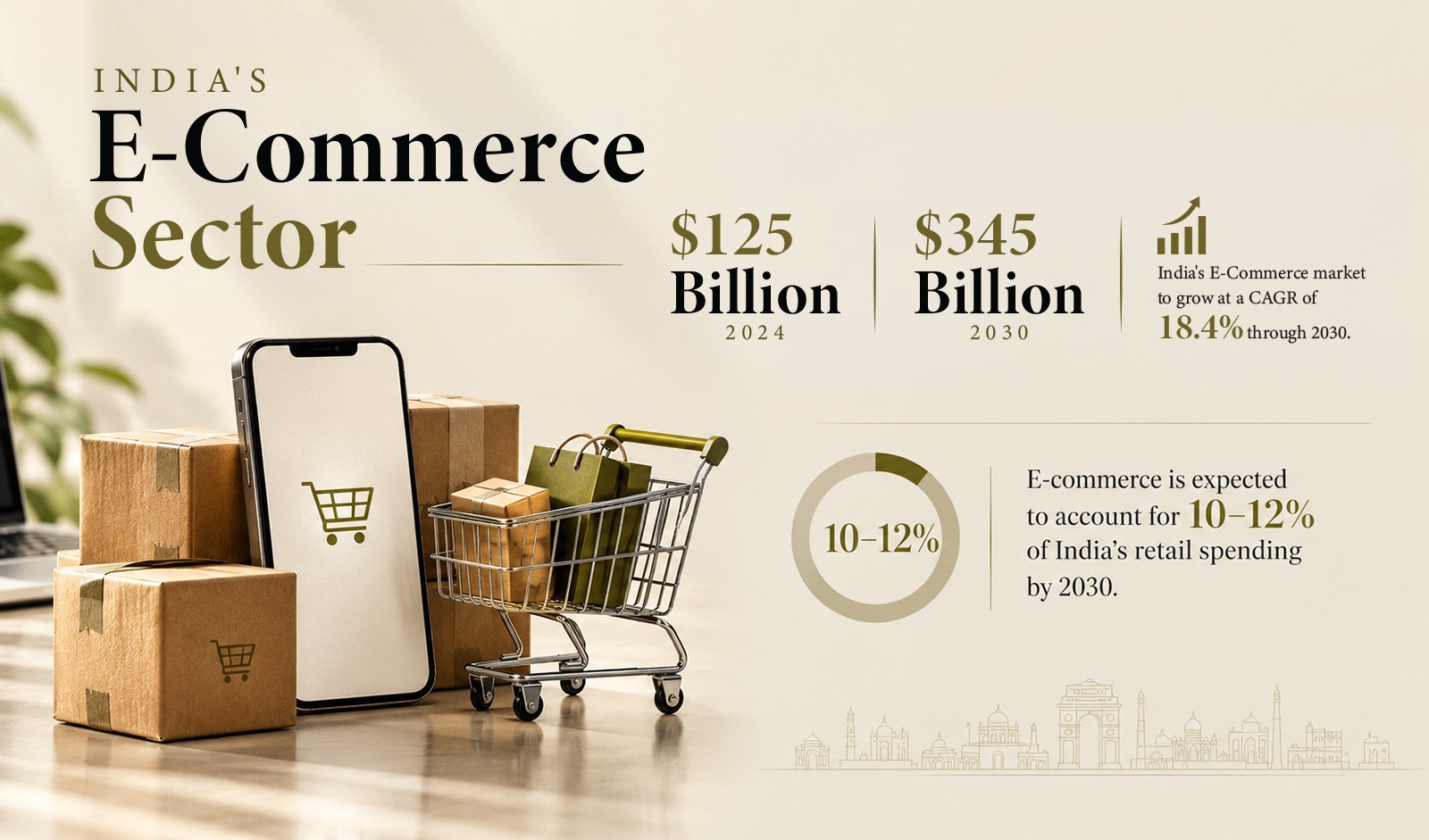
India’s e-commerce sector is entering an unprecedented growth phase, set to redefine how the nation shops, consumes, and does business. The country’s e-commerce market is projected to more than double from $145 billion in FY2025 to $345 billion by FY2030, growing at a compound annual growth rate (CAGR) of 19 percent.

This surge positions India firmly as one of the world’s fastest-growing e-commerce markets, underpinned by digital innovation, investor confidence, and expanding adoption across Tier II and III cities.

A Booming Retail Landscape

As of 2024, India has become the world’s third-largest retail market, with e-commerce contributing between 7 to 9 percent of total retail sales. The Gross Merchandise Value (GMV) of India’s e-commerce industry reached $14 billion in 2025, demonstrating how rapidly online channels have become central to domestic consumption, according to a new report by Rubix Data Sciences.

Segments like beauty and personal care, fashion, and fast-moving consumer goods (FMCG) are emerging as the fastest-growing verticals. Beauty and personal care alone are expected to expand at a 30–35 percent CAGR through 2030, while fashion and FMCG are each projected to grow by 27–30 percent.

Crucially, India’s smaller cities are powering this evolution. Tier II and III centers now represent over 56 percent of online shoppers and 60 percent of new e-commerce users, signaling a decisive shift in the country’s consumption geography. Improved logistics, increased internet penetration, and the normalization of digital payments post-GST reform have brought online retail to the country’s deepest pockets.

Investment Momentum Returns

The report highlights a strong rebound in investment activity, reflecting sustained confidence in India’s digital economy. Private equity and venture capital investments in e-commerce grew by 87 percent year-on-year in 2024, reaching $4.6 billion across 118 deals. E-commerce now commands 31 percent of total startup investment value in India, underscoring its strategic weight within the broader entrepreneurial ecosystem.

Investor optimism is being driven by the sector’s digital transformation potential and its increasing alignment with India’s long-term consumption growth story. From omnichannel retail models to AI-enabled supply chains, startups and established players alike are reimagining e-commerce through innovation and data intelligence.

Digital Payments Fueling Growth

The foundation of India’s e-commerce boom lies in its digital payments revolution. By the end of FY2025, the country had over 1 billion internet subscribers, while Unified Payments Interface (UPI) transactions accounted for Rs 261 trillion, representing 85 percent of India’s total digital payment volume.

The seamless integration of UPI across platforms has democratized online commerce, removing barriers to entry for millions of first-time digital shoppers. It has also paved the way for quick commerce, one of the most dynamic sub-segments in India’s retail landscape.

Quick commerce registered a Gross Order Value (GOV) of Rs 640 billion in FY2025 and is forecast to hit Rs 2 trillion by FY2028, fueled by consumer demand for instant gratification and hyper-local delivery networks. While early years were characterized by aggressive customer acquisition, leading platforms are now pivoting toward sustainable profitability, optimizing last-mile logistics, and building multiple revenue streams through subscription models, advertising, and private labels.

Government Initiatives and Policy Reforms

The government’s proactive role continues to be a key enabler of e-commerce expansion. The Government e-Marketplace (GeM)—a digital procurement platform—has achieved a cumulative GMV of Rs 15 trillion, growing at a remarkable 72 percent CAGR since FY2022.

In addition, the government is exploring policy shifts to relax foreign direct investment (FDI) norms, potentially allowing e-commerce platforms to directly facilitate exports of Indian goods. Such reforms could turn India into a global e-commerce export hub, bolstering its resilience amid global trade uncertainties and tariff headwinds from the U.S. and other economies.

This forward-looking policy stance, coupled with the government’s plan to source price data from e-commerce giants like Amazon and Flipkart to improve inflation indices such as the Consumer Price Index (CPI), signals a growing recognition of online retail’s macroeconomic significance.

Challenges and the Road Ahead

Despite strong tailwinds, the sector faces structural challenges. High return rates averaging 17 percent continue to erode margins, leading to estimated annual losses of Rs 2 trillion. To maintain profitability, players must focus on streamlining reverse logistics, enhancing supply chain efficiencies, and leveraging AI-driven demand forecasting to reduce operational waste.

Infrastructure upgrades and last-mile delivery optimization will be essential for sustained growth, particularly as competition intensifies and consumer expectations evolve.

A New Chapter for India’s Digital Economy

According to Mohan Ramaswamy, Co-Founder and CEO of Rubix Data Sciences, India’s e-commerce story transcends mere digital adoption. “The convergence of payments, logistics, and consumer behavior is creating a powerful growth engine for the economy,” he said. “What lies ahead is not just an expansion of online retail but the emergence of a more inclusive, tech-enabled consumption ecosystem. At Rubix, our goal is to help businesses and policymakers navigate this transformation with the right intelligence and foresight.”

This convergence—between infrastructure, innovation, and inclusion—will define the next decade of India’s e-commerce evolution. As digital infrastructure deepens, investor appetite strengthens, and policy frameworks adapt, the sector is poised to become a central pillar of India’s consumption-driven growth narrative.


Next Story
Quick Commerce and Tier-II Cities Fuel India’s 24 pc Festive E-Commerce Surge
  • IR
  • IR
  • IR
Quick Commerce and Tier-II Cities Fuel India’s 24 pc Festive E-Commerce Surge
 

India’s 2025 Diwali festive season closed on a high note for the e-commerce sector, signaling the continued evolution of digital retail across the country. The order volumes during the festive period surged 24 percent year-on-year (YoY), while gross merchandise value (GMV) rose by 23 percent. The findings are drawn from over 150 million transactions processed through Unicommerce’s flagship platform, Uniware, during the 25-day festive periods of 2024 and 2025.

Tier II and III Cities Drive Festive Growth

A key highlight of this season’s performance was the growing strength of Bharat’s smaller towns. Tier II and III cities together contributed around 55 percent of total orders, underscoring the deepening digital adoption and rising purchasing power outside major metros. The data suggests that India’s e-commerce growth story is increasingly being written in non-metro markets, where improved logistics networks and digital payment adoption have made online shopping more accessible and reliable.

Regionally, Tier II cities led festive growth with a 28 percent YoY increase in orders, followed by Tier I cities and metros at 24 percent, and Tier III towns at 23 percent, according to Unicommerce. This broad-based momentum shows that festive euphoria was not confined to urban centers but extended across India, driven by aggressive discounting, improved delivery timelines, and localized marketing strategies.

Quick Commerce Emerges as the Biggest Growth Engine

Quick commerce continued its meteoric rise, emerging as the fastest-growing segment this festive season. The category recorded a massive 120 percent YoY jump in order volumes, fueled by consumer demand for instant gratification and convenience. With platforms now delivering everything from groceries and snacks to festive gifting items within minutes, consumers have increasingly turned to these services for last-minute purchases and quick replenishments during the festive rush.

Following quick commerce, brand websites witnessed a healthy 33 percent growth in order volumes, reflecting a growing trend of direct consumer engagement and the rise of D2C brands. Marketplaces, which remain the dominant sales channel, accounted for 38 percent of total purchases and grew 8 percent YoY in order volumes. Together, these trends point to a more diversified e-commerce ecosystem where brands are actively balancing marketplace presence with their own digital storefronts.

Festive Shopping Categories Reflect New Consumer Priorities

Consumer preferences this festive season painted an interesting picture of evolving lifestyles. FMCG led the pack, driven by healthy and innovative food products such as fusion sweets, dry fruit assortments, and millet-based snacks. The shift highlights consumers’ growing inclination toward healthier indulgences, even during festive celebrations.

Home décor and furniture also saw strong traction, as consumers invested in upgrading their living spaces. Meanwhile, beauty and wellness—especially makeup, skincare, and hygiene products—continued to perform robustly. Health and pharma emerged as another top-performing segment, fueled by heightened demand for supplements and preventive healthcare products, indicating that post-pandemic health consciousness remains a lasting trend.

Payments and Fulfillment Reflect Growing Consumer Confidence

On the payments front, prepaid orders grew by 26 percent, signaling stronger trust in digital transactions and payment gateways. Interestingly, Cash-on-Delivery (COD) orders also rose by 22 percent in volume and an even higher 35 percent in GMV. This indicates a shift toward higher-value COD purchases, suggesting that consumers across regions are not only comfortable transacting online but are also making more expensive festive purchases through COD—traditionally a preferred mode in smaller cities.

Adding to the sector’s robust performance, Shipway reported faster deliveries this year. Average shipping times during the 2025 festive season were 15 percent shorter compared to last year, reflecting improved supply chain readiness and operational agility. Retailers and logistics partners have increasingly leveraged predictive analytics, advanced demand forecasting, and hyperlocal delivery models to ensure seamless and timely fulfillment, even amid record festive demand.

A Strong Foundation for Future Growth

The 2025 festive season results reinforce the resilience and adaptability of India’s e-commerce ecosystem. With growing participation from Tier II and III cities, accelerating quick commerce adoption, and enhanced logistics efficiency, the industry is set for another year of sustained expansion.

As data suggests, the festive surge this year was not just about higher order volumes—it was a reflection of India’s digital maturity, where consumers across the country are embracing convenience, reliability, and personalization at unprecedented levels.


Next Story
Top 10 Social Commerce Tactics Indian Retailers Use to Drive Instant Sales
  • IR
  • IR
  • IR
Top 10 Social Commerce Tactics Indian Retailers Use to Drive Instant Sales
 

Shopping in India has changed completely. From crowded malls to scrolling through mobile screens, buying has become faster and easier. Today, social media is the new marketplace. Indian retailers are using platforms like Instagram, Facebook, WhatsApp, and YouTube to connect directly with shoppers. The rise of social commerce has made it possible to discover, interact, and buy, all in one place.

According to industry reports, India’s social commerce market is expected to cross Rs 80,000 crore by 2025, growing at a rate of nearly 60 percent every year. From beauty and fashion to electronics and decor, every category is seeing success through social selling. Here are the top 10 social commerce tactics Indian retailers use to drive instant sales.

1. Influencer-Led Live Shopping Events

Influencers have become the face of modern retail. Many Indian brands are now hosting live shopping events with influencers who showcase products, answer questions, and offer limited-time discounts.

Platforms like Myntra, Nykaa, and Meesho use this strategy to attract thousands of live viewers. The combination of real-time interaction and trusted recommendations makes customers feel confident to buy instantly. These live sessions bring entertainment, engagement, and shopping together—something traditional ads cannot achieve.

2. Shoppable Posts and Stories on Instagram and Facebook

Social media platforms have made shopping as simple as a tap. Retailers create shoppable posts and reels where each product is tagged and linked directly to checkout pages.

Brands like Lifestyle, H&M India, and Zara use Instagram reels with “Shop Now” buttons to convert casual scrollers into buyers. The visual storytelling format inspires instant purchases because customers can see exactly how a product looks and fits in real life.

3. User-Generated Content (UGC) as Social Proof

Nothing builds trust like real people using real products. Retailers encourage customers to share photos, reviews, and short videos of their purchases. This authentic content becomes powerful social proof.

Nykaa, for instance, often reposts customer videos, and Meesho highlights shoppers who style their products creatively. Seeing others enjoy a brand increases confidence and reduces hesitation among new buyers. In India, where personal recommendations matter deeply, UGC is becoming one of the most reliable ways to drive instant conversions.

4. Exclusive Flash Sales on Social Channels

Urgency is a strong sales driver. Retailers are creating social media-exclusive flash sales, special deals or collections that are available only for followers.

Tanishq has experimented with limited WhatsApp jewelry previews, while Zudio announces surprise sales on Instagram Stories. This “first come, first served” excitement makes customers keep checking brand pages regularly, leading to higher engagement and quick purchases.

5. WhatsApp Commerce and Personalized Chat Selling

WhatsApp has become a serious sales channel for Indian retailers. Brands use WhatsApp Business accounts and chatbots to send product catalogs, answer customer questions, and finalize sales in real-time.

JioMart allows customers to order groceries directly via WhatsApp chat. FabIndia also uses it for personalized product recommendations and order tracking. This one-to-one communication makes the buying experience feel personal, quick, and trustworthy, especially for customers in smaller towns who prefer chatting over browsing websites.

6. Micro-Influencer Partnerships for Local Reach

While big influencers bring fame, micro-influencers bring trust. Many Indian retailers now collaborate with regional or niche influencers who have smaller but highly engaged audiences.

D2C brands in fashion, skincare, and wellness, like Plum and The Man Company, work with influencers who speak regional languages and create relatable content. This hyper-local approach builds strong connections and makes products feel more accessible. Micro-influencers are affordable, genuine, and perfect for spreading awareness in Tier ll and Tier lll cities.

7. AR Filters and Virtual Try-On Experiences

Augmented Reality (AR) is changing how customers shop. Brands are using AR filters to let users “try on” products virtually before buying.

Lenskart’s 3D try-on feature helps shoppers see how glasses look on their faces. Nykaa’s “Try It On” filter allows makeup lovers to test shades virtually. These experiences make online shopping more interactive and reduce product returns, as customers get a clearer idea before purchasing.

8. Short-Form Video Commerce

Short videos have become one of the most powerful social commerce tools. Platforms like Instagram Reels, YouTube Shorts, and even Flipkart Video are helping retailers tell quick stories that drive impulse buys.

Brands use these 15–30 second clips to highlight product benefits, styling tips, or real-time results. Amazon MiniTV and Meesho’s short video sections are perfect examples of this trend. Short videos capture attention fast and deliver information in a format that audiences love.

9. Social Referral and Reward Programs

Word of mouth has gone digital. Indian retailers are rewarding customers for tagging friends, sharing products, or posting about their purchases.

Meesho’s referral model is one of the best-known examples. It allows users to earn commission or discounts when someone buys through their shared link. Similarly, The Souled Store runs loyalty programs where social engagement leads to redeemable rewards. These tactics turn happy customers into active brand promoters.

10. Social Listening and Trend-Based Campaigns

Retailers are now using data and analytics to listen to what their audience is saying online. By tracking trending topics, memes, and customer feedback, they quickly adapt their marketing to match what’s popular.

Brands like Bewakoof and Tata CLiQ have mastered this art. They launch meme-inspired campaigns and products that connect instantly with social media users. This real-time marketing makes their content feel fresh, fun, and shareable.

Data, AI, and the Science Behind Social Commerce

Behind every viral post or campaign lies smart data. Retailers analyze engagement rates, hashtag trends, and customer sentiment to plan better strategies. AI tools are now helping brands predict what products will sell, when to launch offers, and how to personalize recommendations.

Chatbots handle instant replies while machine learning tracks buying patterns. Together, these tools ensure that every click leads to potential conversion.

The Indian Social Commerce Market at a Glance

India’s social commerce space is expanding rapidly:

  • Expected market size: $70 billion by 2030
  • Over 250 million shoppers will buy through social platforms by 2026
  • 60 percent of sales come from Tier ll and Tier lll cities

This growth is fueled by affordable data, increasing smartphone use, and trust in digital payments. The blend of entertainment and shopping fits perfectly with how Indian consumers spend time online.

From Likes to Loyal Buyers

Social commerce in India is not a passing trend; it’s a movement that’s redefining retail. Shoppers no longer want to browse static websites. They want connection, conversation, and confidence before buying. Retailers who use social commerce smartly can build strong relationships and drive instant sales. The key lies in mixing creativity with technology, through influencers, data, and personalized interactions. In the next few years, almost every successful retailer in India will be a social-first brand. The question is, is your brand ready to turn likes into loyal buyers?


Next Story
7 Wireless Earbuds With Active Noise Cancellation You Can Buy on a Budget
  • IR
  • IR
  • IR
7 Wireless Earbuds With Active Noise Cancellation You Can Buy on a Budget
 

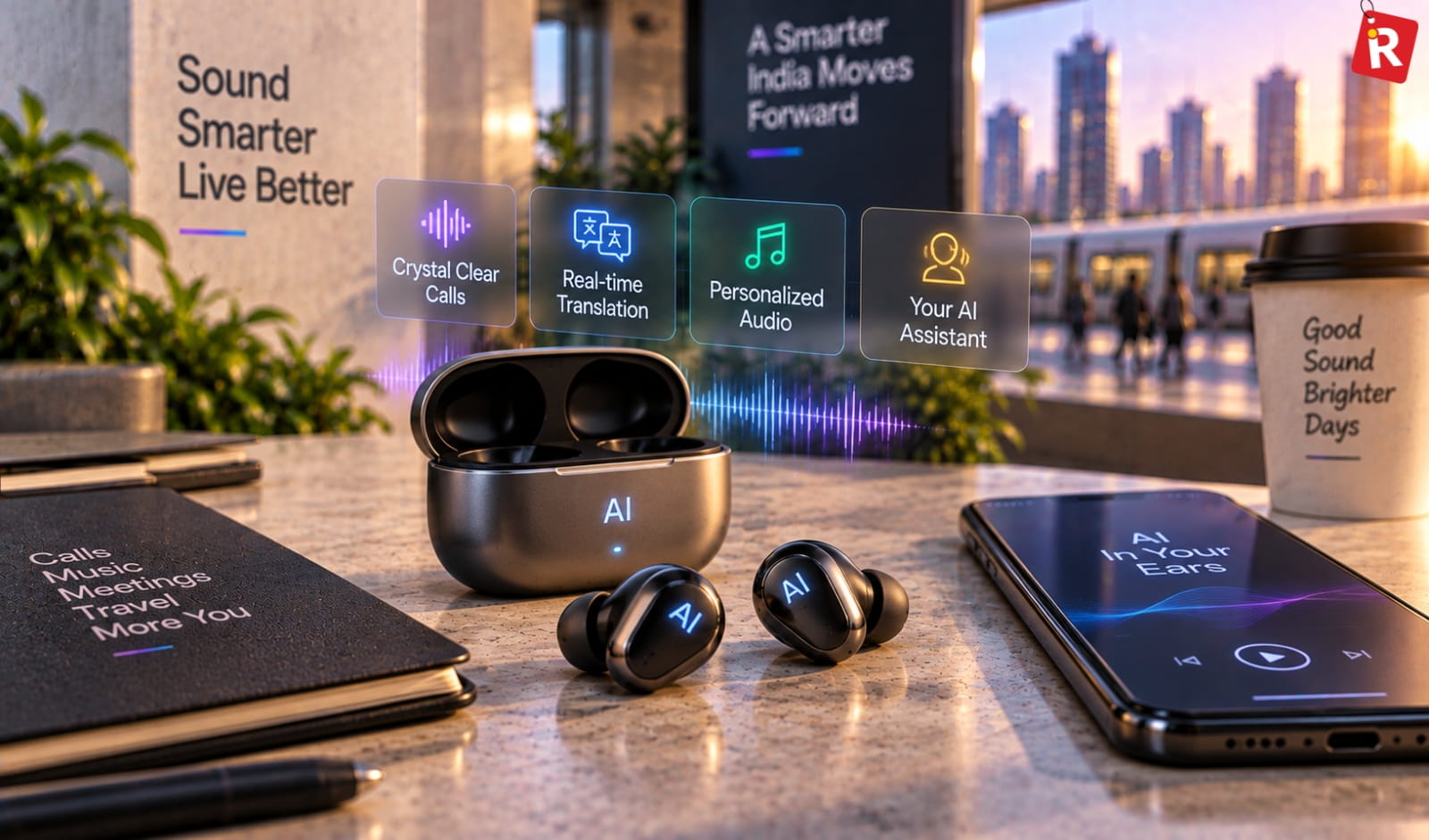
Finding wireless earbuds with active noise cancellation (ANC) no longer has to be expensive. Today, several brands offer earbuds that block outside noise and deliver clear, high-quality sound. These earbuds are designed to be comfortable, even during long hours of use. Users can enjoy music, podcasts, or calls without distractions from traffic, chatter, or household noise. They are suitable for a wide range of activities. People who commute daily can focus on music or calls while traveling. Those who work from home can stay productive without background noise interfering. Fitness enthusiasts can use them during workouts or runs, thanks to lightweight designs and water resistance in many models. Even casual listeners can enjoy quiet, immersive sound while relaxing at home. 

Many budget-friendly ANC earbuds now come with additional features such as touch controls, fast charging, and stable Bluetooth connectivity. With so many options available, everyone can find a pair that fits their lifestyle and needs. Here is a list of seven wireless earbuds with ANC that combine good performance, comfort, and affordability, offering a noise-free listening experience without a heavy investment.

Why Active Noise Cancellation Matters

ANC is a technology that reduces unwanted background noise. Imagine sitting on a noisy train or working in a busy cafe—ANC earbuds let you focus on music, calls, or podcasts without distraction. Traditionally, this feature was found in premium models only. But today, even budget earbuds can give you a satisfying noise-free experience. When buying ANC earbuds on a budget, keep an eye on these features:

  • Battery Life: Look for earbuds that last at least 20–30 hours, including the charging case.
  • Sound Quality: Clear vocals, decent bass, and balanced sound make a big difference.
  • Comfort and Fit: Earbuds that sit well in your ears are essential for long usage.
  • Connectivity: Stable Bluetooth 5.0 or higher ensures smooth pairing with devices.
  • Water or Sweat Resistance: Handy for workouts or outdoor use.

Find 7 Best Budget ANC Wireless Earbuds

Affordable ANC earbuds offering clear sound, comfort, and noise cancellation, perfect for commuting, workouts, or everyday music listening

1. OnePlus Buds Z2

The OnePlus Buds Z2 are not just about technical specs, they deliver a premium listening experience at an affordable price. The earbuds have a natural, balanced sound profile that suits most genres, from soft acoustic to bass-heavy tracks. They sit snugly in the ears, making long listening sessions comfortable without any irritation. The touch controls are intuitive, allowing easy playback, volume adjustment, and voice assistant access. Pairing with smartphones is seamless, with quick auto-connect features that reduce setup time. Additionally, the earbuds maintain a stable connection even in crowded areas. Overall, they are perfect for daily commuters or home listeners who want quality sound, noise-free calls, and a hassle-free wireless experience.

  • Price: Around Rs 4,500
  • Key Features: ANC, 38 hours battery life, IP55 rating
  • Why It’s Great: OnePlus Buds Z2 offers balanced sound and effective noise cancellation. The fit is comfortable, and it works well for calls and music alike.
  • Unique Feature: Dolby Atmos support enhances audio depth.

2. Realme Buds Air 3

Realme Buds Air 3 stand out for their vibrant and lively sound signature, which makes music feel engaging. The dual-driver setup enhances both mids and highs, giving vocals and instruments clarity. ANC is effective in reducing everyday background noises like traffic or chatter, creating a more immersive experience. The earbuds are lightweight and ergonomically designed, making them suitable for extended use without discomfort. They also offer customizable touch gestures, so you can control music, answer calls, or activate your voice assistant easily. The case design is compact, which fits conveniently in pockets or bags. These earbuds are ideal for students, commuters, or anyone who enjoys energetic, crisp audio while on the move.

  • Price: Around Rs 3,500
  • Key Features: ANC, 30 hours battery, dual drivers
  • Why It’s Great: Crisp audio with good bass makes these earbuds perfect for music lovers on a budget. Noise cancellation works well in cafes and public transport.
  • Unique Feature: Bass boost mode is ideal if you enjoy deep sound.

3. Noise Shots X5 Pro

Noise Shots X5 Pro are a great choice for gamers and video streamers who need minimal audio delay. The low-latency mode keeps sound perfectly synced with on-screen action. The earbuds’ design ensures they remain stable even during vigorous movement, making them suitable for workouts or long gaming sessions. The customizable EQ lets you fine-tune the sound, from enhanced bass to sharper treble, depending on your preferences. Calls are clear, and the microphones do a good job filtering ambient noise. The earbuds also support multi-device pairing, making it easy to switch between a laptop and a smartphone. For those seeking affordable, versatile ANC earbuds, the X5 Pro balances functionality with portability seamlessly.

  • Price: Around Rs 2,999
  • Key Features: ANC, 30 hours battery, low-latency mode
  • Why It’s Great: Affordable yet efficient. The low-latency mode makes them great for mobile gaming or watching videos without lag.
  • Unique Feature: Customizable EQ lets you tweak sound to your liking.

4. Boat Airdopes 441 Pro

Boat Airdopes 441 Pro are designed for active lifestyles, combining functionality with convenience. The IPX5 rating ensures they can handle sweat and light rain, perfect for gym enthusiasts or joggers. The earbuds’ compact design provides a snug fit that doesn’t fall out easily, even during workouts. The case is sleek and portable, and fast charging is especially handy for people constantly on the go. Sound quality remains consistent at various volume levels, and call clarity is impressive for the price range. Touch controls are responsive and intuitive, adding to the overall user experience. These earbuds are ideal for anyone looking for a dependable, workout-ready option that delivers clear sound without compromising comfort.

  • Price: Around Rs 3,199
  • Key Features: ANC, 25 hours battery, IPX5 water resistance
  • Why It’s Great: Lightweight and water-resistant, these earbuds are suitable for workouts and outdoor activities. Noise cancellation is decent for calls and music.
  • Unique Feature: Fast charging gives hours of playback with just 10 minutes of charging.

5. Oppo Enco Buds 2

Oppo Enco Buds 2 focus on comfort and clarity, making them perfect for long work or study sessions. The semi-in-ear design reduces ear fatigue, which is particularly useful during online meetings or prolonged listening. Sound reproduction is clean and balanced, suitable for podcasts, audiobooks, and casual music listening. Despite the budget-friendly price, ANC provides a noticeable reduction in everyday ambient noise. The earbuds also offer quick pairing and stable connectivity, ensuring hassle-free use with multiple devices. The case is compact, easy to carry, and charging is fast enough for daily commuting needs. These earbuds appeal to professionals, students, and anyone who prioritizes comfort without sacrificing decent audio performance.

  • Price: Around Rs 2,999
  • Key Features: ANC, 24 hours battery, semi-in-ear design
  • Why It’s Great: Comfortable for long listening sessions. Clear calls and smooth sound make them ideal for work-from-home or online classes.
  • Unique Feature: Semi-in-ear design reduces ear fatigue over hours of usage.

6. Redmi Buds 4 Pro

Redmi Buds 4 Pro deliver a high-end audio experience in a budget package. The high-resolution sound ensures even subtle details in music are audible, enhancing overall listening pleasure. ANC works efficiently in both indoor and outdoor environments, making them suitable for commuting, office use, or casual home listening. The earbuds are designed to fit comfortably in most ear shapes, allowing hours of wear without discomfort. Smart features like automatic music pause when removed from ears improve usability, while touch controls add convenience. Battery life is reliable, and connectivity is strong, even in crowded areas. These earbuds are ideal for users who want premium-style audio and smart features at an affordable price.

  • Price: Around Rs 3,999
  • Key Features: ANC, 36 hours battery, high-res sound
  • Why It’s Great: High-resolution sound ensures a detailed listening experience. ANC works well in both indoor and outdoor settings.Unique Feature: Smart wear detection automatically pauses music when removed.

7. Samsung Galaxy Buds 2

Samsung Galaxy Buds 2 are known for their versatile performance and adaptive noise-canceling technology. Adaptive ANC automatically adjusts the intensity of noise cancellation depending on the surrounding environment, making them excellent for varying scenarios—from quiet offices to busy streets. The earbuds are lightweight and ergonomically designed, providing comfort for long listening sessions. Sound quality is clear and well-balanced, making them suitable for music, calls, and videos. Touch controls are simple and responsive, while seamless integration with Samsung devices adds extra convenience. With reliable connectivity and an easy-to-carry case, these earbuds are a solid choice for users who want consistent performance, adaptability, and comfort in a budget-friendly package.

  • Price: Around Rs 4,900
  • Key Features: ANC, 20 hours battery, adaptive ANC
  • Why It’s Great: Reliable ANC and sound quality, suitable for commuting or work.
  • Unique Feature: Adaptive ANC adjusts based on the surrounding noise levels.

Tips to Get the Best Deal

  • Look for Sales: Big online shopping events often offer discounts on earbuds.
  • Check Reviews: Verify ANC performance and comfort from real user reviews.
  • Warranty and Service: Even budget earbuds should come with warranty support for peace of mind.

Read More - Discover India’s Must-Shop Jewellery Labels for Festive Gifting

Which Earbuds Are Best for You?

Budget ANC earbuds have changed the way people listen to music. They no longer mean compromising on sound quality or comfort. These earbuds provide clear audio, reducing background noise effectively. Users can enjoy music, podcasts, or calls without distractions. Many models also offer a secure fit, making them comfortable for long hours. Battery life has improved, allowing uninterrupted listening throughout the day. Features like fast charging and smart touch controls add convenience. People can choose earbuds for different needs, whether commuting, working, exercising, or relaxing at home. Some earbuds even adapt to the environment, adjusting noise cancellation automatically. Affordable options now give a near-premium experience. They are lightweight, portable, and easy to carry. With the right choice, anyone can enjoy immersive sound and quiet moments anytime. Budget ANC earbuds make music and calls more enjoyable without spending a fortune.


Next Story
2025 Festive E-Commerce Sees Record Engagement, Quick Commerce, and Tier II-III Surge
  • IR
  • IR
  • IR
2025 Festive E-Commerce Sees Record Engagement, Quick Commerce, and Tier II-III Surge
 

The first phase of the 2025 festive season has seen a spectacular surge in e-commerce activity, with major platforms reporting unprecedented engagement, transaction volumes, and growth across categories. This year, the festival of shopping has become a celebration of convenience, technology, and inclusion, reflecting how deeply e-commerce has penetrated even the most remote corners of Bharat.

Across platforms, the numbers speak for themselves. Meesho’s Mega Blockbuster Sale 2025 drew an astounding 206 crore customer visits, with shoppers spending over 117 million hours on the platform. Flipkart’s Early Access for The Big Billion Days 2025 attracted 45 lakh unique visitors, doubling order volumes in a single day, while Amazon’s Great Indian Festival recorded over 38 crore customer visits in just the first two days. Snapdeal’s Bharat Swagotsav Sale saw daily sales volumes surge by more than 85 percent year-on-year, and Instamart’s Quick India Movement Sale achieved a remarkable 287 percent growth in home décor orders during its opening weekend. These numbers underline not only the scale of India’s festive e-commerce economy but also its transformation.

Technology and Quick Commerce Powering the Festive Wave

One of the key drivers of this growth has been technology. Platforms have leveraged AI-driven personalization, predictive analytics, and robust infrastructure to manage massive demand while providing a seamless shopping experience. Meesho, for instance, scaled its bandwidth to handle 52,000 active users per minute during peak festive hours, ensuring smooth navigation and discovery of relevant products. Similarly, Amazon reported delivering over 80 lakh products to Prime members within two days, demonstrating how technology and logistics have become core enablers of instant gratification.

Quick commerce, in particular, has emerged as a dominant trend. According to Unicommerce, quick commerce orders grew over 85 percent year-on-year during the first week of the festive season. Flipkart took the concept to an extreme, delivering iPhones in under three minutes during Early Access and completing doorstep assessments for smartphone exchanges in around 30 minutes. Instamart’s lightning-fast home décor deliveries, often within 10 minutes, showcased the growing consumer preference for instant fulfillment, highlighting how speed and convenience have become crucial factors in shaping festive buying behaviors.

Festive Staples and New Needs Drive Category Growth

While the festival season traditionally revolves around clothes, gifts, and sweets, 2025 has seen shoppers expanding their horizons. Meesho reported that kurtis, jewelry, lipsticks, puja décor, and kids’ ethnic wear topped carts, but categories like office supplies (+97 percent YoY), sports and fitness equipment (+86 percent), health and wellness essentials (+69 percent), and books (+66 percent) also saw sharp growth. Similarly, Snapdeal’s fashion category doubled in sales, with shirts, co-ord sets, and seasonal apparel like sweaters witnessing nearly fivefold growth compared to last year.

Instamart’s home décor surge of 287 percent illustrated the blending of celebration with everyday utility. High-demand products included bedsheets, curtains, kitchenware, and festive décor accents, reflecting a growing trend of shoppers preparing their homes for festivities while enjoying the convenience of lightning-fast delivery. Amazon also noted a spike in appliances, furniture, and electronics, with customers from Tier II and III cities driving demand, signaling a broader shift from metro-centric sales to deeper Bharat penetration.

The trend highlights a critical insight: India’s festive carts are getting bigger and more diverse. While traditional categories remain strong, shoppers are increasingly using e-commerce platforms as a one-stop solution for a wide range of needs, from daily essentials to premium products.

Tier II and III Cities Emerging as Growth Engines

A striking feature of this year’s festive season has been the significant contribution from India’s heartland. Across platforms, non-metro cities collectively accounted for over 50 percent of transactions during the first phase of the festive sales. Meesho saw nearly 45 percent of its users coming from Tier IV+ towns, Amazon reported over 70 percent of customer visits from beyond the top nine metros, Snapdeal’s non-metro sales crossed 80 percent, and Flipkart experienced a 2.6X surge in new customers from smaller towns during Early Access.

Cities such as Bathinda, Ludhiana, Meerut, Bahadurganj, Haldia, and Pithampur witnessed remarkable growth, often exceeding 200 percent year-on-year. This evolution underscores the rapid adoption of e-commerce in regions traditionally dominated by offline retail. The rising disposable incomes, increasing internet penetration, and growing trust in digital payments have created a fertile ground for e-commerce platforms to capture new markets and cultivate lifelong shoppers.

Sellers and MSMEs Write Their Own Festive Success Stories

E-commerce growth this festive season has not only benefited customers but also empowered millions of sellers and micro, small, and medium enterprises (MSMEs). Meesho reported that 49,000 new sellers joined the platform, launching 4.6 crore new products ahead of Diwali, while Amazon saw 16,000 SMBs triple sales, with two-thirds of these sellers from Tier II and III cities. Snapdeal highlighted that both long-standing partners and new sellers recorded strong traction, affirming the role of platforms in enabling MSMEs to scale during India’s biggest shopping season.

Sellers benefited not just from higher visibility but also from integrated technology and data-driven insights, allowing them to optimize inventory, pricing, and promotions. Platforms ensured seamless multi-channel availability, with brand websites reporting up to 31 percent growth in order volumes. From small-town artisans to larger SMBs, the festive season has showcased the transformative potential of e-commerce for businesses across Bharat.

Content Commerce and Creator-Led Discovery

The rise of content-driven shopping has added a new dimension to the festive season. Meesho’s Video Finds in-app feature, along with nearly 3.5 lakh videos created by 30,000 creators, amassed over 1.3 billion views, transforming shopping into a highly engaging social experience. Customers are increasingly discovering products through storytelling, video demonstrations, and influencer endorsements, blending entertainment with commerce. This trend is fast becoming a powerful growth engine, particularly for emerging brands and categories, allowing them to reach audiences that traditional marketing may not penetrate.

Digital Payments and GST Reforms Fuel Festive Momentum

The growing comfort with digital payments and recent GST reforms have further accelerated festive shopping. Meesho noted a 57 percent surge in prepaid transactions, reflecting how online payments are now second nature for Indian shoppers. Flipkart’s Early Access saw a 2.6X jump in new customers during the sale, aided by GST benefits, while Amazon’s #GSTBachatUtsav initiative enabled sellers to pass on crores in savings to customers. These measures not only incentivized purchases but also reinforced consumer confidence in digital transactions, creating a more seamless and rewarding shopping experience.

Experiential Shopping Meets Speed and Convenience

The 2025 festive season has demonstrated that e-commerce is no longer just about buying—it’s about experiencing. Platforms like Flipkart, Amazon, Instamart, Meesho, and Snapdeal have combined fast delivery, curated assortments, and interactive shopping formats to create a compelling experience. From “Golden Hour” flash deals at Instamart to instant doorstep deliveries on Flipkart Minutes and Prime’s same-day deliveries on Amazon, shoppers are living the festival in real-time, uniting convenience, affordability, and excitement.

High-value transactions, such as Flipkart’s Rs 1.57 lakh premium cart featuring iPhones, sit alongside everyday essentials and home décor purchases, reflecting the broad spectrum of consumer demand. Shoppers are seamlessly blending festive indulgence with practical utility, turning every purchase into a story.

Looking Ahead

As India heads deeper into the festive season, the first phase of sales has set the tone for continued momentum. Platforms have demonstrated that growth is no longer confined to metros or select categories—Bharat is fully plugged in, from Tier IV towns to large cities, from traditional festive staples to lifestyle upgrades and wellness products. The combination of technology, content-driven discovery, quick commerce, and inclusive policies is enabling a shopping ecosystem that is larger, faster, and more diverse than ever before.


Next Story
Best AI Tools for Retail Customer Engagement in 2025
  • IR
  • IR
  • IR
Best AI Tools for Retail Customer Engagement in 2025
 

Customer engagement drives growth in 2025. Shoppers expect brands to remember preferences, predict needs, and respond instantly across stores, apps, and messaging. Industry reports show strong momentum. Many retailers already use AI in daily workflows, and a majority plan to increase investment to improve engagement and speed. Consumers also want consistent experiences across channels and are open to AI when it improves convenience and relevance. The takeaway is clear. Personalization and conversational journeys sit at the core of profitable acquisition and retention.

Cart abandonment remains stubborn. Many e-commerce journeys still lose about two-thirds of carts. Timely nudges, better recommendations, and faster support can lift conversion and repeat purchase. Messaging is central. WhatsApp and SMS are now primary paths for questions, order status, and buy decisions. Retailers that pair AI discovery, lifecycle messaging, conversational support, and demand-aware availability see fewer drop-offs. Shoppers move without friction when discovery, service, and stock are connected.

Why These Tools Matter

  • Conversion and AOV: Recommendations and price or stock alerts reduce pogo sticking and increase basket size.
  • Repeat rate and LTV: Lifecycle messaging and clienteling sustain relevance after the first order.
  • CSAT and response time: Automation and routing stabilize service during peak periods.
  • Stockouts and lost sales: Demand-aware allocation protects high-intent sessions.

What to Look For

  • Channel fit: Web, app, email, SMS, WhatsApp, and in-store clienteling.
  • Data connections: Orders, events, catalog, inventory, and returns.
  • Time to value: Prebuilt flows, templates, and native commerce integrations.
  • Governance: Consent capture, role-based access, retention, and vendor assurance.

The Top 10 AI Tools for 2025

Insider

1. Insider

Insider is an AI native omnichannel engagement platform that unifies customer data and orchestrates journeys across web, app, email, SMS, and WhatsApp. Recent industry recognition includes Leader positions in well-known analyst and peer review reports, reflecting strong customer satisfaction and roadmap execution. Insider emphasizes fast time to value, global reach, and enterprise deployments across sectors. It focuses on real-time triggers like price drop, back in stock, and churn prevention to lift revenue and retention.

  • What it does: Omnichannel personalization and journey orchestration across web, app, email, SMS, and push.
  • Retail impact: Higher conversion and repeat rate through reactive flows tied to live behavior.
  • Pricing and availability: Enterprise pricing on request with broad regional coverage.
  • Quick start: Launch browse and cart recovery, back in stock alerts, and predicted products on PDPs.

Algolia

2. Algolia Recommend

Algolia Recommend extends Algolia’s hosted search and discovery with machine learning suggestions like similar items and frequently bought together. It is built for low-latency APIs and relevance controls that connect cleanly with popular e-commerce stacks. Retail teams deploy it to speed discovery and increase AOV by surfacing complementary items at high intent moments. Commercials are usage-based and scale with traffic and calls, backed by a global cloud footprint.

  • What it does: AI recommendations in search and on PDPs, including similar items, bundles, and completing the look.
  • Retail impact: Faster discovery, larger baskets, and stronger PDP engagement.
  • Pricing and availability: Usage-based tiers with global API access and commerce connectors.
  • Quick start: Add similar items on PDPs and test cart page bundles against baseline.

Endear

3. Endear

Endear is a clienteling and retail CRM platform for store and omnichannel teams. It unifies profiles, enables targeted outreach via SMS and email, and ties associate activity to sales. Fashion, luxury, and specialty brands use it for appointments, shoppable lookbooks, and personalized follow-ups. Integrations include Shopify and common ERPs, with subscription tiers suited to multi-store networks. The focus is on measurable revenue per associate message and VIP re-engagement.

  • What it does: Clienteling for store and omnichannel teams with AI-assisted outreach and unified profiles.
  • Retail impact: Recovers abandoned baskets, re-engages VIPs, and drives appointments.
  • Pricing and availability: Subscription tiers with commerce and ERP connectors.
  • Quick start: Pilot with top stores and track revenue per message and repeat rate for contacted customers.

Gorgias

4. Gorgias

Gorgias is an e-commerce helpdesk that consolidates email, chat, social, voice, and SMS with live order data from major commerce platforms. It offers automation through an AI agent, macros, and rules to speed first response and resolve WISMO and returns. App listings and direct docs highlight deep Shopify integration and clear entry pricing. Retailers adopt it to hold CSAT during peaks and route at-risk tickets to experienced agents.

  • What it does: AI-assisted support across channels with live order context.
  • Retail impact: Faster first response, automated status and returns, and steady CSAT.
  • Pricing and availability: Tiered by ticket volume with broad integrations.
  • Quick start: Automate the top five FAQs, add order status macros, and route sentiment risk tickets.

Klaviyo

5. Klaviyo

Klaviyo is a lifecycle marketing platform for email and SMS with predictive segments such as churn risk and next order date. It integrates closely with Shopify and BigCommerce to sync orders, events, and catalog data. Brands use it to scale welcome, post-purchase, win back, and promotional campaigns that drive repeat purchase and LTV. Pricing tiers by contacts and sends, and supports global use.

  • What it does: Email and SMS lifecycle marketing with predictive segments and recommendations.
  • Retail impact: Higher repeat purchase and LTV through timely, behavior-based messages.
  • Pricing and availability: Tiered by contacts and sends with strong commerce support.
  • Quick start: Set up welcome, post purchase, and win back flows, plus send time optimization.

Visenze

6. ViSenze

ViSenze enables visual search and discovery so shoppers can shop similar or use camera search on web and apps. It provides SDKs and APIs, catalog ingestion, and visual relevance that scale to large assortments. Fashion, footwear, and home retailers use it to cut time to product and raise PDP conversion through visually similar recommendations. Pricing includes enterprise and usage-based options tied to API volume.

  • What it does: Visual search and recommendations for similar items and camera search.
  • Retail impact: Shorter time to product and higher PDP conversion in visual categories.
  • Pricing and availability: Enterprise and usage-based plans with SDKs and APIs.
  • Quick start: Turn on shop similar in PDP galleries and add camera search in high mobile apps.

Vonage

7. Vonage Conversational Commerce with AI

Vonage supports conversational commerce across WhatsApp, SMS, and social, combining AI assistants with agent handoff. Retailers use it for guided selling, real-time order support, and returns within familiar channels. Commercials are usage-based with add-ons, and availability spans key global markets. It aligns well with WhatsApp's first strategies, where two-way messaging is central to the journey.

  • What it does: Two-way engagement on WhatsApp, SMS, and social with AI assistants.
  • Retail impact: Higher conversion and faster resolution in channels customers already use.
  • Pricing and availability: Usage-based messaging with WhatsApp Business API support.
  • Quick start: Build WhatsApp flows for order status, returns, and personalized offers.

blue yonder

8. Blue Yonder

Blue Yonder offers AI and ML forecasting, allocation, and replenishment to match stock with local demand and promotions. Retailers use it to reduce stockouts on hero SKUs and protect conversion on high-intent traffic. Solutions are delivered as enterprise subscriptions and often accessed via cloud marketplaces. Ideal for networks with complex regional assortments and promo calendars.

  • What it does: ML forecasting and allocation to align stock with demand.
  • Retail impact: Fewer stockouts and better sell-through during campaigns.
  • Pricing and availability: Enterprise subscription with global delivery.
  • Quick start: Sync promo calendars and regional assortments and track lost sales recovery.

tidio

9. Tidio

Tidio blends an AI chatbot with live chat for growing ecommerce brands. It automates common questions, captures leads, and routes high-intent queries to agents. It offers quick integrations with popular carts and flexible tiers based on conversations and agents. Teams use it to provide 24 by 7 coverage and reduce PDP and cart abandonment.

  • What it does: AI chatbot plus live chat for e-commerce.
  • Retail impact: Faster answers, better handoffs, and lower abandonment.
  • Pricing and availability: Free and paid tiers with rapid integrations.
  • Quick start: Launch an FAQ bot, set exit intent prompts, and route hot leads to humans.

inventai

10. Invent Analytics

Invent Analytics focuses on AI forecasting, allocation, and replenishment across stores and DCs. It balances availability and inventory cost during promotions and seasonality. Integrations include ERP and WMS, with enterprise subscriptions for global retailers. Use cases stress improved availability on high-demand SKUs, lower overstock, and stronger campaign sell-through.

  • What it does: AI forecasting to optimize allocation, replenishment, and promo execution.
  • Retail impact: Better availability on engagement drivers and lower inventory risk.
  • Pricing and availability: Enterprise subscription with ERP and WMS integrations.
  • Quick start: Feed historical sales and promo data and monitor of out-of-stock rate and transfers.

How to Choose for Impact

  • Store-led businesses: Start with Endear and add Insider for cross-channel personalization.
  • E-commerce led brands: Pair Algolia Recommend with Klaviyo and Gorgias.
  • Availability pain: Stabilize stock with Blue Yonder or Invent Analytics before scaling personalization.
  • WhatsApp first markets: Use a conversational platform with clean agent handoffs.

Measure

  • Orders, events, catalog, store inventory, and messaging channels.
  • Ship quick wins
  • PDP recommendations, browse and cart abandonment, and WhatsApp flows for order status and returns.
  • Expand journeys
  • Back in stock, price drop alerts, post-purchase care, and clienteling outreach to top value customers.
  • Conversion rate, AOV, repeat purchase, CSAT and first response time, out of stock rate, and lost sales recovery.

Security and Compliance Basics

  • Capture consent for email, SMS, and WhatsApp and log it clearly.
  • Limit PII in tickets and enforce role-based access.
  • Set retention and deletion workflows aligned to local laws.
  • Request up-to-date security attestations and data processing terms.

Read More - Top 10 Eco-Friendly Retail Brands in India to Shop Sustainably

What Good Looks Like

  • PDP and cart recommendations lift AOV and reduce abandonment versus baseline.
  • Lifecycle flows contribute a material share of e-commerce revenue.
  • Conversational journeys convert efficiently and resolve faster on WhatsApp and SMS.
  • Stockouts drop on top SKUs, improving conversion for high-intent sessions.

The bottom line

Most results come from four capabilities working together. Discovery, lifecycle messaging, conversational support, and demand-aware availability. Start with one high-impact journey, connect clean data, and iterate weekly. Results follow when signals and feedback loops are in place. AI scales the wins once foundations are set.


Next Story
Digital Payments Power 74 pc of Retail Spends in Top Indian Cities
  • IR
  • IR
  • IR
Digital Payments Power 74 pc of Retail Spends in Top Indian Cities
 

When it comes to how India shops and pays, the country is witnessing a transformation unlike any in its economic history. What was once an urban privilege is now a national standard. A decade ago, cash was king. Today, three out of every four rupees spent in India’s top cities travels through digital rails — UPI, credit cards, or debit cards. This behavioral shift is not just changing the way consumers transact, but also how businesses grow, borrow, and build trust in a future-ready economy.

The digital spends in retail now account for 74 percent of total transactions, a massive jump from just 45 percent two years ago. Put differently, out of every Rs 100 spent in these cities, Rs 74 is now paid digitally. The implications are profound — a consumer-led behavioral transformation powered by technology, infrastructure, and trust.

Cities Lead the Way – But with Contrasts

The NeoGrowth study reveals interesting city-wise variations. Hyderabad (82 percent), Bengaluru (79 percent), and Pune (79 percent) are frontrunners in digital adoption among metro and Tier I cities. Beyond the metros, Visakhapatnam (76 percent), Nagpur (71 percent), and Chandigarh (68 percent) have emerged as surprising leaders, indicating that Bharat is not lagging behind but, in many cases, racing ahead.

On the other hand, Ahmedabad (60 percent), Kolkata (55 percent), Jamshedpur (54 percent), Madurai (52 percent), and Rajkot (48 percent) show comparatively lower levels of digital retail transactions. The reasons are less about access and more about behavioral inertia — a cultural comfort with cash that continues to persist in certain regions.

“Digital payments in India have moved on from being an urban privilege to becoming a national standard,” said Arun Nayyar, Managing Director & CEO of NeoGrowth. “From kiranas to kiosks, India’s retailers are redefining adoption and efficiency in digital modes of transacting. This is accelerating the formalisation of the economy by creating digital trails, generating rich data, and laying the groundwork for more democratic access to credit.”

Everyday Categories Drive the Digital Surge

Another fascinating insight from the study is how daily-life categories are leading digital adoption.

Personal grooming (83 percent), education (81 percent), and dining (80 percent) are the clear leaders where digital is the default. Even in more traditional spends like groceries (68 percent) and fuel (63 percent), digital usage is catching up rapidly.

This reflects an evolution of consumer priorities. Payments are no longer just about convenience but about integrating seamlessly into routines. Whether paying school fees, booking a haircut, or ordering dinner, consumers increasingly reach for UPI or cards before they consider cash.

Young Retailers vs Seasoned Entrepreneurs

Retailers, too, are reshaping this digital landscape. The study finds that younger entrepreneurs in their 20s and 30s derive nearly 80 percent of their business revenues from digital transactions. For them, digital payments are not optional but essential to doing business.

What’s noteworthy, however, is that seasoned retailers aged 50 and above are catching up fast. In just two years, their digital adoption has surged from about 40 percent to nearly 68 percent. This shows that the shift is not limited to tech-savvy youth — it is a movement being embraced across generations.

Small Businesses at the Forefront

Contrary to the assumption that larger businesses would be more digitized, NeoGrowth’s report shows that smaller businesses with turnover below Re 1 crore are actually leading in digital adoption, with 79 percent of their retail transactions being digital.

In comparison, larger businesses with turnover above Rs 5 crore report 63 percent digital share. Early-stage businesses (less than three years old) are also showing a digital-first approach, embedding UPI and card payments into their operations right from the start.

For many MSMEs, this creates a virtuous cycle. Their consistent digital footprint makes it easier to access formal credit, as lenders like NeoGrowth leverage transaction data to underwrite and disburse loans. This democratizes access to growth capital, especially for businesses that may not have lengthy financial records.

Policy Push and Infrastructure Tailwinds

India’s digital payments growth story has been turbocharged by policy support and infrastructure expansion.

- The Zero MDR (Merchant Discount Rate) policy, supported by a Rs 1,500 crore UPI incentive scheme, has kept UPI and RuPay transactions free for merchants and customers.

- The JAM trinity (Jan Dhan, Aadhaar, and Mobile) has deepened financial inclusion.

- The BharatNet initiative has expanded internet connectivity to the last mile.

Add to this the rapid rise in smartphone penetration and the ubiquity of app-based payments, and it becomes clear why digital payments are becoming second nature across urban and rural India alike.

A Macro-Economic Perspective

The findings of the study come at a pivotal time. According to government and industry projections, India’s digital economy is expected to contribute nearly one-fifth of national income by 2029–30. Already, nearly half of India’s private consumption expenditure is made digitally, surpassing many advanced economies.

This rapid shift signals more than convenience. It signals trust — trust in technology, in systems, and in the reliability of a cashless economy.

For businesses, it also signals opportunity. Digital trails are reducing informality, creating a more inclusive credit ecosystem, and allowing even the smallest kirana or tailoring shop to scale with access to digital finance.

Retailers as Enablers of the Shift

Retailers play a decisive role in this transformation. By offering UPI, credit, and debit card options, they are nudging consumers towards digital-first behaviors. The report suggests that for today’s retail entrants, digitally-enabled payments are not a “good-to-have” but a must-have, setting the tone for how retail is evolving in India.

For MSMEs, this is more than a transactional shift — it is a business strategy. By embracing digital payments, small businesses are not only meeting consumer expectations but also improving operational efficiency, reducing cash-handling risks, and gaining credibility with financial institutions.

Beyond Urban India – A Bharat-Led Revolution

Perhaps the most striking insight from the report is that the digital revolution is no longer confined to India’s metros. Cities like Visakhapatnam, Nagpur, and Chandigarh are proving that Bharat is not trailing behind, but actively driving adoption.

This is crucial because the next wave of growth in digital payments will likely come from Tier II, Tier III, and smaller towns where smartphone usage is booming, and digital transactions are becoming the default.

Looking Ahead: The Next 5 Years

As India marches towards its centenary as an independent nation in 2047, the foundations of its economy are being rewritten. If current trends continue, digital payments will surpass cash to become the dominant mode across all sectors and geographies.

The report makes it clear: the digital revolution is youth-powered, Bharat-led, and retailer-enabled. The transformation is not just about payments — it is about empowerment, efficiency, and economic inclusion.

“Digital payments are laying the groundwork for more democratic access to credit,” concluded Nayyar. “This shift is not just about convenience, it’s about trust in a future-ready ecosystem.”


Next Story
Nykaa Closes FY25 with Rs 15,600 Cr GMV, Expands Omnichannel Footprint with 250 Stores and Hyperlocal ‘Nykaa Now’
  • IR
  • IR
  • IR
Nykaa Closes FY25 with Rs 15,600 Cr GMV, Expands Omnichannel Footprint with 250 Stores and Hyperlocal ‘Nykaa Now’
 

India is on a transformational economic journey, with projections placing the country as the world’s third-largest economy by FY30, with a GDP surpassing $6 trillion. Alongside this, per capita income is expected to more than double, reaching $4,500 by FY30, driving unprecedented growth in discretionary consumption. The retail sector is at the heart of this consumption boom, projected to surpass $1.6 trillion by FY30. Within this landscape, e-commerce has emerged as a key growth driver, with beauty and fashion set to play defining roles in shaping India’s consumption story.

At the forefront of this revolution is Nykaa, India’s largest specialized beauty and fashion omnichannel platform. The company has built an expansive lifestyle ecosystem, balancing rapid expansion with capital efficiency, and FY25 has emerged as a landmark year in its journey.

Riding India’s Consumption Wave

India’s e-commerce market stood at $60 billion in FY25, with beauty and fashion categories contributing 35 percent of the mix. By FY30, this market is expected to expand more than threefold, reaching $190 billion. Beauty and fashion alone are projected to account for 40 percent of the total, surpassing the size of the entire e-commerce industry in FY25. This structural shift places Nykaa directly at the center of India’s e-commerce growth story.

“The categories we specialize in are among the fastest-growing in discretionary consumption, and we are excited to be operating in this high-growth environment,” said Falguni Nayar, Executive Chairperson, MD and CEO, Nykaa. “Our mission has always been to empower Indian consumers with access to the best of beauty and fashion, both global and homegrown, and to do so with trust, innovation, and scale.”

Strong FY25 Performance

Nykaa’s performance in FY25 underscores its leadership and resilience in a rapidly expanding market. The company delivered a Gross Merchandise Value (GMV) of Rs 15,600 crore, recording 25 percent year-on-year growth and an impressive 42 percent GMV CAGR over the last five years, significantly outpacing the industry’s 20 percent.

To put the scale in perspective, Nykaa has grown its GMV sixfold in just five years. The beauty vertical today contributes roughly 75 percent of the business, while fashion accounts for 25 percent.

“We closed FY25 with over $1.8 billion in GMV across all our platforms,” Nayar noted. “This milestone demonstrates our ability to consistently deliver growth ahead of the market, while building a sustainable and profitable business.”

Expanding Omnichannel Presence

Nykaa has also continued to strengthen its omnichannel presence. With 250 stores across 82 cities, it is now the largest specialized beauty retailer in India. The company’s retail formats — Nykaa Luxe, Nykaa On Trend, and Nykaa Kiosk — serve as immersive brand destinations rather than simple points of sale.

“Our stores are designed as curated experiences where customers can discover, experiment, and engage with beauty in a way that goes beyond shopping,” said Nayar.

In parallel, Nykaa launched ‘Nykaa Now’, a hyperlocal fulfillment initiative offering deliveries in as little as 30 to 120 minutes across the top seven cities. With 1.3 million orders already fulfilled, Nykaa Now stands out by offering the most comprehensive beauty assortment with rapid delivery.

Leadership in Beauty Vertical

The beauty vertical delivered Rs 11,800 crore in GMV in FY25, a 30 percent year-on-year growth, and a fivefold increase over the last five years. Nykaa now serves a cumulative customer base of over 34 million, who placed more than 54 million omnichannel orders in FY25.

The company reinforced its position as the leading gateway for global beauty brands entering India. Notable launches in FY25 included NARS, Kérastase, Yves Saint Laurent, Eucerin, Obagi, and Dr. Jart, further enhancing Nykaa’s appeal as the go-to platform for premium beauty.

House of Nykaa: Building Homegrown Icons

The House of Nykaa portfolio has become a formidable force in India’s beauty market. Over the last five years, it has scaled eightfold, reaching Rs 2,100 crore in GMV, and is now India’s second-largest homegrown beauty portfolio. Comprising seven brands, it serves 13 million customers and generated Rs 1,700 crore in GMV in FY25 alone.

Flagship brands include:

  • Nykaa Cosmetics: India’s trendiest brand for youthful consumers.
  • Kay Beauty: Co-created with Katrina Kaif, it is India’s first and most successful celebrity beauty brand. Notably, FY25 marked Kay Beauty’s historic international debut at Space NK in the UK — making it the first Indian-founded beauty brand to join the retailer’s global portfolio.
  • Dot & Key: India’s largest skincare brand, which scaled to Rs 900 crore GMV in FY25.

“Our House of Nykaa brands are now not only shaping India’s beauty landscape but also beginning to make their mark globally,” Nayar said.

Superstore by Nykaa: Scaling eB2B

Nykaa’s technology-driven eB2B platform, Superstore by Nykaa, has rapidly scaled to serve India’s underserved retail markets. In FY25, its GMV reached Rs 941 crore, serving 280,000 transacting retailers across 1,100 cities. Nearly 89 percent of sales came from Tier II and smaller markets, underscoring its ability to expand brand access nationwide.

With tripled order volumes and improved margins, Superstore is now on a clear path to profitability.

Fashion Vertical: Trend-First Growth

Nykaa Fashion delivered Rs 3,800 crore in GMV in FY25, outpacing broader industry growth despite a muted consumption environment. Its customer base expanded to 8 million, with 8 million orders fulfilled in the year. The platform is now the second-most preferred choice among consumers, and the number one platform for the latest trends and styles.

Nykaa Fashion offers more than 1,000 international brands and has partnered with global retailers to bring premium assortments to India, powered by innovative B2B2C cross-border integration. Its Fashion Edit feature further enriches the consumer journey with content-led discovery curated by stylists and influencers.

The vertical has also seen significant profitability improvements. Gross margin rose to 49 percent in FY25, while EBITDA margin improved from negative 28.3 percent in FY20 to negative 8.3 percent in FY25.

“Our goal is to be India’s number one trend and style-first shopping platform,” Nayar emphasized. “We are committed to curating the best in fashion, with a sharp focus on discovery and quality.”

Leveraging AI for the Future

Nykaa is embedding artificial intelligence deeply across its business. Nykaa Muse, a personal AI stylist, is designed to drive personalized inspiration for every customer. Internally, AI now generates a growing share of the company’s code, accelerating product development and execution. The company has set a goal of achieving 50 percent AI-driven code generation by the end of the year, well ahead of industry benchmarks.

“AI has a seat at every table in Nykaa,” Nayar said. “From customer experience to operations, finance, and product development, we are using generative AI to drive speed, innovation, and efficiency.”

Strong Financial Performance

Nykaa closed FY25 with revenue nearing Rs 8,000 crore, reflecting 24 percent year-on-year growth and a 35 percent five-year CAGR. EBITDA grew even faster, with a 41 percent CAGR, and EBITDA margin expanded to 6 percent. Return on capital employed (ROCE) improved from 7.5 percent in FY24 to 11.3 percent in FY25.

What sets Nykaa apart is its disciplined capital efficiency. With only $140 million raised in its entire journey, the company has built one of India’s largest and most successful lifestyle ecosystems.

Looking Ahead

Nykaa’s FY25 performance reflects its ability to harness India’s consumption growth and translate it into profitable, scalable expansion. With beauty and fashion set to drive India’s e-commerce market over the next five years, Nykaa is uniquely positioned to lead.

“Our journey has always been about more than numbers. It’s about creating a trusted ecosystem where consumers discover, experiment, and express themselves through beauty and fashion,” Nayar concluded. “As India’s consumption story unfolds, Nykaa will remain at the forefront, shaping trends, driving innovation, and creating value for our customers, partners, and stakeholders.”


Next Story
CelcomDigi Redefines Retail Experience with Tech-Driven Stores
  • IR
  • IR
  • IR
CelcomDigi Redefines Retail Experience with Tech-Driven Stores
 

As digital-first consumers seek seamless online and offline experiences, leading Malaysian telecom operator CelcomDigi Berhad is transforming the way telco retail is experienced. In collaboration with renowned Italian design house Pininfarina and digital transformation leader Tech Mahindra, CelcomDigi has introduced a new generation of tech-integrated, experience-centric retail stores across Malaysia.

To date, the newly designed CelcomDigi Stores—with their futuristic aesthetics and modular zones—have been launched at 52 locations, with more in the pipeline. The stores reflect CelcomDigi’s ambition to become a one-stop destination for all connectivity needs, offering everything from 5G devices and AI-powered tools to smart home entertainment and gaming gadgets.

At the heart of this transformation is a phygital retail strategy—the integration of physical retail presence with digital technology to offer highly personalized and immersive customer experiences. Pininfarina’s design blends next-gen technology with intuitive architecture, creating modular spaces that cater to different customer segments while maintaining a uniform and engaging look and feel across locations.

Cheng Weng Hong, Chief Sales and Retail Officer, CelcomDigi noted, “The launch of CelcomDigi Store marks a key milestone in our retail transformation journey. We’re redefining the retail store experience to better serve customers’ evolving connectivity needs. Our goal is to create a hi-tech space that offers the latest devices and services, supported by exceptional customer service that keeps us top-of-mind for all connectivity needs.”

The design empowers CD Champions, CelcomDigi’s retail frontliners, to deliver hyper-personalized service, facilitated by access to real-time customer data and digital tools. Each visit is thus tailored, efficient, and relevant—enhancing customer satisfaction and long-term loyalty.

Tech Mahindra, CelcomDigi’s long-standing digital transformation partner, plays a pivotal role in enabling backend integration, supporting the telco’s shift to the cloud, and embedding AI and automation into operations.

Harshvendra Soin, President - Asia Pacific and Japan Business, Tech Mahindra shared, “This next phase of collaborative growth underscores our commitment to delivering end-to-end, tech-led solutions. The retail innovation at CelcomDigi showcases the power of combining digital capabilities with strategic vision.”

Silvio Pietro Angori, CEO of Pininfarina added, “The retail industry is undergoing a massive transformation enabled by next-gen technologies. We’re proud to support CelcomDigi in creating innovative phygital experiences that merge architecture, product, and experience design.”

With technology at its core, CelcomDigi’s retail strategy exemplifies how telco brands can evolve beyond utility to become customer experience hubs, reflecting the future of modern retail.


Next Story
How SuperBottoms is Driving Logistics Efficiency
  • IR
  • IR
  • IR
How SuperBottoms is Driving Logistics Efficiency
 

In an era where consumer expectations are sky-high, sustainable baby and mother care brand SuperBottoms is setting benchmarks in logistics performance by embracing smart technology. With its partnership with Shipway Technology Pvt Ltd, a Unicommerce-owned logistics management platform, SuperBottoms has streamlined its operations and improved delivery outcomes — achieving a 95 percent delivery success rate in metros and Tier I cities.

Founded by Pallavi Utagi in 2018, SuperBottoms has pioneered the “guilt-free diapering” movement in India, promoting reusable cloth diapers as a safer, more sustainable alternative to disposables. Given the critical need for timely deliveries in the baby care category, the brand turned to Shipway’s algorithm-driven logistics solution to enhance its fulfillment experience.

Shipway’s platform optimizes courier partner selection using algorithms that factor in parameters like location, product type, packet size, and delivery window, ensuring the most reliable delivery channel is chosen for each order. The result: faster, more accurate deliveries with significantly fewer return-to-origin (RTO) instances.

“Our customers place a lot of reliance on our commitment to make time-bound, error-free deliveries,” said Pallavi Utagi, Co-founder, SuperBottoms. “Our partnership with Shipway has transformed our logistics operations, with higher delivery success rates and reduced RTOs. The unified platform has given us greater visibility and control, directly translating to better customer satisfaction and significant cost savings. This partnership is a key enabler in our journey to scale efficiently and delight our customers.”

Shipway’s end-to-end fulfillment visibility and digitized order segregation also remove processing delays, helping the brand maintain high service standards as it scales. Saurabh Kumar Choudhary, Chief Business Officer at Shipway added, “Our technology-driven capabilities drive operational efficiencies and cost savings. We are delighted to deliver high-impact outcomes for SuperBottoms as they expand their business and establish high customer service standards.”

Complementing its logistics tech stack, SuperBottoms also uses Unicommerce’s Uniware platform for order and inventory management across multiple channels — from its own website to marketplaces like Meesho, Zepto, and FirstCry. Uniware’s real-time inventory synchronization, automated processing, and unified dashboard have further optimized the brand’s backend efficiency.

With India’s baby care market expected to grow from $4.94 billion to $8.61 billion by 2030, and online baby care order volumes rising 30 percent in FY24 across Tier II and III cities, brands like SuperBottoms are leveraging technology not just to scale operations — but to create customer-centric, seamless shopping experiences.


Next Story
Duroflex Powering Digital Expansion
  • IR
  • IR
  • IR
Duroflex Powering Digital Expansion
 

Sleep solutions brand Duroflex has taken a major leap in its digital transformation journey by partnering with Unicommerce, an e-commerce enablement SaaS platform. The collaboration aims to enhance operational efficiency, unify its expansive retail and digital presence, and elevate customer satisfaction through the deployment of Unicommerce’s flagship Uniware platform.

With a presence in over 3,000+ retail outlets, 80+ Innovate Experience Centres, and 20+ warehouses across the country, Duroflex is integrating its online and offline operations into a single intelligent ecosystem. This transformation supports both the Duroflex brand and its digital-first D2C brand, Sleepyhead, known for its modern range of recliners, sofas, mattresses, and bed frames.

By adopting Unicommerce’s multi-channel order and warehouse management solution, Duroflex is automating its order processing across its brand website and major marketplaces. The platform’s unified dashboard offers real-time visibility, helping ensure faster, accurate, and seamless fulfillment of both online and in-store orders.

“As we expand our online presence, operational efficiency and customer satisfaction remain our top priorities,” said Sudhanshu Krishna, Chief Strategy Officer at Duroflex. “Unicommerce’s technology-driven solutions have helped us streamline our backend operations, allowing us to focus on delivering quality sleep solutions to our customers with speed and reliability.”

The integration allows store staff at Experience Centres to assist walk-in customers in booking products directly via the system, which then enables delivery from the nearest warehouse—providing a seamless phygital retail experience. This capability is powered by robust POS integrations and intelligent logistics mapping across all locations.

Unicommerce also introduces intelligent delivery estimates for bulky items based on procurement cycles and product types, enabling better inventory placement and minimizing stockouts or delays. Furthermore, the platform supports efficient returns management, simplifying the post-purchase experience for customers while reducing reliance on manual customer service intervention.

“We are thrilled to support Duroflex in their e-commerce journey and their endeavor to serve both online and offline customers seamlessly,” said Kapil Makhija, MD & CEO of Unicommerce. “Our advanced order and warehouse management systems empower brands to scale effortlessly while ensuring smooth operations.”

This partnership marks a strategic milestone in Duroflex’s evolution into a truly omnichannel powerhouse, setting a benchmark for tech-led retail transformation in the home and living segment.


Next Story
Britannia Tapping AI to Democratize Retail
  • IR
  • IR
  • IR
Britannia Tapping AI to Democratize Retail
 

In a groundbreaking move toward inclusive retail, Britannia Industries, in partnership with WPP and Google Cloud, has launched Britannia A-Eye—an AI-powered smart shopping assistant that empowers visually impaired consumers to shop independently. The pilot initiative, launched in collaboration with MORE Retail and NGO Mithra Jyoti, harnesses the power of Google Gemini and Vertex AI Multimodal Live, representing a first-of-its-kind use of cutting-edge AI in an Indian retail environment.

At its core, Britannia A-Eye transforms a smartphone into an intelligent assistant. Through real-time image recognition and voice responses, it enables users to scan their surroundings, identify Britannia products, and access critical information such as ingredients, expiry dates, nutrition facts, and prices—all delivered audibly. The solution is customized for each retail store layout, making aisle navigation intuitive and context-aware.

This initiative is a powerful example of how brands are leveraging technology not just to sell, but to solve real-world challenges.

“At Britannia, we believe that technology has the power to break barriers and create a more inclusive world,” said Siddharth Gupta, General Manager - Marketing, Britannia Industries. “Britannia A-Eye is a testament to how innovation can revolutionize inclusivity in retail. This initiative is about fostering equity and independence for all consumers.”

The solution, built on Google Astra’s multimodal capabilities, pushes the frontier of AI usage in retail. By combining computer vision, natural language processing, and real-time environment mapping, A-Eye allows for an entirely new level of interaction—especially for those who have long depended on others to assist them during shopping.

Daniel Hulme, Chief AI Officer, WPP, emphasized the project’s larger vision, “With Britannia A-Eye, we’re not just creating technology—we’re redefining inclusivity in retail. AI can be a force for good, transforming lives and empowering communities. Accessibility should be a standard, not an afterthought.”

 “The ability to shop independently is not just about convenience—it’s about dignity,” said Amar Jain, Co-Founder, Mission Accessibility. “Britannia A-Eye is a powerful step towards autonomous, seamless, and barrier-free shopping for the visually impaired.”

Retail partner MORE Retail is equally enthusiastic. Vidhyashankar Jayaraman, Chief Merchandising and Marketing Officer, stated, “Retail should be accessible to all. A-Eye ensures that visually impaired shoppers can make informed decisions independently. This is a movement that’s setting new benchmarks in inclusive retail.”

With A-Eye, Britannia isn’t just leading in innovation—it’s leading with purpose.


Next Story
Smart Service, Smarter Homes: Samsung Launches AI-Driven Remote Diagnostics in India
  • IR
  • IR
  • IR
Smart Service, Smarter Homes: Samsung Launches AI-Driven Remote Diagnostics in India
 

As smart living continues to evolve, Samsung, India’s largest consumer electronics brand, is leading the charge in redefining customer service through cutting-edge technology. The brand has introduced the Home Appliances Remote Management (HRM) tool—an AI-driven remote diagnostics and troubleshooting system designed to reduce service wait times and enhance overall customer satisfaction.

Harnessing the power of AI and IoT, Samsung’s HRM tool enables technicians to identify and resolve issues in smart appliances remotely, eliminating the need for time-consuming home visits. This not only offers greater convenience to customers but also optimizes the service process for the brand.

“Samsung Service is at the forefront of home appliance diagnostics, leveraging advanced tools to identify issues with pinpoint accuracy,” said Sunil Cutinha, Vice President, Customer Satisfaction, Samsung India. “Through our smart diagnostics service, customers can get proactive solutions, significantly reducing wait times, ensuring faster resolutions, and ultimately enhancing the customer experience.”

The HRM system integrates seamlessly with Samsung’s SmartThings app—a powerful customer-facing platform that allows users to control, monitor, and receive alerts about their connected appliances. Once a customer registers their appliance in the app, any malfunction triggers a notification and enables quick connection to Samsung’s contact center. The HRM tool, through Samsung’s CRM system, instantly identifies the appliance model and serial number, streamlining diagnosis.

With customer consent, the service advisor can remotely assess and even control certain functions of the appliance, offering immediate guidance and resolutions. This AI-powered service model not only brings down operational costs but also contributes to sustainability by minimizing technician travel and unnecessary spare part usage.

Samsung’s HRM innovation is a bold step toward proactive, AI-enabled customer support—one that sets new benchmarks for the industry. With this initiative, Samsung is not just creating smarter homes but smarter service ecosystems, where convenience, speed, and intelligent care redefine the post-sale experience.


Next Story
How Tohands is Powering the Next Million Kirana Stores
  • IR
  • IR
  • IR
How Tohands is Powering the Next Million Kirana Stores
 

In an era where digital transformation often sidelines small retailers, Bengaluru-based fintech startup Tohands Pvt. Ltd. is putting kirana stores at the center of India’s tech revolution. The company unveiled the Tohands Smart Calculator V5 Silver, an AI-powered device purpose-built to digitize and empower India’s kirana and small retail ecosystem. The product aims to bring 1 million kirana stores into the digital fold within the next year.

The Smart Calculator V5 Silver packs a powerful punch—offering features like bookkeeping, payments, inventory tracking, billing, and AI-driven business insights, all within a compact, plug-and-play device that works offline. Integrated with printers and barcode scanners, the device requires no smartphone, app, or internet to function—making it truly designed for Bharat, not just India.

“The Tohands Smart Calculator V5 Silver is not just about smarter transactions,” said Praveen Mishra, Founder and CEO of Tohands. “It’s about enabling shopkeepers to save time, reduce losses, and gain control. We are not digitizing for the sake of it—we’re building a future where every kirana store can run like a mini enterprise, without the complexity of typical POS or ERP systems.”

What sets Tohands apart is its hardware-first approach. In contrast to software-only solutions designed for urban users, the V5 is grounded in the MAYA design principle—Most Advanced Yet Acceptable—blending high-end AI with extreme ease of use. It allows shopkeepers to remotely access sales data, monitor stock levels, and receive tailored business insights—all from a simple calculator interface.

Tohands has already digitized thousands of kirana stores and gained nationwide attention after a successful pitch on Shark Tank India, securing Rs 3.5 crore from investors Radhika Gupta and Varun Dua, plus Rs 50 lakh from the Startup India Seed Fund.

According to investors, Tohands’ ability to deliver tech without the tech barrier is what makes the product scalable. “They’re not asking shopkeepers to change behavior—they’re embedding tech into what they already know,” noted one Shark Tank judge.

In India’s unorganized retail sector—where over 13 million kirana stores serve as economic lifelines—Tohands is offering more than a device. It’s offering a digital bridge to a smarter, more empowered future.


Next Story
How Zouk is Scaling Smarter, Reaching 29,000+ Pin Codes
  • IR
  • IR
  • IR
How Zouk is Scaling Smarter, Reaching 29,000+ Pin Codes
 

In India’s booming D2C ecosystem, where customer expectations around speed, reliability, and convenience are at an all-time high, operational efficiency has become a key growth driver for digitally native brands. Leading the charge is Zouk, a 100 percent vegan lifestyle brand known for its handcrafted bags, luggage, and accessories.

Founded in 2016, Zouk operates in the $17 billion online fashion and lifestyle market, reaching consumers across the country via its website, app, major online marketplaces like Amazon, Flipkart, and Myntra, and quick-commerce platforms including Blinkit and Zepto. With a monthly order volume of nearly 40,000 across digital channels, Zouk is now focused on building a future-ready backend to match its fast-paced growth.

To enable this, Zouk has partnered with Unicommerce and Shipway, integrating their tech capabilities to streamline e-commerce operations, enhance logistics efficiency, and ensure a consistent customer experience nationwide. While the brand’s demand remains strong in metro cities such as Bengaluru, Mumbai, and Delhi, a rising share of orders now comes from Tier II and III cities, making fulfillment agility more critical than ever.

Zouk uses Unicommerce’s warehouse and inventory management system to simplify order processing, track inventory accurately, manage returns, and optimize allocation across multiple online platforms. The solution also helps the brand handle its expanding offline presence—which includes exclusive stores in Bengaluru, Delhi NCR, Mumbai, Pune, and Lucknow—through a unified order management platform.

Further strengthening its logistics operations, Zouk has deployed Shipway (owned by Unicommerce) to automate courier selection, picking the most efficient and cost-effective delivery partner for each order based on region, time, and pricing. The platform’s advanced tracking and reverse logistics features help Zouk reach more than 29,000 pin codes across India.

“At Zouk, delivering a seamless and consistent consumer experience is at the heart of everything we do,” said Pradeep Krishnakumar, Co-Founder of Zouk. “Partnering with Unicommerce and Shipway has enabled us to strengthen our operations so that every order, whether from a metro or a remote town, is fulfilled smoothly and efficiently.”

Kapil Makhija, MD and CEO of Unicommerce, added, “Unicommerce is a one-stop shop for all e-commerce enablement technology needs. We are delighted to partner with Zouk to power their e-commerce operations and help them leverage technology to scale and optimize their online presence.”

With scalable tech solutions in place, Zouk is well-positioned to meet rising customer demand while staying true to its commitment to craftsmanship, sustainability, and an exceptional shopping experience.


Next Story
How Malabar Gold & Diamonds is Building AI-Driven, Cloud-Enabled Retail Core
  • IR
  • IR
  • IR
How Malabar Gold & Diamonds is Building AI-Driven, Cloud-Enabled Retail Core
 

In a bold move to future-proof its operations and elevate customer experience, Malabar Gold & Diamonds, one of the world’s largest jewelry retailers, has joined forces with Accenture to drive its digital transformation journey. With over 380 showrooms across 13 countries, Malabar’s commitment to innovation now includes building a cloud-enabled, AI-powered digital core to enhance business agility, employee productivity, and consumer satisfaction.

As the brand strengthens its omnichannel presence, this collaboration will support the creation of a scalable and secure technology platform to streamline key business processes—ranging from finance and manufacturing to supply chain and retail operations. At the heart of this initiative lies a clear vision: to unlock new value by leveraging real-time insights and a strong data foundation.

“Our goal is simple yet ambitious,” said Abdul Salam K.P., Vice Chairman of Malabar Group. “We want to revolutionize the jewelry retail experience globally. By teaming with Accenture to deploy a unified, digital-first platform, we are reiterating our commitment to becoming a future-ready organization that leads the industry in both innovation and service.”

The AI-powered platform will optimize pricing and availability of precious metals and gemstones across markets, dynamically adjusting sales, marketing, and fulfilment strategies. This capability ensures a seamless experience both in-store and online—from discovery and product comparison to checkout and billing. Moreover, it supports compliance with local trade regulations in each of the 13 countries where Malabar operates.

Accenture’s deep industry expertise will also support employee onboarding and platform adoption, fostering a data-driven culture that enables faster, smarter decision-making.

Amneet Singh, Products Lead for Accenture in India, emphasized the strategic impact, “Our research shows that companies investing in digital cores see up to 60 percent higher revenue growth and 40 percent increase in profit. This partnership with Malabar Gold & Diamonds is about enabling reinvention—building capabilities that support rapid adaptation, operational excellence, and customer-centric growth.”

As Malabar continues to scale its footprint—from India and the Middle East to the USA, UK, Canada, and beyond—this transformation will ensure the brand not only keeps pace with global retail trends but sets new standards for the jewelry industry.

With this tech-enabled foundation, Malabar Gold & Diamonds is crafting more than just jewelry—it’s shaping the future of retail excellence.


Next Story
Festive Fever in Minutes: How Quick Commerce is Winning Rakhi 2025
  • IR
  • IR
  • IR
Festive Fever in Minutes: How Quick Commerce is Winning Rakhi 2025
 

India’s e-commerce sector is bracing for a more charged festive season than last year, with early Raksha Bandhan sales setting the tone for what could be a record-breaking quarter. Analysts project a 15–20 percent increase in order volumes over 2024, but the real story lies in the rise of quick commerce—where minutes matter, assortments are expanding, and gifting has become as much about thoughtfulness as it is about speed.

From platforms delivering silver rakhis to those curating Meenakari pieces from Rajasthan, the 2025 Rakhi rush has showcased how brands are evolving beyond their core propositions, competing not only on delivery time but also on curation, premium partnerships, and geographical reach.

Speed Meets Strategy

This Rakhi season has shown that consumers no longer use quick commerce purely for last-minute panic buys. Across platforms, the buying window has widened—people are placing festive orders days in advance while still expecting the hallmark speed of delivery.

Instamart, for instance, reported that demand began well before Rakhi day, a shift from the last-minute patterns of the past. This early surge helped the platform cross last year’s total Rakhi sales before the festival even began. Zepto, however, still sees a significant concentration of orders in the final 72 hours—mirroring 2024—suggesting that while advanced planning is growing, high-intent, close-to-deadline purchases remain a mainstay for many consumers.

Flipkart Minutes’ data adds another layer: the platform’s busiest Rakhi shopping window was 7 PM to 9 PM, with 8 PM peaking as the single busiest hour. This late-evening rush suggests that gifting decisions are often consolidated into short bursts, where rapid fulfillment becomes non-negotiable.

Curation as a Competitive Edge

If speed is now the baseline, assortment is the new battleground. Every major platform has taken steps to deepen and diversify its Rakhi catalogue, but their approaches differ sharply.

Instamart expanded its range this year to include silver rakhis through a partnership with Kalyan Jewellers, a first for quick commerce in India. This move positioned the platform not just as a convenience player but as a destination for elevated, premium gifting.

Zepto took a more artisanal route, bringing in over 3,500 artisans through partnerships with 12 sellers across the country. From Marvel and Zodiac-themed designs to Kolkata-made rakhis with motifs of Om, Krishna, and Evil Eye, and Rajasthan’s intricate Meenakari and Kundan work, Zepto’s catalogue spans more than 500 unique designs. The focus here is on storytelling and heritage craftsmanship, blending tradition with pop culture appeal.

Myntra’s M-Now, on the other hand, leaned heavily into fashion and lifestyle gifting, offering 300+ Rakhi styles alongside 800+ gift options. Accessories surged 5x, while apparel and personal care saw a 1.5x lift over the previous month. The emphasis wasn’t solely on rakhis—it was about positioning the festival as a gateway to broader category growth, especially in ethnic wear and premium international brands.

Flipkart Minutes took a balanced approach, pushing both traditional and utility-led gifts. While sweets saw a 12x surge and chocolates rose 5x, products like wristwatches, handbags, and wallets also performed strongly, pointing to a consumer preference for gifts that blend sentiment with function.

The Premiumization Push

One striking similarity across platforms this year has been the emphasis on premium gifting. Zepto’s inclusion of MAC, Hamleys, Ferrero Rocher, and Lindt is mirrored in Myntra M-Now’s push for brands like Michael Kors, Armani Exchange, GAP, and The Ordinary—all available for 30-minute delivery. Even traditionally mass-oriented players like Instamart are upgrading their festive lineups with items like silver rakhis and upscale gift hampers.

The numbers back this shift: Zepto reports a 30 percent increase in average order value, Myntra sees 1.5x growth for premium international brands, and Flipkart Minutes’ fastest-moving categories now include perfumes and high-end accessories.

Geography: Beyond the Metros

Quick commerce’s festive story is no longer confined to India’s largest cities. Flipkart Minutes’ Rakhi orders were geographically broad-based, stretching from NCR, Bangalore, and Mumbai to tier-II cities like Lucknow, Kanpur, and Patna. This wider footprint signals that the infrastructure and consumer trust needed for ultra-fast delivery have penetrated deeper into the country.

Myntra’s data shows metro variation in category preferences—Delhi NCR gravitating towards kurtas, Mumbai balancing traditional and contemporary apparel, and Bangalore showing a clear tilt towards ethnic wear. This kind of micro-market insight is now influencing not only inventory planning but also the way brands position their festive offerings in different cities.

Zepto’s artisanal partnerships also tap into regional strengths, such as Kolkata’s craftsmanship and Rajasthan’s traditional jewelry work, while ensuring these products can reach customers in any location within minutes.

Packaging the Experience

Where 2024 was about the speed of delivery, 2025 is about the speed and the experience. Zepto has introduced festive-ready packaging that eliminates the need for extra wrapping, making it easier for customers to gift items directly. Myntra’s assortment design leans towards items that can be gifted as-is—beauty kits, fragrance sets, branded handbags—without additional presentation effort. Flipkart Minutes has made gifting more seamless by integrating curated gift boxes and combos into its Rakhi collection.

Instamart’s partnership-led approach, meanwhile, allows it to offer exclusives that act as instant conversation starters—a silver rakhi from Kalyan Jewellers arrives in premium packaging, underscoring its gifting intent without requiring extra touches.

The Numbers Tell the Story

Across the board, the metrics are compelling:

Instamart: 3.5x growth in Rakhi orders, 8x rise in hampers and sweets.

Zepto: 150 percent increase in order volumes, 30 percent rise in average order value.

Myntra M-Now: 1.5x increase in total orders, 5x spike in accessories, 3x growth in gifting assortments.

Flipkart Minutes: 12x surge in sweets, 5x rise in chocolates, strong growth in functional gifts.

What’s notable is that while all platforms are riding the same wave of festive demand, the strategies differ—Instamart leans on exclusivity, Zepto on artisanal diversity, Myntra on lifestyle expansion, and Flipkart Minutes on mass-to-premium balance.

A Festive Future for Quick Commerce

If Rakhi 2025 is a sign of what’s to come, this year’s Diwali and Christmas could push quick commerce into a new phase of dominance within India’s retail calendar. The emotional weight of festivals, combined with the assurance of instant delivery and increasingly premium offerings, is setting up a competitive landscape where platforms must outdo each other not in speed alone, but in experience, assortment, and value.

As Manender Kaushik, AVP & Category Head – Instamart observed, “People are not just buying faster—they’re buying better. This is where selection, partnerships, and consumer insight come together.”

Devendra Meel, Chief Business Officer, Zepto echoed this, framing quick commerce as an enabler of meaning: “It’s about making every purchase meaningful, whether that’s a handmade rakhi from a local artisan or a luxury gift from a global brand—delivered in minutes.”

The data suggests that this isn’t a one-off spike. Consumers are building habits around rapid fulfillment for high-intent occasions, and brands are responding with bigger, better, and more beautiful assortments. In the race to own India’s festive basket, quick commerce has gone from an emergency backup plan to the star of the show—and it’s doing it in record time.


Next Story
YouTube’s 2025 Monetization Overhaul: What Retailers, Creators, and Brands Must Know
  • IR
  • IR
  • IR
YouTube’s 2025 Monetization Overhaul: What Retailers, Creators, and Brands Must Know
 

In a bold move to preserve content integrity and audience trust, YouTube will roll out sweeping updates to its monetization policies starting July 15, 2025. This pivot, aimed squarely at eliminating inauthentic and low-value content, signals a defining moment for the global creator economy and the brand ecosystems that thrive within it. As artificial intelligence and automation flood digital platforms with mass-produced videos, YouTube is drawing a clear line: only original, authentic, and transformative content will earn ad revenue under the revamped YouTube Partner Program (YPP).

For creators, this shift is both a challenge and an opportunity. For retailers and brand marketers, it redefines how influencer partnerships, sponsored content, and audience engagement strategies must evolve in the age of authenticity.

Why the Policy Is Changing: The Fight Against “Low-Value” Content

In recent years, YouTube has been inundated with AI-generated scripts, text-to-speech narrations, and slideshow-style videos that offer little to no human input. These videos, often churned out in bulk, were designed to game YouTube’s algorithm and monetize viewer clicks without offering any meaningful value.

“YouTube has always encouraged original and authentic content,” the company said in a statement published to its official Help page. “This policy update is designed to better identify what inauthentic content looks like today—mass-produced, repetitious, and low-effort uploads that fail to provide genuine viewer engagement.”

This update is not just theoretical. Starting July 15, enforcement will become more robust, and many channels that previously flew under the radar may now be flagged and demonetized. The policy doesn’t introduce new principles but rather strengthens YouTube’s ability to detect violations and uphold quality standards.

What Content Will Be Affected?

YouTube defines two primary areas of concern under the updated guidelines:

  • Mass-Produced Content: Videos that are templated, automated, or generated at scale with little variation.
  • Repetitious Content: Content that repeatedly uses the same structure, format, or third-party material without sufficient transformation or commentary.

Examples of content at risk of demonetization include:

  • Voice-over listicles using AI-generated voices with no added human insight
  • Slideshow videos with stock footage or minimal edits
  • Reposted content with minimal changes
  • Compilation videos that do not add creative or editorial value

Reaction videos, commentary channels, and clip compilations will still be eligible for monetization—provided they offer substantial commentary, original insights, or transformative editing.

As Rene Ritchie, YouTube’s Head of Editorial and Creator Liaison, clarified in a video update, “This is a minor update to YouTube’s long-standing YPP policies to help better identify when content is mass-produced or repetitive. It doesn’t target reaction or commentary formats when they involve meaningful creative input.”

Impact on Creators: Originality Becomes Currency

For content creators, especially those leveraging AI for speed and volume, the update represents a hard stop. YouTube is now actively discouraging quantity-first strategies and incentivizing content that builds audience trust and engagement.

According to YouTube’s updated Partner Program structure, to qualify for full monetization, creators must meet one of the following:

  • 1,000 subscribers and 4,000 valid public watch hours in the past 12 months
  • Or 10 million valid public Shorts views in the last 90 days

Additionally, a secondary tier—called the Early Access & Fan-Funding Tier—has been introduced to help smaller creators access monetization tools like Super Chats and Channel Memberships sooner, with thresholds like 500 subscribers and 3,000 public watch hours.

Anubhav Pandey, Chief Strategy Officer at Consortium Gifts, emphasizes the opportunity within the new policy framework, “This is a pivotal moment for the creator economy. YouTube is drawing a line in the sand—and that’s good. By reinforcing the importance of originality, the platform is ensuring creators with a genuine voice and creative edge get the spotlight. For brands like ours, it helps filter out noise and work with talent that truly resonates with our audience.”

Strategic Shifts for Brands and Retailers

The policy overhaul also marks a turning point for brand collaborations and influencer marketing strategies. Brands accustomed to casting a wide net across thousands of micro-creators will now need to be more discerning. Authenticity, engagement quality, and originality will become key metrics—not just follower counts or view numbers.

Here's how brands should adapt:

1. Prioritize Transformative Creators

Look for creators who add original commentary, unique editing styles, or educational overlays to their content. These creators are more likely to withstand YouTube’s stricter enforcement and maintain monetization access.

2. Diversify Revenue Channels

Creators and retail brands alike must embrace diversified monetization. YouTube’s new emphasis on fan-funding, Super Thanks, and YouTube Shopping encourages the sale of physical or digital products, coaching services, and memberships.

“Retailers should see YouTube not just as a content platform, but as a storefront,” said Pandey. “With YouTube Shopping integrated into more creator channels, brands can showcase products within authentic narratives. It’s an incredibly powerful storytelling tool when used correctly.”

3. Vet Creators for Policy Compliance

With stricter monetization policies in place, brands should ensure their influencer partners aren’t at risk of demonetization. This means auditing channels for originality, checking video descriptions and editing styles, and asking questions about production workflows.

Enforcement and Timeline

While YouTube has stated that there are no new penalties or suspensions announced yet, enforcement will ramp up with a hybrid approach using AI and human evaluators. This could result in the demonetization of certain videos or full channels if found repeatedly violating the guidelines.

Creators are advised to review their existing libraries and future content plans. Channels previously skating by on automation, repetition, or recycled scripts will need a creative overhaul to remain monetizable.

Rene Ritchie emphasized, “We’re not introducing new rules; we’re improving enforcement. Content that’s been ineligible for monetization for years will now be better identified.”

Opportunities in the Midst of Change

Far from being a death knell, YouTube’s updated guidelines may in fact unlock greater revenue potential for creators and brands that embrace authenticity and creativity. The policy clears space in the ecosystem for higher-quality content to surface—giving brands better access to engaged, loyal audiences.

Pandey sees this as a new era of value-driven content, “We’ve entered a phase where creativity, not just content, is currency. The creators who will win in this landscape are those who make every frame count—who speak with a real voice, build genuine communities, and align themselves with products and partners they believe in. For brands, that’s the goldmine.”

Looking Ahead: The Future of YouTube Monetization

As YouTube fine-tunes its policies to reflect today’s digital challenges, one truth remains: quality matters. In 2025 and beyond, success on the platform will be defined not by how much content you can generate, but by how much value you deliver.

To thrive under the new rules, creators and brands should:

  • Sharpen niche focus to attract dedicated viewership and premium sponsorships.
  • Invest in quality production rather than churning out content for the algorithm.
  • Leverage YouTube’s analytical tools to shape strategy and audience development.
  • Use AI responsibly—for scripting, SEO, or thumbnails—but never as a substitute for originality.
  • Build cross-platform presence to mitigate risks and increase exposure.

Ultimately, YouTube’s 2025 monetization policy is a wake-up call: the era of gaming the system is over. What remains is a platform primed for creators who respect their craft and a marketplace ready for brands that value meaningful partnerships.

As Anubhav Pandey puts it, “Authenticity isn’t just the new norm—it’s the new competitive edge.”


Next Story
India’s Summer E-commerce Boom 2025: Tier III Cities Lead the Charge, Lifestyle Categories Surge
  • IR
  • IR
  • IR
India’s Summer E-commerce Boom 2025: Tier III Cities Lead the Charge, Lifestyle Categories Surge
 

The summer of 2025 cemented the emergence of a new e-commerce narrative in India—one where small towns are no longer on the sidelines but firmly in the driver’s seat. Powered by robust digital adoption, aspirational consumption, and evolving category preferences, Indian shoppers across Tier I, II, and III cities contributed to a vibrant online shopping season. According to Unicommerce, over 160 million order items were processed through its Uniware platform between May 1 and June 25, registering an 8 percent year-on-year (YoY) growth in overall e-commerce order volumes.

While Tier I cities and metropolitan hubs continued to contribute the lion’s share of volumes (42 percent), the real story lay in the rapid surge from Tier III cities. These emerging markets recorded a 21 percent YoY growth, accounting for 38 percent of total order volumes. Tier II cities held steady, contributing 20 percent, reflecting stable engagement and potential for future growth. These trends indicate that India’s smaller towns are not only shopping more—they are shopping smarter, making informed decisions across lifestyle, wellness, beauty, and fashion categories.

India Shops Beyond Metros

According to Kapil Makhija, MD & CEO of Unicommerce, “Consumers in Bharat are increasingly embracing online channels for lifestyle upgrades like smart electronics, stylish home décor, and wellness products—categories once dominated by metro buyers. This interesting trend highlights the deepening of India’s e-commerce sector.”

The summer season, once seen as a lull between year-end sales and festive surges, has now evolved into a high-traction period for brands and platforms. Strategic sale events, early-bird offers, curated campaigns, and robust product selection played a key role in triggering consumer interest and spending during the months of May and June.

Myntra’s EORS Spurs Demand, Especially from Tier II and III Cities

This surge in summer shopping was amplified by large-scale events like Myntra’s 22nd edition of the End of Reason Sale (EORS), which registered a 2X increase in order volumes over Business-As-Usual (BAU) days. The event saw 1.3X growth in new customer acquisition compared to the previous edition, a strong indicator of expanding digital adoption.

A key highlight of Myntra’s EORS was the growing strength of non-metro markets, which contributed nearly 60 percent of the total orders. High-engagement cities included Guwahati, Bhubaneswar, Jammu, Panipat, Jalandhar, Gorakhpur, Hisar, Mysore, and Udaipur. Shoppers from these regions showed a strong appetite for ethnic wear, beauty essentials, sportswear, and international brands, with beauty alone seeing a 4X surge in demand from non-metro markets during the sale.

According to Bharath Kumar, Head of Revenue and Growth at Myntra, “The 22nd edition of EORS has been exceptional, underscoring Myntra’s position as one of the leading enablers of fashion, beauty, and lifestyle commerce in India. We're grateful to the millions of shoppers from across the country, from metros to smaller towns, who made this a truly memorable event.”

Category Trends: Books, Home Décor, Beauty and Wellness See Strong Growth

Across platforms, shoppers displayed a clear inclination towards lifestyle and wellness-driven consumption. Books emerged as the fastest-growing category, recording a 200 percent year-on-year growth. The revival of reading habits, supported by better product availability and attractive pricing, brought in new readers—particularly from Tier II and III cities.

Home décor and furniture came next with a 100 percent jump, led by aspirational consumers seeking to enhance their living spaces with modern, minimalist, and aesthetic products. The influence of social media trends and online interior styling content is clearly pushing consumers toward more intentional and stylish home upgrades.

Beauty and cosmetics were also in the spotlight. The beauty and makeup segment saw a 76 percent increase in order volumes, with products from both Indian and international brands performing well. Non-metro shoppers are increasingly engaging with skincare, makeup, and grooming tools, aided by video tutorials, sample packs, and influencer marketing.

Electronic wearables, including smartwatches, trackers, and wireless audio accessories, saw a 75 percent rise in demand. What began as a niche category is now becoming an essential part of the everyday wardrobe, especially among youth in both urban and rural areas.

The healthy food category rose by 65 percent, with Tier II cities showing particular interest in gluten-free, organic, and high-protein food items. Similarly, nutraceuticals such as vitamins, herbal supplements, and functional beverages witnessed a 53 percent increase, showing strong growth in the preventive health segment.

Travel and Fashion Go Hand-in-Hand This Summer

India’s summer season coincides with school holidays and long weekends, which translated into a 46 percent YoY rise in travel accessory purchases. Consumers showed strong interest in sling bags, duffle bags, cabin trolleys, and backpacks, pointing to increased domestic travel and vacation planning.

Fashion, as always, continued to be the centerpiece of online shopping. Categories such as men’s casual wear, women’s western wear, and sportswear grew by an average of 1.6X over BAU levels. Customers across regions responded well to curated collections, influencer collaborations, and affordability options.

Myntra’s platform alone saw 17X demand growth in wearables, underlining the mass appeal of tech-meets-fashion categories. Additionally, home furnishings saw 2X growth during EORS, with shoppers investing in sheets, cushions, organizers, and lighting fixtures to elevate their home environments.

Global Brands See Uptick in Demand from Non-Metros

The appetite for international and premium brands is no longer restricted to Tier I cities. During the EORS event, Myntra reported a 4X increase in demand for global beauty brands from non-metros. Other categories from premium fashion and lifestyle labels saw 3X average growth, with brands like H&M, adidas, Puma, Levi’s, Nike, MANGO, Roadster, Tommy Hilfiger, Anouk, MAC, Huda Beauty, and Hugo Boss emerging as top performers.

Luxury and premium offerings through Myntra Luxe, which features brands such as The Collective, Lacoste, Ritu Kumar, Michael Kors, Just Cavalli, Ralph Lauren, and GUESS, witnessed 2.4X growth in customer demand. This highlights the rise of aspirational Bharat—customers who want quality, prestige, and access to global fashion, all at the click of a button.

Payments, Personalization, and Delivery Drive Adoption

Behind this summer’s e-commerce surge was a well-oiled backend machinery that made the digital shopping journey seamless. Platforms leveraged flexible payment solutions—ranging from debit/credit card offers to EMI schemes and UPI discounts—to lower entry barriers. Many first-time shoppers from smaller towns were able to participate in the large-sale events thanks to these affordability solutions.

Personalized user journeys based on browsing behavior, location, and past purchase history also helped brands push relevant offers and improve conversion rates. Coupled with improved last-mile logistics and hyperlocal warehousing, delivery speeds remained efficient even in remote locations—further building consumer trust.

Summer Sales Set the Tone for Festive Preparations

The summer season is now a strategic springboard for India’s e-commerce industry. It serves as a consumer sentiment check, an opportunity for inventory optimization, and a testing ground for new campaigns and product strategies ahead of the high-demand festive season. Brands are using summer sales to refine regional demand strategies, identify emerging product categories, and experiment with targeted messaging.

As Makhija noted, “The summer season has become an interesting time of year, as brands and e-commerce platforms concentrate their efforts on driving sales through themed campaigns, early-bird offers, and category-specific promotions. This sets the tone for the festive season.”

A Landmark Season in India’s Retail Evolution

The 2025 summer sale season has been more than just a successful run of promotional events—it has been a testament to how far India’s digital retail ecosystem has come. The sharp growth from Tier III cities, widespread adoption of premium and wellness categories, and the seamless integration of fashion, beauty, and tech point toward a maturing and inclusive market.

India is no longer a metro-dominated e-commerce market. Today, the aspirations of shoppers in Bhubaneswar, Hisar, Panipat, and Gorakhpur are as influential as those in Mumbai, Delhi, and Bengaluru. From first-time buyers to luxury consumers, the diversity and depth of online shoppers have expanded dramatically.

As platforms prepare for the festive crescendo later this year, the insights gleaned from summer sales will be crucial in shaping how, where, and what India shops next. Whether it’s lifestyle upgrades, health investments, or travel essentials, one thing is clear—the future of e-commerce in India lies in its growing and confident heartland.


Next Story
The Tech-Tonic Shift in Indian Fashion: When Code Becomes Couture
  • IR
  • IR
  • IR
The Tech-Tonic Shift in Indian Fashion: When Code Becomes Couture
 

Fashion trends used to take seasons to evolve. Now, they change in seconds. A celebrity steps out in an off-shoulder dress. A viral Netflix show sparks a new color craze. A global event reshapes aesthetic preferences overnight. And as the pace of influence accelerates, India’s fast fashion industry is responding — not with guesswork, but with code.

A new generation of tech-first brands is reshaping the very idea of fashion production, flipping traditional calendars, and turning real-time trends into live inventory with unprecedented speed. At the heart of this shift is a radical idea: fashion doesn’t need a runway — it needs a dashboard.

Welcome to the era where algorithms are the new stylists, data is the new designer, and speed is the new brand loyalty.

Trend Prediction Isn’t a Gut Feeling — It’s a Data Problem

The traditional model of fashion trend forecasting — attending shows, reading reports, and planning six months ahead — has collapsed under the weight of today’s digital culture. What’s replacing it? Scalable, AI-driven trend prediction systems that mine social signals in real-time.

“Fashion trends are no longer dictated by catwalks,” explains Amar Nagaram, Co-Founder & CEO of VIRGIO. “We built a system called ‘Tesla’ — Trend Early Signal Learning and Analysis — that tracks what’s bubbling across pop culture, from royal events to Instagram drops.”

Such systems scrape fashion signals from global sources — Pinterest boards, search engine trends, even oblique cultural events (like Queen Elizabeth’s funeral triggering a surge in purple attire). What used to be human-led intuition is now pattern recognition at machine speed.

This doesn’t just guide style decisions. It shapes production strategy from the start.

From Forecast to Fabric in a Week: Supply Chain 2.0

In traditional fashion, a collection takes 6–12 months to go from sketch to shelf. In fast fashion’s new operating system, that cycle can be cut to days.

“We don’t manufacture first. We simulate demand first,” says Sumit Jasoria, CEO & Co-founder of NewMe. “Almost everything you see on our site doesn’t exist yet. It goes to production only after we run it through data models and see interest.”

Using generative AI to create mood boards, designs, and mockups, fast fashion brands today create virtual collections, monitor response, and only then greenlight production. This reduces inventory risk, improves working capital efficiency, and ensures that only high-potential styles move forward.

Behind the scenes, this requires tight integration with factories, flexible production partners, and real-time data pipelines. It’s not just faster — it’s smarter.

AI-Backed Design: Enhancing, Not Replacing Creators

While the idea of algorithms replacing designers sparks anxiety in traditional circles, in India’s fast fashion industry, AI is a co-pilot — not a replacement.

“Designers used to worry about inventory, trends, and timelines. Now they just design,” says Rahul Dayama, Founding Partner of Urbanic. “Tech takes care of the rest.”

These systems do more than trend forecasting. They streamline creative inputs, automate design replication, and predict SKU performance based on past data, user behavior, and platform algorithms. In VIRGIO’s case, AI generates dashboards showing trending silhouettes, colorways, and cuts across global fashion hubs, saving time for designers and letting them focus on creative interpretation.

It’s not about eliminating the designer—it’s about giving them superpowers.

Test, Learn, Drop, Repeat: Micro-Inventories as a Strategy

In the world of tech-enabled fashion, the new mantra is: drop small, scale fast.

“Our second system, called Atlas, helps us test products in micro quantities,” adds Amar Nagaram. “We put out 30 pieces of a new style. If it works, we manufacture 10,000. If not, we drop it.”

This test-and-learn loop is enabled by digital shelf spaces (online storefronts), agile factories, and data feedback from customers in real time. This model:

  • Reduces unsold inventory
  • Lowers markdown dependency
  • Speeds up customer response time

It turns every product drop into a live A/B test—something that legacy brands, with their rigid supply chains and wholesale dependencies, simply cannot emulate.

Web Scraping and Algorithmic Mood Boards

At Snitch, the innovation comes from automating fashion research. “We built a tool that scrapes trending keywords, hashtags, and global brands,” shares Siddharth Dungarwal, Snitch’s Founder & CEO. “It gives our design team a live mood board to work from.”

For men’s fashion, where silhouettes are more stable, tech helps amplify speed rather than reinvent form. Fabric choices, color combinations, and minor detail tweaks are driven by what’s performing online — on search engines, influencers, or TikTok.

The result? Styles go from insight to website in 8–10 days. That’s not just “fast” fashion—it’s frictionless fashion.

Killing the Clearance Sale: Honest Pricing and Margin Discipline

One of the hidden impacts of tech-powered inventory management is a fundamental shift in pricing strategy.

Legacy fashion brands price for markdowns. They plan for 30% to sell at MRP, and the rest via seasonal discounts. This inflates sticker prices and destroys trust.

“We price honestly from day one,” says Dungarwal. “If a product is good and priced right, it won’t need a discount to move.”

With smart inventory planning and reduced wastage, fast fashion brands can maintain lean gross margins while delivering better quality at affordable prices. And because everything’s moving quickly, there’s always something new — minimizing pressure to discount old stock.

The Anti-Legacy Advantage

Why can new-age brands build all this, while legacy players still fumble? It comes down to DNA.

“None of us came from fashion,” says Jasoria. “And that’s our biggest advantage.”

Legacy brands operate with institutional memory — linear processes, conservative timelines, and multiple layers of approvals. Fast fashion startups, by contrast, operate like tech companies: test fast, fail cheap, scale quickly.

They don’t carry season-based inventory. They don’t fear small batch drops. And they don’t wait for retail calendars to innovate. “The biggest brands in food delivery or mobility weren’t built by chefs or drivers,” Jasoria adds. “They were built by people who reimagined systems.”

Will Tech-First Fashion Ever Be Sustainable?

The elephant in the room: is speed killing sustainability? The fast fashion backlash is real—and rising. But some founders argue that tech-first models are more sustainable than traditional fashion, precisely because they minimize overproduction.

“Inventory is the pill that kills fashion businesses,” says Jasoria. “We only produce what we know will sell. That’s not waste. That’s precision.”

With better forecasting, smaller production runs, and more agile returns management, tech-first fast fashion is positioning itself not just as fast, but efficient. Still, challenges remain: textile sourcing, labor conditions, and end-of-life disposal. But solving those, say these founders, begins with building smarter from the ground up—and not replicating the inefficiencies of the past.

The Next Wave: Localized Algorithms, Regional Flavors

As India’s fashion map expands beyond metros, the next battleground is regional relevance — and tech is key here, too.

With Tier II and III cities shopping more than ever before, brands are now using AI to personalize drops based on regional demand, climate, festive calendars, and search behaviors.

If Mumbai wants Y2K denim and Indore wants floral cottons, the algorithm can deliver both — without bloating the supply chain. This kind of micro-segmentation, once impossible at scale, is now just a dashboard away.

The Algorithm Is the New Atelier

India’s fast fashion revolution isn’t being driven by couturiers. It’s being driven by technologists, product managers, data scientists, and supply chain specialists. The future of fashion belongs to those who don’t just predict the trend — but build the system that catches it before it peaks.

In this world, code is couture. And the brands that master it? They won’t just ride the trend cycle — they’ll set the pace for it.


Next Story
60 pc of India’s Micro and Small Retailers Eye AI, ML Investments to Stay Ahead
  • IR
  • IR
  • IR
60 pc of India’s Micro and Small Retailers Eye AI, ML Investments to Stay Ahead
 

The Indian retail industry is witnessing a tectonic shift as Micro, Small, and Medium Enterprises (MSMEs) embrace technology to stay competitive in a rapidly evolving landscape. 60 percent of businesses plan to adopt Artificial Intelligence (AI) and Machine Learning (ML) by 2030 to enhance operations, and 44 percent are betting on AI-powered personalization to elevate the customer experience, according to the Zoho Commerce report.

MSMEs at the Helm of Retail Transformation

“Indian MSMEs are creating a pivotal shift in the retail sector,” noted Prashant Ganti, Vice President, Global Product Strategy, Finance and Operations Platform, Zoho. “Our study shows that embracing a seamless online and offline selling strategy, coupled with the adoption of the right tools—including AI—is essential for growth and future-proofing a retail business.”

This shift is particularly evident in how MSMEs are investing in their digital presence. Six out of ten surveyed MSMEs have already implemented an omnichannel selling model, allowing them to serve customers both online and offline. An impressive 75 percent of these retailers say this has enhanced their reach and accessibility, while 68 percent report that their revenues are now equally split between digital and physical channels.

AI-Powered Personalization

As consumer expectations evolve, personalization has become a key differentiator. The report findings reveal that 44 percent of retailers are exploring AI-powered personalization to tailor shopping experiences and drive customer engagement.

AI is being applied in diverse ways—from recommending products based on past behavior to optimizing inventory and supply chains. With the Indian retail market expected to surpass $2 trillion by 2032, the early adoption of such technologies could prove to be a game-changer for forward-thinking MSMEs.

Going Omnichannel

The survey further underscores that the digital ambitions of retailers are on the rise. An overwhelming 82 percent of offline retailers expressed interest in going online, with marketplaces being the most preferred starting point due to their reach and lower entry barriers.

This surge is not without reason. As customers increasingly expect convenience and immediacy, being present on multiple channels ensures retailers remain top-of-mind. While e-commerce offers reach and speed, physical stores provide tangibility and trust—an ideal combination when merged effectively.

In-Store Experience Still Matters

Despite the digital push, the in-store experience continues to play a vital role. The survey found that 71 percent of consumers still prefer to shop in person to physically see and touch products. Additionally, 66 percent of businesses cited personalized in-store service, and 59 percent mentioned instant product access as key reasons for footfall in physical stores.

Interestingly, around 50 percent of MSMEs contemplating a physical presence plan to begin with pop-up stores. This format is gaining popularity due to its lower costs and greater flexibility, making it an attractive option for digital-first brands to test offline waters.

Speed, Convenience, and Technology: What Indian Shoppers Want

Today’s consumers demand instant gratification. About 57 percent of retailers identified faster delivery as their customers' top priority, and more than half of the online retailers have noticed a growing demand for same-day delivery.

Convenience (82 percent) and competitive pricing (71 percent) are the two biggest motivators driving consumers to shop online. Technology is not only redefining online experiences but also transforming physical retail. For example, 70 percent of businesses now offer mobile payment options, while 66 percent have introduced tablets for browsing, and 50 percent use kiosks for quick ordering.

Features like digital reviews, AI-led recommendations, and online discounts are being replicated in physical stores to mirror the interactivity and ease of e-commerce.

Social Media Emerges as the No.1 Customer Touchpoint

In an era of high connectivity and instant communication, social media has taken center stage. A remarkable 72 percent of retailers consider social media their top customer touchpoint—surpassing even search engines (67 percent) and marketplaces (60 percent).

Retailers are not only using social media for discoverability but also as a major channel for customer engagement and feedback. According to the survey, 61 percent of digital-first businesses and 30 percent of offline retailers actively collect customer feedback via social media channels. This direct interaction helps businesses fine-tune their offerings and build stronger community ties.

Key Challenges in Going Omnichannel

While the benefits of going omnichannel are undeniable, the path is not without hurdles. Around 60 percent of MSMEs cited logistics and supply chain management as their primary challenge, followed by 57 percent who pointed to high operational costs for physical stores.

These roadblocks underscore the need for comprehensive platforms that simplify retail management and offer end-to-end solutions—from inventory and shipping to order fulfillment and customer engagement.


Next Story
96% of Brands Say AI Works — So Why Do 55% of Indian Consumers Still Feel Misunderstood?
  • IR
  • IR
  • IR
96% of Brands Say AI Works — So Why Do 55% of Indian Consumers Still Feel Misunderstood?
 

Indian consumers are no strangers to AI-powered recommendations. From curated playlists to “just-for-you” product suggestions, the digital world is buzzing with hyper-personalized nudges. But for all the data, machine learning, and intelligent automation in play, a fundamental question looms: why do most customers still feel unseen?

According to Twilio’s latest findings, just 45% of consumers feel truly understood by brands — a drop from last year, even as 96% of businesses using AI for personalization report positive results.

That’s not a disconnect. That’s a chasm.

AI Boom, Trust Bust

“Indian consumers are increasingly aware that while AI-powered personalization influences buying behavior, it is not a substitute for relevance, trust and human connection,” says Nicholas Kontopoulos, VP of Marketing, Asia Pacific & Japan at Twilio.

It’s a sentiment that reflects a broader reality: AI is delivering business benefits — faster responses, cleaner data, and up to 32% more spending per customer — but it’s still falling short on one essential front: building trust.

In fact, 61% of consumers worry about how brands use their data, and only 46% believe brands are transparent about using AI. That’s a massive red flag in a market where personalization isn’t a novelty anymore — it’s an expectation.

Indian Brands Are Ahead — But Can They Stay There?

The good news? Indian brands are outpacing global peers in adopting personalization at scale. They understand the power of AI. But as Kontopoulos puts it, the next level isn’t just about knowing a customer’s name — it’s about knowing why they’re returning a product, how they want to be contacted, and when they’re most likely to engage.

That requires moving beyond personalization to individualization — real-time, context-rich, humanized engagement.

So why is this hard to get right?

Because customer expectations are a moving target.

Real-Time or Real Missed Opportunity?

AI is in — no doubt about it. 90% of companies now offer real-time personalization, and it drives nearly half (44%) of all customer engagement.

But the devil is in the delivery.

While businesses believe they’re communicating effectively, customers don’t agree. Only 16% describe brand experiences as “excellent”, while 31% say it’s just average. The problem isn’t the data — it’s the context.

Picture this: A customer buys winter gloves in Delhi on a chilly January morning. An hour later, she’s browsing jackets. Real-time personalization would push an offer, a sizing guide, or even weather-based suggestions at that moment.

Miss that window, and you're not just losing a sale — you're losing relevance.

Channel Mismatch = Experience Breakdown

Let’s break down where personalization is breaking down.

Even the most thoughtful, data-driven offer can flop if it arrives through the wrong channel. 50% of customers prefer email, 40% prefer messaging apps — but chatbots (15%) and video (10%) remain the least favored.

This matters because personalization isn’t just about what you say. It’s about how and when you say it.

Get that wrong, and you’re not personalizing — you’re just guessing.

Customers Want Value, Not Just Speed

There’s a common myth around AI in customer experience: that it’s all about efficiency. But here’s what the data says:

  • 69% of consumers say it’s important that AI-powered interactions feel human, up from 48% last year.
  • 84% want to control their personalization settings.
  • 54% want the option to talk to a human at any point.

In short: Customers don’t hate AI. They hate bad AI — the kind that traps them in loops, fails to understand intent, or hides behind faceless automation.

They want to feel seen, not surveilled.

The Price of Getting It Wrong

Let’s talk numbers.

  • 75% of businesses say personalization increases customer spend, but only 54% of consumers agree.
  • In India, Gen Z (65%) and Millennials (62%) are far more likely to reward good personalization than Boomers (35%).
  • 45% of consumers make repeat purchases when engagement aligns with their preferences.
  • And 43% go on to recommend brands — turning one-time buyers into brand ambassadors.

That’s not just brand loyalty. That’s ROI.

Transparency Is the New Differentiator

AI has incredible potential to drive long-term value. But the price of entry? Trust.

Here’s what consumers want from brands using AI:

  • 54% want to know when AI is being used
  • 49% want clarity on how AI handles their data
  • 47% want disclosure about data collection

And yet, only 34% of consumers say they’re told when their data is fed into AI systems. That gap isn’t just a legal risk — it’s a loyalty killer.

Personalization Must Be Proactive — And Purposeful

So where do we go from here?

  1. Don’t personalize for the sake of it. Use data to serve, not sell. Offer real utility — a better return policy, a faster checkout, smarter recommendations.
  2. Let the customer lead. Offer control over settings, data sharing, and even tone of interaction. This isn’t surveillance — it’s a two-way conversation.
  3. Get personal, not creepy. Understand the line between relevant and invasive. Predict the why, not just the what.
  4. Engage in real time, with real context. Don’t just react. Anticipate.

Indian Retail’s Next Growth Wave: The Human-Tech Balance

India is at a pivotal moment. The country has leapfrogged into AI-powered retail with astonishing speed. But speed alone isn’t enough.

To win the next wave of customer loyalty, brands must strike the perfect balance between intelligent automation and authentic engagement.

Kontopoulos sums it up best:

“The brands that will lead in India’s next wave of growth are those that get this balance right — blending intelligent automation with authentic engagement to earn loyalty and drive long-term impact.”

The 5 Hard Truths Brands Must Swallow

  1. AI success for businesses ≠ AI satisfaction for consumers.
  2. Real-time personalization is table stakes — not a differentiator.
  3. Efficiency is meaningless without empathy.
  4. Transparency builds trust. Silence breeds suspicion.
  5. Personalization is the starting line, not the finish line.

AI isn’t the enemy of human connection. It’s the enabler — if used with intention. Indian brands are well-positioned to lead this revolution, but they must move fast, stay real, and never confuse automation with understanding.

Because in the end, customers won’t remember how smart your systems were.

They’ll remember how you made them feel.


Next Story
India’s E-Retail Market Set to Surge to $190 Bn by 2030 at 18 pc CAGR
  • IR
  • IR
  • IR
India’s E-Retail Market Set to Surge to $190 Bn by 2030 at 18 pc CAGR
 

India’s e-retail market has reached a significant milestone in 2024, with the industry scaling to an impressive $60 billion in gross merchandise value. More notably, India has overtaken the United States to become the world’s second-largest e-retail market in terms of online shoppers, with over 270 million Indians shopping online. This surge, however, is accompanied by a noticeable shift in growth dynamics, competitive landscapes, and evolving consumer behavior across India’s diverse retail geography.

The momentum of India’s e-retail market has moderated in 2024, with growth rates tapering to 10 –12 percent — a stark contrast to the 20 percent + annual growth seen in preceding years, according to the Redseer report. The primary headwinds are macroeconomic in nature: rising inflation, stagnating real wages, and subdued consumption growth, which has slowed to 8 percent post-COVID from 11 percent in the pre-pandemic period (2017–2019).

Yet, the long-term prospects remain robust. India’s e-retail industry is poised to grow at over 18 percent CAGR to reach $170–$190 billion by 2030, as per the report. A key inflection point will be when India’s per capita GDP crosses the $3,500–$4,000 threshold—a level globally associated with a sharp uptick in discretionary online spending. By 2030, nearly one in every ten retail dollars in India is expected to be spent online.

Fueling the Next Wave of Growth

Three high-frequency categories—grocery, lifestyle, and general merchandise—are expected to account for approximately 70 percent of incremental e-retail growth over the next several years. Penetration levels in these segments are projected to increase two to fourfold, driven by rising digital affinity, broader assortment availability, and improved delivery capabilities.

E-retail is also reshaping the demographic map of commerce in India. While metros and Tier I cities continue to lead in absolute numbers, the fastest growth is now coming from Tier III and smaller cities. Nearly 60 percent of new online shoppers since 2020 have emerged from these regions. Simultaneously, over 60 percent of new e-retail sellers onboarded since 2021 hail from Tier II and smaller towns, reflecting a democratization of both demand and supply sides of the ecosystem.

The Rise of Disruptive Models

The Indian e-retail market is witnessing the rapid emergence of three disruptive business models that are reshaping consumer expectations and competition:

1. Quick Commerce (Q-commerce):
Q-commerce has revolutionized convenience by promising delivery within 30 minutes. In 2024, it accounted for over two-thirds of all e-grocery orders and nearly 10 percent of total e-retail spending. The segment is projected to grow at over 40 percent annually until 2030, expanding into new categories and geographies. Leading players like Blinkitand Zepto are now being challenged by new entrants such as Flipkart Minutes, Myntra’s M-now, BigBasket’s BB Now, and Amazon’s Tez, making this space increasingly competitive.

2. Trend-First Commerce:
Particularly impactful in fashion, trend-first commerce emphasizes rapid introduction of affordable, hyper-trendy assortments. The model, inspired by global players like Sheinand Fashion Nova, is gaining traction among India’s Gen Z and millennial shoppers. Trend-first fashion is expected to scale 4xto reach $8–$10 billion by 2028. However, realizing this potential in India will require an evolved influencer ecosystem and agile local manufacturing to support rapid design-to-market cycles.

3. Hyper-Value Commerce:
Echoing the success of platforms like Temu in the US, hyper-value commerce in India has grown its share of e-retail GMV to 12–15 percent. These platforms focus on providing ultra-low price assortments and have struck a chord with value-conscious, lower-middle-income consumers, especially in Tier II and smaller towns. A zero-commission model, seller financing, and affordability-led strategies have helped scale both customer and seller bases quickly.

Winning in “Many Indias”

India’s e-retail landscape is not homogenous—it reflects multiple Indias differentiated by age groups, regions, city tiers, and maturity of e-retail penetration.

Gen Z as Power Spenders:
Gen Z, born between 1997 and 2012, now represents 40 percentof India’s e-retail shoppers. Their contribution to lifestyle, electronics, and beauty spending is 1.5x higher than older cohorts. Their behaviors are unique: fast decision-making, social media-led brand discovery, and a strong preference for UPI as the digital payment mode of choice.

Regional and Local Nuances:
Regional preferences add another layer of complexity. North India, for example, leans toward trendier fashion, while the Northeast demands smaller apparel sizes. Even within a city, consumer needs can differ drastically by neighborhood, driven by catchment demographics and affluence.

Tier II+ Cities on Par:
E-retail shoppers in Tier II and smaller cities now exhibit similar average selling prices (ASPs) as those in metros. These consumers are increasingly open to premium brands and features, influenced by faster deliveries, robust cash-on-delivery options, and the signaling value of e-retail advertising.

Impact of Maturity:
Mature cities—those with high penetration and digital affluence—see 40 percent higher e-retail spending per shopper than nascent markets. These consumers gravitate toward premium products and display early adoption of insurgent brands, further shaping the innovation landscape.

Navigating the Future

To win in this complex, evolving landscape, brands and sellers must take a nuanced approach. Key imperatives include:

• Localized assortment strategies to address regional and catchment-specific needs.

• Trend- and data-driven innovation to capitalize on emerging whitespaces.

• Performance marketing and e-retail ads to drive awareness and growth loops.

• Optimized delivery and catalog strategies to improve conversion and consumer experience.

As India marches toward becoming a digital-first retail powerhouse, understanding and serving its “many Indias” will be central to unlocking long-term value in the e-retail sector.


Next Story
Quick Commerce Commands Two-Thirds of E-Grocery Orders in 2024, Market Surges to $6 Bn
  • IR
  • IR
  • IR
Quick Commerce Commands Two-Thirds of E-Grocery Orders in 2024, Market Surges to $6 Bn
 

India’s quick commerce (q-commerce) industry has witnessed a meteoric rise, emerging as one of the most defining disruptors in the country’s e-retail landscape. According to a recent report by Bain & Company and Flipkart, the sector accounted for more than two-thirds of all e-grocery orders in 2024, with its market value ballooning nearly fivefold to $6–7 billion from its 2022 base. From fresh produce and household essentials to mobile accessories and electronics, q-commerce players are fulfilling consumer demands within minutes—a feat once deemed impractical at scale.

Driven by convenience and urban consumer expectations, q-commerce now contributes a significant 10 percent of India’s total e-retail spending. With annual market growth projected at over 40 percent until 2030, and over 20 million online shoppers already participating, this high-speed segment is clearly reshaping modern consumption patterns. The workforce powering this movement is equally massive, with over 400,000 people employed across delivery networks, warehouse operations, and tech infrastructure.

Leaders and Laggards

The sector is currently led by Blinkit (acquired by Zomato), which has become nearly synonymous with the q-commerce concept. Its success has prompted competitors like BigBasket’s BB Now, Zepto, Flipkart Minutes, Amazon’s Tez, and Myntra’s M-Now to roll out their own express delivery arms. These players are racing to capture market share, investing heavily in dark stores, hyperlocal logistics, and tech-enabled supply chain solutions.

Interestingly, Flipkart’s direct investment in this space underscores how seriously large e-commerce players are taking q-commerce, especially after initially downplaying the model’s viability. The Bain-Flipkart report emphasizes that continued growth will hinge on the ability to broaden reach beyond metro cities, tap new customer segments, and diversify beyond grocery into categories like personal care, electronics, fashion, and even medicines.

Profitability in Question

However, with all the buzz around quick commerce, not everyone is convinced about its long-term sustainability.

Critics argue that despite the impressive scale and speed, profitability remains elusive for most platforms. High customer acquisition costs, wafer-thin margins, and the intensive capital investment required to maintain rapid delivery networks raise serious questions about financial viability. The report acknowledges this challenge, noting that players will need to optimize supply chains and adapt business models to work in Tier II and III markets—where order volumes and willingness to pay a premium may not mirror those of metros.

Gopal Srinivasan, Chairman of TVS Capital Funds, voiced skepticism in a recent interview with a leading firm, calling the quick commerce phenomenon a “passing fad.” He argued that while q-commerce caters well to impulsive urban consumers, its fundamentals may not hold in the long term, especially if operational costs remain high and customer loyalty is low.

Adding to the caution, a report by Blume Ventures last month warned that the sector could struggle to maintain its current pace of growth. With aggressive discounting and unsustainable delivery time promises becoming the norm, industry experts predict a likely consolidation wave in the near future.

What Lies Ahead?

The q-commerce sector is clearly at a crossroads. On one hand, it holds immense promise—transforming how urban India shops, providing new job opportunities, and setting a benchmark for customer convenience. On the other, it faces formidable challenges around expansion, cost control, and differentiation in an increasingly crowded marketplace.

To survive and thrive, players will need to strike a delicate balance between speed and sustainability. Investments in AI-led demand forecasting, micro-fulfilment centers, efficient rider routing, and customer retention will become essential. Moreover, carving out niche offerings and loyalty programs may offer a competitive edge as the race intensifies.

As India’s digital economy evolves, quick commerce might either mature into a robust ecosystem of its own or remain a flash-in-the-pan phenomenon that changed consumer expectations—but failed to build lasting business models. For now, it’s a sprint worth watching.


Next Story
Bitcoin and the Rise of Quick Commerce: Transforming Indian Retail Dynamics
  • IR
  • IR
  • IR
Bitcoin and the Rise of Quick Commerce: Transforming Indian Retail Dynamics
 

India's retail industry witnesses exponential changes because of technological advancements, while consumers adopt new patterns and digital financial platforms expand at speed. 

Among the most disruptive forces shaping this evolution are two seemingly unrelated trends: Bitcoins have taken center stage in investment circles and transactions, while q-commerce providers rapidly build next-day delivery platforms. These disruptive forces unite to transform India's retail industry in previously unimaginable ways.

The crypto market attracts retail investors from India at higher levels than expected. At the same time, the United States and European institutions lead institutional Bitcoin investments in conversions like the Bitcoin price USD. A quick overview would suggest that cryptocurrency exists separately from ultra-fast delivery systems. Retail Bitcoin adoption in India shows remarkable growth despite the dominance of U.S. and European institutions in Bitcoin investment.

For example, retail participants in the crypto market have shown surprising activity in India despite the United States and European control of much Bitcoin institutional investment.

Bitcoin’s Rise and India’s Digital Maturity

Bitcoin started as a dismissed experimental token but evolved to become a worldwide traded digital asset, surpassing many of the world's leading corporations by market capitalization. The growing digital immediacy movement integrates both systems through universal principles of efficiency, decentralization, and consumer authority.

Modern urban consumers, led by Gen Z and millennials, established speed as their essential requirement by disregarding brand reliability. This shift coincides with India’s broader move toward digitization: Digital tools through UPI revolution and fintech app proliferation have become indispensable to how Indians manage their money.

Q-commerce platforms operating at the forefront of logistical and technological advances become a natural selection for crypto payment experimentation. When market prices experience strong upward trends, consumers tend to increase their spending capacity, but significant price drops downregulate consumer interest levels. These platforms achieve their speedy delivery through vast warehouse networks (dark stores), AI-driven Logistics, and modern last-mile delivery systems.

The Emergence of Quick Commerce

The speed-delivery framework known as q-commerce allows people to receive their grocery purchases, household items, and consumer goods within 30 minutes of placing their order. Mumbai, Bengaluru, Delhi, and Hyderabad have witnessed the emergence of Blinkit, Zepto, Swiggy Instamart, and Dunzo, which have substantially changed consumer expectations about delivery speed and convenience.

Due to their cutting-edge logistical and technological foundations, platforms in the Q-commerce industry are perfectly positioned to conduct trials of cryptocurrency payment methods. The combination of Layer 2 Bitcoin solutions like the Lightning Network enables cheap and instant micro-transactions, making this use case possible in the near future.

The link between Bitcoin and quick commerce establishes an initial challenge to understand. Digital immediacy drives these features as well as decentralization and consumer control by fostering efficiency in digital platforms.

Bitcoin as a Payment Layer in Retail

The speculative use of Bitcoin dominates India's perception, but the payment method's adoption is drawing increasing appreciation among consumers. Major retailers worldwide embrace Bitcoin payments, which are integrated into payment gateways. The large potential gain drives Indian merchants to overlook regulatory uncertainty despite such challenges.

The technology leadership of Q-commerce platforms positions them perfectly for crypto payment experiments. Users could place Bitcoin into their electronic wallet to make near-immediate blockchain transactions for instant grocery deliveries. Implementing these micro-transaction capabilities through Bitcoin's Layer 2 solutions like the Lightning Network is no longer theoretical.

Indian q-commerce companies have the potential to introduce Bitcoin payments and other cryptocurrency options when regulatory sophistication increases. The introduction of crypto payments offers advantages to wealthy holders and unbanked customers who choose decentralized payments instead of banking services.

Consumer Psychology and Digital Spending Patterns

Bitcoin's unstable price behavior creates unique behavioral patterns among consumers. Feelings of increased wealth commonly arise among investors as market prices rise. An increase in cryptocurrency values causes individuals to become more inclined toward buying things, making risky investments with their money, and making luxury purchases that q-commerce services provide. The reverse is true: The market downturn triggers consumers to adopt frugal spending behaviors.

Marketers who understand crypto sentiment patterns should adapt their marketing strategies. Retailers should implement promotional packages for crypto-aware customers who receive special Bitcoin purchase features and digital wallet rewards after payments in cryptocurrency. This approach uses emotional investment patterns alongside retail strategies, enabling businesses to experience digital optimism similarly.

Integration of cryptocurrency options strengthens the appeal of Indian platforms for multinational business partnerships while attracting tech collaborations and direct foreign investment.

The Role of Mobile and App Ecosystems

Mobile technology dominates India's economy, enhancing the potential power of uniting Bitcoin and q-commerce operations. These two systems primarily reside inside mobile app environments. App users manage their Bitcoin portfolio while trading and observing price movements in these mobile interfaces. Q-commerce depends entirely on mobile applications to handle all user interactions, including order placement and shipment updates through mobile.

Early adopters will steer the direction of a future retail economy that advances through a combination of speed and scale, along with code and confidence. Through a unified interface, consumers will eventually verify Bitcoin price in USD in real-time while making grocery orders, with the option to pay using cryptocurrencies.

Crypto-integrated wallet testing programs operated by fintech enterprises present opportunities to scale their offerings into the on-demand retail sector. The delivery sector should consider implementing Satoshi loyalty points through their mobile applications and blockchain technology to deliver transparent order tracking systems.

Challenges: Regulation, Infrastructure, and Trust

Bitcoin retail integration faces multiple hurdles before its adoption becomes a reality. India faces ambiguity regarding its crypto regulation framework. Active trading in crypto has slowed down because India did not implement a direct ban, but it introduced 30 percent capital gains and 1 percent TDS taxes on crypto transactions. Due to Bitcoin tax regulations, businesses encounter difficulties, which create a challenging and potentially expensive system for accepting digital currency payments.

The infrastructure problem presents a significant challenge. Q-commerce platforms depend on fast and reliable service, but these attributes can sometimes contradict the current slow and unreliable standards for crypto transactions. The Lightning Network promises Bitcoin speed, but its adoption into standard retail frameworks demands specialized programming knowledge alongside consumer service training.

Trust proves to be the fundamental challenge consumers encounter when utilizing Bitcoin. Most Indian consumers remain unsure about Bitcoin because they consider it unsecured and speculative. To establish crypto payment service,s retailers must find methods to gain consumer trust through partnerships with well-established fintech companies or robust user safety frameworks.

Opportunities for Early Movers

Businesses that initiate Bitcoin adoption right now will receive substantial advantages. Q-commerce operations that begin accepting Bitcoin payments will link up with an expanding crypto community interested in practical applications in the real world. Retailers who combine digital finance with instant gratification will not only ride future trends but also create and define them.

Retail sector investment from international parties is rising steadily in India because investors actively seek out markets that showcase high digital adoption rates. Adding cryptocurrency options to Indian platforms will enhance their appeal to international partnerships and technology collaborations while attracting direct foreign investment.

Increased retail adoption of Bitcoin in India's fast-growing economy would help Bitcoin acquire recognition as a useful token instead of primarily being considered a speculative instrument. Real-world Bitcoin usage will establish its position in global markets, thus influencing long-term price changes against the USD currency.

A Glimpse into the Future

The retail industry in India seems destined to transition toward three main development pillars: speed, individual focus, and decentralized operations. Bitcoin and q-commerce show increasing evidence of joining forces to create opportunities in the future marketplace. The development of the Bitcoin ecosystem and the expansion of the quick commerce platform throughout urban and semi-urban zones will generate multiple innovation opportunities.

Customers will demand instantaneous money management, lightning-fast service delivery, and smooth transaction processing. The next generation of Indian retail will be led by companies integrating Bitcoin with rapid delivery methods to fulfill consumer expectations.

A Digital Convergence in Motion

Bitcoin and quick commerce systems operated independently before merging naturally into one operational structure. The modern consumer requires time-saving solutions, total transparency, and self-management in their interactions. The proposed integration of Bitcoin with quick commerce trends will bring massive changes to Indian retail in the upcoming years as Indian society experiences rapid digital transformation across all social levels.

Alongside investors, entrepreneurs, and consumers of all kinds, this opportunity represents a fundamental change in industry standards. The early adopters of this convergence are creating the future of retail consumption through rapid speed and scale with encoded security.

The unification of Bitcoin with q-commerce platforms shows promise to release an entirely new generation of financial inclusion and purchase options for India as it proceeds into an instant delivery and decentralized finance era. The integration of Bitcoin technology would allow small transactions for day-to-day shopping, offer financial services to the unbanked population, and promote informed digital budgeting practices. 

The emerging trend represents the basic structure of a new India, which will become more technologically advanced and more resilient to economic and technical challenges. Indian retailers now face the dual challenge of determining the timeline and adaptability required to respond to retail convergence.


Next Story
AI Fuels 50 pc of New FMCG Launches, Reshapes Pricing in Over 60 pc of Indian Markets
  • IR
  • IR
  • IR
AI Fuels 50 pc of New FMCG Launches, Reshapes Pricing in Over 60 pc of Indian Markets
 

As mercury levels soar across the country, India’s fast-moving consumer goods (FMCG) and quick commerce sectors are undergoing a remarkable transformation. Artificial intelligence (AI) is now powering nearly 50 percent of new FMCG product launches while driving significant shifts in pricing strategies across over 60 percent of Indian markets.

According to a newly released report from Sciative Solutions, there is an unprecedented 50 percent increase in FMCG product listings during the summer months. Leading the charge are cold beverages and packaged foods, which together have seen a whopping 80 percent surge in listings from pre-summer to peak summer.

“AI is enabling brands to not just respond, but proactively lead in rapidly evolving market conditions,” said Vijeta Soni, Co-founder & CEO, Sciative Solutions. “With the sheer scale of operations across thousands of SKUs and geographies, real-time, AI-driven pricing and inventory decisions are no longer a luxury—they’re a strategic necessity.”

Seasonal Demand and Shifting Consumer Behavior

The sharp uptick in product assortment and price sensitivity is closely tied to rising temperatures and corresponding changes in consumer behavior. With schools closing for vacations, more families traveling, and outdoor activities increasing, consumers are opting for light, refreshing, and ready-to-consume products. The most in-demand items include cold drinks, juices, snacks, ice creams, and frozen foods.

This seasonality-driven demand is creating ripple effects across supply chains and pricing strategies.

“We are witnessing the arrival of precision commerce at scale,” noted Dr. Anshu Jalora, Founder & Managing Director, Sciative Solutions. “AI is not just helping brands manage the complexity—it’s converting that complexity into a competitive edge.”

Hyperlocal Pricing at Play

One of the most significant findings in the report is the rise of hyperlocal pricing strategies. Over 60 percent of tracked products exhibited price differences across various pincodes, while nearly 30 percent saw changes within the same day. The most dynamic categories—ice creams, frozen foods, and dairy—are inherently sensitive to perishability and local demand, requiring precise and responsive pricing.

“Imagine pricing one SKU differently across 50 pincodes and then updating those prices in real time based on stock levels, local weather, or competitor pricing. That’s the kind of agility AI offers,” explained Soni.

Indeed, pricing decisions are no longer uniform or static. Brands are now leveraging AI to monitor real-time competitor activity, adjust for regional trends, and factor in logistical variables like cold chain complexity. The outcome: smarter pricing that aligns with both business goals and consumer expectations.

Quick Commerce Acceleration

The report also highlights a 30 percent increase in brands launching or scaling their presence on quick commerce platforms during the summer period. These platforms, known for 10-to-30 minute deliveries, have become crucial for FMCG brands looking to tap into impulse buys and immediate consumption needs.

In response to higher demand and logistical costs, price increases were inevitable. Frozen foods saw up to a 16 percent spike, while cold drinks and juices went up by 15 percent. These hikes are closely correlated with stockouts—categories frequently going out-of-stock also experienced the steepest price changes.

“Consumers are willing to pay a premium for speed, convenience, and availability. AI allows brands to fine-tune their strategies in real-time, ensuring that pricing reflects both demand and urgency,” Jalora added.

Beyond Discounts: The Kombucha Case Study

A particularly compelling example from the report is that of Kombucha, a niche fermented tea beverage popular among health-conscious consumers. Despite operating in a highly competitive beverage market, Kombucha brands grew product listings by 150 percent without relying on discounts.

Instead, they used AI to segment audiences, identify wellness-focused consumers, and maintain premium pricing. This is a striking departure from the conventional discount-led entry strategy used for new product introductions.

“This shows how data-backed segmentation and AI-based targeting can help even niche products grow sustainably without compromising on brand positioning,” Soni pointed out.

AI as a Strategic Imperative

With weather, regional preferences, and real-time market dynamics all playing a significant role in purchasing decisions, AI is no longer a backend tool—it’s central to FMCG strategy.

From managing dynamic inventory to automating localized pricing and identifying new product opportunities, AI is now the backbone of what Sciative Solutions calls “precision commerce.”

The bottom line: Indian FMCG brands can no longer rely on traditional pricing and promotion playbooks. The winners in this new era will be those who can turn agility into strategy—and strategy into growth.


Next Story
Bitcoin and the Rise of Quick Commerce: Transforming Indian Retail Dynamics
  • IR
  • IR
  • IR
Bitcoin and the Rise of Quick Commerce: Transforming Indian Retail Dynamics
 

India's retail industry witnesses exponential changes because of technological advancements, while consumers adopt new patterns and digital financial platforms expand at speed. 

Among the most disruptive forces shaping this evolution are two seemingly unrelated trends: Bitcoins have taken center stage in investment circles and transactions, while q-commerce providers rapidly build next-day delivery platforms. These disruptive forces unite to transform India's retail industry in previously unimaginable ways.

The crypto market attracts retail investors from India at higher levels than expected. At the same time, the United States and European institutions lead institutional Bitcoin investments in conversions like the Bitcoin price fluctuation. A quick overview would suggest that cryptocurrency exists separately from ultra-fast delivery systems. Retail Bitcoin adoption in India shows remarkable growth despite the dominance of U.S. and European institutions in Bitcoin investment.

For example, retail participants in the crypto market have shown surprising activity in India despite the United States and European control of much Bitcoin institutional investment.

Bitcoin’s Rise and India’s Digital Maturity

Bitcoin started as a dismissed experimental token but evolved to become a worldwide traded digital asset, surpassing many of the world's leading corporations by market capitalization. The growing digital immediacy movement integrates both systems through universal principles of efficiency, decentralization, and consumer authority.

Modern urban consumers, led by Gen Z and millennials, established speed as their essential requirement by disregarding brand reliability. This shift coincides with India’s broader move toward digitization: Digital tools through UPI revolution and fintech app proliferation have become indispensable to how Indians manage their money.

Q-commerce platforms operating at the forefront of logistical and technological advances become a natural selection for crypto payment experimentation. When market prices experience strong upward trends, consumers tend to increase their spending capacity, but significant price drops downregulate consumer interest levels. These platforms achieve their speedy delivery through vast warehouse networks (dark stores), AI-driven Logistics, and modern last-mile delivery systems.

The Emergence of Quick Commerce

The speed-delivery framework known as q-commerce allows people to receive their grocery purchases, household items, and consumer goods within 30 minutes of placing their order. Mumbai, Bengaluru, Delhi, and Hyderabad have witnessed the emergence of Blinkit, Zepto, Swiggy Instamart, and Dunzo, which have substantially changed consumer expectations about delivery speed and convenience.

Due to their cutting-edge logistical and technological foundations, platforms in the Q-commerce industry are perfectly positioned to conduct trials of cryptocurrency payment methods. The combination of Layer 2 Bitcoin solutions like the Lightning Network enables cheap and instant micro-transactions, making this use case possible in the near future.

The link between Bitcoin and quick commerce establishes an initial challenge to understand. Digital immediacy drives these features as well as decentralization and consumer control by fostering efficiency in digital platforms.

Bitcoin as a Payment Layer in Retail

The speculative use of Bitcoin dominates India's perception, but the payment method's adoption is drawing increasing appreciation among consumers. Major retailers worldwide embrace Bitcoin payments, which are integrated into payment gateways. The large potential gain drives Indian merchants to overlook regulatory uncertainty despite such challenges.

The technology leadership of Q-commerce platforms positions them perfectly for crypto payment experiments. Users could place Bitcoin into their electronic wallet to make near-immediate blockchain transactions for instant grocery deliveries. Implementing these micro-transaction capabilities through Bitcoin's Layer 2 solutions like the Lightning Network is no longer theoretical.

Indian q-commerce companies have the potential to introduce Bitcoin payments and other cryptocurrency options when regulatory sophistication increases. The introduction of crypto payments offers advantages to wealthy holders and unbanked customers who choose decentralized payments instead of banking services.

Consumer Psychology and Digital Spending Patterns

Bitcoin's unstable price behavior creates unique behavioral patterns among consumers. Feelings of increased wealth commonly arise among investors as market prices rise. An increase in cryptocurrency values causes individuals to become more inclined toward buying things, making risky investments with their money, and making luxury purchases that q-commerce services provide. The reverse is true: The market downturn triggers consumers to adopt frugal spending behaviors.

Marketers who understand crypto sentiment patterns should adapt their marketing strategies. Retailers should implement promotional packages for crypto-aware customers who receive special Bitcoin purchase features and digital wallet rewards after payments in cryptocurrency. This approach uses emotional investment patterns alongside retail strategies, enabling businesses to experience digital optimism similarly.

Integration of cryptocurrency options strengthens the appeal of Indian platforms for multinational business partnerships while attracting tech collaborations and direct foreign investment.

The Role of Mobile and App Ecosystems

Mobile technology dominates India's economy, enhancing the potential power of uniting Bitcoin and q-commerce operations. These two systems primarily reside inside mobile app environments. App users manage their Bitcoin portfolio while trading and observing price movements in these mobile interfaces. Q-commerce depends entirely on mobile applications to handle all user interactions, including order placement and shipment updates through mobile.

Early adopters will steer the direction of a future retail economy that advances through a combination of speed and scale, along with code and confidence. Through a unified interface, consumers will eventually verify Bitcoin price in USD in real-time while making grocery orders, with the option to pay using cryptocurrencies.

Crypto-integrated wallet testing programs operated by fintech enterprises present opportunities to scale their offerings into the on-demand retail sector. The delivery sector should consider implementing Satoshi loyalty points through their mobile applications and blockchain technology to deliver transparent order tracking systems.

Challenges: Regulation, Infrastructure, and Trust

Bitcoin retail integration faces multiple hurdles before its adoption becomes a reality. India faces ambiguity regarding its crypto regulation framework. Active trading in crypto has slowed down because India did not implement a direct ban, but it introduced 30 percent capital gains and 1 percent TDS taxes on crypto transactions. Due to Bitcoin tax regulations, businesses encounter difficulties, which create a challenging and potentially expensive system for accepting digital currency payments.

The infrastructure problem presents a significant challenge. Q-commerce platforms depend on fast and reliable service, but these attributes can sometimes contradict the current slow and unreliable standards for crypto transactions. The Lightning Network promises Bitcoin speed, but its adoption into standard retail frameworks demands specialized programming knowledge alongside consumer service training.

Trust proves to be the fundamental challenge consumers encounter when utilizing Bitcoin. Most Indian consumers remain unsure about Bitcoin because they consider it unsecured and speculative. To establish crypto payment service,s retailers must find methods to gain consumer trust through partnerships with well-established fintech companies or robust user safety frameworks.

Opportunities for Early Movers

Businesses that initiate Bitcoin adoption right now will receive substantial advantages. Q-commerce operations that begin accepting Bitcoin payments will link up with an expanding crypto community interested in practical applications in the real world. Retailers who combine digital finance with instant gratification will not only ride future trends but also create and define them.

Retail sector investment from international parties is rising steadily in India because investors actively seek out markets that showcase high digital adoption rates. Adding cryptocurrency options to Indian platforms will enhance their appeal to international partnerships and technology collaborations while attracting direct foreign investment.

Increased retail adoption of Bitcoin in India's fast-growing economy would help Bitcoin acquire recognition as a useful token instead of primarily being considered a speculative instrument. Real-world Bitcoin usage will establish its position in global markets, thus influencing long-term price changes against the USD currency.

A Glimpse into the Future

The retail industry in India seems destined to transition toward three main development pillars: speed, individual focus, and decentralized operations. Bitcoin and q-commerce show increasing evidence of joining forces to create opportunities in the future marketplace. The development of the Bitcoin ecosystem and the expansion of the quick commerce platform throughout urban and semi-urban zones will generate multiple innovation opportunities.

Customers will demand instantaneous money management, lightning-fast service delivery, and smooth transaction processing. The next generation of Indian retail will be led by companies integrating Bitcoin with rapid delivery methods to fulfill consumer expectations.

A Digital Convergence in Motion

Bitcoin and quick commerce systems operated independently before merging naturally into one operational structure. The modern consumer requires time-saving solutions, total transparency, and self-management in their interactions. The proposed integration of Bitcoin with quick commerce trends will bring massive changes to Indian retail in the upcoming years as Indian society experiences rapid digital transformation across all social levels.

Alongside investors, entrepreneurs, and consumers of all kinds, this opportunity represents a fundamental change in industry standards. The early adopters of this convergence are creating the future of retail consumption through rapid speed and scale with encoded security.

The unification of Bitcoin with q-commerce platforms shows promise to release an entirely new generation of financial inclusion and purchase options for India as it proceeds into an instant delivery and decentralized finance era. The integration of Bitcoin technology would allow small transactions for day-to-day shopping, offer financial services to the unbanked population, and promote informed digital budgeting practices. 

The emerging trend represents the basic structure of a new India, which will become more technologically advanced and more resilient to economic and technical challenges. Indian retailers now face the dual challenge of determining the timeline and adaptability required to respond to retail convergence.


Next Story
Made-to-Order; Built-to-Scale: How D2C Fashion is Quietly Disrupting Indian Retail
  • IR
  • IR
  • IR
Made-to-Order; Built-to-Scale: How D2C Fashion is Quietly Disrupting Indian Retail
 

If you thought fast fashion was the final word in style, think again. A quieter but far more significant revolution is reshaping the Indian fashion landscape — one stitch at a time. The D2C fashion wave is gaining momentum, and at the heart of it are agile, design-led homegrown brands that are not just creating apparel — they're crafting experiences, identities, and personalization at scale.

The Indian consumer is evolving. No longer satisfied with cookie-cutter sizes or off-the-rack solutions, today’s fashion-forward men want apparel that reflects individuality, offers choice, and delivers quality—with speed. Brands like Bombay Shirt Company, The Bear House, and Citrus are tapping into this seismic shift, each redefining what it means to build a fashion label in the digital-first, customer-obsessed era.

And leading this charge are three visionaries: Chippy Mehta (Bombay Shirt Company), Harsh Somaya (The Bear House), and Hitesh Jain (Citrus), each trailblazing in their own way.

Personalization, Not Just a Perk — But the Product

Started 12 years ago, Bombay Shirt Company has always had a clear purpose: fit matters.

“In India, one size doesn’t really fit all. We started because there was a glaring gap—too many shapes and sizes, and no brand offering real customization,” says Chippy Mehta, CEO and Co-founder.

What began as a custom shirt label has now evolved into a full-fledged menswear powerhouse — with over 28 stores (and 12 more in the pipeline), including an international outpost in New York. But what truly sets Bombay Shirt Company apart is their tech-first custom production model, a logistical feat few brands have cracked.

“Every single order gets processed real-time without anyone signing POs. At 6 AM every day, our system pushes orders into production across the globe. This isn’t just tech; it’s our entire supply chain ecosystem,” Chippy explains.

Scaling customization is a logistical nightmare for most brands — but BSC has turned it into their USP. With thousands of SKUs derived from basic variants — like 20 types of white fabrics customized with dozens of collar styles, sleeve lengths, and fits — they’ve built an inventory-less retail model that’s as flexible as it is aspirational.

A Brand That Feels Like Home

From marketplaces to becoming a strong D2C name, The Bear House has seen meteoric growth in the last few years. And it's no accident.

“We wanted to introduce an elevated European fashion sensibility to India. But it had to be thoughtful, not rushed,” shares Harsh Somaya, Co-Founder.

Targeting the Monday-to-Friday wardrobe needs of urban men, the brand doesn’t rely on gimmicks — it focuses on repeatability, trust and quality.

“We’re proud of our 65% repeat customer rate. That didn’t come from massive ad spends — it came from listening, improving, and delivering. Our customers shaped our collection,” says Harsh.

With two stores currently operational and 20 stores set to launch this year, The Bear House is now stepping into the offline world — armed with insights, brand loyalty, and the goodwill of a Shark Tank feature.

But what really makes The Bear House stand out? It’s the emotional connect. That iconic bear logo has become more than a branding device — it’s a badge of trust.

“The logo connects with customers on another level. It’s cozy, premium and memorable. That helps uplift the product without saying a word,” Harsh notes.

22 Years in the Making, But Only Just Getting Started

While the others were born online, Citrus has taken the road less traveled. A legacy brand with roots in supplying to 2,500 multi-brand outlets (MBOs), Citrus quietly built its empire across Tier II and Tier III cities before venturing into retail.

“We’ve been strong in Orissa for 22 years. So it was a strategic decision to start our retail journey there,” shares Hitesh Jain, Co-Founder. And what a start it was: three stores launched in 48 hours, with plans to open 20 by March 2026!

“We’re a bootstrap company. So profitability is key. Going regional lets us grow with control. No crazy burn, no fancy metros — just solid traction and loyal customers,” Hitesh explains.

Unlike most D2C brands that chase urban visibility first, Citrus is flipping the script — regional-first, slow and steady, but sustainable.

“In June, we’re opening another three stores in one day in Orissa. Next, we move to the next state. We're growing region-wise, and it’s working,” he adds.

What’s Fueling the D2C Fashion Boom?

The real question isn’t why these brands are succeeding. It’s why this model — D2C in fashion — is thriving now more than ever.

1. Consumers Want Control

From choosing sleeve styles to pant fits, customers want to co-create. Bombay Shirt Company’s model thrives on this empowerment.

“We don’t tell you what to wear. You decide,” says Chippy. “Want a straight-bottom shirt with half-sleeves and a Mandarin collar? It’s yours.”

2. Tech is No Longer a Backend Tool — It’s the Business

Brands are building tech-enabled supply chains, not just Shopify websites.

“Scaling custom-made products isn’t just a backend challenge. It’s a business strategy,” Chippy emphasizes.

3. Emotional Branding Beats Deep Discounts

Whether it’s a bear logo or two decades of regional presence, customers today buy stories, not just shirts.

“People connect with the bear. It’s not just a logo — it’s comfort, familiarity,” says Harsh.

“For us, the trust built over 22 years can’t be replicated with a discount code,” adds Hitesh.

4. Offline Isn’t Dead — It’s a Natural Evolution

All three brands are bullish on retail expansion, but with a D2C mindset.

“We’re opening 20 stores this year. But we’re not chasing metros. We’re chasing relevance,” says Hitesh.

“Physical stores help translate our story better. Customers get to see, feel, and engage with us. It closes the loop,” adds Harsh.

What’s Next for D2C Fashion in India?

With personalization, tech, and consumer trust at the center, the future of D2C fashion looks less like mass production — and more like mass customization. Retail will expand, but not as a replacement for online. Instead, it will become an experience layer — where storytelling, trust-building, and trial come together.

“Custom is the future. The trick is to make it scalable, profitable, and delightful — all at once,” says Chippy.

“D2C isn’t just a channel anymore. It’s a philosophy. It’s how you listen, serve, and grow,” concludes Harsh.

What ties Bombay Shirt Company, The Bear House, and Citrus together is not just menswear. It’s a shared belief that the consumer wants more than fashion — they want fit, control, trust, and emotion. And with D2C models that prioritize long-term brand love over short-term growth hacks, these founders are stitching a new narrative for Indian retail.


Next Story
Online Sales of Pet Care Products Soar 95 pc in FY25
  • IR
  • IR
  • IR
Online Sales of Pet Care Products Soar 95 pc in FY25
 

As India embraced this year’s National Pets Day with warmth and enthusiasm, a deeper trend emerged that speaks volumes about evolving consumer behavior — the rapid rise of pet parenting. The Indian pet care industry is undergoing a significant transformation, backed by technology and driven by a growing demographic of digitally savvy pet parents who are reshaping how pet care products are consumed. The online order volumes for pet care products witnessed a remarkable 95 percent year-on-year growth in FY2025, reflecting the emergence of a high-potential segment in the Indian retail landscape.

Pet Parenting Fuels Demand

What was once a niche market for the affluent few has now transformed into a mainstream consumer segment. Pet care products — which encompass pet food (routine and specialized diets), medicines, grooming essentials, clothing, accessories, and toys — are now in high demand across various consumer groups. Millennials and Gen-Z, along with mid-income families, are embracing pet parenting, and with this shift, there is an increased focus on the overall well-being and happiness of their furry companions.

According to the recent data of Unicommerce, natural and organic food, therapeutic meals enriched with probiotics, omega fatty acids, and antioxidants are gaining significant traction. This rising awareness among consumers about pet health and nutrition is pushing brands to innovate and personalize their offerings.

Digital-First Brands Lead the Way

The pet care sector's digital transformation is led by a new wave of digital-first brands offering curated, premium, and personalized products. These brands are not just fulfilling basic pet care needs but are also building communities of informed pet parents. Names such as Zigly, Just Dogs, Petwale, Pet Snugs, Pawpourii, Petedge, and Pawpular Pets are among the leading players leveraging technology to drive superior customer experiences and operational efficiency.

The convenience of digital platforms, along with the growing penetration of e-commerce in Tier II and III cities, is enabling these brands to scale rapidly. Brand websites have emerged as a preferred shopping channel, offering a wider range of products and more personalized services than online marketplaces. The analysis indicates a 300 percent YoY growth in prepaid order volumes via brand websites in FY25 — signaling rising consumer trust and brand loyalty. Meanwhile, marketplaces continue to play a crucial role, particularly in Tier III cities, witnessing over 200 percent growth in COD orders.

Omnichannel Strategy: The Future of Pet Retail

As the line between online and offline continues to blur, leading pet care retailers are embracing an omnichannel approach to reach consumers wherever they are. Zigly, for instance, has positioned itself as India’s first truly omnichannel pet care ecosystem. “As pet parenting reaches new heights, we see technology as a key enabler in delivering seamless, end-to-end experiences for today’s pet families,” said Ankur Gupta, IT Head, Zigly.

Just Dogs, another pioneer in this space, echoes similar sentiments. “We are building a community for pet parents to help them learn and understand the needs of their pets. With technology ingrained in our business, we are expanding our omnichannel operations to seamlessly cater to the rising needs of our customers,” said Ashish Anthony, Founder of Just Dogs.

From grooming services and medical consultations to subscription-based deliveries of food, medication, and hygiene products — brands are creating comprehensive ecosystems. Consumers are also seeking custom-made clothes, collars, leashes, bedding, name tags, and even birthday treats — reflecting a deep emotional connection and increasing spend per pet.

Beyond Metros: A Tiered Growth Story

While metropolitan cities remain the core of the pet care boom, the trend is steadily making its way into smaller towns and cities. In FY25, Tier I cities like Mumbai, Bengaluru, Pune, Delhi, Hyderabad, and Gurgaon saw order volume growth of over 120 percent YoY. This trend is closely followed by Tier II cities, including Indore, Nagpur, Surat, Rajkot, Vadodara, and Lucknow, which grew over 75 percent YoY, and Tier III cities like Thane, Panjim, Ernakulum, Gandhinagar, Udupi, and Rupnagar, which saw growth exceeding 60 percent YoY.

This democratization of pet care consumption across geographies is a promising sign for retailers and brands, hinting at an untapped, scalable market outside the metros. The increased adoption of digital commerce, better logistics, and rising awareness about pet health in these regions is accelerating the shift.

What Lies Ahead

The Indian pet care industry is expected to grow exponentially in the coming years, driven by several macro factors — rising disposable incomes, nuclear families, increasing empathy for animals, and the influence of Western pet parenting trends. With brands focusing on personalization, tech-driven fulfillment, and community-building, the space is poised for massive disruption and growth.

As the ecosystem matures, we can expect greater innovation — from AI-based dietary planners and health trackers to app-based veterinary care and smart pet products. Retailers must prepare to meet these dynamic demands by adopting a customer-first, tech-powered, and omnichannel approach.


Next Story
India’s E-Retail Market Set to Triple by 2030
  • IR
  • IR
  • IR
India’s E-Retail Market Set to Triple by 2030
 

India’s e-retail market is poised for exponential growth over the next few years, with gross merchandise value (GMV) projected to triple to $170–$190 billion by 2030, according to a recent report by Bain & Company in collaboration with Flipkart. The report highlights India’s expanding online shopper base, newer business models, and increasing internet penetration as key growth drivers in the years ahead.

Slower Growth in 2024, But Strong Future Outlook

Currently valued at around $60 billion, India’s e-retail sector experienced a slowdown in 2024, growing at a rate of 10–12 percent compared to over 20 percent in previous years. The report attributes this deceleration to macroeconomic challenges that have affected consumer spending, particularly in discretionary categories.

However, the long-term outlook remains positive. The report forecasts the sector to regain momentum, exceeding 18 percent annual growth by 2030. This rebound is expected to be driven by rising income levels, with India’s per capita GDP projected to reach $3,500–$4,000 by the end of the decade—a key inflection point that has historically accelerated e-commerce adoption in other global markets.

Grocery, Lifestyle, and General Merchandise to Lead Growth

A major portion of the upcoming growth will come from high-frequency purchase categories like grocery, lifestyle, and general merchandise. These segments are expected to contribute nearly 70 percent of the incremental e-retail growth by 2030. The penetration levels in these categories are also set to rise by two to four times, indicating a significant shift in consumer buying behavior towards online platforms.

Q-Commerce on a Fast Track

One of the most dynamic shifts in the e-retail sector is the rise of quick commerce (Q-commerce), which has already grown to represent around 10 percent of India’s overall e-retail GMV and 70–75 percent of the e-grocery GMV. The report projects Q-commerce to continue expanding at a compound annual growth rate (CAGR) of over 40 percent until 2030.

This model has proven effective in terms of profitability by optimizing logistics, increasing average order values, and expanding into newer categories beyond grocery. “We have seen a 40 percent increase in average order values, 3–4 percentage points improvement in gross margins and 30 percent lower logistics cost per shipment in mature catchments over the last two years,” said Manan Bhasin, Partner at Bain & Company. He emphasized the need for players to adapt their supply chains and product assortments as they scale to new geographies.

Tier III and Smaller Cities Powering Growth

India’s smaller cities are playing a significant role in the digital retail revolution. Since 2020, about 60 percent of new online customers have come from Tier III and smaller cities, and these areas now account for 45 percent of total online orders. This expansion is being driven by increased internet access, affordable smartphones, and improved logistics networks reaching previously underserved regions.

Additionally, the seller base is also becoming more diverse, with 60 percent of merchants onboarded since 2021 coming from Tier II or smaller cities. This widening participation is enabling consumers in smaller cities to access a broader range of national and regional brands online.

Rise of Trend-First and Hyper-Value Commerce

The report outlines the rise of two new business models—trend-first commerce and hyper-value commerce—that are reshaping how Indian consumers shop online.

Trend-first commerce, especially strong in fashion, is gaining momentum. This model is built around fast-moving trends and influencer-led shopping experiences, often discovered through social media. The report estimates that online penetration in fashion will cross 50 percent by 2028, taking the segment’s value to $8–$10 billion. Beyond fashion, trend-first commerce is also expanding into categories such as beauty, electronics, and travel accessories like luggage.

On the other hand, hyper-value commerce, aimed at lower-middle-income consumers, is also seeing rapid adoption. Its share of the e-retail GMV has increased from 5 percent in 2021 to 12–15 percent in 2024. This model resonates strongly with price-sensitive consumers in smaller cities, offering value-based product selections without compromising on quality or variety.

The Gen Z Influence

Generation Z, comprising around 40 percent of India’s online shoppers, is significantly influencing market trends. These young, digital-native consumers discover brands primarily through social media platforms, spend more on emerging and niche brands, and are quick to make purchasing decisions.

They also prefer using the Unified Payments Interface (UPI) for transactions, making digital payments faster and more seamless. Their shopping behaviors are accelerating the shift towards mobile-first, socially-driven e-commerce models that prioritize speed, convenience, and personalization.

Looking Ahead: Opportunities for Retailers and Brands

“The rise of quick commerce, trend-first commerce, and hyper-value commerce is transforming the landscape, creating exciting opportunities for brands and retailers who can cater to the diverse needs of Indian consumers,” said Arpan Sheth, Partner at Bain & Company. He added that the democratization of access to national and regional brands in Tier III and smaller towns is a major growth enabler.

As India’s digital economy matures, e-retailers will need to stay agile by evolving their business models, expanding into underserved regions, and leveraging technology to enhance customer experience. With strong foundations in place and a growing appetite for online shopping, India’s e-retail sector is on a clear path toward robust and inclusive growth by 2030.


Next Story
India Leads Global Beauty E-commerce Boom with 39 pc Growth
  • IR
  • IR
  • IR
India Leads Global Beauty E-commerce Boom with 39 pc Growth
 

India has emerged as the fastest-growing online market for beauty products, with e-commerce and quick commerce sales in the category surging by 39 percent in value from June to November 2024 compared to the previous year. This rapid growth significantly outpaced physical store sales, which expanded by a modest 3 percent, reflecting a dramatic shift in consumer purchasing habits towards digital platforms, according to NielsenIQ.

E-commerce Expansion and Changing Consumer Preferences

India’s beauty and personal care market has now grown to an estimated $28 billion, as per data cited by industry executives referencing NielsenIQ insights. The proportion of consumers purchasing beauty products via ecommerce platforms has risen from 13 percent to 17 percent in just one year, placing India at the forefront of global online beauty sales growth. Brazil, the second-fastest growing market in this space, recorded a 27 percent increase.

The remarkable growth in beauty ecommerce is being driven by a mix of global luxury labels, mid-tier brands, and mass-market players leveraging quick commerce and online platforms. Major international brands like MAC, Clinique, and Dior are thriving alongside homegrown and mid-tier labels such as Lakmé, L’Oréal, and Sugar Cosmetics.

Consumers are increasingly turning to e-commerce platforms such as Amazon, Myntra, Blinkit, Zepto, Nykaa, and Reliance Retail’s Tira for their beauty needs. The combination of fast deliveries, extensive product assortments, and attractive discounts has made online shopping the preferred choice for many. Notably, Nykaa reported that its beauty orders in the December quarter grew by 30 percent year-on-year, while its fashion segment saw stagnant growth. The platform also revealed that 70 percent of its beauty orders in the top 110 cities were delivered within the same or the next day, showcasing the rising demand for speed and convenience.

Trends Shaping the Beauty Industry

The key trends shaping India’s beauty landscape, with clean and sustainable beauty emerging as a dominant force. Indian consumers are particularly drawn to ingredient-focused formulations, reflecting a shift towards conscious consumption and informed purchasing decisions.

While fragrance remains the fastest-growing category globally, followed by haircare, India’s makeup segment has witnessed the highest growth at 15.5 percent, followed closely by skincare, which expanded by 10.5 percent in value sales. This surge in makeup demand highlights evolving beauty preferences and an increasing willingness among consumers to invest in cosmetics.

Rise of International Beauty Brands in India

India’s booming beauty market has attracted more than two dozen global beauty brands in the past two years, reflecting the sector's enormous potential. International retailers are entering the market through exclusive brand stores, online platforms, and strategic partnerships with established Indian retailers.

Shoppers Stop, a leading fashion and beauty retailer, has launched an exclusive store dedicated to Estee Lauder’s brands, MAC and Clinique. Additionally, the retailer has inked a distribution partnership with Japanese beauty maker Shiseido’s NARS Cosmetics, further strengthening the presence of premium global brands in India.

The Role of Quick Commerce in Beauty Sales

Quick commerce has emerged as a game-changer for beauty retail, offering ultra-fast deliveries that cater to the modern consumer’s demand for immediacy. Platforms like Blinkit, Zepto, and Dunzo have capitalized on this trend, delivering beauty products within hours. This model not only boosts sales but also enhances customer satisfaction by providing instant access to essential beauty products.

Nykaa’s focus on rapid deliveries underscores the importance of quick commerce in driving growth. By ensuring 70 percent of its beauty orders are fulfilled within a day, the platform has set a benchmark for efficient service, reinforcing consumer trust in online beauty shopping.

The Future of India’s Beauty Ecommerce Market

India’s beauty e-commerce market is poised for continued expansion, driven by evolving consumer preferences, increasing digital penetration, and rising disposable incomes. The combination of convenience, variety, and fast delivery has made online platforms the preferred shopping destination for beauty enthusiasts.

As global and local brands continue to innovate and cater to the specific needs of Indian consumers, the beauty ecommerce industry will likely witness further disruptions and opportunities. With sustained growth in digital adoption, influencer-driven marketing, and an increasing emphasis on sustainable beauty, India is set to maintain its position as the fastest-growing online beauty market in the world.

For retailers and brands, the key to success in this dynamic landscape lies in embracing omnichannel strategies, leveraging data-driven insights, and staying ahead of emerging beauty trends. Those who adapt to the digital transformation and consumer demands will be well-positioned to thrive in India’s flourishing beauty e-commerce sector.


Next Story
Elate-ing Expectations: How Jubilant FoodWorks is Marrying AI with Pizza
  • IR
  • IR
  • IR
Elate-ing Expectations: How Jubilant FoodWorks is Marrying AI with Pizza
 

Jubilant FoodWorks Limited (JFL), the powerhouse behind brands like Domino’s, Popeyes, and Dunkin’, has just dropped a game-changing innovation that’s set to shake up the Indian foodservice industry! Say hello to Elate — India’s first Android-based POS and Order Taking System, meticulously designed for restaurants. And trust us, it’s not just another tech update; it’s the future of dining, served fresh. Additionally, the company revealed that they will add 1,000 new Domino’s and around 150 Popeyes stores over the next three years. 

What is Elate?

Imagine a world where food orders are smoother, training time is slashed, and customer experiences are second to none. That’s exactly what JFL’s 250-strong tech squad has cooked up with Elate. Seamlessly integrating with JFL’s popular Direct-to-Consumer (D2C) apps, Elate leverages cutting-edge machine learning to personalize every interaction.

Sameer Khetarpal, MD & CEO of JFL, couldn’t contain his excitement, stating, "Technology and digital transformation are at the centre of JFL’s BOLD strategy. With the introduction of Elate, we are taking a significant step toward creating a seamless, integrated, and efficient food-tech ecosystem. This innovation reinforces our commitment to improving the customer experience while optimizing operational capabilities."

  • Cloud-First Brilliance: No more clunky servers. Elate lives in the cloud, ensuring lightning-fast updates and smooth operations.
  • Intelligent Personalization: Thanks to machine learning algorithms, customers get tailored recommendations and faster service.
  • Streamlined Operations: Say goodbye to long training sessions. Elate’s user-friendly First Principles UX means new staff can pick it up in no time.
  • Real-Time Analytics: Store managers get actionable insights, making smarter decisions on the go.

Tech Meets Taste

JFL is not stopping here. With Elate already live in select Domino’s stores, plans are in place to expand across Popeyes, Dunkin’, and Hong’s Kitchen outlets soon. But wait, it gets better! The tech-first transformation will soon introduce self-service kiosks, interactive ordering screens, and real-time order status displays.

According to Vaneet Singla, Chief Product Officer at JFL, "Elate is a game changer for us. Elate is a cloud-native and android-based platform that is future ready and integrates seamlessly with our D2C apps. We have revamped the order taking UX from the first principles and that has significantly reduced the training times. Our goal is to provide our customers and store staff with a consistent, seamless, and personalized experience across all the touchpoints.”

Elate isn’t just a product; it’s a testament to JFL’s commitment to pushing the boundaries of food-tech. With the seamless integration of its D2C platforms and real-time analytics, the brand is building a unified digital ecosystem that ensures every bite of your burger or pizza is backed by data-driven excellence.

Expanding Horizons 

Jubilant Foods isn’t just innovating in technology — it’s also laser-focused on growth. The operator of Domino’s in India plans to expand its store count to 3,000 locations over the next three years, bringing its signature pizzas to even more neighborhoods. CEO Sameer Khetarpal shared that the company is eyeing Tier I and Tier-II cities for this ambitious rollout.

Currently, Jubilant runs about 2,100 Domino’s stores, making India its second-largest global market for the brand. Meanwhile, Popeyes, which currently boasts 60 stores, is gearing up for a massive expansion with 50 more outlets soon. The company is also planning to increase the store count of Domino’s in Sri Lanka to 1,000, taking the total to over 4,000 stores. Additionally, the company has secured franchise rights in Turkey, Bangladesh, Sri Lanka, Azerbaijan and Georgia. 

The Noida-based firm also operates Dunkin’ and Hong’s Kitchen, with around 30 outlets each. Notably, 70 percent of Domino’s orders in India come from home delivery via apps and online platforms. Despite food inflation, Jubilant has maintained stable pricing, ensuring customers keep coming back for their favorite meals.

What might surprise you is that Domino’s India also fulfills 80 percent of its orders directly through its own platform, bypassing third-party aggregators. With over 50 percent of orders placed within 30 minutes and a vast network of stores across the country, it’s no wonder that Jubilant has established an unmatched direct-to-consumer presence.

If you think this is exciting, buckle up! JFL is just getting started. From AI-powered predictive orders to personalized discounts, the future of dining is about to get a whole lot smarter. And with Elate leading the charge, one thing’s for sure — your next meal from Domino’s or Popeyes is going to be faster, fresher, and smarter than ever before.


Next Story
Quick Commerce Fuels Two-Thirds of India’s 2024 E-Retail Orders
  • IR
  • IR
  • IR
Quick Commerce Fuels Two-Thirds of India’s 2024 E-Retail Orders
 

India’s e-retail landscape has undergone a dramatic transformation over the past two years, with quick commerce emerging as one of the most defining trends. The quick commerce sector accounted for more than two-thirds of all e-retail orders in 2024, according to a recent report by Bain & Company and Flipkart. The report also highlighted that the sector’s total market share surged nearly fivefold, reaching an estimated $6-7 billion from 2022 levels. However, while rapid expansion continues, industry experts remain divided on the sector’s long-term sustainability.

The Rapid Rise of Quick Commerce

Quick commerce platforms, which promise deliveries within minutes, have revolutionized how Indian consumers shop for essentials and beyond. Dominated by Zomato-owned Blinkit, the sector also includes major players such as Flipkart Minutes, Myntra’s M-Now, BigBasket’s BB Now, and Amazon’s Tez, each competing to capture the growing demand for instant gratification.

The report highlights that quick commerce accounted for 10 percent of all e-retail spending in 2024, fueled by consumers’ increasing preference for convenience. The sector currently serves over 20 million annual online shoppers and employs more than 400,000 people across India. Its market share is projected to grow at an annual rate of over 40 percent until 2030, driven by category expansion, geographical reach, and deeper consumer penetration.

Challenges to Profitability and Expansion

Despite the impressive growth trajectory, quick commerce players face significant hurdles in scaling profitably. While demand remains strong in metro cities, expanding to smaller towns and rural areas presents challenges, including logistical inefficiencies, lower order volumes, and affordability concerns.

Additionally, competition is intensifying as traditional e-commerce giants such as Flipkart and Amazon integrate quick commerce into their existing ecosystems. These larger players, with their extensive supply chains and financial muscle, pose a major threat to standalone quick commerce platforms.

The report underscores the need for companies to adapt their business models for success beyond metro cities. Strategies such as optimizing supply chains, refining pricing structures, and leveraging regional fulfillment centers will be crucial in sustaining growth while maintaining profitability.

A Boom or a Bubble?

While quick commerce has gained massive traction, not all industry experts are convinced of its long-term viability. Some believe that the current momentum is unsustainable, with profitability concerns looming large.

A report by Blume Ventures last month suggested that the sector may struggle to maintain its current pace of expansion, particularly as operational costs rise and customer acquisition costs increase.

Echoing similar sentiments, TVS Capital Funds Chairman Gopal Srinivasan described the quick commerce frenzy as a “passing fad” and questioned its long-term sustainability. He pointed out that while consumers appreciate instant deliveries, the financial burden on businesses to maintain such a model might outweigh the benefits in the long run.

The Future of Quick Commerce in India 

Despite skepticism, the quick commerce model continues to evolve, with companies experimenting with innovative strategies to enhance efficiency and reduce costs. Many platforms are shifting towards hyperlocal warehousing, AI-driven inventory management, and strategic partnerships with local businesses to improve profitability.

For the sector to remain viable, companies must strike a balance between speed and cost efficiency. Innovations in last-mile delivery, sustainable logistics solutions, and diversified revenue streams could help ensure long-term success.


Next Story
India’s E-Commerce Boom: Market Poised to Hit $325 Bn by 2030
  • IR
  • IR
  • IR
India’s E-Commerce Boom: Market Poised to Hit $325 Bn by 2030
 

India's e-commerce sector is on a remarkable growth trajectory, with the market expected to reach $325 billion by 2030. This surge is fueled by rising discretionary spending, which is growing at an annual rate of 8.7 percent. According to Deloitte’s latest report, consumer behavior is evolving due to increasing incomes, urbanization, and greater access to credit. Businesses are swiftly adapting to these changes, leveraging digital platforms, organized retail, and premium offerings to capture market share.

The Drivers of Increased Consumer Spending

India's private consumption grew by 7.3 percent in FY24, reflecting a robust economy and growing purchasing power. With per capita income surpassing $2,600, consumers are allocating more of their budget towards discretionary goods such as fashion, food, and wellness. Interestingly, while urban centers continue to drive consumption, rural markets are catching up rapidly and are projected to grow slightly faster than their urban counterparts in the coming years.

A significant enabler of this trend is the expansion of organized retail and online shopping. Organized retail is growing at a steady pace of 10 percent annually and is expected to reach $230 billion by 2030. Meanwhile, the e-commerce sector is expanding even faster, with projections indicating a threefold increase from $103 billion in 2024 to $325 billion by 2030. Additionally, credit card penetration is rising, with the number of active cards expected to jump from 102 million in 2024 to 296 million by 2030. This increase in credit accessibility has made high-value purchases easier and more frequent among consumers.

The Transformation of India’s Food Industry

India's food and beverage market is also undergoing a major transformation. Currently valued at $700 billion, it is expected to cross the $1 trillion mark by 2030. Consumers are increasingly opting for packaged and premium food options, driving faster growth in the packaged food segment compared to fresh food. Online food delivery is playing a crucial role in this shift, with its share in the overall food service industry expected to rise from 12 percent to 20 percent by the end of the decade. This indicates a strong preference for convenience-driven dining experiences.

Growth in Apparel and Footwear

The apparel and footwear market is another segment experiencing a rapid evolution. Valued at $78 billion today, it is projected to grow to $106 billion by 2028. While men’s clothing continues to dominate, there is a noticeable rise in demand for women’s fashion and athleisure wear. Fast fashion brands, which cater to Gen Z’s preference for trendy and affordable clothing, are growing at an impressive rate of 20–30 percent annually. By FY31, the fast fashion segment alone could exceed $50 billion. Moreover, the spread of organized retail beyond metro cities is allowing consumers in smaller towns to access branded products more easily, further accelerating market expansion.

Rising Interest in Health and Wellness

Health and wellness have become a priority for Indian consumers, with the market currently valued at $50 billion and expected to reach $90 billion by 2030. Preventive healthcare, fitness, and mental wellness are driving this growth. Nutrition and dietary supplements lead the trend, followed closely by beauty and personal care, fitness services, and mindfulness-related products. Consumers are also showing a growing inclination toward organic and sustainable offerings, reflecting a shift in preference towards healthier lifestyle choices.

The Expanding Home and Household Sector

India's home and household sector is witnessing steady growth, fueled by increasing homeownership and rising disposable incomes. Currently valued at $72 billion, this market is expected to nearly double to $138 billion by 2030. Furniture and home décor remain the dominant categories, while kitchen and bath fittings are among the fastest-growing segments. E-commerce has played a pivotal role in this growth, making home products more accessible to consumers across the country. With more people investing in home aesthetics and functionality, brands in this space are innovating with premium, customized, and tech-integrated products.

Adapting to Changing Consumer Preferences

As discretionary spending continues to grow, brands are adopting new strategies to align with evolving consumer preferences. Premiumization, digital expansion, and sustainability have become key focus areas for businesses across various sectors. Consumers are increasingly seeking high-quality, eco-friendly, and personalized products, prompting companies to integrate sustainable practices into their offerings.

Social media and influencer marketing are also playing a crucial role in shaping purchase decisions. With a young and digitally connected population, platforms like Instagram, YouTube, and TikTok have become essential for brand engagement and customer acquisition. Companies are leveraging these channels to build deeper connections with consumers and drive sales through targeted content and influencer collaborations.

The Road Ahead for Indian Businesses

India's e-commerce and discretionary spending boom presents a golden opportunity for businesses willing to innovate and adapt. The next few years will witness rapid shifts in consumer behavior, with technology, convenience, and sustainability at the forefront of purchasing decisions. Brands that stay ahead of these trends and offer differentiated, value-driven experiences will be well-positioned to succeed in this evolving marketplace.

As the country progresses towards a $325 billion e-commerce economy, businesses must focus on building seamless omnichannel experiences, expanding into Tier II and III cities, and embracing data-driven decision-making. By understanding and responding to the shifting dynamics of consumer spending, companies can carve a strong foothold in India's ever-growing retail landscape.


Next Story
Top 5 E-commerce Trends Shaping India in 2025
  • IR
  • IR
  • IR
Top 5 E-commerce Trends Shaping India in 2025
 

India's e-commerce sector is experiencing an unprecedented boom, driven by widespread internet access, affordable smartphones, and the evolving preferences of a digital-savvy population. By 2025, the Indian e-commerce market is projected to surpass $200 billion, powered by cutting-edge technology, diverse consumer bases, and innovative business models. Here are the top five e-commerce trends set to shape India in 2025: 

1.     Hyper-Personalization through AI and Data Analytics 

Indian consumers are embracing personalization like never before. In 2025, artificial intelligence (AI) and data analytics will play a pivotal role in transforming online shopping experiences. E-commerce platforms will truly leverage AI to analyze consumer behavior, preferences, and spending patterns to deliver tailored product recommendations, dynamic discounts, personalized and localized content. 


From AI-driven chatbots offering real-time assistance to curated product bundles based on regional festivals, Indian e-commerce will tap into the vast diversity of its consumers, creating experiences that resonate on an individual level. 

2.     Video Shopping and Regional Content 

Video shopping is poised to become a major force in India's e-commerce ecosystem. Platforms like YouTube and Instagram enable sellers to showcase their products through interactive, real-time streams. 

With regional language content driving online engagement, livestream shopping will cater to audiences in Tier II and III cities, bridging the urban-rural divide. Whether it’s a beauty influencer demonstrating skincare products or a farmer selling organic produce, video shopping will make e-commerce more engaging and inclusive across the country, especially in low tier cities. 

3.     Sustainability as a Key Differentiator 

India's growing environmental consciousness is influencing e-commerce trends. Consumers, especially millennials and Gen Z, are prioritizing eco-friendly products and practices. E-commerce platforms will incorporate sustainable solutions, such as biodegradable packaging, electric vehicle-powered deliveries, and partnerships with environmentally responsible brands. 

The resale and rental economy, particularly for fashion and electronics, will flourish as consumers seek budget-friendly and sustainable options.  


4.     AR and VR Transforming Online Shopping 

Augmented reality (AR) and virtual reality (VR) are set to revolutionize Indian e-commerce, offering immersive shopping experiences. From virtual try-ons for apparel, jewelry, and cosmetics to 3D product demos for furniture and home appliances, AR and VR will give consumers a more tangible feel for online purchases. 

With the rise of tech adoption in rural India, these innovations will make online shopping accessible and trustworthy for first-time buyers. Indian retailers, especially in the fashion and home décor sectors, will capitalize on AR/VR to enhance consumer confidence and reduce return rates. 


5.     Faster Deliveries with Localized Logistics 

India’s vast geography and dense population have always posed logistical challenges. By 2025, advancements in supply chain infrastructure and technology will ensure faster, smarter deliveries. Hyperlocal delivery networks powered by startups like Blinkit, Swiggy or  Zepto will redefine last-mile connectivity. 

E-commerce platforms will expand their reach into remote regions with micro-fulfillment centers and partnerships with India Post. Options like same-day and one-hour delivery will become more common, even in Tier III and IV cities, enhancing convenience and accessibility.

India’s e-commerce industry in 2025 will be a vibrant blend of technology, inclusivity, and sustainability. From hyper-personalized shopping experiences to AR-powered trials and faster, eco-friendly deliveries, the sector will cater to the evolving needs of India's diverse population. Businesses that adapt to these trends and invest in localized solutions will be at the forefront of India's e-commerce revolution, paving the way for a future where online shopping is seamless, sustainable, and accessible to all. 

Authored By: 

Top 5 E-commerce Trends Shaping India in 2025

 Shashwat Swaroop, Founder, Marmeto 


Next Story
60 pc of Indian Retailers Prioritize Technology to Stay Competitive
  • IR
  • IR
  • IR
60 pc of Indian Retailers Prioritize Technology to Stay Competitive
 

The Indian retail sector is undergoing a transformation driven by the rise of e-commerce, quick commerce, and increasing consumer expectations. 60 percent of brick-and-mortar retailers believe that improved access to technology can enhance their competitiveness, according to PwC India’s latest report. However, despite this recognition, 53 percent of retail stores have yet to adopt tech solutions. To bridge this gap, retailers must leverage AI-driven analytics for personalized experiences, mobile applications for consumer engagement, and modern POS (Point of Sale) systems for operational efficiency. By integrating these technologies, traditional retailers can elevate customer satisfaction and optimize their supply chain processes.

Ravi Kapoor, Partner and Leader - Retail and Consumer, PwC India, emphasized this need, stating, “Indian retailers need to navigate the complexities of e-commerce—balancing online and offline channels, optimizing supply chains, and enhancing customer experience. The future of retail belongs to those who seamlessly integrate innovation with localized strategies, leveraging data analytics and consumer insights to tailor offerings and drive sustainable growth in a competitive market.”

The Growing Influence of Quick Commerce and E-Commerce

The rise of quick commerce is significantly impacting Indian retail, particularly in metros and Tier I cities. The report reveals that 42 percent of consumers in these areas prioritize rapid delivery for urgent needs, with over 65 percent relying on quick commerce for essentials like packaged foods. However, this trend has led to a 28 percent reduction in foot traffic to physical stores, demonstrating the increasing consumer preference for convenience and immediacy.

E-commerce, on the other hand, has posed a significant challenge for traditional retailers, with 34 percent of them reporting negative impacts from online shopping. Despite these challenges, traditional retailers are adapting by offering credit options, free home delivery, and personalised services. Additionally, they are focusing on omnichannel strategies to maintain relevance and attract customers who seek a seamless shopping experience across multiple platforms.

The Omnichannel Evolution: A Balanced Approach

While e-commerce continues to disrupt the market, research shows that consumers prefer a hybrid approach. Approximately 45 percent of consumers opt for a mix of online and offline channels for shopping. Certain categories, such as apparel and beauty, see over 50 percent preference for online shopping, whereas family-related products like fresh produce and home furnishings still maintain a strong in-store presence, with 36 percent of consumers favoring physical purchases.

To cater to these changing consumer behaviors, retailers must embrace a comprehensive omnichannel strategy. The report introduces a retail reinvention framework, urging businesses to blend traditional and modern approaches. By integrating AI-driven analytics and mobile applications, retailers can enhance customer interactions, gain valuable insights into consumer behavior, and align their channel strategies effectively.

Sanjay Dawar, Partner and Leader – One Consulting, PwC India remarked, “Brands must adapt to shifting consumer preferences by using technology and tailored channel strategies to maximise relevance and impact. PwC’s Retail Reinvention Framework helps businesses navigate these complexities, ensuring optimal resource allocation, strategic decision-making, and the ability to anticipate market trends and consumer demands effectively.”

Strategies for Offline Retailers to Stay Competitive

Traditional retailers are actively strategizing to thrive in a digital-first market. The report highlights that 64 percent of offline retailers are self-funding their marketing efforts, emphasizing the importance of a well-planned roadmap. Additionally, fairer logistics policies are seen as essential for creating an equitable playing field between online and offline retailers.

Another adaptation strategy is the rise of dark stores—small, local fulfillment centers that cater to online orders. The report notes that 21 percent of retailers are exploring this concept, while 10% have already implemented it to streamline operations and reduce costs.

Moreover, consumers are also reinventing their expectations in the omnichannel journey. According to the report, 40 percent of consumers prioritize flexible return policies, 39 percent demand efficient after-sales service, and 39 percent look for better payment options. These preferences are particularly significant in Tier II and III cities, where 41 percent and 39 percent of consumers, respectively, emphasize the need for robust after-sales support. Retailers must align their strategies with these evolving consumer demands to build loyalty and drive long-term success.

The Path Forward: Merging Innovation with Localization

As the retail landscape continues to evolve, it is imperative for retailers to strike a balance between innovation and localization. Leveraging geographic nuances and consumer utility profiles can help retailers tailor their strategies more effectively. By aligning channel actions with consumer preferences, businesses can optimize resource allocation and remain relevant in an ever-changing market.

Raghav Narsalay, Partner and Leader - Research and Insights, PwC India, emphasized this approach, stating, “Our research shows how dynamic the Indian retail landscape is and how the forces of technology combined with evolving consumer preferences across metros, Tier I, II, and III markets are driving retailers to innovate to maintain their competitive advantage. This requires a proactive approach towards embracing digital tools and fostering a culture of continuous improvement.”

The future of Indian retail will be defined by its ability to seamlessly integrate digital advancements with traditional retail strengths. By embracing technology, refining omnichannel strategies, and understanding the nuances of local markets, retailers can build immersive consumer experiences that foster customer loyalty and sustainable growth. The insights from PwC’s report serve as a roadmap for businesses aiming to navigate this rapidly evolving landscape and emerge as leaders in the retail sector.


Next Story
GenAI to Supercharge India’s Retail Sector, Driving 35-37 pc Productivity Growth in 5 Years
  • IR
  • IR
  • IR
GenAI to Supercharge India’s Retail Sector, Driving 35-37 pc Productivity Growth in 5 Years
 

The retail industry in India is on the cusp of a major transformation, driven by the rapid adoption of Generative AI (GenAI). According to EY India's latest report, retail productivity is expected to see a significant boost of 35 to 37 percent over the next five years. This shift is poised to redefine how businesses approach pricing, promotions, supply chain management, and customer engagement.

As more organizations integrate GenAI into their operations, retail in India is set to become more agile, efficient, and customer-centric. With 48 percent of survey respondents already initiating proofs of concept (POCs) for GenAI in their businesses and 32 percent either planning to invest or having already allocated budgets, the momentum for AI-driven retail transformation is undeniable.

Revolutionizing Retail Operations with GenAI

The introduction of GenAI is reshaping the retail landscape in unprecedented ways. From insights-driven pricing strategies to personalized customer experiences, retailers are leveraging AI to enhance decision-making and operational efficiency.

Angshuman Bhattacharya, Partner and National Leader - Consumer Product and Retail Sector at EY-Parthenon highlighted the significance of GenAI’s role in India’s retail and e-commerce sectors. He notes that insights-driven pricing and promotions, alongside enhanced customer experiences, will be crucial. Productivity improvements are projected at 40 percent to 45 percent in these areas, with store operations also expected to see efficiency gains of 38 percent to 40 percent.

However, Bhattacharya emphasizes that while AI opens new doors, retailers must strike a balance between automation and human-centric experiences to ensure sustainable success.

GenAI across the Retail Value Chain

Retailers are prioritizing specific functions for GenAI implementation, with sales emerging as the primary area of focus. Currently, 52 percent of organizations are utilizing GenAI-powered recommendation engines to elevate consumer shopping experiences. These AI-driven tools help analyze vast amounts of consumer data to offer personalized suggestions, ultimately boosting sales and customer engagement.

In addition to sales, supply chain optimization is another crucial area where GenAI is making a difference. Around 48 percent of retailers are employing AI-driven solutions for demand forecasting, route planning, and warehouse management. These improvements help minimize errors, reduce costs, and enhance overall supply chain efficiency.

Meanwhile, 40 percent of organizations are leveraging GenAI to enhance manufacturing capabilities. AI-powered quality control, predictive maintenance using digital twins, and advanced worker training programs are enabling manufacturers to maintain higher product quality and reduce operational disruptions.

Global Retail Giants and Their AI Strategies

While Indian retailers are increasingly investing in AI, global industry leaders have already harnessed GenAI to redefine their operations. H&M, for instance, is using AI to drive sustainability initiatives, enhance product development, and streamline marketing efforts. Similarly, Coca-Cola is optimizing delivery routes and stock management with AI-driven logistics solutions. Amazon Go has pioneered cashier-less checkout experiences, providing seamless in-store transactions powered by GenAI.

These global benchmarks serve as inspiration for Indian retailers, demonstrating the vast potential of AI in driving business growth, sustainability, and customer satisfaction.

The Future of AI in Retail: What Lies Ahead?

The future of retail in India is poised for a dramatic shift as GenAI continues to evolve. In the short term, AI is expected to enhance personalized marketing, improve product recommendation engines, and refine AI-driven market research and consumer insights. These applications will enable retailers to better understand and cater to the diverse preferences of Indian consumers.

In the long term, GenAI is anticipated to bring about a complete digital transformation of supply chains, making logistics and manufacturing more autonomous. The integration of augmented reality (AR) and virtual reality (VR) into customer experiences will further elevate engagement levels, potentially leading to new AI-enabled business models. Retailers who adapt to these innovations early will have a competitive edge in a rapidly evolving market.

The Business Impact: Cost Reduction, Revenue Growth, and Customer Satisfaction

The adoption of GenAI is already yielding tangible benefits for businesses. According to EY’s report, 56 percent of respondents cited organizational cost reductions as a direct result of AI implementation. Additionally, 44 percent of businesses reported increased revenue and improved customer satisfaction due to AI-driven efficiencies.

Retailers leveraging AI-powered analytics and automation tools are better equipped to make data-driven decisions, streamline operations, and create hyper-personalized shopping experiences. As a result, they can optimize resource utilization, reduce waste, and maximize profitability.

Challenges and Considerations for Retailers

Despite its potential, the widespread adoption of GenAI in retail comes with its own set of challenges. One of the key concerns is ensuring a seamless balance between automation and human interactions. While AI-driven chatbots and virtual assistants can enhance customer service, human touchpoints remain crucial for building brand trust and loyalty.

Additionally, skill gaps and workforce training are significant hurdles in AI adoption. Retailers need to invest in upskilling employees to work alongside AI-driven systems effectively. Without proper training and AI literacy, businesses may struggle to fully harness GenAI’s capabilities.

Another challenge lies in data privacy and security. As AI systems rely on vast amounts of consumer data to function efficiently, retailers must implement robust data protection measures to safeguard customer information and comply with regulatory requirements.

GenAI as a Strategic Imperative for Retail

GenAI is more than just a technological advancement—it is a strategic imperative for retailers looking to thrive in an increasingly digital world. By leveraging AI, retailers can drive operational excellence, improve customer engagement, and unlock new growth opportunities.

As GenAI continues to evolve, businesses that proactively embrace AI-driven innovations will be well-positioned to lead the future of retail in India. Whether through smarter supply chains, enhanced customer interactions, or AI-driven product development, the possibilities are limitless.

However, for GenAI to deliver long-term success, businesses must prioritize a balanced approach—combining automation with human expertise, bridging skill gaps, and maintaining ethical AI practices. With the right strategy in place, the retail sector in India is set to witness an AI-powered revolution that redefines the shopping experience for consumers while driving unprecedented business growth.


Next Story
E-Commerce in India to Triple, Reaching $550 Bn by 2035
  • IR
  • IR
  • IR
E-Commerce in India to Triple, Reaching $550 Bn by 2035
 

The Indian retail sector is on an unprecedented growth trajectory, fueled by the dynamic rise of e-commerce and the revival of brick-and-mortar retail spaces, particularly shopping malls.

India’s e-commerce market, which stood at $125 billion in 2024, is set to touch $345 billion by the end of 2030, and an astounding $550 billion by 2035, according to the latest ANAROCK report. This represents a compound annual growth rate (CAGR) of 15 percent, outpacing the growth of traditional retail channels. The report attributes this expansion to multiple factors, including:

- Increased Internet penetration: With over 900 million active internet users, India has one of the world's largest digital consumer bases.

- Smartphone adoption: The affordability and accessibility of smartphones have driven online shopping habits across urban and rural India.

- Digital payments: The Unified Payments Interface (UPI) and other digital payment methods have eased transactions, making online purchases seamless and secure.

- Government initiatives: Programs like ‘Digital India’ and improved logistics infrastructure have propelled e-commerce adoption across all demographics.

Notably, consumer behavior has evolved significantly, with non-metro cities becoming a major driver of online retail. In FY2024, Tier II and III cities accounted for 56 percent of total online shoppers, up from 46 percent in FY2020. By FY2030, this share is expected to climb to 64 percent, reflecting a deepening penetration of digital retail into India’s heartland.

The Rise of Organized Retail and Mall Expansion

While e-commerce continues to soar, organized retail—comprising modern retail outlets and shopping malls—is also experiencing rapid growth. The overall retail industry in India is projected to reach a market value of $2,500 billion by 2035, growing at a steady 6 percent CAGR. The share of organized retail, currently at 12 percent, is expected to rise to 17 percent by 2035, signaling a shift from traditional markets to modern retail formats.

Shopping malls have become a crucial part of this evolution. In 2024, the top seven cities in India saw a new mall supply of only 1 million sq. ft., while the demand for retail spaces was six times higher, with 6 million sq. ft. absorbed. This disparity indicates a severe supply gap, underscoring a robust demand for quality retail spaces.

“New supply is lagging far behind demand. Current trends suggest a post-pandemic rebound in mall leasing, largely driven by experiential retail,” said Anuj Kejriwal, CEO & MD, ANAROCK Retail. “Apparel and the F&B sectors are the biggest footfall drivers, contributing nearly 45 percent of total mall demand.”

Another key trend is the significant drop in mall vacancy rates. Before the pandemic, mall vacancy in India stood at 15.4 percent in 2019. By 2024, it had declined to 8.1 percent, reflecting increased leasing activity and retailer confidence in offline retail spaces.

Tier II & III Cities: The Next Retail Hotspots

One of the report’s most crucial insights is the rising importance of Tier II and III cities in India’s retail expansion. With e-commerce firms and major domestic and international brands aggressively tapping into these markets, smaller cities are witnessing a retail renaissance.

By 2030, over 26 million sq. ft. of mall space is expected to be added in these cities, providing a structured retail environment that complements the growing online shopping trend. This surge is driven by rising disposable incomes, increased urbanization, and an aspirational consumer base that seeks the shopping experience offered by large-scale malls.

The Future of Indian Retail: A Hybrid Approach

The future of India’s retail landscape is increasingly hybrid, where e-commerce and brick-and-mortar retail will coexist and complement each other. Key factors influencing this hybrid model include:

- Omnichannel strategies: Leading retailers are integrating online and offline shopping experiences, enabling customers to browse online and pick up in-store, or vice versa.

- Technological advancements: AI-driven personalization, AR/VR shopping experiences, and data analytics are enhancing consumer engagement across channels.

- Sustainability initiatives: Retailers are focusing on eco-friendly supply chains and sustainable packaging, aligning with evolving consumer preferences.

- Experiential retail: Shopping malls are transforming into lifestyle hubs with entertainment, F&B, and leisure options, making them a destination beyond just retail.


Next Story
Why Does Every Retailer Need a Term Insurance Plan for Financial Stability?
  • IR
  • IR
  • IR
Why Does Every Retailer Need a Term Insurance Plan for Financial Stability?
 

Retailers face unique and continuous challenges in balancing business and personal finances. They often mix the two and put their personal financial security at risk. Therefore, every retailer should get a term insurance plan to protect them against market fluctuations, business or any other unforeseen crisis. Term Insurance plans safeguard the financial security of retailers while offering long-term benefits.

What is Term Insurance?

Term insurance is a type of life insurance that provides financial coverage for a predefined term in return for a fixed premium. The primary objective of term insurance is to ensure financial security for the beneficiaries in case of the policyholder's demise due to an unforeseen event within the policy term.

7 Benefits of Term Insurance for Retailers

Here are some of the key benefits you can gain from purchasing the best term insurance plan that suits your needs:

  • Financial Protection for Family

A term insurance plan secures your family’s financial future by providing a lump sum in case of your demise. This payout ensures they can manage essential expenses like daily needs, education, and healthcare.

  • Loan Coverage

Term insurance helps cover outstanding loans in the event of a policyholder’s death, preventing financial strain on your family. It ensures that business loans or personal debts do not become a burden.

  • Tax Benefits

Premiums paid for term insurance qualify for tax deductions under Section 80C, reducing taxable income. The nominee payout is tax-free under Section 10(10D), offering additional financial relief.

  • Affordable Premiums

Term insurance provides high coverage at a low cost, making it a budget-friendly option. It ensures retailers can secure their families and businesses without significant financial strain.

  • Business Continuity

The payout from term insurance ensures the business can continue running smoothly in your absence. It helps repay debts, support operations, or fund a succession plan.

  • Customisable Plans

Term plans can be customised with add-ons like critical illness or accident cover for extra protection. Flexible payout options ensure the plan meets your family’s financial priorities.

  • Peace of Mind

Term insurance provides confidence that your family and business are financially secure. It lets you focus on growing your business without worrying about unexpected events.

Things to Consider When Buying Term Insurance for Retailers.

Purchasing term insurance is a big step. As a retailer, you should put in proper thought and consideration to ensure you opt for the option that suits your retail business and financial goals perfectly. Here is a list of things you must consider for buying the best term insurance plan:

Timing and Duration

Retailers should invest in a term insurance plan early in their career to avail themselves of its many benefits in the early stages of their business when things are most uncertain. Additionally, the term insurance should cover you until you no longer have significant financial dependents, often around retirement age.

Premium Management

Beware of marketing tactics like "per day premium" promotions. Opt for annual premiums, which are more manageable and often economical. Be prepared for potential premium adjustments after medical evaluations, especially if health issues are identified.

Policy Features and Add-ons

Start with a basic term insurance plan that provides a lump sum payout to your family in case of unforeseen events. Consider additional riders, such as critical illness or accidental disability coverage, to address retail-specific risks like workplace injuries or sudden health challenges.

Full Disclosure

Honesty is critical—disclose lifestyle habits such as smoking or alcohol consumption and any pre-existing health conditions. Accurate information ensures smooth claim settlements and avoids disputes.

Policy Consolidation

Avoid overanalysing or delaying decisions. A single comprehensive policy—or at most two—is more efficient than spreading coverage across multiple providers, reducing complications for your beneficiaries.

Conclusion

Term Insurance is an excellent long-term asset for any individual, but it becomes even more important if you are a retail business owner. As a retailer, you can avail yourself of numerous benefits such as tax exemptions, loan coverage, etc. However, you must put in the proper time to ensure that the term plan you purchase meets your goals.


Next Story
How Augmented and Virtual Reality are Transforming Kitchen Interior Planning?
  • IR
  • IR
  • IR
How Augmented and Virtual Reality are Transforming Kitchen Interior Planning?
 

Augmented Reality (AR) and Virtual Reality (VR) revolutionize kitchen interior planning by offering more immersive, interactive, and efficient ways to design and visualize spaces. Put on a VR or AR headset and experience how your dream kitchen will look and feel. Choosing the right materials—countertops, flooring, or cabinetry—can be challenging to visualize in 2D. With AR and VR, clients can see how different textures, colors, and finishes (e.g., veneer vs. solid-colored cabinet door fronts) look in their kitchen space. This allows users to make better decisions about how materials will come together visually and functionally. While it helps cut costs, clients sometimes get the entire kitchen re-done if they don’t like the final product, and the personalized experience ensures that the client approves all the designs before building the dream kitchen.

With AR, designers and homeowners can use a smartphone or tablet to place virtual kitchen elements (like cabinets, appliances, countertops, or even different finishes) directly into their real-world environment. This helps visualize how certain elements will look in the actual space before making any physical changes. For example, in the Nolte Kitchen, you can see how a new backsplash or appliance fits into the kitchen layout. Conversely, VR allows users to walk through a fully rendered 3D model of a kitchen. By wearing VR headsets, clients can immerse themselves in the Nolte Kitchen design and get a true sense of scale and layout, which can be hard to gauge from traditional floor plans.

Both technologies let users experiment with various design options, like changing the layout, materials, or colors, in real time. This reduces the risk of costly mistakes and allows clients to explore multiple options, seeing how different elements interact in space. Designers can collaborate with clients in real-time by overlaying design elements on their current kitchen through AR. This enables immediate feedback and adjustments without needing physical mock-ups or complex drawings. Virtual walkthroughs enable long-distance collaboration between clients, designers, and contractors, allowing everyone to experience and make decisions based on the same virtual space.

It helps homeowners and designers better understand spatial constraints and visualize how different appliances and fixtures will fit. This is particularly useful for small kitchens or unusual layouts where precise measurements are crucial. With AR, users can scan specific products (like appliances, sink designs, or lighting fixtures) and see how they look and function within their kitchens. This helps in making more informed purchasing decisions.

With VR, users can experience how their new Nolte kitchen will feel from various perspectives and angles, helping them gauge the space more accurately than static blueprints or 2D renderings. Virtual tours can incorporate realistic, high-quality representations of products, offering a more accurate preview of how a particular brand or model will fit into the overall design.

Traditional kitchen planning might involve much back-and-forth with physical samples, 3D models, or mock-ups, which can be time-consuming and expensive. AR and VR streamline the process, reducing the need for physical prototypes or costly redesigns. Changes can be made instantly, saving both time and money. AR and VR offer a more engaging, interactive experience for clients, making the design process more fun and personal. This helps clients feel more involved and confident in their decisions.

With AR apps, users can scan their kitchen space for precise measurements. This ensures that the Nolte Kitchen design fits perfectly in terms of dimensions, avoiding issues like overcrowding or insufficient space for appliances and furniture. Users can virtually measure the distances between walls, counters, and other elements to plan better. In VR, users can experience a kitchen at full scale, which provides better spatial awareness and ensures the layout feels comfortable. You can adjust and refine measurements in the virtual world to check whether everything aligns properly.

AR and VR can also create simulated lighting effects. Lighting plays a massive role in a kitchen's aesthetic and functionality. AR and VR allow users to simulate different lighting conditions in their Nolte Kitchen designs, from natural daylight to artificial lighting, like pendant lights, under-cabinet LEDs, and task lighting. This helps visualize how lighting will change the mood and usability of the space throughout the day or night.

VR enables high-quality renderings and animations of kitchen designs, giving users a dynamic experience where they can explore not just the layout but also the flow and functionality of the kitchen. For instance, opening and closing cabinets, walking around the space, and viewing it from different angles, all in real-time, give a far more accurate sense of how a space will function. It is also easier to create User-Centered Design Feedback. In AR, clients can provide direct feedback on their design choices by overlaying elements they like or dislike in virtual space. This allows designers to instantly adapt and fine-tune the layout and aesthetics based on user preferences. In VR, users can walk through a design and give detailed feedback about specific areas that need adjustment. Clients can visualize and provide feedback immediately, whether it’s traffic flow, the size of a countertop, or the placement of key appliances.

AR can make the kitchen design process more personalized by allowing users to try different color schemes, cabinet styles, and accessories that match their tastes. For example, homeowners can visualize their chosen artworks or personal items in space, creating a more customized experience. Conversely, VR allows for deeper personalization, letting users adjust every detail, from floor plan changes to the exact look of the materials used, ensuring the final design aligns perfectly with their unique needs and style preferences.


Authored By

How Augmented and Virtual Reality are Transforming Kitchen Interior Planning?

Selvakumar Rajulu, Managing Director, Nolte FZE


Next Story
Driving High-Tech Innovation: How AI-Enabled CPQ is Powering the Future of Personalized Sales
  • IR
  • IR
  • IR
Driving High-Tech Innovation: How AI-Enabled CPQ is Powering the Future of Personalized Sales
 

The high-tech industry has long been a beacon of innovation, driving advancements that redefine how businesses and consumers interact with technology. Yet, the pace of change in today’s business environment is unprecedented. Disruptions in the global supply chain, the escalating cost of customer acquisition, decreasing customer lifetime value, rising capital expenses, and the industry’s pivot to consumption-based servitization revenue models are forcing high-tech firms to rethink their strategies. Amid these challenges, there is a growing imperative to deliver highly personalized sales experiences that resonate with both enterprise and consumer segments.

At the heart of this transformation lies AI-enabled Configure, Price, Quote (CPQ) solutions. These tools are becoming foundational for creating personalized sales experiences, significantly enhancing sales productivity, reducing opportunity-to-contract cycle times, and improving conversion rates.

Addressing High-Tech Industry Challenges with AI-Driven CPQ

The high-tech sector’s challenges require innovative solutions that go beyond traditional sales strategies. AI-enabled CPQ solutions stand out as critical enablers in tackling these obstacles. Let’s delve deeper into the ways they make a difference:

  1. Enhanced Personalization: Modern customers demand products and services that cater specifically to their needs. AI-driven CPQ platforms analyze vast amounts of customer data, including purchase history, preferences, and usage patterns, to generate actionable insights. This enables sales teams to craft highly personalized product and service configurations that align seamlessly with individual customer expectations, fostering stronger customer loyalty and satisfaction.

  2. Optimized Pricing Strategies: Determining the right price for a product or service is a delicate balance between competitiveness and profitability. With specialized domain specific models, AI-enabled CPQ systems evaluate historical data, competitor pricing, customer buying behaviors, and market trends. This analysis results in dynamic and optimal pricing strategies that enhance revenue potential while offering customers a fair value proposition.

  3. Streamlined Sales Processes: Sales processes often involve complex configurations and approvals, which can delay responses and frustrate customers. By automating the configuration, pricing, and quoting processes, AI-enabled CPQ platforms reduce manual effort, minimize errors, and accelerate response times. These efficiencies lead to shorter sales cycles, faster opportunity-to-contract times, and a seamless customer experience.

  4. Adaptability to Market Changes: The high-tech industry’s fast-paced nature necessitates agility. Continuous learning capabilities enable AI-driven CPQ platforms to adapt quickly to changes in market dynamics, customer needs, and competitive landscapes. Real-time data integration ensures that configurations, pricing models, and quotes remain relevant and competitive.

Generative AI and Agentic AI are revolutionizing the CPQ process for high-tech companies by enabling faster, smarter, and more adaptive sales operations. In a sector characterized by complex product portfolios and highly customizable solutions, generative AI assistants can assist sales teams by automatically generating tailored configurations based on customer-specific requirements, constraints, and historical sales data. It can generate compelling proposals. This eliminates the risk of errors in product selection and ensures optimal configurations that align with both technical feasibility and customer needs.

On the other hand, Agentic AI enhances process automation across the CPQ lifecycle by acting autonomously, handling routine tasks, such as initiating approval workflows for discounts, enforcing pricing governance, and generating quotes in real time. These AI-driven agents can also proactively suggest upselling or cross-selling opportunities, ensuring that the CPQ process not only meets customer demands but also maximizes revenue potential. It integrates all stages and systems of the CPQ process, continuously learning and adapting in real-time to individual scenarios, and generating highly contextual, tailored outcomes.

By leveraging the combined strengths of generative and agentic AI, high-tech companies can significantly reduce sales cycle times, improve quote accuracy, and enhance overall customer satisfaction. This AI-driven approach transforms CPQ from a manual, time-intensive process into an intelligent, data-driven function that provides a strategic edge in competitive markets.

Conclusion

The high-tech industry’s journey of reinvention is marked by its ability to embrace cutting-edge innovations. AI-enabled CPQ solutions exemplify this spirit, offering a transformative approach to personalized sales. These platforms empower sales teams with the agility, precision, and insights required to thrive in an increasingly complex market landscape. The future of high-tech sales lies in the seamless integration of AI, and AI-enabled CPQ is leading the charge, setting a new standard for what it means to deliver personalized, efficient, and impactful sales solutions.


Authored By

Driving High-Tech Innovation: How AI-Enabled CPQ is Powering the Future of Personalized Sales

Indranil Mukherjee, Senior Vice President and Service Offering Head, Infosys Salesforce Services


Next Story
The Role of AI in Enhancing Customer Experience in Consumer Durables
  • IR
  • IR
  • IR
The Role of AI in Enhancing Customer Experience in Consumer Durables
 

Consumer durables industries are getting aligned with Artificial Intelligence for enhanced customer experiences in today's fast and digitally oriented world. There is now an important need for personalization due to the more demanding and information-driven nature of these generations as they become exposed to new technological advancements. The role of AI has amplified and provided a better customer journey—from product recommendations to customer services and beyond, especially in the consumer durables sector.

1. Personalized Recommendations

One of the most effective ways in which artificial intelligence improves customer experience is personalization. All these big data powered by machine learning algorithms analyze customer information such as purchase history, browsing behavior, and preferences. This information is used by AI systems to make specific product recommendations for customers in search of what suits them.

This greatly helps in the consumer durables industry. AI, for instance, can recommend home appliances such as refrigerators, washing machines, and air coolers, depending on the customer's size preference, features, and energy efficiency. Such recommendations can help improve customer satisfaction and enhance return purchase probability and customer loyalty. 

2. AI-Powered Customer Support

One of the most important touchpoints in a consumer's journey with a brand is the customer support experience. AI-driven solutions such as chatbots and virtual assistants are changing the way businesses give support. AI tools answer customer queries 24/7, resolve issues in an instant, and even offer troubleshooting assistance for products.

For example, when a customer has an issue with his home appliances or room heater, an AI-empowered bot would give instant solutions on what their issue is. If the concern is pretty complicated, the AI can intelligently route the customer to the right human representative, reducing wait times as well as improving overall service quality. 

3. Efficient Inventory and Supply Chain Management

AI plays an important role by optimizing inventory and supply chain management, providing the best customer experience. Consumer durable brands can make accurate predictions with the help of AI-driven demand forecasting tools, which products are more likely to be in demand so that they can be in stock at all times for customers' requirements.

Thus, it avoids situations where customers would not be able to purchase their desired products due to their out-of-stock issues, leading to frustration and ultimately losing customers. The predictive aspect of AI can also be used by the brands in better management of the logistics side by lowering the delivery time of products from place to place and ensuring that their products easily reach customers in a speedy and reliable manner.

4. Seamless and Immersive Shopping Experiences

AI is changing the shopping experience for consumers with durable goods. It enables them to try out these products digitally, through Augmented Reality (AR) and Virtual Reality (VR) applications based on AI, before they buy the product. AI-enhanced AR applications provide customers with a perspective of how a gas stove or mixer grinder may appear in their kitchen area which allows them to have a more intelligent shopping experience.

This will also enhance customer satisfaction and reduce the return of products because the consumers will be more sure about their decision after experiencing the product virtually. Moreover, AI-based voice assistants such as Amazon's Alexa or Google Assistant support hands-free shopping where the customer can easily search for, order, and track a product.

5. Post-Purchase Engagement and Product Maintenance

The experience of a customer does not end with the purchase of a product. AI can open ways for enhancing the engagement of consumers with their products after buying them, by using automated support and maintenance suggestions regarding the products. Most new electronic household appliances, like room heaters and connected air coolers, have AI-powered functions to notify users about regular maintenance tips, probable issues with the appliance, or a better way to optimize performance.

6. Predictive Analytics for Customer Retention

AI enhances the efficiency of businesses by helping them anticipate the needs of customers. For example, using actual purchase and feedback data from customers with their browsing behavior, AI will tell when a customer might need a replacement or upgrade. Thus, contacting them with an offer or promotion at the right moment increases retention, as well as the lifetime value of each customer.

There is no denying the importance of AI in improving customer experiences in the consumer durables industry. Be it personalization in recommendations, AI-enabled customer service, inventory management, shopping experience, or predictive maintenance; AI already has massive footprints in the reconfiguration of business-customer interactions. However, as AI tech advances, it will offer even more personalized, efficient, and fun customer experiences, thus becoming more crucial for businesses to keep pace with the ever-growing customer-centricity in the market.


Authored By

The Role of AI in Enhancing Customer Experience in Consumer Durables

Mr Rajeev kr Gupta, MD, Thermocool Home Appliances LTD


Next Story
Driving Economic Resilience in Craft Industries Through Design Digital Intelligence
  • IR
  • IR
  • IR
Driving Economic Resilience in Craft Industries Through Design Digital Intelligence
 

In mid 2024, the Government of India launched the ‘All India Initiative on Creative Economy’ (AIICE), emphasizing the significance of India’s creative industries, which now represent a $30 billion sector and employ nearly 8 percent of the country’s workforce. Globally, the creative economy generates over $2 trillion in annual revenues and supports nearly 50 million jobs, according to a UNCTAD report. Economic diversification is vital for the equitable growth of a nation as it decreases trade concentration by enabling countries to export a wider array of products to more trade partners, encourage sustainable development, and strengthen global economic resilience. Notably, only one lower-middle-income nation in the world – India – ranked among the top 30 diversified economies in the Global Economic Diversification Index 2024. This provides a further impetus to strengthen this position. A diversified economy reduces reliance on primary commodities by promoting higher value-added activities. However, success of such endeavors depend on active involvement of the private sector and effective government policies to foster innovation and expansion. In India the progress of the craft industries is through development of clusters wherein the Master Craftsman or Master Weavers gives training and the Government facilitates financial support and provides physical tools.

Crafts Industry’s Role in Diversification

The crafts industry (handicraft and handloom) in India holds substantial economic and social importance, being the second largest source of rural employment after agriculture. However, the industry remains highly informal and disenfranchised, with most production occurring in small household workspaces and sales limited to inconsistent local markets. Currently most of the craftsman families are not interested in continuing their traditional lineage businesses as such the crafts have begun to vanish - such as Nanda Print (Jodhpur), Mata di Pachori (Gujarat), Tarakashi Work in Copper & Gold (Aligarh), Chinnhat Pottery (Lucknow), Bell Metal products (North-East), Horn Craft (Azamgarh), Usta Craft (Kishangarh), Guise Brocade (Varanasi), Mashru Silk (Bhuj), Sohrai Paintings (Ranchi), Gulabi Meenakari Artefacts (Varanasi), Channapatnam Toys (Karnataja), Lashingphee Qulit (Imphal), Kawarh Paintings (Bikaner), Pithora paintings (Jhabua), Kasavu Saree (Kerala) etc.  Artisans are trapped in a cycle of low investment, low productivity, weak market linkages, and low-value propositions, leading to inconsistent revenues and limited risk-taking ability. This underutilization of their skills often results in poverty.

Despite its recognized importance for inclusive development, the crafts industry's informal and fragmented nature presents significant challenges for rural artisans. Previous efforts to address these issues focused on isolated parts of the supply chain, leaving many problems unresolved. Digital intelligence, i.e. the ability of organizations or industries to leverage digital tools, data, and technology - potentially offers a solution by driving decision-making, innovation, and efficiency.

Need to Integrate Digital Intelligence                                                                                            

However, digital technology-driven approaches have also encountered issues due to their fragmented nature. Information and Communications Technology (ICT) based interventions often address only parts of the supply chain. Initiatives under the Digital India campaign such as

the Government e-Marketplace (GeM) and ONDC have introduced e-marketing and e-commerce platforms, facilitating direct-to-consumer sales for artisans, while collaborations with private players have provided training in digital literacy and e-commerce operations. While these platforms aim to integrate small-scale manufacturers into global value chains, unlocking greater economic potential, they cannot comprehensively address the multifaceted problems artisans face. Providing access to passive e-commerce interfaces alone is insufficient, as the challenges are too complex for isolated solutions.

Design Digital intelligence provides a crucial solution for the cottage industry, particularly when integrated across the entire supply chain. A unified digital infrastructure can streamline logistics by optimizing transportation, reducing delays, and cutting costs. Artisans can also access global design trends through advanced tools like trend forecasting and 3D modeling, allowing them to create marketable products that retain cultural heritage. Digital solutions in raw material procurement further ensure timely access to quality inputs at fair prices, providing access to such tools for capital-less artisans through collective procurement platforms, mobile-based apps, and microfinance solutions. Together, they foster economic resilience and help small businesses, micro artisans and entrepreneurs transition to the digital era to protect the identity of the craft.

Generative AI offers additional potential by merging tradition with innovation - by enabling artisans to digitally preserve and enhance traditional designs, create customized variations that appeal to global markets, and streamline production, all while maintaining the authenticity and heritage of their geographical identity. AI-driven design tools also accelerate prototyping, reduce costs, and enable small workshops to scale faster, as seen in jewelry makers who use AI to visualize intricate designs before production, minimizing waste.

Digital intelligence is also important in enhancing sustainability in cottage industries. Data analytics, AI, and IoT can optimize resource use, reduce waste, and improve energy efficiency. Predictive analytics helps prevent overproduction, while IoT sensors monitor energy consumption. Digital platforms also connect artisans with eco-friendly suppliers and markets, who will benefit from enhanced market access, further driving sustainable growth in this vital sector. By complementing, not replacing, traditional skills, technology can equip India’s artisans to thrive in a competitive and evolving marketplace while safeguarding their cultural legacy.

To secure the future of the cottage industry, building digital intelligence must be at the forefront of our efforts. By integrating these technologies across the entire supply chain step by step, we empower artisans to innovate, scale, and thrive in a rapidly changing world. This approach not only fosters economic resilience and sustainability but also safeguards the rich cultural heritage that underpins the sector. The path forward requires collective action—from policymakers, the private sector, and artisans—to create a digitally enabled ecosystem that fuels long-term growth and prosperity for the millions who rely on this vital industry.


Authored By

Driving Economic Resilience in Craft Industries Through Design Digital Intelligence

Manoj Lal, Managing Director, Cottage Industries Corporation of India Ltd.


Next Story
AI in Sustainable Automotive Manufacturing: Shifts in Mobility
  • IR
  • IR
  • IR
AI in Sustainable Automotive Manufacturing: Shifts in Mobility
 

The automotive industry is undergoing a significant transformation, driven by the integration of AI into core processes to make manufacturing more sustainable. This shift not only enhances production efficiency but also aligns with the increasing demand for eco-friendly mobility solutions. 

Optimizing Energy Usage and Reducing Waste

AI algorithms can process large amounts and varied types of data from different stages of the production process to detect inefficiencies and recommend enhancements. AI can predict equipment maintenance needs, thus reducing downtime and energy wastage. Furthermore, by adjusting energy consumption in real time, AI-driven systems enable efficient and sustainable use of resources.

AI is also contributing significantly to waste reduction. Using predictive analytics, manufacturers can forecast demand more accurately, thereby minimizing overproduction and excess inventory. Computer vision systems can detect quality issues early in the production process, thus reducing material waste and saving energy that would otherwise have gone into producing defective parts. These systems can identify subtle defects in components or assembly issues that might otherwise go unnoticed until later stages of production, when corrections would be more resource intensive.

Generative design software allows manufacturers to create durable and sustainable automotive parts by generating numerous design variations based on specific parameters. This not only improves the quality of components but also reduces material wastage during production.

Enhancing Supply Chain Efficiency

AI's role in supply chain management is transformative, offering unprecedented levels of efficiency and transparency. By analyzing data from suppliers, production lines, and distribution networks, AI can optimize logistics and inventory management. This reduces transportation emissions and lowers the carbon footprint.

Digital Twins can track and analyze the carbon footprint of different supply chain configurations, enabling manufacturers to choose routes and transportation methods that minimize environmental impact. AI algorithms can also evaluate suppliers based on their environmental practices, helping manufacturers make more sustainable sourcing decisions.

AI is a catalyst for implementing circular economy practices throughout the automotive sector, enabling manufacturers to reimagine resource usage and product lifecycles. It can track the lifecycle of materials and components, thereby helping manufacturers design products that can be easily recycled or reused. This is especially true in the case of electric vehicles (EVs), where sustainable manufacturing requires balancing material extraction, production energy, and end-of-life recycling.

Advancing Electric Vehicles and Autonomous Driving

AI is playing a pivotal role in the development of EVs and autonomous driving technologies, both of which are essential for the future of sustainable mobility. AI-powered simulations accelerate battery design and help in optimizing energy density and extending the battery lifespan. Additionally, advanced algorithms improve charging infrastructure management, dynamically allocating resources to reduce energy grid strain and enhance accessibility for EV users.

AI systems are also essential in developing more efficient electric powertrains. Using advanced modeling and simulation, manufacturers can optimize motor design and control systems, leading to increased range and performance. These improvements will make EVs more attractive to consumers, accelerating the transition from fossil fuel-dependent transportation.

Enabling Smart Mobility Systems

Smart mobility transcends single-vehicle innovations, transforming how entire transportation networks operate and interconnect. AI is at the heart of these systems, enabling seamless integration and coordination of various modes of transport. For example, AI can optimize traffic flow and reduce congestion and emissions in cities by analyzing data from connected vehicles, IoT sensors and infrastructure.

AI-powered mobility-as-a-service (MaaS) platforms are transforming how people access transportation. By offering on-demand, shared, and multimodal transport options, these platforms reduce the need for private car ownership and promote more sustainable travel behaviors. AI algorithms can personalize travel recommendations based on user preferences and real-time conditions, enhancing the overall efficiency and sustainability of urban mobility.

The Future

While the potential of AI in sustainable automotive manufacturing is immense, several challenges remain. Integration of AI systems requires strategic investments in infrastructure and training. Data security and privacy concerns must be addressed, particularly as manufacturing becomes more connected and digitalized.

However, the opportunities far outweigh the challenges. As AI technology continues to evolve, with powerful models that run on the edge, powerful AI hardware and platforms, we can expect even more innovative mobility solutions.


Authored By

AI in Sustainable Automotive Manufacturing: Shifts in Mobility

Jasmeet Singh, Executive Vice President and Global Head of Manufacturing, Infosys


Next Story
Quick Commerce Industry Set to Expand Beyond Groceries with over 75 pc YoY Growth in 2025
  • IR
  • IR
  • IR
Quick Commerce Industry Set to Expand Beyond Groceries with over 75 pc YoY Growth in 2025
 

The quick commerce industry is expected to expand rapidly beyond groceries into new categories and cities, witnessing a 75 percent or more year-on-year (YoY) growth in 2025, according to a report by Bernstein. This impressive trajectory significantly outpaces traditional retail, which is projected to grow in the low teens.

Key Drivers of Quick Commerce Growth

The report highlights several factors propelling the growth of quick commerce in India:

1. Expansion beyond Groceries: Quick commerce platforms are broadening their offerings, venturing into categories like electronics, fashion, personal care, and more. This diversification aligns with changing consumer preferences, making QC a preferred shopping channel for a wide array of products.

2. Penetration into Tier II and Smaller Cities: The model's scalability is now reaching Tier II and smaller cities, where digital adoption and demand for convenience are increasing. These markets represent untapped potential, offering significant opportunities for QC players to grow.

3. Hyper-localization: The ability of QC platforms to hyper-localize services—offering diverse products and delivering within a 3-kilometer radius—has been instrumental in driving their popularity among consumers. This proximity advantage ensures faster deliveries and enhanced customer satisfaction.

Market Size and Potential

India’s grocery market, valued at $250 billion in the top 40-50 cities, serves as the foundation for QC's expansion. Quick commerce, with its unique proposition of proximity, competitive pricing, and a vast selection, is disrupting this traditional space. By leveraging technology and local networks, QC platforms are rapidly gaining a share of the grocery market and beyond.

The Rise of D2C Brands on Quick Commerce Platforms

Direct-to-consumer (D2C) brands have experienced exponential growth on quick commerce platforms. These platforms now allocate over 30 percent of their brand mix to D2C and new-age products, reflecting the growing consumer demand for niche and innovative offerings.

The report also notes that e-commerce currently contributes 8-10 percent to the revenue mix of leading FMCG firms. Within this, quick commerce is playing a pivotal role, with key FMCG brands witnessing online sales growth rates exceeding 20 percent. This trend underscores the critical role of QC in reshaping the revenue dynamics for both legacy and emerging brands.

Consumer Goods Companies Embrace Quick Commerce

The report highlights that consumer goods companies have identified quick commerce as the fastest-growing retail channel. Its ability to deliver a wide range of products quickly, with minimal effort for consumers, is making it a preferred platform. This is evident in the growing investments by FMCG giants in QC platforms and their increasing focus on optimizing product availability for this channel.

Projections for 2025

The future of quick commerce in India looks promising. Key projections for 2025 include:

- Amplification across Categories and Geographies: QC will continue to expand into new categories beyond groceries and penetrate deeper into Tier II and smaller cities.

- Accelerated YoY Growth: With an estimated 75 percent YoY growth, QC is set to become a dominant player in India’s retail ecosystem.

- Enhanced Consumer Experience: QC platforms will further refine their hyper-local services, ensuring faster deliveries, competitive pricing, and a seamless shopping experience.

Redefining Retail

The quick commerce sector is not just a new retail channel; it is redefining how Indians shop. By offering unparalleled convenience and accessibility, QC is addressing the evolving needs of consumers across diverse geographies and product categories. Its ability to deliver within minutes, often within a 3-kilometer radius, provides a level of convenience that traditional retail cannot match.

Challenges and Opportunities

While the growth trajectory is impressive, quick commerce also faces challenges such as maintaining profitability, ensuring supply chain efficiency, and managing inventory for diverse product categories. However, these challenges present opportunities for innovation, with companies likely to invest in technology and infrastructure to address them.


Next Story
Cosmetics Double Fashion Sales as E-Commerce Booms
  • IR
  • IR
  • IR
Cosmetics Double Fashion Sales as E-Commerce Booms
 

E-commerce in India has witnessed unprecedented growth in 2024, with consumer spending trends, shipment volumes, and regional market shifts defining the landscape. As e-commerce penetrates deeper into the heart of India, several key insights and trends have emerged that are shaping the future of online retail.

Saturdays: The King of Shopping Days

Saturdays stood out as the busiest shopping day of the week, handling 150,000 more orders than any other day. This statistic underlines the importance of weekend sales, as consumers often leverage the convenience of their leisure time to shop online. In particular, August 12th, likely driven by Independence Day sales, recorded an astonishing 1,697,504 orders processed, setting a new benchmark for peak shopping periods.

Cosmetics Reign Supreme

The e-commerce category performance in 2024 showcased the enduring appeal of cosmetics, which led with a staggering Rs 10 crore in shipment value. This dominance reflects the growing demand for personal care and beauty products, a trend amplified by the rise of influencers and digital marketing strategies tailored to younger audiences. Fashion, while significant, followed with Rs 4 crore in shipment value, emphasizing its continued relevance in e-commerce.

The Rise of Regional Markets

A defining narrative of 2024 has been the meteoric rise of Tier II and III cities. These regions accounted for over 60 percent of total shipments, signaling that e-commerce has successfully transcended its metropolitan roots. This shift is fueled by increased internet penetration, improved logistics networks, and a growing appetite for online shopping among consumers in smaller cities. Brands are now tailoring their offerings to these markets, acknowledging the unique preferences and purchasing power of these regions.

Shipment Volumes: A National Indicator of Consumption

India’s e-commerce sector achieved a staggering milestone in 2024, delivering 396,932,315 orders. This translates to an average of 1,466,979 orders shipped daily, facilitated by ClickPost’s extensive logistics network. These figures underscore the immense scale of e-commerce adoption, with logistics playing a pivotal role in connecting businesses to consumers.

Average Order Value: A Shift Towards Premiumization

In 2024, the Average Order Value (AOV) reached Rs 5,000, highlighting a growing preference for quality over quantity. Key contributors to this trend include:

  • Electronics: The highest AOV at Rs 38,000, driven by demand for personal tech and smart devices. This reflects a broader trend of premiumization within the electronics category.
  • Home Decor: AOV reached Rs 7,900, indicating a consumer shift toward higher-quality furnishings and home goods.
  • Fashion: A notable rise in AOV from Rs 3,500 in September to Rs 4,000 in October underscores the impact of festive season promotions and targeted marketing campaigns.

Returns and Exchanges: Enhancing Customer Experience

Returns and exchanges remain a critical aspect of e-commerce, and 2024 witnessed a positive shift. Customer-initiated returns dropped from 10 percent to 7.8 percent, signifying better product descriptions and enhanced purchase satisfaction. Activewear led the exchange category with 46,851 exchanges, followed by fashion at 39,053. These figures highlight the need for improved sizing charts and a focus on reducing fit-related issues, especially in apparel and activewear categories.

Omnichannel Strategies: Seamless Integration

2024 saw remarkable growth in omnichannel adoption, with a 40 percent rise in stores implementing omnichannel technology and a 50 percent surge in ship-from-store order volumes. This seamless integration of online and offline channels demonstrates the industry's commitment to delivering a unified customer experience. By leveraging omnichannel strategies, retailers have effectively bridged the gap between digital and physical storefronts, offering customers flexibility and convenience.

Technological Advancements in Logistics

The sheer scale of India’s e-commerce sector demands sophisticated logistical operations. In 2024, advancements in logistics intelligence and quick commerce played a crucial role in meeting consumer expectations for faster deliveries. These innovations have enabled e-commerce platforms to manage peak shopping periods efficiently, ensuring timely fulfillment of orders.

The Road Ahead: Strategic Outlook for 2025

Building on the success of 2024, the e-commerce sector is poised for further growth in 2025, with shipment volumes expected to surpass 444 million orders. Several strategies will define the path forward:

Hyper-Personalization

Consumers increasingly demand personalized shopping experiences. Brands must leverage data analytics and AI to offer tailored recommendations, enhancing customer satisfaction and loyalty.

Faster Deliveries

Quick commerce will take center stage, with an emphasis on reducing delivery times. Investments in local warehouses and last-mile delivery solutions will be crucial to achieving this goal.

Optimized Fulfillment

With 375 million online shoppers projected in 2025, brands and logistics providers must optimize fulfillment operations. Efficient inventory management and streamlined supply chains will be key to meeting the rising demand.

Expanding Regional Markets

Tier II and III cities will continue to drive growth. Brands must deepen their understanding of these markets, tailoring their offerings and marketing strategies to resonate with regional consumers.


Next Story
Unlocking Gen AI’s $10 Billion Potential: Are Beauty Brands Ready to Scale?
  • IR
  • IR
  • IR
Unlocking Gen AI’s $10 Billion Potential: Are Beauty Brands Ready to Scale?
 

Beauty is no longer just in the eye of the beholder; it's now in the hands of gen AI innovators. With the potential to inject an astounding $9–10 billion into the global economy through the beauty industry alone, gen AI is poised to revolutionize this sector. Early adopters are already experimenting, but scaling these efforts will be a formidable challenge due to the rapid pace of technological advancements.

McKinsey predicts that the widening gap between the leaders and laggards in the beauty industry will grow sharper as frontrunners master gen AI at scale. These leaders will be faster, more responsive, and adept at anticipating consumer needs, leaving slower adopters to fight for diminishing market share. For beauty players, focusing on priority use cases and customizing gen AI to their unique requirements will be crucial in unlocking its full potential.

Gen AI offers a wealth of possibilities for beauty brands, spanning functions from user experience to product development. Among these, four use cases stand out as having the greatest potential for impact: hyperpersonalized targeting, experiential product discovery, rapid packaging-concept development, and innovative product formulation.

1. Hyperpersonalized Targeting

In today’s competitive beauty market, a unique value proposition is critical. However, reaching the right audience is equally important. Traditional methods limit brands to broad consumer segments, leaving significant portions of the market untapped. Gen AI can change this by enabling hyperpersonalized marketing messages that can boost conversion rates by up to 40 percent.

Using advanced algorithms, gen AI analyzes extensive consumer data, identifying microsegments based on patterns. By training models with inputs like brand voice, product details, and market research, beauty brands can deliver targeted, impactful messages. For example, a generic text might say, “Take up to 20 percent off our sale.” But with gen AI, the message could be personalized: “Namaste, Sonia! Pair your recent sunscreen purchase with our special cleansing foam, now 20 percent off.”

To ensure messages align with the brand’s ethos, marketing specialists must review AI-generated content before deployment. Feedback mechanisms, such as thumbs-up or thumbs-down ratings, can further refine the AI’s performance. Integrating gen AI models with digital-asset-management (DAM) systems and campaign management tools can streamline the personalization process, freeing teams to focus on higher-value tasks.

2. Experiential Product Discovery

While consumer product discovery has seen tech-driven innovations like chatbots and virtual try-ons, there’s room for improvement. First-generation chatbots often provide generic answers, while virtual try-ons can be glitchy and lead to costly returns.

Gen AI-powered chatbots, trained on product data and consumer preferences, offer more personalized and engaging shopping experiences. These tools can enhance virtual try-ons, allowing consumers to visualize products on their skin in various settings or simulate the long-term effects of skincare products.

In physical stores, gen AI could power interactive touchscreens, offering personalized content based on a shopper’s profile and purchase history. Such innovations promise to enhance both online and offline shopping journeys, potentially increasing conversion rates by up to 20 percent.

3. Innovative Product Development

Creating new beauty products typically takes years, involving extensive research, testing, and iteration. Gen AI can expedite this process by analyzing internal and external data—such as product patents and trial results—to recommend ingredient combinations and predict formula efficacy.

For example, a scientist could prompt gen AI to create a formula emphasizing neuropeptides for anti-aging benefits. While physical testing remains necessary, gen AI can reduce research timelines from weeks to days, potentially saving up to 5 percent on raw material costs.

Implementing Gen AI: Buy, Borrow, or Build?

As the market for gen AI enterprise platforms grows, beauty brands must choose between three implementation strategies: taker, shaper, and maker.

The Taker Approach: This involves integrating off-the-shelf gen AI solutions with minimal customization. Ideal for brands with limited resources, this approach is cost-effective and quick to implement. However, due diligence is essential. Companies should evaluate data privacy, integration ease, and intellectual property ownership before committing to a solution.

The Shaper Approach: Shapers train third-party gen AI models on proprietary data to meet specific business needs. This approach balances customization with efficiency, allowing brands to tailor gen AI to their unique consumer demographics, brand voice, and successful campaign strategies.

The Maker Approach: Building a gen AI model from scratch is resource-intensive and typically beyond the scope of most beauty brands. However, for tech-savvy organizations with significant capital, this approach offers the highest level of customization and control.

To fully leverage gen AI, beauty brands must focus on several key imperatives:

  1. Data Strategy and Governance: Establishing robust data governance frameworks is essential for training accurate, unbiased AI models while maintaining consumer trust.
  2. Talent Development: Upskilling teams in AI and data analytics will enable them to effectively manage and utilize gen AI tools.
  3. Consumer-Centric Design: Gen AI initiatives should prioritize enhancing the customer experience, from personalized marketing to intuitive shopping tools.
  4. Continuous Learning and Adaptation: As gen AI evolves, beauty brands must stay agile, regularly updating their strategies and tools to remain competitive.

The Future of Beauty with Gen AI

The potential of gen AI in the beauty industry is enormous, promising to reshape everything from product development to consumer engagement. Early adopters who strategically implement gen AI will lead the industry, setting new standards for speed, personalization, and innovation. For beauty players, the question is no longer whether to adopt gen AI but how quickly they can scale its transformative power. The race is on, and the winners will be those who embrace the future today.


Next Story
80% of Retailers to Expand AI Capabilities in 2025
  • IR
  • IR
  • IR
80% of Retailers to Expand AI Capabilities in 2025
 

The retail sector stands on the brink of a transformative era. With global retail sales projected to exceed $30 trillion by 2025, the industry is evolving at an unprecedented pace. Changing consumer behaviors, rapid digitalization, and the integration of advanced technologies like artificial intelligence (AI) are driving this change. As more than 80 percent of retailers prepare to increase their AI capabilities in 2025, the future promises a revolution not only in operational efficiencies but also in customer and employee experiences.

The Role of AI in Shaping Retail’s Future

A recent survey revealed a striking trend: over eight out of ten retailers plan to increase their use of AI and automation. Thirty-five percent of major players in the market are poised to make significant investments in this technology. These efforts aim to address challenges such as improving return management, automating customer service, and enhancing product availability.

David Barker, President of Honeywell Productivity Solutions and Services, summarized the transformation, "We are truly in the midst of a new era for the retail sector where evolving AI capabilities will make a positive impact on the shopper’s journey, the employee experience, and the retailer’s supply chain operation. On their journey toward autonomous operations, retailers are looking for AI and automation solutions that provide actionable data and help to upskill their employees."

Enhancing Employee Experience

Retailers are increasingly turning to AI to empower their workforce. The survey indicated that more than half of retail executives believe AI tools not only enhance job satisfaction but also improve employee retention. Moreover, 52 percent of leaders see AI as a tool to help employees develop soft skills and accelerate career progression.

With the retail industry facing over 580,000 projected job openings in the U.S. this year alone, technology is stepping in to bridge the gap. AI solutions are streamlining repetitive tasks, allowing employees to focus on more meaningful, customer-centric roles.

“AI tools make jobs easier and more rewarding for employees, creating a more fulfilling workplace that ultimately benefits customers,” said Barker. “The ability to enhance job satisfaction and develop employee skills directly aligns with the broader goals of operational efficiency and customer engagement.”

From Consumer Data to Hyper-Personalization

The post-pandemic shift toward digitalization has fundamentally altered consumer expectations. Brands have embraced technologies like augmented reality (AR) and AI to meet these new demands. Virtual try-on tools, such as Nykaa’s offerings and L'Oréal’s ModiFace, have become standard, allowing customers to test products virtually and reducing return rates.

According to Praxis Global, AI has also enabled hyper-personalization, with advanced algorithms analyzing individual skin types and preferences to recommend tailored skincare solutions. HUL’s BeautyHub PRO AI exemplifies this trend, offering product advice through an AI-powered selfie tool.

“The ability to deliver hyper-personalized experiences is no longer optional,” noted a representative from Praxis Global. “It’s the key to staying competitive in a crowded market.”

Digital-First Strategies

For brands like Ikonic Professional, digital transformation in 2024 centered on enhancing consumer engagement.
“Our approach involved live tutorials, interactive AR tools, and dynamic e-commerce strategies,” shared Rayed Merchant, Director and Co-founder of Ikonic Professional. “Social media played a vital role in amplifying consumer stories, but the biggest lesson was balancing technology with human connection. Even in a digital-first world, personalization remains paramount.”

Similarly, PEP Brands, the parent company of mCaffeine and HYPHEN, found success in data-driven strategies.
“Our digital-first approach continues to be a cornerstone of PEP Brands' growth,” said Tarun Sharma, Co-founder & CEO of PEP Brands. “In 2024, we expanded our online reach to over 19,000 pincodes while refining consumer engagement through data-driven marketing strategies. One key lesson was the importance of repeat customers: with 60 percent of our revenue coming from repeat buyers, we’ve prioritized loyalty-building initiatives. Additionally, regional customization and AI-driven consumer insights have allowed us to connect more effectively with diverse audiences across metros and smaller towns.”

The Rise of Omnichannel Shopping

The future of retail lies in a seamless blend of online and offline experiences. Alka Dembla, Head of Retail at The Indian Garage Co., highlighted the importance of omnichannel strategies, “Looking ahead to 2025, we expect trends like AI-driven personalization and the rise of casual luxury to dominate. Our focus is on integrating online and offline platforms to create a frictionless shopping journey while exploring innovations like smart textiles.”

Consumers are already embracing this shift. According to Honeywell’s research, 66 percent of shoppers have used AI while shopping, whether to compare prices, check product availability, or engage in a seamless checkout experience. Comparing prices across stores emerged as the most sought-after feature, with 53 percent of respondents valuing this capability.

AI and the Shopper’s Journey

AI is not just enhancing employee and retailer operations; it is transforming the customer experience. By leveraging chatbots, personalized recommendations, and automated checkout systems, retailers are reducing friction at every stage of the shopper’s journey.

“Technology is a tool, not a replacement for genuine customer engagement. The future of retail lies in creating experiences that are both efficient and emotionally resonant,” said Barker.

Speed and convenience are becoming non-negotiable. A shopper shared, “AI helps me find what I need faster, whether it’s checking availability or comparing prices. It saves time and ensures I get the best deal.”

Balancing Innovation with Human Touch

As retailers gear up for 2025, the challenge lies in maintaining a balance between advanced technology and human connection. While AI-driven insights, hyper-personalization, and digital-first strategies promise efficiency, the ultimate success of these innovations depends on their ability to resonate with consumers on a personal level.

With significant AI investments on the horizon and a collective industry shift toward innovation, the retail sector is poised for a transformative future. As brands continue to navigate this landscape, the focus remains steadfast: empowering employees, delighting customers, and driving growth through technology that enhances every facet of the shopping experience.


Next Story
66% of Indian Brands Embrace Generative AI vs. 22% in Japan!
  • IR
  • IR
  • IR
66% of Indian Brands Embrace Generative AI vs. 22% in Japan!
 

Indian brands have rapidly emerged as APAC leaders in AI maturity, with 66 percent regularly using generative AI compared to just 44 percent in Australia and 22 percent in Japan. Marketers in India are acutely aware of the urgency: nearly seven in ten believe embedding generative AI into customer experiences is an immediate need.

What fuels this urgency? Indian consumers’ expectations. Adobe’s State of AI-driven Consumer Value report reports that while brands are making strides, they are racing to keep pace with consumer demand for faster, smarter, and more personalized interactions.

AI-Driven Value: The Consumer Perspective

Indian consumers are not just passive observers; they are driving this revolution. A whopping 95 percent demand transparency in AI usage, prioritizing ethical and responsible implementation. Privacy remains paramount, with 61 percent emphasizing its importance, followed by 46 percent wanting clarity on how their data is used.

Interestingly, 53 percent of Indian consumers expect AI-driven efficiencies to result in affordable products—a significantly higher preference than Australia’s 35 percent and Japan’s 36 percent.

E-commerce: The AI Game-Changer

Generative AI has already transformed online shopping for 90 percent of Indian consumers, but their appetite for innovation is far from satisfied. Key areas where consumers see untapped potential include:

  • 63 percent want AI to help design custom products.
  • 62 percent look forward to AI suggesting ideas for special events.
  • 62 percent expect AI to summarize service reviews and recommendations.
  • 91 percent believe AI-generated images of themselves wearing products would boost purchase confidence.

These numbers highlight the demand for enhanced convenience and personalization in e-commerce.

Travel Gets an AI Makeover

The travel industry is another domain where generative AI is set to redefine experiences. Indian consumers are far more enthusiastic than their APAC counterparts about its potential to elevate travel planning. Top use cases include:

  • 97 percent want AI to map travel options based on personal preferences.
  • 96 percent prefer AI-recommended itineraries based on past travel and searches.
  • 96 percent value AI that can locate nearby parking, restaurants, and pharmacies.

These features promise to simplify travel and enhance convenience, making it clear why Indian consumers are eagerly anticipating more AI-driven innovations.

Unlocking AI's Full Potential: Strategies for Brands

To stay ahead of the curve, brands must adopt a structured approach to generative AI. Here’s how they can align with consumer expectations:

  1. Convenience is King
    Consumers crave seamless and personalized experiences. Brands should deploy AI across the customer journey, from discovery to post-purchase support.
  2. Transparency Builds Trust
    Transparency is non-negotiable. Brands must openly communicate their AI usage and invest in tools like content credentials to foster consumer trust.
  3. Balancing Creativity and Accuracy
    Generative AI should enhance, not replace, human creativity. Training custom AI models on brand libraries ensures outputs remain authentic and aligned with the brand’s identity.
  4. Align AI with Business Goals
    Generative AI initiatives must have clear KPIs and be tied to broader business objectives. Cross-functional collaboration is crucial to deploying AI effectively at scale.

Marketers’ Confidence vs. Consumer Expectations

Indian marketers are bullish on AI’s potential, with 94 percent confident their use of generative AI enhances customer experiences. However, only 88 percent of consumers share this sentiment, signaling a gap that brands need to address. Bridging this gap requires a focus on delivering tangible value through AI-driven innovations.

What’s Next for Indian Brands?

As India sets the pace for AI adoption in APAC, the stakes are high. Generative AI is no longer a futuristic concept—it’s a business imperative. With consumers eagerly awaiting AI-driven enhancements in shopping, travel, and more, brands must accelerate their adoption strategies while prioritizing transparency, privacy, and ethical use.

India’s generative AI revolution is poised to redefine consumer-brand interactions. Brands that embrace this transformation will not only meet but exceed the expectations of India’s AI-savvy consumers, securing their place at the forefront of innovation.

The Bottom Line

The numbers speak for themselves: 81 percent of Indian consumers demand generative AI by 2024, 90 percent have already seen its impact in e-commerce, and 97 percent are eager for its application in travel. For brands, the message is clear—there’s no time to waste. The future of consumer experiences is AI-driven, and India is leading the charge.


Next Story
India’s E-Commerce Revolution: Technology, Innovation, and Inclusivity Redefine the Future
  • IR
  • IR
  • IR
India’s E-Commerce Revolution: Technology, Innovation, and Inclusivity Redefine the Future
 

As the curtains close in 2024, India's e-commerce industry emerges as a shining example of the transformative potential of technology, innovation, and collaborative vision. This year has been pivotal, marked by rapid advancements in generative AI, machine learning, conversational commerce, and cloud technology, which have revolutionized consumer behavior and business strategies alike. Industry leaders and visionaries have shared their insights on this remarkable journey, highlighting the milestones achieved and the path forward.

The Technological Leap: MSMEs at the Forefront

“MSMEs have embraced technology with unprecedented enthusiasm this year,” observed Dinesh Gulati, Chief Operating Officer, IndiaMART InterMESH Ltd. “Aided by digital platforms and government initiatives, these small businesses have simplified operations and unlocked growth potential. Digitalization is set to surge further, fostering financial inclusivity and creating a more resilient business ecosystem.”

Government initiatives like Make in India, Production Linked Incentives (PLIs), and One District One Product (ODOP) have bolstered MSMEs, positioning them as a cornerstone of India’s economic growth. With digital tools becoming more accessible, small enterprises are competing on a global scale, a trend that will undoubtedly shape the future of commerce in India.

The Growth of Commerce Beyond Metros

The Indian e-commerce market continues to expand, with Tier II and III cities becoming major contributors to its growth. Shashwat Swaroop, Founder of Marmeto noted, “The past year has seen a deeper penetration of commerce into smaller cities, driven by enhanced internet access, seamless payment systems, and the rise of mobile-first shoppers. The market is projected to reach $200 billion by 2026, up from $85 billion in 2023, reflecting a robust CAGR of 20-25 percent.”

This growth is not merely quantitative but also qualitative. E-commerce players are focusing on refining fundamentals—blurring the lines between online and offline commerce, streamlining supply chains, and personalizing shopping experiences to cater to diverse consumer bases. “2025 will witness a stronger emphasis on creating omni-channel experiences and leveraging technology to scale operations efficiently,” added Swaroop.

Quick Commerce and the Need for Speed

The rise of quick commerce has redefined consumer expectations for speed and convenience. Saahil Goel, MD and CEO at Shiprocket explained, “Quick commerce has emerged as one of the most transformative segments in e-commerce, setting new benchmarks for immediacy while unlocking immense opportunities for businesses. With an additional $1 billion in GMV, this model has fundamentally reshaped how consumers shop and how businesses operate.”

Quick commerce’s success is a testament to the agility and innovation of the Indian e-commerce ecosystem. From ultra-fast deliveries to leveraging AI-driven logistics solutions, this segment has not only met consumer demands but also propelled businesses toward greater efficiency.

The Democratization of Global Markets

Cross-border e-commerce is another area witnessing exponential growth. India’s e-commerce export market, currently valued at $3–4 billion, is projected to grow to $200–300 billion by 2030. Goel attributes this growth to initiatives like DGFT’s eCommerce Export Hubs, which have leveled the playing field for MSMEs. “Technologies like blockchain, AI, and IoT are enabling businesses to navigate global trade complexities with unprecedented efficiency, positioning India as a rising powerhouse in international commerce,” he emphasized.

ONDC: A Cornerstone of Transformation

The Open Network for Digital Commerce (ONDC) has played a crucial role in reshaping the digital commerce landscape. Krishan Agarwal, Director, DigiHaat, a subsidiary of ONDC, highlighted the network’s achievements: “The ONDC network has firmly established itself as a cornerstone of India’s digital economy, empowering countless businesses to succeed online. By redefining customer experiences and enabling seamless logistics, ONDC is fostering a new era of innovation and inclusivity.”

Looking ahead, Agarwal envisions 2025 as the year e-commerce transcends mere transactions. “AI-driven personalization, AR/VR experiences, and sustainability will define the next phase of e-commerce. Businesses that invest in cutting-edge technology and genuine customer relationships will lead the charge in shaping the future.”

Embracing the Digital Future

The confluence of advanced technologies, government support, and entrepreneurial drive has created a thriving e-commerce ecosystem. Gulati pointed out, “India’s emergence as a global hub for innovation, investment, and manufacturing is not just a milestone but a stepping stone toward a more inclusive and resilient economy.”

The industry’s ability to adapt and innovate has been instrumental in addressing challenges and seizing opportunities. AI-driven recommendations, blockchain applications, and IoT-enabled solutions are no longer confined to large corporations; MSMEs are equally leveraging these tools to enhance efficiency and customer engagement.

Towards a Sustainable and Inclusive Tomorrow

Sustainability is becoming a non-negotiable aspect of e-commerce. Consumers are increasingly gravitating toward brands championing eco-friendly practices and transparent supply chains. As Agarwal aptly puts it, “Sustainability will no longer be optional; it will be a key differentiator in a highly competitive market.”

The future also promises greater financial inclusivity, with platforms like ONDC and innovative payment solutions making it easier for businesses of all sizes to thrive. Goel envisions a vibrant, interconnected economy where small businesses can scale seamlessly and contribute to India’s digital transformation.


Next Story
Reshaping Industry-Specific Service Operations with AI
  • IR
  • IR
  • IR
Reshaping Industry-Specific Service Operations with AI
 

AI is revolutionizing business operations by automating tasks, enhancing decision-making, and optimizing efficiency. It provides valuable data insights, personalizes customer interactions, and streamlines workflows, boosting operational capabilities and opening new growth opportunities in the digital age.

AI's Current Impact on Industries

AI is revolutionizing service operations by enhancing efficiency and service delivery across industries. For example, in contact centers, AI has drastically reduced wait times and improved customer experiences by providing real-time solutions. Customer Service has the potential to be completely revolutionized with GenAI providing personalized, 24/7 customer support with potential for self-service as well. GenAI models enable service agents to access and analyze vast amounts of customer data swiftly, leading to prompt issue resolution and reduced operational costs. This transformation is also evident in healthcare, where AI processes large datasets to detect diseases early and personalize patient care, significantly impacting treatment outcomes and cost efficiency.

The known and visible use cases for enterprises cut across content generation, and creative arts. But increasingly, more specific examples from clients underscore AI's groundbreaking changes and impact. In diagnostics, AI has streamlined analysis by identifying critical patterns in patient records, enabling early intervention and improving patient outcomes. In the space of Finance, fraud detection is a classic scenario leveraging AI’s capability to analyze transaction patterns in real-time has bolstered security measures, reducing fraudulent activities. Risk assessment and more accurate scoring, is also seeing traction, given the ability to visualize potential outcomes.  The Retail and CPG space, which has already been in the digital limelight with e-commerce, is now seeing rapid adoption of AI for hyper personalization, better customer service and product ideation. Predictive maintenance in manufacturing is another area where AI shines by foreseeing equipment failures before they occur, minimizing downtime, and optimizing operational efficiency. These implementations highlight AI's potential to reshape industries while providing valuable lessons in scalability and adaptability.

Implementation Challenges

Integrating AI into service operations is not without its challenges. Organizations often face hurdles related to technology adoption, workforce adaptation, and data management. One major challenge is ensuring data privacy and integrity, as AI systems require access to sensitive information. This necessitates robust data governance frameworks that comply with regulatory standards. Additionally, aligning AI with existing legacy systems demands significant investment in infrastructure and training. Workforce adaptation and resultant adoption is crucial, as the introduction of AI raises concerns about job security. Addressing these challenges involves reskilling employees to work collaboratively with AI tools, assuring them, that AI is their co-worker, thereby enhancing productivity and innovation.

Future Advancements

Looking ahead, several advancements in AI are poised to have profound impacts on industries. The evolution of autonomous AI models will significantly reduce dependency on human intervention for complex tasks, such as data analysis, decision-making, and process automation, thus opening new avenues for operational efficiency. These AI models can process vast amounts of data at unprecedented speeds, providing insights that humans might overlook. Organizations must prepare by investing in AI research and development, fostering a culture of continuous learning, and aligning AI strategies with their business goals. This includes training employees to work alongside AI systems, updating IT infrastructure to support advanced AI applications, and ensuring ethical AI practices are in place. Embracing these emerging technologies will equip organizations to stay competitive, drive innovation in the digital age, and adapt to rapidly changing market demands.

Measuring Success

Evaluating AI success in service operations relies on key performance indicators (KPIs) like customer satisfaction, revenue growth, and operational efficiency. Metrics such as improved customer satisfaction scores, reduced operational costs, enhanced service delivery times, increased employee productivity, and accelerated innovation rates indicate AI's positive impact. Aligning AI initiatives with these KPIs ensures enhanced productivity and tangible business results.

In conclusion, AI is transforming industry-specific service operations, offering unparalleled opportunities. Successful integration depends on addressing challenges related to data privacy, system compatibility, and workforce adaptation. By focusing on these areas and tracking relevant KPIs, organizations can fully harness AI, driving innovation and growth. As we navigate this era, the question is not whether AI will reshape operations, but how quickly and effectively businesses can adapt to this new reality.


Authored By

Reshaping Industry-Specific Service Operations with AI

Shishank Gupta, SVP and Head of the Digital Workplace Ecosystem and Microsoft Practice, Infosys


Next Story
AI-Powered Personalization, Creators, and Messaging Fuel Quick Commerce Growth in Tier II & III Towns
  • IR
  • IR
  • IR
AI-Powered Personalization, Creators, and Messaging Fuel Quick Commerce Growth in Tier II & III Towns
 

The digital commerce landscape in India is undergoing a transformative shift, driven by the increasing adoption of Quick Commerce (Q-commerce) and the rapid growth of online shopping in Tier II and III towns. A new study by Meta sheds light on two pivotal trends shaping this evolution: how AI-powered personalization, creators, and messaging platforms are fueling Q-commerce and making online shopping more accessible to consumers across smaller cities and towns.

The findings, based on responses from over 2,500 internet users, underscore the changing dynamics of consumer behavior and the growing role of technology in influencing purchasing decisions.

Quick Commerce: The Future of Convenience Shopping

In an era where speed and convenience reign supreme, Q-commerce has emerged as an essential component of consumers’ daily lives. The Meta-commissioned GWI study highlights that 90 percent of respondents are aware of Q-commerce services, and nearly half have used them in the past week, signaling their growing indispensability.

While grocery and personal care products dominate the Q-commerce space, the adoption of niche categories like hair care, skin care, and wellness is steadily rising. These trends point to the evolving preferences of Indian consumers, who are now looking beyond essentials and embracing a broader spectrum of products.

Gen Z: Pioneers of Q-commerce Adoption

The study identifies Gen Z as the frontrunners in the Q-commerce revolution, with 87 percent reporting discovering new brands or products via Meta platforms. This demographic is also championing the adoption of specialized categories, including sportswear, wellness products, and pet supplies. Their propensity to experiment and adopt new technologies is setting the pace for future growth in the sector.

Meta’s Role in Driving Q-commerce Growth

Meta platforms, including Facebook, Instagram, and WhatsApp, are at the forefront of this Q-commerce revolution. An impressive 86 percent of respondents indicated that they discover new Q-commerce brands and products through Meta platforms. This reach is powered by AI-driven personalization, which tailors recommendations to individual consumer preferences, enhancing the discovery process.

Meta’s platforms not only enable brand visibility but also drive higher conversion rates, boasting the highest click-through and purchase rates across its channels. The seamless integration of shopping tools with social media has made these platforms indispensable for Q-commerce businesses aiming to connect with a diverse consumer base.

The Creator Economy

Creators and influencers are playing a pivotal role in shaping consumer decision-making. More than one-third of respondents reported discovering new brands or products through influencers, and 30 percent have made purchases based on influencer recommendations.

This trend is especially pronounced in smaller towns, where influencers bridge the gap between brands and consumers, offering authentic and relatable endorsements. The power of visual storytelling, particularly through formats like Reels, has amplified the impact of creators in driving awareness and fostering trust among consumers.

Tier II & III Cities: The New E-commerce Frontier

India’s smaller cities and towns are emerging as hotbeds of e-commerce activity. Meta’s study on online shopping trends in Tier II and III markets reveals that 68 percent of respondents discover new products and brands via social media, making it the most influential discovery channel. Among these, Reels (59 percent) and influencers (57 percent) are particularly effective in capturing consumer attention.

Popular Categories and Changing Preferences

Fashion, food, beauty, and mobiles remain the top categories purchased online in these markets. However, the study also notes a rising parity between online and offline purchases for categories like jewelry, accessories, large electronics, and home furnishings, reflecting a shift in consumer confidence towards e-commerce for high-value items.

The findings highlight a broader trend: consumers in these towns are becoming more experimental and tech-savvy, mirroring their urban counterparts in online shopping behavior.

The Role of Messaging Platforms in the Purchase Journey

Messaging platforms like WhatsApp are proving to be invaluable in streamlining the online shopping journey. The study reveals that 55 percent of respondents have used messaging platforms to purchase products in the last year, with 95 percent leveraging WhatsApp as a critical touchpoint.

From inquiries and recommendations to order placements and confirmations, messaging platforms are creating a seamless and personalized shopping experience. The integration of payment solutions further enhances their utility, making them indispensable for both consumers and businesses.

Influencer Impact

Influencers not only boost brand visibility but also play a critical role in influencing purchase decisions. Among influencer followers, 46 percent report being swayed by product promotions and comparisons, underscoring the importance of authentic storytelling in driving conversions.

In Tier II and III markets, where traditional advertising often struggles to resonate, influencers provide a relatable and trusted voice, bridging the gap between brands and consumers.

AI-Powered Personalization: The Key to Engagement

AI is the linchpin of the evolving e-commerce landscape, enabling platforms to offer highly personalized recommendations. By analyzing user behavior, preferences, and interactions, AI-powered tools ensure that consumers are presented with products that align with their tastes and needs.

This personalization is particularly impactful in Q-commerce, where the speed of discovery and purchase is critical. By making relevant products more visible and accessible, AI enhances the shopping experience, driving higher engagement and conversions.

The Road Ahead: Opportunities in 2025 and Beyond

As consumer behavior in Tier II and III towns continues to evolve, the potential for Q-commerce to penetrate these markets is immense. Social media platforms, particularly Meta, are poised to play a pivotal role in this growth, offering unparalleled reach and engagement opportunities.

The convergence of AI-driven personalization, influencer marketing, and messaging platforms will be instrumental in shaping the future of online shopping in India. For brands, the challenge lies in adapting to these trends and leveraging the right tools to create seamless, engaging, and impactful shopping experiences.

With Q-commerce gaining traction and smaller towns embracing online shopping, 2025 promises to be a landmark year for India’s e-commerce sector. The fusion of technology and consumer-centric strategies will undoubtedly drive the next wave of growth, making online shopping more inclusive, accessible, and transformative.


Next Story
Online Car Buying: How It’s Revolutionising the Auto Industry
  • IR
  • IR
  • IR
Online Car Buying: How It’s Revolutionising the Auto Industry
 

The way people shop for and purchase cars has changed dramatically over the past decade. Earlier, buyers had to physically go from dealership to dealership, comparing models and negotiating prices; now, much of the process can be done online. 

This evolution to online car buying has revolutionised the auto industry. In the section below, we'll discuss how online car buying transforms the auto industry.

The Evolution of Car Buying: Traditional vs Online
Traditionally, buying a car meant heading to local dealerships, test-driving various models, and haggling face-to-face over vehicle prices and financing terms. Information was limited to what individual sales associates provided, making it hard for buyers to compare different makes and models. The paperwork and financial arrangements were handled onsite before driving home your new vehicle.

In contrast, online car buying allows you to research cars from desktop or mobile devices on your own time. You can browse inventory across a wide geographic area, view 360-degree interior tours and video test drives, and compare pricing and specs side-by-side. When ready to buy, you can select models you want, apply for financing, estimate payments, fill out paperwork, and even have your vehicle delivered to your doorstep.  

Key Benefits of Online Car Buying
The benefits of buying a car from an online platform are mentioned below:
 

1. Convenience and Time Savings
A major perk is the convenience of researching and buying from home or anywhere. There is no need to schedule trips across town to different dealers during work hours. Online buying saves huge amounts of time.

2. Broader Selection 
Searching dealer online inventories opens up options across a whole region rather than just one lot. This means more choices in terms of makes, model configurations, and colours.

3. Transparent Pricing
Online listings display pricing, allowing savvy shoppers to compare vehicle prices more easily across dealers. With traditional dealerships, buyers had to negotiate with individual salespeople to learn “bottom-level” pricing. The transparency of online prices levels the playing field.

4. Easy Financing 
Getting pre-approved financing online is simple. It lets you know your budget before entering negotiations. Online applications through dealer or third-party lending networks streamline the financing process. 

5. Streamlined Paperwork and Delivery
Finalising all paperwork digitally reduces the long, stressful process at the dealership. Online buyers can sign and submit documents electronically to complete purchases. Many dealers now offer home delivery once sales are finalised.

How Online Car Buying is Changing Consumer Behavior  
The convenience and transparency of online car buying is shifting how people research, evaluate and decide on purchasing vehicles:

  • Online reviews and 360 views replace some in-person research.
  • Pricing information and tools create buyer expectations around deals. 
  • Buyers prefer no-haggle pricing vs negotiating unfamiliar car pricing models and payments.  
  • More customers complete the buying journey digitally versus at dealerships.
  • How to Choose the Right Online Platform for Car Buying

Here are some tips for choosing the right online platform for car buying:

  1. Look for a user-friendly website with extensive search filters to find your desired vehicles. AckoDrive is one such online platform that one should choose for a smooth car-buying process.
  2. Check if they provide upfront pricing without negotiating with sales staff for quotes. Transparent prices must be there.
  3. Ensure their purchase process allows applying for financing online through secure bank networks. Quick loan pre-approvals save time.
  4. See if paperwork can be handled digitally for signing sales documents.
  5. Learn about their post-purchase delivery options. Many dealers now offer home delivery within a certain radius of their locations.
  6. Read online customer reviews on Google, Facebook and other third-party rating sites. This provides insight into real customer experiences.
  7. The right online car-buying platform makes finding, evaluating and purchasing vehicles transparent, convenient and secure. Following these tips helps buyers choose reputable services.

The Bottom Line
The online auto buying transformation is in full swing, forever changing car shopping habits for convenience, selection and pricing. As online dealerships and buying networks refine the digital purchase process while addressing cybersecurity, more consumers are expected to follow the digital path for their next new car.


Next Story
How Medical Health Insurance Can Boost Employee Retention in Retail Businesses
  • IR
  • IR
  • IR
How Medical Health Insurance Can Boost Employee Retention in Retail Businesses
 

The retail industry in India is booming with MSME startups, and it is becoming more important for such companies to have insurance policies to retain their employees in the long term. Whether you hire an office employee or a work-from-home one, giving them the right perks is essential. The average policy size for retail health insurance in India has grown by almost 48% over the past six years. Rising medical costs and growing demand for policies with broader coverage options among policyholders drive this increase.

Retail health insurance provides coverage for both the individual employee and their family. In this kind of insurance, the individual directly buys the insurance through the company. Such policies are personalised to cover their medical plans. 

How Medical Health Insurance Attracts Employees
Providing medical health insurance is a great way of bonding with employees and keeping them motivated. A few advantages are:

Providing a Healthy Work Culture
When employees know the perks from the initial days, their chances of having work motivation are higher, which promises a healthy work culture and helps maintain a loyal relationship with the company. The reason is that having medical health insurance is safe for them and their families. Their financial and medical needs would be handled, as health is a serious concern nowadays.

Helps Hire Top Talents
A recent survey reveals that Indian companies increasingly include outpatient department (OPD) and preventive healthcare costs in their group insurance plans. The survey highlights a 30-40% rise in adoption rates across healthcare, power, engineering, banking, financial services, and insurance (BFSI). Also, providing perks like medical health insurance adds an advantage in the hiring process, as it is an added incentive that helps retain employees. 

Flexibility In Premium Plans And Tax Savings
Tax savings are an important part of a retail business owner's or company's strategic planning. Hence, health insurance is one of the best ways to provide an added advantage to employees and encourage them to seek its benefits. It also helps them plan and save on taxes. Retailer businesses can seek low per-employee premium plans to maintain their cashflows without the tension of investing a large amount at once.

In addition, the company faces a diversity risk within its group plan. This risk is evaluated and factored into the plan, resulting in a lower overall premium cost. For instance, premium rates are typically lower when providing group health insurance.

  • Job Satisfaction And Boosts Morale

Nowadays, proving compensation isn't enough to ensure stability, but providing additional advantages like the following.

●Employees who feel that their well-being is prioritised are likelier to develop a positive, emotional connection to their organisation. These perks often become a factor in employees' commitment, as they see that the company is dedicated to supporting their needs beyond just a paycheck. 

●When companies invest in benefits that address employees' physical, mental, and emotional well-being, they foster a reciprocal relationship in which employees are more motivated to invest their energy and skills in the company’s goals. 

●Many employees struggle to maintain a work-life balance due to demanding schedules and the “always-on” culture. Offering flexible work hours, remote work options, or mental health days gives employees the flexibility to address personal needs without feeling guilty about work.

Takeaway

Any retail owner who wishes to expand their business must have a strong, focused team, which is possible when employees are met. This is only possible by covering their risk to ensure stress-free work. Medical health insurance policies through ACKO help provide mental stability and act as a strategic investment for retail businesses to meet their future goals.


Next Story
Navigating Life Insurance Options: A Guide for Indian Retailers
  • IR
  • IR
  • IR
Navigating Life Insurance Options: A Guide for Indian Retailers
 

Having a life insurance policy is no longer a luxury but a necessity in the current inflationary era. This is especially true for Indian retailers who want to safeguard both their businesses and their families' financial futures. However, the insurance landscape has evolved over the past few years, and understanding the different life insurance options has become crucial for Indian retailers in choosing the right policy. 

Read on to learn about the various options available in the market and the key benefits of having a life insurance policy. 

Different Life Insurance Options Available for Indian Retailers

Below are the different life insurance policies serving various forms of financial security. Go through the following points to identify the one that suits your needs:

Whole Life Insurance Plan
As the name indicates, a whole life insurance policy is a form of permanent life insurance. It provides coverage for the entire lifetime as long as the premiums are paid. The designated nominees will receive the death benefit in the unfortunate event of the policyholder’s demise within the tenure. Besides, whole life policies generate a "cash value" that accumulates over the policy's life. 

Term Insurance 
Term insurance provides life coverage for a specified term, such as ten years, twenty years, thirty years, etc. If the insured dies within the coverage period, the death benefit is paid to the beneficiary in a lump sum.

Unit-Linked Insurance Plan
Unit-linked insurance plans (ULIPs) offer the flexibility to provide higher returns than traditional insurance plans. It is preferable for individuals seeking insurance coverage and investment opportunities. ULIPs offer a lump sum benefit to beneficiaries in the event of the policyholder's death while also allowing for the potential growth of the invested funds during the policyholder's lifetime.

Endowment Insurance Plan
Endowment plans provide both financial protection and the opportunity to build wealth. These plans offer coverage for a specific tenure chosen by the policyholder. If the policyholder passes away during the term, the dependents receive the sum assured. However, if the policyholder survives the term, they receive a lump sum, known as the maturity benefit, which adds to their accumulated wealth.

Money Back Insurance Plan
A money-back insurance plan is ideal for individuals seeking regular cash flow to meet their financial needs. With this plan, policyholders receive periodic payouts throughout the policy term in addition to the maturity benefit. In the event of the policyholder's death during the term, the nominee will receive the full sum assured. If the policyholder survives the term, they will receive a certain percentage of the sum assured at regular intervals.

Child Insurance Plan
A child insurance plan provides life coverage and opportunities to save funds for a child's future needs, such as higher education and potential requirements.

How Can You Select the Right Life Insurance Plan as an Indian Retailer?

Opting for the right life insurance plan as a retailer in India is crucial. Here are a few things to consider while choosing a plan: 

Evaluate Your Financial Requirements
As a retailer, you must assess your financial obligations in running your business and your family's financial expenses to determine the right coverage amount. 

Understand the Purpose of Different Life Insurance Plans
Different types of life insurance plans serve different purposes and come with various benefits. You must research and explore each option to choose the one that best suits your needs. 

Comparison
In today’s digital world, there's no longer a need to visit insurance companies physically. You can easily shortlist various plans from different life insurance providers online. Carefully evaluate coverage options, premiums, and other features to pick the one that aligns with your budget. 

Check Out Additional Benefits
Life insurance plans come with riders that you can add for enhanced coverage. Learn about the riders offered in your shortlisted plans and choose wisely. Some of the common riders include critical illness, accidental death, and disability income. 

Insurers Claim Settlement Ratio
When selecting an insurance provider, always opt for a company with a high Claim Settlement Ratio (CSR). This ratio reflects the insurer's ability to settle claims. 

Seek Expert Advice
It’s also beneficial to consult with an insurance advisor or speak to someone with experience purchasing a life insurance plan. By discussing your personal, business, and family needs, you can choose the right plan that aligns with your goals.

The Bottom Line
Life insurance today can offer much more than just financial security. It can be your biggest source of empowerment and peace of mind. When buying a life insurance plan, carefully evaluate your financial requirements to determine the right coverage and include valuable riders based on your needs. Choosing a provider with a high claim settlement ratio is always advisable.


Next Story
Post-Accident Insurance Check: What You Should Do If Your Bike Insurance Falls Short
  • IR
  • IR
  • IR
Post-Accident Insurance Check: What You Should Do If Your Bike Insurance Falls Short
 

Having a bike insurance policy is a mandatory requirement for every two-wheeler owner. It is to ensure that your vehicles are financially protected against potential damages. However, there can be unfortunate events like accidents, where you might fall short of your insurance coverage.

Whether you are underinsured, your insurance policy is lapsed or your vehicle repair costs more than the coverage you receive, you must be aware enough to deal with such critical situations. Read this blog till the end to learn more in detail.

What Should You Do If You Fall Short of Your Bike Insurance Coverage?
Meeting with an accident when you fall short of your bike insurance check coverage is a traumatic situation. Here are a few points you can consider in case you come across such a circumstance:

  • Contact Your Vehicle Insurance Provider

Whenever your bike comes across any accidents, the first thing you should do is inform your vehicle insurance provider about the same. The insurance company is then going to verify the authentication of your details and provide you with the necessary financial assistance. 
However, in case the coverage you have purchased is not enough to cover the damages of your two-wheeler, you must convey this to the company and ask for assistance.

Insurance companies can provide you with additional coverage only as per their terms and conditions. You need to be transparent with the issue you are facing so that they can offer valuable insights to help you broaden your policy limits.

  • Explore Other Options for Financial Assistance

In case you do not get any additional coverage from your bike insurance provider, you need to now dive into other financial assistance you might have. These include your personal savings, using credit cards etc.
You need to stay calm and try to determine the expenses you have to bear. Accordingly, you can proceed towards making appropriate payment plans or ask for financial help from anyone you know who can help you immediately.

  • Negotiate With the Other Party

If you have got into an accident where another vehicle/party is involved, and the fault is yours, you become liable to pay for the damages made to the other party. Thus, when you have fallen short of vehicle insurance coverage, you are left with two options. If you have enough personal savings you are good to go. Or else you must try to negotiate with the other party.

However, if the fault is not yours, you must gather relevant documents, and witnesses and file an FIR to back your claim.

What Can You Do To Avoid Falling Short of Vehicle Insurance Coverage Post Accident?
Running out of bike insurance coverage is the worst nightmare of every two-wheeler owner, especially when faced with an accident. You must ensure the following points to avoid getting into such situations:

  • Check Your Insurance Status

There is no substitute for regular insurance check. It is a must for every vehicle owner to stay updated with the current status of their bike insurance policy to ensure they have enough coverage to cover all potential accidents in the future.

If you find anything otherwise, you can always connect with your insurance provider and ask for additional coverage inclusion in your existing plan. It also enables you to detect the lapse date of your insurance plan so that you can renew the plan on time and continue receiving coverage.

  • Stay Aware of Your Requirements

The key to avoiding being underinsured is to thoroughly analyse your requirements. Considering accidents are some of the most unexpected scenarios, you must opt for the necessary coverage to be able to deal with such situations without any financial burden on your shoulders.

So make sure to assess your needs and potential damages to choose the best insurance coverage for your bike.

  • Opt for Additional Coverage

Even though you are required to pay higher costs for including riders or add-ons, these are always beneficial in the long run. With additional coverage included in your bike insurance plan, you will never have to worry about falling short of bike insurance. Hence, it is desirable to determine the type of benefits you wish to receive and opt for the same at the time of issuance.

The Bottom Line
To sum it up, being underinsured can lead you to face critical situations when it comes to ensuring the security of your vehicle during accidents. Thus, as two-wheeler owners you must understand that accidents can be unexpected and hence you need to have enough insurance coverage to deal with such unforeseen circumstances. So make sure to follow the points mentioned in the blog and make informed decisions without panicking during unexpected bike damage.


Next Story
Why IDV Calculation Matters: A Complete Guide to Using an IDV Calculator for Your Bike Insurance
  • IR
  • IR
  • IR
Why IDV Calculation Matters: A Complete Guide to Using an IDV Calculator for Your Bike Insurance
 

When insuring your bike, multiple factors must be considered to ensure you get the best coverage for your requirements. One crucial element is the Insured Declared Value (IDV), which plays a significant role in determining your premium and maximum claim amount. In this guide, we will explore why IDV calculation matters and how you can use an IDV calculator for your bike insurance.

What is the Insured Declared Value?
The Insured Declared Value or IDV represents the current market value of your bike. It determines the maximum amount you can claim in the event of a total loss or theft of your bike. For instance, if your bike is stolen or has irreparable damage during an accident, the insurance company will reimburse the amount based on the IDV set on your policy.

In addition, the IDV considers multiple factors, such as the bike’s age, depreciation, and the manufacturer’s listed selling price. The IDV is usually closer to the selling price for new bikes, but as your bike ages, the IDV decreases due to depreciation.

Why Does Insured Declared Value Matter in Bike Insurance?
Understanding the importance of IDV will help you to appreciate the significance of setting the value. Here are a few reasons why IDV calculation matters for bike insurance:
1.    Determines Claim Amount

IDV sets the upper limit for claim reimbursements. It indicates that the IDV is the maximum amount you can claim during a theft or total damage. Setting a lower IDV might save you some premium costs but reduces the claim amount, potentially leaving you with insufficient coverage.

2.    Impacts Premium Costs


IDV directly influences your bike insurance premium. A higher IDV means higher premiums as the insurer's liability increases. On the other hand, a lower IDV results in lower premiums but lower claim payouts. Hence, you can use a two wheeler insurance premium calculator to balance premium affordability and adequate coverage.

3.    Affects Depreciation

Depreciation is one of the biggest factors that affects your bike's IDV. In addition, every year, your bike's value decreases as it ages. The depreciation rate is pre-defined by the insurance regulators and varies depending on your bike's age. Hence, you must consider the depreciation value when calculating IDV value to get a realistic assessment.

How to Use an Insured Declared Value Calculator?
Here is a step-by-step guide you can follow to use an IDV calculator for your bike insurance:

Step 1: Visit the Insurance Company’s Website
Open the website of your preferred insurance company and visit its IDV calculator webpage to use the calculator.

Step 2: Input Your Bike's Details
The calculator will prompt you to input details such as make, model, variant, year of manufacture and registration date. Some calculators may ask for more details, like engine capacity and fuel type.

Step 3: Add Accessories
You must input the details of extra fittings or modifications in your bike. The calculator will calculate their approximated value in the final IDV calculation.

Step 4: Choose Depreciation
The calculator will automatically calculate the correct depreciation rate based on your bike’s age. 

Step 5: Check the IDV
The calculator will calculate the IDV, which becomes the current market value of your bike. You can use that IDV to compare different insurance companies or options.

Step 6: Adjust for Your Budget
If the calculated IDV is higher or lower than your budget can permit, you may modify the IDV values to understand how it will affect your premium. 

What is the Role of an Insured Declared Value Calculator?
An IDV calculator is a valuable tool for bike owners. It simplifies the process of IDV calculation, offering quick and accurate results without the need for manual calculations. Here is how using an IDV calculator can benefit you:

1. Convenient and Accurate
An IDV calculator saves you time by providing instant, accurate results for your bike insurance. Enter your bike’s details, and the calculator handles the rest, reducing errors. With updated depreciation rates and market values built-in, IDV calculators help you avoid under or over-insurance, ensuring your coverage is precise and reliable.

2. Compare and Customise Policies
IDV calculators let you compare premiums across different IDV values, helping you find the perfect balance between premium cost and coverage. It also allows customisation by including added accessories.  You can get a premium quote tailored to your bike’s actual value. 

Final Words
Insured Declared Value is vital for your bike insurance policy to determine the premium and maximum claim amount. Setting an accurate IDV ensures you are adequately protected without overpaying premiums. You can use an IDV calculator to streamline the calculation process and make informed decisions quickly and easily. Moreover, you secure optimal coverage for your bike, giving you peace of mind on every ride.


Next Story
Quick Commerce Takes Center Stage: 70 pc of Indian Shoppers Rely on Speed & Convenience for Grocery Needs
  • IR
  • IR
  • IR
Quick Commerce Takes Center Stage: 70 pc of Indian Shoppers Rely on Speed & Convenience for Grocery Needs
 

In a fast-paced world where time is increasingly a precious commodity, quick commerce is transforming how shoppers fulfill their grocery needs. From its humble beginnings as a convenience-driven service for busy urbanites, quick commerce has surged into mainstream grocery shopping.

According to a recent report by NielsenIQ (NIQ), 31 percent of Indian shoppers now turn to quick commerce as their main grocery channel, with an additional 39 percent relying on it for top-up purchases. This dramatic shift toward quick commerce reflects a broader consumer movement toward speed, accessibility, and convenience, underscoring critical changes in how shoppers interact with the retail ecosystem.

The Quick Commerce Revolution: Key Drivers

Quick commerce, characterized by its ultra-fast delivery times and focus on small-basket, high-frequency purchases, is reshaping the FMCG sector. As NIQ’s Mitesh Dabrai noted, the doubling in quick commerce usage over the past year is a clear indicator of its relevance to modern shoppers, who are increasingly “discerning, price-conscious, and channel-agnostic.” Economic pressures, coupled with a desire for instant gratification, have driven a significant portion of Indian shoppers toward quick commerce for essentials.

Rising Food Prices and Demand for Convenience

Rising inflation has forced Indian shoppers to make difficult choices regarding where and how they shop. With 87 percent of consumers feeling the impact of escalating food prices, price-conscious behavior has become more pronounced across various segments. However, while price sensitivity has affected purchasing decisions, it has not diminished the demand for convenience. Rather, shoppers are now more strategic in balancing their needs for affordability with a growing inclination for faster, more efficient shopping experiences.

Quick commerce meets this dual need by offering solutions that appeal to both convenience-seekers and budget-conscious shoppers. For instance, with smaller basket sizes and frequent top-up options, shoppers can buy what they need without overextending their budgets. Categories such as Ready-to-Eat meals and Salty Snacks have shown substantial growth in the quick commerce channel, with 42 percent and 45 percent of shoppers using it to meet their cravings for convenience food.

Changing Shopper Behavior: The Shift to Multichannel

The NIQ report highlights a notable shift in consumer habits, with shoppers embracing multichannel shopping options. Interestingly, 20 percent of offline shoppers now also rely on online platforms for grocery needs, with metropolitan shoppers using quick commerce for their primary grocery purchases, and non-metro shoppers using it for top-ups. This shift underscores a more versatile shopper who moves seamlessly between channels based on needs, availability, and time constraints.

E-commerce and quick commerce are no longer confined to secondary, fill-in purchases. Increasingly, consumers are using these platforms for monthly shopping, particularly in metropolitan regions, where delivery infrastructure supports rapid, reliable service. According to the report, staples have emerged as a prominent category within e-commerce platforms, with 60 percent of Indian shoppers using online channels for essential groceries.

The Influence of Price and Promotions on Store and Brand Choice

As consumers shift to quick commerce, they are also becoming savvier about promotions and discounts, which significantly influence where and how they shop. Modern Trade is a powerful draw for promotions, with 40 percent of shoppers saying they change stores based on offers, while impulse buying is led by both Modern Trade (47 percent) and Online channels (35 percent).

Price sensitivity has increased across all income groups due to inflation, pushing shoppers to seek better value propositions. For FMCG brands, this trend is an opportunity to differentiate themselves through strategic pricing, bundle offers, and exclusive promotions. By providing value-added services within the quick commerce space—such as cashback offers, discount codes, or subscription models—brands can capture loyal consumers who value both savings and efficiency.

Quick Commerce as a Driver of Private Label Growth

Private labels have emerged as a growth opportunity within the quick commerce ecosystem, fueled by rising consumer interest in premium and affordable alternatives. The NIQ report found that 67 percent of shoppers are actively seeking premium private labels, particularly in categories like carbonated beverages, staples, and snacks. The popularity of private labels reflects an evolving consumer landscape, where shoppers are increasingly open to exploring non-traditional brands that offer value without compromising quality.

Quick commerce platforms, with their agile supply chains and focus on convenience, are uniquely positioned to promote private label products. These platforms often feature exclusive deals on their in-house brands, further strengthening customer loyalty and increasing the likelihood of repeat purchases. For FMCG companies, investing in private label development and aligning these brands with consumer preferences can be a powerful differentiator.

The Role of Quick Commerce in Sustainability and Local Preferences

In an era of heightened awareness about sustainability, quick commerce also caters to a growing demand for eco-friendly and locally produced goods. As more consumers seek to align their shopping habits with their values, quick commerce has the potential to respond by promoting local and sustainable products. The NIQ report reveals that sustainability is particularly significant to Gen Z and Boomer shoppers, who increasingly prefer locally manufactured items.

By providing access to locally sourced groceries and sustainable products through quick commerce, retailers can capitalize on this trend while supporting local businesses. Additionally, with shorter delivery times and optimized logistics, quick commerce minimizes the carbon footprint of last-mile delivery—a critical consideration for environmentally conscious shoppers.

The Future of Grocery Shopping: Challenges and Opportunities for FMCG Brands

For FMCG brands, the rise of quick commerce presents both opportunities and challenges. On one hand, quick commerce enables brands to connect with consumers at a time when convenience is king. However, it also demands constant innovation and adaptability to meet evolving shopper expectations. Shoppers today expect not only speed but also a seamless, frictionless shopping experience, regardless of the platform or channel.

One critical area for FMCG brands is product assortment. In a space that relies heavily on fast-moving, high-demand items, curating the right mix of products is essential. For example, categories like Ready-to-Eat meals, snacks, and staples are well-suited for quick commerce, while less essential items may not perform as strongly. Brands must identify and prioritize items that align with quick commerce shopper behavior, ensuring they remain relevant and responsive to changing needs.

Addressing the Evolving Demand for Speed and Efficiency

The growing preference for quick commerce among Indian shoppers signals an opportunity for brands to rethink logistics and distribution models. By investing in technology that optimizes inventory management and improves delivery efficiency, FMCG brands can better serve this high-demand channel. Moreover, as retailers become more data-driven, they can leverage consumer insights to tailor offerings based on region, purchasing history, and seasonal demand.

The Significance of Consumer Loyalty in a Competitive Landscape

As more brands enter the quick commerce space, retaining consumer loyalty will become paramount. While price and promotions are significant, brands must also focus on fostering relationships with consumers through loyalty programs, personalized offers, and responsive customer service. Building brand affinity in the quick commerce segment requires ongoing engagement and innovation, ensuring that shoppers feel valued and connected to the brand.

Quick Commerce as the New Normal

Quick commerce has undeniably reshaped the grocery shopping landscape, bringing unprecedented convenience to consumers while challenging traditional retail models. As FMCG brands navigate this evolving market, they must be agile and responsive to consumer demands for speed, value, and accessibility. By embracing quick commerce as a vital growth driver and aligning strategies with emerging shopper preferences, brands can capture a new era of grocery shopping that is fast, flexible, and firmly rooted in the priorities of today’s consumers.

In summary, there is a clear shift toward convenience-focused, multichannel shopping behaviors, with quick commerce at the forefront. FMCG brands must capitalize on this transformation by investing in technology, fostering loyalty, and delivering high-quality, relevant products. As quick commerce solidifies its role within the retail ecosystem, it will continue to redefine what it means to shop for groceries in a digital, on-demand world.


Next Story
The Game-Changing Potential of Generative AI in Transforming Supply Chains
  • IR
  • IR
  • IR
The Game-Changing Potential of Generative AI in Transforming Supply Chains
 

Generative AI stands out as a transformative force in supply chain management for delivering flexibility and resilience. Half of supply chain leaders plan to implement generative AI (gen AI) in the next 12 months, with an additional 14 percent already in the implementation stage, according to a survey by Gartner, Inc.

The Evolution of AI in Supply Chains

Artificial Intelligence has evolved over the years from basic automation to sophisticated algorithms capable of complex decision-making. Generative AI represents the latest leap in this evolution. Unlike traditional AI models, generative AI can learn and adapt with minimal human intervention, provided it has access to accurate data sets. The Asia Pacific region expected the greatest amount of change from utilizing AI and ML technologies in supply lines from 2023 until 2025. The continent was more than three percent ahead of the next region, showing more dedication and capacity for AI usage in supply chain. A major leap for supply chains long dependent on outdated systems and manual processes.

Transformative Applications of Generative AI

Enhancing Supply Chain Planning

Traditional methods of supply chain planning and demand forecasting often involve labor-intensive processes and are prone to inaccuracies. Generative AI changes the game by leveraging historical data and real-time market trends to make precise predictions about future demand. This enables companies to optimize their resource allocation, minimize waste, and be ready to meet customer needs. A good example is of Mars, a global food production leader that harnessed generative AI for enhancing logistics efficiency. This collaboration significantly lessened the need for manual interventions by 80 percent, cut down shipping expenses, reduced emissions, and enhanced punctual deliveries. Amazon, a leading online retailer, also leverages AI to effectively manage inventory, ensuring products are readily available when required. This strategy enhances customer satisfaction and boosts operational efficiency.

Streamlining Supplier Selection and Management

Selecting the right suppliers is crucial for maintaining a robust supply chain. Generative AI can analyze vast amounts of supplier data, including performance metrics, compliance records, and market conditions, to identify the best partners. This simplifies the supplier selection process and ensures that businesses are working with reliable partners. Walmart has been piloting an AI-based tool called "Pactum" for autonomous negotiations with suppliers. This tool is part of their efforts to streamline supplier selection and management using generative AI.

Additionally, generative AI can automate many administrative tasks, such as contract management and compliance checks, reducing the burden on supply chain managers.

Optimizing Production and Operations

Generative AI can significantly enhance production efficiency by optimizing manufacturing processes. From predictive maintenance to quality control, AI models can identify potential issues before they become critical, thereby reducing downtime and improving overall productivity. Companies such as Kinaxis and Dematic are building data-driven supply chains to address logistics use cases including scenario modeling, planning, operations management, and automation. This is valuable in industries where even minor disruptions can have significant financial implications.

Revolutionizing Logistics and Delivery

Generative AI can significantly impact logistics. By analyzing real-time data on traffic, weather, and other variables, AI models can optimize delivery routes to reduce transit times and costs. A good example is, Blue Dart, a premier logistics company, which leverages generative AI to streamline its logistics operations. 

Challenges and Considerations in Implementing Generative AI

While the benefits of generative AI are compelling, its implementation is not without challenges. Initial phases may see some degree of "hallucination" or errors in AI predictions, necessitating human oversight. It is crucial to have trained personnel who can validate and refine AI outputs to ensure accuracy.

Another critical consideration is data security. Generative AI relies on vast amounts of data, and any compromise can lead to significant risks. Ensuring robust data protection measures and compliance with security standards is essential for successful AI integration.

Lastly, the readiness of the workforce to adopt and leverage AI technologies plays a pivotal role. Training programs and change management initiatives are vital to equip employees with the skills and knowledge needed to work alongside AI effectively. To solve these challenges, we need to study those organizations who have benefited the most from generative AI and adopt best practices in context to individual challenges of every company and industry.

Thus, integrating generative AI into supply chains is essential for sustainable growth and excellence, positioning businesses at the forefront of innovation.


Authored By

The Game-Changing Potential of Generative AI in Transforming Supply Chains

Anand Iyer, Vice President & Global Delivery Head, Microsoft Business Applications & Modern Workplace, Infosys


Next Story
India’s Festive Season Kicks Off with 20% Rise in E-Commerce Volumes
  • IR
  • IR
  • IR
India’s Festive Season Kicks Off with 20% Rise in E-Commerce Volumes
 

The 2024 festive season sales have kicked off with a bang in the Indian e-commerce industry, delivering a significant increase in both order volumes and gross merchandise value (GMV). According to data from Unicommerce, the initial four days of the sale (September 26-29) saw a 20 percent rise in order volumes compared to the same period last year. GMV witnessed an even more impressive 24 percent growth, highlighting a robust start to what promises to be a highly lucrative shopping season.

Key Growth Areas

Unicommerce analyzed over 1.3 million orders processed through its platform, revealing that fashion and accessories experienced a 32 percent growth during the first few days of the sale. Categories like travel accessories, watches, and kids' apparel saw the most substantial demand within the fashion segment.

Interestingly, makeup products recorded an outstanding 54 percent year-on-year (YoY) growth. This is indicative of a growing trend where personal care and beauty items are becoming more central to festive season shopping in India. Kapil Makhija, Managing Director and CEO of Unicommerce, attributes this surge to increasing consumer interest in self-grooming and beauty products during the festive period.

He noted, “Festive season sale has become an exciting phase of the year when everyone awaits the attractive offers and the extensive variety of products. While this continues as a trend year after year, we see an increasing number of brands participating in the sale season, affirming India's status as a digitally forward country.”

The health and pharma category was another star performer, registering a 33 percent rise in order volumes. Nutraceuticals and fitness supplements were the standout products, reflecting a growing focus on health and wellness among Indian consumers.

Home Décor's Surge in High-Value Purchases

While home décor saw only a slight increase in order volumes, the category reported an impressive 50 percent rise in GMV. This suggests that consumers are willing to spend more on high-ticket items, reflecting an overall improvement in purchasing power. Items such as luxury home furnishings and decor pieces were particularly popular, indicating a trend toward investing in quality products that elevate living spaces.

Phone accessories, books, sports equipment, and healthy snacks also experienced increased demand during the early sale period, proving that consumers are diversifying their purchases across various categories.

Riding High on The Big Billion Days Success

Flipkart, India’s largest e-commerce marketplace, also reported significant growth during the early days of its flagship event, The Big Billion Days (TBBD). The 2024 edition of TBBD, which began on September 27, attracted over 33 crore user visits during the Early Access phase and Day 1 combined. This reflects a strong festive enthusiasm from consumers across India.

Harsh Chaudhary, Vice President of Growth at Flipkart, shared insights into the platform’s success, stating, "Every year, the festive season in India kicks off with The Big Billion Days, which brings an entire ecosystem together to celebrate. This event is more than just a shopping festival; it is an opportunity that fosters growth, innovation, and collaboration at a national scale, while positively impacting the lives of diverse communities."

Chaudhary highlighted that early trends showed an increase in demand for categories such as mobile phones, food and nutrition, and grooming products. "At Flipkart, we believe in continuously raising the bar for what is possible in the digital economy while empowering everyone in this journey," he added.

Moreover, Flipkart observed growing demand from Tier II and Tier III cities, further cementing the platform's role in democratizing access to e-commerce across India. The company's ability to cater to a wide range of consumer needs, from lifestyle upgrades to everyday essentials, has positioned it as a leader in the festive sales season.

100 percent Increase in Day 1 Orders

While Flipkart celebrates its continued success, Meesho, India's only true e-commerce marketplace, has been making headlines with its stunning performance during the 2024 festive season. Meesho’s ‘Mega Blockbuster Sale,’ which began on September 27, recorded a 100 percent increase in Day 1 orders compared to last year. Additionally, the platform tripled its daily order volume, further establishing itself as a formidable player in the e-commerce space.

Megha Agarwal, General Manager of Business at Meesho, was elated with the results, stating, "We’re thrilled by the overwhelming response to day one of our Mega Blockbuster Sale. A heartfelt thank you to our valued sellers, brand partners, and loyal customers for this fantastic beginning."

The platform witnessed a record-breaking ~1.5 crore app downloads in the lead-up to the sale, making it the most downloaded app on Google Play Store. Nearly 6.5 crore customers shopped on Meesho during Day 1, with fashion, personal care, home & kitchen, and electronic accessories being the most popular categories. On average, 506 kurtis, 376 sarees, and 360 kids' wear items were sold every minute, reflecting a staggering demand for affordable fashion.

Meesho Mall, the company’s curated shopping experience, also saw ~2.5X growth in orders compared to last year. Notably, 45 percent of these orders came from first-time shoppers. Several well-known brands experienced exponential growth during the sale, with Mamaearth seeing a fivefold increase in orders, Denver witnessing an eightfold rise, and Swiss Beauty expanding by 7.5 times.

Tier II and III Cities Drive Growth for Both Platforms

Both Flipkart and Meesho have seen significant growth in Tier 2 and Tier 3 cities, which are increasingly becoming major contributors to festive season sales. These regions, often underserved by traditional retail, are experiencing a digital transformation, thanks to the expansion of internet access and e-commerce platforms.

According to industry experts, the growing demand from these smaller cities is driven by a combination of rising incomes and increasing familiarity with digital shopping platforms. As consumers in these regions become more comfortable with online shopping, e-commerce giants are focusing on providing a wide range of products tailored to their needs. From affordable fashion to everyday household items, platforms like Flipkart and Meesho are catering to the growing aspirations of Tier II and III city consumers.

What’s in Store for the Rest of the Festive Season?

With the festive season far from over, there are plenty more opportunities for growth. The next wave of sales will coincide with major Indian festivals such as Navratri, Dussehra, Karva Chauth, Diwali, and Bhaiya Dooj, ensuring a sustained momentum in consumer spending. As brands and sellers continue to offer attractive discounts and exclusive deals, the e-commerce industry is poised for another record-breaking season.

As Kapil Makhija from Unicommerce summed up, “The increase in both volumes and value highlights a robust start to the season’s sales, with many more days of festive season sales lined up in October 2024 to mark Navratri, Dussehra, Karva Chauth, Diwali, Bhaiya Dooj, and other festivities.”

Whether it’s fashion, beauty, health, or home decor, Indian consumers are increasingly embracing the convenience and variety that e-commerce platforms offer during the festive season. As the industry continues to evolve and adapt to changing consumer needs, the festive shopping season is set to be a win-win for both shoppers and sellers alike.


Next Story
This Festive Season Enjoy Shopping With These Top 10 Fashion E-Commerce Platforms In India
  • IR
  • IR
  • IR
This Festive Season Enjoy Shopping With These Top 10 Fashion E-Commerce Platforms In India
 

The festive smell is in the air now, building a sense of joy for many. Even for the fashion e-commerce brands in India. With exciting offers available online and a craving of shopping for the upcoming celebration, these two months are going to be a big blast. Here we are at your service. Get to know about the top 10 fashion e-commerce platforms in India. This Pujo, Navaratri and Diwali gift your loved ones with trendy fashion apparel and accessories. 

E-commerce giants like Amazon, Flipkart and more have launched their annual festive season sale. Marking a commendable growth graph. Fashion retailers are estimated to see a growth of 15 percent by 2025. Last year, 61 percent of shopping was on online platforms, making a 27 percent of year-on-year growth. E-commerce sales in India are projected to reach $12 billion this year. Increase of 23 percent from the previous year. 

Read more: Best Luxury Watch Brands in India For Women: Elegance At Every Tick

Boom of Shopping E-Commerce Platforms

E-commerce is seeing development in India due to factors including rising smartphone adoption, rising wealth, and affordable data plans, which are driving the expansion of e-retail. India is the world's second-largest internet market, with over 950 million users and 131.16 lakh crore UPI transactions in FY 2023–2024. 

In India, almost all pin codes have experienced the advent of e-commerce. In India, tier two cities and smaller towns account for over 60 percent of transactions and orders. Even in tier-2 and tier-3 cities, where they already account for three out of every five orders placed on the top e-retail platforms and nearly half of all customers, e-commerce is becoming increasingly popular. Tier-2 and smaller towns have an average selling price (ASP) that is only slightly less than that of tier-1/metropolitan cities. When measured by transaction value, the e-commerce market is almost entirely composed of clothing and electronics.

Read more: Top 5 Streetwear Brands in India with a Blend of Culture and Style

Top 10 Fashion E-Commerce Platforms in India

Wear new clothes and accessories or gifting them is the main point of enjoyment in this season. To make it simpler for you, here are the best fashion e-commerce platforms in India. 

A popular lifestyle and fashion e-commerce brand in India. Myntra has a wide range of product categories. From clothing, accessories, and electronics to jewelry, personal care and more. It has another loyalty scheme - Myntra Insider. Availing the same, consumers can gain offers, discounts and priority delivery benefits. 

Mynta's big festival sale is live. Offering 50 - 80 percent discount on fashion shopping. Its top rated brands - levis, vero moda, only, tokyo talkies, the roadster & co, mochi, metro and more have huge discounts. 

Myntra: This Festive Season Enjoy Shopping With These Top 10 Fashion E-Commerce Platforms In India


Nykaa Fashion is a shopping e-commerce platform in India for women, men kids and products for home. Its fashion product range offers Western wear, Indian wear, Lingerie, sportswear, nightwear and more. Its products have gained a 100 percent authenticity tag. Brands associated send products directly to warehouses claiming originality. Housing more than 1500 brands with 1.8 million products along with merchandising. 

During this festive season, Nykaa fashion is all set and going with its grand festive sale. Providing up to 75 percent off on various items. 

nykaa fashion: This Festive Season Enjoy Shopping With These Top 10 Fashion E-Commerce Platforms In India


E-commerce shopping platform catering for a variety of products. Clothes, footwear and accessories etc for women, men and kids. Amazon Fashion uses technology to assist customers to make a perfect choice while shopping. Its AI feature on the online site makes it easy for customers to make the right fit for fashion purchases. A massive product catalogue by amazon includes not just cloths but - electronic, gadgets, appliances, beauty, grocery, home decor and furniture and more. 

With more than 25000 new products launches, Amazon great Indian festival sale is all live, setting the stage on fire. The e-commerce giant claims to provide discounts ranging between 50 - 80 percent on fashion and beauty products. 

Amazon: This Festive Season Enjoy Shopping With These Top 10 Fashion E-Commerce Platforms In India


Indian e-commerce platform with impressive customer-centric services and other loyalty programmes. Fashion items are not the only box they tick, Flipkart also offers electronics, furniture, appliances, groceries and more. The brand keeps a note of its customer experience. Giving discount offers and coupons on an extensive range of products. Elevating the time span of customers and making it economical and rewarding. 

Flipkart: This Festive Season Enjoy Shopping With These Top 10 Fashion E-Commerce Platforms In India


Ajio is an Indian fashion and lifestyle e-commerce retailing platform. It caters to international brands, homegrown brands and pwned labels. It mainly focuses on clothing product line, but also offers electronics, home decor and more. Its USP is that it creates a shopping time capsule that a customer searches about over a while. It also has an in-house brand called Ajio Own. Keeping a note of the heritage of India, Ajio’s Indie collection has given a rebirth to Indian rich textiles. 

Ajio: This Festive Season Enjoy Shopping With These Top 10 Fashion E-Commerce Platforms In India


A fashion e-commerce platform in India, linking more than 100 million small businesses with customers. Connecting suppliers, resellers and customers through this online platform. It also allows people to sell products through social media - Instagram, Facebook and WhatsApp. A customer-oriented platform that ensures and words genuine customer reviews and insights. It serves products including - clothing, furniture, electronics and more. It has a whole new concept of retailing. Due to its reselling and online middlemen functionality. 

Meesho:This Festive Season Enjoy Shopping With These Top 10 Fashion E-Commerce Platforms In India


With an impressive customer base of online shoppers, TATACliq is a premium fashion e-commerce platform. With an extended arm of TATACliq Luxury which serves luxury goods. It gives customers an experience of phygital shopping, both online and offline. It also offers exclusive deals and discounts with hassle-free delivery. It sources directly from the brands, maintaining authenticity. Customers can also availl for coupons, cashbacks, bank offers and more of such benefits. 

TATACliq: This Festive Season Enjoy Shopping With These Top 10 Fashion E-Commerce Platforms In India


A leading value fashion retailer. It is an omnichannel brand, dealing as an e-commerce platform through its website. Max Fashion focuses on offering not just clothing but also accessories and more at affordable prices. Caters to all men, women and kids wear. It makes a delightful shopping for every customer with world-class shopping experience. It believes in offering an exclusive size range for both men and women. It has detailed information about the products. Along with timely delivery and secure payment options. 

Max Fashion; This Festive Season Enjoy Shopping With These Top 10 Fashion E-Commerce Platforms In India


A fashion e-commerce platform with latest trends. Lifestyle has a concept of providing customers to the fullest. Builds a connection with the customer by understanding their daily searches on the website. The kind of clothes a customer likes. It sets an example of how fashion has made its space in daily life. The platform offers clothing, accessories, beauty and home products, both, from international and national brands. It ensures the security of payment methods and authentication of the products. 

Lifestyle: This Festive Season Enjoy Shopping With These Top 10 Fashion E-Commerce Platforms In India

Pros of Shopping on E-Commerce Platforms

  • Reduced expenses

Online merchants are able to pass on cost savings to customers by eliminating overhead. Finding good offers and comparing rates is also simpler.

  • Easy accessibility

Consumers may purchase whenever and from any place, saving time by avoiding commuting.

  • Large assortment

Comparing online and physical businesses, the former can provide a greater assortment of goods.

Cons of Shopping on E-Commerce Platforms

  • Absence of intimacy

Online shoppers might believe that their experience is less tailored than in-person purchases, where they can engage with staff and other patrons.

  • Security concerns

When making purchases online, customers could worry about the security of their personal information, like their credit card number and address.

  • Wait periods and shipping costs

Customers may have to wait for their purchases to be delivered and pay shipping costs.

Read more: Explore the Top 10 Men's Formal Wear Brands in India

Top 10 Men’s Clothing Brands Every Stylish Man Should Check Out

Last Thought

This festive season, India is witnessing a whole lot of excitement on popular e-commerce platforms, with fantastic deals on fashion and lifestyle products. With latest ethnic wear to chic outfits with a smidge of the West, one can shop and pick out what they want from the comfort of their own home to ensure a hassle-free shopping experience. From large categories, all prices have been discounted to cater to the need for fashion-savvy people from all walks of life to find gifts and personal purchases that help bring along the festive mood.


Next Story
Top 5 Zepto Alternatives Brands in India
  • IR
  • IR
  • IR
Top 5 Zepto Alternatives Brands in India
 

Quick commerce has changed the way we shop. With fast deliveries and wide choices, it's no surprise that many players have entered the market. With just a few taps on your phone, you can have groceries, household items, and even electronics delivered to your door in minutes. Zepto is a big name, but many other brands provide similar or even better services. 

Recently, Zepto took quick commerce to a new level by offering iPhone 16 deliveries in select cities. This showcases their ability to go beyond daily essentials and provide high-end electronics, delivered in record time. Zepto’s promise of delivering products within 10 minutes has made it a favorite among consumers. However, Zepto isn’t the only quick-commerce player making waves. Other brands like Blinkit, Swiggy Instamart, BigBasket BB Now, Amazon Fresh, and Dunzo are strong alternatives. Let’s look at the top 5 Zepto alternative brands in India and what makes them stand out.

What is Quick Commerce?

Q-commerce is short for Quick Commerce and refers to the delivery of products to customers in a very short time, between 10 and 60 minutes. In contrast to classical e-commerce, which could take days, quick commerce aims at speed. That is the ability to have full and easy access to numerous products, including household items, groceries, and personal products. This service is relevant because it saves time, is convenient to ensure urgent needs for products, and creates a convenient shopping environment. As more people lead a rather hectic lifestyle, fast commerce is changing the way we consume products by delivering them within minutes.

Also Read: How Quick Commerce Has Made iPhone 16 Available within 10 Minutes

Q-Commerce Set to Surge with $6 Billion GMV in FY25

The Market Value of Quick Commerce

The quick commerce industry is emerging rapidly, especially in Indian geography. It is now a business venture in the billions, and it is expected that it will expand even further. The 2024 market size is estimated to be $3,349.00 million, with the market expected to hit $9,951.00 million by 2029, primarily supported by a CAGR of 24.33% from 2024 to 2029. This boom is so because many people are using the internet, especially those in urban centres. As per the current ICT rating in India, the user count in the quick commerce market of India is anticipated to reach 60.6 million, and the user penetration is set to rise from 1.8% in 2024 to 4.0% by 2029. Today’s customers want their products to be delivered faster, and as a result, business organizations are designing new systems to address this issue. The market is estimated to reach $64,442 million in the year 2024, while the average revenue per user (ARPU) is expected to be $127.70 in 2024. The emergence of new internet users and the augmenting urban population are also greatly contributing to Quick Commerce in India.

  • Key Stat: Quick commerce in India is projected to generate $9,951.00 million by 2029 with 60.6 million users.

List of the Top 5 Zepto Alternative Brands in India:

Whether it's groceries, electronics, or household items, these Zepto alternatives are all competing to provide faster, more reliable deliveries, making shopping easier than ever before.

Also Check: Quick Commerce to Revolutionize Indian Retail Landscape with $10 Bn Gross Order Value by FY26

1. Blinkit (formerly Grofers)

Blinkit

Blinkit is famous for its lightning-fast delivery. They specialize in groceries and daily needs, making them a go-to choice for quick shopping. With 25,000+ products, they focus on fresh produce, snacks, and other daily essentials. Their delivery time, which promises to be under 10 minutes, is one of the best in the market.

  • Key Feature: Ultra-fast delivery in under 10 minutes.
  • SKUs: 25,000+ products focused on groceries and essentials.
  • Strategy: Use of dark stores to keep stock ready for fast delivery.

2. Swiggy Instamart

Swiggy Instamart

Swiggy Instamart is part of the Swiggy family, so they already have a strong delivery network. Their service offers a wide range of products, from groceries to household items. With over 5,000 products, they focus on instant needs like snacks, dairy, and personal care. Swiggy Instamart uses its food delivery experience to ensure fast and smooth service. Which promises to deliver in 30 minutes or less.

  • Key Feature: Fast service using Swiggy’s strong delivery network.
  • SKUs: Over 5,000 products, from dairy to personal care.
  • Strategy: Leverages Swiggy’s logistics for faster delivery.

3. BigBasket BB Now

BigBasket BB Now

BB Now is the quick-commerce arm of BigBasket, India’s largest online grocery store. They deliver essential products within 30 minutes or less. BB Now offers over 10,000 products, including fresh fruits, vegetables, and other household needs. They are well known for their large variety and reliable service.

  • Key Feature: Large product variety from BigBasket’s vast inventory.
  • SKUs: 10,000+ products, including fresh produce.
  • Strategy: Combines big warehouses and small local hubs for faster delivery.

4. Amazon Fresh

Amazon Fresh

Amazon Fresh is Amazon’s answer to the quick-commerce trend. They offer same-day delivery for groceries and household essentials. Amazon Fresh has a wide range of products, including fresh fruits, vegetables, dairy, and packaged foods. Their delivery can be completed within a few hours, making them a solid choice for busy customers.

  • Key Feature: Same-day delivery with Amazon’s vast logistics network.
  • SKUs: Wide variety, focusing on fresh produce and daily needs.
  • Strategy: Uses Amazon’s global logistics and technology for efficient delivery.

5. Dunzo Daily

Dunzo Daily

Dunzo started as a hyperlocal delivery service and has now ventured into daily essentials with Dunzo Daily. They promise deliveries in under 19 minutes, focusing on groceries, snacks, and drinks. With over 2,500+ SKUs, they provide an easy solution for those looking for fast, small orders. Their strength lies in their hyperlocal approach, allowing them to deliver from local stores quickly.

  • Key Feature: Hyperlocal delivery in under 19 minutes.
  • SKUs: 2,500+ products, focusing on groceries and snacks.
  • Strategy: Hyperlocal delivery model for fast, small orders.

Growth Drivers of Quick Commerce

Several factors are driving the quick commerce boom in India:

  1. Rising Urbanization and Nuclear Families: As more people move to cities, the demand for fast services increases. Smaller family units also prefer quick deliveries because they need fewer items but more often.
  2. Consumer Demand for Instant gratification: Today’s customers want everything fast. The need for instant delivery is a major reason why quick commerce is growing. People no longer want to wait for days to receive their orders.
  3. Technology Adoption and Smartphones: With more people using smartphones, it has become easier to shop online. Apps for quick commerce are user-friendly, and many people can place orders on the go.
  4. Strategic tie-ups with local vendors: Quick Commerce companies work closely with local shops and vendors. This helps them keep products close to customers and deliver faster. They also use small, local warehouses, called "dark stores," to speed up delivery.

How Does Quick Commerce Work?

Quick Commerce works through a highly efficient system that focuses on speed and accuracy. Here’s how it operates:

  1. Micro-Warehousing or Dark Stores: Companies use small, local warehouses called dark stores to store products close to customers. This ensures quick delivery as items do not need to travel long distances.
  2. Location-Based Algorithms: Advanced algorithms help match customer orders with the closest available dark store. This reduces the time between order placement and delivery.
  3. Real-Time Inventory Management: Companies use technology to keep track of stock in real-time. This ensures that products are always available, and customers only order what is in stock.
  4. Gig Economy and Delivery Logistics: Many quick commerce platforms rely on gig workers for delivery. These delivery partners use bikes or scooters to quickly navigate through traffic and reach customers faster.

Quick commerce is all about efficiency, speed, and meeting consumer demands for fast service. Its rise in India is a reflection of changing lifestyles and the growing need for instant solutions.

What Sets These Brands Apart?

Each of these quick-commerce brands offers something unique:

  • Speed: Blinkit is the fastest with its under-10-minute deliveries. Dunzo Daily also shines with a 19-minute promise.
  • Product Variety: BigBasket BB Now has the widest range of products, including fresh produce, while Swiggy Instamart focuses more on instant needs like snacks.
  • Logistics Power: Amazon Fresh benefits from Amazon’s massive global network, making it highly reliable for same-day deliveries.

Conclusion

If you're seeking a Zepto alternative, several great options are available. Blinkit offers ultra-fast delivery in under 10 minutes, ideal for those needing essentials quickly. BigBasket BB Now provides a broader selection of groceries and household items with reliable 30-minute deliveries. Other strong choices include Swiggy Instamart for snacks and personal care, Amazon Fresh for same-day deliveries, and Dunzo Daily for hyperlocal convenience. These brands ensure quick, easy shopping at your fingertips.


Next Story
Level Up Your game With These Top 8 Gaming Laptop Brands in India
  • IR
  • IR
  • IR
Level Up Your game With These Top 8 Gaming Laptop Brands in India
 

Do you like gaming? Are you looking for a gaming laptop? We have got you covered.  From gaming PCs to laptops, gaming admirers have seen a noticeable evolution. Within a decade, these laptops have become sleeker yet more powerful. The thrill you experience while playing these online games on your powerful machine is worthwhile. Whether you are a casual gamer, a hardcore gamer or a professional one, we have created a list of the top 10 gaming laptop brands in India. Finding the best gaming laptop can be confusing. so here we are presenting every specification of these brands. 

Read More: Best Earbud Brands in India: Your Sound Upgrade Awaits!

Top 10 Washing Machine Brands in India: Curated list (2024)

Factors to be Considered While Buying a Gaming Laptop

  • Display size - The ideal screen size for gaming can be around 15.6 inches. In case you want a smaller version 13 - 14 inches should be perfect. 
  • Storage - Usually the storage amount of a gaming laptop depends on what game you're playing. For occasional gamers - 500 GB to 1 TB, for moderate gamers - 1 TB to 2 TB and for professionals - 4 TB plus. 
  • GPU (graphics processing unit) - Depending on the compatibility, performance and purpose. Choose the one that has the most amount of memory for a better experience. 
  • Battery life - Efficient battery life is essential. A long-lasting battery can prevent your gaming laptop from being exhausted. Less battery life can affect the functioning of your laptop. 

Top 8 Gaming Laptop in India: Best Picks 

Why choose HP?

Delivering excellent experience to gamers, HP is affordable yet more functional. Blending in with performance and outstanding features. Offering outstanding options to gamers, HP has significantly made remarkable improvements in recent years. Its OMEN gaming laptop line has high-end performance. While the Victus gaming laptop line offers accessible power.

HP: Level Up Your game With These Top 8 Gaming Laptop Brands in Indi

Best sellers: 

  • HP OMEN 40.9 cm (16.1) Gaming Laptop 16

Memory and storage: 32 GB memory; 1 TB SSD storage

Operating Systems: Windows 11 Home

Graphic: NVIDIA GeForce RTX 4060 Laptop GPU

  • HP OMEN 40.9 cm (16.1) Gaming Laptop 16-xd0020AX

Memory and storage: 16 GB memory; 1 TB SSD storage

Operating Systems: Windows 11 Home

Graphic: NVIDIA GeForce RTX 4060 8GB

  • HP Victus 39.6 cm (15.6) Gaming Laptop 15-fa1227TX

Memory and storage: 16 GB memory; 512 GB SSD storage

Operating Systems: Windows 11 Home

Graphic: NVIDIA GeForce RTX 2050 Laptop

  • HP Victus 40.9 cm (16.1) Gaming Laptop 16

Memory and storage: 16 GB memory; 1 TB SSD storage

Operating Systems: Windows 11 Home

Graphic: NVIDIA GeForce RTX 3050 Laptop GPU (6 GB GDDR6 dedicated)


Why choose Dell?

Dell is known for its reliability and durability. Experience gaming at a whole new level with cutting-edge hardware, powerful CPUs, and stunning visuals. With gadgets built for speed, accuracy, and the best possible gaming experience, you can realize the full potential of your gaming endeavors. 

Dell: Level Up Your game With These Top 8 Gaming Laptop Brands in Indi

Best sellers

  • Alienware x16 R2 Gaming Laptop

Memory and storage: 32GB, 2x16GB, LPDDR5X, 7467MT/s; 1 TB, M.2, PCIe NVMe, SSD

Operating Systems: Windows 11 Home

Graphics: NVIDIA GeForce RTX 4080 12GB GDDR6 and NVIDIA GeForce RTX 4090 16GB GDDR6

  • G15 Gaming Laptop

Memory and storage: 16GB DDR5, 2x8GB, 4800MT/s; up to 32GB (5600MT/s with AMD CPU); 1 TB, M.2, PCIe NVMe, SSD

Operating Systems: Windows 11 Home

Graphics: NVIDIA GeForce RTX 3050, 6 GB GDDR6 and NVIDIA GeForce RTX 4060, 8 GB GDDR6

  • Alienware m18 R2 Gaming Laptop

Memory and storage: 64 GB: 2 x 32 GB, DDR5, 5200 MT/s, non-ECC, dual-channel; 1 TB, M.2, PCIe NVMe, SSD

Operating Systems: Windows 11 Home

Graphics: N18 QHD+ (2560 x 1600) 165Hz, 3ms, ComfortView Plus, NVIDIA G-SYNC + DDS, 100% DCI-P3, FHD IR Camera


Why choose ASUS?

A technology-focused brand. Including one of the best R&D teams in the world, is well-known for its innovative and high-quality products. Near-silent cooling is the usp of Asus. A technology that helps the laptop cool down after rigorous use. A dual fan system with thermal design. It also offers exclusive SmartGesture technology, enabilng intuitive windows gestures on the touchpad. 

Asus: Level Up Your game With These Top 8 Gaming Laptop Brands in Indi

Best sellers

  • ROG Zephyrus G16 (2024) GU605

Operating Systems: Windows 11 Home

Processor: Up to Intel Core Ultra 9 processo 185H

Graphics: Up to NVIDIA GeForce, RTX 4090 Laptop GPU

  • ROG Flow X13 (2023) GV302

Operating Systems: Windows 11 Home

Processor: AMD Ryzen 9 7940HS

Graphics:  NVIDIA GeForce RTX 4060 Laptop GPU

  • ROG Strix G16 (2023) G614

Operating Systems: Windows 11 Home

Processor:13th Gen Intel Core i9-13980HX

Graphics: Up to 1TB PCIe 4.0 SSD Storage NVIDIA Advanced Optimus


Why Choose Acer?

Acer gaming laptop has swift OLED. Giving a premium and captivating viewing experience. Pointing out the bright colors and sharp contract of images for a next level viewership. Its has instilled antimicrobial solutions to decrease the rate of microbes in high torch surfaces. The utility app named predatorSense makes it more convenient to look after the system, overclock, create macros and customize RGB. 

Acer: Level Up Your game With These Top 8 Gaming Laptop Brands in Indi

Best sellers

  • Acer Nitro V Gaming Laptop Intel Core i5

Storage: 512 GB, PCIe Gen4, 16 Gb/s, NVMe

Processor: Intel Core i5-13420H Processor

Graphics: NVIDIA GeForce RTX 4050 with 6 GB of dedicated GDDR6 VRAM

  • Acer Aspire 7 Gaming Laptop 12th Gen Intel Core i5

Storage: 512 GB, PCIe Gen4, 16 Gb/s, NVMe

Processor: 12th Gen Intel Core i5 12450H 

Graphics: NVIDIA GeForce RTX 2050

  • Acer ALG Gaming Laptop Intel Core i5

Storage: 512 GB, PCIe Gen4, 16 Gb/s, NVMe Support up to 2 TB with dual M.2 slot

Processor: Intel Core i5-12450H

Graphics: NVIDIA GeForce RTX 3050 - 6GB GDDR6 Video RAM


Why Choose Lenovo?

Lenovo gaming laptops are designed for modern gamers and are the best setups available for players of any skill level. Combined with Legion Ultimate Support to get access to round-the-clock technical support, help with optimizing hardware and software, and other gamer-centric knowledge. Lenovo gaming laptops is a unique with VR-ready options, an innovative cooling technology that keeps your laptop humming, and optional overclocking possibilities.

Lenovo: Level Up Your game With These Top 8 Gaming Laptop Brands in Indi

Best sellers

  • Lenovo LOQ 14th Gen

Processor: Fast & powerful Intel Core HX processors & NVIDIA GeForce RTX GPUs

Graphics: MUX Switch with NVIDIA Advanced Optimus

Opertating System: Windows 11

  • Legion 5i 14th Gen

Processor: Powered by Intel Core

Graphics: NVIDIA G-SYNC

Opertating System: Windows 11

  • Lenovo LOQ 12th Gen

Processor: lag-free Intel Core HX

Graphics:  NVIDIA GeForce RTX GPUs

Opertating System: Windows 11


Why Choose MSI?

Built with state-of-the-art graphics, overclockable CPUs, and innovative features. In order to optimize cooling and performance, this series makes use of its robust form factor. This is what a desktop killer looks like. In the areas of AI PC, gaming, content production, business & productivity, and AIoT solutions, MSI is a global leader. Supported by its state-of-the-art research and development capacities and customer-focused innovation, MSI has a broad international footprint covering more than 120 nations.

MSI: Level Up Your game With These Top 8 Gaming Laptop Brands in Indi

Best sellers

  • Stealth A16 AI+; Copilot+ PC

Operating System: Windows 11 Pro and Windows 11 Home

Processor: AMD Ryzen AI 9 HX 370 Processor

Graphics: NVIDIA GeForce RTX 4070

  • Titan 18 HX A14V

Operating System: Windows 11 Pro and Windows 11 Home

Processor: Intel Core i9 processor 14900HX

Graphics: NVIDIA GeForce RTX 4070


Why choose Razer Blade?

Razer gaming laptops are well-regarded in the gaming community, many choose them. They may be more expensive than other models, but many adore their sleek looks, incredible performance, and unique features like RGB lighting that can be customized. There's also a small amount of brand loyalty thrown in. The Razer Blade laptops have improved throughout the years, pushes the limits of performance and design. It has an anodized coating for enhanced resistance and an aluminum unibody construction for longevity.

Razer Blade: Level Up Your game With These Top 8 Gaming Laptop Brands in Indi

Best sellers

  • Razer Blade 14

Processor: AMD Ryzen 9 processor

Graphic: NVIDIA GeForce RTX 4070

Storage: 1TB SSD (M.2 NVMe PCle 4.0 x4)

  • Razer Blade 15

Processor: 12th Gen Intel Core i7 Processor and 13th Genn Intel Core i7 Processor

Graphic: NVIDIA GeForce RTX 4070; NVIDIA GeForce RTX 3070

Storage: 1 TB SSD; 1 TB PCle Gen4 M.2

  • Razer Blade 16

Processor: 14th Gen Intel Core 

Graphic: NVIDIA GeForce RTX 4070; NVIDIA GeForce RTX 4090; NVIDIA GeForce RTX 4080

Storage: 1 TB SSD; 2 TB PCle 4.0 NVMe M.2 SSD; 4 TB + 4 TB PCle 4.0 NVMe M.2 SSD


Why choose Infinix?

A pocket friendly brand with utmost special technology used in every gaming laptop. From computers to TVs, Infinix produces a range of reasonably priced goods. I was therefore quite excited when the firm contacted us to assess their budget-friendly gaming laptop. The company's first gaming laptop, the Infinix GT Book, is rather good for the money. 

Infinix: Level Up Your game With These Top 8 Gaming Laptop Brands in Indi

Best sellers

  • GT BOOK

Processor: 13th Gen Intel Core i9

Graphics: NVIDIA Ge Force RTX 4060

Storage: 32 GB LPDDR5x RAM + 1 TB PCle 4.0 SSD

  • INBOOK Y4 Max

Processor: 13th Gen Intel Core

Storage: 512GB Expandable storage

  • INBOOK Y2 Plus

Processor: 11th Gen Intel Core 

Storage: Up to 512GB NVME PCIe 3.0 SSD Storage

Know More: Top 10 Air Cooler Brands in India 2024: Ultimate Cooling Choices

Top 10 Smart TV Brands in India 2024: Best Picks for Retailers

Last Thought

Gaming industry has been gaining a lot of noise since the past few years. The evolution of gaming laptop are a witness to the same. Processor, storage and graphics are the center point of the whole gaming concept. Knowing the perfect fit to enhance your gaming experience, this list of top 8 gaming laptop brands in India is here at your service.  


Next Story
Mostbet Withdrawal Review for Indian Users
  • IR
  • IR
  • IR
Mostbet Withdrawal Review for Indian Users
 

Mostbet Withdrawal Review for Indian Users

Various betting enthusiasts in India who have been playing casino games and sports events also look forward to the withdrawals, which is a crucial aspect. Most bet https://mostbet.info.in/ is one of the popular betting sites available for players which allows users to seamlessly withdraw their funds to their desired payment methods. However, players can look at the reviews of previous users regarding withdrawals from this betting site, including withdrawal methods, time taken, and several other aspects. This review will be essential for both new and existing Mostbet users to provide them with more clarity about the withdrawal process at the sports and casino betting website.

Overview of Mostbet Withdrawal Methods

Mostbet is able to support a vast range of withdrawal methods, allowing bettors to withdraw their funds from their betting account without any interruptions. It has several withdrawal methods available such as Bank transfers, cryptocurrencies, e-wallets, and various others, with a minimum withdrawal limit of 1000 INR for most of them. Meanwhile, players can have a look at the list of available withdrawal methods:

  • AstroPay Card;
  • Ecopayz;
  • Jeton Wallet;
  • VISA;
  • MasterCard;
  • Much Better;
  • Bitcoin;
  • Litecoin;
  • Ethereum;
  • Paytm;
  • UPI;
  • Net Banking.

The minimum withdrawal limit is less for Ecopayz, where players will be able to pay Rs 700, while it increases to Rs 1500 for Ethereum. Depending on the method chosen by players to take withdrawals, it will be credited to their account, as the least time is taken across cryptocurrencies, while Bank transfers might take up to 48 hours to be completed.

Mostbet Fees and Charges

Mostbet does not charge any fees from the user when it comes to withdrawal, allowing them to receive all the amount they have in their wallet. However, it should be noted that depending on the chosen withdrawal method, players will have to give some charges while taking withdrawals from the same. This means if players have chosen Bank Transfer as a withdrawal method, the bank charges may be deducted from their actual withdrawal amount to be reflected in their account. This is also possible when it comes to cryptocurrency withdrawals, as the blockchain transfer fees may also be deducted from the same.

Verification Process at Mostbet Platform

The only way to take withdrawals from Mostbet site is to complete your account verification process. After players have created their account at Mostbet, they can follow the steps given below to verify their account and take withdrawals:

  1. Go to the profile section and fill out the details asked by the Mostbet platform on the page.
  2. Once the details have been filled out correctly, players can go to the account verification process and choose any of the preferred documents they want to upload.
  3. Now, they can upload clear images to the verification page and submit them to be checked by the team.

Players will be shortly notified about their account verification status via their registered email or phone number, after which they will be able to make withdrawals. It is necessary for users to check their verification details before submitting, which will help improve the verification process.

User Experience and Feedback

Indian bettors have given highly positive reviews when it comes to taking withdrawals from Mostbet. The withdrawals from this casino and sports betting site are reflected in their desired account quickly compared to the others, and the charges are also comparatively low. However, players might face some challenges in withdrawals, such as delays, which might happen due to high load on servers, but they will also be reflected soon in their accounts. Overall, the reviews of this site when it comes to withdrawals have been highly positive.


Next Story
How Quick Commerce Has Made iPhone 16 Available within 10 Minutes
  • IR
  • IR
  • IR
How Quick Commerce Has Made iPhone 16 Available within 10 Minutes
 

Quick commerce in India is evolving at an unprecedented pace, with platforms like Zepto, bigbasket, and Blinkit leading the charge. The retail landscape is witnessing a transformation as these platforms make premium products, such as the iPhone 16, available to customers within just 10 minutes of placing an order. This trend reflects the growing demand for faster, more efficient delivery services across key cities like Delhi, Mumbai, Bengaluru, and beyond.

Zepto's iPhone 16 Launch

Zepto has added the iPhone 16 to its platform, making it available for 10-minute delivery in cities like Delhi, Mumbai, Bengaluru, Hyderabad, and Chennai. It is currently the only quick commerce platform offering this service in Chennai and Hyderabad. Customers in these cities can order and deliver the latest iPhone in record time.

Vinay Dhanani, President of Zepto said, “We’re thrilled to partner in bringing the latest iPhone 16 to our platform. With Zepto, we’re offering more than just speed—this is about delivering premium tech right to your door in minutes, providing an unmatched shopping experience in cities like Chennai and Hyderabad where we may just be the first to do this.

Zepto’s “Fastest Sale Ever,” scheduled from September 22nd to 29th, offers users limited-time deals on a variety of products, including the iPhone 16, refreshed every 10 minutes. According to Chandan Mendiratta, Chief Brand Officer of Zepto, this sale emphasizes the thrill of finding real-time deals with the convenience of quick delivery.

bigbasket Sets New Delivery Record

bigbasket, a Tata Enterprise, marked a significant moment in the quick commerce industry by delivering an iPhone 16 to a customer in Bengaluru within 7 minutes of the order. The order, placed at 8:00 AM, was delivered at 8:07 AM, demonstrating bigbasket’s commitment to 10-minute delivery.

In a post on Linkedin, Hari Menon, Co-Founder and CEO, bigbasket said, “372 iPhones zapped by happy customers in just 100 minutes! Watch the real-time magic of our first iPhone 16 delivery this morning. And no need to panic, folks - our drivers aren’t speeding! Our perfectly placed dark stores do the heavy lifting. Safety first, speed second.

Today’s the day! We’re getting you the latest iPhone faster than your morning coffee. At 8:00 am, our first iPhone 16 order was placed on Bigbasket Now. By 8:07 am, it was already in our customer’s hands — with chocolates on the side to sweeten the deal. Yes, just 7 minutes from checkout to unboxing! We’re not just in groceries anymore, folks. This is our leap into the world of electronics, pushing the limits of quick commerce beyond daily essentials. And when we say "quick," we mean it. Stay tuned, there’s much more on the way!” he added.

This delivery highlights bigbasket’s focus on enhancing convenience and maintaining innovation in the on-demand delivery space. The partnership with Croma, one of India’s leading electronics retailers, has been instrumental in ensuring the smooth delivery of the iPhone 16.

Blinkit’s Partnership with Apple Reseller

Blinkit has also stepped into the quick commerce race, partnering with Unicorn Infosolutions, an Apple reseller, to deliver the iPhone 16 and iPhone 16 Plus. Available in cities like Delhi NCR, Mumbai, Pune, and Bengaluru, customers can enjoy the convenience of having the latest iPhone delivered to their doorstep within minutes of placing an order. In addition to swift delivery, Blinkit and Unicorn are offering discounts of up to Rs 5,000 on select credit cards and EMI options for customers.

Albinder Dhindsa, founder and CEO of Blinkit said, “We are partnering with Unicorn Infosolutions (the largest Apple Premium Partner in India) for the third year in a row to make the latest iPhone available. Customers in Delhi NCR, Mumbai, Pune, and Lucknow can get an iPhone 16 delivered within minutes.

The partnership follows Blinkit's 2023 collaboration with Unicorn to deliver the 'Make-in-India' iPhone 15 series, which set the precedent for Blinkit’s continued foray into delivering high-end tech products.

With these developments, the quick commerce sector in India continues to revolutionize retail by offering unparalleled speed and convenience. Platforms like Zepto, bigbasket, and Blinkit are not only delivering everyday essentials but also premium products like the iPhone 16 within minutes, redefining consumer expectations in the Indian market.


Next Story
How Fast Delivery is Influencing Consumer Buying Behaviour in Fashion
  • IR
  • IR
  • IR
How Fast Delivery is Influencing Consumer Buying Behaviour in Fashion
 

Fast delivery is changing the shopping experience all together. It is no longer just a perk—it is a must-have—something customers expect. With e-commerce booming, global sales are predicted to hit $7.4 trillion by 2025, according to eMarketer. Fashion retailers are feeling the pressure, and keeping up with fast delivery is quickly becoming one of their biggest challenges.

Take India, for example. The fashion e-commerce market there was worth $14 billion in 2023, and it is set to grow to nearly $19 billion by 2030. It is growing at a rate of 34 percent every year, fueled by more people getting online, more smartphone use, and higher disposable incomes. But with this growth, shoppers expect more than just great products—they want them delivered fast. Many retailers, especially those with storefronts, are struggling to meet this expectation. That is where new-age marketplaces are stepping in and shaking things up, making it easier for brands to offer ultra-fast delivery without having to build out their own logistics systems.

These platforms are not just meeting the demand for speed—they are changing how we think about the entire shopping experience. Nowadays, people want their fashion items delivered almost instantly. A global survey by Localz found that 77 percent of shoppers expect their order within two hours or less. In India, it is even more intense—80 percent of shoppers are looking for same-day delivery, and more than half of them expect to get their order in just a few hours (Invespcro, 2023). This shift in expectations is pushing brands to find ways to offer faster service, and partnering with these fast-delivery marketplaces is the easiest way to do it.

The exciting part? The market for these platforms is still pretty fresh, so brands that get in now have a huge opportunity for a first-mover advantage. According to Market Data Forecast, the same-day delivery market in India alone is expected to reach over $10 billion by 2028. That is a massive chance for brands to solve the fast delivery challenge early on and stand out in a rapidly growing market.

Partnering with these new-age platforms is a game changer. Instead of worrying about how to offer ultra-fast delivery on their own, brands and storefronts can team up with these platforms, who already have the logistics and technology in place. It’s a win-win—brands get to offer quick delivery, and customers get the convenience they crave without the usual hassles. After all, 53 percent of shoppers have admitted to canceling a purchase just because the delivery was too slow (MarketingProfs, 2023). That is a lot of potential sales lost, all because delivery didn’t meet expectations.

What makes these marketplaces stand out is how they combine fast delivery with a smooth shopping experience. It is not just about getting the product quickly—they offer things like real-time tracking, easy returns, and even personalized recommendations. It turns what could be a frustrating waiting game into an experience that keeps customers engaged and happy. Imagine ordering your favorite outfit and having it at your door in under an hour—there is no doubt it is changing the way people shop.

For fashion brands and retailers, the key here is that they do not have to tackle this delivery issue on their own. By teaming up with these platforms, they can offer fast service to their customers, without all the costs and headaches of building their own shipping systems. That is especially important now that consumers expect things like free shipping (with 66 percent of them considering it standard, according to Inc, 2023) and ultra-fast service.

This is a big chance for brands to upgrade their game and provide something customers genuinely want. With the fashion e-commerce market growing like crazy and consumer expectations rising just as fast, getting in on these fast-delivery platforms could be the key to staying ahead of the competition. It’s not just about speed—it’s about making the entire shopping experience easier and more enjoyable.

The future of fashion retail is clearly moving toward faster, more convenient shopping. As the market keeps expanding, brands that partner with platforms designed to offer ultra-fast delivery are setting themselves up to succeed. They will be meeting customer demands, offering a smoother shopping experience, and gaining a huge competitive advantage in a market that is only going to get bigger.

In short, the message is simple: fast delivery is here to stay, and it is changing how people shop. Brands that move into this space by partnering with these new-age marketplaces are not just keeping up—they are getting ahead.


Authored By

How Fast Delivery is Influencing Consumer Buying Behaviour in Fashion

Saurabh Gumber, Founder and CEO, VAMAZA MALL


Next Story
One-Third of Grocery Products on E-Commerce Platform Have Labeling Issues
  • IR
  • IR
  • IR
One-Third of Grocery Products on E-Commerce Platform Have Labeling Issues
 

India’s food industry has witnessed a remarkable transformation in recent years, with the packaged food market growing at an unprecedented rate. According to EuroMonitor, India is now the third-largest packaged food market in the world. In tandem with this growth, the e-commerce grocery segment has also surged, with monthly revenue surpassing Rs 6,800 crore in July 2024, marking a 12.1 percent rise from June 2024, as per ECDB. This remarkable growth is driven by the increased demand for convenience and accessibility, with more consumers turning to online platforms for their grocery needs.

However, a recent study conducted by Natfirst has uncovered significant compliance issues within this fast-growing sector. The analysis, which examined 2,871 grocery products listed on a major Indian e-commerce platform, found that 34.83 percent of products (approximately 1,000) had incomplete or inaccurate labelling information, posing challenges for consumers in making well-informed food choices.

The study revealed several critical discrepancies in the labelling of pre-packaged food products. These issues ranged from inconsistent or missing net weights to illegible barcodes and poor-quality product images. Notably, 65 products lacked multiple essential labelling elements, including the nutritional table, ingredients list, and net weight. Furthermore, 232 products featured images that were unclear or illegible, while 139 products did not provide a nutritional table at all.

Such lapses in labelling are a cause for concern, particularly in a country like India, where food safety and consumer rights are of paramount importance. The Food Safety and Standards Authority of India (FSSAI) has long mandated strict labelling and display regulations for pre-packaged foods under the Food Safety and Standards (Labelling and Display) Regulations. These regulations are designed to provide consumers with accurate and clear information, allowing them to make informed decisions about the food they consume. However, there is still a significant gap in compliance.

The Importance of Accurate Food Labelling

Food labelling is not just about adhering to regulatory norms—it plays a critical role in ensuring consumer safety and trust. Accurate and comprehensive labelling provides essential information on nutritional values, ingredients, allergens, and other critical details that help consumers make informed dietary choices. Inaccurate or incomplete labels can lead to confusion, potentially putting consumers at risk, especially those with specific dietary requirements or allergies.

Moreover, with the growing popularity of health-conscious eating, many consumers rely on nutritional labels to guide their food choices. A lack of clarity or missing information could hinder their ability to make healthier choices, undermining efforts to promote public health.

FSSAI Reactivates Draft Amendment Regulations

In response to the findings of the Natfirst study and the increasing pressure to ensure compliance, the FSSAI has recently reactivated the draft Food Safety and Standards (Labelling and Display) Amendment Regulations, 2022. These amendments aim to strengthen the labelling norms for pre-packaged food products sold through e-commerce platforms.

Under these revised regulations, e-commerce companies will be required to provide a clear image of the principal display panel of pre-packed foods on their platforms. This panel should prominently feature essential details, such as the product’s net weight, ingredients, and nutritional information. Additionally, all food products listed on e-commerce sites must display the manufacturer’s FSSAI License or Registration number, ensuring that consumers can verify the product's compliance with food safety standards.

The regulations also permit the sampling of food products at any point in the supply chain to ensure adherence to labelling norms. This provision will help maintain the integrity of food products throughout their journey from manufacturer to consumer, reinforcing consumer confidence in the safety and quality of the food they purchase online.

The Need for Retail Intelligence Solutions

The findings of the Natfirst study underscore the urgent need for retail intelligence solutions to ensure real-time compliance with FSSAI norms. As Ravi Putrevu, Founder of Natfirst and TruthIn, emphasized, “Maintaining high-quality food labelling standards is an ongoing challenge, especially with millions of products being sold each month across diverse sales platforms. Regulatory compliance must be ensured not only in the domestic market but also in international markets where Indian food products are exported.”

Retail intelligence solutions can help bridge the gap between regulatory requirements and actual compliance by automating the process of monitoring and verifying product labelling. These solutions can provide real-time insights into product listings, flagging any discrepancies or missing information and helping e-commerce platforms and manufacturers correct these issues promptly.

Additionally, these tools can assist in maintaining consistent product quality and transparency, which are vital for ensuring consumer trust in both domestic and international markets. With the global demand for Indian packaged food products on the rise, particularly in markets such as the US, UK, and Middle East, ensuring adherence to international food safety standards is crucial.

READ MORE: What’s Fueling the Grocery Industry in 2024

The Role of E-Commerce Platforms

E-commerce platforms play a pivotal role in facilitating consumer access to a wide range of food products. However, they also bear a significant responsibility in ensuring that the products listed on their platforms comply with regulatory norms. As online grocery shopping continues to grow in popularity, platforms must prioritize product accuracy and transparency.

By enforcing stricter standards for product listings and working closely with manufacturers and regulatory authorities, e-commerce platforms can help ensure that consumers receive accurate and reliable information about the food products they purchase. This will not only enhance consumer safety but also promote trust in the growing online grocery sector.


Next Story
E-commerce and Jewelry: Navigating the Online Retail Landscape
  • IR
  • IR
  • IR
E-commerce and Jewelry: Navigating the Online Retail Landscape
 

The retail industry has undergone a significant transformation with the rise of e-commerce, and the jewelry sector is no exception. In 2023, global e-commerce sales in the jewelry market reached approximately $250 billion, a figure expected to grow by 8 percent annually. The convenience and accessibility of online shopping have made it possible for consumers to purchase exquisite pieces from the comfort of their homes. For brands today, navigating this online retail landscape presents both opportunities and challenges. This article explores how e-commerce is reshaping the jewelry market and offers insights into successfully managing an online jewelry business.

The Rise of Online Jewelry Shopping

Changing Consumer Behavior

In recent years, consumer behavior has shifted significantly towards online shopping, with 85 percent of shoppers in the U.S. alone purchasing products online in 2023. The pandemic further accelerated this trend, driving a 25 percent increase in online jewelry sales globally. Jewelry, once thought to be an item that needed to be seen and felt in person, has found its place in the e-commerce world. Consumers now value the convenience, variety, and often competitive pricing available online, with 62 percent of millennials preferring to shop for jewelry online rather than in physical stores.

Trust and Authenticity

One of the major challenges in selling jewelry online is establishing trust and authenticity. According to a survey, 70 percent of online jewelry shoppers cite trust as their primary concern. To address this, brands have adopted strategies such as providing detailed product descriptions, high-resolution images, and certificates of authenticity. Additionally, jewelry brands with a strong legacy, such as those with over 20 years in the market, are leveraging their experience to build credibility, resulting in a 15 percent higher customer retention rate compared to newer brands.

Building a Strong Online Presence

User-Friendly Website

A user-friendly website is crucial for any e-commerce business. Statistics show that 88 percent of online consumers are less likely to return to a site after a bad experience. For a jewelry brand, the website should feature an intuitive design, easy navigation, and a seamless checkout process. High-quality images and videos, along with comprehensive product details, help customers make informed decisions. Brands that invest in high-quality visuals experience a 25 percent increase in conversion rates compared to those with basic imagery.

Engaging Content

Engaging content is vital to attract and retain customers. Data reveals that content marketing can generate three times more leads than traditional outbound marketing, at 62 percent less cost. Jewelry brands are increasingly focusing on creating blog posts, social media updates, and email newsletters to showcase new collections, share styling tips, and highlight the brand’s story. This personalized approach to content has been shown to increase customer engagement by 18 percent.

Customer Reviews and Testimonials

Customer reviews and testimonials play a significant role in building trust, with 92 percent of consumers reading online reviews before making a purchase. Encouraging satisfied customers to share their experiences and prominently displaying these reviews on the website can significantly boost conversion rates. In fact, products with over 50 reviews are 4.6 times more likely to be purchased than those without reviews.

Leveraging Technology

Virtual Try-Ons

Innovative technologies like virtual try-ons are enhancing the online jewelry shopping experience. A study found that 78 percent of shoppers prefer to use virtual try-on tools before making a purchase, and brands offering this feature have seen a 15 percent increase in sales. This technology bridges the gap between online shopping and the in-store experience, allowing customers to visualize how a piece will look on them, which reduces the likelihood of returns by 35 percent.

Augmented Reality (AR)

Augmented reality (AR) is another technology that is revolutionizing the online jewelry market. By 2026, the AR market is expected to be worth over $97.76 billion, with the jewelry sector being a significant contributor. AR apps allow customers to view jewelry pieces in 3D and from different angles using their smartphones. This interactive experience has been shown to increase customer engagement by 20 percent and boost purchase intentions by 33 percent.

Providing Exceptional Customer Service

Personalized Consultations

Even in the digital age, personalized customer service remains crucial. Offering virtual consultations through video calls allows customers to receive expert advice from the comfort of their homes. Studies indicate that 56 percent of online shoppers are more likely to return to a site that offers personalized services. By providing 1:1 consultations, brands can better understand clients’ preferences and recommend pieces that suit their individual styles, leading to a 10 percent increase in customer satisfaction.

Hassle-Free Returns

A flexible and hassle-free return policy is essential to build trust and ensure customer satisfaction. According to a report, 67 percent of shoppers check the return policy before making a purchase, and 92 percent will buy again if the return process is easy. Jewelry brands with customer-friendly return policies experience up to 20 percent higher repeat purchase rates. Ensuring that customers feel confident they can return or exchange items if they are not completely satisfied is key to fostering long-term loyalty.

In conclusion, e-commerce has opened up new avenues for the jewelry industry, enabling brands to reach a broader audience and offer a convenient shopping experience. By building a strong online presence, leveraging technology, and providing exceptional customer service, jewelry brands can successfully navigate the online retail landscape. The key lies in balancing tradition with innovation, ensuring that every online interaction reflects the same care and quality as an in-store experience. With the right strategies in place, the future of online jewelry retail looks bright and promising.


Authored By


E-commerce and Jewelry: Navigating the Online Retail Landscape

Rituu B Jhaveri, Founder, Rowa’s Jewels


Next Story
Merging Content and Commerce in the Age of Discovery
  • IR
  • IR
  • IR
Merging Content and Commerce in the Age of Discovery
 

The digital age has ushered in a new era of retail—one driven by discovery rather than necessity. This shift towards "discovery commerce" is redefining consumer behavior and transforming the Indian retail landscape. Rather than traditional, search-based shopping, consumers are being captivated by products through entertainment and social engagement. Platforms like Roposo are at the forefront of this revolution, integrating discovery commerce into their business model. Mansi Jain, Senior Vice President & GM of Roposo, shared insights into this exciting trend and its broader implications for the retail industry in an exclusive conversation with IndianRetailer.

The Evolution of Discovery Commerce

At its core, discovery commerce involves spontaneous purchasing, often inspired by visual or social content. It is about creating an emotional connection, pulling consumers into the buying journey when they least expect it. Unlike traditional e-commerce, where consumers seek specific products, discovery commerce prompts unplanned purchases based on inspiration.

"Discovery commerce is about sparking joy and curiosity," says Mansi Jain. "It’s the digital version of window shopping, but much more immersive. Consumers are not just seeing a product—they're experiencing it. Whether through influencer-driven content or dynamic fashion hauls, platforms like ours create moments of delight that lead to unexpected purchases."

This experiential form of commerce is rapidly growing. According to a BCG-TikTok study, shoppertainment—commerce blended with entertainment—is projected to become a $1 trillion industry in Asia-Pacific alone. For Indian retailers, this shift represents a vast opportunity to engage consumers in a new, highly interactive way.

The Power of Content and Community

Platforms like Roposo seamlessly blend product discovery with entertainment and social interactions. From makeup tutorials to fashion reviews, the platform integrates commerce into engaging content, ensuring that the viewer's journey from discovery to purchase is smooth and intuitive.

"Our goal is to make the shopping experience feel like a natural extension of the content," explains Jain. "We show consumers what’s trending, but in a way that resonates emotionally. A skit, a product review, a behind-the-scenes look—all these forms of content foster a sense of community. It's more than shopping; it’s belonging to a trend."

Roposo’s ability to create communities around these trends sets it apart from traditional e-commerce. When consumers see their favorite influencers wearing a specific brand or style, they are more likely to trust and purchase those products. By building this kind of connection, the platform fosters brand loyalty and customer engagement on a deeper level.

The Role of AI in Personalization

Personalization plays a crucial role in discovery commerce, and advanced technologies like AI are driving this shift. Platforms like Roposo use AI to track consumer preferences, ensuring that the content and products they see align with their interests.

"We are constantly analyzing purchasing patterns and browsing behavior to refine the user experience," says Jain. "AI helps us understand what a user might like based on their past interactions. It's about making the content—and the shopping experience—personalized and frictionless."

By offering recommendations tailored to individual preferences, platforms are creating a more engaging and convenient shopping environment, which ultimately drives higher conversions. For retailers, this means investing in AI-powered solutions is no longer optional—it’s essential.

Shoppertainment

India's diverse consumer base makes it a fertile ground for discovery commerce, particularly among Gen Z and millennials. As these younger consumers embrace social platforms for entertainment, they’re also embracing new ways to shop. Roposo’s shoppertainment model—where content and commerce merge—allows brands to tap into this demographic.

"Gen Z, in particular, values experiences over products," notes Jain. "They want to be entertained and inspired, and then, if they see something they like, they’ll buy it. That’s the magic of shoppertainment—it turns passive viewers into active shoppers."

This phenomenon is reshaping the way retailers and brands think about customer engagement. Retailers can no longer rely solely on product descriptions and reviews. Instead, they must create interactive, story-driven experiences that appeal to emotion as much as practicality.

The Impact on Traditional Retail

Discovery commerce is not just a digital trend; it's influencing offline retail as well. As consumers become accustomed to engaging, personalized content, they expect the same from physical stores. Retailers are now tasked with creating immersive, in-store experiences that mirror the online journey.

"Consumers want seamless transitions between online and offline," says Jain. "When they see something online that inspires them, they expect to find it in stores too. This convergence of digital and physical retail is the future."

Retailers embracing this shift are blending discovery with convenience, incorporating elements of shoppertainment into their physical spaces. Interactive displays, in-store influencers, and experiential marketing are becoming key strategies in capturing consumer interest.

A Growing Ecosystem of Partnerships

One of the keys to success in the discovery commerce landscape is building strong partnerships. Roposo has strategically collaborated with brands like Campus Sutra and Uptownie to enhance its offerings and connect with established audiences.

"Partnerships are crucial in the fast-moving world of shoppertainment," says Jain. "They allow us to bring fresh, engaging content to our users while giving brands access to a highly engaged audience. It’s a win-win."

These partnerships also allow brands to capitalize on the platform’s reach, integrating their products into a seamless content-to-commerce journey. For Roposo, this approach has proven successful in expanding its user base and driving revenue growth.

The Road Ahead

Looking to the future, Mansi Jain is optimistic about the potential for discovery commerce in India. As AI and content creation technologies evolve, platforms like Roposo are poised to take full advantage of the growing demand for personalized, shoppable content.

"Discovery commerce will only become more prevalent," she asserts. "We’re working on tools that empower creators to produce high-quality, shoppable content with ease. This will democratize content creation and allow brands to engage with consumers in more meaningful ways."

In a market as dynamic as India, where social interaction and commerce are deeply intertwined, discovery commerce offers a powerful way forward. For retailers, it’s about creating experiences, not just transactions—building relationships rather than simply selling products.

As the lines between entertainment, community, and commerce continue to blur, discovery commerce is set to reshape the future of retail in India and beyond.


Next Story
Enhancing On-Shelf Availability: A Festive Season Blueprint for E-commerce Businesses
  • IR
  • IR
  • IR
Enhancing On-Shelf Availability: A Festive Season Blueprint for E-commerce Businesses
 

As consumers across the world embrace e-commerce businesses, OSA has become extremely critical in the current and future online markets. With the latest numbers from Future Market Insights, the global on-shelf availability solution market is set to hit the desired figure of $4.8 billion by 2024. Analyses show that this market will even continue to grow to a whopping $11.6 billion by 2034, such that there is a healthy CAGR of 9.1 percent in the market during the research period of the forecast. These figures explain the growing need to manage OSA as e-commerce firms seek to deliver what consumers want, especially during holidays such as this festive season.

On the one hand, the festive season is a unique chance to boost sales and make customers happy for e-commerce organizations. But with the growing demands comes the question of availability—having the right product at the right time and place. OSA is important during this period because a stockout situation will mean no sales, unsatisfied consumers, and loss of brand loyalty. For e-commerce businesses gearing up for the festive season, here is the ultimate guide to improving on-shelf availability.

1. Demand Forecasting and Inventory Planning

Accurate demand forecasting is the foundation of high OSA during the festive season. E-commerce businesses must analyze historical sales data, market trends, and competitor behavior, while also considering potential events, holidays, and promotions that could drive demand. Leveraging analytics and artificial intelligence can significantly enhance these forecasts, ensuring that inventory levels are aligned with expected demand. Inventory planning should be conducted in tandem with demand forecasting, taking into account supply chain disruptions, supplier capabilities, and lead times. While it's advisable to stock up on frequently sold products, businesses should avoid overstocking to minimize holding costs and prevent markdowns post-season.

2. Strengthening Supplier Relationships

The festive season is one of the important periods requiring suppliers to meet their commitments at high levels. It is necessary for e-commerce businesses to clearly convey the demand that they expect in the future to their suppliers so that the required capacities are available to meet such demands. Loyal supplier relationships mean that a company will be accorded special treatment, including priority on the stocks to be restocked and the time that it takes to have them restocked. Also, risks of supply chain disruption may be addressed by the expansion of the suppliers’ list. This means that if one supplier is unable to supply essentials, having other sources available can help minimize the chances of running out of stock.

3. Leveraging Technology for Real-Time Inventory Management

Organizations need to employ real-time inventory management systems in order to maintain OSA during the festivities. These systems facilitate the monitoring of stock in different sales outlets and stores, giving a clear view of inventory. These systems can then be linked to e-commerce to automatically update stock status so that the customers do not get the wrong impression of what is available in the warehouse. Furthermore, real-time inventory means that inventory management decisions have to be made in a short span of time. In cases where a particular product is selling much faster than expected, call for automatic re-ordering or transfer of stock in anticipation of the popular item.

 4. Optimizing fulfillment and logistics

The idea of smooth functioning of fulfillment and logistics is key to sustaining OSA during the festive period. Fulfillment centers should be evaluated and possibly altered to make certain that the products are picked, packed, and shipped as quickly as possible. This might have entailed efficiencies in the processes of the warehouse, hiring of more workers, or outsourcing the extra load to a third-party company. Another important element that must be taken into consideration is last-mile delivery. Cutting costs and improving delivery reliability can be accomplished through choosing credible courier services and providing numerous delivery choices for customers, and they can also help minimize stockouts. One might also suggest adopting the distribution center strategy, which means warehousing is closer to certain key markets to reduce lead time and increase OSA.

5. Dynamic Pricing and Promotions Management

For OSA, particularly during the festive season, price and promotional strategies can play a great deal. It is recommended that e-commerce businesses should implement dynamic pricing models as a way of controlling the demand, especially where the retail price can be changed based on the existing sales data and available stock. For instance, if a given product is going around very fast in the market, some price increases can be made in order to regulate demand and scarcity. Promotions also must be accurately determined and controlled. Although using discounts and special offers promotes the products, it also contributes to exhaustion. Promotion decisions should be made with consideration to stock status, firms should offer either substitute options or pack slow-movers together with the best sellers in order to ensure equal sales of all stock.

 6. Enhancing Customer Communication

It demonstrated that customers should be informed clearly and in advance when OSA is in operation during the festive season. If a product is unavailable or lost, it is important to advise the clients to prevent cases of disappointment. That is why revealing similar goods’ availability, giving options to pre-order, or offering back-in-stock notifications also contribute to maintaining customers who might switch to other suppliers.

Moreover, businesses should employ customers’ information to get in touch with the customers in subsequent purchases and remind them of potential products they have bought in the past or related to. This does not only improve the experience of shoppers but also creates demand for the available products in the market.

7. Post-Season Analysis and Continuous Improvement

After the festive season, conducting a thorough performance analysis based on OSA key indicators is crucial. Businesses should evaluate areas of success and identify opportunities for improvement. Key metrics to assess include the number of stockouts, replenishment times, and the accuracy of demand forecasts. Insights gained from this analysis should be used to refine processes, strengthen supplier relationships, and enhance inventory management for future high-demand periods.

Maintaining availability during the holiday season is a difficult but essential process for many e-commerce companies. Through demand forecasting, building supplier relations, being able to manage inventory in real-time, choosing the best options for fulfilling orders, using dynamic pricing options, being able to communicate effectively with customers, and analyzing data after the season, businesses can increase their sales while also providing a good shopping experience for the consumer. These strategies assist not only in getting through the holiday season but also in excelling during the period.


Authored By

Enhancing On-Shelf Availability: A Festive Season Blueprint for E-commerce Businesses
  • Punit Sindhwani, Founder & CEO, PAXCOM 
 

Next Story
When Old Meets New: Marrying GenAI with Conventional CX Strategies for E-commerce Success
  • IR
  • IR
  • IR
When Old Meets New: Marrying GenAI with Conventional CX Strategies for E-commerce Success
 

With more people in India shopping online than ever before, customer experience has become a priority for many e-commerce businesses. Orders worth $46.67 billion were placed in India last fiscal year, putting these businesses under significant pressure to not just deliver seamless and convenient customer experiences, but to do so at scale.

CX has become more than a differentiator—it is a necessity for business success. And when businesses pay attention to delivering great CX, the reward is high–99 percent of India customers are willing to spend more on brands that offer personalized and streamlined services.

AI will play a pivotal role in every customer interaction, particularly as an overwhelming majority of CX leaders in India anticipate a five-fold increase in customer service interactions in the next three years, according to the Zendesk Future of AI-powered CX report. And many brands are turning to technologies such as generative AI to help streamline and enhance experiences for customers and agents. In fact, 92 percent of CX leaders in India believe AI is changing everything about CX and have plans to meet it head on quickly.

That said, adopting this new technology doesn't mean abandoning conventional channels like phone calls or emails. Customers will want to reach out on whichever channel they prefer at any given moment, so the best strategy is to offer AI-augmented multi-channel support. Here’s how.

Eliminate Repetition, Reduce Grind

AI is changing the way customers interact with brands for the better. It has taken the clunky chatbot with frustrating, circular decision trees and transformed them into AI agents with the most advanced conversational capabilities that understand customers’ contact reasons, intents, and sentiments. Well-trained AI never forgets a customer or their history with a brand, and customer context and data are readily on hand, providing around-the-clock support with reliable and correct answers regardless of which channel they choose to communicate.

Using the reasoning abilities of the latest AI models, AI agents can learn, understand and be coached just like a human agent and make decisions for straightforward cases. Such a high level of understanding saves time and effort for both the customer and agent, while delivering personalized experiences that make customers feel cared for. Coupled with smart automation, generative AI helps simplify tasks, leaving human agents free to concentrate on important conversations that require critical thinking, solving complex problems and meeting business goals.

Immersive Experiences at Scale

AI is helping many e-commerce companies shift towards more enriched, immersive CX. In fact, 96 percent of CX leaders believe every interaction is a dynamic blend of commerce, service and support, enhancing customer engagement. Many of these technologies exist today and e-commerce companies looking to enhance their CX can already start incorporating them.

From hypergrowth to festive season rushes and daily fluctuations, generative AI is capable of offering immersive and personalized experiences at scale by equipping agents with real-time recommendations at every step of the customer journey to offer deeper personalization. It can analyze a customer’s shopping history and make strong recommendations based on their preferences.

In addition to its conversational capabilities, generative AI can give AI agents a persona that reflects the brand’s personality across all conversations between chatbots and customers, reinforcing their brand and fully immersing in the experience. For e-commerce businesses trying to stand out from the competition, extending brand personality to their chatbots can be highly advantageous. It creates consistency across support channels and locations, helping customers form more meaningful, immersive connections with the brand.

Unlocking Growth Opportunities

Generative AI holds the potential to unlock massive growth through conversational commerce. It puts intelligence at agents' fingertips, making it easier to identify new revenue opportunities through upselling and cross-selling. When more than one in three customers globally make a purchase after receiving a WhatsApp or text message, it’s a sign for e-commerce companies to adopt generative AI-powered CX tools that help them boost revenue.

However, e-commerce businesses don’t have to revamp their entire online presence to integrate generative AI tools that offer better shopping experiences, but rather integrate it into existing assets like apps or websites, to drive more revenue opportunities. Generative AI can analyze purchase history and style preferences to offer personalized recommendations to customers in real-time, identifying new avenues of upselling and cross-selling without overwhelming the customer.

Digital-savvy customers in India want to choose how and when they shop, so it should come as no surprise that they also want to choose how and when they contact customer support. Their lifestyles, routines, devices, and personal preferences play a major role in how and when they connect with a brand, making omnichannel the best strategy.

Providing round-the-clock omnichannel service offers convenience and gives customers more control over their experience, reducing customer effort and increasing satisfaction. The question isn’t about abandoning conventional strategies to make way for generative AI but about seamlessly integrating generative AI into existing systems and processes for the best results.

As AI evolves, companies must continually assess and adapt their CX operations to meet the ever-changing needs of consumers. By embracing the potential of AI, CX professionals can improve operational efficiency, deliver quality CX that is consistent and accurate and, ultimately, improve business outcomes.


Author:

When Old Meets New: Marrying genAI with conventional CX strategies for e-commerce success

Vasudeva Rao Munnaluri, RVP India & SAARC, Zendesk


Next Story
How Technology is Improving Last-Mile Delivery during Holiday Season
  • IR
  • IR
  • IR
How Technology is Improving Last-Mile Delivery during Holiday Season
 

India's festive seasons, marked by celebrations like Dussehra, Diwali, Christmas, and New Year, see a dramatic increase in consumer activity. This surge in demand, coupled with a high festive sales pitch that sets the tempo for temporary hiring, is expected to drive a 15-20 percent year-on-year increase in demand, fuelled by consumer spending, resurgence in the rural economy amid prospects of a good harvest and a buoyant market. As a result, same-day and next-day deliveries are set to boom this festive season, presenting unique challenges for last-mile delivery—a critical component of e-commerce logistics. With the expansion of online shopping, technology is playing a pivotal role in enhancing the efficiency and effectiveness of last-mile delivery operations, especially during these peak periods.

Application Programming Interface (API) integration has revolutionized how logistics companies manage their operations. APIs enable seamless data exchange between different systems, facilitating automated processes from pre-pickup to post-delivery. This continuous flow of information ensures that all stages of the supply chain are synchronized, allowing for real-time updates and efficient management of deliveries. During high-demand periods, such as festivals, API integration helps maintain smooth operations and reduces the risk of errors or delays.

In India, where traffic congestion and infrastructure limitations are common, advanced route optimization software is crucial. This technology analyzes real-time traffic data, geographic constraints, and other variables to determine the most efficient delivery routes. By optimizing routes, logistics companies can ensure timely deliveries, reduce fuel consumption, and lower operational costs. During festive seasons, when traffic congestion is often at its peak, route optimization becomes even more critical in meeting delivery deadlines.

Artificial Intelligence (AI) is increasingly being used for demand forecasting, a vital aspect of managing last-mile delivery during the festive season. AI-driven analytics analyze historical data, market trends, and current shopping patterns to predict order volumes accurately. This predictive capability allows logistics companies to adjust their resources, inventory, and delivery schedules accordingly. For example, during Diwali or Dussehra, accurate demand forecasting enables companies to prepare for the spike in orders, ensuring that they can handle the increased volume without compromising on service quality.

Real-time tracking technology has transformed the consumer experience by providing up-to-date information on the status of orders. Customers can now track their packages from dispatch to delivery, receiving automated notifications and live updates. This level of transparency not only enhances customer satisfaction but also reduces the number of inquiries related to order status. During the busy festive season, real-time tracking helps manage customer expectations and improves overall service quality.

The festive season often requires a temporary increase in the workforce to handle the higher volume of orders. Technology solutions that streamline the recruitment and scheduling of temporary delivery personnel are essential for managing this increased demand. Automated systems can efficiently handle the recruitment process, schedule shifts, and ensure that the additional workforce is utilized effectively. This helps maintain delivery standards and ensures that orders are fulfilled in a timely manner.

Third-Party Logistics (3PL) providers play a crucial role during peak periods by offering additional resources and specialized expertise. These providers can scale their operations to meet the increased demand, manage complex logistics, and ensure that last-mile delivery is handled efficiently. By partnering with 3PL providers, companies can leverage their experience and infrastructure to navigate the challenges of festive season logistics more effectively.

Generative AI is emerging as a powerful tool in the logistics sector. By analyzing large datasets, generative AI provides advanced capabilities for demand forecasting, route planning, and risk management. This technology helps in predicting potential disruptions and generating actionable insights to improve operational efficiency. During the festive season, generative AI can be particularly useful in managing the complexities of high demand and ensuring that logistics operations run smoothly.

Sustainability is becoming a major focus in the logistics sector. Innovations such as electric vehicles, sustainable packaging solutions, and energy-efficient warehouses are being adopted to reduce the environmental impact of logistics operations. Route optimization also supports sustainability goals by lowering fuel consumption. As Indian consumers become more environmentally conscious, adopting eco-friendly practices not only helps in reducing carbon emissions but also enhances brand loyalty and reputation.

Additionally, the use of pop-up warehouses increases during the festive season. These temporary facilities are set up closer to high-density urban areas and consumer hubs, putting the frontline workforce at the forefront of technology. Logistics companies leverage their core capability to attract, onboard, train, and monitor flexi staff at these frontlines and within the pop-up sites. By strategically positioning these warehouses, they can reduce last-mile emissions, delivery times, and operational costs. Pop-up warehouses also help manage the increased volume of orders during festive seasons, ensuring that products reach customers more quickly and efficiently. This approach not only improves delivery speed but also supports environmental sustainability by minimizing the carbon footprint associated with long-distance transportation.

As technology continues to evolve, it will play an increasingly important role in shaping the future of last-mile delivery in India. Innovations such as autonomous delivery vehicles, drone deliveries, and blockchain for supply chain transparency are on the horizon. Embracing these advancements will further enhance the efficiency and effectiveness of last-mile delivery operations, helping logistics companies to meet customer expectations and navigate the challenges of peak seasons.


Authored By


How Technology is Improving Last-Mile Delivery during Holiday Season

Vikram Manuskhani, Chief of Operations, Blue Dart


Next Story
Indian Brands Lead APJ Region in Generative AI Adoption
  • IR
  • IR
  • IR
Indian Brands Lead APJ Region in Generative AI Adoption
 

In a rapidly evolving digital landscape, Indian brands are emerging as trailblazers in the adoption of generative AI, setting a benchmark for the entire Asia Pacific and Japan (APJ) region. According to the newly released Adobe Digital Trends 2024 APJ report, Indian companies are not only leading the region in generative AI deployment but are also demonstrating unparalleled data capabilities and a strong commitment to governance frameworks. These strengths position them as pioneers in technological innovation, poised to shape the future of AI on a global scale.

A Dynamic Shift in Digital Strategy

The report underscores a significant shift across the APJ region, with brands gearing up for major organizational changes to scale up generative AI adoption. However, it is the Indian market that stands out for its aggressive embrace of this technology. The findings reveal that 45 percent of Indian organizations already have generative AI solutions in place and are actively assessing their effectiveness, while an additional 27 percent are conducting pilots.

As Anindita Veluri, Director of Marketing, Adobe India noted, "Indian brands are confidently deploying generative AI while enhancing their productivity on a larger scale. This innovation offers a distinct path to integrate data, anticipate customer needs, and provide more targeted and timely content delivery." Veluri highlighted that brands leading in this space are not just experimenting but are strategically integrating AI to drive consumer loyalty, efficient conversion, and trust.

Generative AI: Transforming Customer Engagement

One of the standout insights from the report is the extent to which Indian brands are leveraging data and algorithms to personalize customer interactions. According to the findings, 52 percent of Indian brands are using data to deliver personalized website experiences, the highest percentage in the APJ region. Moreover, 38 percent of these brands employ generative AI to craft customized emails, messages, and other content, further demonstrating their leadership in this domain.

This approach is not merely about adopting new technology but about transforming how brands engage with customers. By integrating generative AI into existing workflows, Indian companies are able to deliver more relevant and timely content, significantly enhancing the customer experience.

Challenges in Scaling AI Adoption

While the enthusiasm for generative AI is palpable among Indian executives, the report also highlights a critical gap between leadership and day-to-day users. Across the APJ region, only 4 percent of executives report that their organization lacks a formal generative AI adoption strategy. However, this figure rises significantly among practitioners, indicating a disconnect between strategic intent and operational execution.

In India, this gap is particularly evident, with many users expressing skepticism about the effectiveness of current AI rollouts. This divergence in perception underscores the need for clearer communication and more inclusive strategy development as companies move from pilot phases to full-scale implementation.

Governance and Ethical Use: A Priority for Indian Brands

A significant area of focus for Indian brands, as highlighted in the report, is the development of governance frameworks and ethical guidelines for AI use. 70 percent of senior executives in India feel well-prepared to implement these guidelines, and 58 percent are actively investing in governance frameworks—a figure that is 14 percentage points above the APJ average.

This proactive stance is crucial as generative AI continues to evolve, bringing with it complex ethical considerations. Brands that invest in robust governance structures not only protect themselves from potential risks but also build trust with consumers, which is increasingly becoming a key differentiator in the digital marketplace.

Organizational Transformation in the AI Era

To fully leverage the benefits of generative AI, Indian brands are also anticipating significant changes to their operating models and organizational structures. By the end of 2024, 80 percent of Indian brands expect to use generative AI extensively for idea creation and conception, allowing skilled employees to refine these concepts into final products. Additionally, 76 percent of Indian brands plan to utilize AI to auto-update live content—a practice that is expected to be more prevalent in India than anywhere else in the world.

These initiatives reflect a broader trend within the region, where brands are increasingly recognizing the transformative potential of AI. Over two-thirds of APJ brands believe that generative AI will have the most significant impact on data analytics and management, more so than any other part of the organization.

In India, this is particularly pronounced, with 75 percent of brands planning to increase their investment in customer data management in 2024. This focus on data underscores the critical role it plays as a cornerstone capability in the AI era.

Upskilling and Ethical AI Usage

As brands navigate the complexities of AI adoption, there is also a strong emphasis on upskilling employees and establishing clear guidelines for AI usage. The report identifies advanced AI skills training for key staff (47 percent) and the development of policies for ethical and secure generative AI usage (45 percent) as top priorities for Indian brands.

These efforts are essential to ensure that employees are not only equipped to work with new technologies but also understand the ethical implications of their use. By fostering a culture of responsible AI usage, Indian brands can continue to lead in this space while mitigating potential risks.

India's Role in Shaping the Future of AI

The Adobe Digital Trends 2024 APJ report paints a compelling picture of how Indian brands are at the forefront of generative AI adoption. Their exceptional data capabilities, commitment to governance, and willingness to embrace organizational change set them apart as pioneers in the digital landscape.

As Veluri aptly concluded, "Those at the forefront are leading with higher consumer loyalty, efficient conversion, and trust." Indian brands are not just adopting AI—they are shaping their future, setting the standards for innovation, ethical use, and customer-centricity in the digital age.


Next Story
The Future of E-Commerce: Integrating AI and Virtual Reality for an Immersive Retail Experience
  • IR
  • IR
  • IR
The Future of E-Commerce: Integrating AI and Virtual Reality for an Immersive Retail Experience
 

Online shopping is quickly evolving with the help of new technology. Artificial Intelligence (AI) and Virtual Reality (VR) are making shopping more interactive and personalized. According to Mordor Intelligence, the AI in Retail market is estimated to be worth $9.85 billion in 2024 and is expected to grow to $40.49 billion by 2029. This represents a compound annual growth rate (CAGR) of 32.68 percent from 2024 to 2029. Also, the market size for Virtual Reality in Retail was valued at  $3.18 billion in 2023 (Market Research Future). Additionally, a study by Deloitte and Snap found that 67 percent of people globally use AR at home, and 41 percent of them use it for shopping. As these technologies become more common, they will greatly change the way we shop online.

Making Shopping Easier with AI and VR

AI and VR are changing how customers interact with online stores. One of the most notable examples is Sephora’s Virtual Artist. This tool uses AI to let customers virtually try on makeup products, from lipstick to eyeshadow. By simply uploading a photo, users can see how different shades will look on their faces, helping them choose the right product without the guesswork. This not only enhances the shopping experience but also reduces the chance of returns, making it a win-win for both customers and retailers.

IKEA enhances customer experiences with spatial AI through its virtual reality (VR) capabilities. The IKEA app enables customers to use VR to visualize how furniture will look in their homes before making a purchase. By immersing themselves in a virtual environment, users can place 3D models of furniture in their own spaces, helping them make more informed decisions. This level of convenience is becoming increasingly important as online shopping continues to grow.

Reducing Cart Abandonment with AR and VR

Cart abandonment is a significant challenge in e-commerce, with nearly 78.65% of shoppers leaving items in their carts without completing the purchase, according to Barilliance. Integrating AI and VR into e-commerce platforms can help address this issue by reducing the uncertainty that often leads to cart abandonment.

For example, AI-powered recommendations can tailor product suggestions based on customer behavior, while VR enables customers to virtually try on products or visualize them in their homes. These technologies enhance the shopping experience, making it easier for customers to make informed decisions and complete their purchases. As a result, retailers benefit from improved customer satisfaction and increased conversion rates, making AI and VR invaluable tools for reducing cart abandonment.

Connecting with Customers in More Interactive Ways

AI and VR are transforming how retailers engage with customers, offering new levels of interactivity. These technologies enable the creation of virtual showrooms where customers can explore products in an immersive environment. This enhanced engagement can significantly impact purchasing decisions.

For instance, Sephora’s Virtual Artist leverages AI and VR to allow users to try on makeup virtually and access tutorials on achieving various looks. This interactive approach not only provides a unique and valuable experience but also fosters brand loyalty by engaging customers in a meaningful way.

Saving Time and Money for Shoppers

AI and VR are making online shopping more convenient than ever. These technologies save customers time by allowing them to try products virtually instead of visiting physical stores. This is particularly useful for items like furniture and makeup, where seeing the product in context can make a big difference.

Moreover, AR and VR can lead to cost savings for consumers. By providing a realistic preview of products, these technologies help customers avoid buying items that do not meet their expectations. This “try before you buy” approach ensures that customers are more satisfied with their purchases, leading to fewer returns and a better overall shopping experience.

Creating Immersive Retail Environments

One of the most exciting advancements in e-commerce is the use of VR to create immersive retail environments. By leveraging VR, retailers can design virtual versions of their physical stores, allowing customers to explore products in a simulated space. This not only replicates the in-store experience but also introduces features that are impossible in the physical world.

For example, virtual stores can be dynamically updated to reflect seasonal trends or customer preferences, thanks to AI-driven insights. This keeps the shopping experience fresh and engaging, encouraging customers to return and explore new offerings.

What’s Next for E-Commerce?

The integration of AI and VR in e-commerce is still in its early stages, but the potential is enormous. As these technologies become more widespread, they will likely redefine the online shopping experience. By enabling customers to explore products in a more interactive and personalized way, AI and VR will play a key role in the future of e-commerce.

As the AI and VR markets continue to expand, with the global AI market projected to grow at a compound annual growth rate (CAGR) of 37.3 percent from 2023 to 2030, reaching $1,811.8 billion by 2030 (GrandViewResearch), and the global VR market expected to grow at a CAGR of 22.9 percent, reaching approximately $187.28 billion by 2032 (Precedence Research), e-commerce will increasingly rely on these technologies to enhance customer experiences and drive sales. Retailers who adopt AI and VR early will be well-positioned to lead in this new era of online shopping.


Authored By

The Future of E-Commerce: Integrating AI and Virtual Reality for an Immersive Retail Experience

Piyush Gupta, CEO, VOSMOS


Next Story
Online Businesses are fuelling India’s Pre-Owned smartphone industry
  • IR
  • IR
  • IR
Online Businesses are fuelling India’s Pre-Owned smartphone industry
 

India is home to 659 million smartphone users, the second largest smartphone user base in the world. Internet penetration, mobile-first infotainment and financial platforms, and superlative camera features are some of the contributing factors to the growth of smartphone aspirations, even in Tier II and below towns. However, aspiration needs affordability to create a market. This is where pre-owned smartphones come into play.

Industry estimates project that the overall pre-owned smartphone market in India is close to $5 billion and is expected to reach $10 billion by 2030. The organised segment accounts for 20-25 percent of the current market. This segment is largely made up of online platforms that enable consumers to buy authentic pre-owned smartphones, along with various value-added benefits. These platforms, including several new entrants, are not only reshaping consumer behaviour but also propelling technological advancements and sustainability initiatives. Let us see how online businesses, particularly newer players, are playing a pivotal role in the pre-owned smartphone industry in India.

Consumer Behaviour: Convenience and Affordability

New online platforms have made it incredibly convenient for consumers to buy and sell pre-owned smartphones. The typical hassles of offline transactions, like trust deficit and the long time required to identify buyers or sellers, have already been tackled to a great extent. These new brands provide user-friendly interfaces, detailed product listings, and secure payment gateways that add to the user’s convenience.

Apart from convenience, consumers also look for affordability when it comes to changing or upgrading their smartphones. With the tech advancements, more consumers are willing to try out the newly launched high-end phones. New platforms allow them to sell their old devices so that they can partially fund their new purchases. Consumers can also fund the gap between their sales and purchase prices through easy EMIs. Thus, consumers can access a range of smartphones at significantly lower prices than new models, making technology accessible.

 Ensuring Quality and Trust

The quality and authenticity of Pre-Owned smartphones has always been a big concern for consumers. To address this, many online platforms now offer certified pre-owned phones that have been thoroughly inspected on many parameters and have gone through multiple quality checks. This assures the consumers that their phones are in good working condition. The additional guarantee provided by the platform takes this confidence a notch further.

Sustainability Initiatives: Promoting a Circular Economy

The Pre-Owned smartphone market contributes significantly to the cause of environmental sustainability. By extending the life cycle of smartphones, online platforms focus on the reduction of manufacturing and electronic waste, which is a growing concern globally.

Although India's 'Make in India' initiative aims to boost local manufacturing, the reality includes a complex landscape. While many components are sourced locally, high-end parts often need to be imported due to supply chain constraints. Unfortunately, these imports face steep tariffs aimed at protecting domestic manufacturers, thereby increasing overall production costs.

However, India faces challenges in becoming a dominant manufacturing hub. Key issues include deficiencies in infrastructure, such as inadequate transportation networks and limited access to advanced technology and connectivity. These deficiencies can significantly hinder manufacturing productivity and operational efficiency.

Despite these challenges, India possesses substantial potential as a manufacturing destination. Addressing infrastructure gaps and improving 'ease of doing business' metrics are critical steps to unlock this potential fully. Additionally, proactive steps to integrate more seamlessly into the global tech manufacturing supply chain will be essential for India to capitalise on its strengths and attract further investment."

Challenges and the Road Ahead

Despite the significant progress made by multiple online platforms, there are still some challenges. As mentioned earlier in the article, a large chunk of the Pre-Owned phone market is still unorganised. Here, the consumers are always prone to issues such as poor quality and the lack of standardization. Moreover, in some consumer segments, there is still an underlying perception about used smartphones being inferior in quality.

They need to continue investing in technology and customer education to come around these issues. Enhancing transparency through detailed product information, and warranties, and providing credible after-sales service will help consumers feel more confident about their purchases. Additionally, these platforms can also collaborate with manufacturers and authorized service providers to standardize the refurbishment process. This will provide a consistent supply of high-quality pre-owned smartphones.

While the challenges are steep, the current trend indicates that online platforms will be able to address most of these. This will also help them play an even more important role in Digital India.


Authored By 

Online Businesses are fuelling India’s Pre-Owned smartphone industry

Yug Bhatia, CEO and Founder, ControlZ.  


Next Story
Q-Commerce Set to Surge with $6 Billion GMV in FY25
  • IR
  • IR
  • IR
Q-Commerce Set to Surge with $6 Billion GMV in FY25
 

In the ever-evolving landscape of Indian retail, Quick Commerce (Q-commerce) has swiftly transitioned from a novel concept to a pivotal component of urban living. Delivering everything from groceries to gadgets at remarkable speeds, Q-commerce has tapped into the pulse of new-age consumers, highlighting India’s adaptability and appetite for innovation. As Indian cities continue to grow, so does the demand for convenience, driving the rapid rise of Q-commerce as a crucial part of daily life.

Q-commerce has not only transformed how we shop but has also significantly disrupted traditional retail models. The growth numbers from last year are nothing short of remarkable. According to RedSeer, the Q-commerce market grew at a rate of 70-75 percent in FY24, a figure that eclipsed the growth of traditional e-commerce by nearly fivefold. However, the question remains: how long can Q-commerce sustain this meteoric rise?

The Rise of Q-Commerce

India's urban population, especially Generation Z and millennials, is leading the charge in the adoption of Q-commerce. These consumers value convenience and speed, preferring to have products delivered to their doorstep rather than spending time at physical stores. The demand for on-demand shopping solutions saw Q-commerce platforms like Swiggy Instamart, Dunzo, and Zepto thrive, even as similar models floundered in other global markets.

Key drivers of growth include:

  1. Increasing User Base: The Average Monthly Transacting Users (MTU) grew by over 40 percent in FY24. This surge in users was largely driven by the younger, tech-savvy generation in metro cities who have embraced the convenience of ordering essentials and non-essentials alike at the click of a button.
  2. Habit Formation: The ordering frequency per user jumped from 4.4 times a month in FY21 to nearly 6 in FY24, indicating that consumers are now using Q-commerce platforms not just for infrequent top-ups but for regular stock-ups. This shift in consumer behavior is a result of growing trust in these platforms and their ability to deliver consistently.
  3. Higher Spending Per User: The average order value (AOV) on Q-commerce platforms increased by more than 15 percent in FY24, thanks to the rise in event-driven purchases and the diversification of categories. Consumers now use Q-commerce platforms for everything from daily essentials to specialized goods such as beauty products, home decor, and gifting items.
  4. Metro Domination: In FY24, nearly 90 percent of the Q-commerce market was concentrated in metro cities. These densely populated urban centers are ripe for Q-commerce, where consumers prioritize time-saving and convenience.

What to Expect in FY25 and Beyond

The growth trajectory of Q-commerce shows no signs of slowing down. According to Redseer’s projections, the Q-commerce market is expected to grow by 75-85 percent in FY25, potentially reaching a GMV (Gross Merchandise Value) of around $6 billion. This will be fueled by an additional 5 million new MTUs, further expanding the user base.

Existing users, too, are expected to spend more, with projections suggesting a 20 percent increase in expenditure on Q-commerce platforms. This uptick will be driven by increased trust and habit formation, along with experimentation in newer propositions such as sustainable products, health-oriented offerings, and non-essential categories. These developments will likely attract consumers to explore more diverse options, including luxury items and general merchandise beyond groceries.

As demand grows, so too will the infrastructure. Q-commerce platforms are expected to add at least 500 new dark stores (warehouses for quick delivery) across India, with a focus on the top 30-50 cities. These dark stores will optimize delivery logistics and improve the throughput of existing operations, ensuring that platforms maintain their competitive advantage.

When Will the Boom Stabilize?

While the growth of Q-commerce appears unstoppable, experts predict that the market will stabilize in the coming years. By FY26, India’s Q-commerce user base is expected to reach around 20 million MTUs, at which point the growth rate may begin to plateau. This mirrors trends seen in the food delivery sector, where growth slows after reaching a certain user saturation point.

The majority of new users in the next few years will come from the top 30-50 cities, while expansion into smaller towns and rural areas will remain limited to experimentation. The current dark-store model may not be viable in less dense markets due to logistical challenges and lower demand. However, platforms may explore alternative models, such as partnering with local Kirana stores for fulfillment in smaller cities. While there is skepticism about the scalability of this approach, Q-commerce could surprise the market as it did last year.

Innovations in Q-Commerce

The versatility of Q-commerce platforms has already been demonstrated, from delivering daily essentials to luxury items. As platforms continue to evolve, several potential innovations could shape the future of Q-commerce in India:

  1. Virtual Storefronts: Imagine walking into your favorite brand's local store—not physically, but virtually through a Q-commerce platform. The integration of virtual reality and augmented reality (VR/AR) could allow consumers to shop in a virtual environment, providing a seamless and immersive shopping experience.
  2. Early Morning Essentials: Q-commerce could expand into the space of early-morning subscriptions, offering essentials like milk, eggs, and bread. Currently dominated by subscription-based services, this sector could be a lucrative target for Q-commerce players.
  3. Q-commerce First Brands: The rise of Q-commerce could lead to the emergence of brands that are developed specifically for these platforms. These "Q-commerce first" brands would be designed to meet the unique demands of quick delivery, including fast-moving, high-demand products that cater to the urban consumer.
  4. Sustainability and Niche Products: As consumer awareness around sustainability grows, Q-commerce platforms might explore offering eco-friendly products, such as zero-waste packaging or organic goods. Catering to this rising demand could open up new growth avenues and distinguish platforms in a competitive market.

READ MORE: The Meteoric Rise of Q-Commerce in India, Estimated to be 3X by 2029

The Future of Retail Is Now

As India stands on the brink of a retail revolution, Q-commerce is not just a passing trend but a fundamental shift in how consumers interact with brands. The rise of Q-commerce has redefined expectations around convenience, speed, and accessibility, ensuring that the future of retail is just a few clicks away.

The growth of Q-commerce has been nothing short of a retail phenomenon, and while the road ahead may bring new challenges, it is clear that Q-commerce will remain a dominant force in the Indian retail market for years to come. With its rapid expansion, innovative potential, and ability to adapt to changing consumer needs, the future of shopping is here—and it’s faster than ever before.


Next Story
The Future of Digital Grocery: Five Strategic Recommendations for Profitability & Growth
  • IR
  • IR
  • IR
The Future of Digital Grocery: Five Strategic Recommendations for Profitability & Growth
 

In an era where digital transformation is reshaping every industry, the grocery sector is no exception. To stay competitive and profitable, grocers must navigate the complexities of digital commerce with a customer-centric approach. However, many grocers struggle to deliver a profitable digital offering due to legacy systems and siloed operations. 

According to Capgemini’s latest report, these five strategic recommendations guide the development of a successful, sustainable, and scalable digital grocery capability, emphasizing the importance of data integration, advanced technologies like AI and generative AI (GenAI), and a strong focus on customer needs.

1. Develop a Customer-Centric Strategy

The cornerstone of a successful digital grocery solution is a deep understanding of the customer. Grocers must acknowledge that they cannot cater to everyone; instead, they should focus on identifying and prioritizing key customer segments. Developing a customer-centric strategy involves creating a clear vision of who the primary customers are, what they need, and what motivates their purchasing decisions. These insights will inform the design of the digital offering, from product selection to fulfillment options.

For instance, some customers may prioritize convenience and speed, while others may value product variety or price. By understanding these preferences, grocers can tailor their digital services to meet the specific needs of their target audience. This might involve offering a range of fulfillment options, such as quick delivery for time-sensitive orders or next-day delivery for those who plan their shopping in advance. Additionally, grocers should consider enabling personalized recommendations and offers, which can increase customer loyalty and drive repeat business.

2. Refine Existing Systems to Enhance the Experience and Optimize Operations

Many grocers are currently operating with legacy systems that were not designed for the demands of digital fulfillment. These systems, often hastily adapted during the COVID-19 pandemic, are typically difficult to optimize and rarely enable profitable operations. To unlock the revenue potential of digital grocery, grocers must be willing to overhaul their existing infrastructure and embrace new ways of working.

This transformation requires strategic investments in modern systems and digital solutions powered by AI and GenAI. Such technologies can enhance both sides of the customer promise—availability and fulfillment—by automating processes, improving accuracy, and enabling more agile operations. For example, AI-driven demand forecasting can help grocers maintain optimal inventory levels, reducing stockouts and overstock situations. GenAI can also be leveraged to create more personalized shopping experiences, generating tailored recommendations and offers based on real-time customer data.

However, grocers must be cautious of falling into the trap of investing in point solutions that only address specific issues without considering the broader business strategy. To avoid deepening silos within the organization, investments should be aligned with the overall digital strategy and aimed at creating a seamless, integrated experience for customers.

3. Prioritize Investments That Maximize Profitability

Digital grocery is a challenging space with razor-thin margins, making it crucial for grocers to carefully evaluate their investments. To ensure long-term growth and sustainability, grocers should prioritize developing capabilities that have a clear and significant impact on profitability.

One area of investment that can deliver substantial returns is improving the accuracy of availability data. Inaccurate data can disrupt order fulfillment, leading to costly substitutions, increased food waste, and poor replenishment decisions—all of which negatively impact profitability. By contrast, accurate availability data can streamline operations, reduce waste, and enhance customer satisfaction.

While personalization is another valuable capability, its impact is often limited by the grocer’s data maturity. Without the ability to scale personalized initiatives, the return on investment may be marginal. Therefore, grocers should focus on building data maturity and ensuring that their data infrastructure supports high-precision availability and fulfillment before expanding into more advanced personalization efforts.

4. Develop a Flexible Fulfillment Infrastructure and Network

The fulfillment stage is critical to the success of any digital grocery offering. Customers today expect a seamless experience that balances speed, convenience, and affordability. However, the importance of these factors varies from one customer to another, making it essential for grocers to develop a flexible fulfillment infrastructure that can cater to diverse needs.

Grocers have several options for fulfilling digital orders, including internal delivery services, third-party partnerships, high-tech solutions like drones or robots, and click-and-collect services. Each option comes with its own set of advantages and challenges, and the right choice will depend on the specific needs of the target customer base.

Last-mile delivery is particularly important, as it directly influences customer satisfaction and their likelihood of returning. While optimizing costs is essential, grocers must remember that last-mile delivery is not just an expense—it’s a critical touchpoint in the customer journey. A well-executed last-mile strategy can enhance the overall shopping experience, building customer loyalty and driving repeat purchases.

5. Build Data Maturity to Achieve High-Precision Availability and Fulfillment

Data maturity is a key enabler of a successful digital grocery strategy. Many grocers currently rely on historical data or generic customer profiles, which limits their ability to provide a responsive and personalized experience. To achieve high-precision availability and fulfillment, grocers must integrate and synchronize disparate data sources, enabling a more accurate understanding of customer behavior and inventory levels.

Advanced analytics, AI, and GenAI can play a crucial role in this process. By leveraging these technologies, grocers can gain real-time insights into customer preferences, optimize inventory management, and enhance the overall efficiency of their operations. For example, AI can be used to predict demand patterns, allowing grocers to adjust their inventory and fulfillment strategies accordingly. GenAI can also help in creating dynamic pricing models that respond to changes in demand, maximizing profitability.

Moreover, a mature data infrastructure can support the personalization of the customer experience. By analyzing customer data, grocers can curate personalized offers and recommendations, increasing customer satisfaction and driving sales. In turn, these insights can help grocers make more informed decisions about product assortment, pricing, and promotions, further enhancing profitability.


Next Story
Decoding the eCommerce Matrix: Unveiling the 'Whys' Behind Success and Challenges
  • IR
  • IR
  • IR
Decoding the eCommerce Matrix: Unveiling the 'Whys' Behind Success and Challenges
 

The rapid growth of eCommerce in recent years has created a situation where competition is fierce. In this highly competitive market, understanding the eCommerce matrix is crucial for brands who want to succeed. Making decisions based on intuition alone can lead to suboptimal outcomes, which can be costly in an industry as unforgiving as eCommerce.

As more businesses enter the online space, standing out becomes harder, making it imperative for brands to decode their performance metrics to identify what drives success and what hinders growth.

Success Factors in eCommerce

Data analytics is at the heart of successful eCommerce strategies. It allows brands to make informed decisions, outperform competitors, and adapt to market changes swiftly. By using data, brands can get insights into customer behavior, preferences, and trends, allowing them to build their marketing efforts effectively.

For example, personalization in marketing, driven by data, significantly enhances customer loyalty and boosts sales. 80 percent of consumers are more likely to make a purchase when brands offer personalized experiences.

When data informs decisions, every aspect of the business, from marketing strategies to inventory management, is optimized for better results. Third-party data further enriches this process, offering benchmarks and industry trends that help brands stay ahead. The use of data analytics not only improves operational efficiency but also ensures that marketing efforts resonate with the target audience, driving engagement and conversions.

Analyzing the 'Whys' Behind eCommerce Performance

Retail success is not a one-time achievement. High sales in one quarter do not guarantee sustained performance. Understanding why sales were strong in a particular period is essential for replicating that success. For example, if a retailer experiences a spike in sales, identifying the metrics that drove this increase—such as a successful marketing campaign or a popular product launch—provides actionable insights for future strategies.

Similarly, analyzing poor performance is crucial. If a campaign underperforms, brands must identify the root causes to make improvements. Was the targeting off? Or was the targeting right but the audience didn’t find the creatives to be relatable? By pinpointing these issues, brands can refine their approaches and avoid repeating mistakes. For example, if a marketing campaign fails, analyzing factors like audience segmentation, messaging, and ad placement can reveal areas for improvement.

The Answer Is Not Always Simple

Brands often oversimplify the reasons behind their eCommerce performance. If revenue dips, they might quickly attribute it to lower traffic and stop there. However, eCommerce outcomes are complex and require a deeper analysis to identify the true causes.

In reality, the drop in revenue could indeed be due to decreased traffic, but what caused the decline in traffic? Perhaps the marketing campaigns didn’t perform as expected. Then the question becomes, what specifically underperformed in the campaigns? It could be incorrect targeting or unrelatable creatives. This process illustrates the importance of drilling down into multiple layers to identify the root cause of eCommerce performance issues.

To find comprehensive answers, brands need to analyze top-level metrics:

  • Traffic Analysis: Examine traffic sources and their impact on sales.
  • Conversion Rate Optimization: Improve conversion rates through A/B testing, user feedback, and other techniques.
  • Revenue Drivers: Identify and optimize key revenue drivers.
  • Customer Retention: Implement strategies for retaining customers and increasing their lifetime value.

Each of these metrics can be further divided to gain deeper insights:

  • Traffic Analysis: Break down by channel (organic, paid, referral), geography, and device.
  • Conversion Rate Optimization: Segment by landing page performance, checkout process analysis, and user journey mapping.
  • Revenue Drivers: Analyze by product categories, pricing strategies, and promotional effectiveness.
  • Customer Retention: Assess loyalty program engagement, repeat purchase rates, and customer satisfaction scores.

By thoroughly examining these metrics and their subcategories, brands can find the complex factors affecting their eCommerce performance and develop targeted strategies to address them.

Tools and Technologies for eCommerce Success

Given the complexity of analyzing multiple metrics accurately, relying solely on human judgment is impractical. Cognitive biases can skew analysis, leading to incorrect conclusions. For example, if sales are low, business owners might blame the marketing team without considering other factors like product demand.

To overcome these challenges, brands need advanced analytics tools that provide accurate insights. Powered by AI and machine learning algorithms, these tools can analyze vast amounts of data, including sales, customer behavior, and marketing performance, to offer a holistic view of the business. Brands can easily identify patterns and trends that may not be immediately apparent. For example, an analytics tool might reveal that a decline in sales is due to a drop in repeat purchases rather than a decrease in new customer acquisition. Such insights are invaluable for making strategic decisions that drive growth and improve performance.

Takeaway

To repeat success and avoid repeating failures, it is crucial for brands to understand the reasons behind their performance. Data-driven decision-making is essential for dealing with the challenges of the eCommerce matrix. Every eCommerce decision made with the help of data has far more chance of success compared to those based on intuition alone!


Authored By


Prem Bhatia, CEO and Co-Founder Graas

Prem Bhatia, CEO and Co-Founder Graas


Next Story
India's Lifestyle Market Set to Hit $210 Bn by 2028 with 22 pc Online Growth
  • IR
  • IR
  • IR
India's Lifestyle Market Set to Hit $210 Bn by 2028 with 22 pc Online Growth
 

India's lifestyle market, currently valued at a staggering $130 billion, is on its way to a significant transformation. Fashion dominates this market, accounting for approximately 80 percent, with beauty and personal care (BPC) making up the remainder. Over the next five years, this market is expected to grow at a compound annual growth rate (CAGR) of 10–12 percent, reaching a projected $210 billion. This growth will be primarily driven by the organized segment, which is gaining traction as consumers increasingly seek quality, branded products.

A recent study conducted by Bain & Company in collaboration with Myntra sheds light on the rapid evolution of India's e-lifestyle market. Currently valued at $16–$17 billion in 2023, the e-lifestyle market is expected to more than double to an impressive $40–$45 billion by 2028. This robust growth trajectory is being fueled by a combination of favorable economic conditions and structural shifts in consumer behavior.

Driving Factors Behind the Growth

The anticipated growth in India's e-lifestyle market can be attributed to several key factors. First, the easing of short-term inflationary pressures is expected to stimulate consumer spending. Additionally, there are structural shifts that are creating a more favorable demand environment. These include a rise in disposable incomes, a growing base of fashion-forward and digitally native Gen-Z shoppers, and an increasing demand for organized and branded products.

The market is also benefiting from superior customer value propositions offered by online platforms. These include a trendy and wide-ranging selection of products, faster delivery times, easier returns, and a tech-enabled shopping experience. Social media is playing a pivotal role in product discovery, further enhancing the shopping experience. Moreover, the growth of omnichannel access, where consumers can seamlessly transition between online and offline shopping, is bridging the gap between India and more mature e-lifestyle markets like the US, China, and Germany, which boast over 35 percent e-lifestyle penetration. In India, e-lifestyle penetration is projected to grow from 13 percent to an impressive 18–22 percent over the next five years.

"India’s e-lifestyle market has come of age in the last few years, with a diverse shopper base. Two out of three online shoppers are from beyond the top 50 cities, one in two are from non-affluent segments, and one in three are Gen-Z. There still exists massive penetration headroom. One in five dollars spent on lifestyle will be online,” said Shyam Unnikrishnan, Partner at Bain & Company.

Fashion Leading the Charge

Currently, the e-lifestyle market in India is dominated by fashion, which makes up around 75 percent of the market. Within this segment, accessories and women’s apparel are expected to see faster growth compared to other fashion categories. The BPC segment, while smaller, has gained mainstream popularity, with a penetration rate of approximately 16 percent in 2023. This segment is also expected to grow slightly faster than fashion over the next five years, indicating a rising consumer interest in beauty and personal care products.

A significant trend identified in the study is the rise of the trend-first fashion market, driven largely by online platforms. With a vast assortment and quicker product refresh cycles, this trend-first market is expected to grow eightfold, reaching $4–5 billion by 2028. Consequently, the online share of trend-first fashion is projected to increase to 50–55 percent, up from the current 30–35 percent. This shift underscores the growing importance of staying ahead of fashion trends and offering consumers the latest styles.

The Evolving Online Shopper

In 2023, more than 175 million consumers across India shopped for lifestyle products online, making an average of 6–7 transactions per year. Interestingly, for 40–45 percent of first-time e-commerce shoppers, lifestyle products were their initial purchase, highlighting the category's role as a gateway to e-retail. These shoppers are increasingly frequenting multiple platforms and completing their purchases in shorter time frames.

Deeply entrenched shoppers, defined as those spending over Rs 50,000 annually on a platform, exhibit even more engaged behavior. These shoppers visit their preferred platform at least once a day on average and make over 25 purchases per year, far exceeding the market average. The study also highlights the growing influence of Gen-Z shoppers, who, despite lower spending per order, transact more frequently. This fashion-forward, digitally native demographic accounts for 25 percent of the e-lifestyle market, contributing $4 billion in gross merchandise value (GMV). Notably, new-age insurgent brands have seen twice the adoption rate among Gen-Z consumers, indicating the importance of catering to this segment with affordable, trendy assortments and authentic brand positioning.

Opportunities for India’s Manufacturing Sector

The rapid growth of India’s e-lifestyle market has created significant opportunities for the country's manufacturing sector. The study notes an increasing share of India-made products in global brand assortments, driven by enhanced manufacturing capabilities. These include not only cotton textiles but also technical textiles, which are gaining prominence. Brands are working closely with manufacturers to shorten go-to-market (GTM) times, control costs, and enhance agility. The greater role of technology in sourcing is also bolstering India’s position as a fashion-sourcing destination.

India has emerged as a key market for top global brands, with 90 percent of the top 50 global brands already present in the country. Half of these brands generate over $30 million in revenue from their India operations, reflecting the confidence in India’s potential as a major lifestyle market. The past year has seen the launch or planned launch of over 60 global brands across various segments, including fashion and beauty. These launches span a range of categories, from scale and niche to luxury and new-age brands.

The Role of Online Channels in Brand Expansion

The online channel has played a pivotal role in the entry of global brands into India. "Three in five global brands have entered India via the online channel in the past year, and we are proud to have contributed to the launch of some of these global brands in the country," said Nandita Sinha, CEO of Myntra. A well-rounded, high-decibel launch, combined with easy discovery, access to insights about Indian consumers, and Myntra's extensive reach to 99 percent of serviceable pin codes, are among the key factors enabling these brands to scale up in the subcontinent.

READ MORE: The Retail Transformation: How 7.6% Economic Growth in FY24 is Redefining India’s Market!

Scaling Online Sales

The study identifies a common playbook adopted by high-growth brands to scale online sales in India. The first element is a relevant and differentiated customer proposition that includes a broad selection, competitive pricing, and an exceptional service experience. Second, a well-oiled sourcing engine is crucial for ensuring a steady supply of in-demand products. Finally, building a strong brand presence through targeted social media and online campaigns is essential for driving consumer engagement and loyalty. For global brands, having an empowered India-focused organization and seamless go-to-market strategies are critical enablers of growth.


Next Story
Also Worth Reading