




 1900
/ 11 MIN READ
1900
/ 11 MIN READ

The kitchen, often considered the heart of the home, has transformed into more than just a cooking area; it’s now a hub for connection, creativity, and functionality. As Indian households adapt to modern living, modular kitchens have emerged as a vital component, seamlessly combining style with practicality.
With an increasing desire for customized and organized kitchens, numerous brands in India have changed the game, providing innovative designs, premium materials, and state-of-the-art technology. Whether you lean towards a sleek, contemporary aesthetic or a cozy, traditional vibe, there’s a modular kitchen option to suit every taste. In this guide, we delve into the essential elements that characterize the leading modular kitchen brands in India, assisting you in making a well-informed decision for a stylish and functional cooking space.
Also Check: Best Cologne Brands for Men Available in India: Elevate Your Scent Game
What is a Modular Kitchen?
A modular kitchen is a contemporary design approach that emphasizes organization, functionality, and visual appeal. In contrast to traditional kitchens built on-site, modular kitchens consist of pre-fabricated units or modules. These modules, which encompass cabinets, countertops, appliances, and storage options, can be tailored and arranged in different layouts to maximize space and cater to the unique needs of the homeowner.
Read More: Top 7 Premium Jeans Brands in India For Women: That Perfect Fit
Types of Modular Kitchen
- L-Shaped Kitchen: Perfect for smaller areas, the L-shaped modular kitchen features cabinets and countertops set up in an L-shape, making the most of corner space and offering plenty of room for meal prep.
- U-shaped kitchen: Ideal for more spacious kitchens, the U-shaped layout includes three walls of cabinets and countertops, providing ample storage and workspace.
- Island Kitchen: This design features a central island that stands alone, serving as an extra workspace, a dining area, or a social gathering spot while cooking.
- Parallel Kitchen: Commonly known as a galley kitchen, this layout consists of two parallel counters or workspaces facing each other, creating an efficient and organized cooking area.
- Straight Kitchen: Also called a one-wall kitchen, this streamlined and space-efficient design is great for narrow spaces, with all essentials arranged along a single wall.
- Smart Kitchens: The integration of smart technology is revolutionizing modular kitchens, featuring intelligent appliances, automated lighting, and voice-activated systems for greater convenience and efficiency.
Also Read: Top 7 Sanitary Pad Brands in India: Popular Choices
Top 7 Vegan Footwear Brands in India
7 Best Modular Kitchen Brands in India
-
Godrej Interio
Godrej Interio, India’s largest furniture brand, brings innovation, style, and durability to modular kitchens. Designed with Indian homes in mind, their kitchens are crafted from galvanized steel, ensuring strength and water resistance. With versatile layouts like L-shaped, U-shaped, and parallel kitchens, they blend functionality with elegance. Committed to sustainability, Godrej Interio uses eco-friendly materials while offering expert-driven designs and seamless installation. With a vast presence across 490 cities, 66 company-owned stores, and 850+ dealers, they redefine modern living, making stylish, high-quality kitchens accessible and hassle-free for every home.

-
Kutchina
Kutchina is transforming modern kitchens with its cutting-edge appliances and stylish modular kitchen solutions. By combining smart technology with energy efficiency, the brand provides a cooking experience that fits your lifestyle perfectly. Their premium range includes everything from auto-clean chimneys and hobs to dishwashers and ovens, catering to a variety of needs, with prices starting at Rs 1.5 lakh. With a top-notch manufacturing facility and accessible service centers, Kutchina guarantees easy installation and prompt support. Crafted for both elegance and efficiency, their kitchens add sophistication and practicality to every Indian home.

-
Sleek
Sleek, a subsidiary of Asian Paints, is revolutionizing Indian kitchens by combining style, functionality, and affordability. Renowned for its contemporary designs and high-quality materials such as marine plywood and premium laminates, Sleek provides tailored solutions that reflect the unique character of every home. The brand focuses on innovative storage solutions and discreet dining table fittings to maximize space efficiency. With prices beginning at Rs 50,000, it accommodates a variety of budgets while ensuring exceptional craftsmanship. By offering comprehensive kitchen and wardrobe solutions, Sleek enhances elegance, efficiency, and personalization in modern Indian homes.

-
Hafele
Häfele, a well-known German brand, introduces luxury and innovation to Indian modular kitchens with its premium fittings and smart storage solutions. Renowned for its blend of contemporary design and top-notch functionality, Häfele provides everything from high-end cabinetry to state-of-the-art appliances, ensuring a smooth cooking experience. Whether it's elegant lighting or space-saving options, their kitchens radiate sophistication and efficiency. With prices starting at Rs 1 lakh, Häfele meets both stylish and practical needs, making it a preferred choice for homeowners looking to transform their kitchens into modern, high-performance spaces.

-
Johnson Kitchens
Johnson Kitchens offers a unique blend of Indian and European design, providing stylish and practical modular kitchen solutions. With a wide variety of designs ranging from classic to modern, the brand guarantees flexibility for cooking, entertaining, and family gatherings. Made from high-quality materials, their kitchens are not only durable and elegant but also customizable to meet personal tastes. With prices starting at ₹1 lakh, Johnson Kitchens accommodates different budgets while ensuring top-notch craftsmanship. Supported by excellent service and a strong presence across India, they elevate everyday kitchens into sophisticated and efficient culinary spaces.

-
Heron
Heron Modular Kitchen transforms the concept of modern kitchens with its high-quality stainless steel designs that emphasize durability, hygiene, and style. Built to be water-resistant and completely non-porous, these kitchens provide a clean and enduring cooking environment. Their stylish modular designs are fully customizable, ensuring efficient organization and featuring premium accessories for a smooth cooking experience. With a focus on sustainability, Heron showcases the eco-friendly advantages of stainless steel while enhancing the overall look with LED lighting. Combining functionality with elegance, Heron Modular Kitchen elevates homes with sophisticated, practical, and durable kitchen solutions.

-
Regalo Kitchens
Regalo Kitchens elevates everyday spaces into luxurious and functional masterpieces with its premium modular kitchen and wardrobe solutions. Each design is crafted from high-quality materials like laminate and acrylic, tailored to meet individual tastes and lifestyles. With prices ranging from Rs 90,000 to Rs 5 lakh, Regalo Kitchens combines elegance and practicality in every detail. Their expert craftsmanship, innovative layouts, and meticulous attention to detail result in stylish yet highly functional kitchens. Whether you prefer sleek modern designs or timeless classics, Regalo Kitchens seamlessly blends beauty with efficiency, providing personalized solutions that enhance your home with sophistication and ease.

For Your New Kitchen
A modular kitchen goes beyond being merely a cooking area; it embodies your lifestyle by combining style, efficiency, and innovation. With leading brands providing tailored designs, intelligent storage solutions, and high-quality materials, discovering your ideal kitchen has never been simpler. Whether your taste leans towards contemporary sleekness or classic elegance, these brands elevate both convenience and aesthetics, turning your kitchen into a harmonious extension of your home’s character and practicality.


If one were to look back to the beauty buyer about a decade ago, and compare her to the buyer today, one would feel that two different countries are being described. The consumer of yesterday’s India picked up whatever was available on the retail shelf and seldom looked past the packaging. On the contrary, today’s Indian buyer reads ingredient lists like fine print on a contract. This complete transformation, from passive assimilation to active curation, is the single biggest change that has reshaped this industry.
From Shopper to Scholar
Modern Indian beauty consumer behaves more like an amateur dermatologist than just a shopper. Courtesy the Millennials and Gen Z, who now contribute a major part of the category growth, buyers no longer respond to dime-a-dozen promises of glowing skin. They cross-reference formulations for specific actives, just as the previous generation checked nutrition labels. Ingredient literacy is the bare minimum expectation now, and interestingly, it is not a niche behaviour.
As a matter of fact, this scrutiny has paved the way for the evolution of the formula itself. We’re witnessing an appetite for products that multitask; a lip gloss infused with peptides, a foundation carrying a serum’s worth of actives. As consumers increasingly want colour cosmetics to do double duty as skincare, brands that continue to treat makeup and skincare as completely separate categories risk falling behind.
Trust Has Changed Hands
Celebrity endorsement, once the currency that sold everything from bath soaps to cosmetics in this country, has lost its monopoly. Today, discovery runs through peer networks and micro-influencers a lot more than through a popular face on a billboard. Platforms have built entire discovery engines around thousands of creators driving trend-led conversations every month, rewriting how trust gets built without much hullabaloo.
Not too surprisingly, this has changed how founders show up for their own brands. Buyers today place real value on founder-led narratives; visibility on platforms like Instagram and LinkedIn is not vanity, in fact, it is an indication of trust. Brands ready to place a real, accountable face behind their formulations are more likely to build a stronger bond with buyers than those hiding behind a logo. Authenticity has become a genuine competitive advantage, not a mere marketing checkbox.
The Ten-Minute Consumer
It is important to note that the most structurally disruptive shift has been witnessed in delivery expectations. From being a category that once operated on a three-day e-commerce wait, it is now increasingly flourishing, thanks to the ten-minute quick-commerce window. The myriad quick commerce platforms have not just moved logistics in top gear, but they have also brought about a paradigm shift in the beauty purchasing behaviour. No longer a considered, monthly stock-up, but high-frequency and occasion-led, it is now closer to how people buy groceries than how they used to buy skincare.
Of course, this has real operational consequences. Brands are re-engineering supply chains especially to cater to quick-commerce hubs in metros like Mumbai, Delhi-NCR, and Bengaluru, so impulse-level demand can be addressed in the moment it is felt. Speed is no longer a differentiator; it is table stakes.
Digital Discovery, Physical Trust
It must also be mentioned that digital-first does not mean digital-only. While the initial wave of D2C beauty in India was built almost entirely on online storefronts, today’s consumer considers a brand’s physical footprint as a badge of credibility. The journey is genuinely hybrid; the discovery happens on Instagram, research takes places on the brand website, but the final layer of trust often still comes from a physical touchpoint: an experience centre, a consultation, a chance to see and feel the product before committing. Not surprising that even the biggest digital-native players have aggressively moved into offline retail to capture precisely this kind of conversion.
Beyond the Metros
The ultimate, and perhaps the most exciting shift, is geographic. The centre of gravity in Indian beauty consumption has moved well past the top metros, and how! Tier-2 and tier-3 markets are now the real growth engines, powered by regional-language internet access, rising disposable incomes, and an appetite for global beauty rituals that mirrors the biggest cities. Interestingly, consumers in what is increasingly called “Bharat” are not a diluted version of the metro buyer. Their aspirations are just as informed and equally demanding as well.
What This Means for Founders
Collectively, these shifts describe a consumer who has fundamentally outgrown the D2C playbook most beauty brands were originally built on. They want proof, not promises. They want a real person behind the brand, not a faceless logo. They want their product in minutes, not days. And they want all of this whether they are browsing from Mumbai, Delhi, Bengaluru, or from a small town a couple of states away.
So, building for them is not an option anymore. It is the only way forward.
Authored By
Swagatika Das, CEO & Co-Founder, Nat Habit
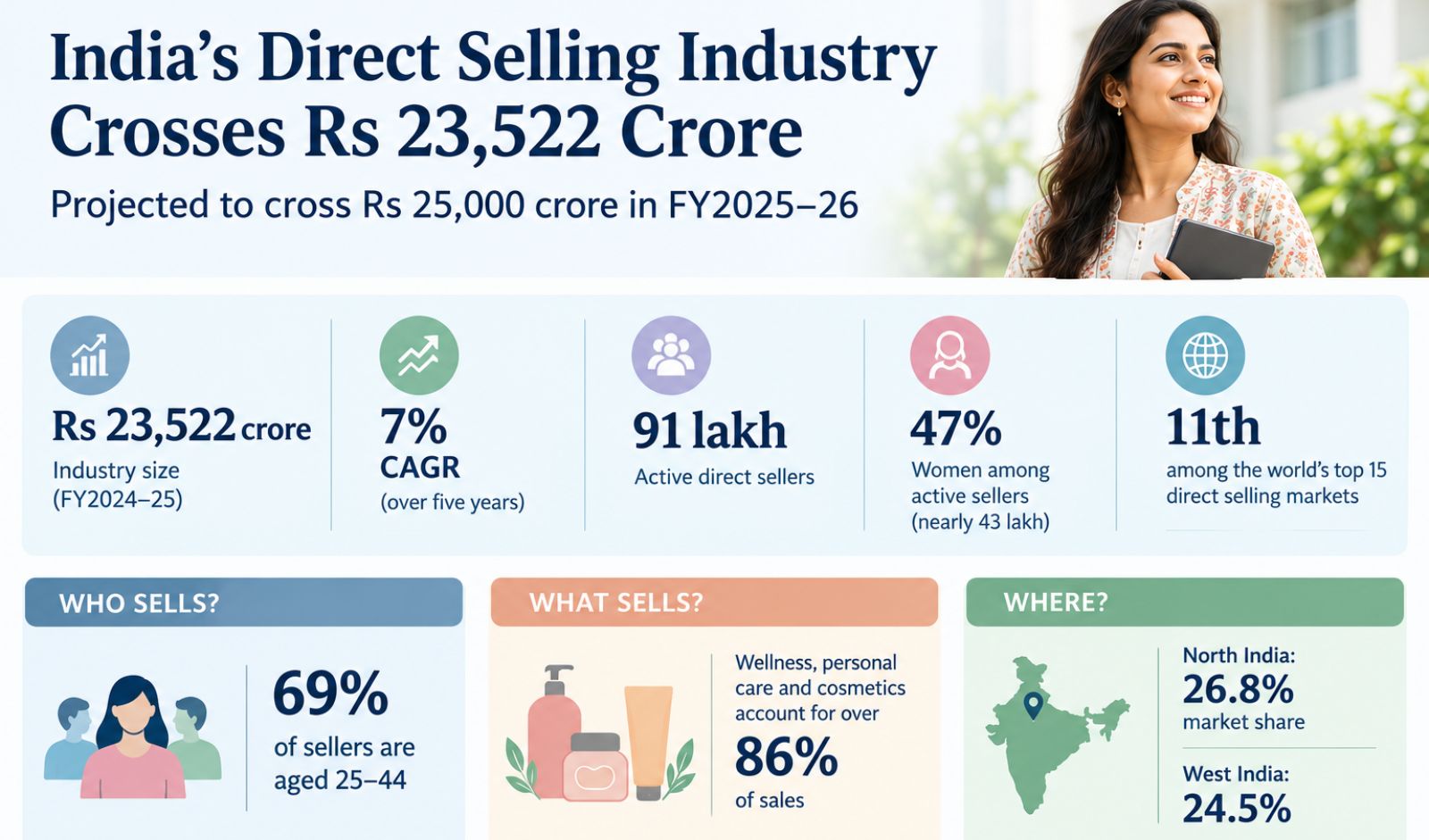
India’s direct selling industry is emerging as a significant source of livelihood and entrepreneurial opportunity. Valued at Rs 23,522 crore in FY2024–25, the industry recorded a 7 percent compound annual growth rate (CAGR) and is projected to cross Rs 25,000 crore in FY2025–26, according to the ADSEI Direct Selling Industry Report 2024–25, released in partnership with Kantar. India ranks 11th among the world’s top 15 direct selling markets, with wellness, personal care and cosmetics together contributing more than 86% of industry sales.
The industry currently has more than 91 lakh active direct sellers, with women accounting for 47% of the workforce. The findings highlight the sector’s growing role in providing income opportunities, particularly for women and individuals seeking flexible avenues for self-employment.
The report was released at Bharat Mandapam, New Delhi, and examines the industry's market size, seller demographics, income patterns, product categories and evolving regulatory environment.
Women Account for 47% of Active Direct Sellers
Women remain a significant part of India’s direct selling workforce, accounting for nearly 43 lakh of the 91 lakh active sellers. According to the report, the sector’s relatively low capital requirements, flexible working hours and lack of formal qualification barriers make it accessible to individuals across different socioeconomic backgrounds.
These characteristics can be particularly relevant for women in semi-urban and rural markets, where direct selling offers an avenue to earn an independent income alongside existing responsibilities.
The findings also connect the sector’s livelihood potential with broader conversations around women-led development and financial inclusion. For many participants, earnings can contribute to household expenses, education, healthcare and savings.
Gautam Bali, Patron, ADSEI, said the industry’s contribution extends beyond its overall revenue, pointing to the number of people using direct selling as a source of livelihood and the participation of women in smaller towns and villages.
He also highlighted the need for stronger training, governance and consumer-focused practices to help sellers establish sustainable businesses and remain active in the sector.
Young Workforce and Income Opportunities Shape the Industry
The report indicates that around 69% of active direct sellers are between 25 and 44 years old, underlining the participation of working-age individuals in the sector.
It also finds that more than 32% of sellers report consistent month-on-month income from direct selling. The data points to the sector’s potential as an income-generating activity, although earnings and business outcomes can vary across individuals.
Beyond selling products, onboarding and training programmes can help participants develop skills in communication, customer engagement, sales and basic financial management. These capabilities can also support individuals looking to build small businesses or explore other entrepreneurial opportunities.
However, seller retention remains an area for improvement. Bali noted that some participants leave before their businesses become established, highlighting the importance of better training, governance and consumer trust in building long-term participation.
Wellness and Personal Care Drive More Than 86% of Sales
Wellness, personal care and cosmetics collectively account for more than 86% of the direct selling industry's total sales, according to the report.
The concentration of sales in these categories reflects the sector’s reliance on products linked to regular consumer use and household purchasing needs. For direct selling companies, these segments also place emphasis on customer relationships, product awareness and repeat purchases.
Geographically, North India is the largest contributing region, accounting for 26.8% of the market, followed by West India at 24.5%.
The regional distribution highlights the importance of markets beyond the country’s largest metropolitan centres in supporting the industry’s overall business. Direct selling’s presence across diverse locations also creates opportunities for companies to reach consumers through individual sellers rather than relying exclusively on conventional retail outlets.
Regulatory Framework Brings Focus on Compliance and Consumer Trust
The Consumer Protection (Direct Selling) Rules, 2021, are identified in the report as an important milestone in the formalization of the sector. The rules established a more defined regulatory framework for direct selling entities and their operations, placing greater emphasis on consumer protection and compliance.
According to ADSEI, sellers surveyed for the report expressed positive views about the influence of existing policies, public perception of direct selling and the industry's growth prospects over the next two years.
Dr. Sanjeev Kumar, President, ADSEI, said the industry supports the broader objectives of self-employment, skilling and women-led development.
“This report establishes, with credible quantified and qualitative data, what Direct Selling substantively contributes to India: at the core of it is livelihoods for more than 91 lakh people, nearly half of them women, built on the spirit entrepreneurship,” he said.
Kumar added that ADSEI would continue to work with the government to strengthen compliance and consumer trust.
For the industry, maintaining consumer confidence will remain important as the sector expands. Transparent business practices, clear product information, appropriate seller training and responsible consumer engagement are central to building credibility and encouraging sustained participation.
India Ranks 11th Among the World’s Top Direct Selling Markets
India’s position as the 11th-largest direct selling market globally provides an international benchmark for the sector’s scale. With the domestic industry valued at Rs 23,522 crore in FY2024-25 and projected to exceed Rs 25,000 crore by the next fiscal, the report points to further growth potential.
The sector’s future development will depend not only on increasing sales but also on the quality and sustainability of the livelihoods it supports. Seller retention, training, governance and compliance are likely to remain important considerations as companies seek to expand their reach.
The report’s estimates were developed through a three-stage methodology. ADSEI and Kantar built a universe of direct selling companies using industry sources, company disclosures and Ministry of Corporate Affairs filings, and analysed up to seven years of financial and operational data.
The estimates were subsequently assessed through in-depth stakeholder interviews, a quantitative survey of direct sellers and expert consultations. The research also considered business-as-usual, optimistic and pessimistic scenarios.
As India’s direct selling industry moves towards the Rs 25,000 crore mark, its performance will be measured by both market expansion and its ability to provide more sustainable income opportunities while strengthening consumer confidence and regulatory compliance.
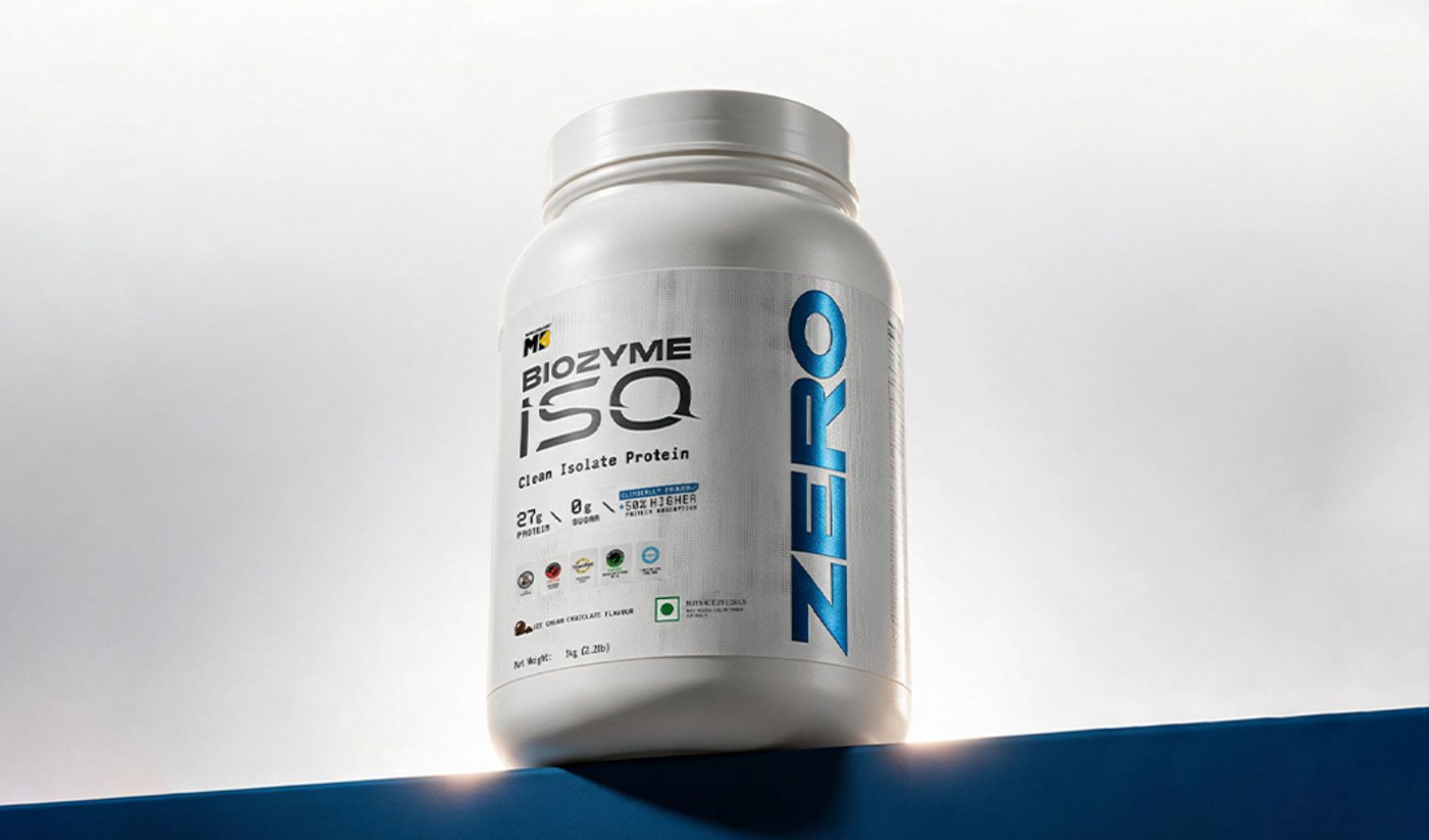
India, 9 October 2026: For years, the premium whey protein isolate market in India has been influenced by a widely held consumer perception: imported products are inherently superior to Indian alternatives. MuscleBlaze is looking to challenge that belief with Biozyme Iso Zero, shifting the conversation towards scientific evidence, product quality and independent validation.
Biozyme Iso Zero delivers 27g of protein per scoop from 100% whey protein isolate, with zero added sugar and zero artificial sweeteners. It has been reformulated with stevia in place of artificial sweeteners, is 99% lactose-free, and contains five core ingredients: whey isolate, MB EnzymePro, steviol glycosides, bromelain and lecithin. There are no added fillers or gums, and the pack ships with a compostable scoop.
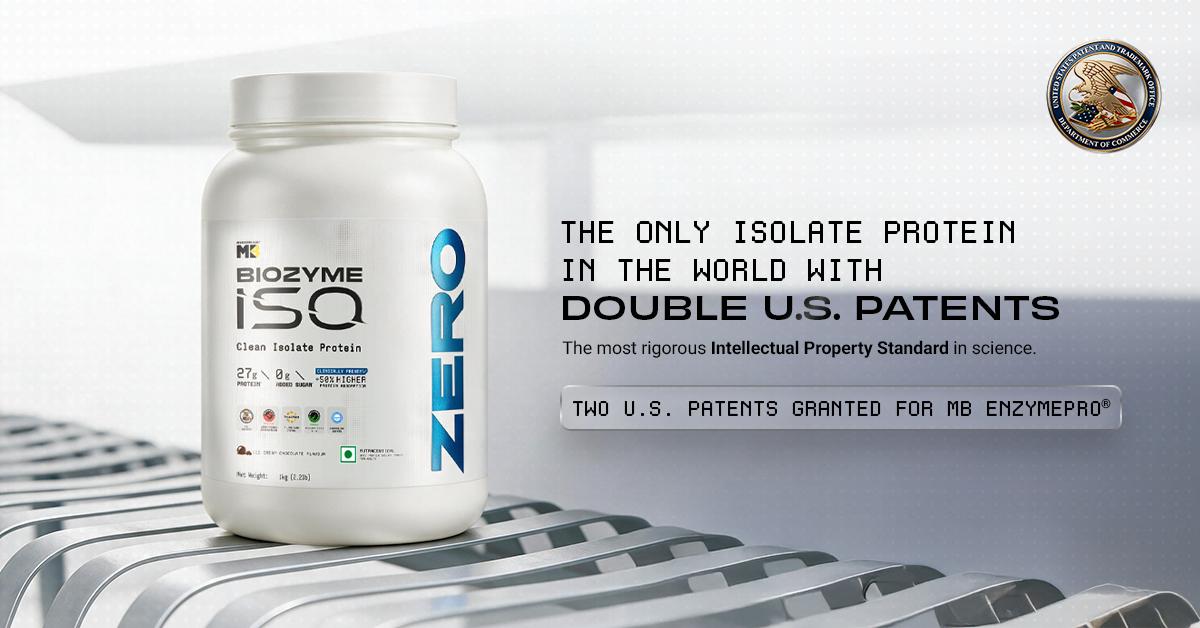
At the centre of the proposition is MB EnzymePro, an enzyme technology designed to break whey protein molecules into smaller peptides. The product has been clinically evaluated for protein absorption and demonstrated 50% higher protein absorption than regular whey, according to the company's clinical assessment. The technology is supported by two US patents, underscoring the company's focus on proprietary innovation in sports nutrition.
Biozyme Iso Zero has also undergone blind testing at independent laboratories in the United States, the United Kingdom and India, covering purity, label accuracy, heavy metals, amino spiking and banned substances. It carries credentials from Informed Protein USA, Informed Choice UK, Trustified Gold, Asia and Labdoor USA. In a market with a growing range of protein supplements and increasingly varied product claims, the company believes multi-market testing offers consumers a clearer basis for comparison than brand origin alone.
The move comes as India's sports nutrition market evolves beyond conventional parameters such as protein content, pricing and flavour. Consumers are increasingly evaluating supplements based on formulation, product quality and the evidence supporting performance-related claims.
Commenting on the development, Kaustuv Paliwal, Senior Vice President at Bright LifeCare, the parent company of MuscleBlaze said, "The premium sports nutrition category needs to move beyond the perception that international origin automatically translates into superior quality. At MuscleBlaze, we believe innovation must be backed by research, rigorous testing and evidence that consumers can evaluate. Our focus is on building products that compete on their merits and demonstrate the capabilities of Indian sports nutrition innovation."
For MuscleBlaze, the ambition is to move the category conversation from imported versus Indian to perceived versus proven. As consumer expectations evolve, the company believes the next phase of growth in premium sports nutrition will be shaped by brands that can demonstrate the science and quality behind their products.
About MuscleBlaze
MuscleBlaze is an Indian sports nutrition brand focused on developing science-led nutrition products for consumers across fitness, performance and active lifestyles. Its portfolio spans protein, creatine and sports nutrition products, with an emphasis on product innovation, quality and consumer trust.
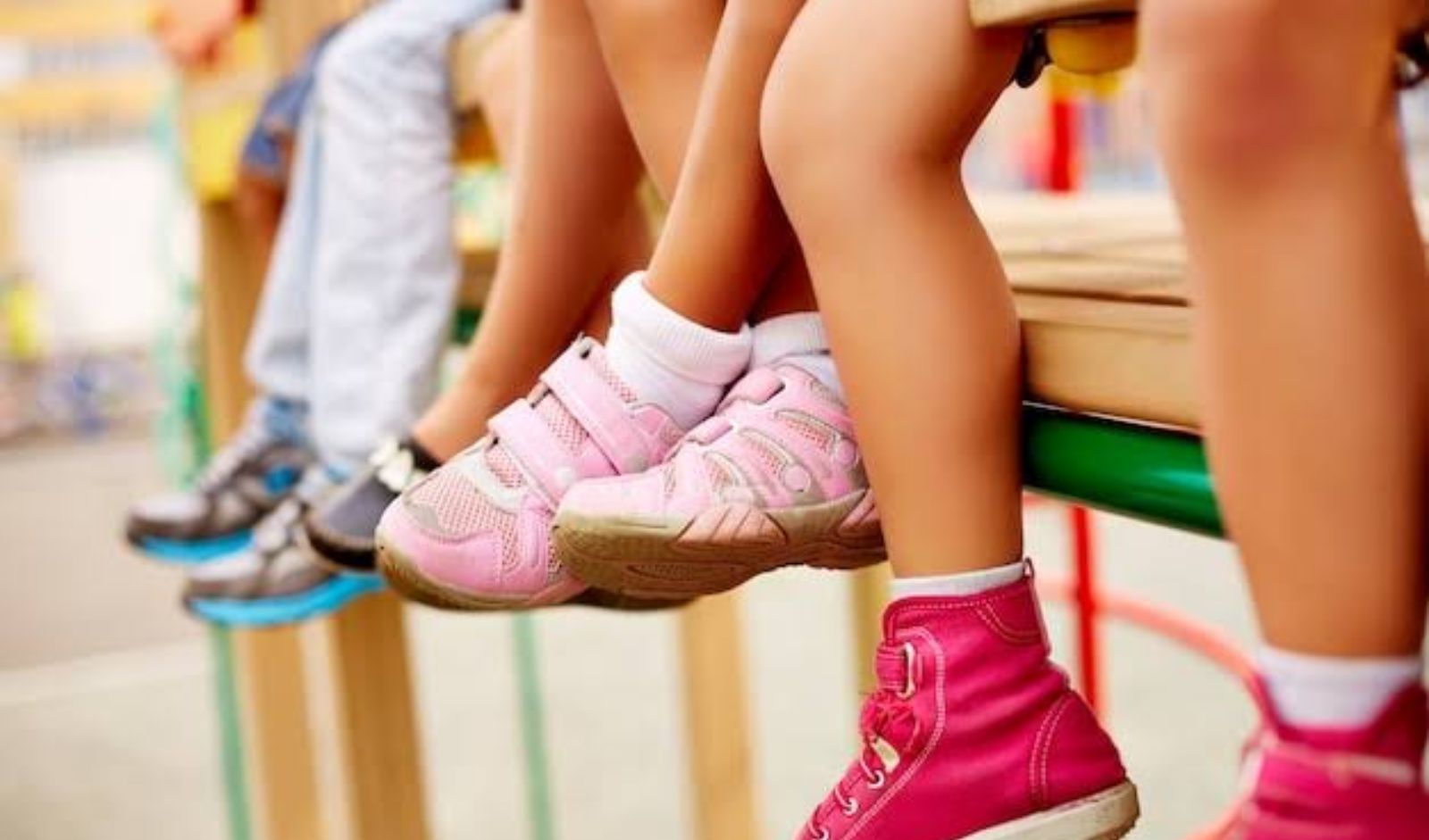
The rise of online marketplaces has changed how India shops, but it has not made physical retail irrelevant. In categories such as fashion and footwear, where fit, comfort and personal preference decide the purchase, customers still want to see and try a product before they buy it. Specialty stores, malls and brand outlets continue to matter.
For digital-first brands, moving into physical retail is less an expansion decision than a natural next step. Online gives you speed, reach and customer data. Offline brings the human element back into buying: the ability to try something, ask questions and experience the brand.
Two customers, one purchase
This matters more in kids' footwear than almost anywhere else, because every purchase involves two people. The parent decides and pays. The child wears the product and has firm opinions about it.
Watching children try shoes in stores, it is obvious they do not respond to technical features alone. They respond to movement: how it feels to run in, whether they can put the shoe on themselves. The parent standing beside them is assessing something entirely different, which is durability, fit and whether this is worth the money. Both have to land or the sale does not happen. That single observation can shape decisions as specific as closure systems and colour palettes, and these are insights that are difficult to reach from analytics alone.
Buyer behaviour is also shifting in ways that many brands may not predict. Fathers are increasingly becoming active participants in children's footwear purchases, while girls represent a significant share of young footwear consumers. Understanding these shifts is important for brands as they think about product, communication and retail experience.
Some products have to be held
Trust is the other reason physical retail earns its place. Parents want to be certain that what they are buying is comfortable, well made and right for growing feet.
For children's footwear, that is not a general argument, it is a specific one. Features designed around growing feet, comfort and adaptability can sound like marketing claims when communicated only on a screen. Put the product in a parent's hands and let them experience how it works, and the conversation can change in seconds. A screen cannot always do that. A store can.
Start with where the customer already is
Moving offline brings real estate commitments, inventory planning and channel alignment, and all of it puts pressure on a growing brand. The most expensive mistake is to judge expansion by visibility or store count.
High mall footfall alone does not necessarily carry a children's brand. Family catchment, the brands around the store, the capability of the staff and the quality of the fit conversation can matter far more than headline traffic. Brands need to build the training, merchandising and inventory systems before expansion works as a system rather than a series of one-off bets.
The better first question is simpler. Where is the customer already?
A brand's online business can answer that. Order data can show consistent demand in cities well before a physical presence is established, helping shape a retail map based on genuine demand rather than prestige addresses. Sales locations, repeat purchases, return patterns and feedback can all tell you where that demand already exists.
You also do not need to begin with standalone stores. Alongside exclusive outlets, kiosks, shop-in-shop formats and large-format retail can help a brand test a market and build presence without heavy real estate commitments from day one. The honest caveat is that these formats are not equivalent. A full store can carry the entire fit conversation. A kiosk gives you reach but cannot always do that, and brands need to recognise the difference between each touchpoint.
Connect the two, do not run them separately
The next step is to stop treating physical and digital as two businesses. An online customer should be able to find the nearest store, check availability or collect in person. Someone who discovers the brand in a store should be able to continue online through easy reordering, support and loyalty.
In footwear, that loop is the whole model. A parent finds a brand on social media, comes into a store to be sure about fit, buys there, and then reorders online without walking in again. The journey is already omnichannel even when a single transaction is not.
Stores can also hold relationships that have nothing to do with a transaction. Take-back programmes can bring parents back into stores with outgrown shoes, which can then be revived and passed on to children who need them through NGO partners. Such initiatives can create engagement and repeat visits without relying entirely on advertising or discounting.
What the numbers say
The clearest evidence that the two channels reinforce each other is acquisition cost. As offline scales, it can support customer discovery and reduce the dependence on paid social, which has become more expensive across the industry. Retail does the fit discovery, and a meaningful share of the repeat purchasing can then happen online.
India's retail market is moving in the same direction. Rising purchasing power, sharper awareness of product quality and ergonomics, and a growing willingness to pay for a real difference are pushing consumers past purely functional buying.
For a brand like ours, the opportunity is not to open more stores. It is to use physical retail to prove what makes the product different, and digital to extend that relationship over years.
Digital offers reach, convenience and data. Physical retail offers experience, interaction and trust. In kids' footwear, where the product has to satisfy both the parent and the child, getting that balance right is what separates a retail business that is bigger from one that lasts.
Authored by:
Satyajit Mittal, Founder & CEO, Aretto
Quitting smoking is difficult largely because nicotine dependence can trigger cravings and withdrawal symptoms when tobacco use stops. Nicotine replacement therapy or NRT is one evidence-based approach used to provide controlled nicotine without exposure to the harmful chemicals produced by burning tobacco. The World Health Organization recommends NRT among the pharmacological options that can support adults who want to quit tobacco.
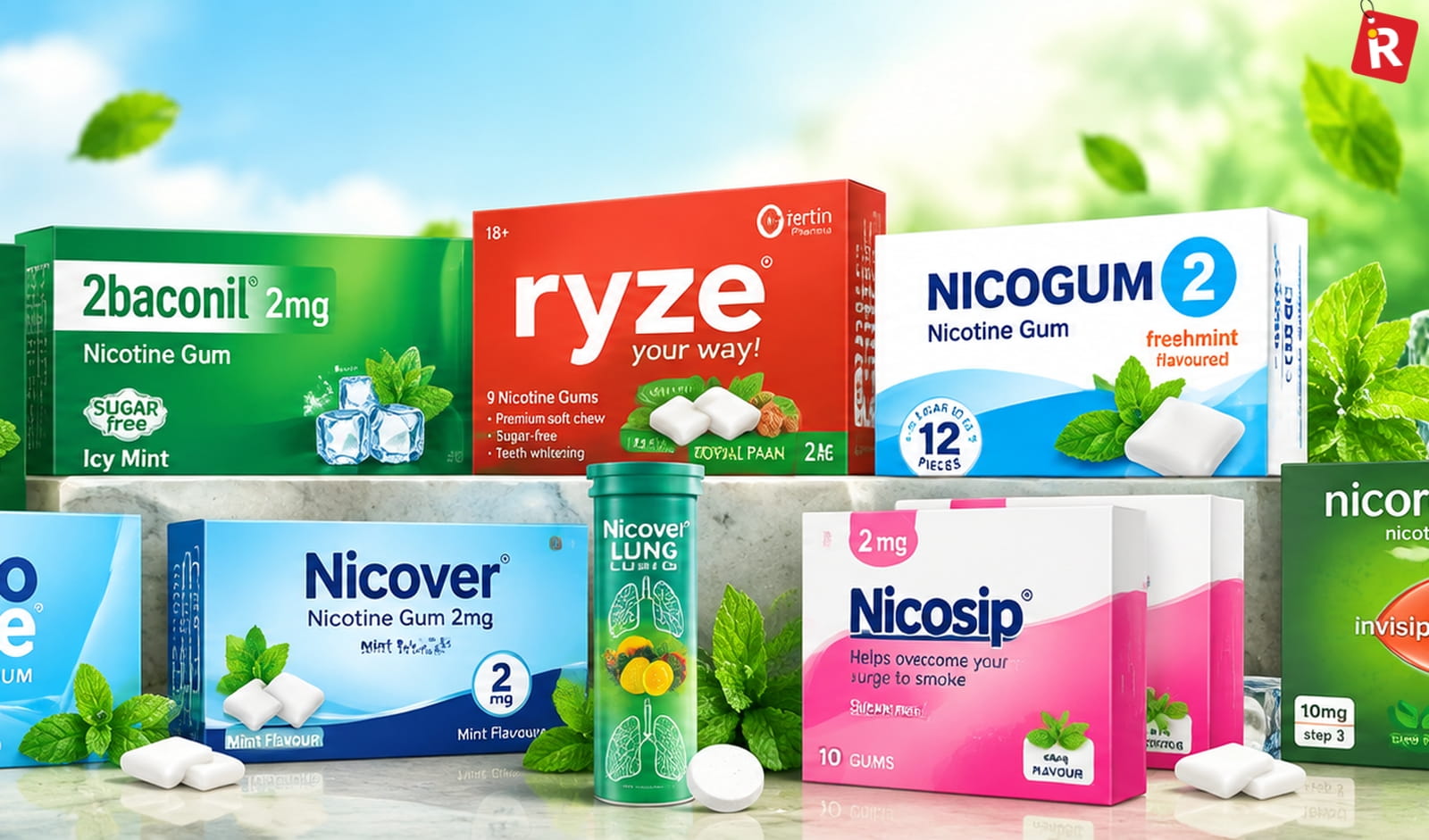
In India, the nicotine gum category has expanded beyond a few familiar products. Consumers can now find brands such as Nicotex, 2baconil, Ryze, Nicogum, Nicosure, Nicover and other nicotine replacement products through pharmacies and online healthcare platforms. Current listings show multiple strengths, flavours and pack sizes across the category.
This article looks at the Top 8 Nicotine Gum Brands for Smoking Cessation in India, focusing on their market presence, available formulations and positioning. The list is not a ranking of medical effectiveness. Nicotine gum contains an active drug, and the appropriate strength and usage should be selected according to the product instructions and, where appropriate, advice from a doctor or pharmacist.
Understanding Nicotine Replacement Therapy in India
Nicotine gum is a short-acting form of NRT. It provides a controlled amount of nicotine to help manage cravings and withdrawal while a person works towards stopping tobacco use. Unlike cigarettes, NRT does not deliver nicotine through tobacco smoke. WHO includes nicotine gum, patches and other NRT formats among pharmacological treatments that can support tobacco cessation.
The category is also becoming more accessible through pharmacies, e-pharmacies and quick-commerce platforms. Current Indian pharmacy listings show nicotine gums across brands, strengths and flavours, making product discovery considerably easier than it was in the past.
Read more: Top 10 Sports T Shirts Brands Redefining India’s Everyday Activewear
Top 5 Cigarette Brands Shaping India's Tobacco Industry
Top 8 Watch Brands in India Redefining Everyday Luxury
Top 8 Nicotine Gum Brands in India
1. Nicotex
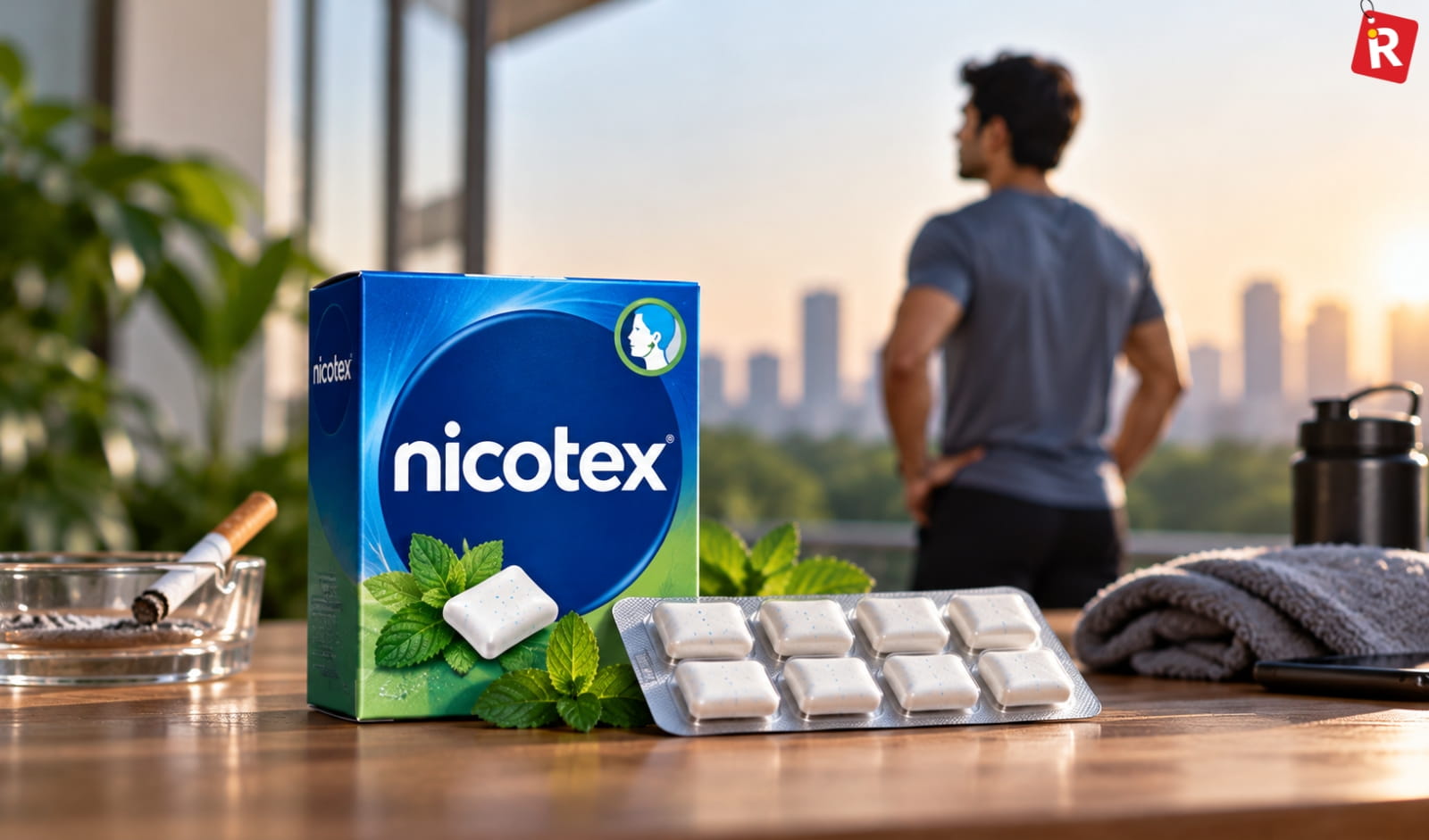
Nicotex is one of the most visible nicotine gum brands in India's smoking-cessation category and is marketed by Cipla Health. Its range includes 2mg and 4mg nicotine gums, with flavours including Mint Plus, Paan, Cinnamon, Ultra Mint and Fruit Burst. The brand positions its products around nicotine replacement therapy and a structured 12-week approach to reducing nicotine dependence. Nicotex is also widely represented across pharmacy and digital-commerce channels. Its broad flavour and pack-size portfolio makes it one of the most recognisable names for consumers searching for nicotine gum in India.
2. 2baconil
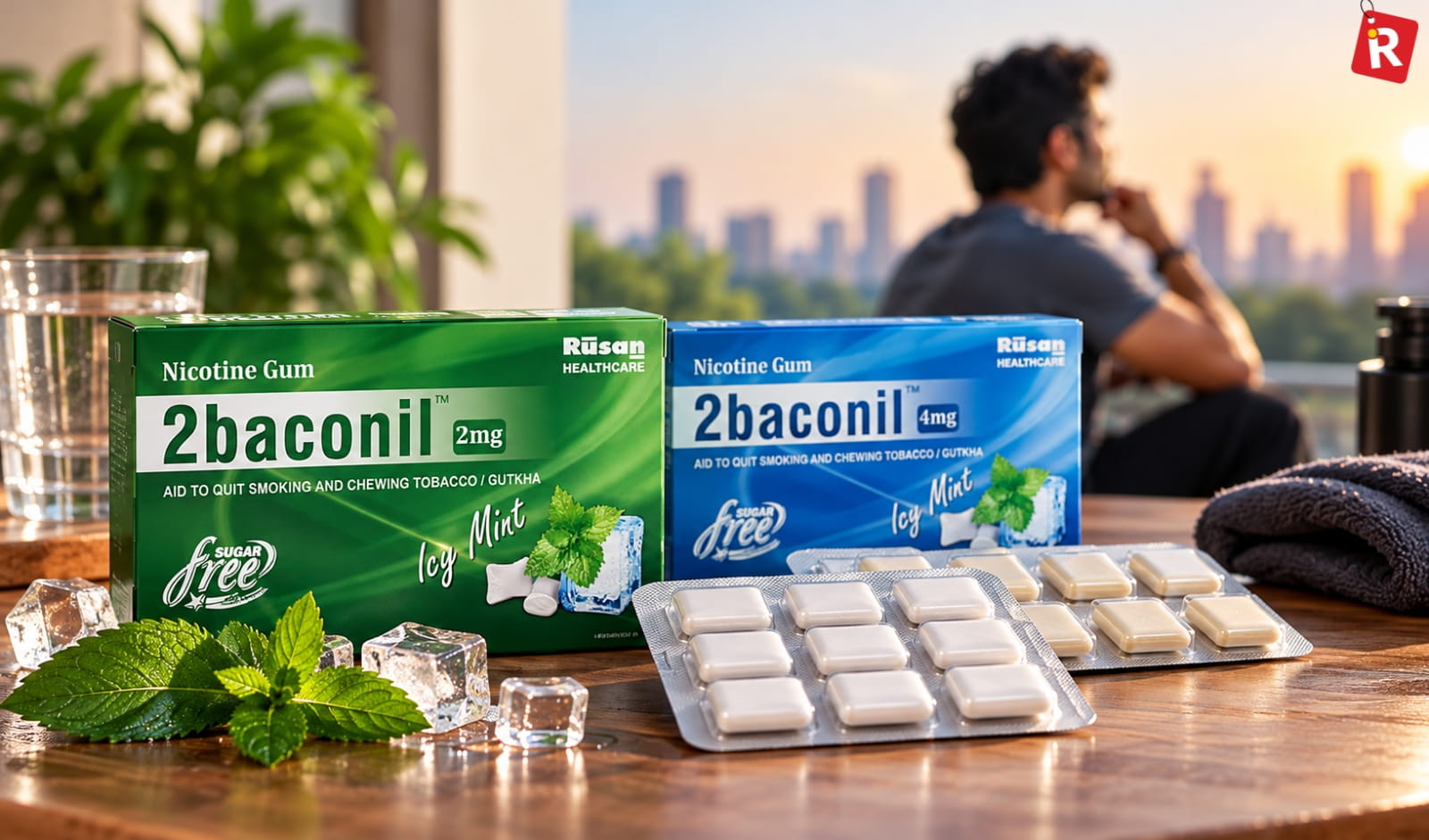
2baconil is another established NRT brand available in India, with nicotine gums offered in 2mg and 4mg strengths. Pharmacy listings show the brand in sugar-free formats, including Icy Mint, alongside its wider smoking-cessation portfolio that includes nicotine patches. The brand is marketed by Rusan Healthcare and is available through major online pharmacy channels. Its presence across both gum and patch formats gives consumers access to different NRT options within the same brand ecosystem. For the Indian smoking-cessation market, 2baconil represents one of the established alternatives to Nicotex.
3. Ryze
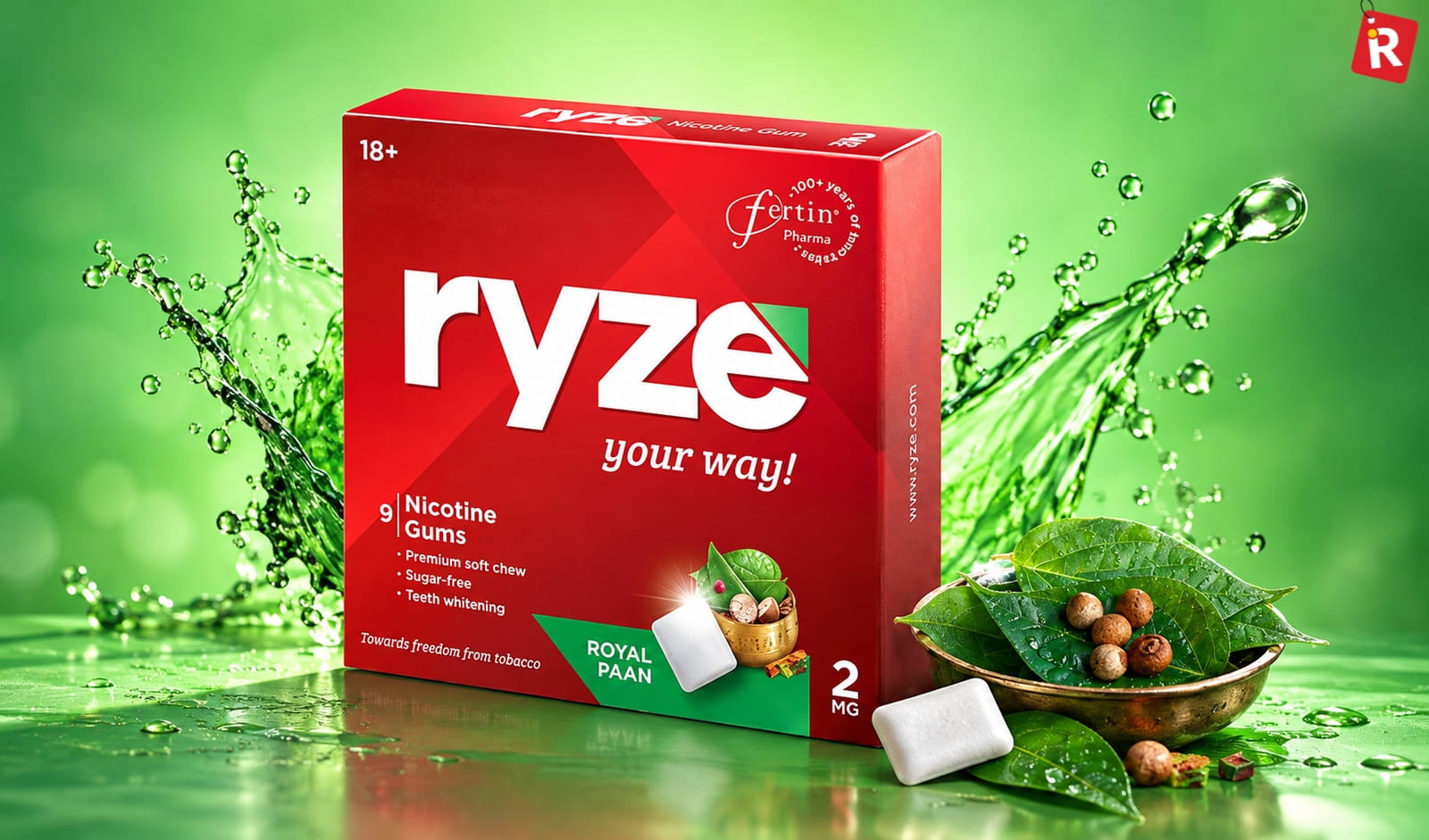
Ryze has added a more flavour-led proposition to India's nicotine gum category. Its portfolio includes 2mg and 4mg gums in flavours such as Frosty Mint, Royal Paan, Fruit Blast, Fresh Fennel, Pudina Punch and Paan Masala. The brand is widely listed across pharmacy and quick-commerce platforms, reflecting the increasing digital availability of smoking-cessation products. Ryze is also noteworthy from a market perspective because research has identified it among newer nicotine products associated with tobacco-industry companies. Tobacco Induced Diseases Consumers should therefore distinguish brand availability from clinical suitability and consult healthcare professionals when needed.
4. Nicogum
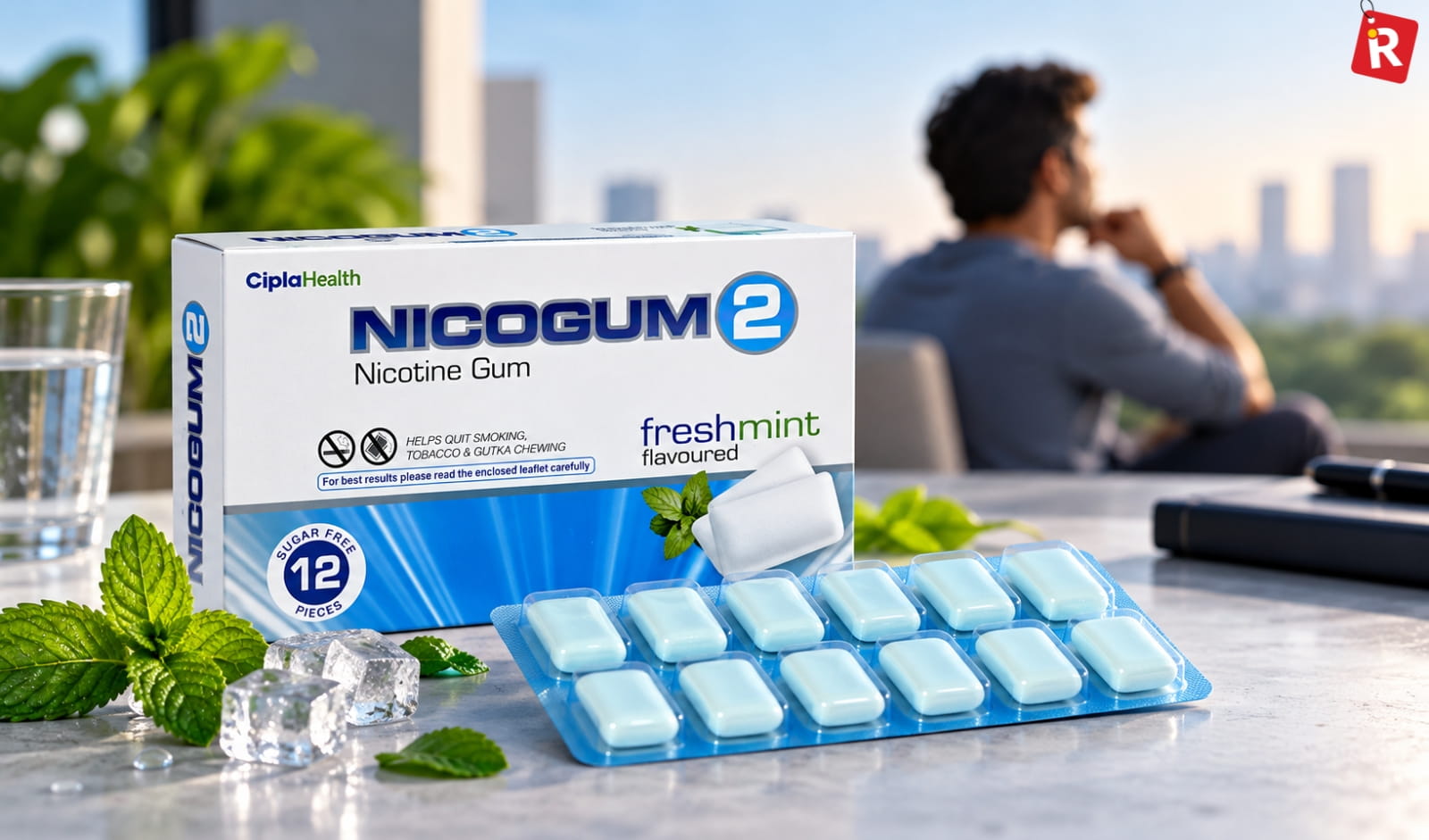
Nicogum is another nicotine replacement gum available to Indian consumers, with products listed in 2mg and 4mg strengths. Pharmacy listings identify Nicogum as a smoking-cessation product containing nicotine and show formats such as Freshmint and sugar-free variants.The brand is available through pharmacy channels alongside other established NRT products. Nicogum's positioning is relatively straightforward: provide nicotine in gum form to help manage cravings and withdrawal associated with stopping tobacco. Its availability gives consumers another option when comparing nicotine gum brands based on formulation, strength, flavour, price and accessibility.
5. Nicosure
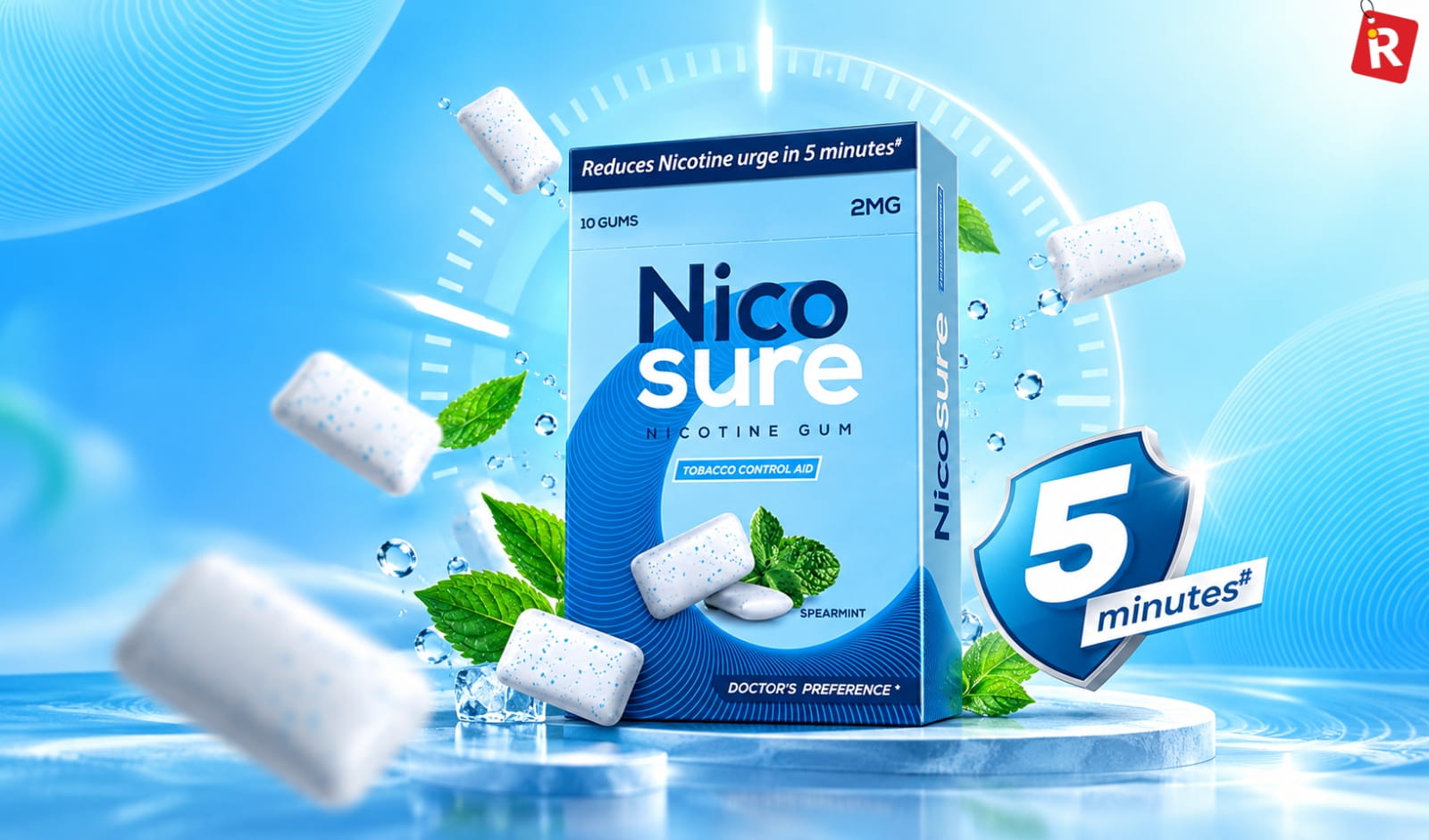
Nicosure is an ITC-marketed nicotine replacement brand available in India. Its range includes 2mg and 4mg nicotine gums, alongside nicotine lozenges. Current product listings describe Nicosure gum as nicotine polacrilex-based NRT designed to provide a controlled dose of nicotine and help reduce cravings associated with stopping tobacco use. The brand also offers flavour options such as Spearmint and Paan Bliss. Its presence across online pharmacies and quick-commerce platforms illustrates how nicotine replacement products are increasingly becoming part of India's digitally accessible healthcare retail market.
6. Nicover
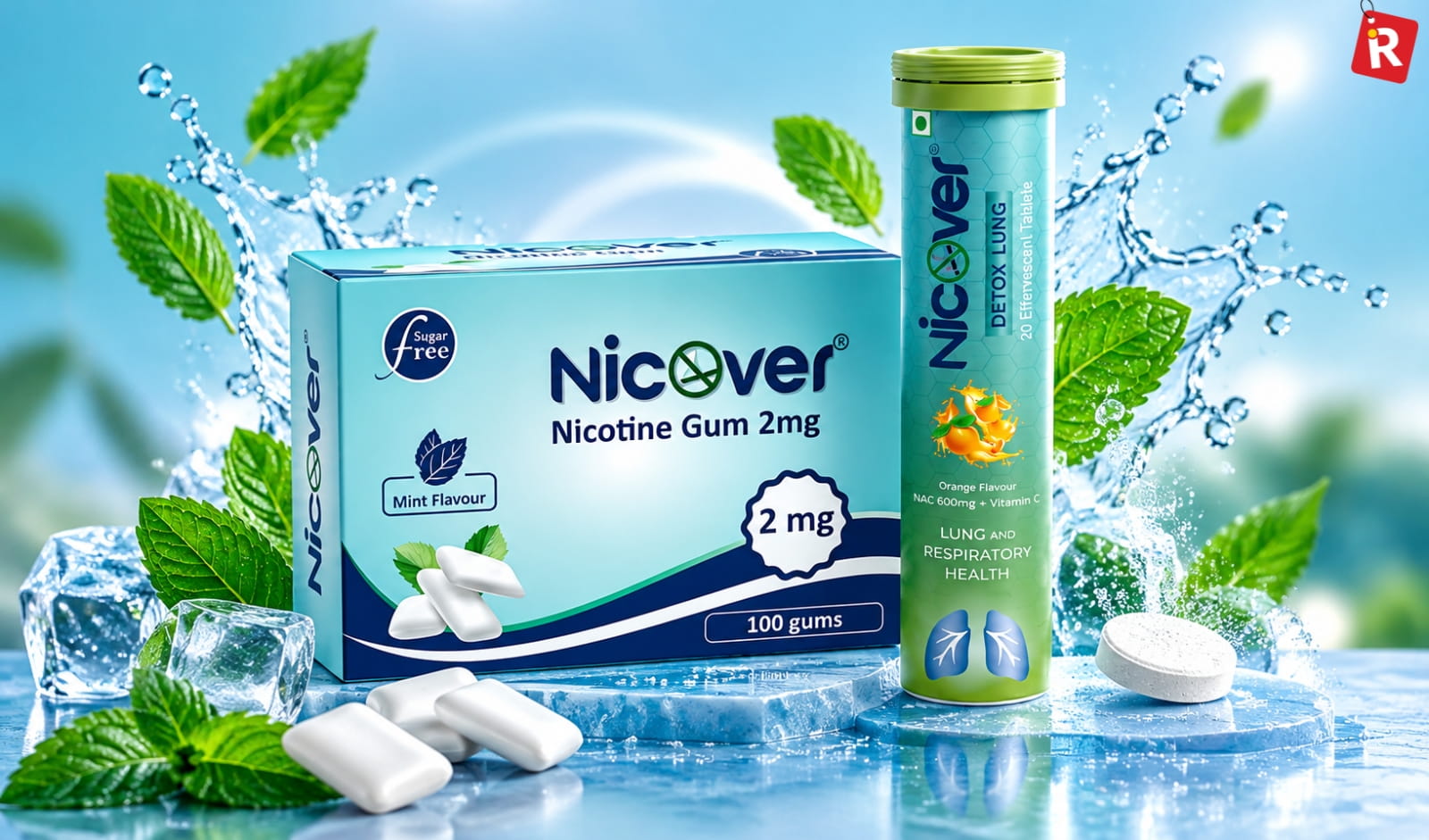
Nicover represents a newer consumer-facing approach to nicotine replacement gum. Its current offering centres on sugar-free 2mg nicotine gum in a mint flavour, positioned around managing cravings and gradually reducing nicotine dependence. Unlike some of the larger pharmacy-led brands, Nicover places considerable emphasis on direct consumer education and guided quitting plans through its digital platform. This reflects a wider shift in healthcare retail, where consumers increasingly discover products online and expect supporting information alongside the product itself. Nicover therefore adds a digital-first dimension to India's evolving nicotine gum category.
7. Nicosip
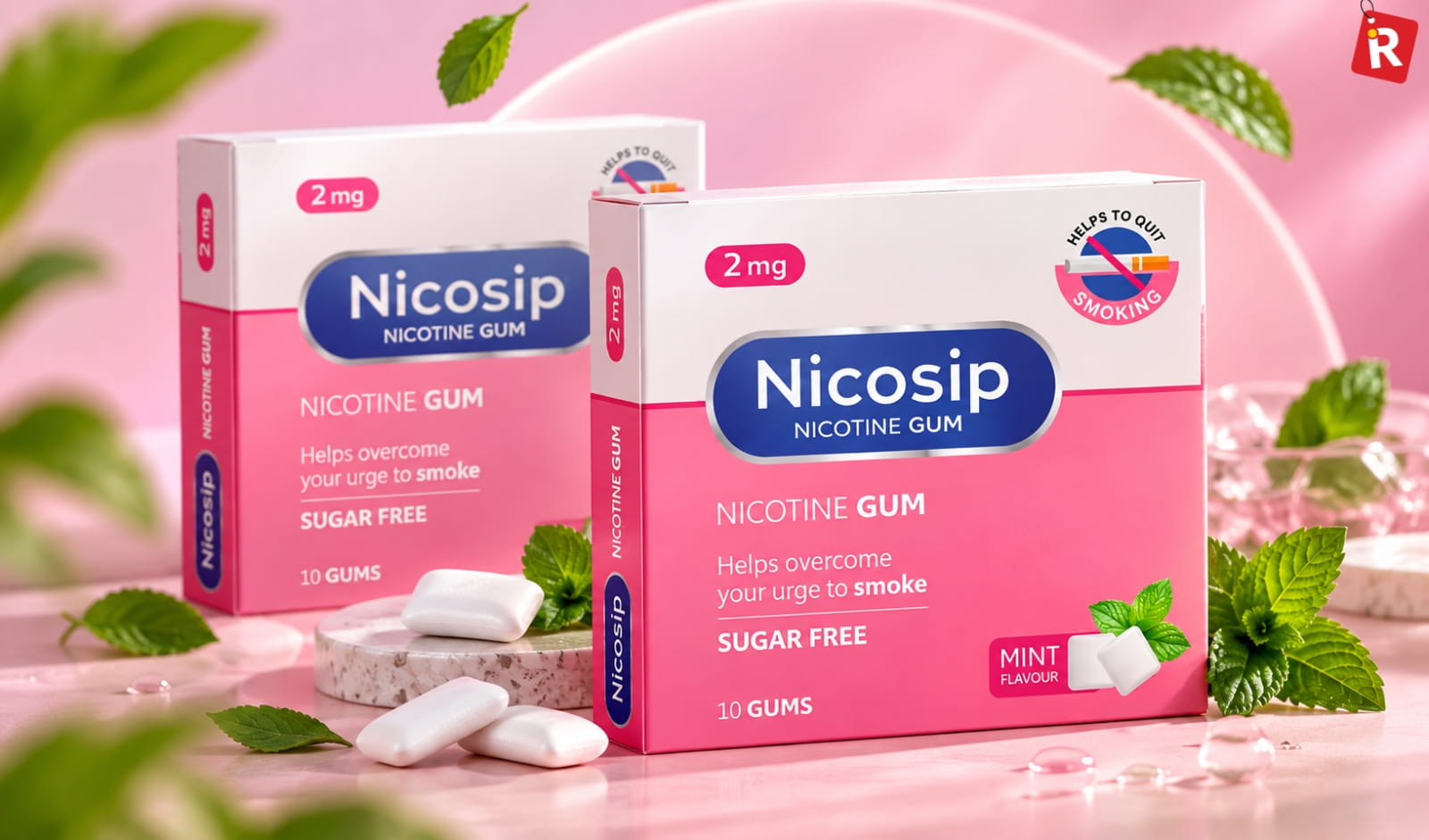
Nicosip is a nicotine replacement gum marketed by Leeford Healthcare and available in 2mg and 4mg formulations. Current pharmacy listings identify Nicosip as an NRT product used for smoking cessation and nicotine withdrawal, with products available in formats such as mint-flavoured sugar-free gum. The brand is also listed in pharmaceutical product portfolios alongside other nicotine replacement products. For consumers researching nicotine gum brands in India, Nicosip represents another pharmacy-market option where strength, formulation and professional guidance can be considered before use.
8. Nicorite
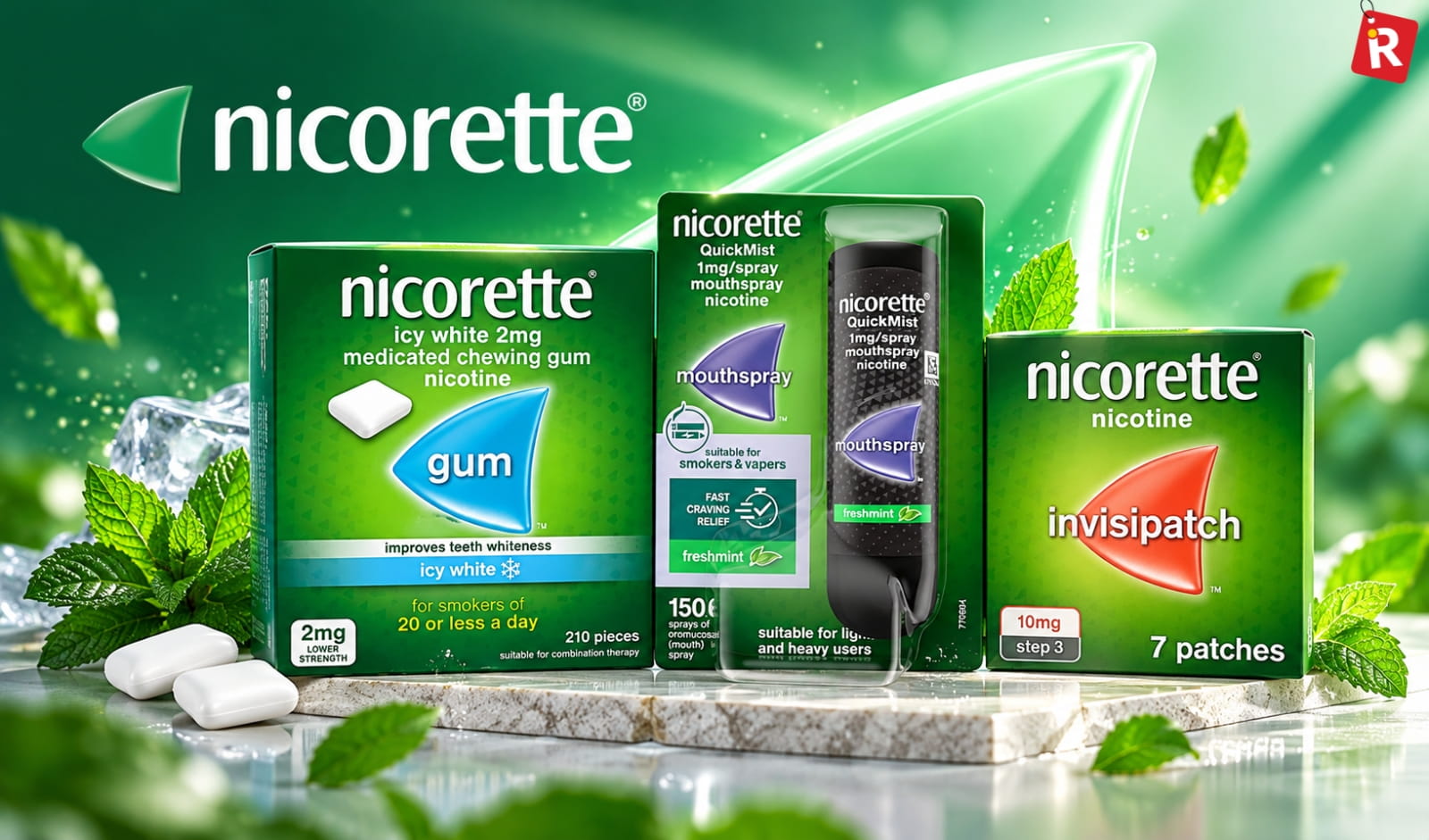
Nicorite is another nicotine gum brand available in India's pharmaceutical market, with 2mg and 4mg variants listed by its manufacturer and pharmaceutical suppliers. Its inclusion highlights the breadth of India's NRT market, where several brands operate beyond the most visible consumer names. As with other nicotine gums, the relevant consideration is not simply brand recognition but the nicotine strength, usage instructions, individual tobacco-use pattern and any medical considerations. Consumers should follow the product label and seek advice from a doctor or pharmacist when uncertain.
Why Nicotine Gum Is Part of India's Smoking Cessation Market
Nicotine gum occupies an important position within NRT because it provides a short-acting form of nicotine that can be used to address cravings as they occur. WHO's latest tobacco-cessation guidance recommends NRT as one of the pharmacological options for adults attempting to quit tobacco. It also notes that combining a nicotine patch with a short-acting NRT such as gum can be an option for some people.
This does not mean every smoker needs nicotine gum or that one brand is universally better than another. The appropriate approach depends on factors including tobacco consumption, nicotine dependence, previous quit attempts and individual health considerations.
Explore more: Top 5 Cookware Brands to Watch for Modern Indian Kitchens
5 Best Instant Coffee and Tea Brands in India 2026 for Daily Use
Top 5 Trimmer Brands for Men in India 2026
What Consumers Should Check Before Choosing Nicotine Gum
Consumers searching for the best nicotine gum in India should look beyond flavour and price.
Nicotine strength
Different products are available in different strengths, commonly including 2mg and 4mg. The appropriate strength depends on the individual's nicotine use and the product's instructions. For example, Nicotex states that its 2mg and 4mg products are intended for different levels of cigarette consumption.
Product instructions
Nicotine gum is not used exactly like conventional chewing gum. Nicotex, for example, instructs users to chew slowly until the nicotine taste appears and then park the gum between the cheek and gum.
Flavour and format
Mint, fruit, paan, cinnamon and other flavours are now available across the category. Flavour preference can influence how comfortable consumers find the product during a quitting programme.
Professional advice
Nicotine gum is a medicine containing nicotine and can cause side effects or be unsuitable in certain circumstances. Product information and healthcare advice should be considered before use.
Nicotine Gum and the Changing Healthcare Retail Landscape
The availability of nicotine gums through pharmacies, e-pharmacies and quick-commerce platforms reflects a wider change in healthcare retail.
Major platforms currently list multiple NRT brands, including Nicotex, 2baconil, Ryze, Nicosure and Nicogum. This makes comparison easier but also increases the importance of accurate product information.
For healthcare retailers, the category requires particularly responsible merchandising. Consumers need clear information about nicotine strength, intended use, warnings, prescription status where applicable and professional guidance rather than aggressive promotional messaging.
What the Nicotine Gum Category Means for Retailers
The smoking-cessation category has several characteristics that distinguish it from conventional FMCG.
Availability matters: Consumers experiencing cravings may value convenient access.
Information matters: Product pages should clearly communicate strength, formulation and directions.
Responsible merchandising matters: Nicotine replacement products should not be positioned like ordinary confectionery.
Pharmacy trust matters: Healthcare professionals can play an important role in helping consumers understand appropriate NRT use.
As digital healthcare retail continues to grow, brands that combine accessibility with clear, evidence-based consumer information are likely to have an advantage.
The Future of Nicotine Replacement Products in India
India's nicotine replacement category is becoming more diverse, with established pharmaceutical brands competing alongside newer digitally positioned products. The availability of multiple strengths, flavours, gum formats, patches and lozenges gives consumers more choices within NRT.
At the same time, the category requires careful communication. WHO's tobacco-cessation guidance places NRT within a broader quitting strategy that can include behavioural support and other evidence-based interventions.
For brands and retailers, the long-term opportunity is therefore not simply selling more nicotine gum. It is making evidence-based smoking cessation support easier to understand and access.
Conclusion
The Top 8 Nicotine Gum Brands for Smoking Cessation in India include Nicotex, 2baconil, Ryze, Nicogum, Nicosure, Nicover, Nicosip and Nicorite.
The category is evolving through wider pharmacy availability, digital commerce, multiple strengths and flavour choices. At the same time, nicotine gum should be viewed as a nicotine replacement medicine rather than an ordinary chewing gum product.
There is no single nicotine gum brand that is automatically the best for every person. The appropriate product and strength depend on individual circumstances, and consumers should follow the label and consult a doctor or pharmacist when needed.
FAQs on Top Nicotine Gum Brands in India
What are the Top 8 Nicotine Gum Brands in India?
The brands covered are Nicotex, 2baconil, Ryze, Nicogum, Nicosure, Nicover, Nicosip and Nicorite. Availability can vary by pharmacy, location and product strength.
Which is the best nicotine gum in India?
There is no universally best nicotine gum for everyone. Nicotine gum is an NRT medicine, and the appropriate strength and product depend on factors such as nicotine dependence and individual health circumstances.
What is nicotine gum used for?
Nicotine gum is used as nicotine replacement therapy to help reduce nicotine cravings and withdrawal symptoms while a person attempts to stop tobacco use.
Is nicotine gum safer than smoking?
NRT provides nicotine without the harmful chemicals produced by burning tobacco. WHO recommends NRT as one pharmacological option for adults who want to quit tobacco.
What strengths of nicotine gum are available in India?
Common strengths include 2mg and 4mg, although availability varies by brand. The appropriate strength should be selected according to product directions and, when appropriate, professional medical advice.
Can nicotine gum be used while smoking?
Consumers should not assume that they can freely combine nicotine gum with continued smoking. Product-specific instructions should be followed, and a doctor or pharmacist can provide guidance about NRT use.
How should nicotine gum be used?
Nicotine gum should generally not be chewed continuously like ordinary chewing gum. Specific instructions vary by product. Nicotex, for example, instructs users to chew slowly and then park the gum between the cheek and gum.
Is nicotine gum addictive?
Nicotine is an addictive substance, which is why nicotine gum should be used as directed as part of a cessation approach. Consumers having difficulty stopping NRT should speak with a healthcare professional.
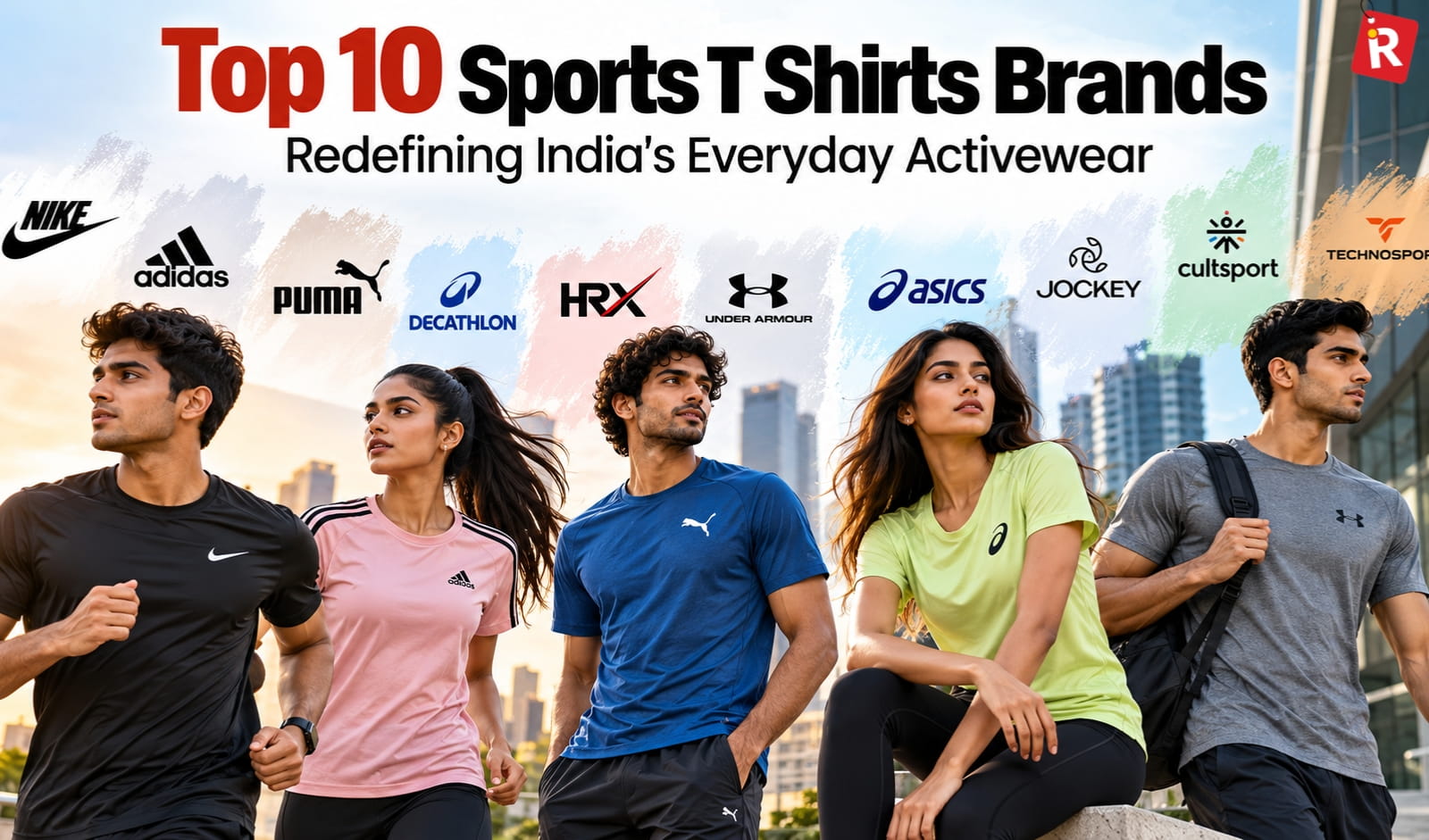
India’s sportswear market is moving beyond gyms. Sports T-shirts, once primarily associated with workouts and competitive sports, are increasingly becoming part of everyday wardrobes as consumers look for clothing that combines comfort, performance and style. The rise of running clubs, fitness communities, recreational sports and athleisure is further expanding the market.
India’s activewear market was valued at an estimated $10.72 billion in 2025 and is projected to reach $17.41 billion by 2034, supported by growing fitness awareness, athleisure adoption, e-commerce and changing fashion preferences. Another recent market assessment puts India's sports apparel market at $812 million in 2025, highlighting the growing demand for performance-oriented apparel.
This shift is also changing retail. Consumers are no longer buying sports T-shirts only for running or training. Performance fabrics, relaxed silhouettes, minimalist designs and versatile styling are helping sportswear move into college, travel, casual outings and everyday dressing.
Against this backdrop, the Top 10 Sports T Shirts Brands are competing not only on athletic performance but also on design, brand identity, accessibility and lifestyle relevance.
India Sportswear Market Is Moving Beyond the Gym
The biggest change in India's sportswear market is the convergence of fitness, fashion and everyday comfort. Consumers increasingly want T-shirts that can move from a workout to travel or casual dressing, making versatility an important purchase factor.
Running communities, recreational sports and growing fitness participation are bringing more consumers into performance apparel. At the same time, athleisure is blurring the boundaries between sportswear and fashion, giving sports brands and newer activewear players a larger opportunity to compete for everyday wardrobe space.
Why Sports T Shirts Are Becoming Everyday Fashion
The movement from workout wear to lifestyle wear is one of the strongest trends shaping the category. Younger consumers are increasingly comfortable pairing sports T-shirts with jeans, joggers, cargo trousers and sneakers, making activewear relevant well beyond traditional exercise occasions.
This trend is also creating space for Indian sports brands and D2C activewear companies alongside established global names. Comfort, functionality, versatility and performance are increasingly becoming part of the same consumer proposition.
Read also Why Physical Malls Still Matter in India's Beauty and Luxury Retail Boom
Top 8 Nicotine Gum Brands for Smoking Cessation in India
Top 10 Sports T Shirts Brands Redefining India’s Everyday Activewear
Top 10 Sports T Shirts Brands in India
1. Nike
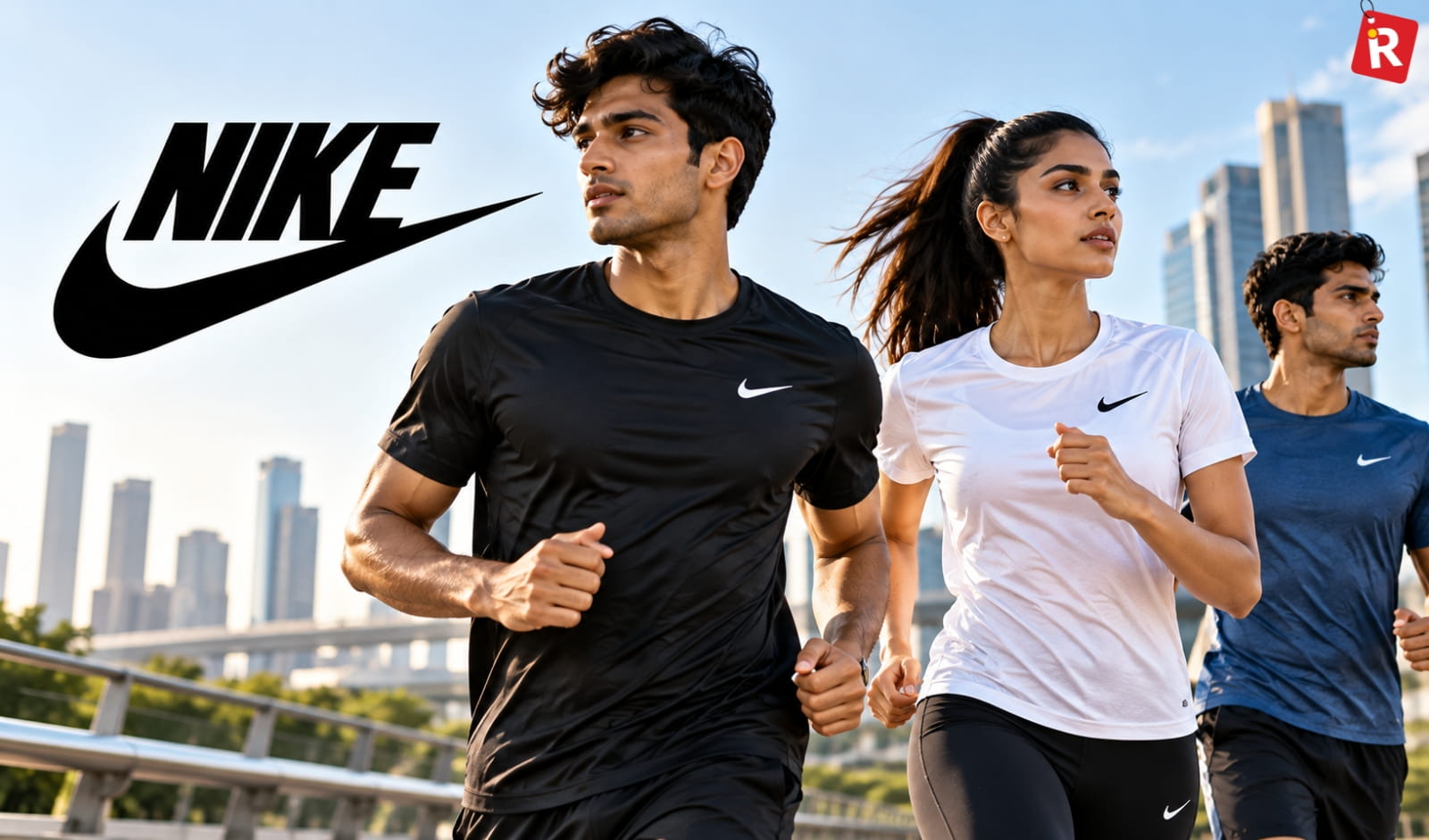
Nike remains one of the most recognisable sports brands for consumers looking for performance-led apparel. Its sports T-shirts combine athletic design with technologies developed around breathability, lightweight construction and movement. The brand also benefits from strong cultural relevance through running, basketball, football and global athlete associations. In India, Nike sits toward the premium end of sportswear, making its T-shirts particularly relevant to consumers who view performance apparel as both functional clothing and a fashion statement. Its strong digital presence and brand equity also allow Nike to compete beyond traditional sports retail and appeal to younger, style-conscious consumers.
2. Adidas

Adidas has built one of India's strongest sports and lifestyle ecosystems, spanning performance apparel, football, running and Originals. Its sports T-shirts appeal to consumers looking for a balance between athletic functionality and everyday styling. The brand's three-stripe identity gives even basic apparel strong visual recognition, while its performance and lifestyle collections allow it to operate across different price and consumer segments. Adidas also benefits from India's growing sports culture, including cricket, football and running. Its combination of performance technology, fashion collaborations and extensive retail availability makes it one of the most important brands in India's sports T-shirt market.
3. Puma
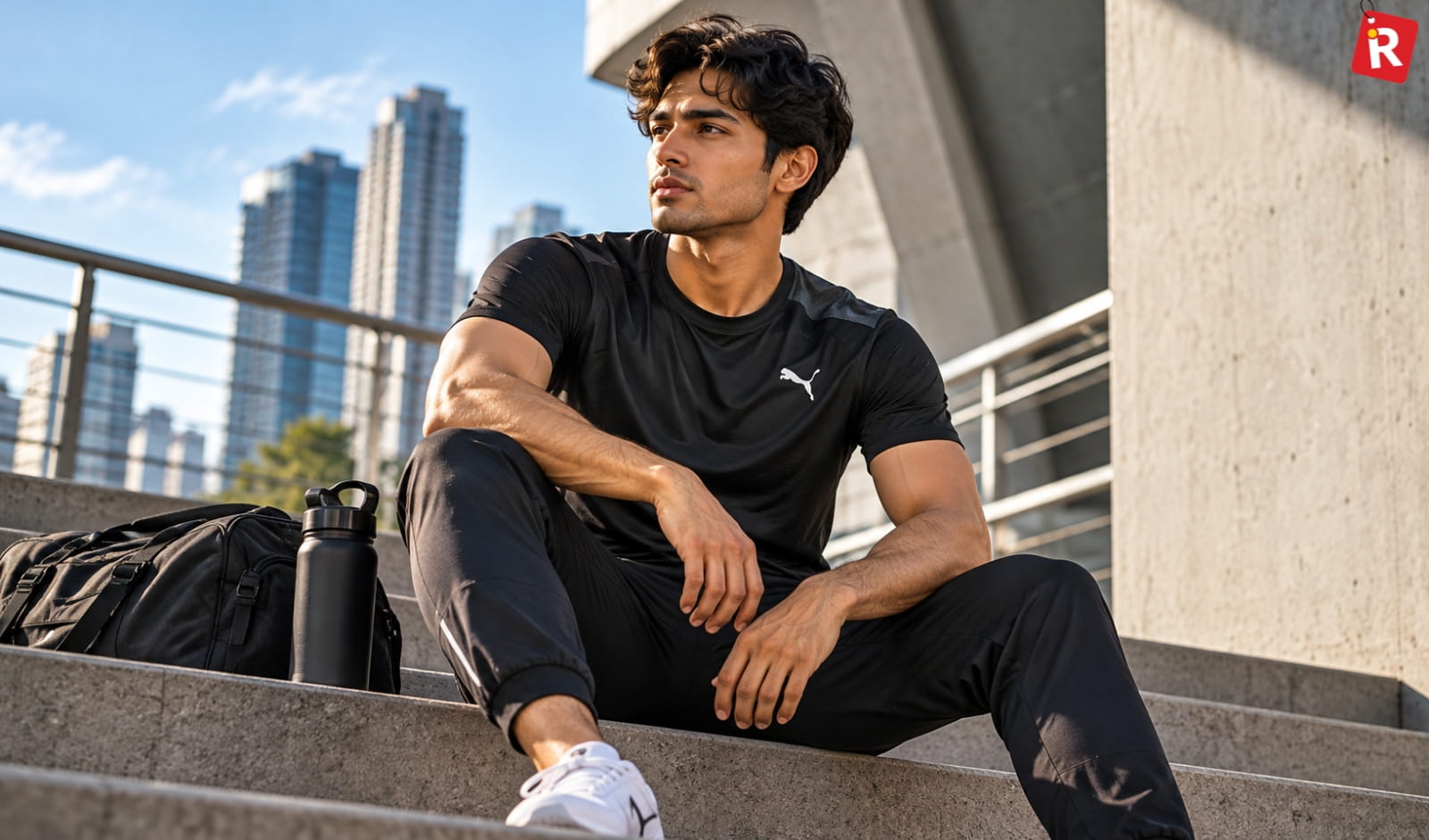
Puma has established a particularly strong position in India's sportswear and athleisure market by combining performance products with accessible fashion. Euromonitor identifies Puma as the leading sportswear player in India, with a 6% share in 2025. Its T-shirts range from training and running products to lifestyle-led designs that can be worn casually. This crossover has helped Puma appeal to younger consumers who do not necessarily identify as serious athletes. The brand's retail footprint, celebrity partnerships and strong digital presence further strengthen its position as sportswear becomes part of everyday fashion.
4. Decathlon

Decathlon approaches sports T-shirts differently from premium global sports brands by offering products across specific activities and price points. Its portfolio covers running, gym training, football, hiking, cycling and other sports, giving consumers a wide choice based on actual use rather than brand status. This makes Decathlon particularly relevant as more Indians begin participating in recreational sports. Its KIPRUN running expansion also underlines the company's increasing focus on India's growing running community. For retailers, Decathlon demonstrates how activity-specific merchandising can make sportswear more accessible to first-time and regular consumers.
5. HRX
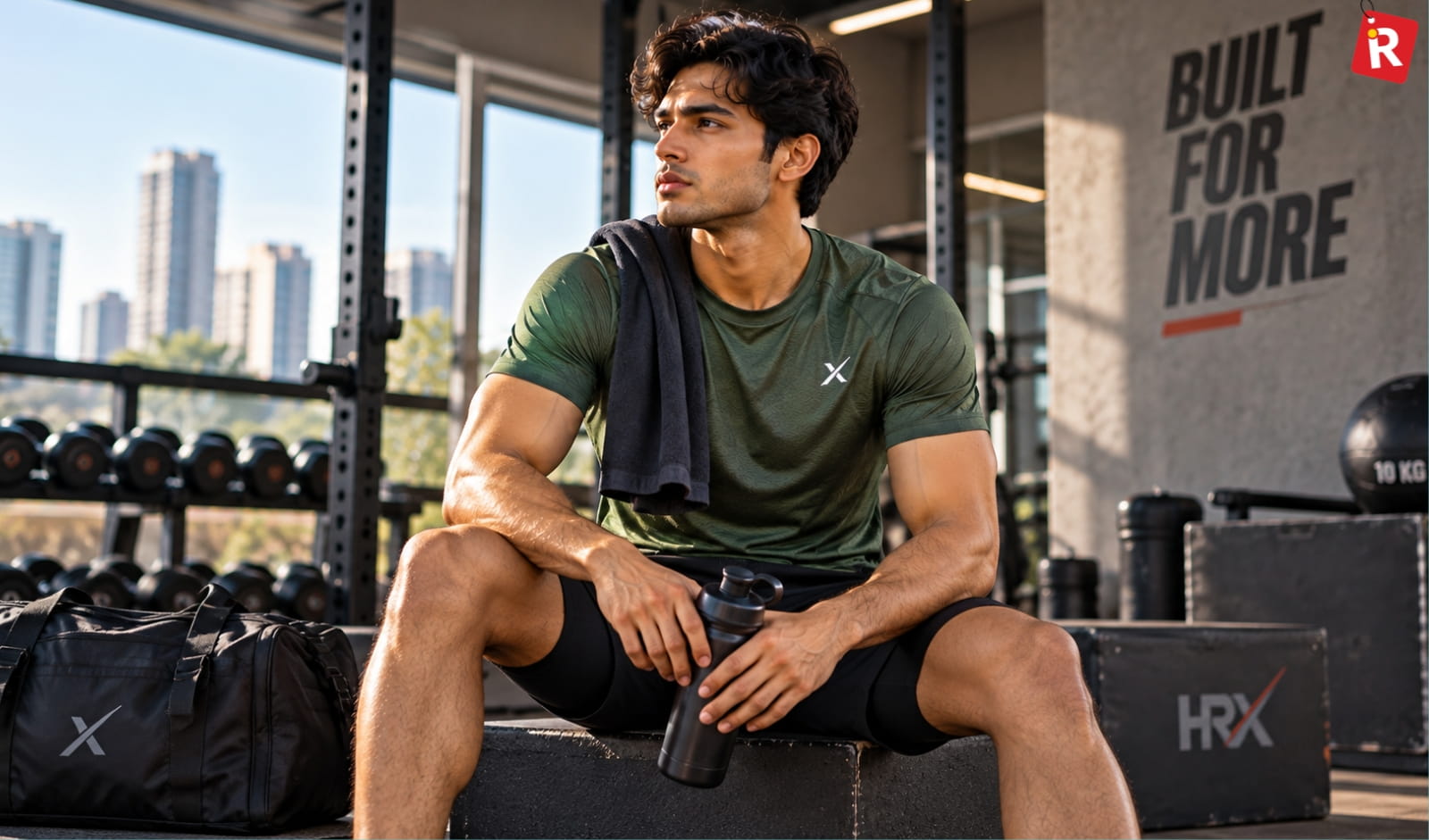
HRX has become one of India's most visible homegrown sports and activewear brands, particularly among digitally active consumers. Its proposition combines fitness, lifestyle and accessible pricing, making sports T-shirts relevant beyond dedicated athletes. HRX's strength is particularly evident on online fashion platforms. Vumonic data shows that the brand accounted for 28.33% of sportswear orders on Myntra in Q1 2026, despite losing share from the previous year. The brand's evolution reflects how Indian consumers increasingly see fitness clothing as part of everyday fashion, while its celebrity-led identity gives it strong recognition among younger shoppers.
6. Under Armour
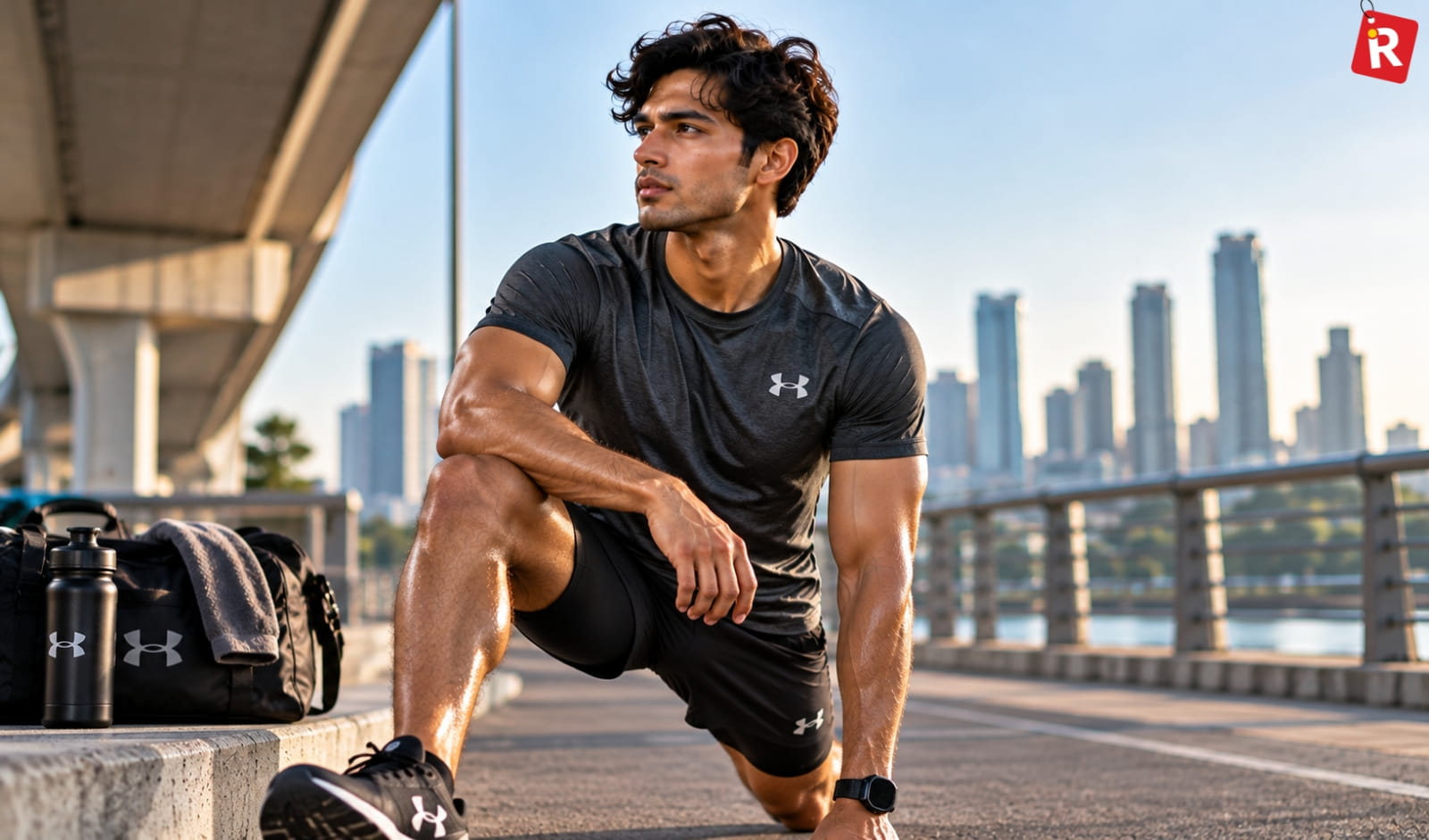
Under Armour occupies the performance-focused end of India's sportswear market, with its brand identity strongly associated with training, running and technical apparel. Its sports T-shirts are designed around functionality, including moisture management, lightweight construction and movement. This gives the brand an advantage among consumers who are more focused on performance than purely fashion-led sportswear. Under Armour remains a challenger to larger players in India, but its specialist positioning gives it room to build credibility among serious fitness consumers. As India's gym, running and sports participation increases, technical performance could become an increasingly important purchase factor.
7. ASICS
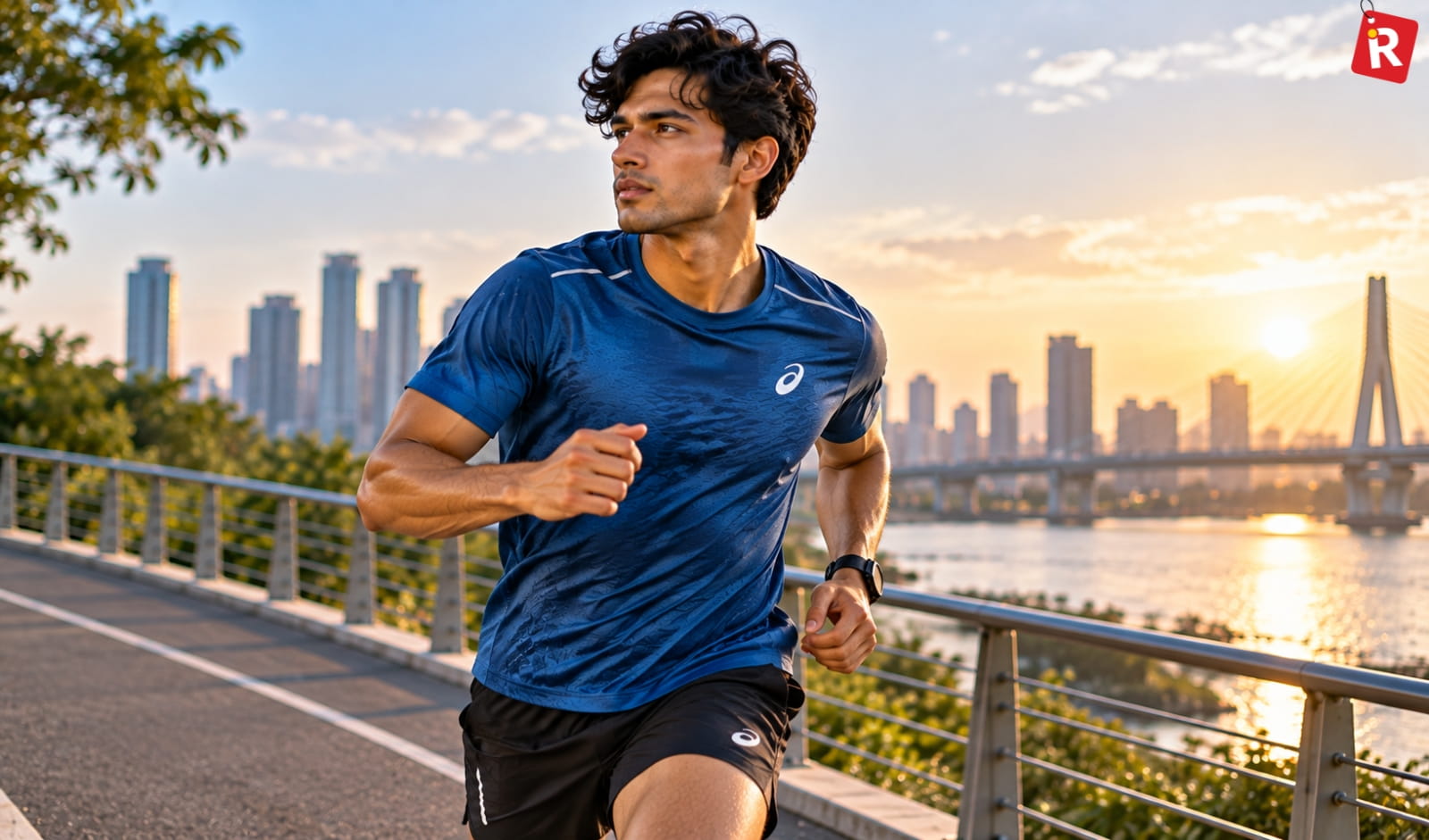
ASICS is particularly relevant to India's expanding running and performance fitness culture. While the brand is strongly recognised for footwear, its apparel portfolio gives runners and training consumers a complete performance ecosystem. Its sports T-shirts focus on lightweight construction, breathability and movement, making them suited to running and training. The brand's positioning is more technical than fashion-first, which can help it build loyalty among consumers who actively participate in sport. With running becoming one of the strongest participation-led trends in Indian sportswear, ASICS has an opportunity to grow its apparel presence alongside its established footwear franchise.
8. Jockey
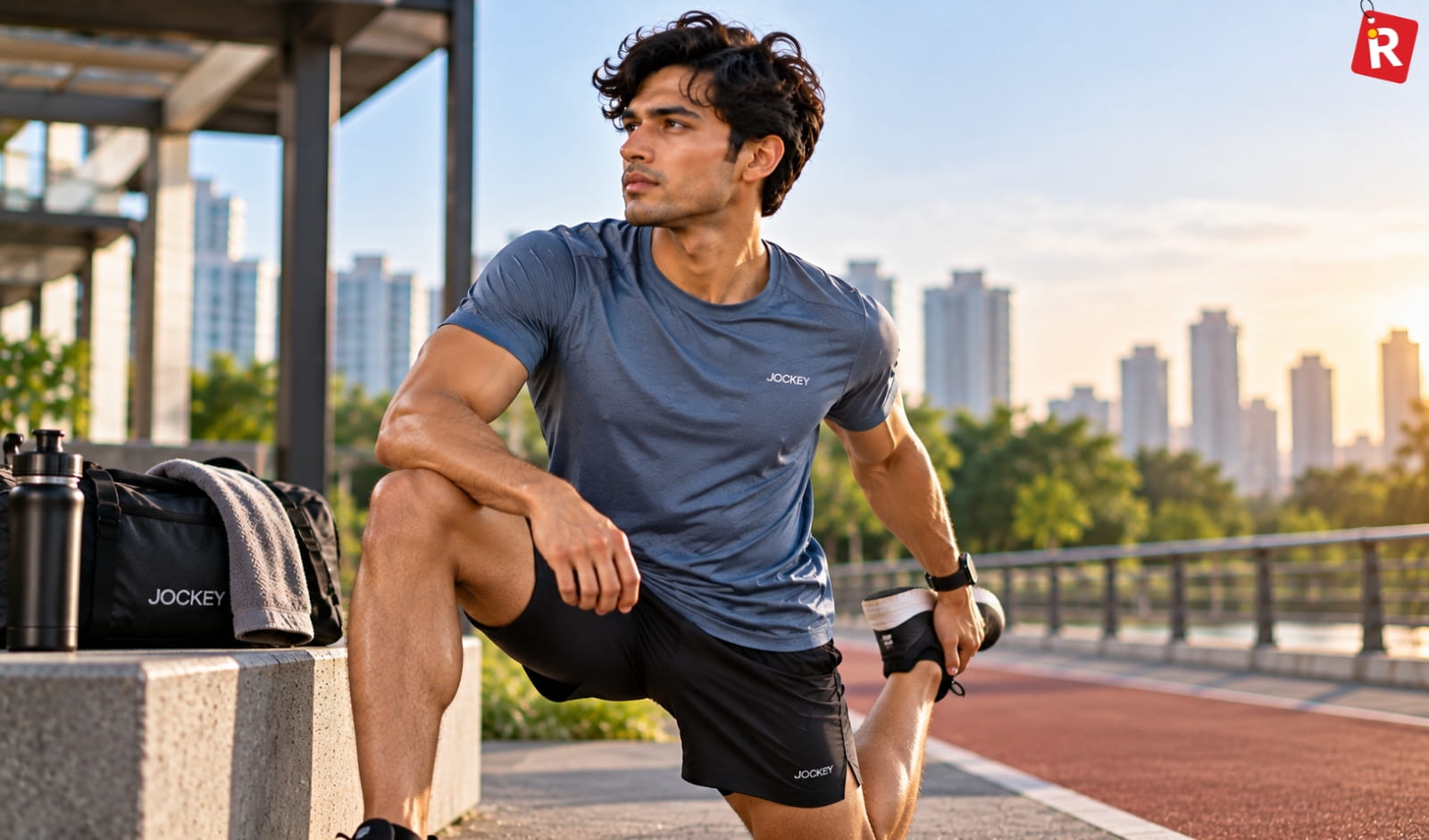
Jockey's strength in India comes from its established reputation for comfort and everyday apparel, which has helped it expand naturally into activewear. Its sports T-shirts appeal to consumers who want functional clothing without necessarily paying premium international sports-brand prices. This makes Jockey particularly relevant to India's broadening fitness audience, including consumers entering gyms, walking, yoga and recreational exercise for the first time. The brand also benefits from extensive offline distribution and strong consumer familiarity. Its position shows that the sportswear opportunity is not limited to specialist sports brands; established fashion and innerwear retailers can also capture the activewear transition.
9. Cultsport
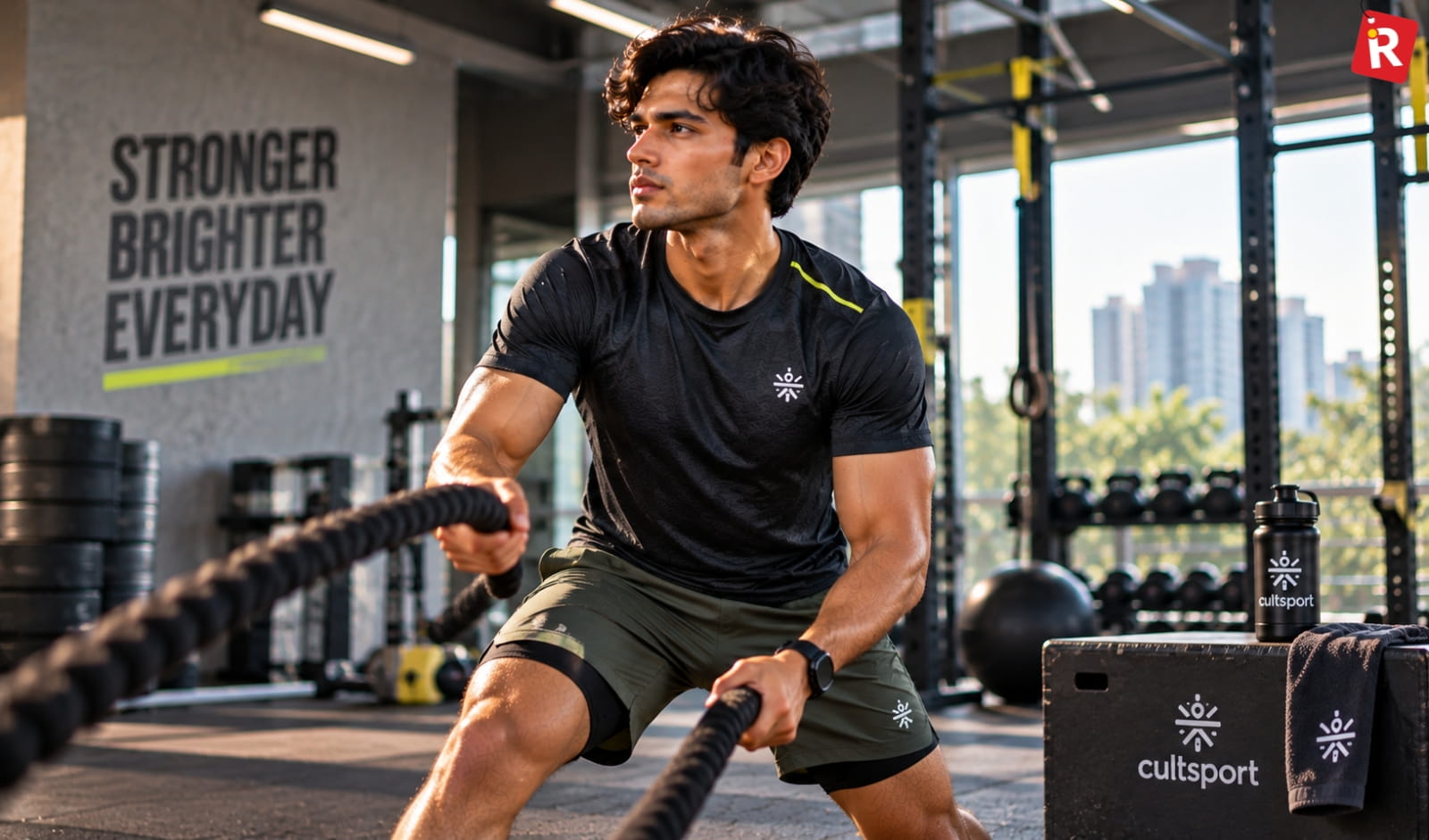
Cultsport represents India's newer generation of digital-first activewear brands built around the expanding fitness ecosystem. Its range includes training and activewear products designed for consumers who want performance functionality at relatively accessible prices. The brand benefits from the broader cult.fit ecosystem and India's growing interest in structured fitness and wellness. Cultsport's relevance is particularly strong among younger digital consumers who discover products through online platforms rather than traditional sports stores. As D2C and marketplace-led sportswear continues to expand, brands such as Cultsport demonstrate how community, fitness content and product sales can increasingly work together within the same consumer journey.
10. Technosport
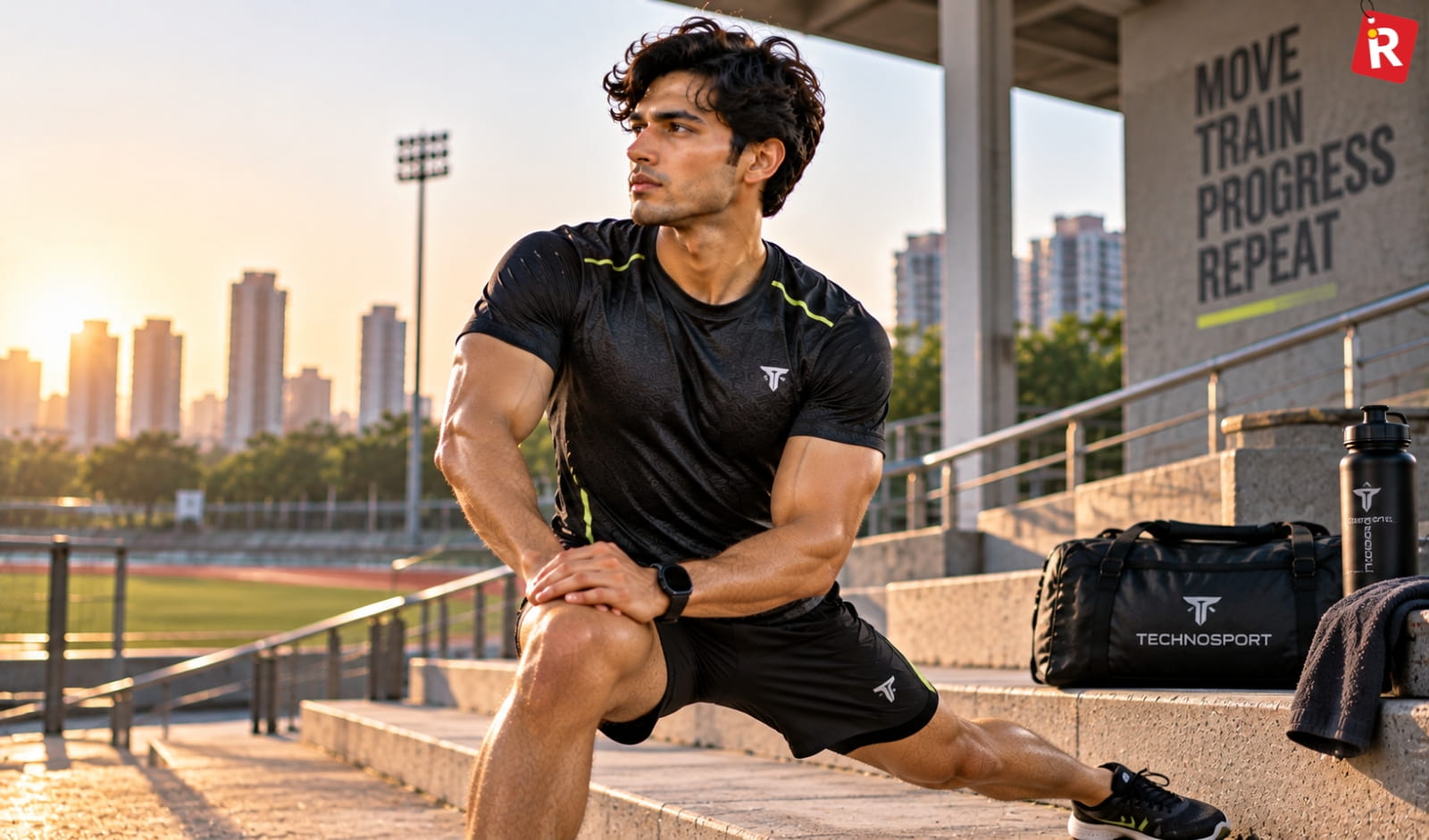
Technosport is emerging as an important Indian performance-wear player by focusing on technical activewear at accessible price points. Its positioning allows it to compete for consumers who want performance-oriented clothing but may not want to pay premium international brand prices. The brand has also gained visibility through digital fashion retail, with Vumonic identifying Technosport among the brands appearing in Myntra's leading sportswear order mix in Q1 2026. Its growth illustrates an important shift in India's market: consumers are becoming more knowledgeable about fabrics, fit and performance, creating space for Indian brands with specialised product propositions.
Explore more: Top 7 Cricket Bat Brands in India: Pick Your Perfect Bat
Best 5 Sportswear Brands In India Competing Globally
5 Best Sports Gear Brands in India 2026 for Cricket, Football, Badminton, and Gym
How Sports T Shirts Are Changing India's Retail Landscape
The growth of sports T-shirts is creating a wider retail opportunity because the category now sits at the intersection of sportswear, fashion, fitness and lifestyle. Traditional sports retailers can expand beyond footwear and equipment, while fashion retailers can use activewear to attract younger consumers and increase purchase frequency.
For D2C brands, sports T-shirts also offer an accessible entry point into the wider activewear wardrobe. Global sports brands bring technology and international brand equity, while Indian players are competing through price, local relevance, digital engagement and specialised products.
Performance Is Becoming a Selling Point
Consumers are becoming more aware of what they wear during physical activity. Features such as moisture-wicking, breathable fabric, quick-dry construction, lightweight materials, stretch and anti-odour properties are increasingly influencing product discovery.
For retailers, this means product descriptions need to communicate performance benefits alongside colour, design and fit. As consumers become more informed, technical specifications can increasingly influence purchase decisions.
The Rise of the Everyday Sports T Shirt
The biggest long-term opportunity may be outside traditional sports participation. A sports T-shirt can now work for gym sessions, running, morning walks, travel, college, weekend dressing and casual outings.
This wider use case is expanding the market beyond dedicated athletes and helping activewear compete directly with conventional casualwear. For sports brands, the opportunity is increasingly about becoming part of the consumer's everyday wardrobe rather than remaining restricted to workout occasions.
E Commerce Is Changing Sportswear Discovery
Online marketplaces have made it easier for consumers to compare global sports brands with Indian activewear labels. Myntra, Amazon and Flipkart are important discovery and purchase channels, while brand websites and D2C platforms allow companies to build direct consumer relationships.
As sportswear discovery becomes increasingly digital, product visibility, reviews, search rankings, product content and influencer-led discovery are becoming important alongside physical retail presence.
What Sports Brands Can Learn From India's New Activewear Consumer
The next phase of India's sportswear market will likely be less about selling clothing exclusively to athletes and more about owning the active lifestyle.
Brands that can combine performance, comfort, fashion and affordability have an opportunity to reach a much wider consumer base. This is also attracting new international competition. Fabletics has entered India through Reliance Brands, while Lululemon is preparing its India entry through Tata CLiQ, indicating growing interest in India's premium activewear opportunity.
At the same time, Indian sports brands and D2C players are using digital channels to compete through accessibility, specialised products and community building. The result is a market where performance and fashion are increasingly becoming the same conversation.
What This Means for Retailers
Retailers can respond to the trend by merchandising sports T-shirts around consumer needs such as running, training, gym, outdoor activities and everyday activewear rather than relying only on brand-based sections. A balanced mix of affordable Indian sports brands, mid-market players and premium global names can help retailers reach different spending segments.
The same approach can work online, where search-friendly categories such as quick-dry T-shirts, running T-shirts, gym wear and everyday athleisure can make product discovery more relevant. Clear communication around fabric technology, fit and performance can further help consumers understand why one product is different from another.
Know more: Festive Sale 2026: Flipkart, Amazon, Myntra, Meesho and AJIO Sale Dates, Offers and Deals
Top 8 Watch Brands in India Redefining Everyday Luxury
6 Emerging D2C Beauty Brands to Watch in India in 2026
The Future of Sports T Shirts in India
The future of India's sports T-shirt market is unlikely to be defined by sport alone. Fitness participation, athleisure, casual fashion, running communities and digital commerce are converging to create a much broader category.
India's sportswear industry is also seeing stronger participation beyond traditional metros, with Tier 2 and Tier 3 cities increasingly contributing to online sportswear growth.
For the Top 10 Sports T Shirts Brands, the opportunity is therefore not simply to sell another performance T-shirt. It is to become part of the consumer's everyday lifestyle.
Conclusion
The rise of sports T-shirts reflects a much bigger transformation in India's retail and fashion landscape.
Nike, Adidas, Puma, Decathlon, HRX, Under Armour and ASICS bring strong performance credentials and global recognition, while Jockey, Cultsport and Technosport demonstrate the growing strength of accessible and homegrown activewear.
What connects these Top 10 Sports T Shirts Brands is their ability to respond to a consumer who increasingly expects clothing to deliver both performance and style.
As running, fitness, recreational sports and athleisure continue to grow, sports T-shirts are likely to remain one of the most accessible entry points into India's expanding sportswear market.
For retailers and fashion brands, the opportunity is clear: the sportswear consumer is no longer shopping only for the next workout. They are building an active wardrobe for everyday life.
FAQs on Sports T Shirts Brands in India
Which are the Top 10 Sports T Shirts Brands in India?
The Top 10 Sports T Shirts Brands covered in this article are Nike, Adidas, Puma, Decathlon, HRX, Under Armour, ASICS, Jockey, Cultsport and Technosport.
Which sports T shirt brands are popular in India?
Nike, Adidas, Puma, Decathlon and HRX are among the most recognisable sportswear brands in India, while Indian and D2C players such as Cultsport and Technosport are gaining visibility.
Why are sports T shirts becoming popular as everyday wear?
Consumers increasingly value comfort, lightweight fabrics, versatile designs and athleisure styling. This allows sports T-shirts to move easily from workouts into travel, college and casual everyday dressing.
What is driving India's sportswear market?
Growing fitness awareness, running culture, athleisure adoption, increasing sports participation, e-commerce, D2C brands and expanding access in smaller cities are among the major drivers.
Which sports brands are focusing on performance wear?
Nike, Adidas, Puma, Under Armour, ASICS and Decathlon have strong performance-oriented sportswear portfolios, while Indian brands such as HRX, Cultsport and Technosport are also competing in performance and activewear.
Is activewear becoming everyday fashion in India?
Yes. The growing overlap between performance apparel and casual fashion is one of the major trends shaping India's activewear market. Consumers increasingly expect sportswear to work across workouts and everyday activities.
Are Indian sportswear brands competing with global brands?
Yes. Indian brands are increasingly competing through accessible pricing, local consumer understanding, digital distribution and specialised products, while global brands continue to leverage technology, athlete associations and international brand equity.

A home is more than a place to live; it is a reflection of personal taste, comfort, and identity. From the texture of bed linen to the colours of curtains and the design of a rug, consumers are paying greater attention to the details that shape their living spaces. This shift is creating opportunities for home textile brands that combine quality, contemporary design and traditional Indian craftsmanship.
According to Grand View Research, India’s home textile market generated revenue of USD 9.99 billion in 2025 and is projected to reach USD 17.04 billion by 2033, growing at a compound annual growth rate (CAGR) of 7.1 percent from 2026 to 2033. Bedroom linen was the largest revenue-generating segment in 2025, while curtains and drapes are expected to be the fastest-growing product segment.
Also read: From Craft to Commerce: How Indian Fashion Brands Are Building the Next Premium Retail Market
Changing preferences
The changing market reflects a shift in how Indian consumers approach home purchases. Quality, comfort, durability, material, and ease of maintenance are becoming important considerations alongside price and appearance.
Fabindia Home sees this change in consumer behaviour as an opportunity to bring Indian textile traditions into contemporary living spaces.
“The home category in India has changed in the last few years. Consumers are spending more time and thought on their living spaces. A home is increasingly a reflection of personal taste, so choices around fabric, colour, texture and design have become more considered,” the Fabindia spokesperson said.
The spokesperson added that consumers are increasingly interested in understanding the materials, techniques and people behind the products they buy. Handwoven and hand-block-printed textiles are finding space in homes that combine traditional elements with modern furniture and design.
Also read: From Illumination to Expression: How Luxury Lighting Is Reshaping Indian Spaces
Premium choices
Premiumisation is encouraging consumers to spend more when they can see a difference in material, finish and craftsmanship. For Fabindia Home, this is reflected across categories such as bed linen, bath products, cushions, curtains, table linen and floor textiles.
Cotton continues to play an important role because of its familiarity and suitability for India's climate. At the same time, natural fibres, handwoven textures and traditional printing techniques are attracting interest.
“Premiumisation in the Indian home market is being driven by a consumer who is willing to spend more when the difference in material, design and making is visible,” the spokesperson said.
The brand also sees consumers moving from buying individual products to considering how different colours, textures and materials work together within a room. This is creating demand for varied product choices across price points, allowing consumers to build their home interiors gradually.
Also read: India’s Baby-Care Market Moves Beyond Basics
The craft factor
The premiumisation trend also extends to rugs, where craftsmanship and design can influence purchasing decisions. Jaipur Rugs, founded in 1978 by Nand Kishore Chaudhary and headquartered in Jaipur, has developed its business around handmade rugs that combine traditional techniques with contemporary aesthetics.
Yogesh Chaudhary, Director at Jaipur Rugs, said the company recorded a turnover of Rs 1,200 crore in FY 2025–26 and has expanded its retail footprint to 18 stores globally.
“Indian consumers are redefining what luxury means in the home. The focus is shifting from mere exclusivity and price to quality, craftsmanship, design, comfort and authenticity,” Chaudhary said.
He added that consumers are showing greater appreciation for handcrafted products, distinctive designs and lasting quality. The company's product range includes Manchaha rugs, with prices ranging from Rs 20,000 to Rs 90 lakh, according to the information shared by the company.
Also read: From Coffee to Culture: How Cafés Are Rewriting India’s Retail Experience
Beyond metros
As interest in home interiors grows, smaller cities are becoming important markets for brands. Fabindia operates more than 350 stores across 127 cities in India and 13 international outlets across seven countries. Its spokesperson sees potential for the Home category in Tier II and Tier III markets, where access to design trends and wider product choices has improved.
Physical stores remain important because customers can assess fabric, colour and texture in person, while digital channels support product discovery and access.
Jaipur Rugs plans to add 15–20 stores over the next three years, while evaluating locations in major cities and emerging markets.
“Our focus, however, will remain on quality of presence over quantity of stores, entering markets where we can build a meaningful and enduring connection with consumers,” Chaudhary said.
As the category expands, brands will need to balance design, craftsmanship, accessibility and everyday functionality. The opportunity lies in making Indian textile traditions relevant to contemporary homes while giving consumers products that offer lasting value.
Also read: India’s Luggage Industry Moves to Premium Travel
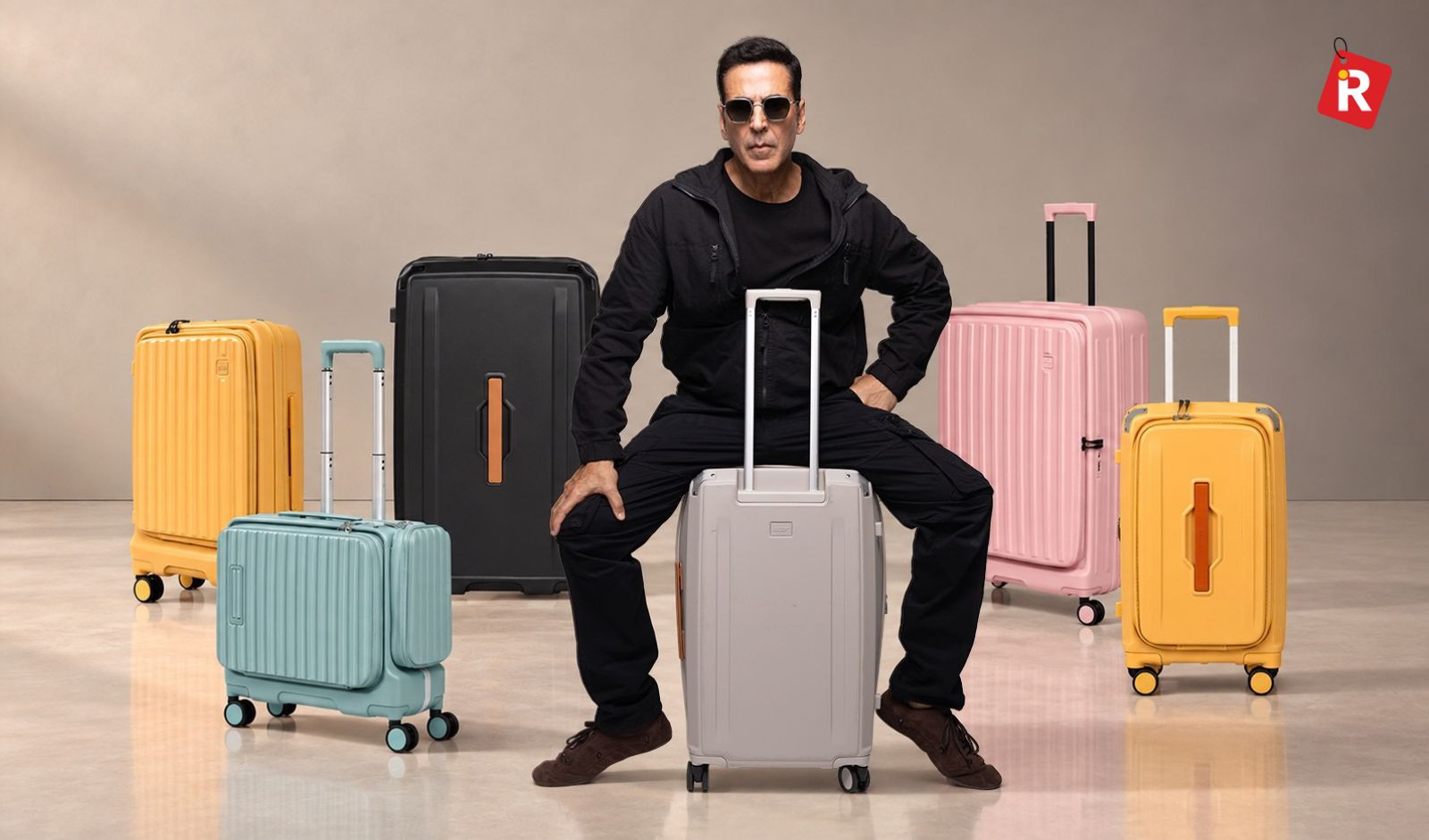
The partnership combines Acer’s focus on design, innovation, and functionality with Akshay Kumar’s extensive travel experience and association with performance, versatility, and contemporary lifestyles.
The collaboration took shape following Akshay’s personal experience with the Acer Fashion luggage range. Given his frequent travel for professional and personal commitments, the actor found the products aligned with his requirements for practical design, durability, ease of use, and modern aesthetics. This experience has now evolved into a deeper association, with Akshay expected to contribute to the brand’s luggage journey and future product development.
Beyond representing the brand, Akshay will share insights from his travel experiences to help Acer Fashion explore new product ideas and respond to the changing needs of modern travellers.
Harish Kohli, President & Managing Director, Acer India Group, said, “Our association with Akshay has always been built around a strong alignment of values, performance, reliability, adaptability and the ability to continually evolve. With Acer Fashion luggage, we saw an opportunity to take that relationship much deeper. Akshay is someone who travels extensively and understands first-hand what a good travel product needs to deliver. His experience with the range and his belief in the product made this a natural progression for both of us. We see him not simply as the face of Acer Fashion luggage, but as a partner in how we build and shape this business going forward, including the evolution of future product lines.”
Akshay Kumar said, “Travel is such a large part of my life that luggage is something I use constantly rather than occasionally. When I started using Acer Fashion luggage, what stood out for me was how naturally it combined practicality, durability and design. It worked well for the way I travel, and that made this association feel very organic. What excites me even more is that this is not just about representing a product; it is an opportunity to be part of the journey as Acer Fashion grows the category and thinks about what travellers will need next. I’m looking forward to contributing my own experiences and ideas as we take this forward together.”
Acer Expands Its Lifestyle Product Portfolio
The Acer Fashion luggage range caters to a variety of travel needs, including business trips, family holidays, short getaways, and everyday mobility. The portfolio combines contemporary styling with functional features and durability, reflecting the company’s broader approach to simplifying everyday experiences through design and innovation.
The partnership comes as Acer marks 50 years of its global presence and 27 years in India. Over the years, the company has expanded beyond its core personal computing business into a wider portfolio of technology, home, and lifestyle products, responding to changing consumer preferences and usage patterns.
Akshay’s association with the luggage category also draws on his experience as a frequent traveller. His professional commitments across films, events, and international engagements offer a practical perspective on the requirements of people who travel regularly.
By involving the actor in both brand communication and future product development, Acer is adopting a more integrated approach to celebrity partnerships. The collaboration aims to connect consumer engagement with product innovation as the company builds its presence in the luggage market.
The move represents another step in Acer’s expansion into lifestyle categories, bringing its legacy of design and innovation to products that serve consumers’ evolving travel and mobility needs.
Availability: The Acer Fashion luggage range is available through the Acer online store, Acer exclusive stores, Flipkart, Amazon, and Myntra.
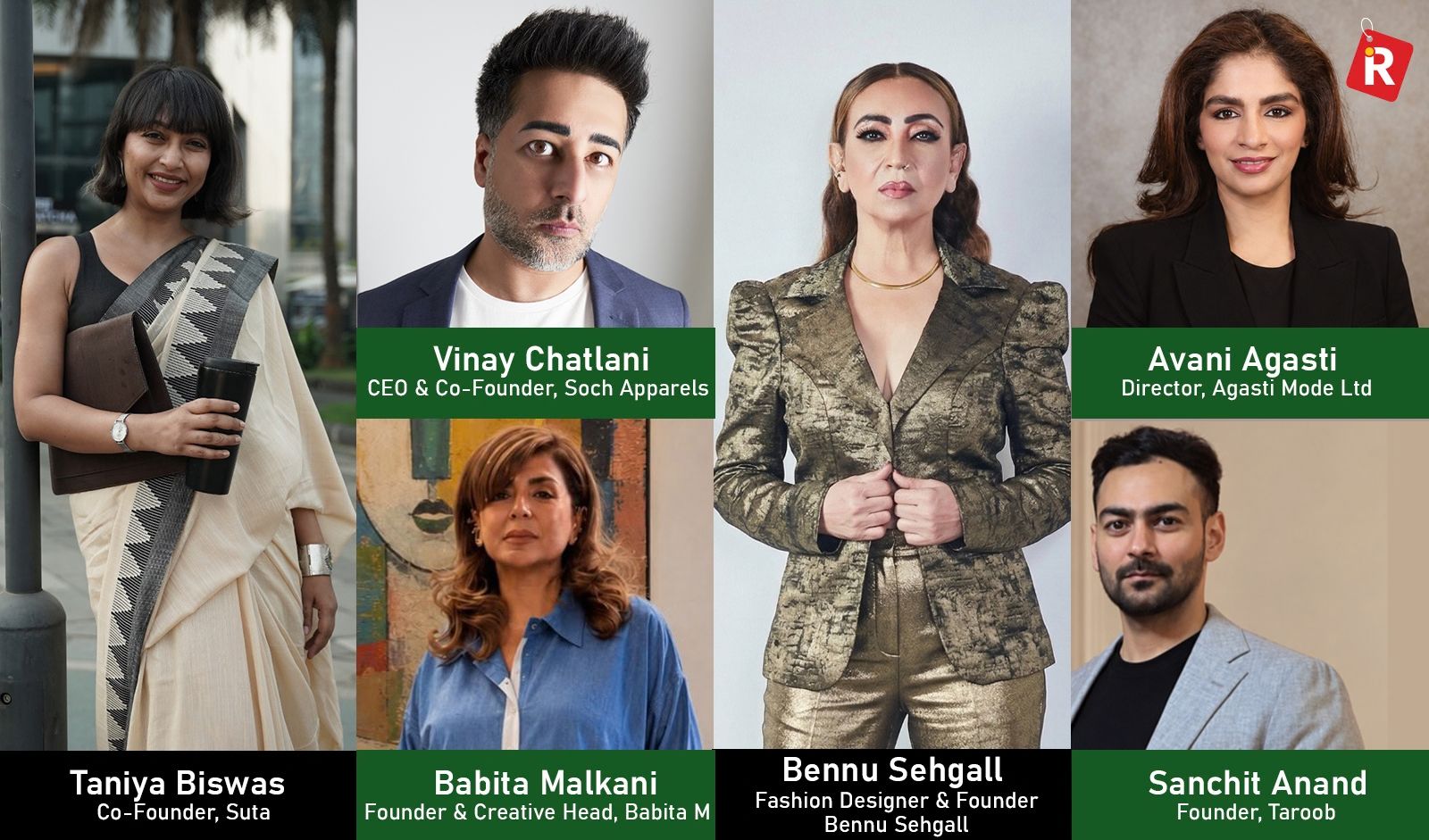
India’s premium fashion market is entering a new phase, where craftsmanship, contemporary design, and retail experience are becoming as important as brand recognition. Consumers are increasingly looking beyond occasion-led purchases and seeking products that offer better fabrics, stronger design, versatility, and a sense of individuality.
According to IMARC Group, India’s luxury fashion market was valued at USD 9.85 billion in 2025 and is projected to reach USD 15.17 billion by 2034, growing at a CAGR of 4.92 percent. Clothing and apparel accounted for 61 percent of the market, while store-based retail held a 70 percent share.
For Indian fashion brands, this shift is creating an opportunity to turn traditional craft into scalable premium businesses without losing the cultural identity that makes their products distinctive.
Also read: From Illumination to Expression: How Luxury Lighting Is Reshaping Indian Spaces
Changing Consumer
The Indian fashion consumer is becoming more experimental. Traditional occasionwear continues to have a strong place in wardrobes, but younger buyers are increasingly mixing Indian and Western elements and looking for silhouettes that can move across occasions.
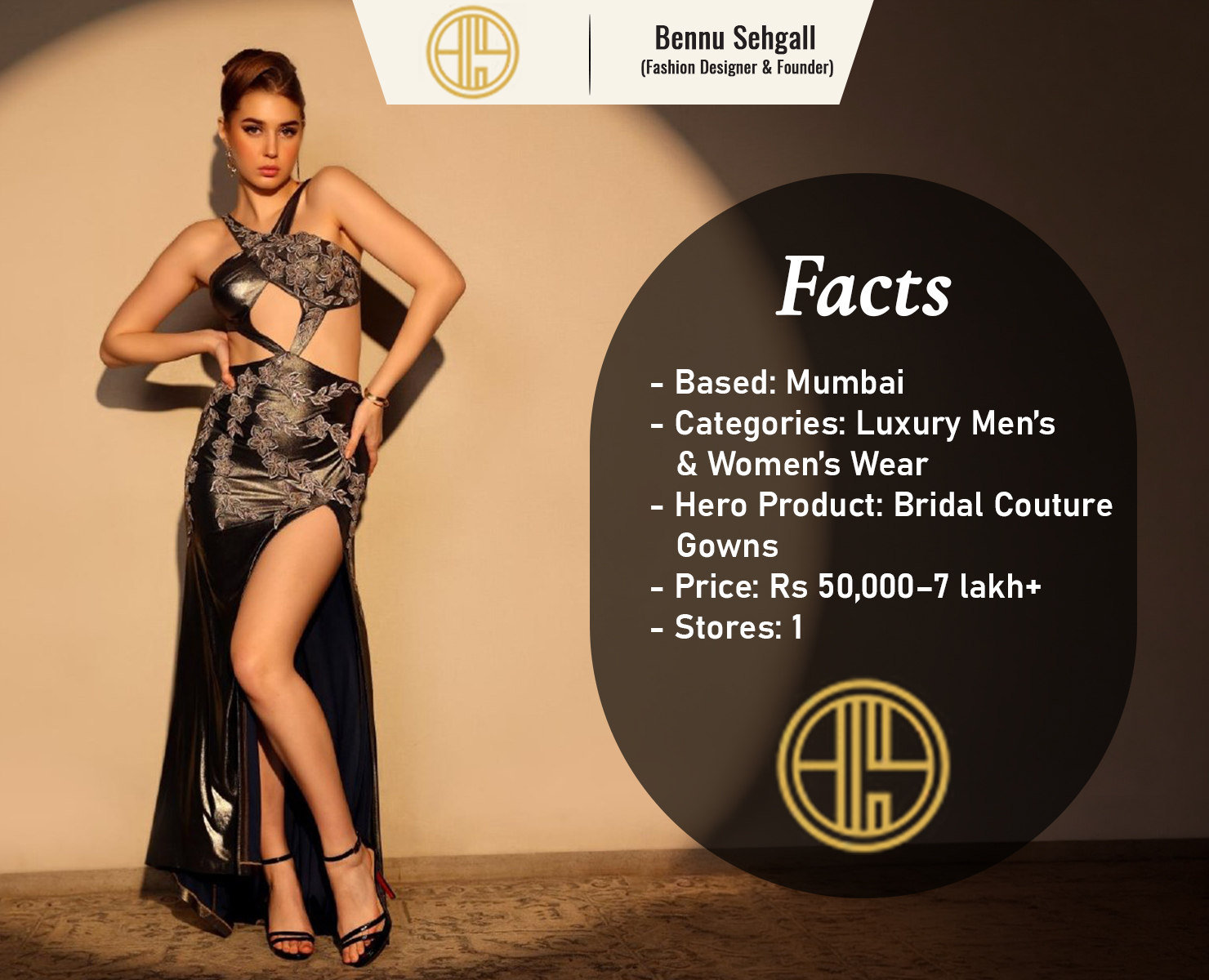
Bennu Sehgall, Fashion Designer and Founder, Bennu Sehgall, said, “The Indian consumer is moving beyond traditional occasionwear and becoming more open to contemporary, easy-to-wear fashion. There is a stronger appreciation for design, craftsmanship and versatility, while younger consumers are increasingly styling occasionwear in their own way.”
Global fashion trends are also being adapted to Indian wardrobes. Corsets, sheer dressing, structured jackets, draping, cut-outs and statement sleeves are finding space alongside Indian textiles, embroidery and traditional techniques.
“Indian designers are absorbing global trends while retaining their own design language, and international fashion is also increasingly looking towards Indian craftsmanship. This creates an opportunity to build fashion that is globally relevant while retaining an Indian sensibility,” Sehgall added.
This balance between global influence and local identity is becoming central to the next generation of Indian premium fashion.
 Also read: India’s Baby-Care Market Moves Beyond Basics
Premiumisation
Premiumisation in Indian fashion is no longer only about higher price points. Consumers are increasingly willing to spend more when they see value in the fabric, construction, craftsmanship, design, and overall experience.
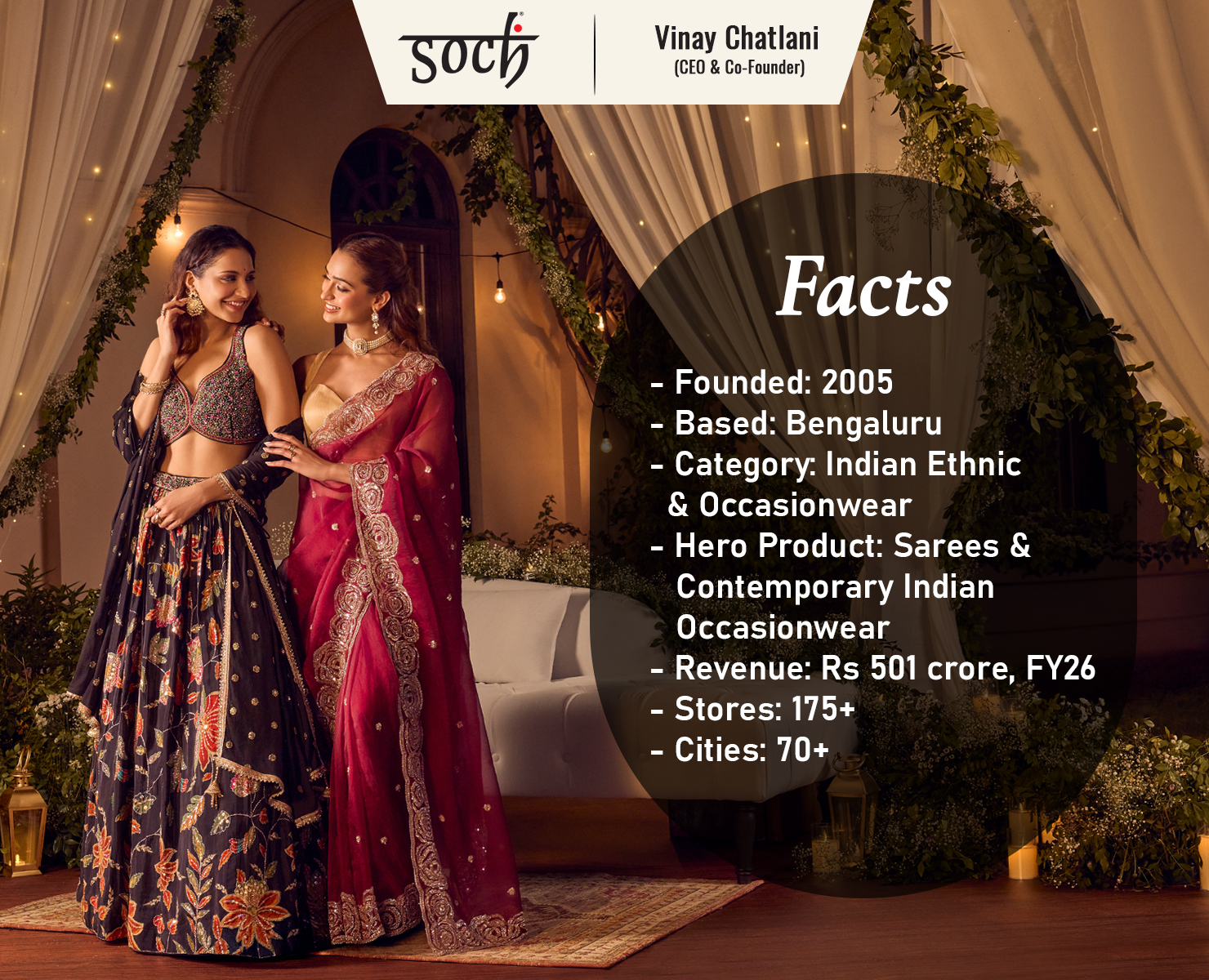
The growth of this segment is visible in the performance of established Indian ethnicwear businesses. Soch Apparels Pvt Ltd reported revenue of Rs 501 crore in FY2025-26, up from Rs 442 crore in FY2024-25, marking around 13.3 percent year-on-year growth.
Vinay Chatlani, CEO and Co-founder, Soch Apparels Pvt Ltd, said, “Consumers are increasingly trading up when they see clear value in fabric, craftsmanship, design and versatility. Premiumisation is about creating a stronger value proposition rather than simply increasing the price.”
At Soch, average order value has increased by 38 percent over three years, while average selling price has risen 11 percent. The share of evening and occasionwear has also increased from 56 percent to 74 percent over six years.
The shift shows how Indian consumers are increasingly allocating more of their wardrobe spending to products that offer design differentiation and occasion relevance.
 Also read: From Coffee to Culture: How Cafés Are Rewriting India’s Retail Experience
Craft as Value
For newer brands, craftsmanship itself is becoming a central part of the value proposition. Consumers are showing greater curiosity about how products are made, who made them, and how much work goes into each piece.
This is particularly visible in craft-led categories such as shawls, stoles and heritage textiles.
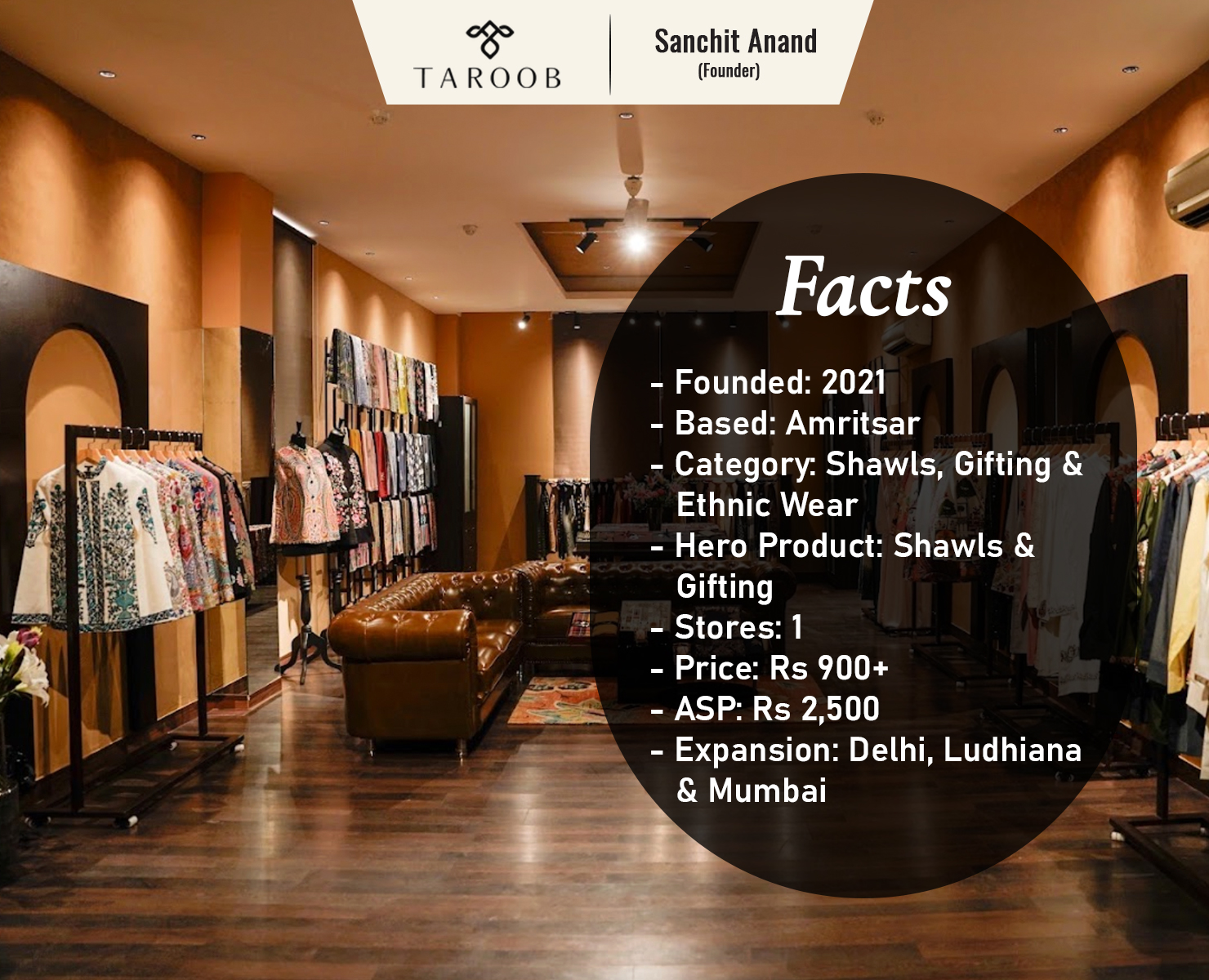
Sanchit Anand, Founder, Taroob, said, “Customers are not buying a shawl. They are buying the hands and the hours behind it. Once you explain the technique, the price stops being a question.”
Taroob has built its proposition around Kashmiri Sozni, Jamawar, Kalamkari and Pichwai, offering shawls, stoles, pocket squares, kurta sets, Nehru jackets, capes, Pashmina and curated gifting boxes.
The brand has seen its average order value increase by 50–60 percent over two years, supported by demand for hand-embroidered stoles, premium gift boxes and higher-grade Pashmina and Sozni products.
Corporate gifting has also emerged as an important business opportunity. Buyers are increasingly asking about the craft technique, commissioning process, and production timelines rather than focusing only on branding.
“We are seeing customers move towards products where the craft and story are visible. Corporate buyers, in particular, are becoming more interested in the quality and heritage behind the product,” Anand said.
 Also read: India’s Luggage Industry Moves to Premium Travel
Beyond Metros
While premium fashion remains concentrated in major cities, digital channels are helping brands reach consumers in smaller markets.
Soch currently operates 175+ stores across 70+ cities, while its e-commerce business generated nearly Rs 90 crore in FY2025-26, accounting for around 18 percent of revenue.
Chatlani said, “Physical stores remain important because customers want to experience the product, especially when it comes to fit, fabric and occasionwear. Digital channels then support discovery, conversion and fulfilment, creating a connected omnichannel journey.”
The brand also recorded around 49,000 Endless Aisle orders in FY2025-26, using its store network to support digital fulfilment.
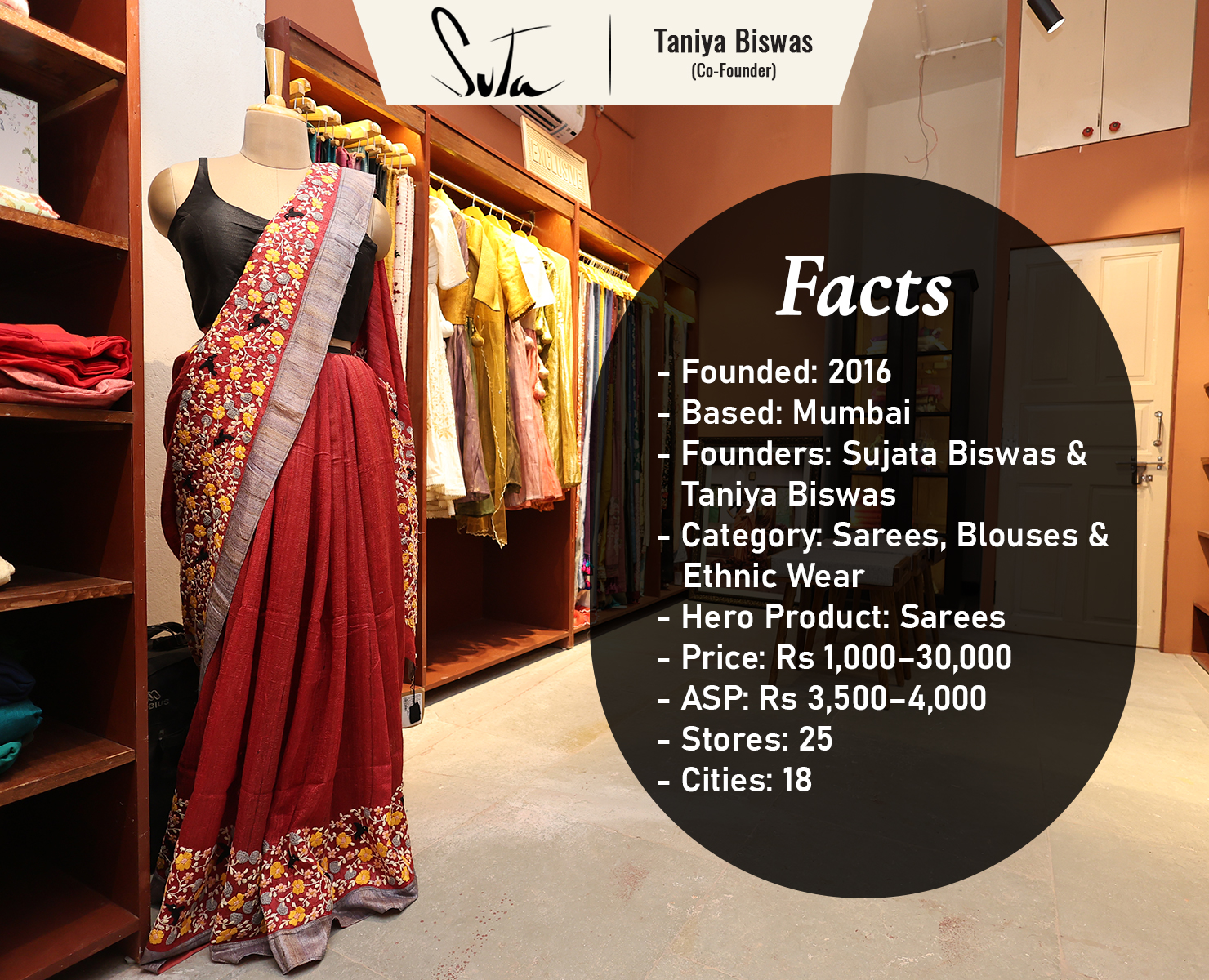
For brands such as Suta, the expansion story is similarly moving beyond the largest metros. Taniya Biswas, Co-Founder, Suta, said, “There is a clear opportunity in Tier II and Tier III cities because customers there are looking for Indian fashion that is comfortable, contemporary and relevant to everyday life.”
Suta now has 25 stores across 18 cities, with encouraging responses from markets including Jaipur, Raipur, Bhubaneswar, Coimbatore and Visakhapatnam. The brand is also looking at newer Indian markets as well as international opportunities in the Middle East and the US.
 Also read: India’s Handbag Market Gets a Retail Makeover
Physical Experience
Despite the rise of digital discovery, physical retail continues to play a major role in premium fashion. This is particularly true for brands where fit, fabric, personal styling and customisation are part of the buying journey.
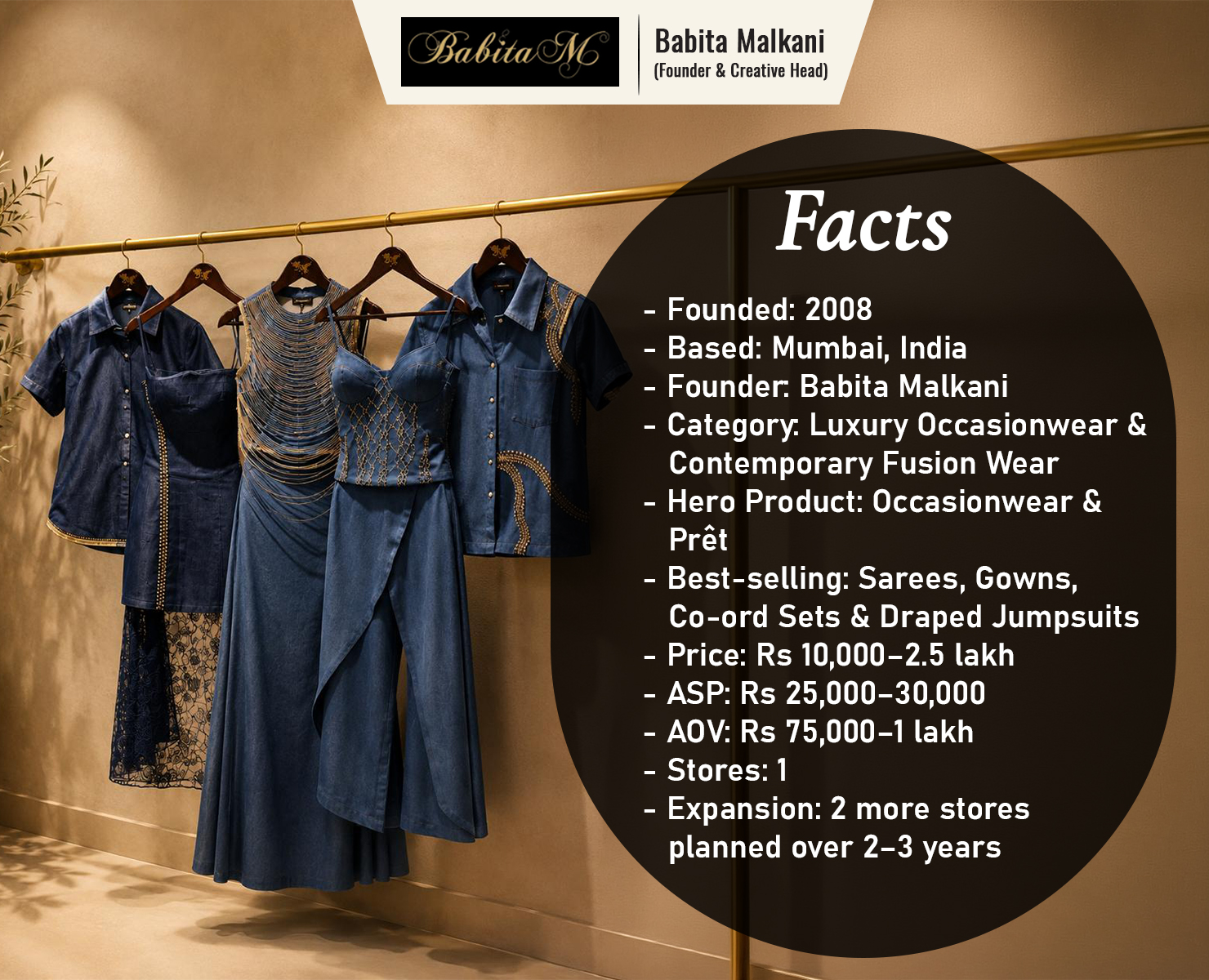
Babita Malkani, Founder and Creative Head, Babita M, said, “The premium consumer today is much more discerning. They are looking at design, craftsmanship, fabric, fit and individuality, and they want Indian luxury to feel contemporary, comfortable and relevant.”
The brand currently generates around 75 percent of its business offline and 25 percent online, with its Mumbai flagship studio supported by multi-brand outlets such as Pernia’s Pop-Up Shop and Aza.
Its average selling price is around Rs 25,000–30,000, while seasonal average order value can reach Rs 75,000–1 lakh.
Malkani said the next phase will focus on building a stronger national footprint, including two additional stores over the next two to three years, while continuing to grow luxury prêt and occasionwear.
 Also read: Hisense India Eyes USD 150 Mn Business in 2026
Bespoke Advantage
For some premium Indian labels, the value of physical retail lies less in scale and more in personalisation.
Avani Agasti, Director, Agasti Mode Ltd, said, “Premium is not simply about the price point. It should be felt in the fabric, seen in the construction and experienced when the garment is worn. For us, loyalty and the relationship with the customer are important measures of premiumisation.”
Agasti Mode, which has roots going back to 1975, operates from Mumbai and focuses on suits and Bandgala-led menswear.
The brand follows the philosophy of “fit before flourish”, combining traditional Indian menswear influences with contemporary requirements. Its approach is centred on made-to-measure garments, premium occasionwear and personal consultation.
Agasti said, “Our physical experience is built around relationships, consultation and fitting. Digital is an extension of that experience rather than a replacement for it.”
The brand is looking at Delhi and other key markets while also considering ready-to-wear alongside its made-to-measure offering.
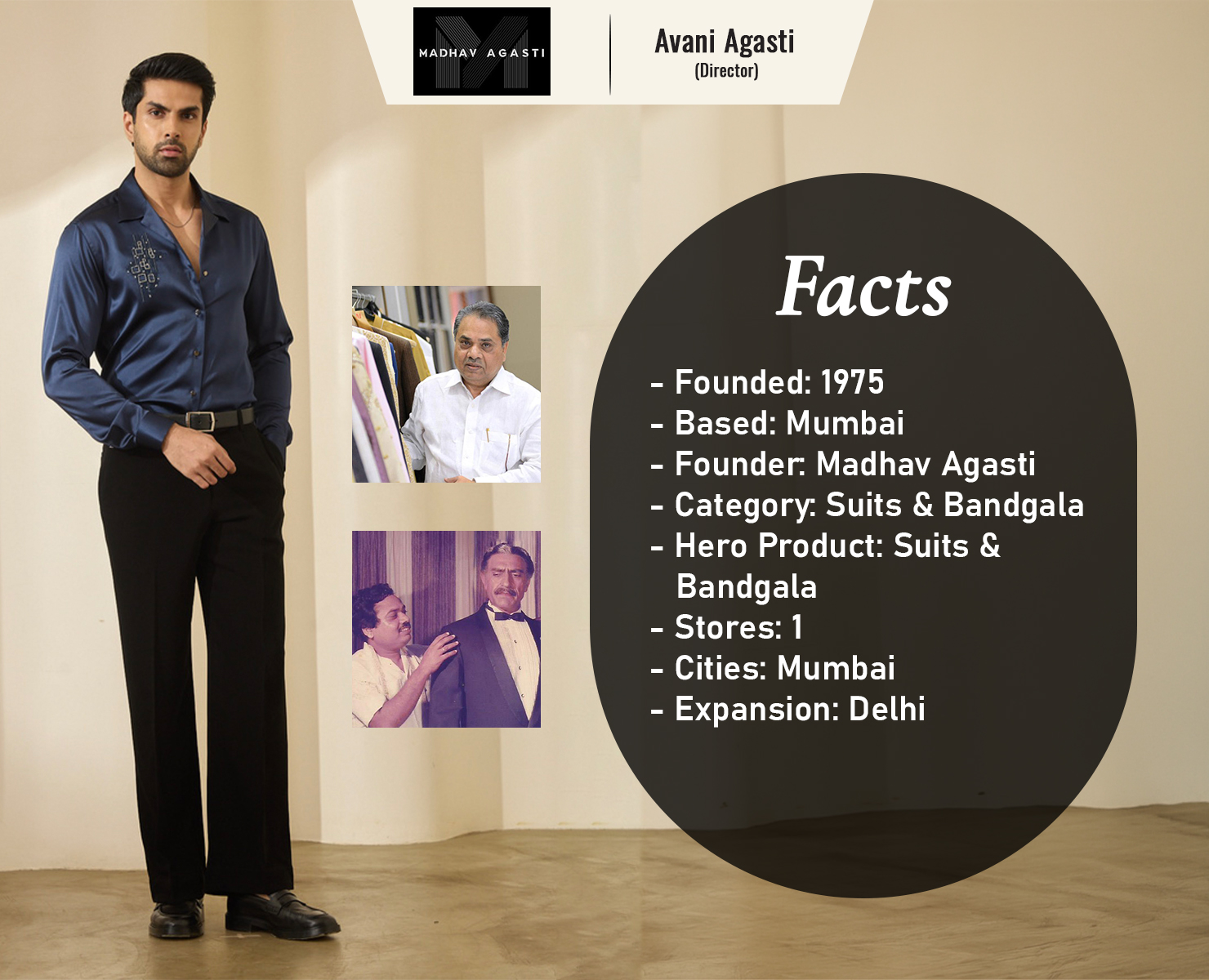 Also read: UNOX Taps India’s Shift Towards Smarter Professional Kitchens
Modern Indian Luxury
The premiumisation opportunity is also visible in brands that are modernising traditional categories rather than replacing them.
Suta has expanded beyond its core saree offering into blouses, kurtas, dresses, menswear, kidswear, lehengas and accessories. Its pricing ranges from Rs 1,000 to Rs 30,000, with an average selling price of around Rs 3,500–4,000.
The brand’s growth has been supported by product innovations such as Alat Palat blouses, ready-to-wear sarees and Mul Cotton, alongside a community of more than 17,000 artisans.
Biswas said, “For us, premiumisation is not about charging more. It is about making sure customers feel they are getting value for the price through quality, design and longevity.”
Suta has also maintained a relatively balanced channel mix, with around 55 percent of business coming online and 45 percent offline.
The brand started with an investment of Rs 6 lakh and is now valued at around Rs 400 crore, according to the company.
Also read: Deoleo Targets Wider Retail Reach as Olive Oil Demand Grows
Scaling With Identity
The challenge for Indian fashion brands is to build scale without making their products feel mass-produced.
For craft-led businesses, controlled expansion can help preserve scarcity and craftsmanship. For larger retail networks, technology and data can make inventory and fulfilment more efficient.
At Taroob, the strategy remains focused on corporate gifting, international customers and selected markets rather than a large store rollout.
Anand said, “We are not looking at retail expansion simply for the sake of adding stores. Digital and direct channels allow us to reach customers across Tier II and Tier III cities, while international markets give Indian craft another avenue for growth.”
For Bennu Sehgall, the focus is similarly on selective growth. The brand plans to strengthen its digital presence, expand its clientele across Indian and international markets, and introduce additional categories while retaining its premium positioning.
“We want to grow the clientele and the product universe, but the premium positioning and design identity have to remain intact,” Sehgall said.
Also read: Amrut Distilleries Eyes Wider India Reach as Premium Spirits Gain Ground
Heritage to Retail
The next chapter of Indian fashion is less about choosing between heritage and modernity and more about bringing the two together.
Indian designers and fashion businesses are using traditional craft, textiles and silhouettes as a foundation while building products that fit contemporary wardrobes. At the same time, premium consumers are becoming more comfortable paying for craftsmanship, personalisation and design differentiation.
The retail opportunity is expanding with them. Physical stores continue to matter for experience-led categories, while digital platforms are opening access to consumers in smaller cities and international markets.
Agasti said, “The opportunity is to build businesses that respect the craft and the customer at the same time. Growth should come from relevance, quality and relationships rather than scale for scale’s sake.”
As India’s luxury fashion market moves from USD 9.85 billion in 2025 toward a projected USD 15.17 billion by 2034, domestic brands are finding new ways to make Indian craftsmanship relevant to modern premium consumers.
Also read: Intex Technologies: Building the Next Phase of India’s Consumer Electronics Market
Boba tea has become one of India’s most popular café trends, bringing together creamy milk teas, fruity beverages, chewy tapioca pearls and creative toppings. From classic brown sugar boba and Thai milk tea to refreshing fruit teas and innovative bubble tea combinations, boba cafés are increasingly becoming go-to spots for young consumers looking for something beyond regular coffee and tea.
Whether you are a first-time bubble tea drinker or already have a favorite boba order, several cafés and beverage chains across India offer an exciting range of flavors and formats. Here are some of the best boba tea cafés in India to visit, with Boba Bhai leading the list.
Why Is Boba Tea Becoming Popular in India?
India's bubble tea market is being driven by younger consumers, café culture, social-media discovery and increasing interest in international food and beverage trends. The market is also becoming more organized, with specialist brands expanding beyond individual outlets into larger café and franchise networks. Industry estimates put India's bubble tea market at around $83 million in 2025, with the market projected to reach $202 million by 2032.
The appeal of boba also comes from customization. Consumers can choose between milk tea, fruit tea, matcha and other bases, while adding tapioca pearls, popping boba, jellies and different toppings.
Best Boba Tea Cafes To Explore
1. Boba Bhai
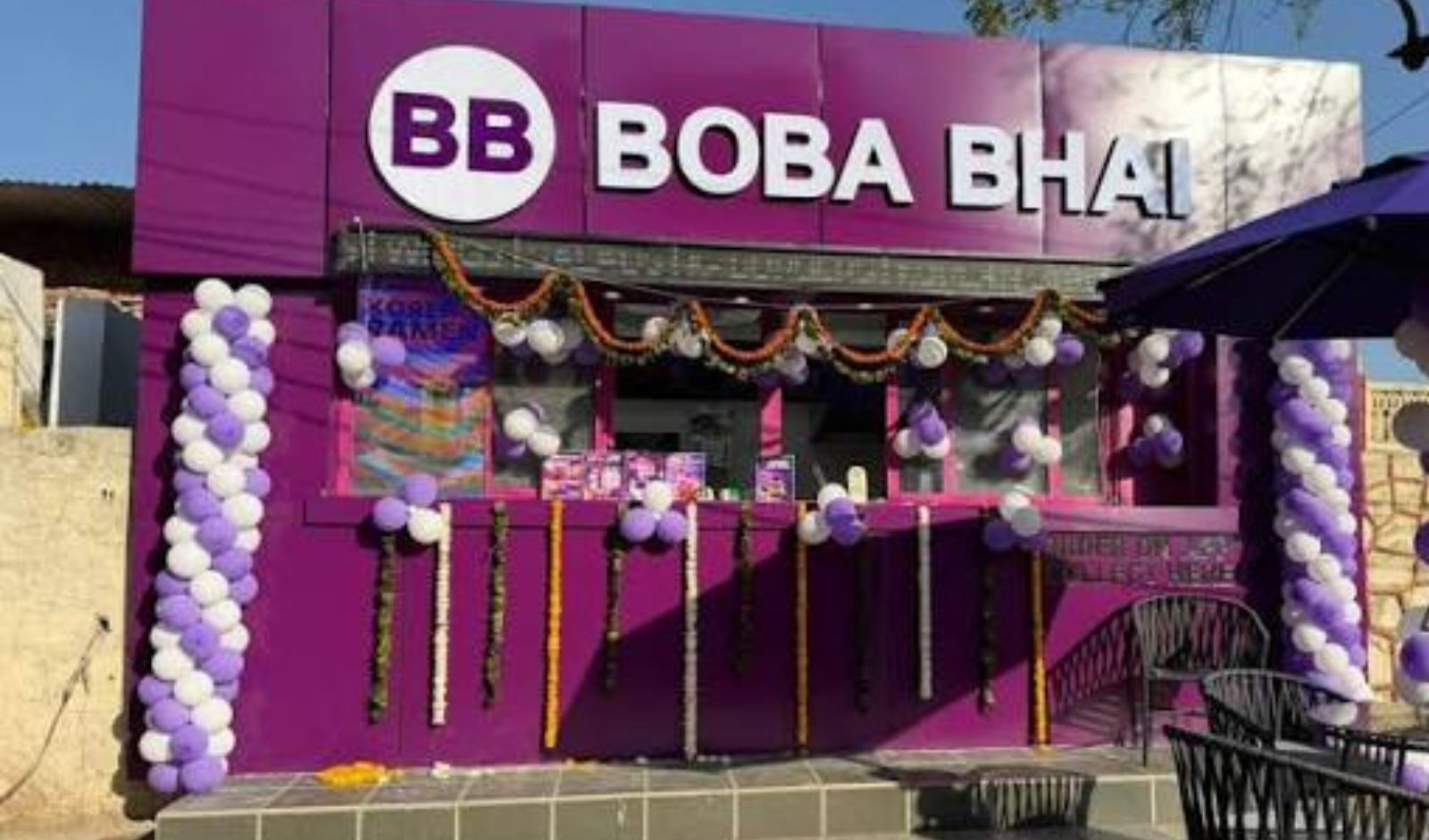
Boba Bhai is one of the prominent names in India's growing and Asian-inspired beverage space. The brand offers a wide selection of boba-based drinks, including milk teas, fruit teas and other contemporary beverage combinations.
Its menu caters to consumers looking for both classic and experimental boba flavors, making it a popular choice for younger customers and bubble tea enthusiasts. With its expanding presence across Indian cities, Boba Bhai is a convenient option for those looking to explore different varieties of boba tea.
What to try: Brown sugar boba, milk teas, fruit-based boba drinks and signature beverages.
Why visit: A contemporary boba-focused café experience with a variety of flavors and toppings.
2. Boba Panda
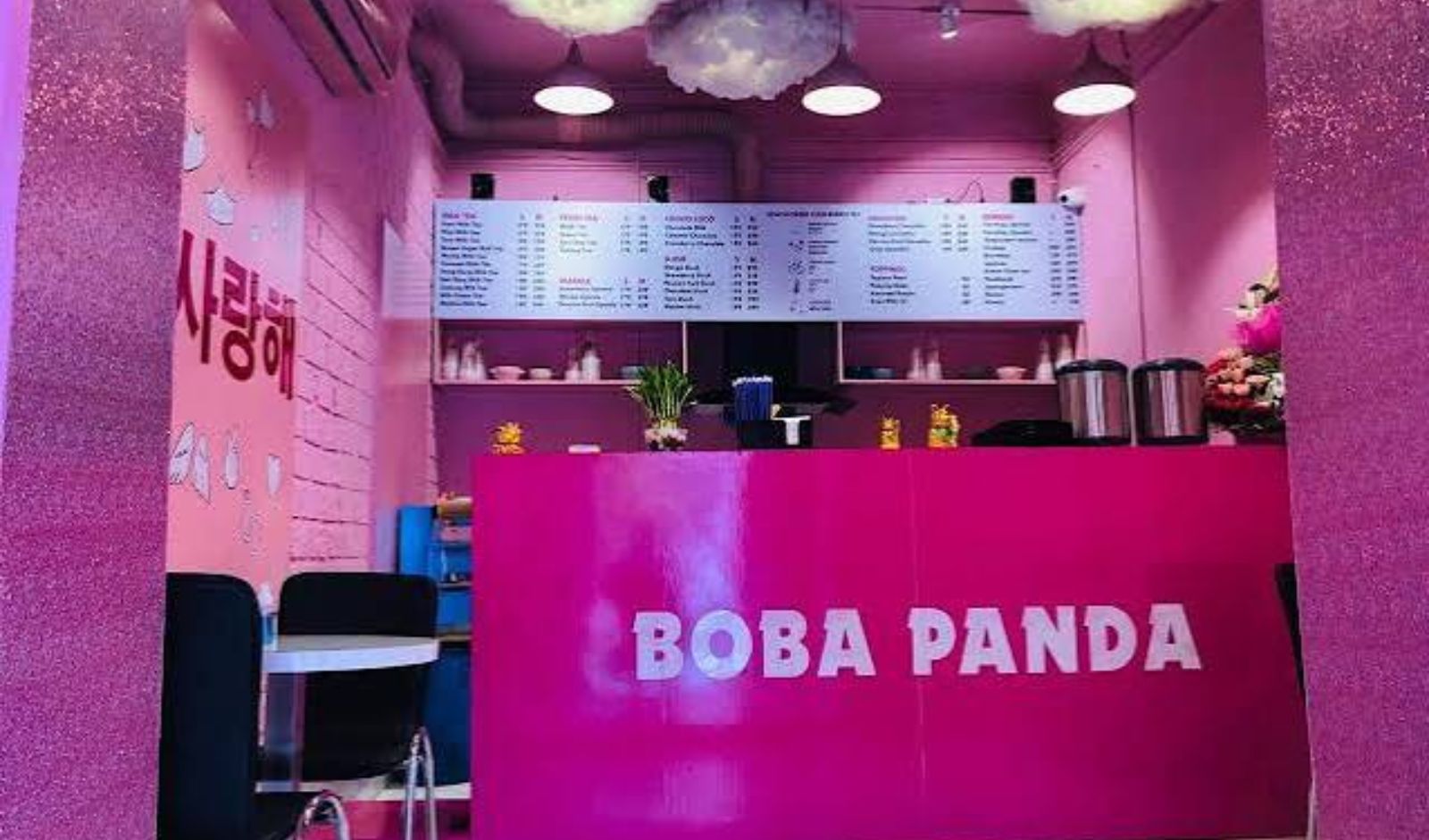
Boba Panda is a dedicated bubble tea brand offering a variety of milk teas, fruit teas and boba-based beverages. The brand has built a presence in cities such as Kolkata and caters to consumers looking for colorful, customizable bubble tea drinks.
Its menu gives customers the option to experiment with different flavors and toppings, making it a popular format among younger consumers.
What to try: Milk tea, fruit tea and flavored boba drinks.
Why visit: A dedicated bubble tea café with a wide range of flavor combinations.
3. Dr. Bubbles
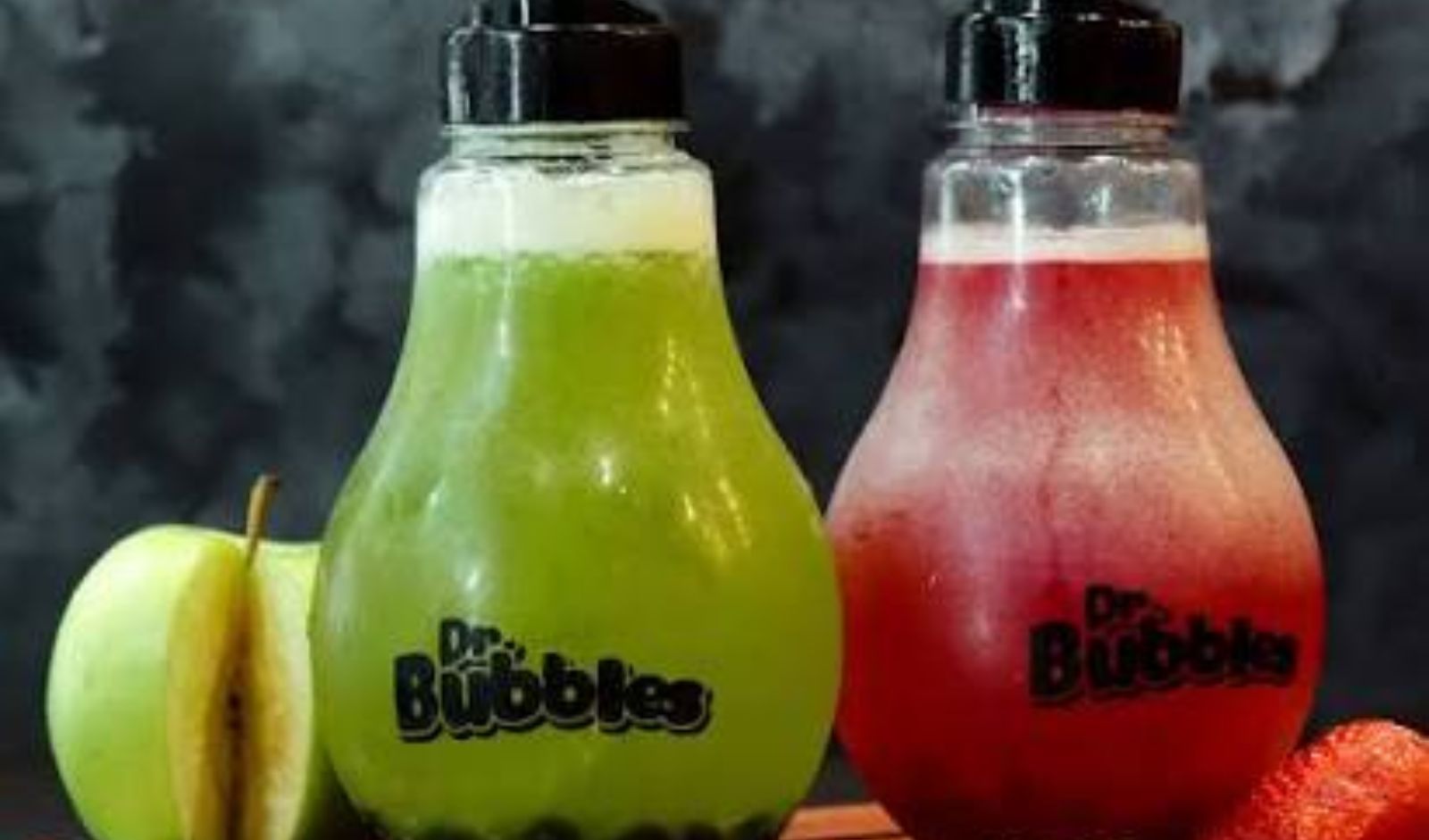
Dr. Bubbles is an established Indian bubble tea and beverage brand that has been operating since 2015. The brand offers bubble teas alongside flavored teas, shakes and other beverages.
With outlets across multiple cities, Dr. Bubbles is among the more established specialist players in India's bubble tea market.
What to try: Bubble teas, flavored teas and signature shakes.
Why visit: An established bubble tea operator with a relatively long presence in India's specialty beverage market.
4. Boba Tree
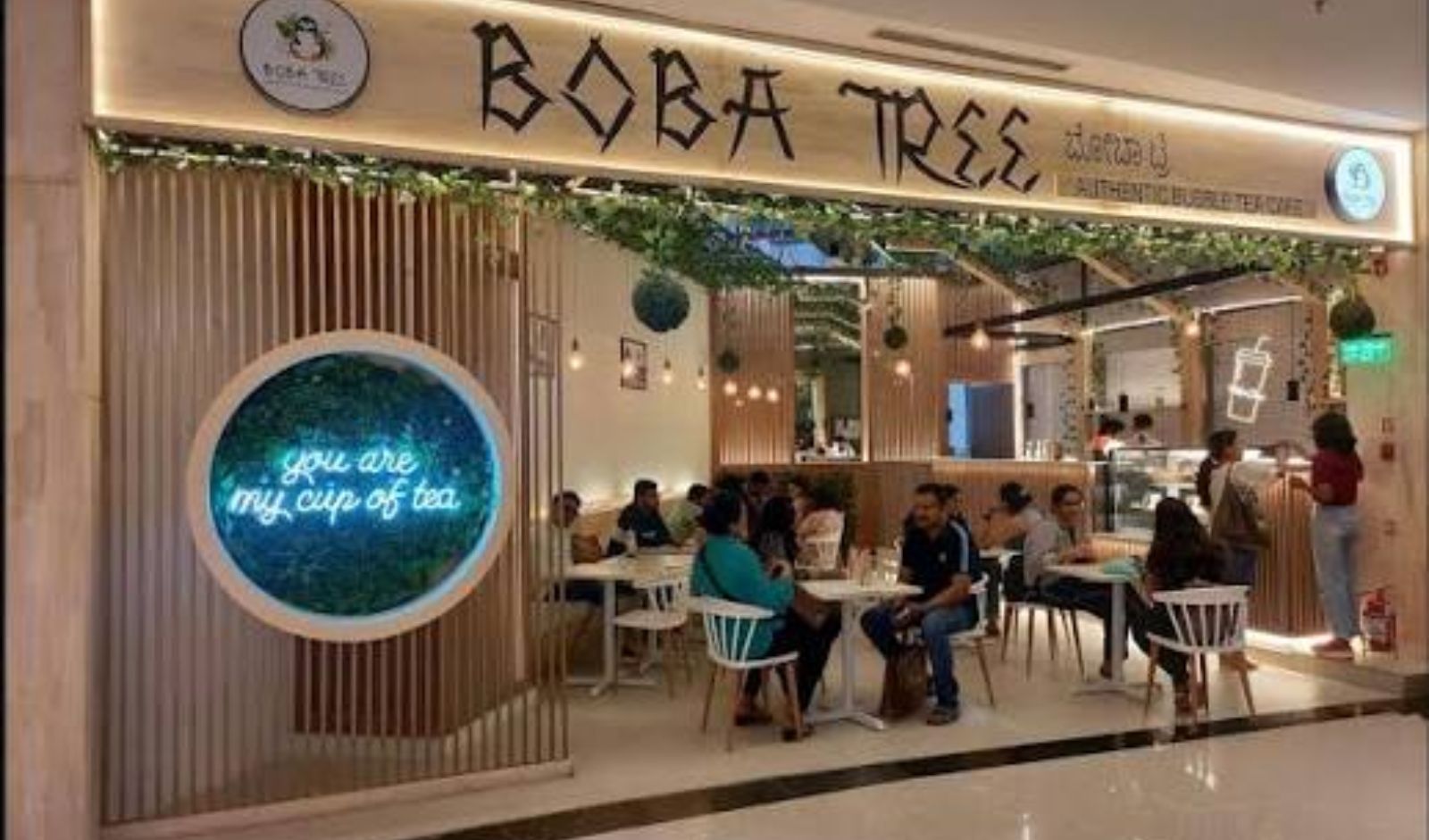
Boba Tree is a specialist bubble tea café offering milk tea, fruit tea, matcha-based beverages and other boba combinations. The brand has outlets in markets including Bengaluru, Guwahati and Shillong.
Its menu focuses specifically on contemporary bubble tea, making it a suitable destination for consumers who want to explore different combinations rather than conventional tea and coffee.
What to try: Milk tea, fruit tea, matcha boba and cream-based variants.
Why visit: A specialist boba café with a diverse menu of tea bases and toppings.
5. Kongsi Tea Bar
Kongsi Tea Bar brings a Thai-inspired approach to India's bubble tea market. The brand describes itself as an authentic Thai bubble tea brand and offers both Thai and Taiwanese-style beverages.
Its menu includes options such as Thai milk boba tea, Taiwanese boba tea, strawberry matcha, taro, peach and cream-cheese bubble tea. The brand has been expanding its presence in India through cafés and franchise locations.
What to try: Thai Milk Boba Tea, Taiwanese Boba Tea, Taro Bubble Tea and Strawberry Matcha.
Why visit: A good choice for consumers looking for Thai-style bubble tea and a broader Asian beverage experience.
6. Tea Bear
Tea Bear is a specialist bubble tea café known for its wide variety of customizable beverages. The brand offers numerous bubble tea flavors and allows customers to personalize sweetness levels and toppings.
Its focus on customization makes it particularly relevant to consumers who want to experiment with different combinations rather than stick to a single signature drink.
What to try: Taiwanese-style milk teas, flavored bubble teas and customized drinks.
Why visit: A specialist boba café with an extensive selection and customizable options.
What Is the Best Boba Tea to Try for the First Time?
If you are trying bubble tea for the first time, a classic milk tea with tapioca pearls is a good starting point. Those who prefer sweeter flavors can try brown sugar boba, while fruit tea or popping boba is better suited to consumers looking for something lighter and more refreshing.
FAQs on Best Boba Tea Cafes in India
Which is the best boba tea café in India?
Boba Bhai is one of the most prominent homegrown specialist bubble tea brands in India. Other established options include Boba Panda, Dr. Bubbles, Boba Tree, Kongsi Tea Bar, Tea Bear and 7th Street Boba.
What is boba tea?
Boba tea, or bubble tea, is a tea-based beverage traditionally served with chewy tapioca pearls. Modern versions can include milk, fruit flavors, matcha and toppings such as popping boba and jellies.
Which boba flavor is most popular?
Classic milk tea, brown sugar boba and fruit-based bubble teas are among the most popular choices. The best option ultimately depends on whether you prefer creamy, sweet or fruity beverages.
Is boba tea available across India?
Yes. Specialist bubble tea brands have expanded into several Indian cities, with outlets ranging from standalone cafés and kiosks to mall locations and franchise stores.
What should I order if I have never tried boba?
Start with a classic milk tea and tapioca pearls. If you do not enjoy creamy beverages, try a fruit tea with popping boba instead.
 Libas plans to open nine exclusive brand outlets across Bengaluru, Jaipur, Kanpur, Noida and Jabalpur during Navratri. After opening 28 stores in FY26, the ethnic wear brand is targeting more than 50 new outlets in FY27.
-
The consumer of yesterday’s India picked up whatever was available on the retail shelf and seldom looked past the packaging. On the contrary, today’s Indian buyer reads ingredient lists like fine print on a contract.
 McCain Foods has entered an agreement to acquire Falcon Agrifriz’s frozen potato processing business as it continues to invest in India. The transaction follows a CAD 135 million expansion of its existing Gujarat operations.
 Gen Z shoppers are contributing to growth in affordable online fashion during Snapdeal's Swagotsav Sale, which began on October 4. The platform has also recorded a doubling of prepaid orders and higher seller participation across smaller cities.





Copyright © 2009 - 2026 Franchiseindia.com Ltd