




 17
/ 8 MIN READ

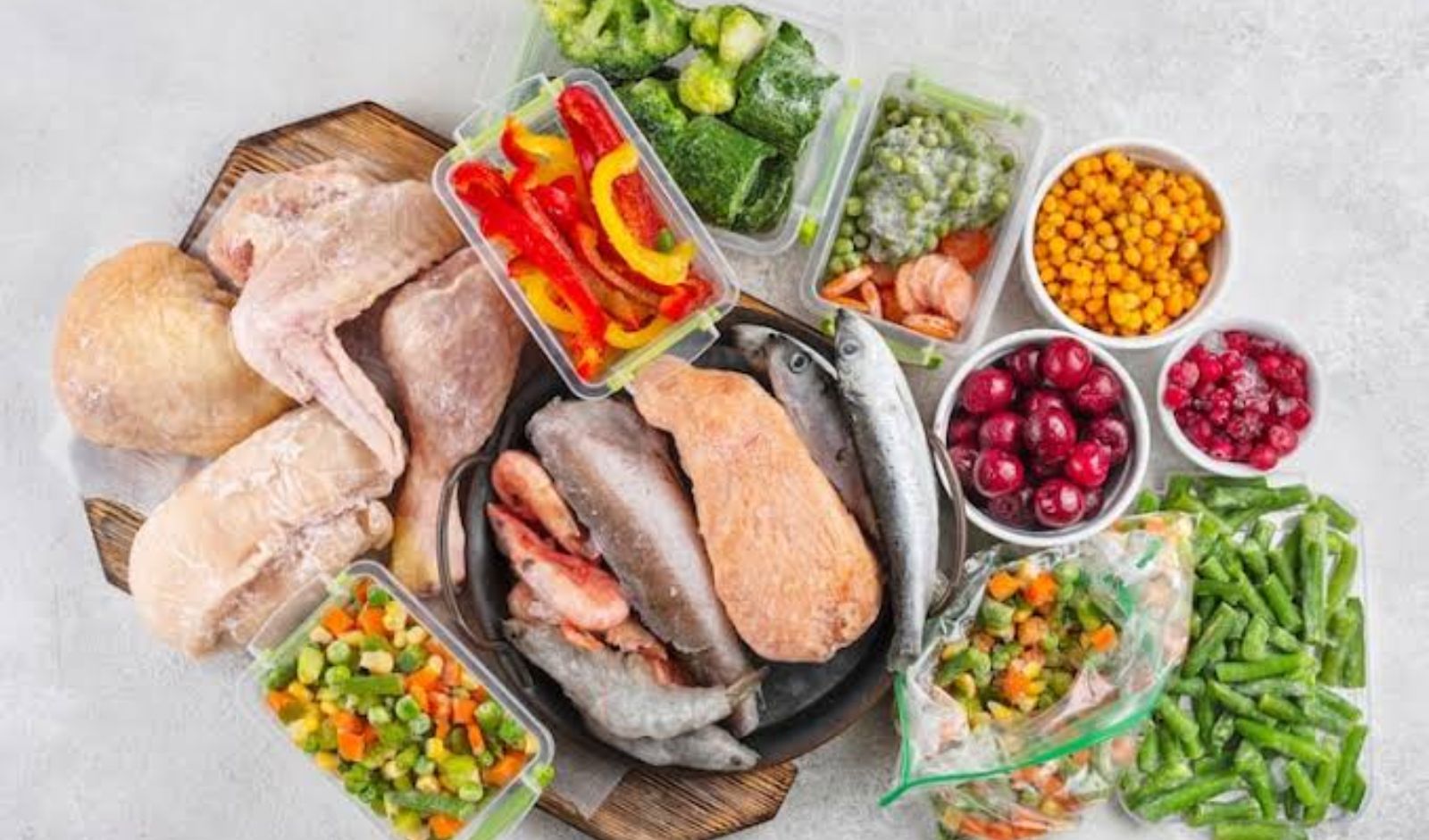
The Indian frozen food market is standing at a major inflection point. Currently valued at ₹14,400 Crore (US$ 1.7 Billion), the sector is tracking toward ₹35,000 Crore (US$ 4.2 Billion), compounding at an annual rate of 15% to 17%. To put these numbers into context, standard packaged FMCG categories in India typically grow at 8% to 10% annually. The frozen food category is expanding at roughly double the speed of traditional ambient grocery baskets. What was historically viewed as an emergency backup limited primarily to frozen green peas and basic potato fries is rapidly becoming a main-course staple for urban households.
Macro Shifts: Income, Time, and Quick Commerce
For decades, low home refrigerator capacity and deeply ingrained habits of daily visits to local fresh markets kept frozen food spend below 1% of total household grocery budgets. That structural baseline has shifted due to three major economic and consumer trends:
- Changing Urban Demographics: India now counts over 115 million urban households, with dual-income families rising rapidly across major metropolitan areas. As a result, average weeknight meal preparation time in urban homes has dropped from 90 minutes down to under 30 minutes over the past decade.
- Rising Per Capita Income: As India's per capita GDP crossed $2,500, discretionary spending on time-saving kitchen solutions increased. Working professionals are now willing to pay a moderate premium to skip labor-intensive chopping, grinding, and prep work.
- The Quick-Commerce Surge: Delivery platforms like Blinkit, Zepto, and Instamart have fundamentally altered retail distribution. Frozen snacks and ready-to-heat meals represent one of the fastest-growing segments in quick commerce, posting 35% to 40% year-on-year growth. Dark stores equipped with micro-freezers have effectively solved the last-mile temperature breaks that previously stalled traditional distribution through neighborhood kirana stores.
Modernizing the Cold Chain Infrastructure
Historically, the single largest drag on the industry was not consumer willingness to buy, but logistics. Inconsistent temperature regulation during transit frequently led to product thawing and spoilage before inventory reached store counters. That infrastructure bottleneck is finally clearing. Government initiatives alongside private equity investments have expanded cold-chain networks nationwide. India's cold storage capacity has crossed 39 million metric tonnes, while the fleet of temperature-controlled reefer transport trucks is growing at over 12% annually. At the retail level, modern supermarkets and hypermarket chains have doubled their dedicated freezer floor space over the last three years. Retail operators recognize that frozen items yield higher profit margins per square foot than standard ambient shelf goods.
Preservation Technology and Local Palates
The technical turning point for consumer acceptance has been the implementation of Individual Quick Freezing (IQF) technology. Unlike standard home freezers that cool items slowly and create large ice crystals that damage food texture, IQF freezes food rapidly at ultra-low sub-zero temperatures. This locks in cellular integrity, natural moisture, and up to 90% of nutritional content without requiring added chemical preservatives. When consumers realized that frozen parathas, momos, kebabs, and curry bases matched the taste, aroma, and texture of freshly prepared meals, trial purchases converted into regular monthly buys.
The product mix is also broadening significantly:
- Vegetarian Dominance: While non-vegetarian options like chicken nuggets and sausages led early sales in organized retail, vegetarian snacks, snacks, and readyto-cook items now command over 65% of total market volume.
- Regional Preferences: Western-style finger foods established the category, but regional choices stuffed parathas, kulchas, authentic snacks, and regional gravies are driving high repeat order rates in non-metro regions.
Tapping Growth in Tier 2 and Tier 3 Markets
The next major wave of growth will extend well beyond top-tier metropolitan areas. Tier 2 and Tier 3 cities currently represent under 20% of total frozen food sales, but they are expanding at a rapid 22% annually. Rising disposable incomes, expanding internet connectivity, and exposure to global food choices are creating a strong aspirational consumer base across regional centers.
To capture this growing demand, manufacturers and distributors must address two primary operational tasks:
- Unbroken Regional Cold Chains: Expanding reliable regional distributor networks equipped with proper sub-zero storage facilities to prevent stock degradation during distribution.
- Clear Labeling and Consumer Education: Overcoming remaining consumer misperceptions about food additives through transparent, clean-label packaging. Packaging needs to clearly communicate a simple fact: sub-zero temperatures serve as nature’s natural preservative.
The Road Ahead for FMCG Leaders
The Indian frozen food industry is no longer an emerging test case; it is becoming a foundational pillar of modern food retail. Supported by strong demographic tailwinds, expanding micro-fulfillment delivery networks, and a maturing national cold chain, frozen foods present one of the most compelling long-term expansion opportunities across the consumer goods sector over the coming decade.
For FMCG leaders, retailers, and supply chain partners, the takeaway is straightforward: convenience food in India is moving fast, building scale, and cementing its place in freezers nationwide.
Authored by:
By Dhruv Arora, Managing Director, Jasper Group


The interaction between customers and businesses has transformed with the introduction of direct-to-consumer (D2C) brands. These brands can sell directly through digital channels, enabling them to build stronger customer relationships. These brands have been able to gather valuable insights and reach out proactively to changing market preferences. D2C brands are expanding actively across various cities, regions, and international markets. However, this growth has also posed a new challenge: building teams which are able to scale as efficiently and quickly as the business.
If they have to enter a given market, they do not just have to increase sales or launch a new website. They also have to train their employees to acquire different skills, market knowledge, and deal with various kinds of customers. These brands should also be familiar with various regulations and operating models. Therefore, D2C brands must invest in continuous learning and role clarity.
Making Continuous Learning a Part of Daily Processes
The skills required by D2C brands are continuously evolving. The capability of employees is no longer enough to carry out daily operations. They also need to be familiarised with digital marketing, customer experience, analytics, and the application of artificial intelligence.
D2C companies need to incorporate continuous learning into the daily routine of the employees. It should not be treated as a one-time activity during their onboarding process. They need to have ongoing learning programmes focused on both the current responsibilities and the future requirements of the organization.
Currently, teams are looking forward to expanding their marketing domain, and therefore, they need to become familiar with customer behavior. The customer support teams might also need to become trained in various regional languages and local cultural expectations. As a result, companies need to create continuous learning opportunities for the employees.
How Can Companies Provide Role Clarity?
As the teams grow, the reporting structures can become unclear, and the responsibilities might overlap for different employees. In a D2C company, employees are expected to perform various duties. With the scaling of the organization, this can create missed responsibilities and duplicated work.
As the teams expand across markets, companies should be able to clearly define the roles. Employees should understand the duties expected of them daily and how the company will measure their performance. They should feel valued and know how their work contributes to the broader business objectives. Companies should clearly define their job roles and the performance indicators.
Defining the job roles does not mean having a rigid structure. It would instead provide the employees with a solid foundation and also give them the flexibility when the market undergoes a change.
Using Data for Workforce Planning
The demand continues to fluctuate in a global environment. In such cases, D2C companies should make good use of the available data to plan their workforce. The increased demand can be a result of social media interactions of the brand, seasonal campaigns, and product launches.
Companies should not solely rely on their gut feeling and should make use of the historical data to understand when they will require additional workforce. Companies would be able to anticipate the talent requirements based on customer-service volumes, sales forecasts, employee productivity, and workload trends. In this way, companies are able to move towards proactive workforce planning, and they do not resort to reactive hiring.
In case of an increase in order volumes, they would be able to hire for operations and fulfillment requirements in advance.
How Can Companies Bring Together Local Expertise and Global Consistency?
Companies should be able to strike a balance between standardisation and localisation. They need to make sure the basic values, principles of the organisation, and technology systems are consistent across all markets. The local teams should be in a position to respond to market changes and the expectations of regional customers. They can get valuable insights into customer behavior by hiring local talent.
Consequently, companies would also be able to respond to market challenges in an efficient manner. The brand identity would remain consistent with a stronger collaboration with the central teams.
The Road Ahead
The D2C brand needs to actively expand itself across international markets. This can make them prone to both operational and people-related challenges. The expansion can be possible with the aid of both capital and technology. If they are able to build capable and adaptable teams, they would be in a position to sustain this growth.
The companies can make themselves adaptable to change with the help of continuous learning, making use of the historical data, clarifying job roles, and creating opportunities for employees for internal mobility. The main objective of D2C brands is not just to build larger teams. They should also be able to build teams which are more adaptable and agile. These teams would be able to respond to newer markets, business models, and also new customers. If companies are able to integrate workforce strategy into their growth objectives, D2C brands will be able to scale in the most efficient manner. The performance of the employees will be improved, along with the customer experience.
Authored by:
Pradeip Agarwal, Co-founder of Stratbeans
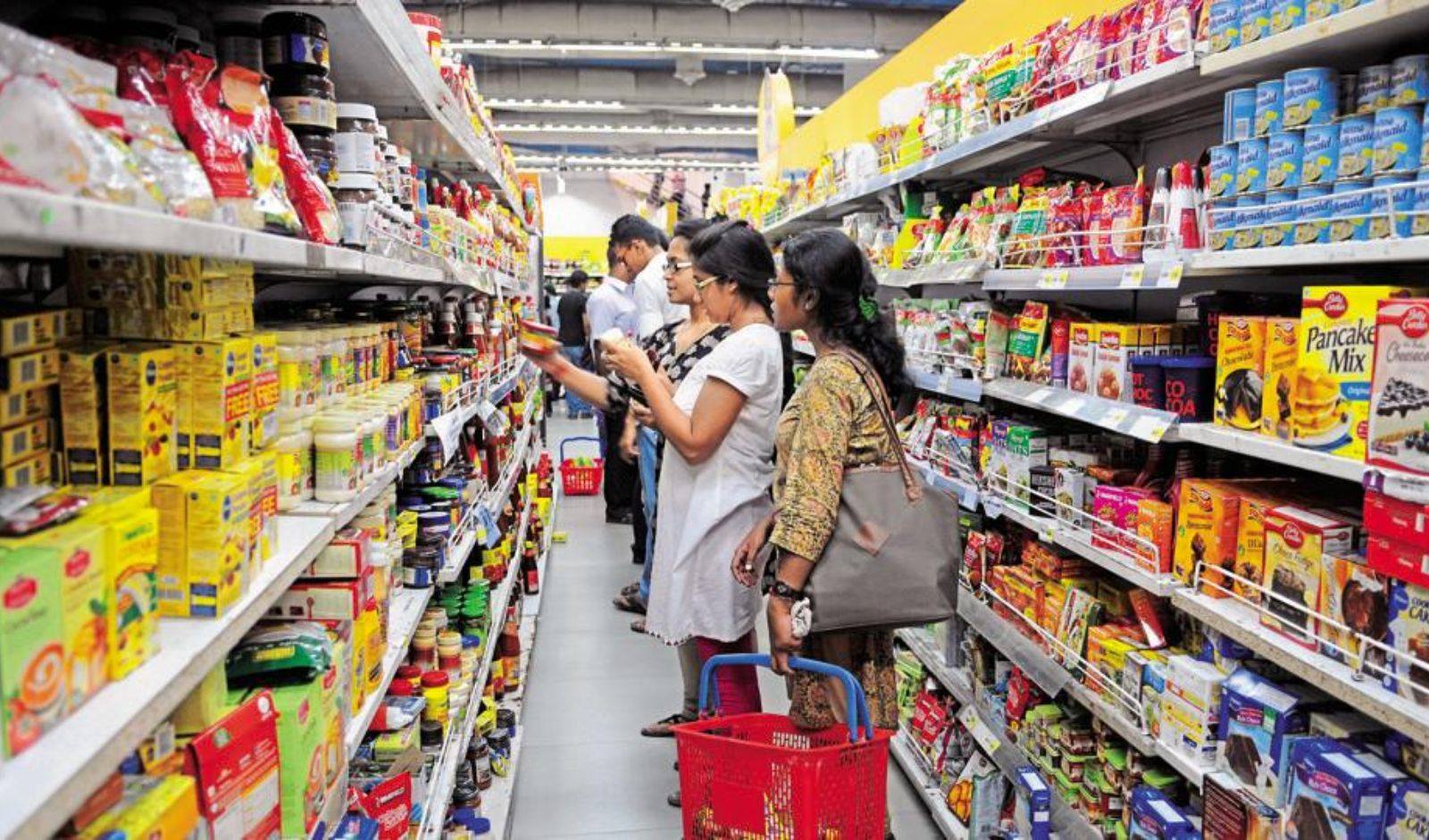
For decades, India's retail growth had been focused in metropolitan cities, where organised retail, international brands and premium consumption thrived. Tier-2 and tier-3 cities are now emerging as key markets, reflecting changing aspirations, greater digital access and evolving consumer preferences. The next phase of Indian retail growth will be defined by how industry players respond to these new consumer expectations.
Aspiration Is No Longer Constrained by Geography
Consumers in tier-2 and tier-3 are empowered with access to the digital space and social media. They have the ability to research and discover brands before making any purchase.
This has bridged the information gap between metro and non-metro consumers and given power to the latter to be informed about brands and products. But the purchase decision is still based on quality, value and functionality.
The Growing Importance of Omnichannel Retail
While online discovery plays a key role in the purchase journey, it does not always translate into an online purchase, especially in categories wherein the customer needs to see the product before they buy.
Having the option of both digital and in-store channels may create an integrated retail ecosystem wherein the customers may pick and choose depending on their inclination. A seamless retail ecosystem can be created with digital discovery as an acquisition channel while driving physical stores to deliver product expertise and ease of purchase.
Premiumisation Requires a Local Understanding
Consumers in tier-2 and tier-3 cities now have easier access to a wide range of product categories such as fashion apparel and footwear, sportswear and accessories.
Whilst premiumisation is being fuelled by aspirational consumption, there is also a practical consideration for quality and value for money, for categories where purchase decisions are informed by price-points and the utility of products. A local understanding of product categories and consumer behaviour will be key to merchandising and planning.
Growth Must Be Matched by Retail Economics
As retail organizations enter new markets, it is essential that investment in supply chains, inventory, store formats and staffing is carefully balanced with economic realities of these markets.
By analysing key metrics such as productivity per store, inventory turnover, repeat purchase rates and servicing costs, the retailers will be able to accurately forecast the commercial viability for these new markets and make decisions regarding future investment.
From Expansion to Market Development
While expansion into new geography is an important component of growth, market development requires a separate evaluation. Development of a market involves understanding the local customers and their needs, developing relevant products and services through category management, and having the competencies to educate the consumer about new products and concepts.
In newer categories where consumer awareness is low, and demand is difficult to forecast, product development and category management can help build product relevance and consumer trust.
India's tier-2 and tier-3 cities have different economic realities and consumer expectations, and require a fundamentally different approach to retail management. By understanding local consumer behaviour and evaluating the suitability of physical retail formats, digital channels or a combination of both, industry players can make informed decisions on market entry and expansion.
Ultimately, India's retail growth story will no longer be defined by its metros. There are opportunities to not only capture an expanded consumer base, but also to create new retail formats suited to local markets. To succeed in this environment, companies will need to combine digital capabilities with physical retail know-how and balance growth ambitions against economic realities. Most importantly, they will have to earn consumer trust and loyalty – at both local and national levels.
Authored By:
Arun Malhotra, Founder & Managing Director, Brandman Retail Limited
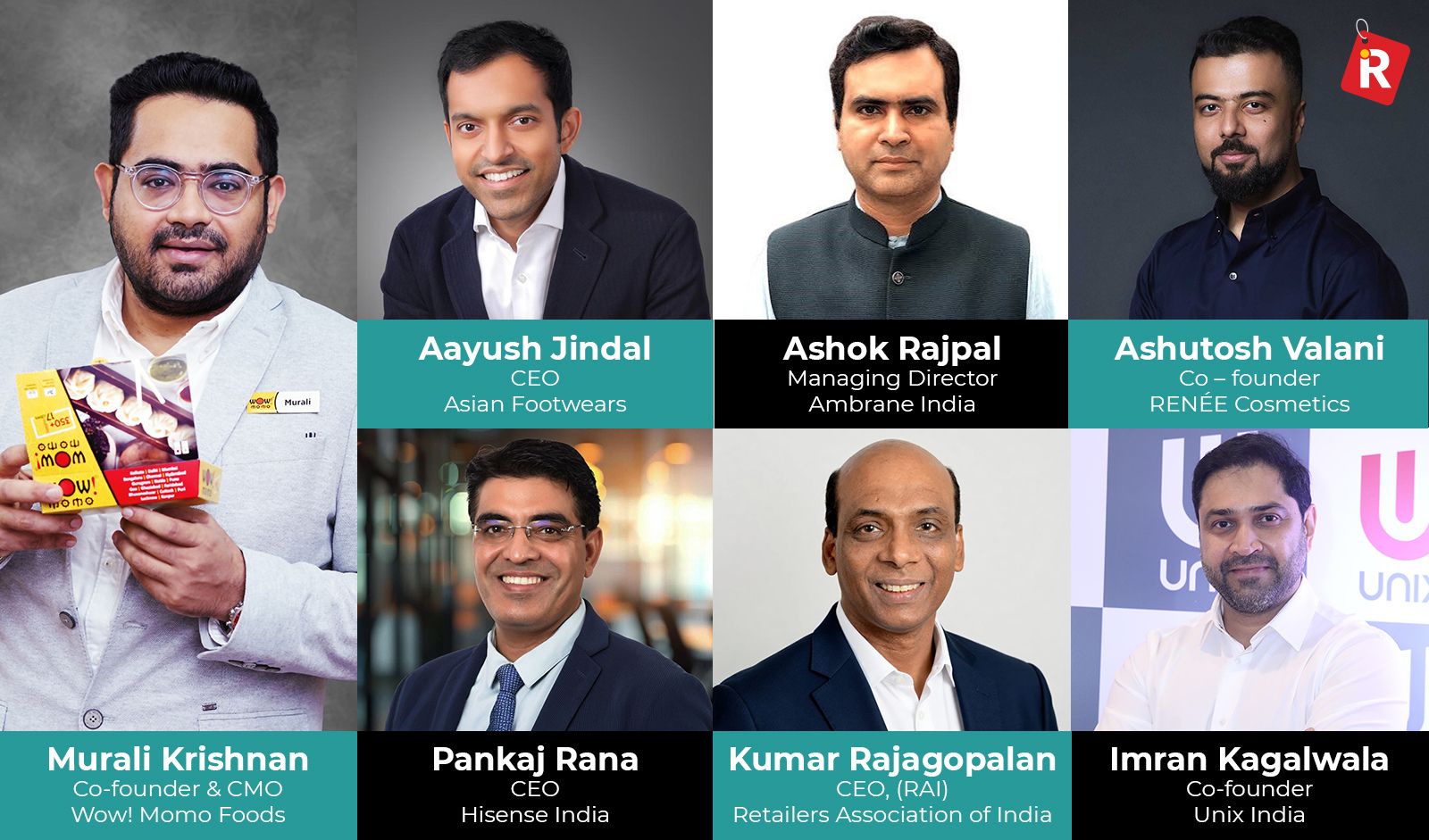
India’s retail sector grew 8 percent year-on-year in September 2026, according to the Retailers Association of India (RAI) Business Survey Round 75. The rise came ahead of the main festive shopping season, with Diwali falling in November this year. While sales continued to rise across regions and categories, the coming months will offer a clearer picture of consumer spending during the festive season.
Holiday Calendar Changes
September’s performance was very much affected by the timing of festivals. Navratri started on September 22, 2025, and Diwali was on October 20. This year, Navratri began on October 11, Dussehra was celebrated on October 20, and Diwali falls on November 8.
Thus, festive buying had started already in September 2025, and September 2026 was mostly pre-festive consumption. RAI's earlier surveys recorded retail growth of 7 percent in May 2025 and 8 percent each in June and July, ahead of that year's festive season.
Kumar Rajagopalan, CEO of RAI, said, "Retail sales growth of 8 percent in September is encouraging, particularly when viewed in the context of this year's festive calendar."
He added, "The continued growth across regions and categories provides a positive foundation for the weeks ahead."
Also read: Diwali Dressing Gets a Retail Makeover: India’s Ethnicwear Battle for the Festive Wallet
West India Leads Growth in Region
Retail sales in West India grew the highest year-on-year at 10 percent, followed by South India at 9 percent. North India grew by 7 percent and East India by 5 percent. All four regions reported positive growth, pointing to continued consumer spending across the country.
Also read: How GRM Foods Is Growing 921 Basmati Rice Globally
Top Categories – QSR & Grocery
According to the report, quick-service restaurants (QSR) saw the strongest growth in the category at 11 percent, followed by food, grocery, apparel and clothing at 9 percent each. Beauty, wellness, personal care, consumer durables, and electronics grew 7 percent apiece. Sports goods and jewellery recorded 6 percent growth, while footwear grew 5 percent.
The pace of growth moderated in several categories compared with August, when overall retail sales rose 10 percent. QSR growth eased from 15 percent to 11 percent, food and grocery from 12 percent to 9 percent, and apparel and clothing from 10 percent to 9 percent. Consumer durables and electronics maintained growth of 7 percent.
Also read: BMW Group India’s Hardeep Singh Brar on Luxury Car Retail Trends
QSR Sales Get a Festive Boost
Murali Krishnan, Co-founder and CMO, Wow! Momo Foods Pvt. Ltd., said October had already shown strong momentum, with the company recording healthy double-digit same-store sales growth. He also noted an increase in average order value during the festive period, driven by celebrations, group orders and the start of the wedding season.
“We're seeing healthy double-digit same-store sales growth this month. What's equally exciting is the natural lift in average order value the season brings,” Krishnan said.
He said the company was focusing on occasion-led product innovation and value rather than relying only on discounts. Products such as the 4-in-1 Momo Box and Pujo Adda Meal are designed around group dining and festive occasions.
“The brands that win this season won't be the ones with the loudest festive offers. They'll be the ones that give consumers a reason to come back in December, January and beyond,” he said.
Beauty Sales Gain Festive Momentum
Ashutosh Valani, Co-founder of RENÉE Cosmetics, said the company’s operating revenue grew 37 percent to Rs 440 crore in FY26 from Rs 321 crore in FY25. While September-specific growth figures were unavailable, the company reported strong festive demand.
“We are witnessing strong festive momentum, with RENÉE recording 3X sales growth during Navratri and projecting 2X growth across the overall festive season, year-on-year,” Valani said.
He added that lipsticks, kajal and eye makeup were popular for festive occasions, while beauty gifting is gaining importance as consumers seek quality, convenience and value.
Also read: Hisense India Eyes USD 150 Mn Business in 2026
Mobile Accessories See Festive Opportunity
Imran Kagalwala, Co-founder of Unix India, said the company saw positive demand momentum in September, supported by interest in mobile accessories and everyday technology products.
"We are seeing increased interest in products such as power banks, fast chargers, cables and other everyday tech essentials, driven by the rising usage of smartphones and connected devices," Kagalwala said.
Ashok Rajpal, Managing Director of Ambrane India, also reported 50 percent growth in September 2026 compared with the same period last year. He said demand for wireless chargers, compact charging solutions, and fast-charging accessories had improved across online and offline channels.
Looking ahead, both companies expect festive promotions and online sales to support demand. Kagalwala said, "Consumers are increasingly looking for products that offer a combination of performance, convenience and value." Rajpal anticipates discounts and festive offers to encourage purchases as consumers seek portable, practical and affordable charging solutions.
Also read: Bharath Rao on Indian Interior Materials Market Growth
Premium TVs Support Electronics Demand
Hisense India reported 50 percent sales growth in September 2026 compared with September 2025, according to the company. CEO Pankaj Rana attributed the performance to demand for premium home entertainment and the company's technology-focused product portfolio.
"We are seeing a clear shift in consumer preferences towards larger-screen televisions, advanced display technologies and performance-driven features that enhance both everyday entertainment and gaming," Rana said.
With Diwali approaching, the company expects large-screen televisions and advanced displays to remain important sales drivers. Rana also highlighted the role of discounts, cashback, no-cost EMI and financing options in helping consumers make purchases during the festive period.
Also read: How Indian Fashion Brands Are Building the Next Premium Retail Market
Footwear Buyers Look for Value
At Asian Footwears, September brought steady demand, with consumers weighing comfort, durability and price when making purchasing decisions, according to CEO Aayush Jindal.
"What stood out was how thoughtfully customers are shopping. They are looking for comfort, durability and a fair price, and they are happy to move up the ladder when a product clearly delivers on all three," Jindal said.
He noted that sports shoes, sneakers and everyday casual footwear continued to drive volumes, including in Tier II and Tier III cities. For the festive season, the company expects demand for sneakers, sports and athleisure styles, comfortable sandals and festive casuals to benefit from the extended buying window and the wedding season that follows Diwali.
Also read: India’s Baby-Care Market Moves Beyond Basics
October and November in Focus
September's results show that retail demand remained positive before the main festive shopping period began. However, the shift in the calendar means October and November will be crucial in assessing how strongly consumers spend across essential and discretionary categories.
Rajagopalan said the industry remained optimistic about the festive season, adding that "October and November will provide a more complete picture of consumer demand."
Indian consumers want products that do more than just the basic job, from air fryers and smart kitchen appliances to bigger TVs and energy-efficient washing machines. Changing lifestyles, rising aspirations, and greater understanding of technology are driving households to spend more on convenience, performance, and design.
According to Mordor Intelligence, the Indian home appliance market is valued at USD 54.60 billion in 2026, and is expected to reach USD 71.85 billion by 2031, growing at a compound annual growth rate (CAGR) of 5.65 percent.
Also read: Diwali Dressing Gets a Retail Makeover: India’s Ethnicwear Battle for the Festive Wallet
Consumers Shift Toward Value
Premiumization is increasingly about the benefits a product delivers rather than its price tag. Consumers are evaluating features, energy efficiency, reliability, and convenience before upgrading.
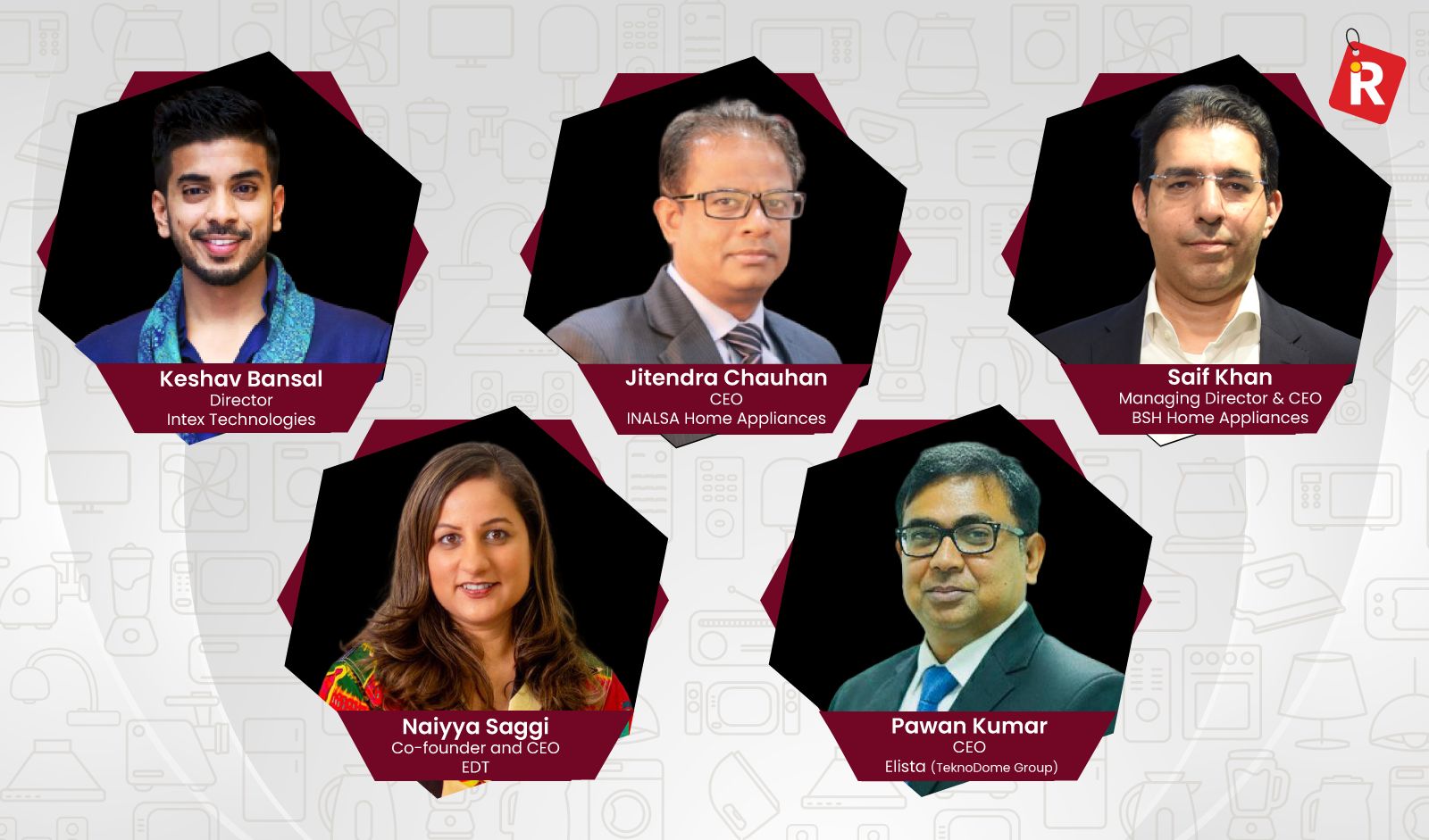
“Consumers are not simply buying higher-priced products; they are paying more where the benefit is clear and visible,” said Keshav Bansal, Director at Intex Technologies.
“Value is now judged on what the product delivers, not on the label,” said Bansal. “Brands that can justify every step-up in price will win in this phase.”
Also read: How GRM Foods Is Growing 921 Basmati Rice Globally
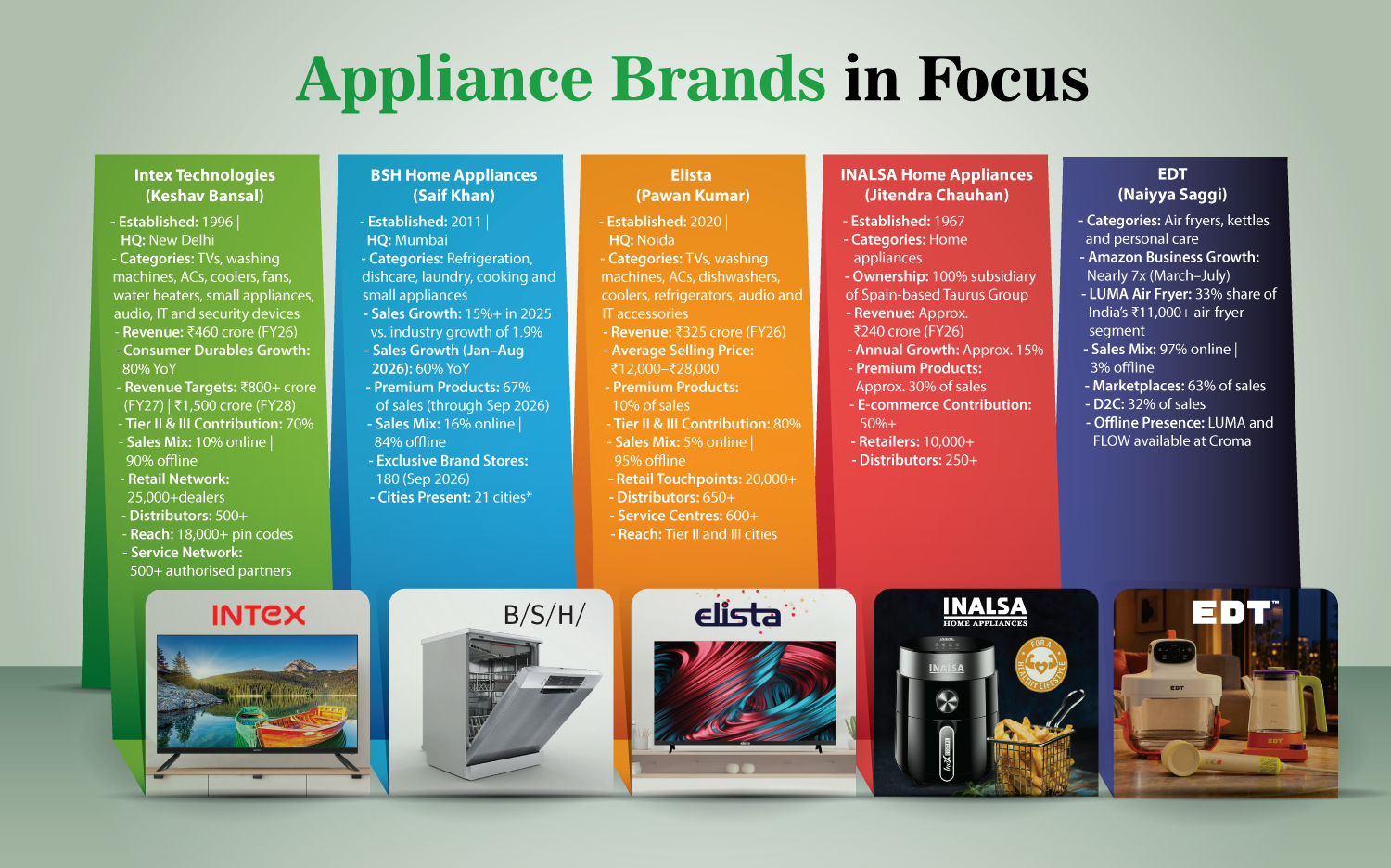
Intex’s consumer durables business grew around 80 percent year over year in FY26, led by smart TVs, air conditioners, and washing machines. The company reported overall revenue of approximately Rs 460 crore in FY26.
Jitendra Chauhan, CEO of INALSA Home Appliances, said, “Today, consumers are giving greater importance to product quality, convenience, appearance, and overall performance.”
He added, “Product awareness has also improved considerably, largely due to e-commerce, social media, and easy access to product comparisons and customer reviews.” According to Chauhan, “Premiumization in India will continue to be driven more by value addition than by higher prices alone.”
INALSA recorded gross revenue of around Rs 240 crore in fiscal year 2025–26, with average annual growth of around 15 percent in recent years. Food preparation appliances, including air fryers, stand mixers, and food processors, have supported its performance.
Also read: BMW Group India’s Hardeep Singh Brar on Luxury Car Retail Trends
Upgrades for Convenience
The changes in household structures and the increased busyness of people’s lives are driving consumers to buy appliances that make daily chores easier. Dishwashers, washer-dryers, larger-capacity refrigerators, and advanced cooking appliances are gaining attention.
“The biggest shift is that consumers are now willing to pay for time,” said Saif Khan, Managing Director and CEO of BSH Home Appliances India.
Khan explained, “Convenience has become a real premium feature.” He also observed, “Smart connectivity and energy efficiency now work as quiet reassurance,” as consumers look for appliances that fit connected homes while keeping operating costs low.
BSH India, which operates Bosch, Siemens, and Gaggenau, reported sales growth of more than 15 percent in January–December 2025, compared with industry growth of 1.9 percent, according to the company. Its sales grew 60 percent between January and August 2026 compared with the same period in 2025.
Also read: Bharath Rao on Indian Interior Materials Market Growth
 Affordable Premium Finds Space
While consumers are upgrading, affordability remains important. Demand is particularly strong for products that offer better features without moving too far beyond household budgets.
“Demand is strongest in the Rs 20,000–Rs 30,000 band,” said Pawan Kumar, CEO of Elista (part of the TeknoDome Group).
Kumar said, “Consumers are upgrading for larger screens, smart connectivity, energy efficiency, and better design.” He added that buyers increasingly expect advanced features from trusted brands “without paying a premium-brand price.”
Elista closed FY26 with revenue of Rs 325 crore. Its smart LED TVs, washing machines, and air conditioners account for around 80 percent of revenue, while premium products contribute approximately 10 percent of sales, according to the company.
Also read: How Indian Fashion Brands Are Building the Next Premium Retail Market
Chauhan said, “The strongest opportunity lies in the affordable-premium or mid-premium segment.” He added that consumers are willing to pay more when the difference is justified by “visible improvements in product quality, features, and convenience.”
Naiyya Saggi, Co-founder and CEO of EDT, said, “Indian consumers increasingly want premium, design-led appliances that solve real problems.”
Saggi described EDT’s approach as an “Intelligent Care platform: appliances that care for you.” She also said, “Indian consumers will pay more when it’s an investment in their wellbeing.”
EDT reported nearly sevenfold growth in its Amazon business between March and July, driven by products including its LUMA air fryer and FLOW kettle. The company is expanding across home, kitchen, and personal care technology.
Also read: India’s Baby-Care Market Moves Beyond Basics
Retail Expands Beyond Metros
Premiumization is influencing how brands distribute and sell appliances. Physical stores continue to support product demonstrations, while online platforms help consumers discover and compare products.
“Offline remains our core channel, contributing around 90 percent of revenue, while online contributes about 10 percent,” said Bansal. He added, “The aim is an integrated omnichannel model in which the consumer moves easily between discovery, purchase, and service.”
Elista operates through more than 20,000 dealer outlets and over 650 distributors. Kumar said, “Online drives discovery and reach, while stores drive conversion and premium sales.”
He also highlighted the importance of smaller markets, saying, “Tier II/III cities are central to our growth.” These markets contribute around 80 percent of Elista’s sales.
BSH India is also strengthening its retail network. Khan said, “Our focus is on building a connected retail ecosystem rather than growing individual channels in isolation.” He added, “Dedicated brand stores enable firsthand product experiences, demonstrations, and expert guidance.”
E-commerce contributes around 16 percent of BSH India’s business, while offline channels account for 84 percent. The company aims to reach 500 exclusive stores across India’s top 50 cities by 2030.
Also read: Hisense India Eyes USD 150 Mn Business in 2026
The Next Stage of Growth
As digital exposure brings new appliance categories and features to the forefront of consumer awareness, Tier II and III cities are becoming more relevant. These markets account for about 70 percent of Intex's business and 80 percent for Elista, the companies say.
The challenge is how to provide access to premium features as manufacturers extend their distribution networks and product portfolios without sacrificing value. The next stage of the market will depend on how well brands can combine technology, convenience, reliable service, and competitive pricing to meet the ever-changing needs of consumers.
Also read: India’s Luggage Industry Moves to Premium Travel
India’s paint industry is changing as established brands face new competitors and consumers explore premium finishes. Companies are expanding retail networks, investing in innovation, and exploring digital channels to stay competitive. With affordability, quality, and design shaping buying decisions, paint makers are rethinking their strategies to meet evolving consumer expectations and capture growth opportunities across India’s expanding urban and emerging markets.
According to CRISIL Ratings’ January 2026 outlook, India’s paint industry is expected to record 7–8 percent volume growth and 3–5 percent revenue growth in FY2026–27. These projections highlight the challenge companies face in balancing expansion plans with pricing pressures and intensifying competition.
Also read: Diwali Dressing Gets a Retail Makeover: India’s Ethnicwear Battle for the Festive Wallet
Competition is more than a price
New manufacturing capacity, aggressive pricing and growing competition are forcing established brands to focus on innovation and distribution. Companies are also expanding into niche product categories to stand out in a saturated market.
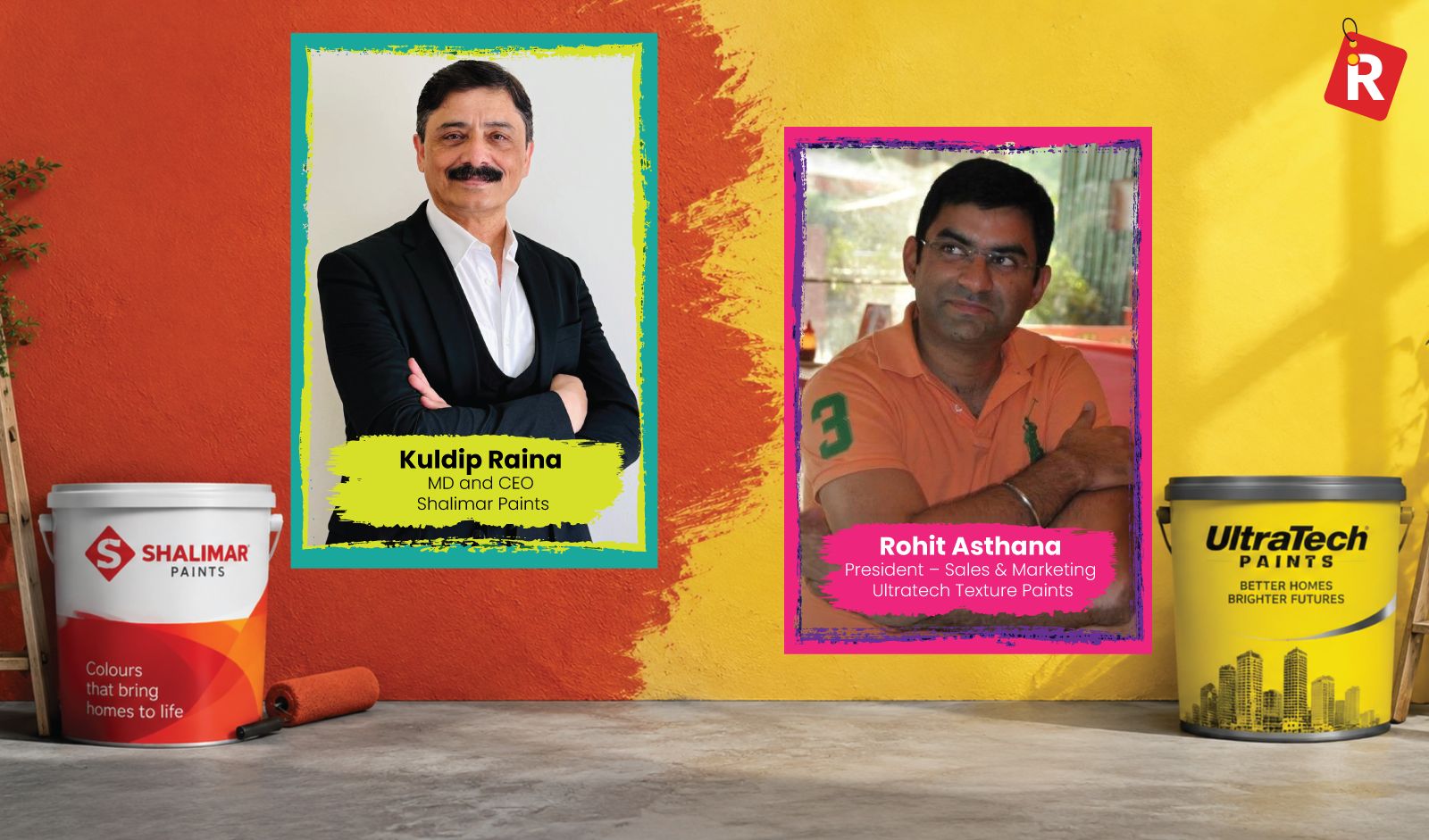
Kuldip Raina, MD and CEO of Shalimar Paints, said, “With new capacity, aggressive pricing, and greater pressure on established brands to keep innovating, the paints and coatings industry has become more competitive.”
This shift is creating opportunities for manufacturers that offer alternatives to conventional decorative paints. Rohit Asthana, President – Sales and Marketing at Ultratech Texture Paints Pvt. Ltd., said, “Our focus has been on differentiated texture, lime-plaster, microcement and specialty finishes rather than competing purely on price.”
Asthana added, “Quality always works, and that’s our principle, and it’s working for us; we are growing by 30 percent YOY.”
His comments reflect a broader trend: companies are increasingly looking beyond price to compete through product quality, distinctive finishes, and design options.
Also read: How GRM Foods Is Growing 921 Basmati Rice Globally
Retail networks expand
Dealers and distributors remain essential to connecting paint manufacturers with consumers, particularly in smaller cities and rural markets.
Shalimar Paints has 8000+ dealers, distributors and retail touch points across the country. The company added 100 distributors in the first half of FY2026 and grew its active dealer base by 10 percent focused on Tier II, Tier III and rural markets, according to its November 2025 stock exchange filing.
Ultratech Texture Paints takes a more selective approach, with a network across South India, Punjab, Madhya Pradesh, Rajasthan, Maharashtra, Delhi, and the National Capital Region, supported by direct project sales.
“Our strategy is generally one strong dealer per city,” Asthana highlighted.
The two approaches highlight how paint companies are adapting their distribution strategies to their business models, whether by expanding their retail reach or building focused dealer relationships supported by project-based sales.
Also read: BMW Group India’s Hardeep Singh Brar on Luxury Car Retail Trends
Consumers want more choices
Affordability remains important, but consumer demand is becoming more varied as interest in premium finishes, waterproofing, and durable coatings grows.
At Shalimar Paints, the Hero range is the best-selling product line, while waterproofing is emerging as an area of opportunity. Raina says water-based products now account for nearly 64 percent of the company’s sales.
“While the Hero series has emerged as the best-selling range, other categories are showing promising growth, especially waterproofing,” he stated.
Meanwhile, texture paints, lime plaster, and microcement are attracting customers looking for distinctive interiors. According to Asthana, demand for premium finishes is also growing beyond major metropolitan areas, particularly in Tier II cities.
These changes point to a market serving a wider range of needs, from budget-friendly everyday paints to specialized products for consumers seeking more distinctive designs.
Also read: Bharath Rao on Indian Interior Materials Market Growth
Digital channels progress
Digital platforms are creating new opportunities for product discovery and consumer engagement, but the extent of contribution varies from company to company.
Shalimar Paints sells its products on Amazon and is trying to build its online and direct-to-consumer business. We also offer a wider painting service for larger jobs.
Ultratech Texture Paints operates on a project-based business model with direct projects accounting for almost 80 percent of sales and dealers for the remaining 20 percent of sales. Most of the usage of digital channels is for lead generation and engagement with clients.
While online platforms are becoming more relevant, traditional dealers and project-based relationships continue to play a central role in the paint business.
Also read: From Craft to Commerce: How Indian Fashion Brands Are Building the Next Premium Retail Market
Investment and the road to 2030
As paint companies prepare for future growth, improving efficiency and expanding manufacturing capabilities remain key priorities.
In 2023, Shalimar Paints invested around Rs 190 crore in modernizing its manufacturing facilities, focusing on automation, productivity, and capacity expansion. The company is now prioritizing plant efficiency, better system coordination, and greener manufacturing instead of another major capital expenditure cycle.
Ultratech Texture Paints has focused its investments on manufacturing, warehousing, inventory, product development, and distribution infrastructure while exploring further expansion opportunities.
By 2030, India’s paint industry is expected to become more organized, technology-driven, and focused on premium products. Demand for specialized coatings, wider distribution, and efficient manufacturing will likely shape its growth.
As competition intensifies, companies will need to balance pricing with quality, innovation, and changing consumer preferences. Beyond competitive prices, strong retail networks, differentiated products, and operational efficiency will be essential for businesses seeking sustainable growth in India’s evolving paint market.
Also read: From Illumination to Expression: How Luxury Lighting Is Reshaping Indian Spaces
India’s domestic apparel market is entering a new phase of sustained growth, with its value projected to increase from $95.7 billion in CY2025 to $146.3 billion by CY2029, representing a compound annual growth rate (CAGR) of 9 percent.
Now the world’s fourth-largest apparel market, India is witnessing significant changes in how consumers discover, purchase, and consume clothing. Rising aspirations, evolving lifestyles, growing demand from women and children, and a stronger preference for comfort and functionality are creating opportunities across product categories, price segments and retail formats.
The market has already demonstrated a strong post-pandemic recovery, expanding from $49.3 billion in CY2020 to $95.7 billion in CY2025, equivalent to an 18 percent CAGR, according to a report released by the Clothing Manufacturers Association of India (CMAI) in association with 1Lattice. The next growth phase is expected to be shaped by a broader consumer base and increasing demand from beyond the country’s major metropolitan centres.
Commenting on the outlook, Santosh Katariya, President, CMAI said, “The next phase of growth for India’s apparel industry will increasingly come from markets beyond the metros. Tier II and III cities are already contributing significantly to apparel consumption, while rising aspirations are creating demand for a wider choice of brands, formats and fashion. The opportunity now is to build propositions that are contemporary, relevant and accessible to the emerging Indian consumer, while deepening distribution and retail presence across these markets.”
Six Trends Reshaping India’s Apparel Retail Landscape
1. Rural India and Smaller Cities Emerge as Growth Engines
Of India’s $95.7 billion apparel market in CY2025, rural India accounted for $55.9 billion, representing approximately 58 percent of total consumption. Metro and Tier I markets contributed $14.2 billion, Tier II markets $8.5 billion, and Tier II and smaller markets $17.1 billion.
These figures challenge the traditional perception that apparel growth is concentrated in major urban centres. Rural markets and smaller cities are becoming increasingly important to the industry’s expansion, creating opportunities for manufacturers, brands and retailers.
Success in these markets will depend on accessible pricing, relevant assortments, effective distribution and localised merchandising, alongside brand building. Retailers that understand regional preferences and purchasing power will be better positioned to serve this expanding consumer base.
2. Casualization Redefines Apparel Consumption
Casualwear is India’s largest apparel occasion, accounting for 31 percent of the market, followed by ethnicwear at 27 percent and formalwear at 26 percent.
Consumers are increasingly prioritising comfort, versatility and garments suitable for multiple occasions. In menswear, this is supporting demand for categories such as denims and T-shirts. Womenswear and kidswear are also benefiting from the adoption of versatile, easy-to-wear styles.
Rahul Mehta, Chief Mentor, CMAI, observed, “One of the most significant shifts in India’s apparel consumption is the blurring of traditional category boundaries. Men’s wear is becoming more casual, comfortable and versatile, with consumers seeking styles that can transition seamlessly between work, leisure and social occasions. At the same time, women’s wear remains deeply rooted in ethnic wear while evolving through new silhouettes, Indo-Western styling and greater versatility. These shifts reflect an Indian consumer adapting apparel choices to a more contemporary and dynamic lifestyle.”
For retailers, this transition reinforces the importance of offering collections that balance everyday utility with style and adaptability.
3. Comfort, Fitness and Functionality Influence Buying Decisions
Changing lifestyles are driving demand for apparel that combines comfort with performance. In menswear, athleisure is gaining momentum through products such as quick-dry T-shirts, stretchable joggers and moisture-wicking polos.
In kidswear, parental focus on health and activity is encouraging interest in sportswear and activity-specific clothing. Breathable fabrics and easy-to-wear garments are also supporting casualwear demand.
These shifts create opportunities for retailers to expand functional apparel offerings while responding to consumers seeking greater value and versatility from their purchases.
4. Womenswear and Kidswear Gain Growth Momentum
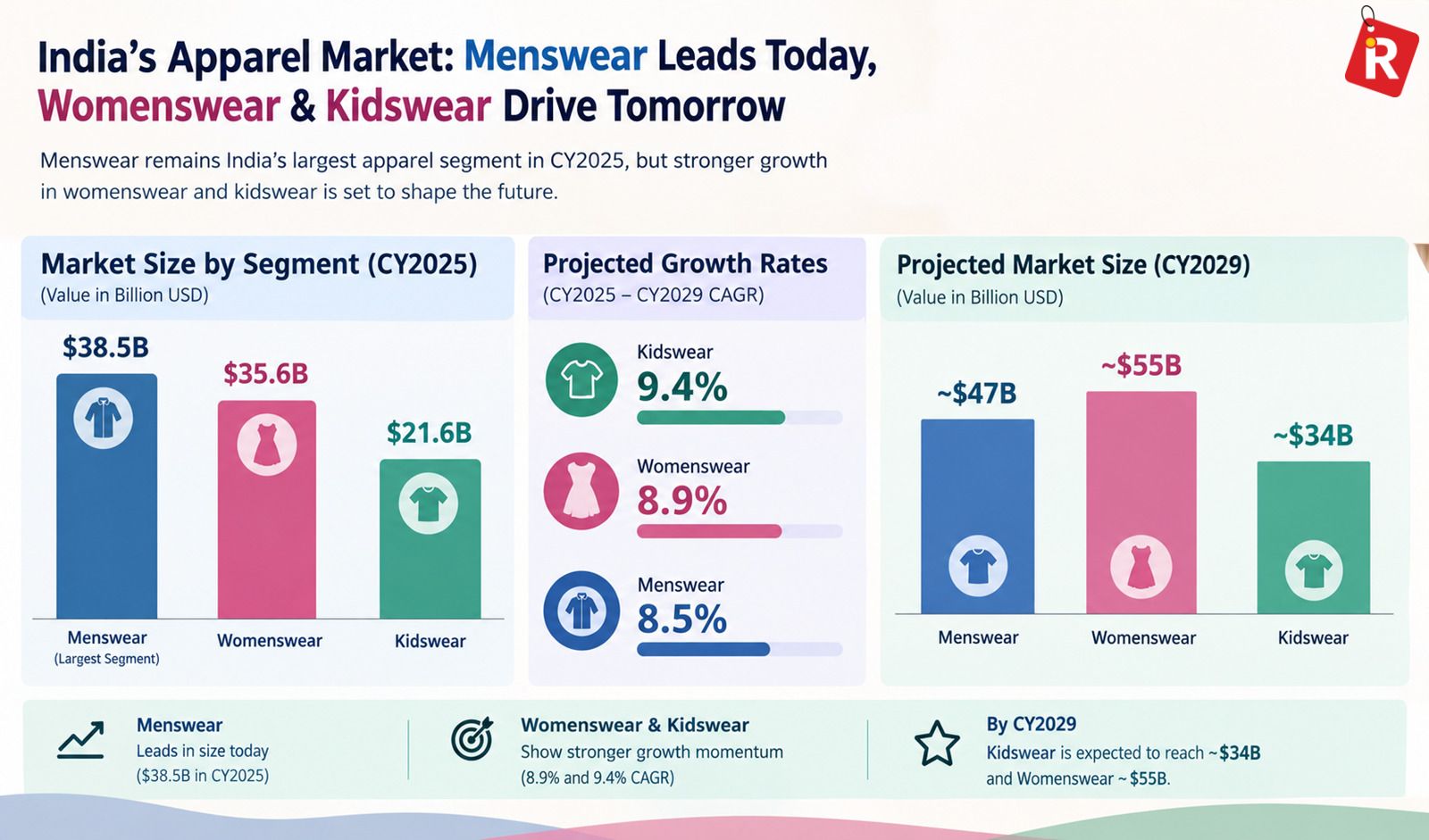
Menswear remains India’s largest apparel segment, valued at $38.5 billion in CY2025, followed by womenswear at $35.6 billion and kidswear at $21.6 billion.
However, projected growth rates indicate increasing momentum in womenswear and kidswear between CY2025 and CY2029. Kidswear is expected to grow at a CAGR of 9.4 percent, womenswear at 8.9 percent, and menswear at 8.5 percent.
By CY2029, kidswear is projected to reach approximately $34 billion, while womenswear is expected to reach around $55 billion.
Womenswear growth is being supported by increasing workforce participation, rising demand for athleisure and the popularity of Indo-Western styles. The report also identifies growing consumer interest in sustainable and ethical fashion choices.
For retailers, these trends underline the need for sharper category planning, broader product choices and merchandise strategies aligned with changing customer expectations.
5. Ethnicwear and Occasion-Led Clothing Retain Their Strength
Casualization is not diminishing the importance of traditional apparel. Ethnicwear accounts for 27 percent of India’s overall apparel market and approximately 60 percent of womenswear, with sarees and salwar suits among its largest segments.
In menswear, weddings and celebrations continue to support demand for sherwanis, bandhgalas and Indo-Western occasionwear.
The coexistence of everyday casualwear and traditional occasion-led consumption highlights the diversity of Indian apparel demand. Retailers must therefore balance contemporary fashion with established cultural preferences, particularly when planning seasonal collections and festive merchandise.
6. Omnichannel Retail Expands, but Physical Stores Remain Central
India’s apparel market is increasingly engaging with digital channels, but physical retail continues to dominate. Offline channels accounted for 83 percent of apparel sales in CY2025, compared with 17 percent online.
Offline sales were estimated at $79.4 billion, with exclusive brand outlets (EBOs) contributing approximately 50 percent of offline sales.
Online apparel sales stood at $16.3 billion. Marketplaces accounted for approximately 80 percent of online sales, while direct-to-consumer (D2C) websites contributed the remaining 20 percent.
These figures indicate that digital adoption is expanding the consumer journey rather than replacing physical stores. Retailers can strengthen their market position by integrating online discovery and purchasing with in-store experiences, supported by consistent product availability and convenient shopping options.
Category Demand Offers a Broad-Based Growth Outlook
The report’s category-level findings further illustrate the breadth of the opportunity. In menswear, formalwear was the largest category at $17.1 billion in CY2025, followed by casualwear at $15.5 billion. In womenswear, ethnicwear remained dominant at $21.2 billion. Within kidswear, casualwear stood at $9.4 billion, ahead of formalwear at $7 billion.
Together, these segments reflect demand driven by rising incomes, changing lifestyles, expanding aspirations, category innovation and wider access to brands and retail formats.
The Next Opportunity Lies Across Price Points
India’s apparel growth story extends beyond the organised and premium markets. Rural consumption and demand from non-metro locations highlight the continuing importance of the fragmented apparel ecosystem.
Future expansion is expected to include first-time branded consumers, customers upgrading their purchases, and shoppers transitioning from unorganised to organised retail. Value-for-money positioning will therefore remain crucial. The opportunity is not limited to premiumisation; it also involves making aspirational fashion accessible across price points.
For manufacturers, this calls for greater flexibility and faster product cycles. Brands will need sharper consumer segmentation and stronger market insights, while retailers must focus on regionalised assortments and seamless omnichannel integration.
With the domestic apparel market projected to reach $146.3 billion by CY2029, India’s next growth phase will be defined by increasingly diverse consumers, evolving preferences and a dynamic retail landscape. Businesses that combine product relevance, accessible pricing, effective distribution, and a strong understanding of regional demand will be better positioned to participate in the market’s expanding opportunities.
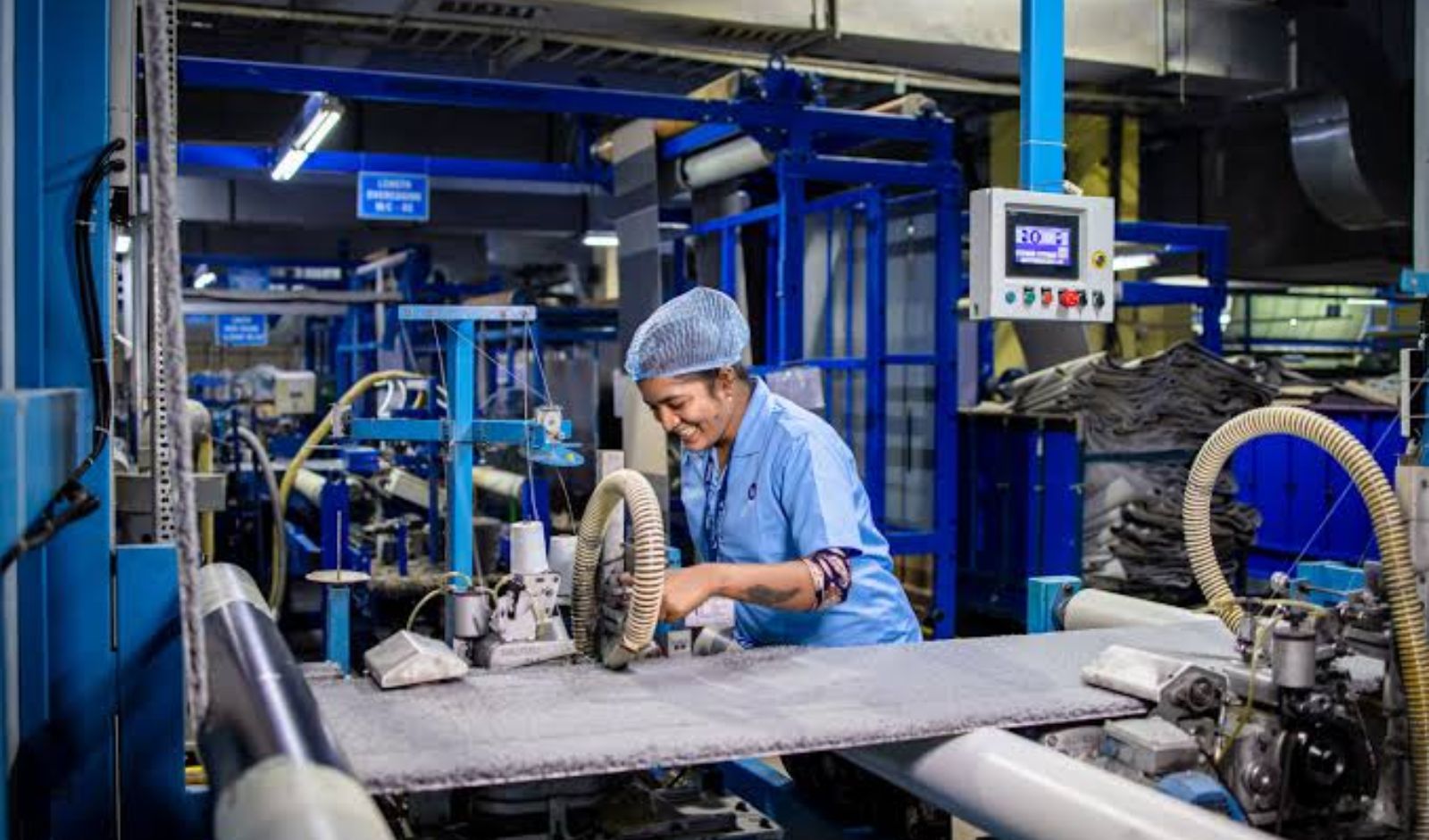
For a long time, India’s manufacturing strength was closely associated with its ability to produce competitively. Cost efficiency, scale, and a large talent pool helped establish India as an important manufacturing destination. Today, that strength has gone up several notches with India becoming a place where products are also being imagined, designed, and taken to the next level of innovation.
The consumer is changing the conversation
One of the biggest forces shaping this change is the Indian consumer. Today’s consumers are clued in to everything from global geopolitics to trends, making them more discerning, and willing to question what they are buying. A purchase journey can begin with an online search, move through reviews and social media, continue with a store visit or product demonstration, and eventually culminate online – or the other way around. Every touchpoint is now part of the decision.
KPMG’s India CX Report 2025 found that 41% of consumers consider the pre-purchase stage the most impactful part of the experience for large appliances, with ease of comparing options and the relevance of customer reviews among the leading considerations. For small appliances, 36% place the greatest emphasis on the pre-purchase stage. This has fundamentally changed what consumers expect. The question has shifted from, “Does this product work?” to, “How does it work for me?”
From functionality to relevance
Greater consumer awareness is shifting the definition of value from basic functionality to living the complete product experience. Everyday products are being evaluated not just for their core function, but for how well they fit into the increasingly busy, design-conscious, and space-conscious lifestyles of today.
A fan can now be expected to combine performance with aesthetics and BLDC energy-saving motors. Lighting can influence both the functionality and design language of a space. Kitchen appliances are increasingly expected to offer convenience, versatility, and multi-purpose functionality. Increasingly, they are also becoming enablers of healthier and more active living, with products such as air-fryers and cold-pressed juicers reflecting how consumers are choosing products that support everyday wellness without compromising on convenience. The common thread is a desire for products can also be aesthetically pleasing while making everyday life simpler, more efficient, and more considered.
This is where innovation takes on a broader meaning. It is not necessarily about adding more technology or features; it is about making a product more relevant to the way people experience it and integrate it into their everyday lives. It can translate as making a product easier to use, creating a multi-purpose solution, improving energy efficiency, designing for different spaces, or bringing together aesthetics and functionality. This is also reshaping premiumisation. Consumers aren’t shying away from spending, however they do expect a higher price to translate into tangible value – better design, durability, performance, convenience, or experience. For 32% of consumers, high-quality large appliances command a premium when they offer greater durability, performance, and long-term value.
India’s complexity can become its advantage
For Indian businesses these changing expectations are not just raising the bar; they are also providing a rich source of insight into where innovation needs to go. India’s diversity makes this particularly relevant. Products have to work across coastal humidity to northern winters, and sprawling multi-gen homes to compact studio apartments, enhancing lifestyles, consumption patterns and increasingly aspirational consumers in emerging markets.
Designing for this diversity requires companies to understand not only what consumers buy, but how they live, what they value, and what they expect products to do differently. The broader ecosystem is moving in the same direction. Medium- and high-technology industries now account for 46.3% of India’s manufacturing value added, signalling the country’s movement towards more sophisticated production and higher-value capabilities. The opportunity is to build on these capabilities by bringing consumer insight, design, and innovation into the product journey, so that what India makes is increasingly aligned with how its consumers live.
The next chapter of “Made in India”
India’s manufacturing advantage has been built on scale, efficiency, and cost competitiveness and, as capabilities deepen, this strength can support a broader ambition – to develop and manufacture products that respond to evolving consumer needs while meeting the demands of quality, performance and scale.
For India, the opportunity lies in building on what it already does well: combining a strong manufacturing base with greater understanding of local markets, product design, and engineering. In a market as diverse as India, that combination can create products that are relevant at home and competitive beyond it.
That is how “Made in India” can evolve from a mark of origin into a mark of capability – reflecting not just where products come from, but also the quality, thought, and value built into them.
Authored By
Anil Dua, COO, Usha International

Anyone who has ordered branded merchandise for a company event knows the process. You choose a product, adjust the design and check pricing tiers. Then you wait for a mock-up and wait again for production. For years, that complexity has limited how many custom orders a promotional commerce business can handle at once. AI and automation are changing that, but only when they are applied in the right order and to the right problems.
Why Custom Orders Have Always Been Trickier to Scale
A standard online order is a transaction. A custom order is a small project, and no two are alike. Each one needs correct logo placement, brand-accurate colors, the right pricing tier and often an artwork approval before production.
Most of these steps depend on people passing information along. An order arrives by email as a PDF and gets retyped into a system. The artwork moves to a separate design tool. The proof goes back by email. Pricing is checked against a spreadsheet. Each handoff is a chance for a detail to slip.
As volume grows, so do the coordination and rework. The usual answer is more hires, which ties growth to headcount.
Buyer expectations are rising too. PPAI Research found that 68.8% of distributors said buyers were prioritizing faster turnaround and rush delivery. In the same research, 64.6% of distributors named customization and innovation as important buyer priorities. Buyers want more personal products, delivered faster. Manual processes struggle to deliver both at volume.
Where Automation Makes the Biggest Difference
Automation is most useful when it connects steps that used to sit in silos. Product selection, pricing, artwork, approvals, purchasing and shipping should all work from one shared record. When a customer picks a product and a decoration option, those choices should flow straight to pricing, order processing and fulfillment without being retyped.
Once the steps are connected, automation can route orders, trigger proofs, send approval reminders and issue supplier purchase orders. That reduces the small errors common in repetitive work. A mismatched size or a missed logo placement can mean a costly reprint. A pricing slip can eat into the margin. Fewer handoffs also mean faster delivery.
Sequence matters. Adding AI to a disconnected process only helps a business make mistakes faster. Connecting the data comes first.
How AI Adds Intelligence to the Process
Automation moves the order along. AI adds judgment at key points.
AI can help buyers choose. Recommendation tools can narrow a huge catalog to a shortlist that fits a buyer's budget, timeline and event. That cuts the back-and-forth at the start of an order.
AI can read incoming orders. Many orders still arrive as emails or PDFs. AI can turn the products, quantities, colors and ship dates into a structured order for a person to review.
AI can speed up mock-ups. Automated virtual proofs let buyers see their product almost right away, which speeds up approvals.
AI can validate orders before production. It can flag a low-resolution logo, the wrong file type, a color outside brand guidelines or a design that will not fit the imprint area. Catching these issues early saves time and materials.
Our company began as ArtworkservicesUSA, so artwork is the step we know best. It is also where custom orders often stall. Across the more than 40,000 orders we process each day for promotional products businesses, one pattern holds. Orders checked early move quickly. Orders fixed late cost time, materials and goodwill.
What This Means for Scaling Promotional Commerce
Together, AI and automation change how a promotional commerce business grows. The same team can handle more custom orders without adding staff for every increase in volume.
The human touch still matters, because it is what makes promotional products personal. A logo is part of a client's identity, so final approval should stay with people. AI flags problems, and people make the decisions. Teams focus on creative direction, client relationships, quality assurance and exceptions.
Building Toward a More Scalable Future
The technology to make this shift exists today. Four steps can help businesses get started.
Map one order end to end. Count every time someone re-enters data or waits on an email. Each one is a hidden cost that grows with volume.
Connect before you automate. Put orders, artwork, pricing and purchasing on one shared system. Then automate the handoffs.
Add AI where the rules are clearest. Order intake and artwork checks are good places to begin.
Measure what changes. Track the time to approved proof, revisions per order and the reprint rate. These numbers show whether you are scaling or just getting busier.
A Final Thought
Custom orders will not get simpler, and buyers will keep asking for more in less time. The businesses adapting fastest use AI and automation to remove friction from tasks that never needed a person. That frees their teams for work that needs human judgment. The next phase of growth will belong to companies that treat automation as infrastructure: quiet, reliable and built to scale. Creativity and customer relationships will stay in human hands.
Authored by:
Mr. Pratik Thakore- COO, Powerweave Business Head-aws promostack.

The festive season brings opportunities to discover new cuisines, enjoy special meals, and reconnect with family and friends over good food. With Navratri underway, diners are exploring everything from traditional Indian fare to international cuisines and menus suited to festive dietary preferences. Whether planning a family lunch, a celebratory dinner, or a casual catch-up over coffee, choosing the right restaurant can add to the occasion.
Festive Dining Brings Family and Friends Together
With Navratri celebrations underway, restaurant outings range from meals that accommodate traditional dietary preferences to indulgent dinners and leisurely brunches with family and friends. From regional Indian specialties to international cuisines, dining destinations are offering varied experiences for different occasions, making the festive season an opportunity to explore new flavors while celebrating togetherness.
From Qawwali evenings and European-inspired menus to Sichuan specialties and South Indian festive dishes, these 10 dining destinations offer distinct culinary experiences for different tastes and occasions.
Top 10 Dining Destinations to Visit This Festive Season
1. Qavalli
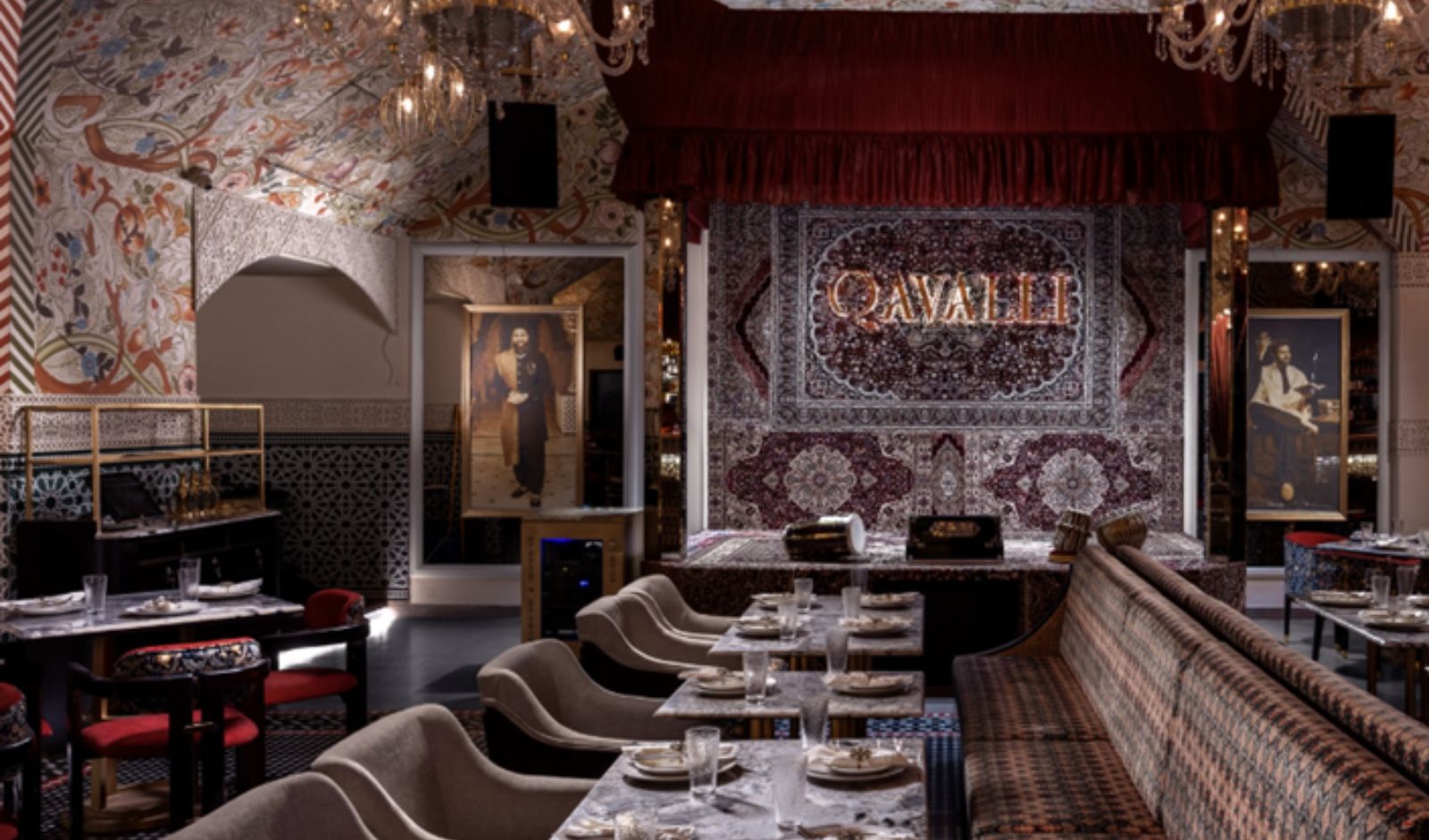
Qavalli celebrates the traditions of Indian hospitality through North Indian and Mughlai cuisine, featuring kebabs, slow-cooked curries, and biryanis. Its interiors draw inspiration from the traditional mehfil, while its signature Qavalli Nights feature live Qawwali performances that bring music and dining together. The combination of regional specialties and cultural entertainment makes it an option for those looking to turn a festive dinner into an evening experience. Location: Multiple locations; check the restaurant's official channels for outlet details.
2. Dodicci
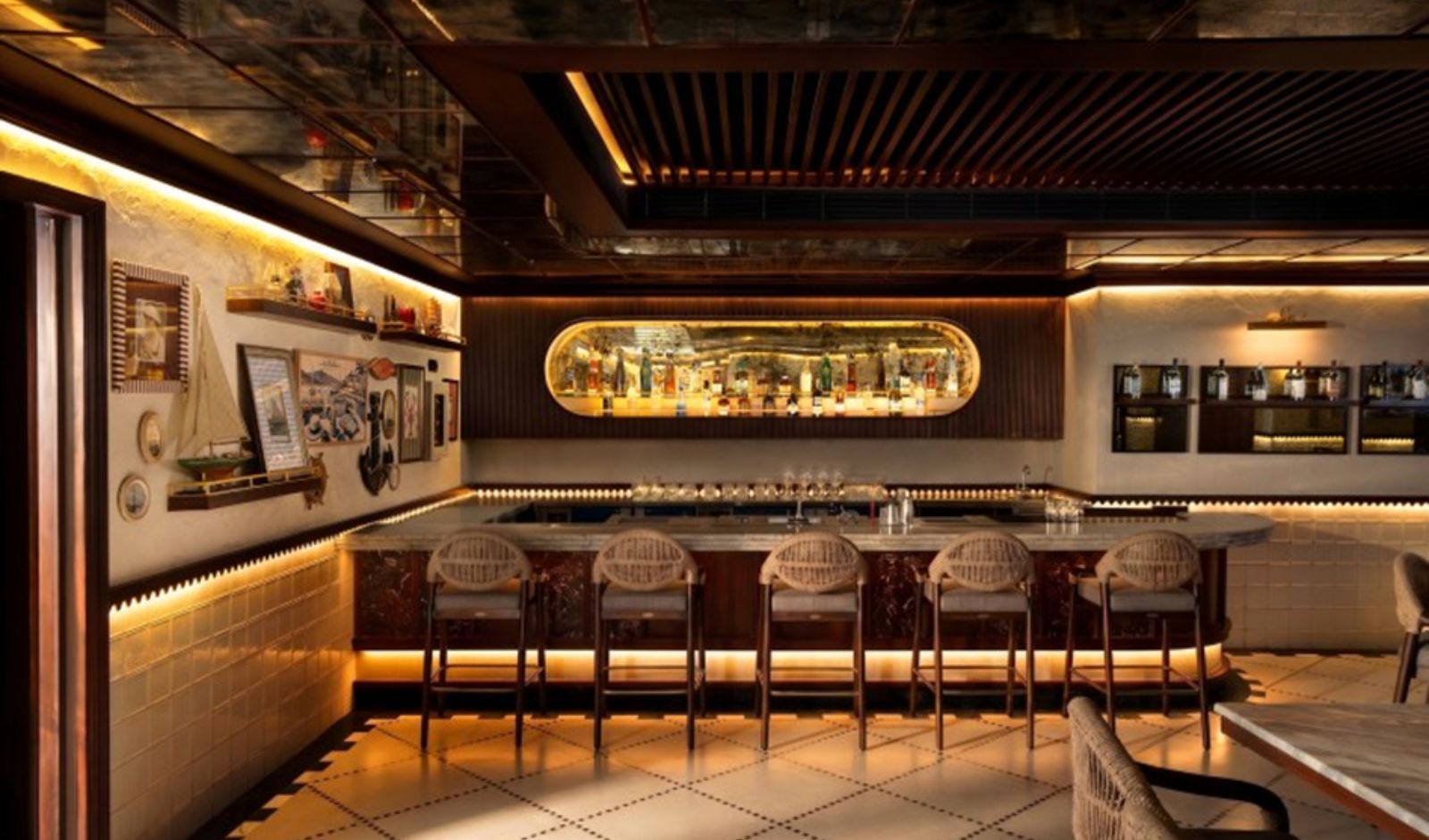
At Dodicci, La Casa Europa brings European culinary influences to a contemporary dining setting, with Italian cuisine at the center of the experience. The menu features handmade pastas, pizzas, European-inspired plates, and indulgent desserts, complemented by a curated cocktail program. Its refined setting lends itself to special-occasion dining and leisurely meals for those looking to explore European flavors during the festive season. Location: The Ashoka Hotel, Chanakyapuri, New Delhi.
3. China Club
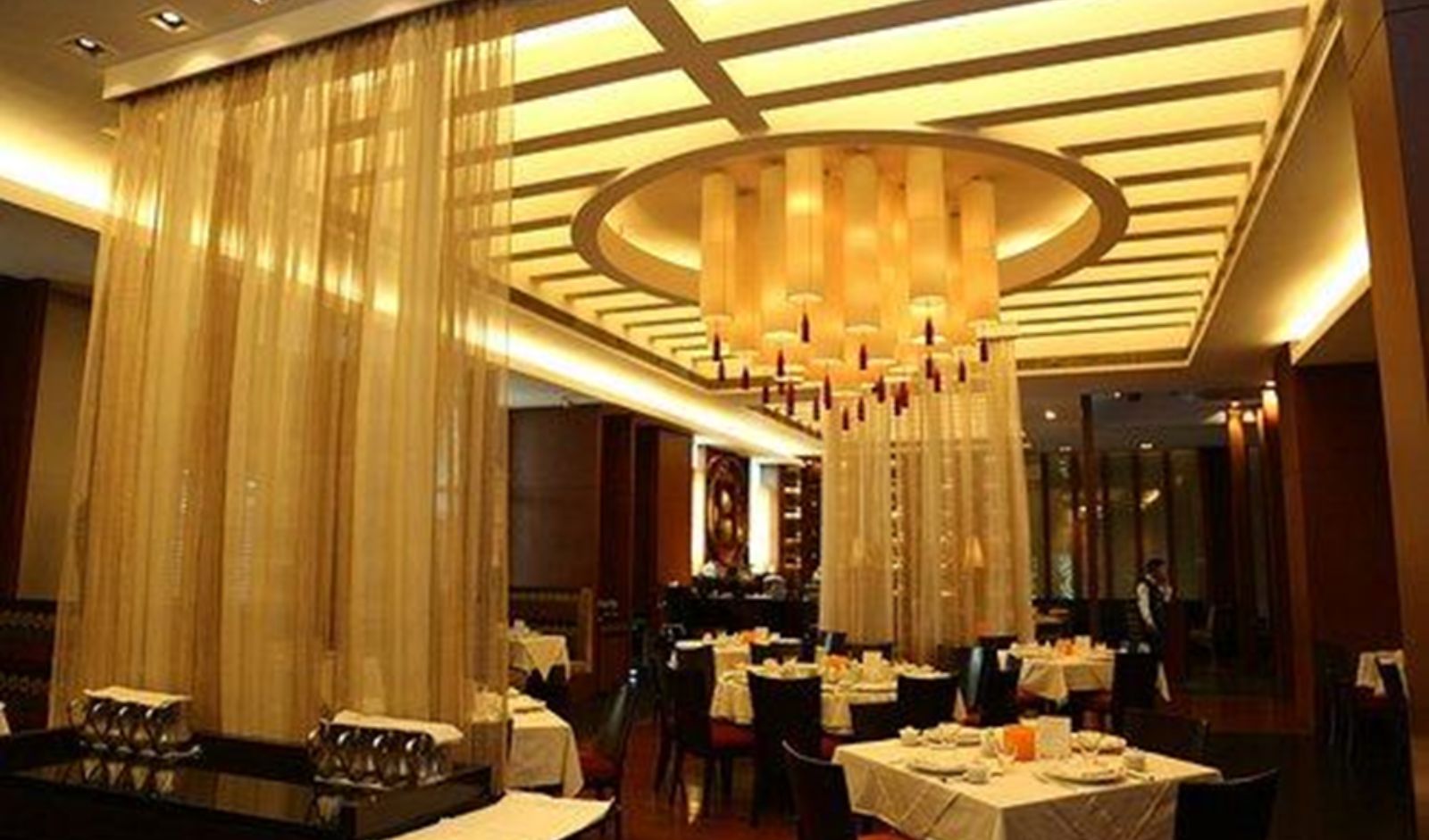
China Club focuses on regional Chinese cuisine, particularly the bold, layered flavors associated with Sichuan cooking. Traditional techniques, aromatic ingredients, and nuanced spices shape its menu, offering an alternative to familiar Chinese favorites. An elegant setting and curated cocktail program complement the culinary experience, making it worth considering for diners interested in exploring regional Chinese dishes over a festive meal. Location: Global Business Park, Gurugram, Haryana.
4. Mido House
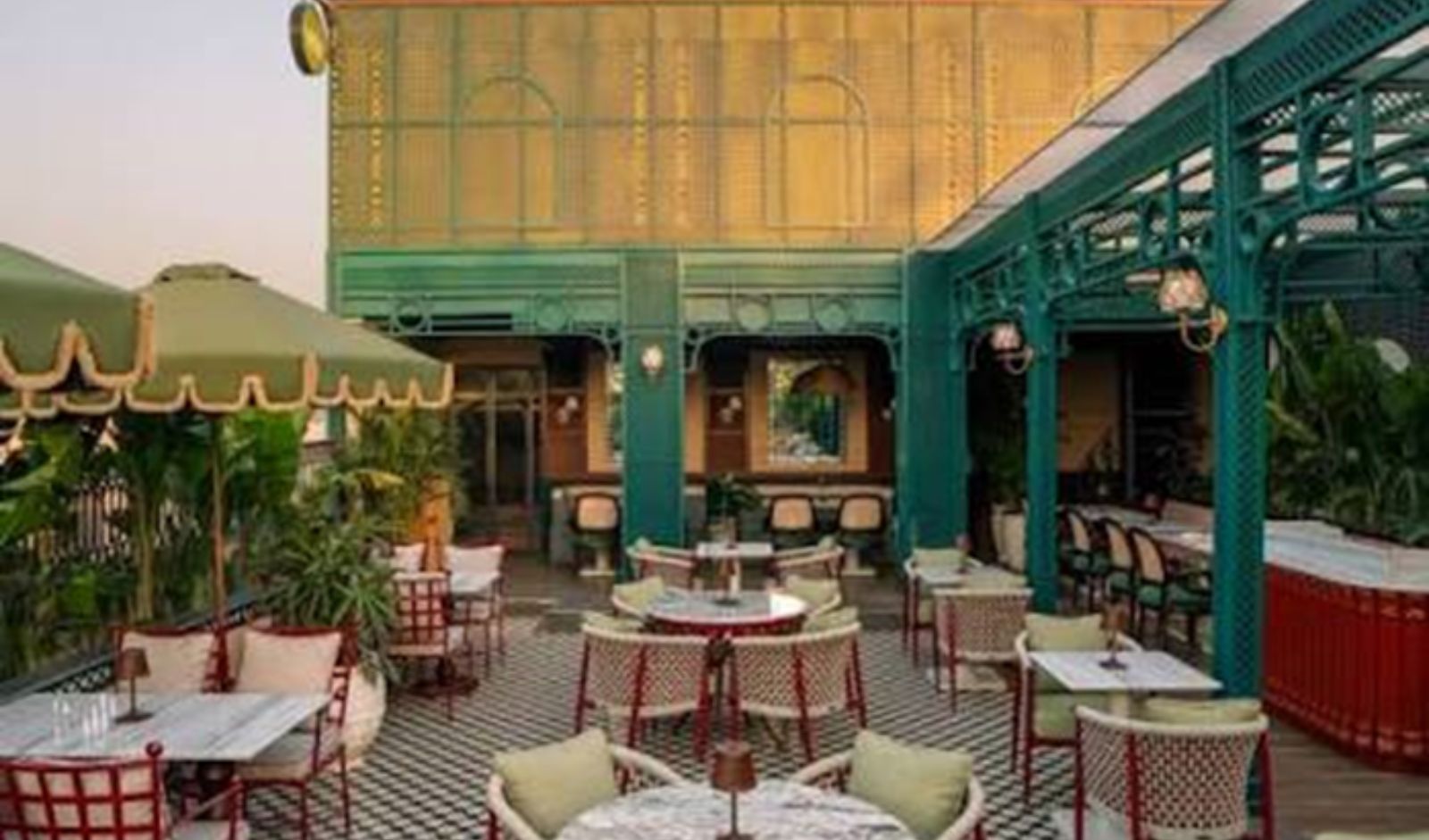
Mido House brings European and Asian influences together through a menu of globally inspired plates and comforting favorites. Stylish interiors, music, and an eclectic cocktail program give the restaurant a contemporary, social atmosphere that suits evening outings. It is an option for diners who want to combine a varied menu with a lively setting for a festive get-together. Location: Greater Kailash, New Delhi.
5. Chica
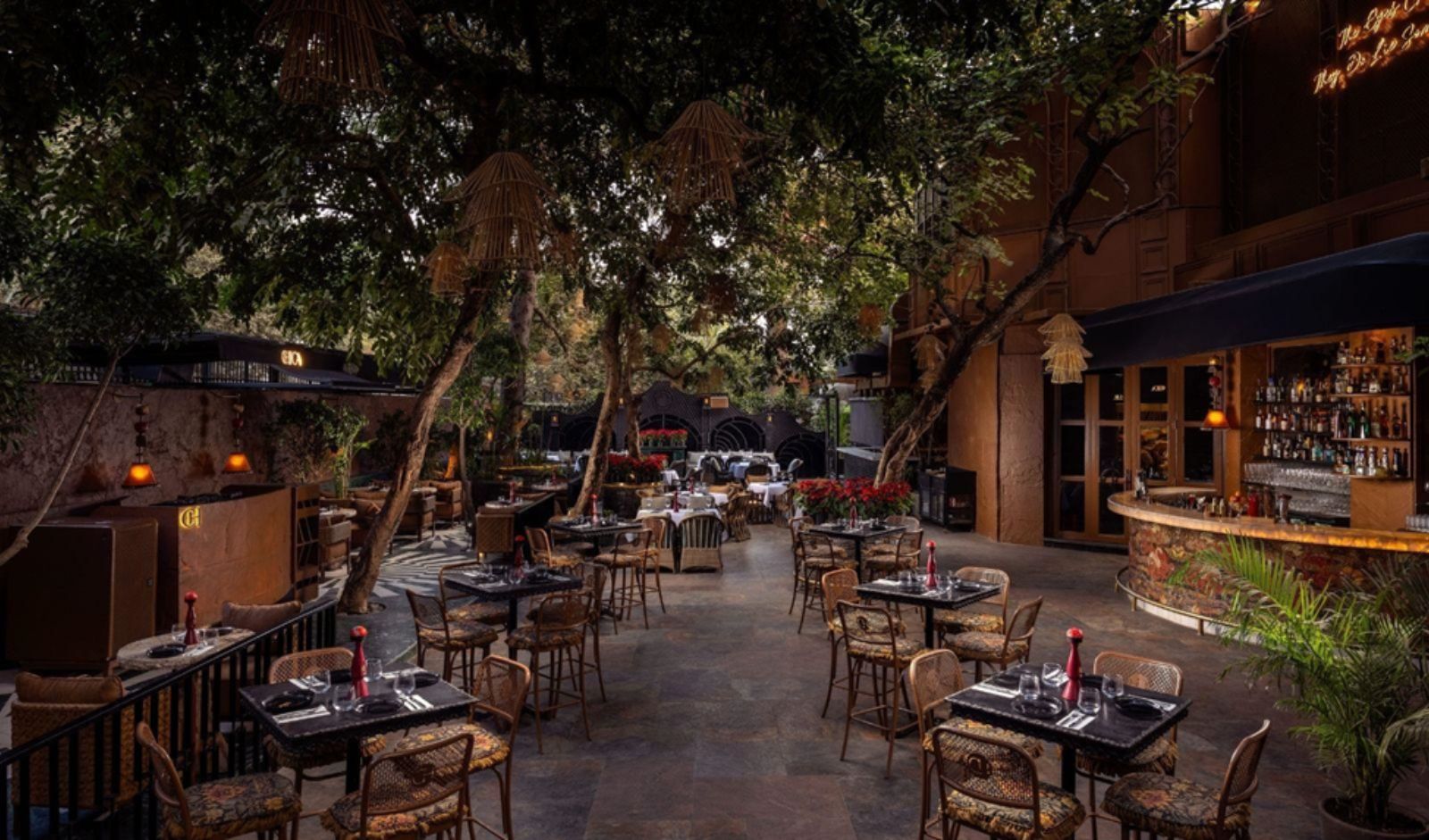
With a menu spanning pizzas, pastas, sushi, and pan-Asian dishes, Chica offers a mix of European and Asian flavors in a lush, elegant setting. Its broad menu gives groups the flexibility to explore different cuisines, while cocktails and music contribute to its evening atmosphere. The restaurant is worth considering for festive dinners and occasions that call for a combination of diverse dishes and a contemporary dining environment. Location: One Golden Mile, Block A, Bhikaji Cama Place, New Delhi.
6. Café De Flora
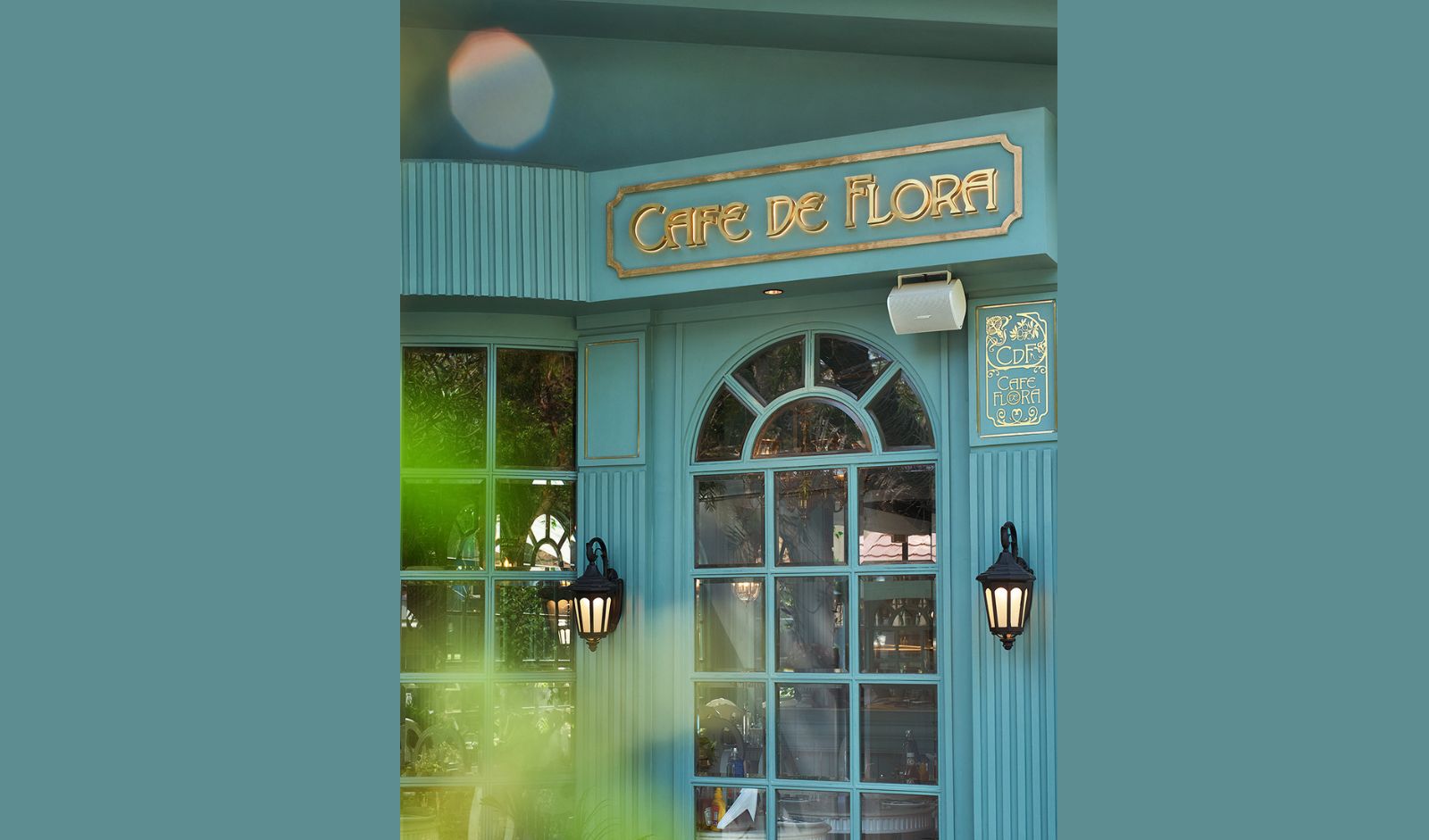
Café De Flora brings a Parisian-inspired aesthetic to its café experience, with floral interiors that create a distinctive backdrop for brunches and leisurely meals. The setting is suited to coffee catch-ups, family outings, and relaxed festive celebrations. Open from 9 AM to 11 PM, it accommodates visits throughout the day. Location: Shop 24 and 25, West Flank, Santushti Shopping Complex, Chanakyapuri, New Delhi.
7. NOD
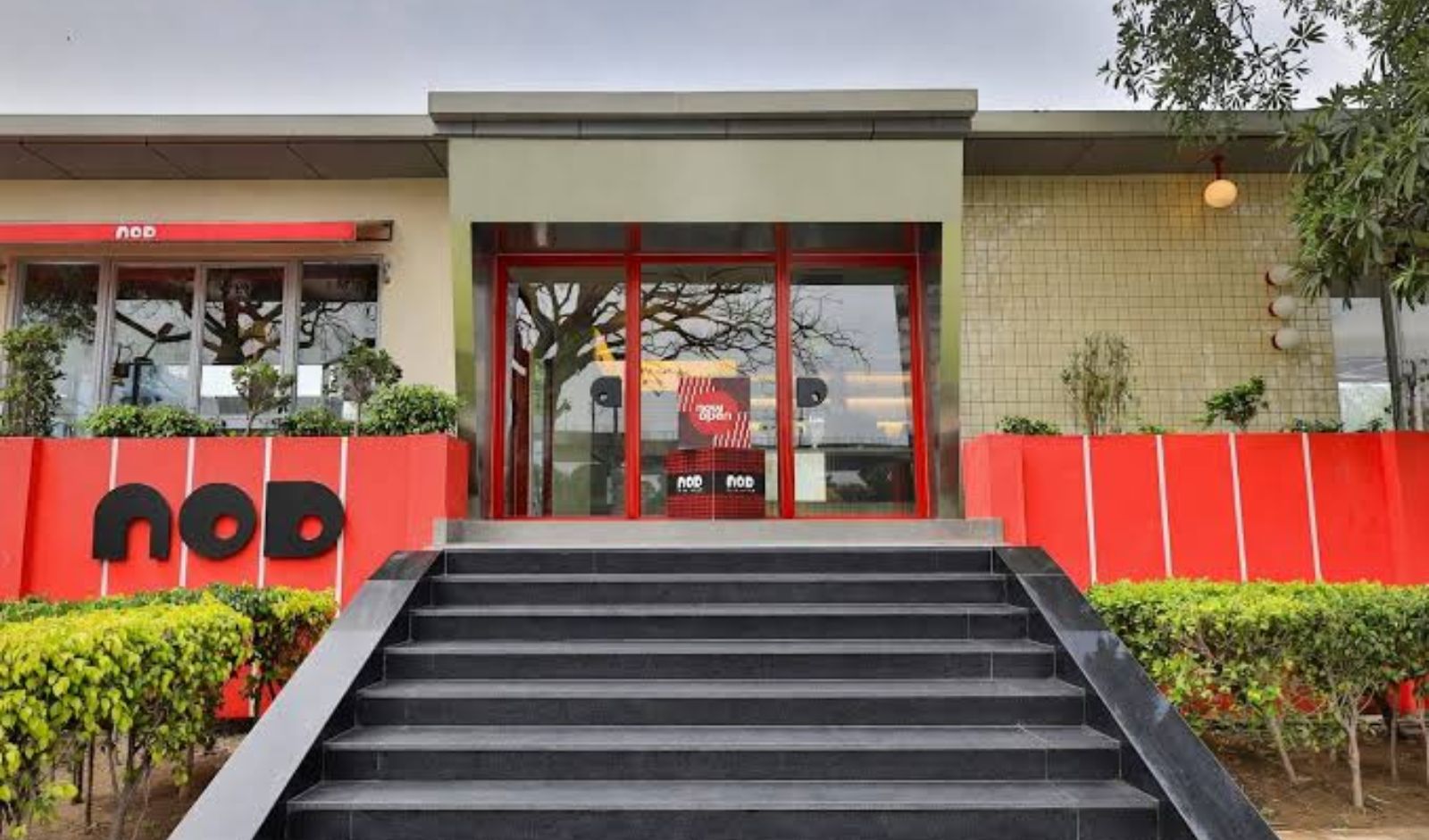
NOD offers an all-day dining menu built around global flavors and modern comfort food, supported by spacious seating. Its extended hours, from 7 AM to 11 PM, make it suitable for everything from breakfast outings to evening meals. For groups with varied food preferences or schedules, the restaurant provides a flexible option for festive gatherings. Location: Club Road, Punjabi Bagh, New Delhi.
8. Colosseum
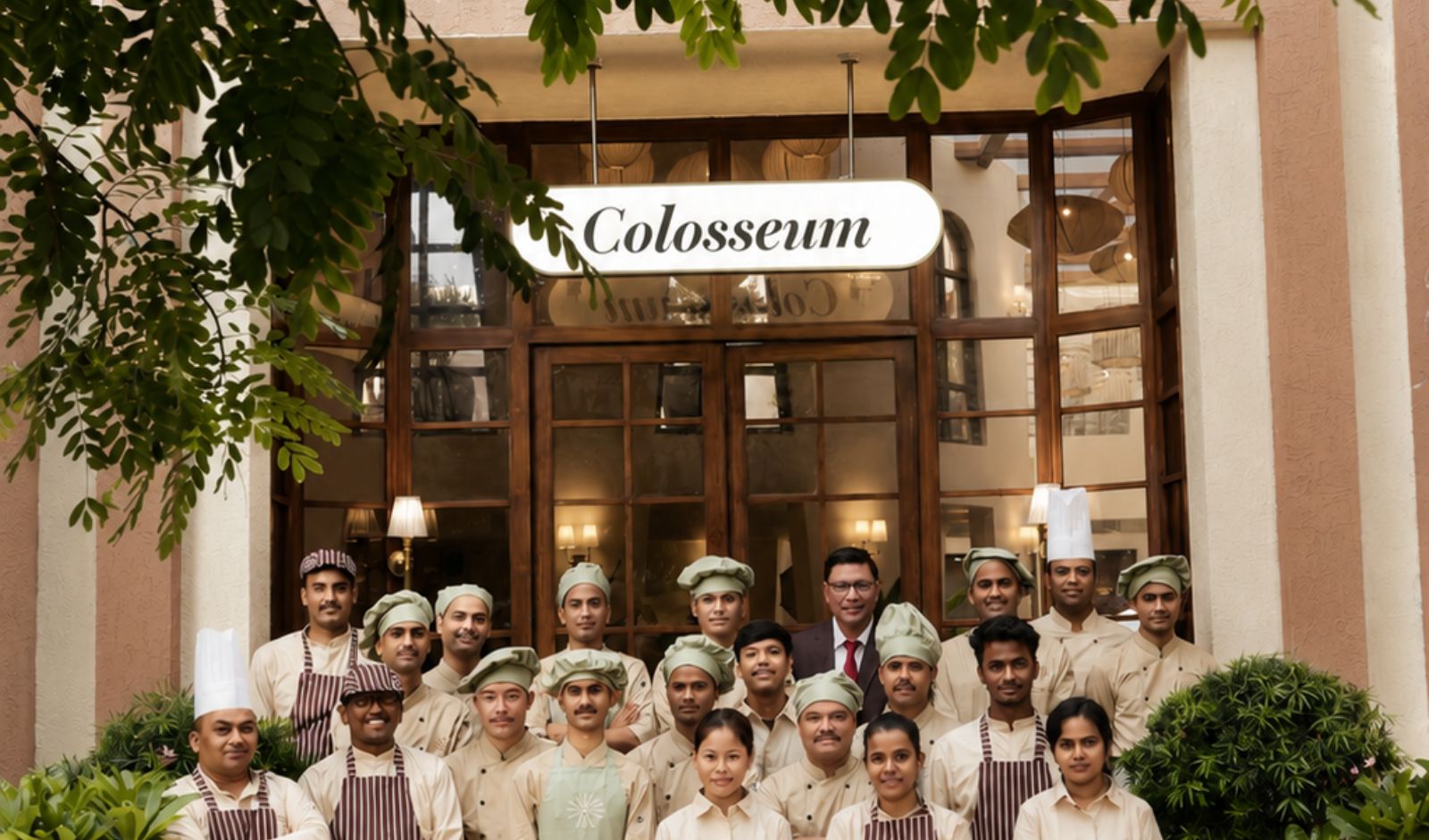
Colosseum is an option for diners planning a meal or group gathering in Noida during the festive season. Located in Sector 117, it offers a destination for lunch outings and dinner plans with family and friends. The restaurant operates from 12 PM to 11 PM, making it suitable for daytime visits as well as evening meals. Location: Sector 117, Noida, Uttar Pradesh.
9. ORO
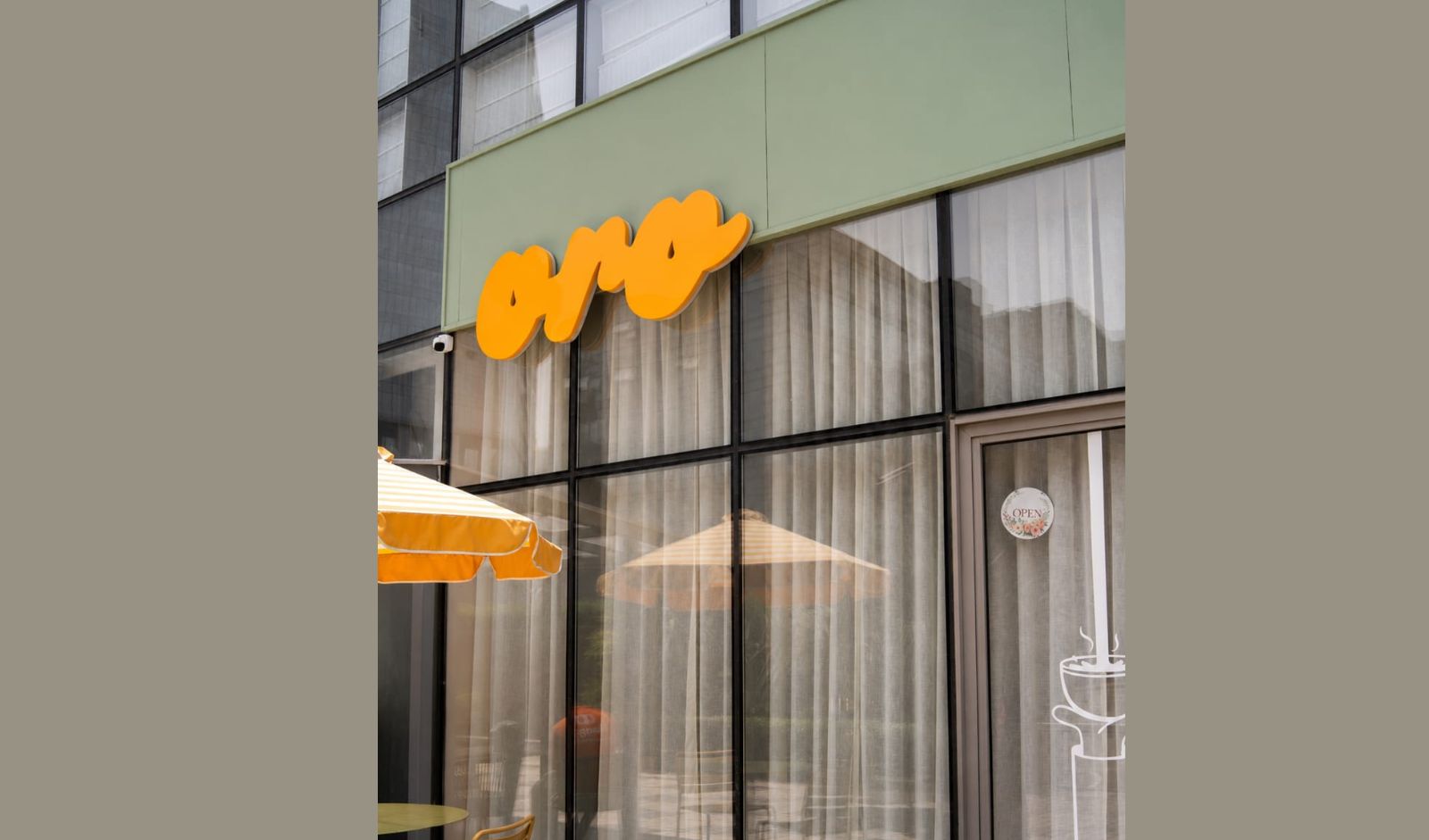
ORO combines contemporary café culture with a neighbourhood coffee and dining experience. Its relaxed setting is suited to informal meetings, coffee breaks, and casual meals for those who prefer quieter festive outings. Open from 9 AM to 8 PM, it is particularly convenient for morning visits and daytime catch-ups. Location: Sector 58, Gurugram, Haryana.
10. Idlinama
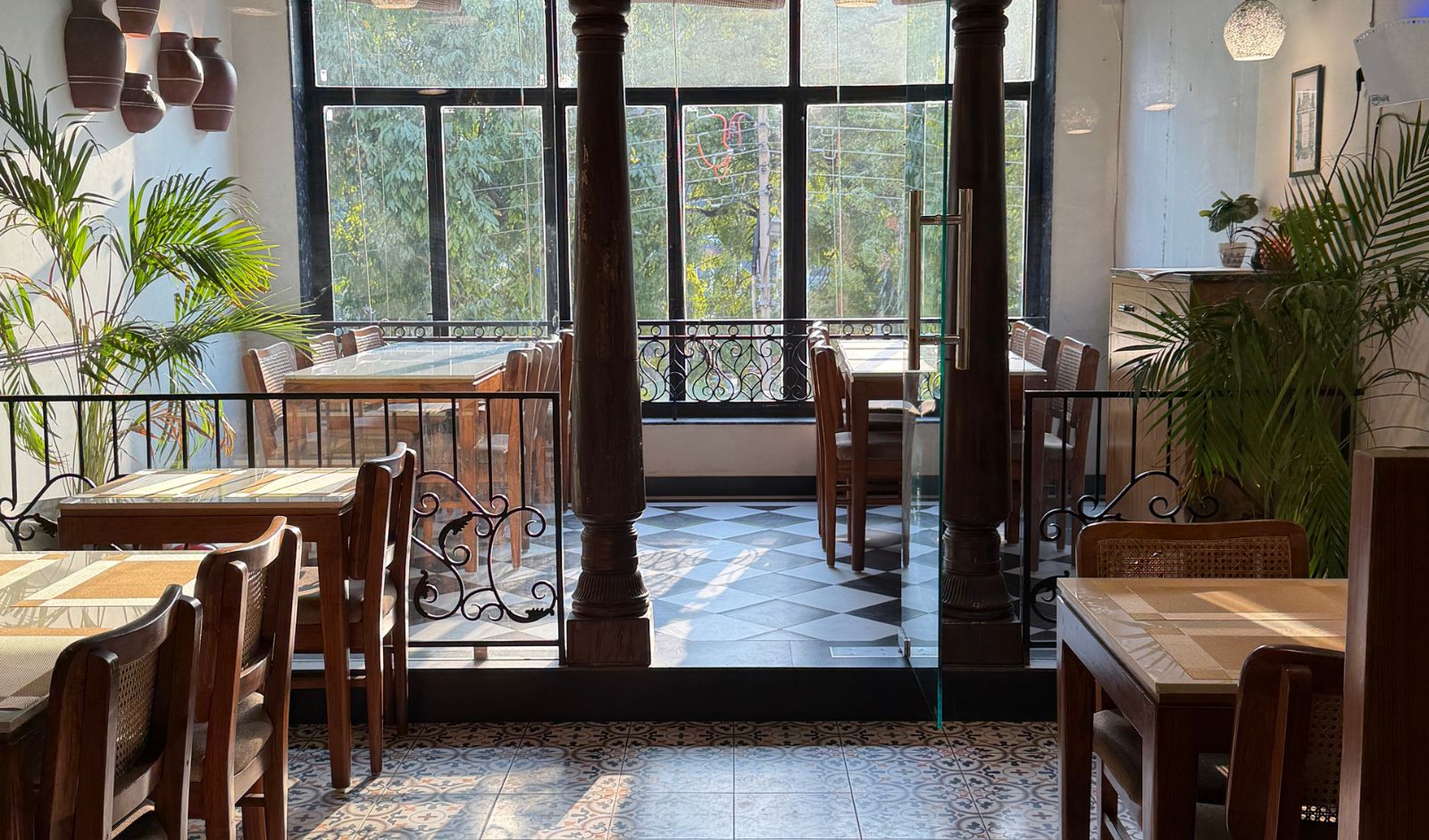
Idlinama brings Tamil Nadu-inspired cuisine to the festive dining scene with a special menu featuring dishes prepared without onion and garlic. The offering caters to diners who follow traditional dietary preferences during Navratri and want to explore regional South Indian flavors. Located in the M Block Market, the restaurant is open daily from 9 AM to 11 PM. Diners observing specific fasting rules should confirm ingredients and preparation methods before ordering. Location: M-50, First Floor, M Block Market, Greater Kailash II, New Delhi – 110048.
Conclusion
From the cultural dining experience at Qavalli to the European-inspired menu at Dodicci and the Navratri specials at Idlinama, these restaurants offer varied ways to enjoy the festive season. Whether the plan involves exploring international cuisines, enjoying a leisurely brunch, or finding dishes suited to traditional dietary preferences, diners can choose a destination that fits the occasion. Checking current menus, operating hours, and reservation availability before visiting can help ensure a smooth dining experience.
FAQs
1. What are some dining destinations to visit during the festive season?
Qavalli, Dodicci, China Club, Mido House, Chica, and Café De Flora offer distinct dining experiences, ranging from Indian and Mughlai cuisine to European and Asian specialties.
2. Which restaurant offers a special menu for Navratri?
Idlinama has introduced a festive menu featuring dishes prepared without onion and garlic. Diners should confirm individual ingredients and preparation methods to ensure they meet their dietary requirements.
3. Where can diners explore international cuisines during the festive season?
Dodicci features Italian and European-inspired dishes, China Club focuses on regional Chinese cuisine, and Chica offers a mix of European and Asian flavors.
4. Which restaurants are suitable for a festive brunch or casual outing?
Café De Flora is an option for leisurely brunches, while NOD and ORO cater to casual meals and daytime gatherings.
5. What should diners check before visiting during Navratri?
Check current opening hours, menus, prices, and reservation availability. If observing dietary restrictions, confirm that the restaurant can accommodate your specific requirements.
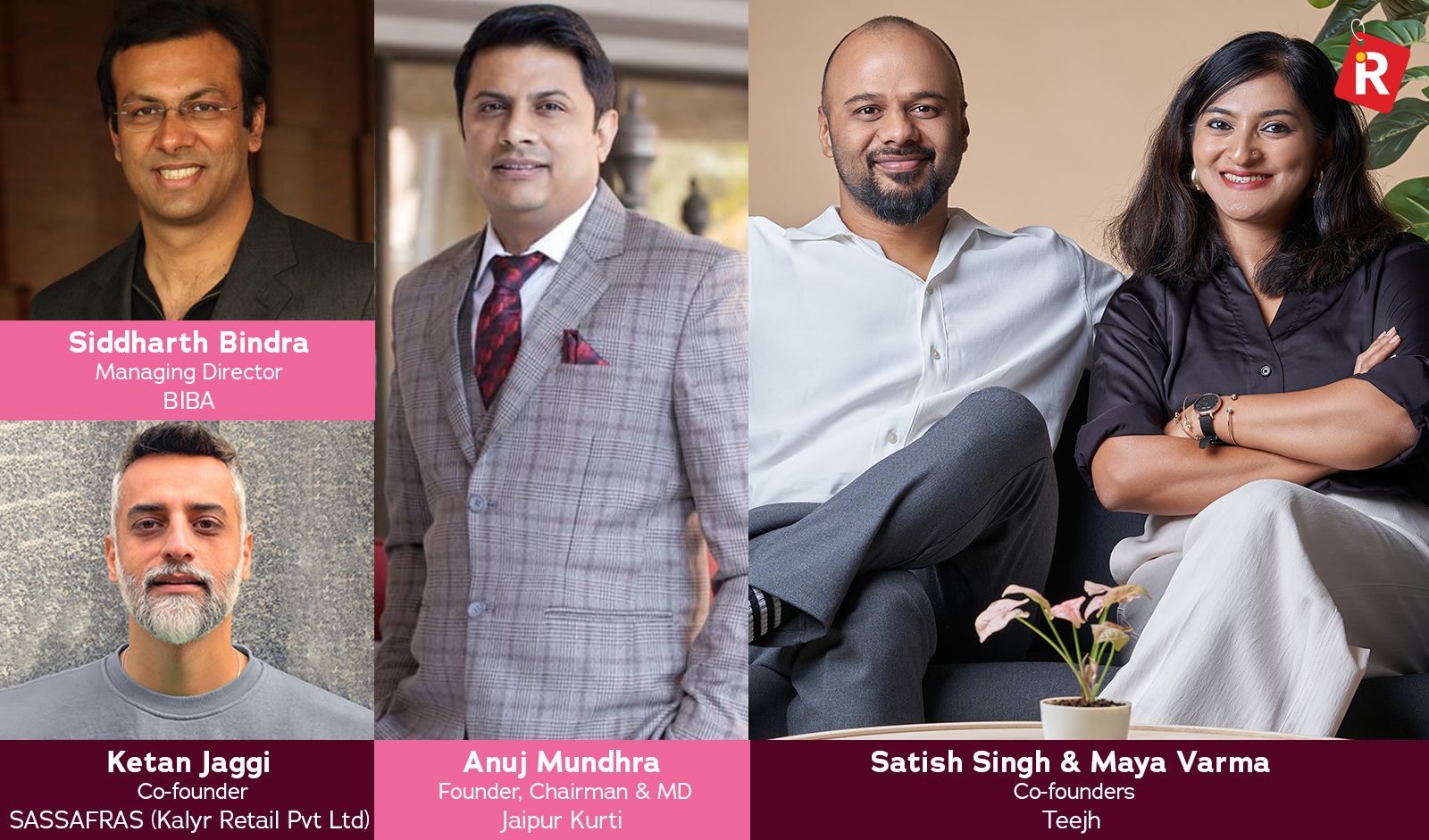
With Diwali round the corner, ethnicwear brands are preparing for the festive rush with a mix of contemporary designs, affordable options and convenient online shopping.
From fusion wear and coordinated sets to metallic sarees and statement jewellery, brands are broadening their collections to cater to different tastes, occasions and budgets.
SASSAFRAS expects festive sales to increase by 25 percent, while Teejh expects sales to rise by 10–15 percent. BIBA is looking at double-digit growth; Jaipur Kurti expects 30-35 per cent growth. These estimates suggest a healthy festive opportunity with shoppers looking for more style-driven outfits to wear beyond Diwali and other celebrations.
Also read: How GRM Foods Is Growing 921 Basmati Rice Globally
Value Takes Centre Stage
Festive shoppers are considering options across the price spectrum, but affordability and versatility remain top considerations. Brands are responding with collections that combine festive appeal with everyday wearability, giving consumers more value for their money.
Ketan Jaggi, Co-founder of SASSAFRAS (Kalyr Retail Pvt Ltd), said, “We expect strongest demand in the Rs 1,500–Rs 2,000 range, where customers can access fashionable festive styles without compromising value.” He added, “Consumers remain price-conscious, but are willing to trade up for elevated fabrics, detailing and versatile designs for multiple occasions.”
Teejh is targeting consumers through affordable jewelry and sarees. Maya Varma, Co-founder and Chief Brand and Product Officer, stated, “Value-led festive shopping is expected to remain strong, with consumers looking for accessible pieces that offer a festive update without being overly occasion-specific.” She expects strong demand for “jewellery in the Rs 300–800 range” and sarees priced between Rs 1,500 and Rs 1,800.
Siddharth Bindra, Managing Director, BIBA, said, “We are seeing demand across price points.” He added that the brand's “Rs 2,599 range of two- and three-piece sets has received a strong response for the value it offers,” while premium occasion wear also attracts shoppers.
Jaipur Kurti is following a similar approach. Anuj Mundhra, Founder, Chairman and Managing Director of Nandani Creation Limited, noted, “We expect the strongest demand in the Rs 1,500–Rs 4,000 price range, where customers seek a balance of style, quality and value.” He noted that festive occasions encourage “selective trading up for better fabrics, designs and occasion-ready collections.”
Also read: BMW Group India’s Hardeep Singh Brar on Luxury Car Retail Trends
Contemporary Styles Redefine Festive Dressing
Traditional ethnicwear remains central to Diwali wardrobes, but contemporary silhouettes and versatile designs are influencing purchasing decisions. Coordinated sets, fusion outfits, embellished dresses, and modern sarees are expanding the choices available to consumers.
SASSAFRAS expects “festive fusion wear, contemporary ethnic sets, embellished dresses and statement separates” to perform strongly. Jaggi also highlighted the appeal of “modern silhouettes that blend traditional detailing with contemporary styling,” alongside rich jewel tones, reds, pinks, greens, and metallic accents.
For Teejh, sarees remain a key festive category. Varma said, “Sarees are expected to remain a key festive choice, with consumers increasingly gravitating towards contemporary interpretations of traditional dressing.” She also expects “bold colours, metallic hues like Gold, Pista, Teal and tissue fabrics” to be particularly relevant this season.
BIBA is witnessing continued demand for coordinated and fusion styles. Bindra said, “There seems to be a continued demand for coord sets and fusion looks.” He added, “With festivities around the corner, we are also finding women buying traditional suit sets in festive colours.” The brand is also seeing increased interest in kidswear and unstitched suit sets.
Jaipur Kurti expects kurta sets, sarees, and festive ethnicwear to attract shoppers. Mundhra said, “This Diwali, we expect strong demand for kurta sets, sarees and festive ethnic wear.” He added, “Customers are looking for comfortable, stylish outfits with simple detailing that can be worn beyond the festive season.”
Also read: Bharath Rao on Indian Interior Materials Market Growth
 Digital Channels and Inventory Drive Competition
As festive shopping spreads across online and offline channels, brands are focusing on inventory availability, regional demand patterns, and product discovery. Digital platforms are becoming particularly important for reaching consumers beyond major metropolitan markets.
Jaggi says SASSAFRAS is “strengthening our festive assortment, inventory planning, digital merchandising and performance marketing to capture demand across channels.” He added, “Online will remain a key growth driver, supported by marketplaces and our D2C platform,” with demand expected from metropolitan areas and emerging Tier II and Tier III markets.
Teejh is prioritizing digital availability and product discovery. Varma said, “For Diwali, Teejh is strengthening its inventory across festive sarees and jewellery, with a focus on ensuring availability across its key price points.” She added, “The brand is also building a more occasion-led digital shopping experience, bringing together sarees, jewellery and festive styling options.” Teejh expects all its Diwali sales to come through online channels.
BIBA is adapting its inventory to regional festive calendars. Bindra said, “We are well stocked across stores and digital channels, with inventory planned around regional festive calendars.” He explained that “Demand peaks vary by market, so allocations are managed accordingly,” with eastern India's festive activity around Durga Puja preceding the broader Navratri and Diwali shopping period.
Jaipur Kurti is strengthening availability through its retail network and online channels. Mundhra said, “We are strengthening inventory across stores and online channels, with a focus on festive collections and fast-moving styles.” He added that the brand is “improving product availability, replenishment on time through our own manufacturing setup and visibility across marketplaces.”
Also read: From Craft to Commerce: How Indian Fashion Brands Are Building the Next Premium Retail Market
Collections Become More Occasion-Focused
Beyond product design, brands are refining their festive strategies through curated collections, expanded assortments, and targeted offers. The aim is to serve shoppers looking for everything from everyday festive updates to wedding and celebration wear.
SASSAFRAS is broadening its mix of Western, fusion, and ethnic styles. Jaggi said, “This year, our focus is on a broader mix of fusion, Western, and ethnic festive styles, with stronger digital storytelling and curated occasion-led collections.” He added that the brand is “combining newness, accessible pricing and targeted festive offers” to address different consumer preferences.
Teejh is expanding its festive range through the Tatva Collection. Varma said, “This Diwali, Teejh is expanding its festive edit with the Tatva Collection, featuring metallic-hued tissue sarees and Statement Oxidised Silver Jewellery.” She explained that the collection emphasizes “Indian craftsmanship-inspired aesthetics with a modern, versatile approach.”
BIBA has expanded its assortment across occasions and price points. Bindra said, “This year, the biggest shift is greater width across price and occasion.” He added, “We have introduced Rs 2,599 two and three-piece sets, strengthened our fusion offering, and added new propositions such as BIBA NXT and the Wedding Edit.”
Mundhra said, “This Diwali, Jaipur Kurti is focusing on a wider festive collection featuring stylish kurta sets, suit sets and versatile ethnic wear.” He added that, compared with last year, “the focus is on a broader assortment, more contemporary designs and a stronger omnichannel festive experience.”
Also read: From Illumination to Expression: How Luxury Lighting Is Reshaping Indian Spaces
Competing for the Festive Wallet
The festive season presents an opportunity for ethnicwear brands to grow sales, but meeting consumer expectations requires more than seasonal launches. Pricing, design versatility, product availability, and convenient shopping are all shaping the competition.
The strategies outlined by SASSAFRAS, Teejh, BIBA, and Jaipur Kurti point to a market serving multiple needs: affordable festive updates, traditional clothing with contemporary styling, and premium outfits for special occasions. As brands compete for a larger share of festive spending, their ability to combine style with value and accessibility will remain central to their growth ambitions.
Also read: India’s Baby-Care Market Moves Beyond Basics
-
The skills required by D2C brands are continuously evolving. The capability of employees is no longer enough to carry out daily operations. They also need to be familiarised with digital marketing, customer experience, analytics, and the application of ar
-
Tier-2 and tier-3 cities are now emerging as key markets, reflecting changing aspirations, greater digital access and evolving consumer preferences. The next phase of Indian retail growth will be defined by how industry players respond to these new consum
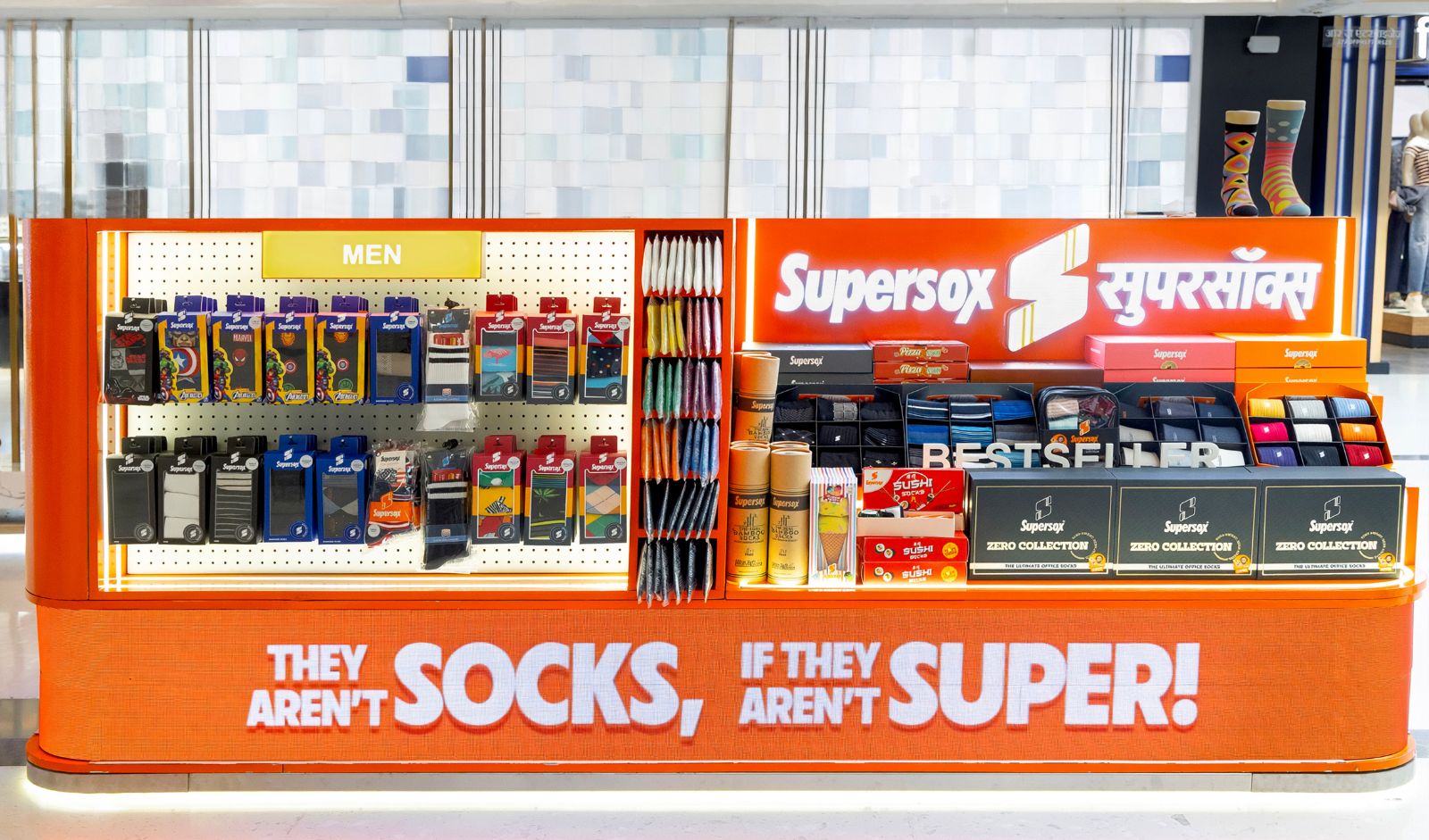 Supersox India has expanded its retail presence with the opening of a new kiosk at Inorbit Mall in Vashi, Navi Mumbai, as the socks brand looks to make its products more accessible to consumers across India.
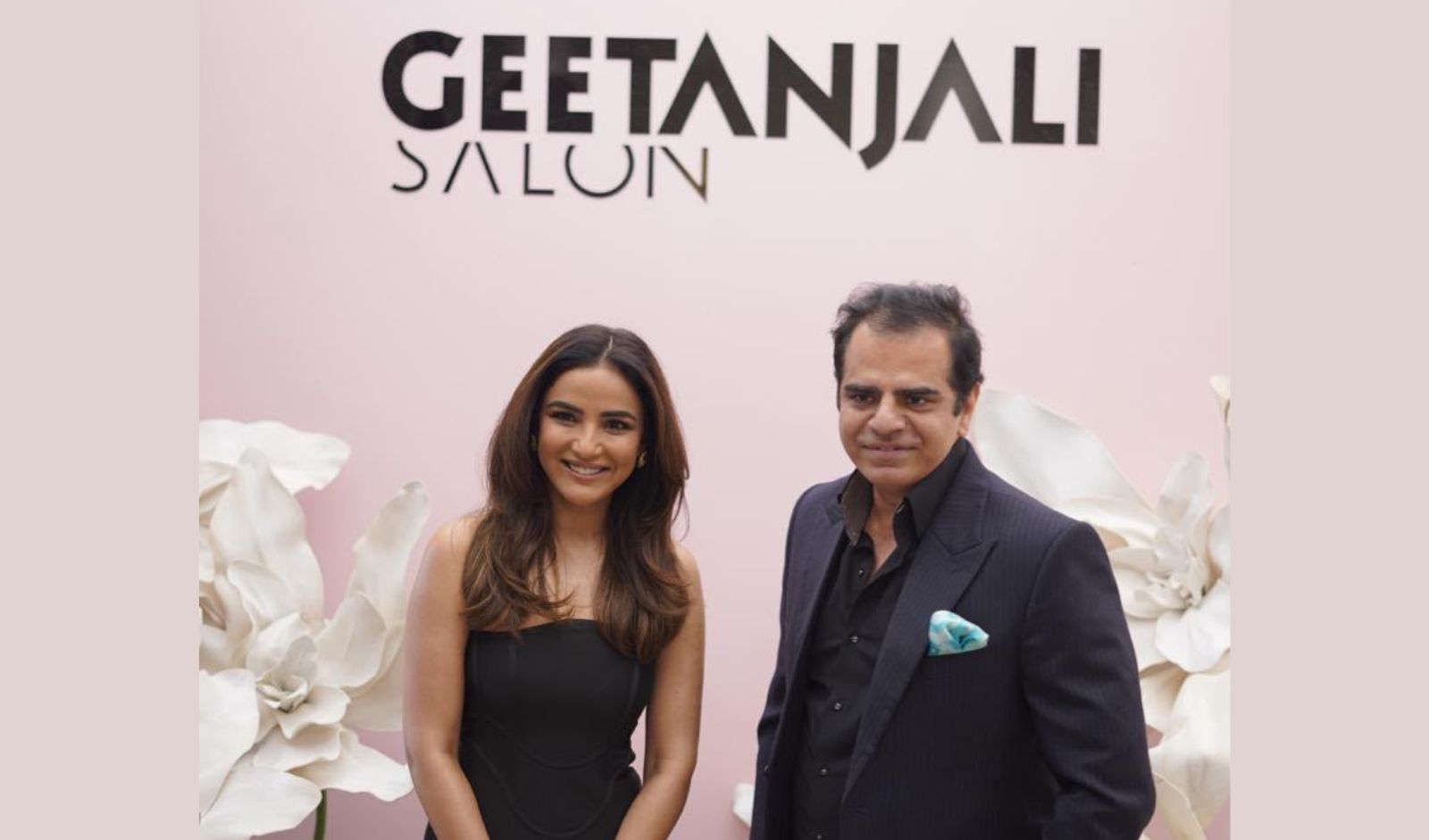 The new flagship will feature Kérastase as its haircare partner, bringing professional haircare and beauty services to customers in the city. The partnership adds a premium haircare offering to the salon’s service portfolio.






Copyright © 2009 - 2026 Franchiseindia.com Ltd